We, the Data: Human Rights in the Digital Age

We, the Data: Human Rights in the Digital Age

A Conversation with WENDY H. WONG
Author · Professor of Political Science at University of British Columbia

One of the things that we need to remember is that we are data stakeholders and not data subjects. We're often called data subjects if you look at the way legislation is written and tech companies talk about the users of their technology as data subjects. Being a subject casts this sort of '“you can't help but have this happen to you” effect. But we're actually data stakeholders for the reason that data cannot be created without us. If companies were incentivized to follow data minimization for example, where they only collect the data they need, that would change the way we interact with digital technologies.

A Brief History of Intelligence

A Brief History of Intelligence

Evolution, AI and the Five Breakthroughs That Made Our Brains
A Conversation with MAX BENNETT Author · Cofounder & CEO of Alby · Fmr. Cofounder & CPO of Bluecore

So, modern neuroscientists are questioning if there really is one consistent limbic system. But usually when we're looking at the limbic system, we're thinking about things like emotion, volition, and goals. And those types of things, I would argue reinforcement learning algorithms, at least on a primitive level, we already have because the way that we get them to achieve goals like play a game of go and win is we give them a reward signal or a reward function. And then we let them self-play and teach themselves based on maximizing that reward. But that doesn't mean that they're self-aware, doesn't mean that they're experiencing anything at all. There's a fascinating set of questions in the AI community around what's called the reward hypothesis, which is how much of intelligent behavior can be understood through the lens of just trying to optimize a reward signal. We are more than just trying to optimize reward signals. We do things to try and reinforce our own identities. We do things to try and understand ourselves. These are attributes that are hard to explain from a simple reward signal, but do make sense. And other conceptions of intelligence like Karl Friston's active inference where we build a model of ourselves and try and reinforce that model.

AI & THE FUTURE OF HUMANITY

AI & THE FUTURE OF HUMANITY

What will the future look like? What are the risks and opportunities of AI? What role can we play in designing the future we want to live in? In this first episode of our new channel, philosophers, futurists, AI experts, science fiction authors, activists, and lawyers reflect on AI, technology, and the Future of Humanity..

I'd be glad to go live on another planet

I'd be glad to go live on another planet

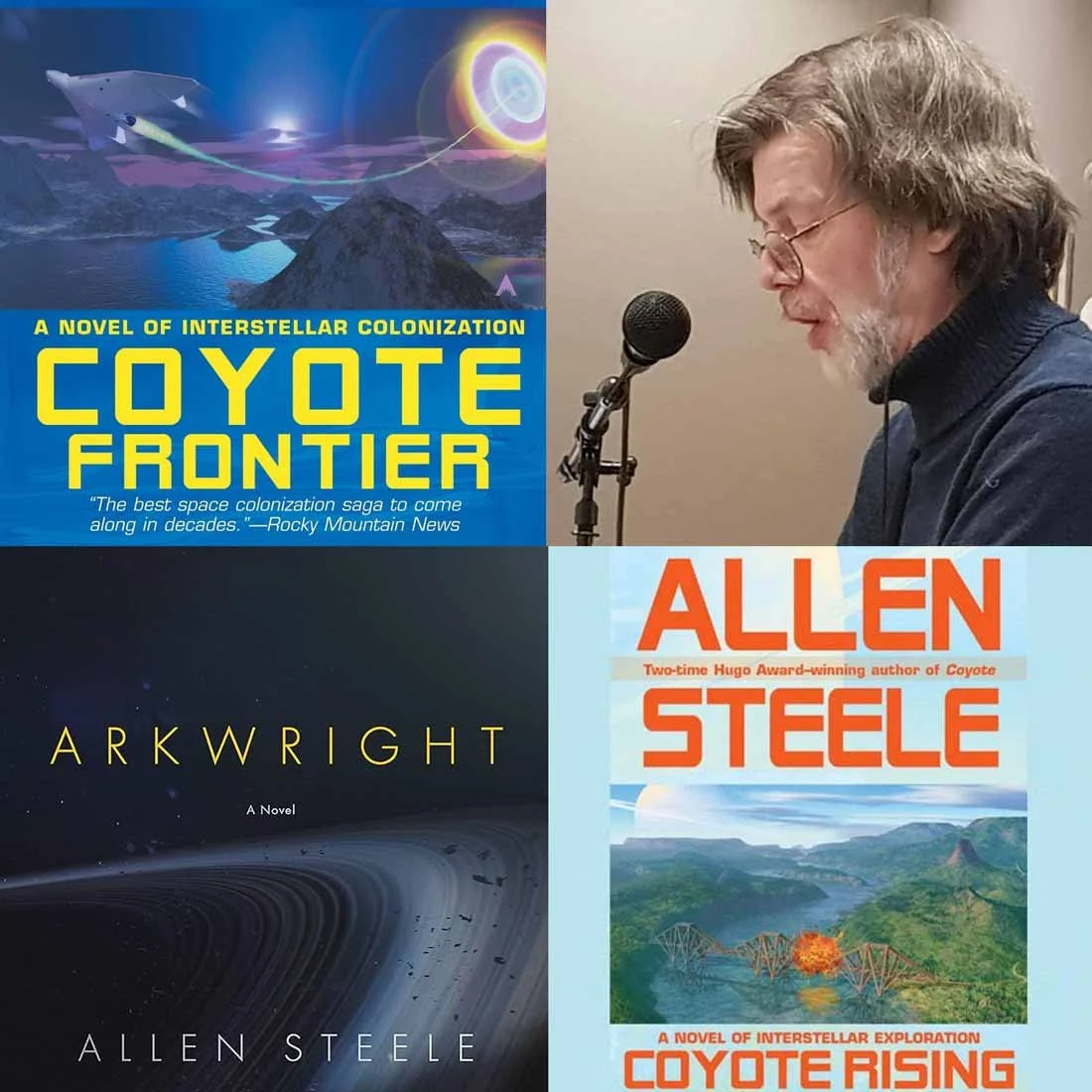
A Conversation with Author ALLEN STEELE
Winner of the Hugo · Asimov's Readers & Locus Awards
Served on the Board of Directors of Science Fiction & Fantasy Writers of America

I'm really very glad. I was happy to see that within my lifetime that the prospects of not just Mars, but in fact interstellar space is being taken seriously. I've been at two conferences where we were talking about building the first starship within this century. One of my later books, Arkwright, is about such a project. I saw that Elon Musk is building Starship One, I wish him all the best. And I envy anybody who goes.

I wish I were a younger person and in better health. Somebody asked me some time ago, would you go to Mars? And I said, “I can't do it now. I've got a bum pancreas, and I'm 65 years old, and I'm not exactly the prime prospect for doing this. If you asked me 40 years ago would I go, I would have said: in a heartbeat!” I would gladly leave behind almost everything. I don't think I'd be glad about leaving my wife and family behind, but I'd be glad to go live on another planet, perhaps for the rest of my life, just for the chance to explore a new world, to be one of the settlers in a new world. We've got to be careful about how we do this. And we've got to be careful, particularly about the rationale of the people who are doing this.

Technology, AI, Art & Culture

Technology, AI, Art & Culture

Artists, Philosophers, Economists & Scientists discuss the Future

How can we shape technology’s impact on society? How do social media algorithms influence our democratic processes and personal well-being? Can AI truly emulate human creativity? And how will its pursuit of perfection change the art we create?

PAY ATTENTION

PAY ATTENTION

A Call to Regulate the Attention Market and Prevent Algorithmic Emotional Governance

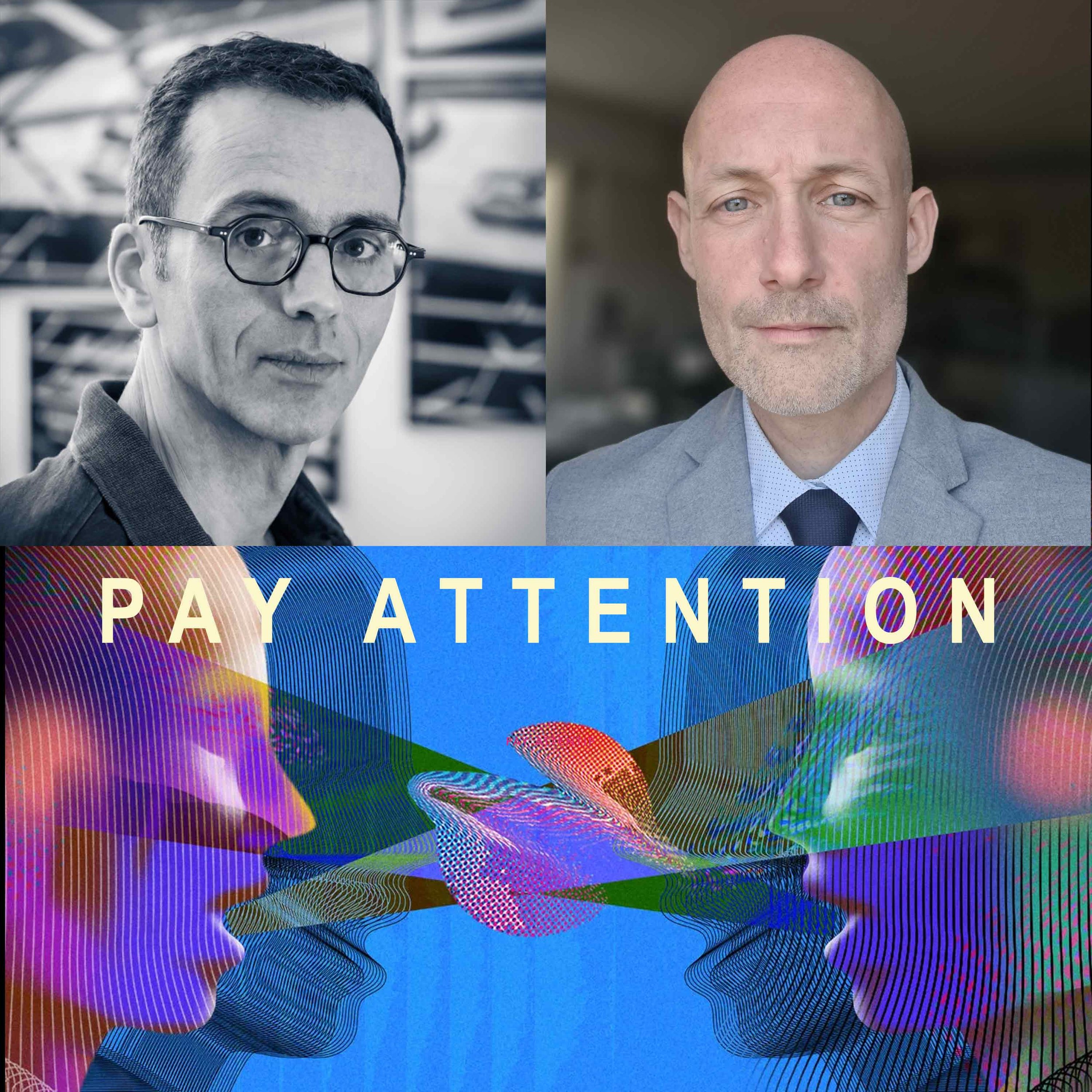
The fact that technologies are being used and combined to capture our attention is concerning. This is currently being done with no limitations and no regulations. That's the main problem. Attention is a very private resource. No one should be allowed to extract it from us by exploiting what we know about the human mind and how it functions, including its weaknesses. We wrote this paper as a call to regulate the attention market and prevent algorithmic emotional governance.

The Evolutionary Brain

The Evolutionary Brain

A Conversation with Neuroscientist DR. FERNANDO GARCÍA-MORENO

I think creative thinking is rooted in different parts of the brain. I believe that creativity is mostly a cultural expression of how our brains react to the world. It is our culture and our lives that make our brains creative in different manners. Even though you and I have very similar brains containing exactly the same cell types, we have evolved alongside each other for 300 million years. We share a lot of features, yet we express our ideas through creative thinking differently. In my opinion, this is cultural evolution—an expression of how our brains have evolved throughout our lives, how we learn, and what experiences we have over time: what we read, the movies we see, and the people we talk to.

We are working in the lab to understand this moment in development, which is called phylotypic. This is something that has been known for over a hundred years. When you see many vertebrate embryos at this early embryonic time point, all embryos look very, very similar. We are extrapolating these ideas to the brain. We have seen that at this time point, the phylotypic period, all brains of these species are very simple but very closely related. We share the same features with a fish or with a gecko or with any other mammalian species at this early time point. We have the same brain with the same genes active and the same cell types involved in it.

 The Art of Insubordination

The Art of Insubordination

How to Dissent and Defy Effectively
A Conversation with APA Award-winning Author TODD B. KASHDAN
Leading Authority on Well-being, Curiosity, Courage & Resilience

We're really talking about principled rebels. And when we talk about insubordination, we're talking about most of us live in these social hierarchies, and there's the idea, this started in the military and still goes on, where if someone at a lower rank questions or challenges a command or a norm that someone of a higher rank, that's considered an act of insubordination. And one of the main problems of that, I think anyone who's listening can acknowledge, is it depends on the quality of the idea of the person who's raising the question. I just realized there was this whole body of literature on minority influence that no one had put together into a book for the general public, and considering the racial reckoning that occurred during COVID-19, the extra attention to diversity, to disadvantaged groups, every moment of society, it just feels like it's more and more relevant of what I've been working on.

 Empire of AI: Dreams & Nightmares

 Empire of AI: Dreams & Nightmares

in Sam Altman's OPEN AI
A Conversation with KAREN HAO

My book is called Empire of AI because I'm trying to articulate this argument and illustrate that these companies operate exactly like empires of old. I highlight four features that essentially encapsulate the three things you read. However, I started talking about it in a different way after writing the book.

The four features are: they lay claim to resources that are not their own, which is the centralization of resources; they exploit an extraordinary amount of labor, both in the development of the technology and the fact that they're producing labor-automating technologies that then suppress workers' ability to bargain for better rights; they monopolize knowledge production, which comes when they centralize talent.