LINCOLN CENTER: Celebrating the Performing Arts, LGBTQ+ Stories & the Human Spirit w/ SHANTA THAKE

LINCOLN CENTER: Celebrating the Performing Arts, LGBTQ+ Stories & the Human Spirit w/ SHANTA THAKE

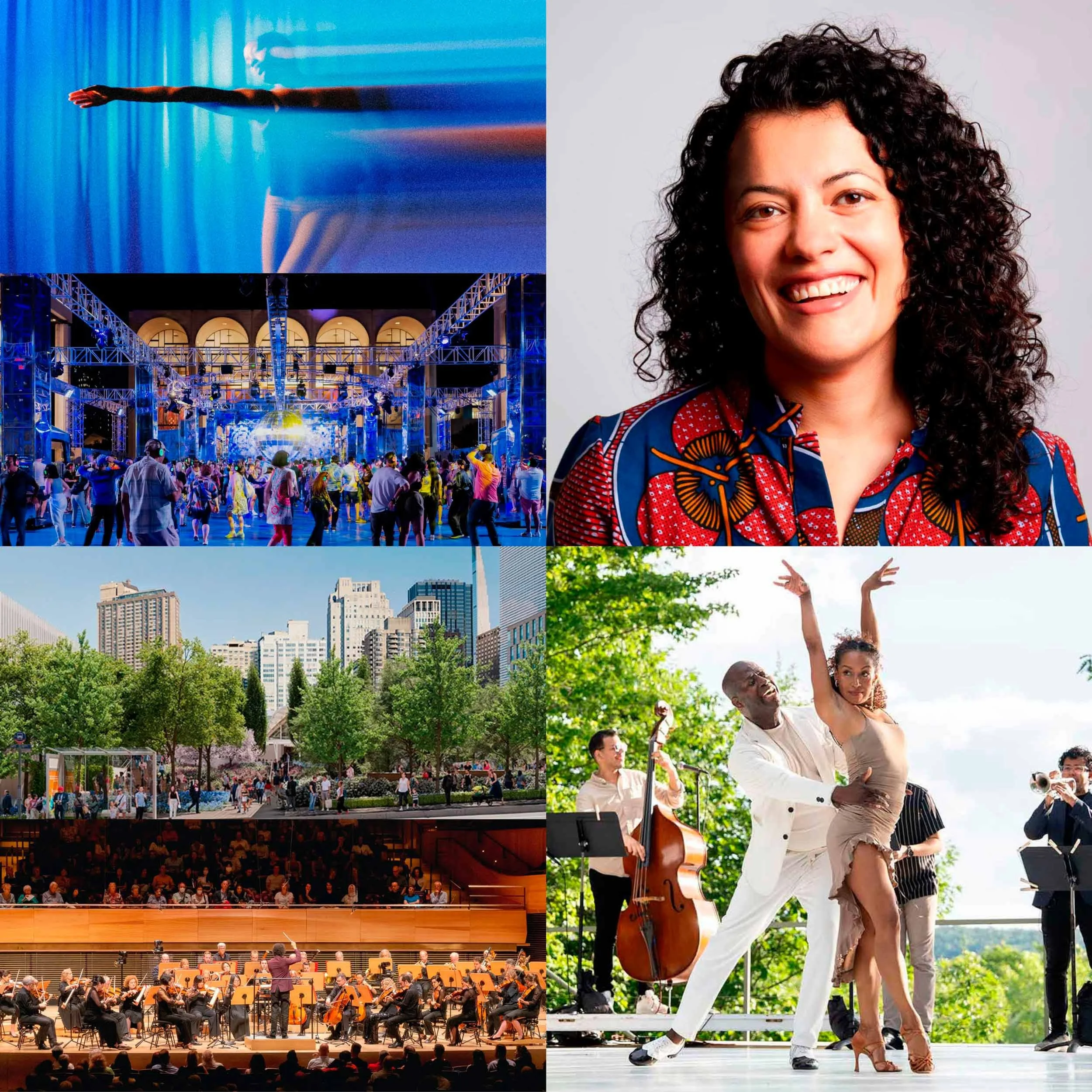
Lincoln Center is multiple stages. I think probably over three dozen stages across 16 acres. It is a vast canvas in and of itself. And then we have this beautiful plaza that leads to this beautiful campus, and that’s the visual I think that most people have when they think of Lincoln Center is this beautiful fountain in the center and these three gorgeous buildings.It’s New York’s biggest plaza, and it feels very vibrant and beautiful. In the summer, we really take that plaza and we transform it into a dance floor. So this idea of also interrupting what people’s notion of Lincoln Center is because it’s a space that is very aspirational, which is a great thing.

Building Bridges, Breaking Cycles: Personal Stories of Healing, Social Justice & Activism

Building Bridges, Breaking Cycles: Personal Stories of Healing, Social Justice & Activism

How do our personal relationships affect political movements and activism? What can we learn from Native American tradition to restore ecological balance? How can transforming capitalism help address global inequality and the environmental crisis? Dean Spade, Jericho Brown, Alexi Hawley, Tiokasin Ghosthorse, and Paul Shrivastava share their stories.

We Grow the World Together: Parenting Toward Abolition with MAYA SCHENWAR & KIM WILSON

We Grow the World Together: Parenting Toward Abolition with MAYA SCHENWAR & KIM WILSON

Parenting Toward Abolition
A Conversation with MAYA SCHENWAR & KIM WILSON about what inspired them to commission a wide range of amazing activists, artists, scholars, and organizers to write whatever came to their minds about the topic of parenting and abolition. The result is a rich mosaic of unique insights expressed in diverse forms, but each one touching deeply on the interdependency of living beings and the importance of caregiving in all its forms. It is this commitment that leads us always to imagine an abolitionist future for ourselves, and all children.

How to Build Relationships, Hook Up & Raise Hell Together: Conversation w/ DEAN SPADE - Highlights

How to Build Relationships, Hook Up & Raise Hell Together: Conversation w/ DEAN SPADE - Highlights

Conversation with DEAN SPADE about How to Build Relationships, Hook Up, and Raise Hell Together

This book has a lot of the wisdom of things that feminists and queers have learned in the community about sexuality, but the book is really for anybody who is political, even those just starting out and beginning to realize that there is something wrong with the systems they live under. I want to be in movements. Our movements are made of relationships. So, if you're just getting into our movements, or if you've been here for years and have been watching the ways we hurt each other and fall apart relationally, this book is about identifying these common patterns.

 LOVE in a F*cked-Up World: DEAN SPADE on How to Build Relationships, Hook Up & Raise Hell Together

LOVE in a F*cked-Up World: DEAN SPADE on How to Build Relationships, Hook Up & Raise Hell Together

This book has a lot of the wisdom of things that feminists and queers have learned in the community about sexuality, but the book is really for anybody who is political, even those just starting out and beginning to realize that there is something wrong with the systems they live under. I want to be in movements. Our movements are made of relationships. So, if you're just getting into our movements, or if you've been here for years and have been watching the ways we hurt each other and fall apart relationally, this book is about identifying these common patterns.

Making Impactful Films with Oscar & Emmy-winning Director SHARMEEN OBAID-CHINOY - Highlights

Making Impactful Films with Oscar & Emmy-winning Director SHARMEEN OBAID-CHINOY - Highlights

Oscar & Emmy-winning Director
Diane von Furstenberg: Woman in Charge · A Girl in the River
Forthcoming Star Wars film starring Daisy Ridley

As a filmmaker, I've always made films about extraordinary women whose lives are faced with extenuating circumstances who've had adversity thrown at them and who've risen to the occasion. And when I began to look at Diane's story, for me, Diane is a fashion designer, but she's so much more. Her central ethos is woman before fashion, and we felt it was very important to take that ethos and weave it into the spine of our film, and make it about the woman.

DIANE VON FURSTENBERG: Woman in Charge w/ Oscar-winning Director SHARMEEN OBAID-CHINOY

DIANE VON FURSTENBERG: Woman in Charge w/ Oscar-winning Director SHARMEEN OBAID-CHINOY

Oscar & Emmy-winning Director
Diane von Furstenberg: Woman in Charge · A Girl in the River
Forthcoming Star Wars film starring Daisy Ridley

As a filmmaker, I've always made films about extraordinary women whose lives are faced with extenuating circumstances who've had adversity thrown at them and who've risen to the occasion. And when I began to look at Diane's story, for me, Diane is a fashion designer, but she's so much more. Her central ethos is woman before fashion, and we felt it was very important to take that ethos and weave it into the spine of our film, and make it about the woman.

How Can Music Heal Trauma & Foster Identity? - Highlights - MATTIA MAURÉE

How Can Music Heal Trauma & Foster Identity? - Highlights - MATTIA MAURÉE

Interdisciplinary Composer ·  AuDHD Coach
Host of the AuDHD Flourishing Podcast

So for me, just removing a lot of the shame and then a lot of the energy that I was wasting trying to fit myself into a neurotypical process or framework or way of thinking or being. So, you know, some people call that unmasking, just kind of removing. I was wasting a lot of energy, basically trying to be someone else and function in a different way. And then just beating myself up internally for not being able to do that. And throughout my healing journey, as I really realized, Oh, that's actually what's happening. Like there's not actually anything wrong with me being able to...That's why it's called Love Your Brain. It's not just, you know, tolerate your brain. Or, fine, you can work with this brain that you have. It's like, no, I genuinely love the weird experiences that my brain can give me and the incredibly rich, deep experience I have of the world. Like I experience nature so deeply and so intensely. I have really strong connections with animals. I have really great intuition, which I think is just from picking up all this sensory data and putting it together. All these experiences that I get to have, but I don't get to have those experiences if I'm just trying to make myself be something else, which I think is most people who are late diagnosed, I feel like that's their experience. It's just like I've been trying to be someone else for so long. It's exhausting. And then you don't have the energy then to be creative, the carving out the time, making the time to actually create.
Exploring the Sensory World of Autism, ADHD & Non-Binary Artists with MATTIA MAURÉE

Exploring the Sensory World of Autism, ADHD & Non-Binary Artists with MATTIA MAURÉE

Interdisciplinary Composer ·  AuDHD Coach
Host of the AuDHD Flourishing Podcast

So for me, just removing a lot of the shame and then a lot of the energy that I was wasting trying to fit myself into a neurotypical process or framework or way of thinking or being. So, you know, some people call that unmasking, just kind of removing. I was wasting a lot of energy, basically trying to be someone else and function in a different way. And then just beating myself up internally for not being able to do that. And throughout my healing journey, as I really realized, Oh, that's actually what's happening. Like there's not actually anything wrong with me being able to...That's why it's called Love Your Brain. It's not just, you know, tolerate your brain. Or, fine, you can work with this brain that you have. It's like, no, I genuinely love the weird experiences that my brain can give me and the incredibly rich, deep experience I have of the world. Like I experience nature so deeply and so intensely. I have really strong connections with animals. I have really great intuition, which I think is just from picking up all this sensory data and putting it together. All these experiences that I get to have, but I don't get to have those experiences if I'm just trying to make myself be something else, which I think is most people who are late diagnosed, I feel like that's their experience. It's just like I've been trying to be someone else for so long. It's exhausting. And then you don't have the energy then to be creative, the carving out the time, making the time to actually create.

Creating Safe Spaces: ITA O’BRIEN & the Art of Intimacy Coordination - Highlights

Creating Safe Spaces: ITA O’BRIEN & the Art of Intimacy Coordination - Highlights

Intimacy Coordinator · Founder of Intimacy on Set
Author of Intimacy On Set Guidelines

For years, people spoke about how awkward or embarrassing it was to perform the intimate content. And what they're speaking about is feeling horrible. If something's awkward, that squirm, that ring in the body, it feels embarrassing. That's actually an emotion that is not professional. That is not allowing the actor to stay feeling listened to, heard, empowered, autonomous. And so that they can just get on without any of those concerns and do their job to their best ability. And that's the awareness that we brought. So, we're saying, it is not suitable in our workplace for anybody to feel harassed or abused. 

Intimacy Coordinator ITA O’BRIEN on It's a Sin, Sex Education & Creating Safe Spaces

Intimacy Coordinator ITA O’BRIEN on It's a Sin, Sex Education & Creating Safe Spaces

Intimacy Coordinator · Founder of Intimacy on Set
Author of Intimacy On Set Guidelines

For years, people spoke about how awkward or embarrassing it was to perform the intimate content. And what they're speaking about is feeling horrible. If something's awkward, that squirm, that ring in the body, it feels embarrassing. That's actually an emotion that is not professional. That is not allowing the actor to stay feeling listened to, heard, empowered, autonomous. And so that they can just get on without any of those concerns and do their job to their best ability. And that's the awareness that we brought. So, we're saying, it is not suitable in our workplace for anybody to feel harassed or abused. 

Championing LGBTQ Stories Amidst the AIDS Crisis and Breaking TV Barriers - Highlights - LISA EDELSTEIN

Championing LGBTQ Stories Amidst the AIDS Crisis and Breaking TV Barriers - Highlights - LISA EDELSTEIN

Actress · Artist · Director · Producer · Writer
House M.D. · Girlfriends’ Guide to Divorce · Little Bird

I have always thrown myself into everything, and that includes terrible things, because I want to have the whole experience. Even if I know it's going to hurt for better or for worse, that has been how I've lived my life. And so it's given me a lot of information and allowed me to play a lot of different roles and understand a lot of different points of view. I think part of the beauty of being in a long-running television show is that, in season one, you're playing the role they wrote. By season two, they're writing the person you're playing. You start to build your voice, and they start to merge, and so by the time you get to season three, you're much more like full human beings having this dialogue.

LISA EDELSTEIN - From Acting to Directing, Writing & Visual Art

LISA EDELSTEIN - From Acting to Directing, Writing & Visual Art

Actress · Artist · Director · Producer · Writer
House M.D. · Girlfriends’ Guide to Divorce · Little Bird

I have always thrown myself into everything, and that includes terrible things, because I want to have the whole experience. Even if I know it's going to hurt for better or for worse, that has been how I've lived my life. And so it's given me a lot of information and allowed me to play a lot of different roles and understand a lot of different points of view. I think part of the beauty of being in a long-running television show is that, in season one, you're playing the role they wrote. By season two, they're writing the person you're playing. You start to build your voice, and they start to merge, and so by the time you get to season three, you're much more like full human beings having this dialogue.

Spirituality & Selfhood: TARA ISABELLA BURTON - Author of The World Cannot Give, Here in Avalon, & Strange Rites

Spirituality & Selfhood: TARA ISABELLA BURTON - Author of The World Cannot Give, Here in Avalon, & Strange Rites

Author of Here in Avalon · Social Creature
Strange Rites: New Religions for a Godless World 
Self-Made: Curating Our Image from Da Vinci to the Kardashians
So this idea that we can present ourselves as works of art, that we can create ourselves has always had a particular sort of aristocratic coding, historically associated with monarchs, who create their public image and their public persona, including through fashion. Today, if we don't self-promote, self-create, and self-brand, will we find the right partner? Get into the right college? Even secure the best job?

Forty years of Bringing LGBTQ+ Stories to the Screen - Highlights - ALAN POUL

Forty years of Bringing LGBTQ+ Stories to the Screen - Highlights - ALAN POUL

Emmy & Golden Globe-winning Executive Producer · Director
Tokyo Vice · Six Feet Under · Tales of the City · My So-Called Life

I think all great work comes from the need to say something. And so this is the challenge for young artists and also maybe one of the essential elements that can never be completely taken over by AI because there has to be something you feel has not been said, and you feel an urgent need to say it. In fact, you can't not say it. That need to express is what gives birth to unique expression, which is where all of our visual, performance, and creative arts come from. 

ALAN POUL - Emmy & Golden Globe-winning Producer/Director - Tokyo Vice - Six Feet Under - Tales of the City - My So-Called Life

ALAN POUL - Emmy & Golden Globe-winning Producer/Director - Tokyo Vice - Six Feet Under - Tales of the City - My So-Called Life

Emmy & Golden Globe-winning Executive Producer · Director
Tokyo Vice · Six Feet Under · Tales of the City · My So-Called Life

I think all great work comes from the need to say something. And so this is the challenge for young artists and also maybe one of the essential elements that can never be completely taken over by AI because there has to be something you feel has not been said, and you feel an urgent need to say it. In fact, you can't not say it. That need to express is what gives birth to unique expression, which is where all of our visual, performance, and creative arts come from. 

Highlights - DEAN SPADE - Professor at SeattleU’s School of Law - Author of Mutual Aid, Building Solidarity During This Crisis (and the Next)

Highlights - DEAN SPADE - Professor at SeattleU’s School of Law - Author of Mutual Aid, Building Solidarity During This Crisis (and the Next)

Organizer · Speaker · Professor at Seattle University's School of Law
Author of Normal Life: Administrative Violence, Critical Trans Politics, and the Limits of Law
Mutual Aid, Building Solidarity During This Crisis (and the Next)

I want to see movements that embolden our tactics. Like people blocking oil pipelines all over the world. That's what's required now. Asking endlessly from the dominant system to treat us fairly doesn't work. And this frustrating kind of endless appeal and hoping maybe we can get it to work this time doesn't work. And the clock is ticking, especially on ecological collapse. We need to save each other's lives and act.

DEAN SPADE - Author of Normal Life: Administrative Violence, Critical Trans Politics, and the Limits of Law

DEAN SPADE - Author of Normal Life: Administrative Violence, Critical Trans Politics, and the Limits of Law

Organizer · Speaker · Professor at Seattle University's School of Law
Author of Normal Life: Administrative Violence, Critical Trans Politics, and the Limits of Law
Mutual Aid, Building Solidarity During This Crisis (and the Next)

I want to see movements that embolden our tactics. Like people blocking oil pipelines all over the world. That's what's required now. Asking endlessly from the dominant system to treat us fairly doesn't work. And this frustrating kind of endless appeal and hoping maybe we can get it to work this time doesn't work. And the clock is ticking, especially on ecological collapse. We need to save each other's lives and act.

Speaking Out of Place: SARA AHMED discusses The Feminist Killjoy Handbook

Speaking Out of Place: SARA AHMED discusses The Feminist Killjoy Handbook

Author of The Feminist Killjoy Handbook
Independent Queer Feminist Scholar

You're more likely to progress if you say yes. It's a reproductive mechanism, which is why feminist culture knows so much about everything. We can explain how it is that institutions keep being reproduced in the same way. So what then do you do? Where do you go if your no has nowhere to go? And I think when you say no to the world, and you're pushed out by it, you still find your people. And that there's the world-making is in the people who find in the refusal of the institution a common ground.

Highlights - SHEHAN KARUNATILAKA - Booker Prize-winning Author of The Seven Moons of Maali Almeida

Highlights - SHEHAN KARUNATILAKA - Booker Prize-winning Author of The Seven Moons of Maali Almeida

Booker Prize-winning Author
The Seven Moons of Maali Almeida
Chinaman: The Legend of Pradeep Mathew

So this was the decision to write in the second person. A lot of people ask me: why? There are not many examples of this technique. The reason I opted for that is I was trying to figure out interviewing a ghost. And one of the challenges was: what does a disembodied voice sound like? The narrator's body has been chopped up and chucked in a lake. So, I figured that if anything survives the death of your body, it's perhaps the voice in your head. The voice in my head is in the second person. I don't know about your head or anyone else's head, but in mine, it's the second person.