VLAD SOKHIN

VLAD SOKHIN

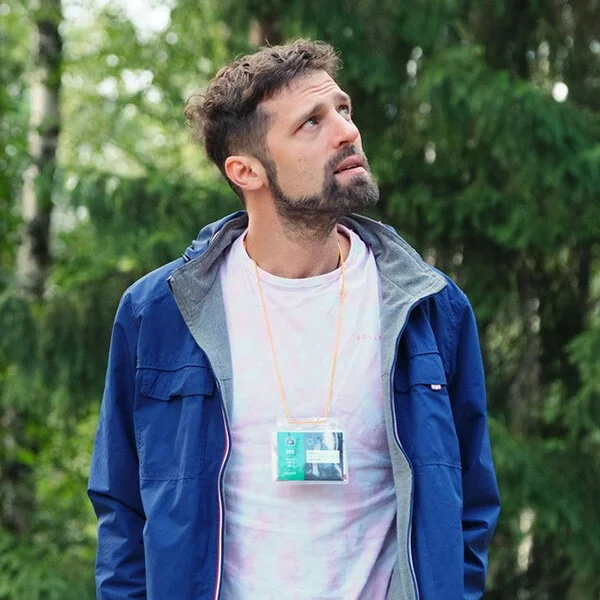
Vlad Sokhin is a Russia-born documentary photographer, videographer, and multimedia producer covering sociocultural, environmental, and human rights issues worldwide. His projects are supported by various UN agencies and international NGOs. Vlad’s work has been featured in over 40 publications, including National Geographic, NPR, Newsweek Japan, BBC, and The Guardian. In 2014, he was named Best Photographer in Russia, and in 2017, he was awarded the Visa d’or Franceinfo: Award for the Best Digital News Story for his “Warm Waters, Kamchatka” series. Vlad is a citizen of the world. He is currently based in the Asia-Pacfic region and continues to work on photography and video projects there, in addition to Africa, Europe, Russia, and the Middle East.

VLAD SOKHIN

It's not about money, as my teacher said, "If you want to be rich, go to advertising." It's about lifestyle. It's what you want to achieve, what you want to share with people. And in terms of topics I choose...somehow these topics choose me. I just happen to be there. For example, I moved to Australia, and then I was exploring the neighbouring countries, back in 2011. That's where I found my first big projects that I started working on. And one of them was gender-based violence in Papua New Guinea. So of course, I travel far away, but mostly it's something that is in my neighborhood, around me. And that's where I also encountered later on stories that are related to climate change. I was sent in 2013 to cover deforestation and illegal logging in Papua New Guinea. Australian online media sent me there, The Global Mail. I did one story, I did another for them. And then I thought, oh, it'd be interesting to keep telling these stories and connect the whole region together. And that's how Warm Waters was born.

In Alaska, they're moving villages. There's the village of Newtok. They're relocating the entire village to a new location where they hope that they won't be affected by permafrost thawing and coastal erosion. Those new houses they built, they already built them in such a way that they can be slid somewhere else. So, they have this in mind that you can put them on the slides and then move them somewhere else, easily. The village of Shishmaref in Alaska is where just a few years ago, they voted for the entire relocation of the village, and before they spent millions of dollars building big sea walls, hoping that this would protect them. But it doesn't work. In places like Tuvalu, for example, people also try to immigrate, try to move. It's not only because of climate change, it's also because of overpopulation. It's because of lack of jobs, many things. But climate change is also becoming one of those important factors. And yeah, they move to New Zealand. Tuvaluans try to move to Niue, another Pacific island that is more protected. It's a big volcanic elevated rock in the middle of the ocean, and they face the other problem of depopulation. There, people have New Zealand citizenship, so they move to New Zealand and nobody wants to stay there. So, these are interesting shifts and migrations we can see in the Pacific. But many of them now are associated with climate change, especially in tiny atolls, because the people there are most affected.

I'm sure there are some people who deny climate change, they have different reasons. And now I think, of course, every Pacific Islander who lives on this front line of climate change, they wouldn't say it doesn't exist. They see it every day. But also they have the understanding that some of the processes are also natural, or man-made, which makes effects of climate change more visible. You know, they feel more. But it's started by men. In Kiribati, there was an island in the middle of the lagoon. And then they started creating causeways, building roads between little islets, and the water flow changed and that island disappeared. And then people start with the same, "climate change, climate change, sea level rise," which it is not. So it's good to understand: this is what we do; this is what climate change does. Right? And how humans are involved in that.

THE CREATIVE PROCESS

And I'm curious also about your childhood, your upbringing, what drew you to your journey towards photography and why you decided that that would be your lens to tell these stories, as opposed to some other way of telling stories or engaging politically?

SOKHIN

Well, first of all, I'm trying to stay away from politics. I'm speaking generally without saying names. I'm trying to stay as far from politics as possible.This is not my thing. Photography is a natural thing. I'm a visual person. I like to see, I connect through it. But I'm not one of those photographers who always walk with the cameras, as well. If I work, I take my camera. If I don't, I like to enjoy life and take photos with my eyes. They inspire me. But, I do it every day. So for me, it was a natural choice. I just chose this path. Because, I do write as well. And for me, writing is also a way, especially if I accompany my story, but it's not as expressive as visual storytelling.

THE CREATIVE PROCESS

And in these societies there are, you know, they're vastly different, some of them, but from things that we understand, whether it's rituals or superstitions or being less inclusive in terms of gender preference. There's a lot of different customs and things that you're navigating, but what do you find are some universal truths that have ignited your experiences?

SOKHIN

The universal truth is probably: there is good and bad. That's the universal truth. Believing in witchcraft, for example. In some societies they do believe in it, in some they don't believe. But, in some societies you are a Democrat, and you're a Republican. And for those people, it's witchcraft as well. So it depends on the point of view. Good and bad is a division, and then people are divided. They believe that there is a duality that exists, that this is "me" and this is "other." In fact, there's no other. That's when I talk about changing the way you think, about climate change, about yourself. There is no other. It's not the "other" country, or these "primitive people," as some call them. No, it's us, as well; it's like your leg, or your finger. But humanity is one organism. If we understand that, there will be way less problems in the world. Some people are still in this stage of development. But, would you blame, let's say, your child for trying to walk and walking a little bit wobbly? No, just give it time. Papua New Guinea was a very remote country, isolated from the rest of the world. They didn't have universities. And then recently, suddenly they were introduced to the Western way of life. It's not better or worse, the way of life that they lived before. It's just different. So, when we introduce it, and we introduce it very fast, people may not be ready for that. That's it. We just need to understand that.

And I'm not saying that they are less developed, it is not that. It's like: there is yellow color; there's blue. Why is blue not yellow? Because it's blue. That's it. And that's what was with them. They just live differently. And now, there's a lot of people trying to reconnect. There's the thinking, "Ah, what do the elders say?" In the United States of America, or in Australia, every new big thing– they now call their native people, and they ask them, "Why don't you do a ceremony to call the spirits?" Now, it's changing. Now, they tap into this truth, to this, let's say, ancient knowledge, that probably people would forget. Now the governments invite these people. I've been to many festivals in Sydney that start with inviting Aboriginal people to do a water blessing ceremony. So, it becomes part of the shifting of awareness: your way of life is different from ours, it's not worse or better, it's just different. So, let's also include it in the way we live and share and exchange.

This interview was conducted by Mia Funk with the participation of collaborating universities and students. Associate Interviews Producer on this podcast was Khrystyna Tsunyak. Digital Media Coordinator is Yu Young Lee. “Winter Time” was composed by Nikolas Anadolis and performed by the Athenian Trio.

Mia Funk is an artist, interviewer and founder of The Creative Process.


JACK THORNE

JACK THORNE

Jack Thorne is an internationally acclaimed playwright and BAFTA award-winning screenwriter. His adaptation of Philip Pullman’s His Dark Materials is currently airing on HBO and the BBC, and his new series The Eddy was recently released for Netflix. Thorne’s screenwriting career began on the Channel 4 series Shameless and BBC series Skins. Later this year, his feature adaptation of The Secret Garden will be released and feature films Enola Holmes and Swimmers are on the way. Thorne’s films include The Aeronauts, starring Eddie Redmayne and Felicity Jones, Wonder, starring Julia Roberts and A Long Way Down starring Toni Collette. As a playwright, Jack’s credits include the Tony and Olivier award-winning West End and Broadway hit Harry Potter and the Cursed Child.

Photo by Gage Skidmore

CHARLES BAXTER

CHARLES BAXTER

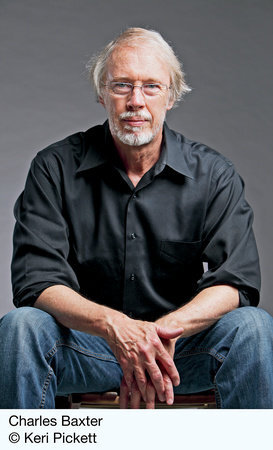
Charles Baxter is the author of the novels The Feast of Love (nominated for the National Book Award), First Light, Saul and Patsy, Shadow Play, The Soul Thief, and The Sun Collective, and the story collections Believers, Gryphon, Harmony of the World, A Relative Stranger, There’s Something I Want You to Do, and Through the Safety Net. His stories have been included in The Best American Short Stories. Baxter lives in Minneapolis and has taught at the University of Minnesota and in the MFA Program for Writers at Warren Wilson College.

MORGAN NEVILLE

MORGAN NEVILLE

Documentary Filmmaker

I think it's interesting because I feel like in scripted films people are trying to infuse a spontaneity and a reality and a being in the moment into something that's very artificial. And I feel a lot of what we do as documentarians is try and impose a structure or a form on something that is utterly real and alive and in the moment and uncategorizable in many ways. So, we're kind of the opposite, coming from opposite ends of the same goal, which is to kind of create something that is or feels authentic to a certain truth, an emotional truth, or a literal truth.

APRIL GORNIK

APRIL GORNIK

Artist and activist for people, places, and animals

I was in a group called the Women's Action Coalition in the early 90's. The fact that we couldn't get the ERA passed is insane. Although, now as I’m seeing it reintroduced, it should be a true equal rights amendment for everybody. Not just focused on women being equal to men, but a real update to the constitution. We still have things that we need to rewrite.

ALBERT SERRA

ALBERT SERRA

Albert Serra has been called one of the most radical and singular filmmakers working today. Born in Banyoles, Spain, he studied literature and art history at Barcelona University. In 2006 he wrote, directed and produced his first feature film, Honor of the Knights, followed by Birdsong; both were selected for the Directors’ Fortnight at Cannes. In 2010 he made Els noms de Crist before directing, a year later, El Senyor ha fet en mi meravelles for the exhibition Correspondencias at Barcelona. He is best known for his films Story of My Death and The Death of Louis XIV starring Jean-Pierre Léaud. His most recent feature film Liberté explores libertinism at the time of the French Revolution.


Mia Funk is an artist, interviewer and founder of The Creative Process.

JAMES McDANIEL

JAMES McDANIEL

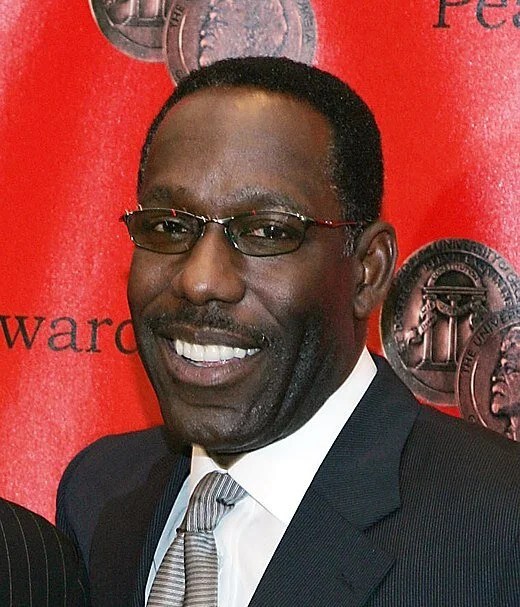
James McDaniel is an actor and director best known for his award winning performances on NYPD Blue, Detroit 187, and Edge of America. When he’s not acting in front of the camera you can find James on and off-Broadway starring in works like Before it Hits Home, August Wilson’s Joe Turners Come and Gone, and most recently A Soldier’s Play. James also created the role Paul, in Six Degrees of Separation, setting the stage for future Black actors like Will Smith, who reprised the role in 1993. His television credits include Orange is the New Black, Madame Secretary, and most recently, Hysteria, streaming on Amazon Prime. Other film credits include The Battle for Bunker Hill, Steel City, and Malcolm X, amongst many others.

This interview was conducted by Mia Funk with the participation of collaborating universities and students. Associate Interviews Producer on this podcast was Ua Hayes. Digital Media Coordinator is Yu Young Lee. “Winter Time” was composed by Nikolas Anadolis and performed by the Athenian Trio.

HANS-ULRICH OBRIST

HANS-ULRICH OBRIST

Curator · Writer · Interviewer & Artistic Director of Serpentine Gallery

I always thought that curating has to do with junction making. I think when I wake up in the morning, I always think how can I bring people together? We haven't met each other yet. And I think my activity has always to do with junction making. When I do exhibitions, I make junctions between artworks. I make junctions between artists. I make junctions between art and different disciplines because I think we live in a society where there are a lot of silos. There are different very specialized worlds. And I've always seen it as my role to make connections between these different worlds. If we want to address the big questions or challenges of the 21st century–if it's extinction and ecology or if it's inequality or if it's the future of technology–I think it's very important that we go beyond the fear of pooling knowledge. We go beyond these silos of knowledge and bring the different disciplines together.

HOWARD RODMAN

HOWARD RODMAN

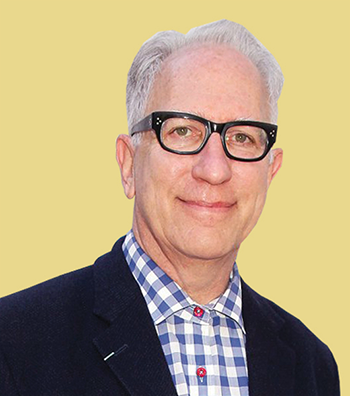
Howard A. Rodman is a screenwriter, author and educator. His novels include The Great Eastern and Destiny Express. As a screenwriter, Rodman wrote Savage Grace, with Julianne Moore and Eddie Redmayne, nominated for Best Screenplay at the 2009 Spirit Awards, and AUGUST, starring Josh Hartnett and David Bowie. He also wrote Joe Gould’s Secret, the opening night film of the Sundance Film Festival, based on the memoir by iconic New Yorker writer Joseph Mitchell. He is the past president of the Writers Guild of America West; professor of screenwriting at USC's School of Cinematic Arts; a member of the National Film Preservation Board; and an artistic director of the Sundance Screenwriting Labs. 

This interview was conducted by Mia Funk with the participation of collaborating universities and students. Associate Interviews Producer on this podcast was Bret Young. Digital Media Coordinator is Yu Young Lee. “Winter Time” was composed by Nikolas Anadolis and performed by the Athenian Trio.

JOE MANTEGNA

JOE MANTEGNA

Actor and Director

When I read Mamet, to me, it was almost like–Yeah! I get it. This is a language I understand. It felt very comfortable to me. And I know he has told me that he has written characters with my voice in his mind as he wrote them, and so, again how lucky for me that that's the case. I feel very lucky that it's worked out that way that he's the writer that I ended up hooking up with.

ROBERT NATHAN

ROBERT NATHAN

Robert Nathan is an award-winning television producer, screenwriter, journalist, and novelist. Best known for his work on the Law & Order television franchise and his novel The White Tiger. He has worked in politics, broadcast and print journalism, film, and television. Nathan joined the original writing staff of Law & Order, working on three series in the franchise. Nathan’s script for the episode “Manhood,” co-written with Walon Green, holds the franchise’s only Emmy nomination for Outstanding Writing for a Drama Series. He was also on the original staff of the TV series ER and received a Peabody Award. Nathan has received four Emmy nominations, an Edgar Award nomination, the GLAAD Media Award, the Silver Gavel Award, the Shine Award, and a Humanitas Award nomination.

This interview was conducted by Mia Funk with the participation of collaborating universities and students. Associate Interviews Producer on this podcast was Sophie Mackin. Digital Media Coordinator is Yu Young Lee. “Winter Time” was composed by Nikolas Anadolis and performed by the Athenian Trio.

SALVADOR PEREZ

SALVADOR PEREZ

President · Costume Designers Guild
The Mindy Project, Pitch Perfect trilogy, Four Weddings and a Funeral, Veronica Mars

Whether you're telling a story for the people at work or you're telling a story for your character on camera, I think that we tell a story every day by what we wear.

DAVID HOLLANDER

DAVID HOLLANDER

Showrunner · Writer · Director

They are very different skill sets and very different ways of approaching storytelling. Writing is very private. I find writing to be very difficult. I have an idea. I have a feeling, and then I write into it. That part of the process is the most painful and the most demanding. Directing is easier. It’s a very different skill set. It’s applying a story to the technique of how you film it, how it’s going to work. That part is so simple. The writing is brutally hard. There’s an architecture to every season that you write in television. I have to see the whole story. This big twelve-hour story. There’s a lot of math in that. There’s a lot of Where am I going? and How is it going to feel? Because at the end of the day, all I’m doing is trying to make people feel something.

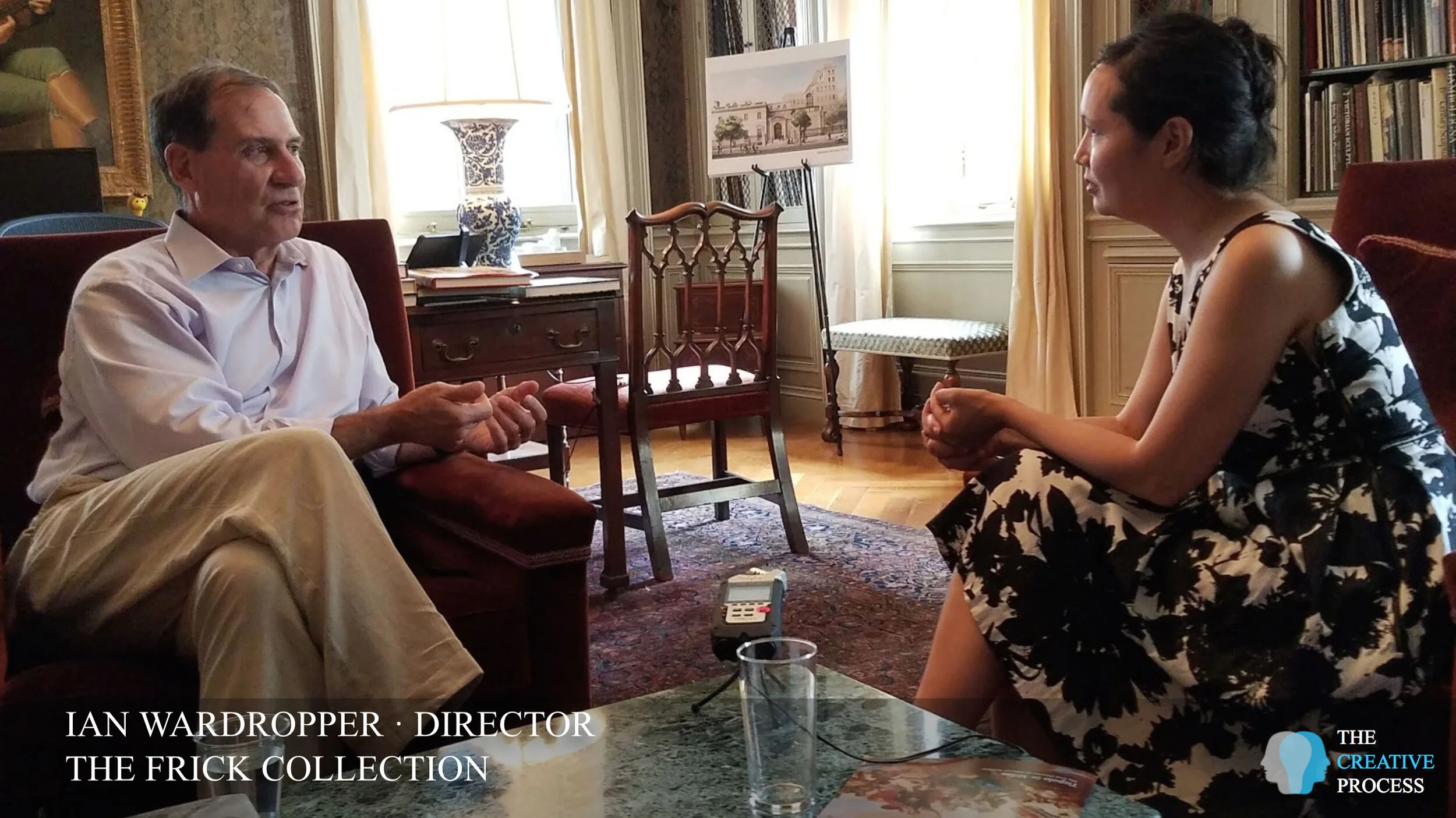
IAN WARDROPPER

IAN WARDROPPER

Anna-Maria and Stephen Kellen Director · The Frick Collection

I firmly believe that the arts should be a part of everybody's education. It's not just learning the history of art, but it's about opening up creativity as a means that can be useful to somebody throughout one's life.

NEIL GAIMAN

NEIL GAIMAN

Interview Highlights

I've always, pretty much from the beginning, I've always wanted to write as if I were paying by the word to be published. So that's always gone in there. Whether it's film or television, whether it's comics, whether it's novels, and especially short stories. I want everything to count. I want every word to count.

SIRI HUSTVEDT

SIRI HUSTVEDT

Novelist and Essayist

The reason I think you should read in these other disciplines is because it will help you in your own work. Now I really mean that. I think what has happened with the fragmentation of disciplines is that when problems arise. ...the people working in the discipline are unable to see avenues out of the problem that they would easily see if they had worked through problems in other disciplines.

YIYUN LI 李翊雲

YIYUN LI 李翊雲

The artificial beginning is interesting to me. There is a clear-cut: old life, that's old country, and here's there's new life, new country. It is an advantage. You are looking at life through an old pair of eyes and a new pair of eyes. And there's always that ambivalence––Where do you belong? And how do you belong? And I do think these are advantages of immigrant writers or writers with two languages or who have two worlds.

GEOFF DYER

GEOFF DYER

In a way, I sometimes think that it’s when the divergences from what really happened are quite small that it calls for the services of a very scrupulous and clever biographer. Certainly the stuff you get about me from my books it’s not–how can I put it?–it’s not reliable as evidence in any court of law. I’m very conscious that I’m not under oath when I’m writing.