AI & THE FUTURE OF HUMANITY

NACHO DE GREGORIO · Author of TheWhiteBox
I'm a believer in this technology. I believe that the cheaper it is, the more people will use it. So, even if we assume that models will get smaller for the same level of intelligence, the demand to actually have more compute is going to be enormous. And the reason why you want to have the compute close to you is not only in terms of performance. As a national security threat, I'm not saying this will happen, but it could happen that China or US or whoever decides to stop exporting compute to the rest of the world. If that happens today, Europe has zero AI at the scale of data the data center.
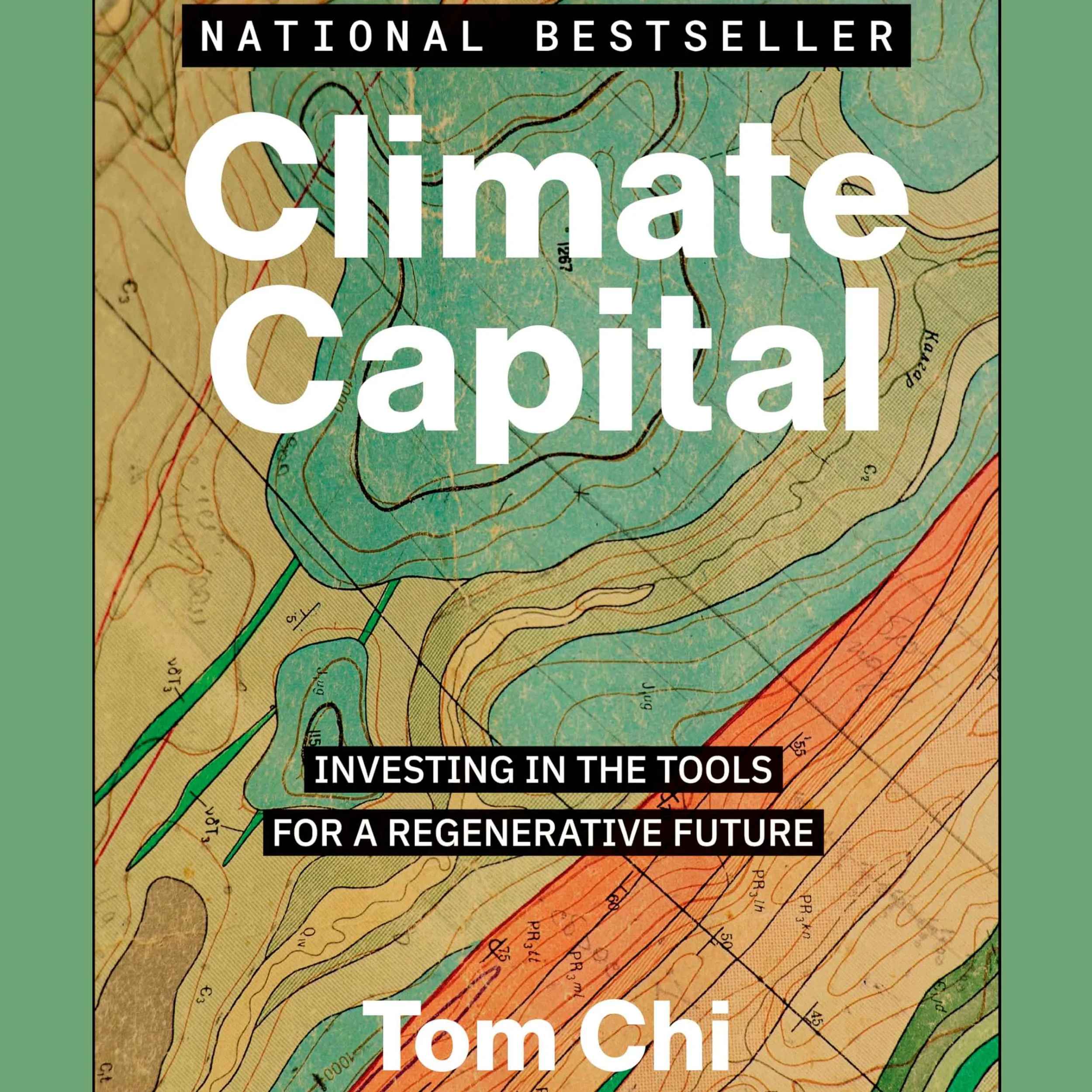
In the book I spend a bunch of time basically teaching skills and frameworks of thinking. Not to indoctrinate, it's not a framework like an ideology where you need to believe exactly these things. This is a lot more about how does one use their minds effectively to solve problems that have been solved before. I work on things that have to do with investment and climate and the future of the economy and automation. The main things I'm trying to teach in the book are skills around creativity, critical thinking, community compassion and frameworks around how to go and use that on problems that should be relatively portable to a bunch of problems that are meaningful to you. The way that education needs to change is that people need to actively be working on things that truly matter to them so that over time they end up being able to go make that difference.
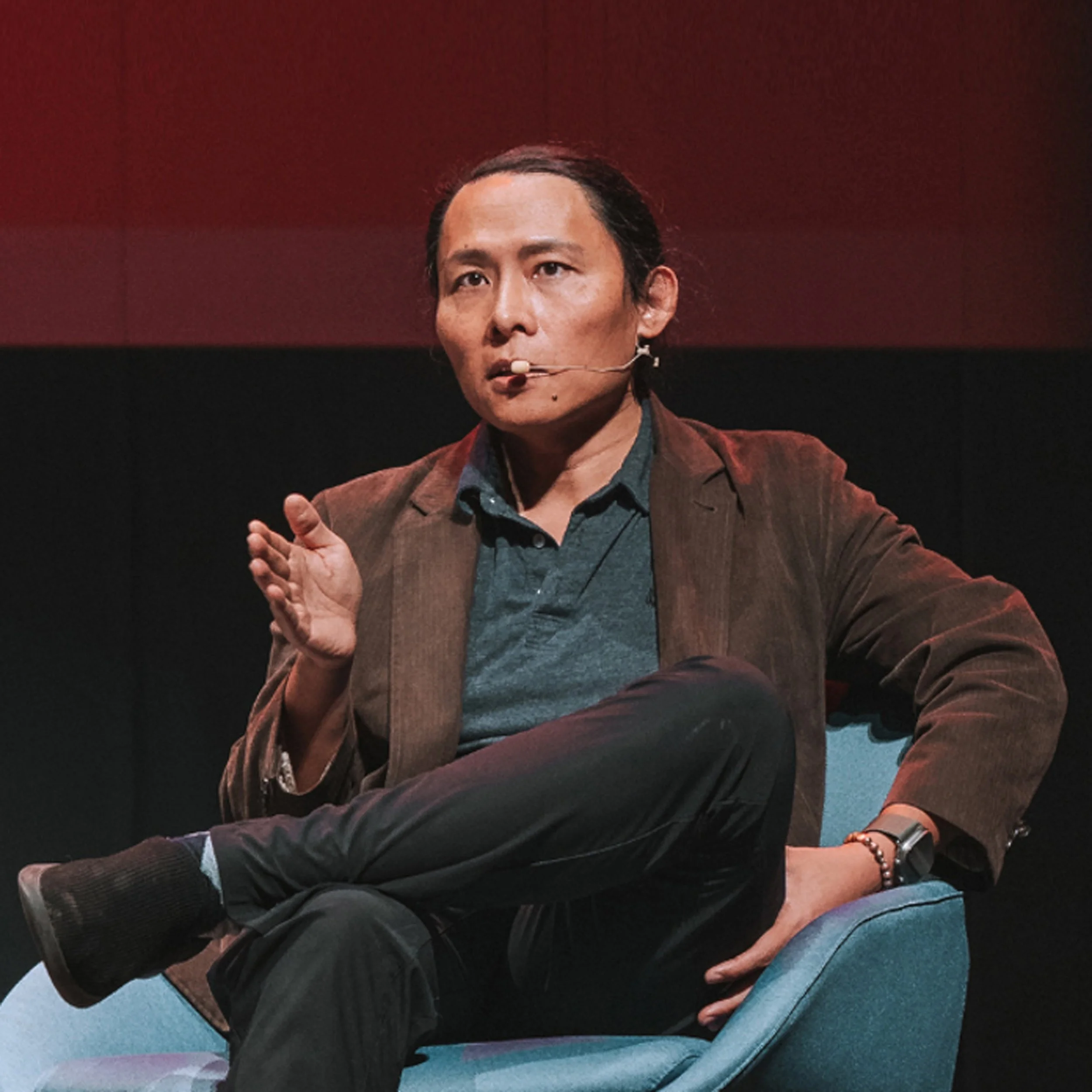
In the book I spend a bunch of time basically teaching skills and frameworks of thinking. Not to indoctrinate, it's not a framework like an ideology where you need to believe exactly these things. This is a lot more about how does one use their minds effectively to solve problems that have been solved before. I work on things that have to do with investment and climate and the future of the economy and automation. The main things I'm trying to teach in the book are skills around creativity, critical thinking, community compassion and frameworks around how to go and use that on problems that should be relatively portable to a bunch of problems that are meaningful to you. The way that education needs to change is that people need to actively be working on things that truly matter to them so that over time they end up being able to go make that difference.
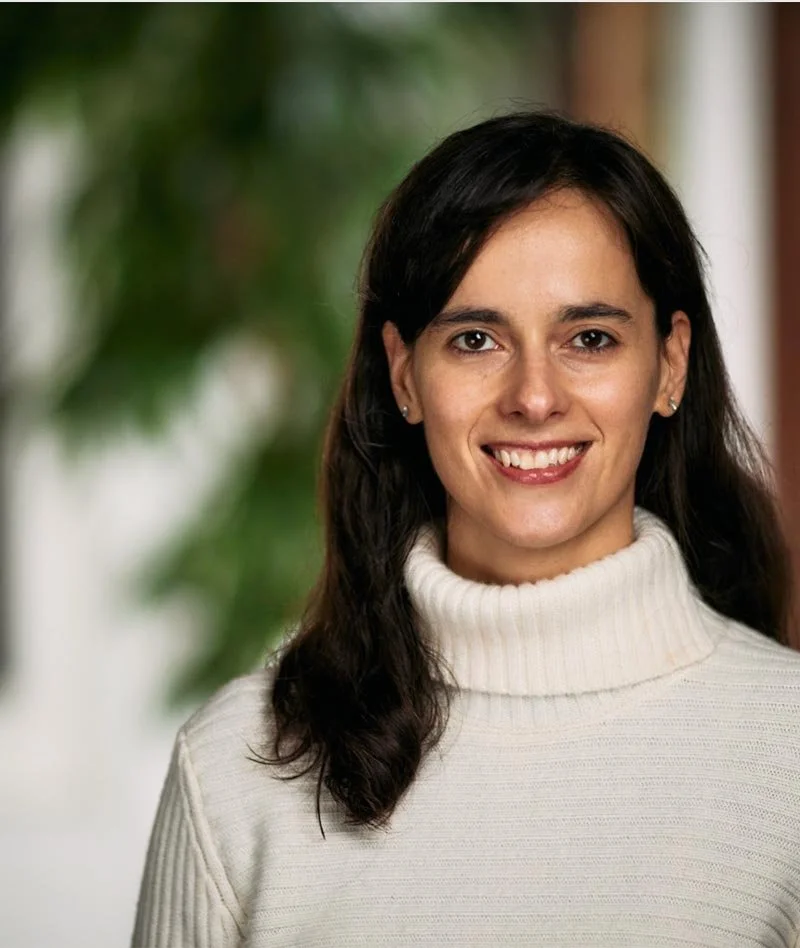
CARISSA VÉLIZ · Author of Prophecy: Prediction, Power & the Fight for the Future · Privacy is Power: Why & How You Should Take Back Control of Your Data
Algorithms are deciding whether you are eligible for a loan, a job, an apartment or insurance. They determine what you see online, who reads your social media posts and who connects with you on dating apps. They may even decide whether you get arrested or go to jail. Your very life hangs in the balance of prophecies.
If you are unlucky, a prediction will be what kills you. Forecasts can determine your place on a waiting list for an organ transplant or whether you get medical care in an emergency. Policymaking hinges on predictions. War and peace and whether someone lives or dies are decided based on forecasts about the strength of an adversary, the impact of a mission or the identity of a person. And yet no one has asked your permission to make those guesses. No governmental agency is supervising them. No one is informing you of the prophecies that shape your fate. Prophecies are the grounds on which fights over the future take place.
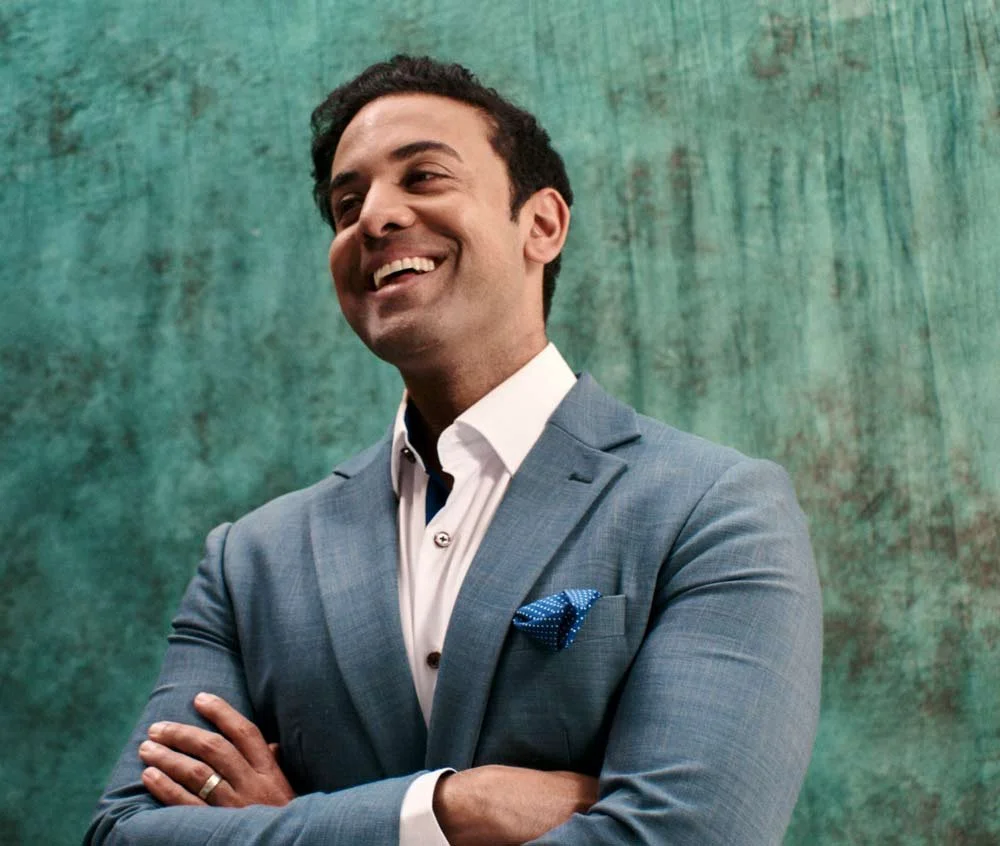
DR. ADEEL KHAN on the Future of Regenerative Medicine
I think the most important thing that I've learned through this whole journey is that we are ultimately here to help one another. And as a doctor, my job is to try to help as many people as I can with the technologies and kind of the gifts I have. I think everyone has their own unique gift and finding that and knowing how you can share that with the world is really what you should focus on. I think a lot of people have heard the word "stem cells"—it’s kind of become part of the zeitgeist almost, where people are just like, "Oh yeah, I think I've heard of stem cells." And when people think about it, I think they think regeneration. They think healing, which is kind of the whole idea behind stem cells.
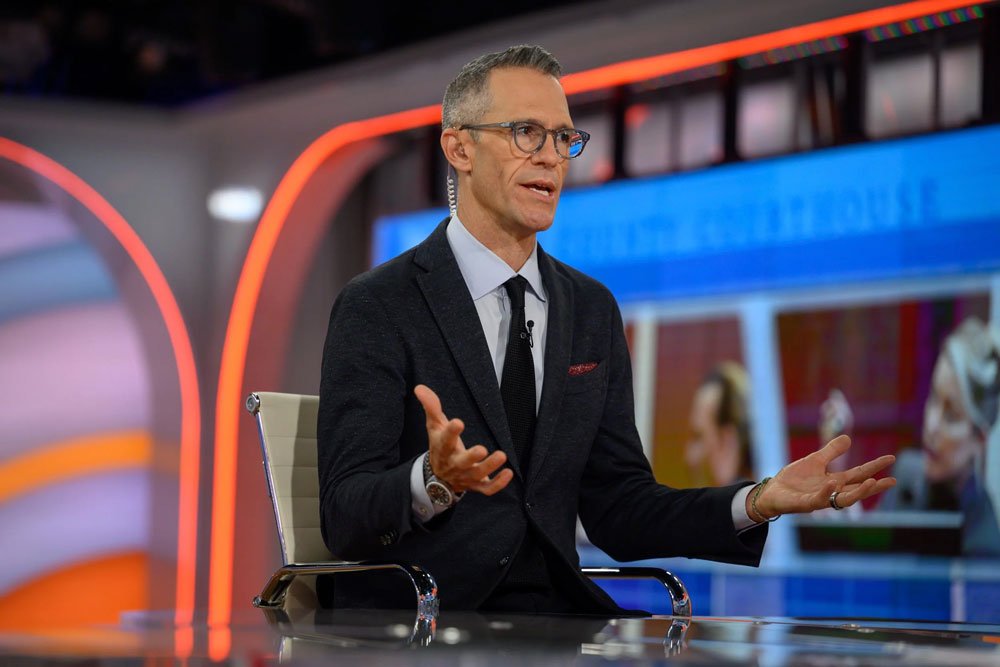
Conversation with Journalist JACOB WARD · Author of The Loop: How AI Is Creating a World Without Choices and How to Fight Back · Host of The Rip Current Podcast
Civilization is really a very new and very glitchy thing. If you talk to evolutionary psychologists and people who've looked at how our brains have developed over hundreds of thousands, if not millions of years, they'll tell you that our sense of wonder and creativity, as well as our ability to be cautious and rational, and to trust people we've never met to govern us, all of that kind of stuff—the vast majority of our decision-making actually rests on a much older, much more ancient system. We are so much more like primates than we like to think. Certainly, that's been the lesson of the last sort of 50 years of behavioral science. I was trying to marry a lot of research looking at the ways in which people are trying to build interesting technologies, but then deploy them to make money, and how tempting it is to throw those technologies at those ancient decision-making systems, especially because so much of our decision-making is instinctive. My worry with AI, of course, is that as we automate decision-making more and more, we use automated systems not only to entertain ourselves but to decide who gets a job, who gets a loan, and who gets bail. I worry that we're going to be in a position in 20 years where we don't have the internal compass we once did. We may have slid away from that higher human functioning—the creativity, the rationality, and all that stuff—and back toward a more primitive version of ourselves, because that's the part that gets played on by this kind of technology. And that's how all these companies wind up making money.

Conversation with SVEN NYHOLM, Prof. of Ethics of AI, LMU Munich · Lead Investigator, AI Ethics, Munich Center for Machine Learning · Author of Humans and Robots · The Ethics of Artificial Intelligence
I think we're betting on AI as something that can help to solve a lot of problems for us. It's the future, we think, whether it's producing text or art, or doing medical research or planning our lives for us, etc., the bet is that AI is going to be great, that it's going to get us everything we want and make everything better. But at the same time, we're gambling, at the extreme end, with the future of humanity , hoping for the best and hoping that this, what I'm calling the AI wager, is going to work out to our advantage, but we'll see.
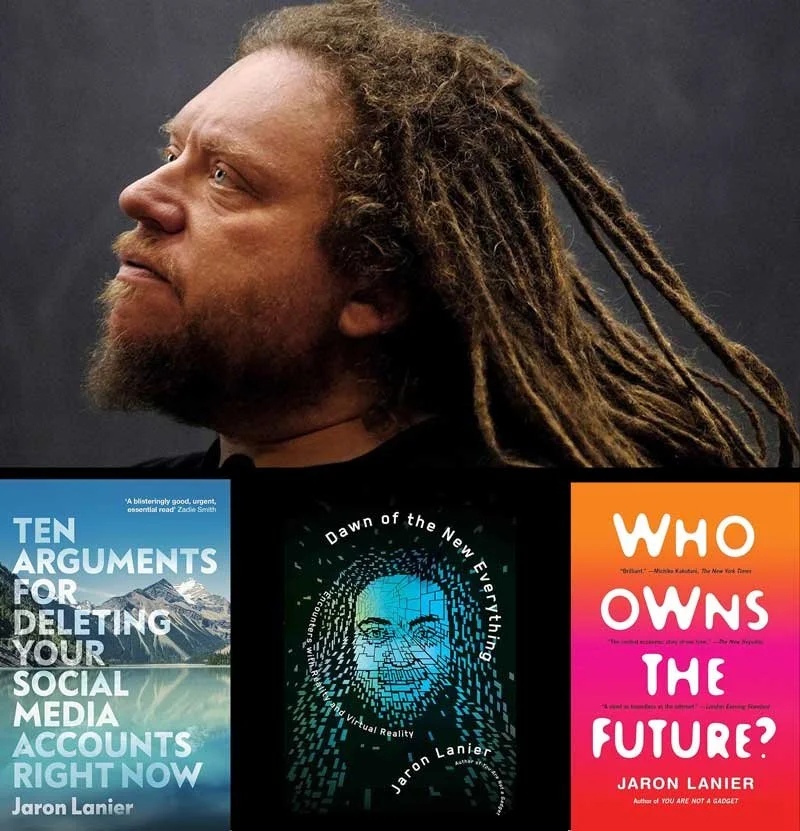
VR Pioneer · Musician · Author JARON LANIER
Who Owns the Future? · Dawn of the New Everything: Encounters with Reality & Virtual Reality · Ten Arguments for Deleting Your Social Media Accounts Right Now
AI is obviously the dominant topic in tech lately, and I think occasionally there's AI that's nonsense, and occasionally there's AI that's great. I love finding new proteins for medicine and so on. I don't think we serve ourselves well when we put our own technology up as if it were a new God that we created. I think we're really getting a little too full of ourselves to think that.
When we do that, I think we confuse ourselves too easily. This goes back to Alan Turing, the main founder of computer science, who had this idea of the Turing test. In the test, you can't tell whether the computer has gotten more human-like or the human has gotten more computer-like. People are very prone to becoming more computer-like. When we're on social media, we let ourselves be guided by the algorithms, so we start to become dumb in the way the algorithms want us to. You see that all the time. It's really degraded our psychologies and our society.
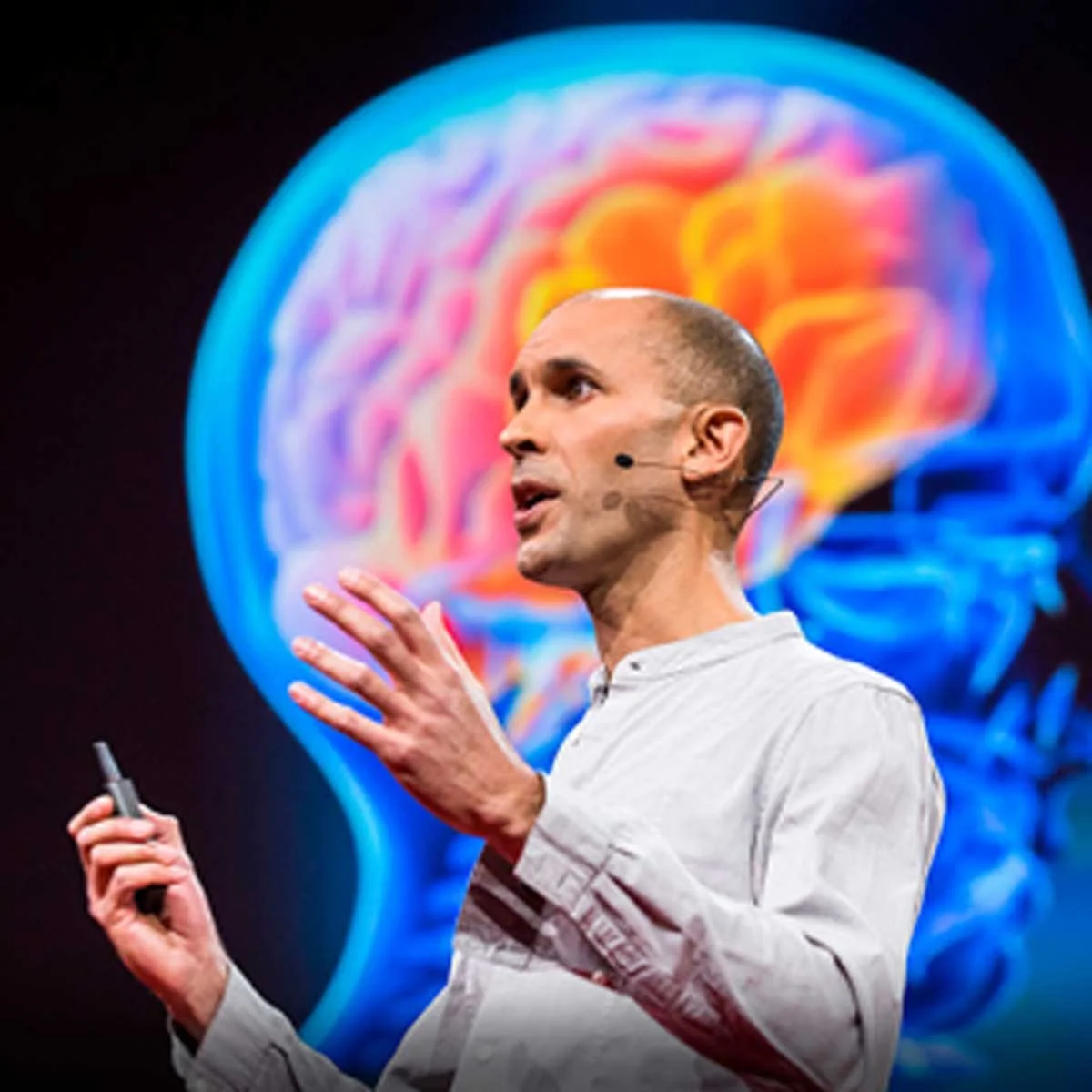
A Convesation with ANIL SETH · Co-director of the Sussex Centre for Consciousness Science · Canadian Institute for Advanced Research Program on Brain, Mind & Consciousness
This is a point in philosophy that the world as it is can never be directly apprehended by our minds. We are shielded from it by what's called a sensory veil. There are, for instance, no such thing as colors that are out there. As the artist Cezanne said, "The colors are where the brain and the universe meet." And color is, I think, a really good example because it is, in a sense, less than what's there because our eyes are only sensitive to three wavelengths of this huge electromagnetic spectrum, which goes all the way from x-rays and gamma rays to radio waves. And we live in a tiny, thin slice of that reality. But then out of those three wavelengths we experience our brains generate many more than three colors and almost an infinite palette of colors. So there's no sense in which our perception could ever reveal the world as it really is, that it reveals the world in a way that's very useful for us as organisms hell-bent on continuing to live and to survive.

A Conversation with LIAD MUDRIK
Neuroscientist · Principal Investigator Liad Mudrik Lab · Tel Aviv University
So when I say that I am a conscious creature, I mean that I don't only analyze information about the world, or not only even respond to the world because you can think about, your thermostat response to the world, but when I sense the world, I don't only process information. I also have a qualitative experience, adopting Thomas Nagel's famous title of his paper. It feels like something in his case to be a bat. In our case, to be me. It feels like something to drink coffee, right? So the question is what allows us as human beings not only to process information but also to experience it? And this is what we are trying to understand, basically. And I should say, I said us as human beings, but I think that animals also have such conscious experience.
So to what extent does our cognition affect perception itself? And I belong to those researchers who think that it does. We are affected by what we expect to see. And sometimes we even perceive the expected as opposed to the world as it is. That also pertains to day-to-day life, to politics, to the reality you construct for yourself. So the brain is an amazing, amazing piece of machinery. And one of the things that it does best is to create these narratives. into which we project ourselves. So it creates a model of the world.

A Conversation with SUSAN SCHNEIDER · Founding Director · Center for the Future Mind · Florida Atlantic University · Fmr. NASA Chair at NASA · Fmr. Distinguished Scholar at US Library of Congress
So it's hard to tell exactly what the dangers are, but that's certainly one thing that we need to track that beings that are vastly intellectually superior to other beings may not respect the weaker beings, given our own past. It's really hard to tell exactly what will happen. The first concern I have is with surveillance capitalism in this country. The constant surveillance of us because the US is a surveillance capitalist economy, and it's the same elsewhere in the world, right? With Facebook and all these social media companies, things have just been going deeply wrong. And so it leads me to worry about how the future is going to play out. These tech companies aren't going to be doing the right thing for humanity. And this gets to my second worry, which is how's all this going to work for humans exactly? It's not clear where humans will even be needed in the future.

The Lives of Billionaires Comic Artist & Author DARRYL CUNNINGHAM on Making Complex Subjects Simple
No one should be a billionaire because it's damaging. There's a certain level of wealth that's damaging to a country. Billionaires have so much wealth that they have enormous political power, which is undemocratic. There should be a ceiling on wealth. I have nothing against people becoming millionaires or even multi-millionaires. But multi-billionaires are incredibly bad for all of us. If you have so much money that you can buy an entire political party, that's a thing that shouldn't exist.

Economist · Oxford & King’s College London
Author of Growth: A Reckoning · A World Without Work
We have a choice to change the nature of growth. How we can have growth that is more respectful of place, doesn’t cause as much damage to the environment, doesn't lead to as large inequalities in society, doesn’t disrupt politics, doesn't undermine the availability of good work? We ought to pursue this morally enriched GDP measure which better reflects what we really value and care about as a society.
A Conversation with RISTO UUK · Head of EU Policy & Research · FUTURE OF LIFE INSTITUTE
The Future of Life Institute has been working on AI governance-related issues for the last decade. We're already over 10 years old, and our mission is to steer very powerful technology away from large-scale harm and toward very beneficial outcomes. You could think about any kind of extreme risks from AI, all the way to existential or extinction risk, the worst kinds of risks and the benefits. You can think about any kind of large benefits that humans could achieve from technology, all the way through to utopia, right? Utopia is the biggest benefit you can get from technology. Historically, that has meant we have focused on climate change, for example, and the impact of climate change. We have also focused on bio-related risks, pandemics and nuclear security issues. If things go well, we will be able to avoid these really bad downsides in terms of existential risk, extinction risks, mass surveillance, and really disturbing futures. We can avoid that very harmful side of AI or technology, and we can achieve some of the benefits.

A Conversation with MELVIN VOPSON · Physicist · Author · Co-founder & CEO of the Information Physics Institute
These ideas go as far back as Ancient Greece, which basically gave birth to two lines of thinking, two ideologies, materialism and idealism. And the idealist thinkers like Plato regarded reality as a projection of our minds, as something that is not real. And the only thing that is real is our consciousness and our minds and everything else around us is just constructs of our proception and projections. And that was a philosophy that was opposed to materialism, which regards the world as in a materialistic way, made up of atoms and matter and our minds are a product of these chemical reactions and the matter is coming together and forming our minds and consciousness. And everything in the world exists regardless of our consciousness or our minds and the universe is there and it's a materialistic view of the world. So these are two competing ideologies, and this is actually how we see the world today in a materialistic way.

A Conversation with WENDY H. WONG
Author · Professor of Political Science at University of British Columbia
One of the things that we need to remember is that we are data stakeholders and not data subjects. We're often called data subjects if you look at the way legislation is written and tech companies talk about the users of their technology as data subjects. Being a subject casts this sort of '“you can't help but have this happen to you” effect. But we're actually data stakeholders for the reason that data cannot be created without us. If companies were incentivized to follow data minimization for example, where they only collect the data they need, that would change the way we interact with digital technologies.

Evolution, AI and the Five Breakthroughs That Made Our Brains
A Conversation with MAX BENNETT Author · Cofounder & CEO of Alby · Fmr. Cofounder & CPO of Bluecore
So, modern neuroscientists are questioning if there really is one consistent limbic system. But usually when we're looking at the limbic system, we're thinking about things like emotion, volition, and goals. And those types of things, I would argue reinforcement learning algorithms, at least on a primitive level, we already have because the way that we get them to achieve goals like play a game of go and win is we give them a reward signal or a reward function. And then we let them self-play and teach themselves based on maximizing that reward. But that doesn't mean that they're self-aware, doesn't mean that they're experiencing anything at all. There's a fascinating set of questions in the AI community around what's called the reward hypothesis, which is how much of intelligent behavior can be understood through the lens of just trying to optimize a reward signal. We are more than just trying to optimize reward signals. We do things to try and reinforce our own identities. We do things to try and understand ourselves. These are attributes that are hard to explain from a simple reward signal, but do make sense. And other conceptions of intelligence like Karl Friston's active inference where we build a model of ourselves and try and reinforce that model.
What will the future look like? What are the risks and opportunities of AI? What role can we play in designing the future we want to live in? In this first episode of our new channel, philosophers, futurists, AI experts, science fiction authors, activists, and lawyers reflect on AI, technology, and the Future of Humanity..

Organizer · Speaker · Professor at Seattle University's School of Law
Author of Normal Life: Administrative Violence, Critical Trans Politics, and the Limits of Law
Mutual Aid, Building Solidarity During This Crisis (and the Next)
I want to see movements that embolden our tactics. Like people blocking oil pipelines all over the world. That's what's required now. Asking endlessly from the dominant system to treat us fairly doesn't work. And this frustrating kind of endless appeal and hoping maybe we can get it to work this time doesn't work. And the clock is ticking, especially on ecological collapse. We need to save each other's lives and act.
on how Uber, Lyft, Instacart, DoorDash and others use algorithmic wage discrimination against their workers
In this episode of the Speaking Out of Place podcast, Professor David Palumbo-Liu speaks with Professor Veena Dubal about how such companies have exported globally a technique of algorithmic wage discrimination that pays workers based on data to which they have no access. Owners dangle bonuses before workers but take away work from them as they draw close to achieving their targets; they use psychological tricks derived from video games to create a casino-like environment where the house always wins. Dubal urges us not to fall into the trap of competing against the house, but back to “good old-fashioned organizing.”
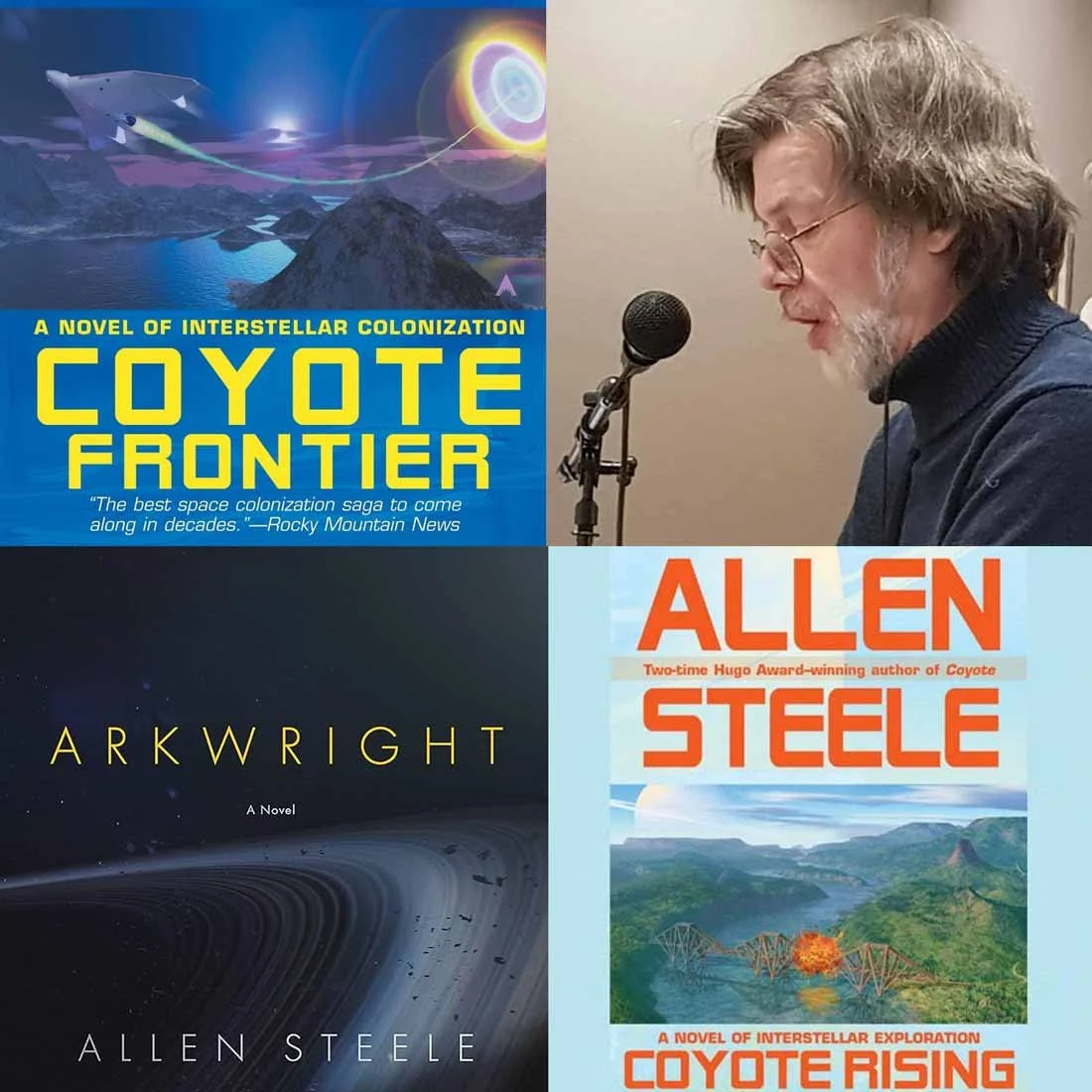
A Conversation with Author ALLEN STEELE
Winner of the Hugo · Asimov's Readers & Locus Awards
Served on the Board of Directors of Science Fiction & Fantasy Writers of America
I'm really very glad. I was happy to see that within my lifetime that the prospects of not just Mars, but in fact interstellar space is being taken seriously. I've been at two conferences where we were talking about building the first starship within this century. One of my later books, Arkwright, is about such a project. I saw that Elon Musk is building Starship One, I wish him all the best. And I envy anybody who goes.
I wish I were a younger person and in better health. Somebody asked me some time ago, would you go to Mars? And I said, “I can't do it now. I've got a bum pancreas, and I'm 65 years old, and I'm not exactly the prime prospect for doing this. If you asked me 40 years ago would I go, I would have said: in a heartbeat!” I would gladly leave behind almost everything. I don't think I'd be glad about leaving my wife and family behind, but I'd be glad to go live on another planet, perhaps for the rest of my life, just for the chance to explore a new world, to be one of the settlers in a new world. We've got to be careful about how we do this. And we've got to be careful, particularly about the rationale of the people who are doing this.

Writers, Philosophers & Thought Leaders Speak Out
How can we be more engaged global citizens? How do we fight for truth and protect democracy in a post-truth world? What influence do billionaires have on politics, journalism, and the technology that shapes our lives? Deborah Cahn, Daniel Susskind, Carlos Moreno, Lee McIntyre, Julian Lennon, Darryl Cunningham, and Arash Abizadeh on the future of democracy.

Artists, Philosophers, Economists & Scientists discuss the Future
How can we shape technology’s impact on society? How do social media algorithms influence our democratic processes and personal well-being? Can AI truly emulate human creativity? And how will its pursuit of perfection change the art we create?
A Call to Regulate the Attention Market and Prevent Algorithmic Emotional Governance
The fact that technologies are being used and combined to capture our attention is concerning. This is currently being done with no limitations and no regulations. That's the main problem. Attention is a very private resource. No one should be allowed to extract it from us by exploiting what we know about the human mind and how it functions, including its weaknesses. We wrote this paper as a call to regulate the attention market and prevent algorithmic emotional governance.
A Conversation with Neuroscientist DR. FERNANDO GARCÍA-MORENO
I think creative thinking is rooted in different parts of the brain. I believe that creativity is mostly a cultural expression of how our brains react to the world. It is our culture and our lives that make our brains creative in different manners. Even though you and I have very similar brains containing exactly the same cell types, we have evolved alongside each other for 300 million years. We share a lot of features, yet we express our ideas through creative thinking differently. In my opinion, this is cultural evolution—an expression of how our brains have evolved throughout our lives, how we learn, and what experiences we have over time: what we read, the movies we see, and the people we talk to.
We are working in the lab to understand this moment in development, which is called phylotypic. This is something that has been known for over a hundred years. When you see many vertebrate embryos at this early embryonic time point, all embryos look very, very similar. We are extrapolating these ideas to the brain. We have seen that at this time point, the phylotypic period, all brains of these species are very simple but very closely related. We share the same features with a fish or with a gecko or with any other mammalian species at this early time point. We have the same brain with the same genes active and the same cell types involved in it.

How to Dissent and Defy Effectively
A Conversation with APA Award-winning Author TODD B. KASHDAN
Leading Authority on Well-being, Curiosity, Courage & Resilience
We're really talking about principled rebels. And when we talk about insubordination, we're talking about most of us live in these social hierarchies, and there's the idea, this started in the military and still goes on, where if someone at a lower rank questions or challenges a command or a norm that someone of a higher rank, that's considered an act of insubordination. And one of the main problems of that, I think anyone who's listening can acknowledge, is it depends on the quality of the idea of the person who's raising the question. I just realized there was this whole body of literature on minority influence that no one had put together into a book for the general public, and considering the racial reckoning that occurred during COVID-19, the extra attention to diversity, to disadvantaged groups, every moment of society, it just feels like it's more and more relevant of what I've been working on.

in Sam Altman's OPEN AI
A Conversation with KAREN HAO
My book is called Empire of AI because I'm trying to articulate this argument and illustrate that these companies operate exactly like empires of old. I highlight four features that essentially encapsulate the three things you read. However, I started talking about it in a different way after writing the book.
The four features are: they lay claim to resources that are not their own, which is the centralization of resources; they exploit an extraordinary amount of labor, both in the development of the technology and the fact that they're producing labor-automating technologies that then suppress workers' ability to bargain for better rights; they monopolize knowledge production, which comes when they centralize talent.