CINDY CHUPACK

CINDY CHUPACK

Writer · Producer · Director
Sex and the City, Modern Family, Everybody Loves Raymond, Otherhood

It was a long journey because I think I've been writing television now twenty-five years. I never really had the directing bug. I always loved writing and I like being behind the scenes and, in television, writers have so much control anyway to rise up the ranks and run the show and hire the directors, so I mostly had just great collaborations with directors.

Chris Dercon

Chris Dercon

Museum director, curator, and cultural producer at large, Chris Dercon is the President of the Réunion des musées nationaux – Grand Palais, an umbrella group of national museums in France. His career in major cultural institutions across Europe spans several decades. From 2011 to 2016, he was director of London's Tate Modern. He has been program director of MoMA PS1 in New York, and has served as director of the Witte de With Center of Contemporary Art in Rotterdam, Museum Boijmans Van Beuningen in Rotterdam, the Haus der Kunst in Munich, and Berlin's Volksbühne theater. He is also a presenter, writer and maker of cultural documentaries.
www.grandpalais.fr


DEBRA KERR

DEBRA KERR

Debra Kerr is the Executive Director of Intuit - the Center for Intuitive and Outsider Art in Chicago. She was previously at the John G. Shedd Aquarium for 17 years - she is a past board member of the Association of Zoos and Aquariums, past chair and instructor for its Professional Development Committee and management courses, past chair of the zoo and aquarium committee for the International Association of Amusement Parks and Attractions, and former board member of the National Veterans Art Museum. 

She currently serves on the board for the Merit School of Music and the National Wildlife Federation’s Great Lakes Leaders Council. She frequently presents on issues related to museum relevance, teen empowerment and activating the public for social good.

Mia Funk is an artist, interviewer and founder of The Creative Process. 

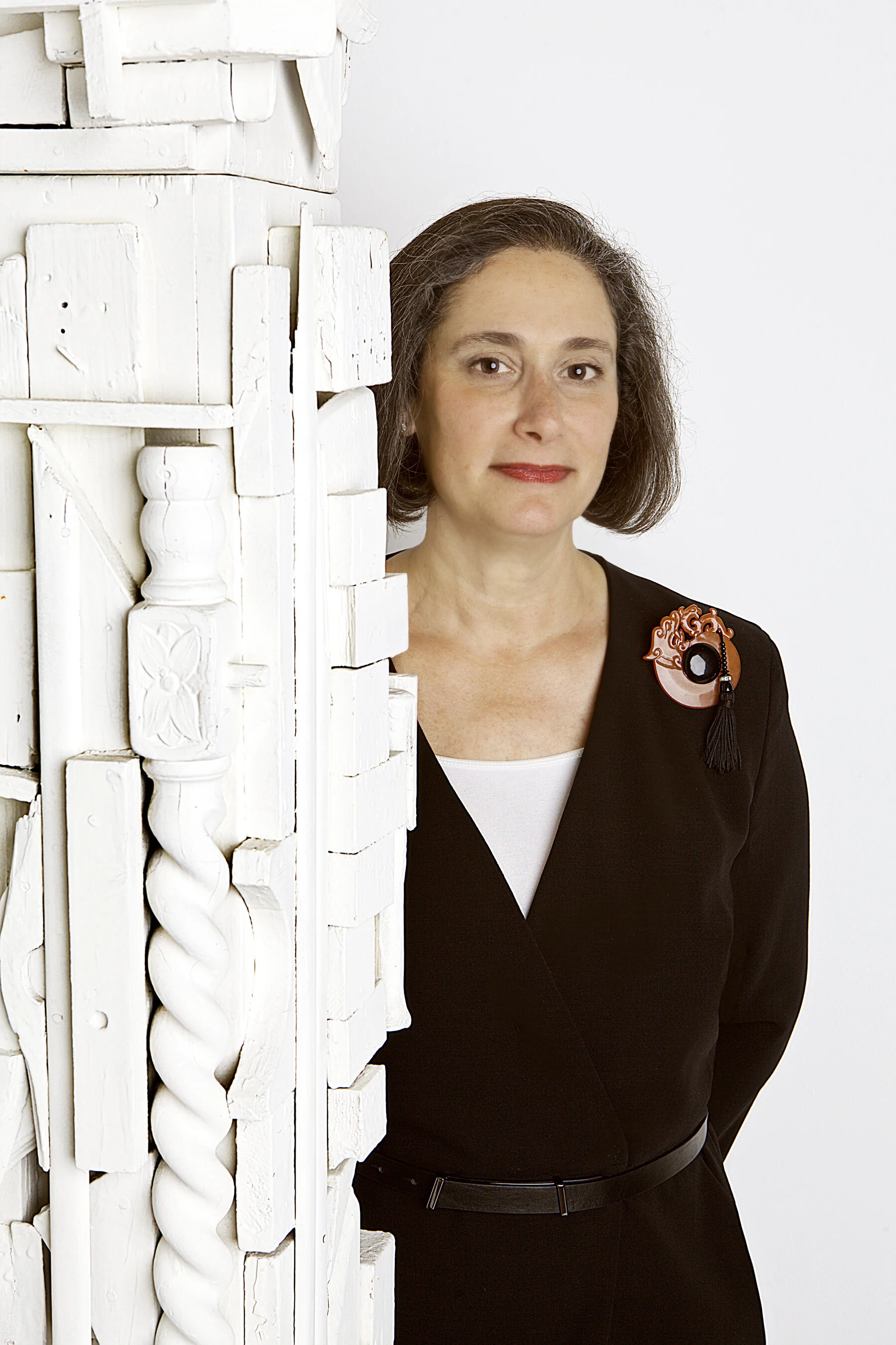
SUSAN FISHER STERLING

SUSAN FISHER STERLING

Director of the National Museum of Women in the Arts (NMWA) in Washington, D.C., Susan Fisher Sterling has built her career and the stature of the museum around the message of equity for women through excellence in the arts.

Unusual for the museum field, Sterling has dedicated her entire career to advancing NMWA’s mission.As an associate curator, curator of modern and contemporary art, and then chief curator/deputy director, she spent her first 20 years organizing exhibitions and publications of contemporary women artists.

Sterling assumed the directorship of the museum in 2008. During her ten-year tenure the museum has flourished, and has regularly received the highest Charity Navigator rating of 4 stars for sound fiscal and programmatic management. In 2017–18, NMWA celebrated its 30th anniversary with Washington Post “best pick” exhibitions like Women House and its annual gala honoring renowned photographer Annie Leibovitz.
A life-long champion of women through the arts, Sterling has received National Orders of Merit from Brazil and Norway and the President’s Award of the Women’s Caucus for Art. In 2017 she was named one of the Most Powerful Women in Washington by Washingtonian magazine.

Photo: Michele Mattei

THE CREATIVE PROCESS

The National Museum of Women in the Arts is such a necessary institution, and you've been here over 30 years, almost since the beginning. What was your vision coming in and how has that evolved over the years?

SUSAN FISHER STERLING

I came to work at the National Museum of Women in the Arts thirty-two years ago. I really took to the idea that the museum was controversial, that a lot of men said, "Why do you need a women's museum? There are so many other museums. Why do women have to be separated?" I think feminists also said similar things sometimes. "Do we need to have a separate museum for women? Couldn't we just make sure that women are in all the other museums?" It's interesting, too, because some of the people who were more conservative, more traditionalist, would say things like, "Well, we're not sure we like this feminist concept." So it was very interesting to see the triangulation of opinions about the museum.

The way we exhibit the collection is based on themes, themes that are developed by our curatorial team and often in conjunction with our educators as well as our library. The reason for this goes back a really long way. It goes back to the founding of the museum, at a time when I was a curator, and frankly, I did not have enough works to be able to show the collection thematically. So the question becomes, why did we want to do that? The answer is that in some ways, particularly with our collection, which is mostly European and American, when you take a look at Western art history, chronology tends to subvert or discount women and people of color, because technically we show up sort of late to the game. The training opportunities were different. If you look at the 18th century, you find a lot of portraits, you find still lifes, various sorts of imagery or types of painting that women were seen as being able to do, but men were able to do other kinds of work which were highest in this hierarchy. So we never were really comfortable with this notion of a chronology that perpetrated or put forward a hierarchy in the arts. Some four or five years ago, my charge to our chief curator and our team asked, do we have enough works now in the collection? Because the collection is about 5000 works now. When I started, it was about six hundred. So do we have enough works now to be able to create thematic installations within our galleries, our collection galleries that tease out themes that are important? Vis-à-vis women, but yet also just important. Can we mix the different eras in a way that's responsible, where the art really talks to one another?

Many, many people come to us because of contemporary art and they're very interested in seeing contemporary art, which goes a little bit against the idea of many museums where the historical work seems to be most important to people. I think that's partly a realization that women artists came later to the game and so modern and contemporary art is where women artists have really shown their stuff, if you will. The historical work, while it's very important to the story, needs to be interspersed and looked at in relation to contemporary art and contemporary themes so as to continue to have a real relevance. That's a curious thing for us because people are coming to us for something we have to offer that might be different from the large municipal or encyclopedic museum. So in a way, we've been able to shift the discussion and also still showcase those great persevering, exceptional talents of the past that really were able to succeed, way against the odds, totally against the odds.

The shift was from being a museum that reinserted women into the history of art to a more inclusive agenda, which is to champion women through the arts. It allows for the excellence of women. It enables the museum to have programs like the Women, Arts, and Social Change programming that involves women artists at the center of social change or social action. It also talks about women as change agents.

And so museums like the National Museum of Women in the Arts that are permissioned to do more were created with that new way of thinking about ourselves. While at the same time we continue to do the work of the past, reinserting women into the history of art, our programs enable us to showcase or bring to the fore contemporary women artists who are doing great work. It allows us to bridge the past with the present and see that sort of future for ourselves.

I mean, we really are ciphers and not just ciphers, but also integrally involved in these issues that are important to our communities. You can see how what's happening with the pandemic is now layered upon what was already a concern that was our focus for the year in that programming.

But it's a really good model for how you can bridge arts and social change and point to women and artists as being at the center of that. It will be interesting to talk about spirituality in the sense of how do you have joy, how do you keep a spiritual life? How do you feel connected to other spaces, other sorts of thoughts in the midst of difficult times? What kind of artwork might come of that? Is our spiritual life something that we should take very seriously, not just during the pandemic, but afterwards?

THE CREATIVE PROCESS

What do you feel about the idea of artistic genius?

FISHER STERLING

"Genius" is such an interesting term. Just like "visionary." Who decides? It's oftentimes the case that men decide.

And certainly, you have this idea of the solitary genius, the rebel, the working in the garret. The idea that genius will out, no matter what. Geniuses always know exactly what they're thinking about, and they create this amazing work and everybody recognizes it right away.

Certainly, there are interesting ways to think about mathematical genius. There are also interesting ways to think about artistic genius. Who is a genius for people who are social philosophers? All different manners of things that people call genius. The truth is there's a system that props that up and says this person's a genius, but that person's not.

Most often that leads to a whole body of folks who are left out, because at least in the past, with all kinds of 19th-century brain studies, there were all these studies that wanted to prove the inferiority of everybody other than a white male.

I think that the concept of genius at this point in my world is debunked. But that doesn't mean that I don't want women artists to be seen as geniuses, because that's a term that people understand in the world of the popular press or just the general population. So, you want to play on the field that's given. When I was working with Carrie Mae Weens, I liked to say, just because there's such a thing as the male gaze, doesn't mean you shouldn't stare that gaze down.

This interview was conducted by Mia Funk and Katherine Capristo with the participation of collaborating universities and students. Digital Media Coordinator is Yu Young Lee. “Winter Time” was composed by Nikolas Anadolis and performed by the Athenian Trio.

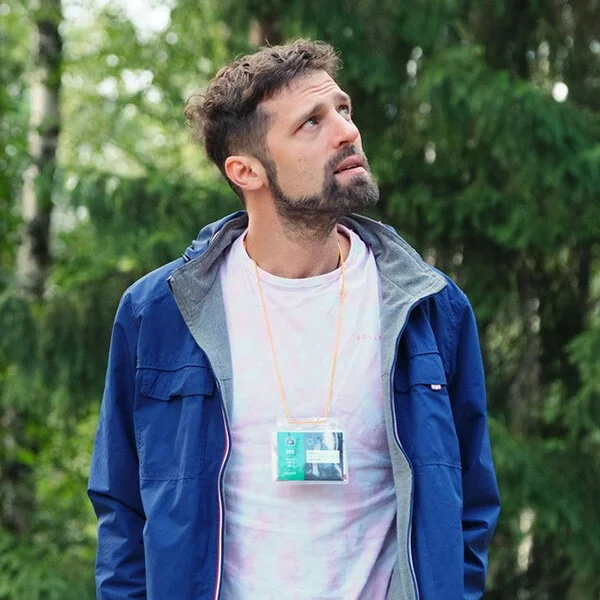
JOSH PAIS

JOSH PAIS

Joshua Pais has appeared in over a hundred movies and TV shows, including recurring roles in Ray Donovan, Mrs. Fletcher, The Good Wife, Maniac, The Sopranos, and Law and Order: SVU. His film work includes Motherless Brooklyn, Joker, Touchy Feely, Teenage Mutant Ninja Turtles, Music of the Heart, Assassination of a High School President, and I Saw the Light. The son of holocaust survivor and theoretical physicist Abraham Pais, Josh is the founder of Committed Impulse, a comprehensive acting technique which involves creating from the energetic (atomic) truth in the body.

This interview was conducted by Mia Funk with the participation of collaborating universities and students. Associate Interviews Producer on this podcast was Emma Ryan. Digital Media Coordinator is Hannah Story Brown.

Mia Funk is an artist, interviewer and founder of The Creative Process.

NOELANI PANTASTICO

NOELANI PANTASTICO

Principal Dancer · Pacific Northwest Ballet

I always do a lot of studying into the history of something, if I feel like that is going to help me. And then, if that's not going to help me, I make up a story. I do a lot of different things for each role and each performance, and sometimes when I repeat something something else will come through. So it really changes every single time.

AARON DWORKIN

AARON DWORKIN

Aaron Dworkin is a multifaceted artist and entrepreneur with passion for diversifying and amplifying the arts. Epitomizing how art, leadership, and diversity all play a vital role in advancing our society, Dwokin founded The Sphinx Organization, a non-profit organization that molds Black and Latinx classical musicians, and he serves on the advisory board for several prestigious arts organizations. Dworkin is an educator of both Arts Leadership and Entrepreneurial Leadership at his alma mater, the University of Michigan. Aaron Dworkin, decorated in awards and accolades, continues to be a force in his community, driving the need for diversity, arts education, and leadership.

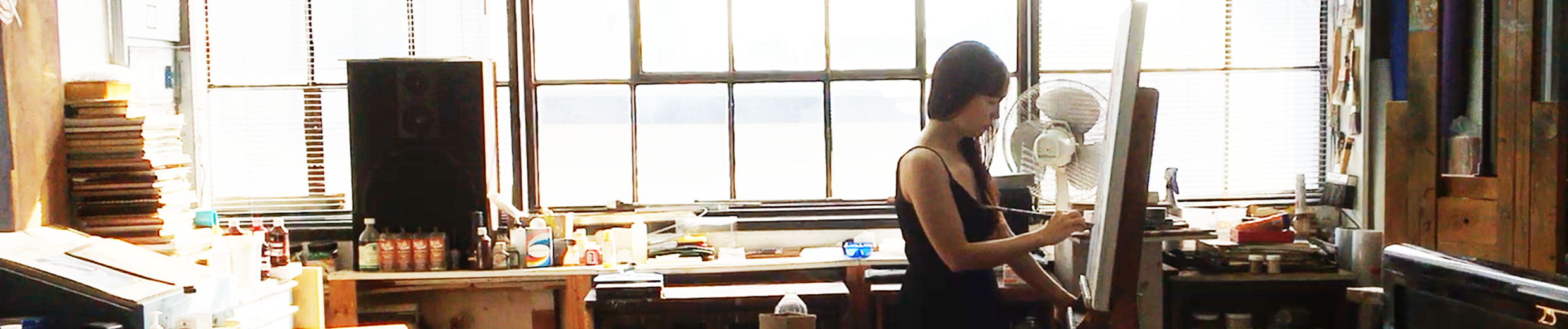
REEM BASSOUS

REEM BASSOUS

Reem Bassous received her Bachelor of Arts from The Lebanese American University in Beirut. Lebanon and her master of Fine Arts from The George Washington University in Washington DC. She started teaching drawing and painting in 2001 at The George Washington University, taught at the University of Hawai’i at Manoa for 9 years, and is currently an instructor at Leeward Community College at the University of Hawaiʻi. Bassous’ work is in permanent collections which include the Honolulu Museum of Art and Shangri La Museum for Islamic Art, Culture and Design.

REEM BASSOUS

The truth of the matter is that there are some people who are born to be creative and they're going to be artists. And the importance of fostering that is necessary, because if we each fulfill our purpose as humans, then society is better off for it. So in other words, if I had been anything else other than what I have become, I would have only been living up to half of my potential. And so that's really important to address that. I have a lot of students whose parents don't want them to be artists because it doesn't make money, but that means they're only living up to half of their potential because they're truly meant to be artists. And so society needs to shift this understanding on what is important. 

 THE CREATIVE PROCESS

I was wondering, as you are beginning a work of art, these works on paper, these paintings, what do you begin with. Is it feelings or memories you have or what you would want the audience to experience?

BASSOUS

That's a great question. A lot of the work that I work with is based on my memory as a survivor of the Lebanese civil war.

Beirut is a very layered city, having been destroyed now eight times, it was previously destroyed seven times. And so it was first settled 5000 years ago. So throughout the city, you see these layers of history. You see these Roman excavations.

And so it makes a lot of sense for me to layer the canvas in a certain way, so that as I am layering, I'm also excavating and I'm erasing and I'm digging into the surface. And so there are a lot of things to consider when making an image. I always tell my students, when you're painting, you're not coloring in. It's a lifelong learning experience to understand the material of paint.

 THE CREATIVE PROCESS

I'm very interested in memory as well. And it's interesting because if you do speak to people who have not had maybe not even just war experiences, but haven't had traumatic experiences in their youth, they often don't have or they say they don't remember a lot from their childhood. It's interesting, you know, when somebody takes something from you or somebody marks you in a way, then you remember you have a scar you have or psychic scar, metaphor scar. So you were talking about living in the state of vigilance. You are aware, you know, you have to protect yourself. So in some way it can, I think, kind of trains the artistic practice, which is one of noticing and taking in.

BASSOUS

It would be very pretentious of me to say that this is not a cathartic practice. It absolutely is.

And I don't mean for it to be necessarily. But I just remember, for example, I kept having this recurring dream of the shelter that we used to hide in. And it was always the same dream going down the steps into darkness, basically. And finally, I worked for months on this one painting of that exact dream. And then I stopped having the dream. And that was after about 15 years, of having this dream, very, very recurrently. And so it's just interesting, again, you know, there's so much we don't know about how the mind works. I'm certainly not a psychologist to be able to analyze that. But I do remember quite a bit from that time period. I remember almost everything. And I talked to family members and they seemed to have blocked a lot of it out. But I remember quite a bit and I remember things and details down to, for example, how shattering glass looked as it fell. Things, you know, very, very small details tend to stick in my mind.

 THE CREATIVE PROCESS

All right. I think there's something that we have been asking people and now I think particularly with the pandemic and also for you being distant from your family in Beirut. Our thoughts are on the future. And we have time now to reflect on how we might work towards giving a better future to the next generation. I know you must think about that. Also with your teaching.

BASSOUS

Yes. I think that there is a struggle that a lot of art teachers are going through nationwide and worldwide. I don't know how it is in Europe, frankly, but in the states, there is much less emphasis on the importance of the arts in public schools, for example, and in universities. So it makes me very sad because the arts and the humanities in general are critical in creating a conscientious society, a feeling society, a society that cannot only achieve but can ethically achieve. And so I think that people constantly underestimate the importance of that. And, you know, we talk about how detrimental binary thinkers can be sometimes. Binary thinkers are the way they are because they don't understand the importance of nuance.  And that nuance is often that gray zone is often where the arts lie. And I think that that's such an important aspect of society.  I mean, like I said, we don't just need to achieve. We need to achieve with meaning and with heart and with morality

This interview was conducted by Mia Funk with the participation of collaborating universities and students. Associate Interviews Producer on this podcast was Majd Al Whaidi. Digital Media Coordinator is Yu Young Lee. Music was by Ziad Rahbani.

TRISH SIE

TRISH SIE

Trish Sie is a multi-talented director whose work spans the realms of music videos, commercials, and short and feature films. After spending a decade as a professional dancer, championship ballroom competitor and choreographer, she built a successful and championed career in filmmaking. The first music video that she produced, “Here it Goes Again” for the band OK Go,  won her a Grammy award. Her success expands to the world of films, where she has directed the likes of PItch Perfect 3 and Step Up: All In, using her dance and choreography experience to make magic happen on camera. Along with the Grammy, Trish has won a number of awards such as the Youtube award for most creative video, the smithsonian ingenuity award, and multiple accolades for best short film at various film festivals. 

JEFFREY ROSEN

JEFFREY ROSEN

Jeffrey Rosen is a Professor of Law at The George Washington University Law School. He is also the President and CEO of the National Constitution Center and a Contributing Editor of The Atlantic. Rosen is a graduate of Harvard College, Oxford University, and Yale Law School. His latest book, for the American Presidents Series, is William Howard Taft. His other books include: Louis D. Brandeis: American Prophet; The Supreme Court: The Personalities and Rivalries that Defined America, the best-selling companion book to the award-winning PBS series; The Most Democratic Branch: How the Courts Serve America; The Naked Crowd: Freedom and Security in an Anxious Age; and The Unwanted Gaze: The Destruction of Privacy in America. Professor Rosen is coeditor, with Benjamin Wittes, of Constitution 3.0: Freedom and Technological Change. His essays and commentaries have appeared in The Atlantic, The New York Times Magazine, on National Public Radio, in The New Republic, where he was the legal affairs editor, and in The New Yorker, where he has been a staff writer. He hosts the weekly "We the People" podcast. The Chicago Tribune named him one of the ten best magazine journalists in America, and the Los Angeles Times called him the nation's most widely read and influential legal commentator.


THE CREATIVE PROCESS

You are the president and CEO of the National Constitution Center. You're also a writer, educator, a journalist. I think that so many of us, and certainly I, don't know enough about the Constitution. So why for you is the Constitution "the greatest vision of human freedom ever provoked?"

JEFFREY ROSEN

The Constitution expresses the Enlightenment faith. All human beings are born with natural rights that come from God or nature and not from government, and that it's the purpose of government to allow us to exercise our freedom. It's so rich and striking to see how the great thinkers who inspired the Founders of the American Constitution, beginning with the Greek and Roman philosophers Plato and Aristotle and the Stoics, and then continued through The Enlightenment, really were philosophers of happiness. And they believe that we have a right and a duty to pursue happiness, not by feeling good, but by being good. It's a classical notion of happiness rooted in virtue and civic virtue. It's both an individual and a political obligation. The individual obligation to pursue happiness is to master our perturbations of the mind, as Cicero put it, channeling Aristotle–anger, jealousy, and fear so that we can be guided by reason rather than passion and serve others and the public good. And then constitutions are formed to allow us to do that at the political level and to be governed by reason rather than passion, to slow down deliberation so that hasty factions don't crystallize and threaten liberty and equality, and to ensure that the government protects our natural rights rather than threatening them.

It's an extraordinarily galvanizing vision. It's crucially important for personal and political happiness. And that's why it's so exciting to learn about the Constitution.

THE CREATIVE PROCESS

Tell us a little bit about the founding of the National Constitution Center, its history, and mission.

ROSEN

It is exciting and it's wonderful to share the founding of this great institution that I'm so lucky to work at. So, the Constitution Center was founded by the US Congress during the bicentennial of the Constitution in 1987. It was started in 1988. It's a private nonprofit, but it was created by Congress with an inspiring mission, and I love to recite it at the beginning of all of our podcasts and programs because it gears everyone up for the learning ahead. The mission of the Constitution Center is to disseminate information about the US Constitution on a nonpartisan basis in order to increase awareness and understanding of the Constitution among the American people.

Imagine the US Congress today creating a nonpartisan educational institution. It's hard to imagine in a polarized time, but during this brief shining moment, it was created and it carries out this mission on a remarkable series of platforms. It's a beautiful museum of the US Constitution on Independence Mall in Philadelphia, across from Independence Hall, with the greatest view of Independence Hall in America and with statues of the framers and the rarest early drafts of the Constitution and exhibits on the Civil War and Reconstruction, and women's equality and live theatre and interactive displays for kids. It's just this beautiful temple of the Constitution, which I hope anyone who is in Philadelphia can visit because we're now open again during this challenging time.

But our mission is carried out on a much broader platform and that's online. And we have this amazing platform called the Interactive Constitution that I would love your listeners to check out at www.constitutioncenter.org. And on this platform, you can click on any provision of the U.S. Constitution, the First Amendment, or the preamble or the Fourth Amendment or whatever you like, and find the following amazing content. First, we have essays by America's leading liberal and conservative scholars describing what they agree about and what they disagree about. Imagine a thousand words about what the Second Amendment means that both the Left and the Right agree about. It's like a unanimous Supreme Court opinion.

And then you have separate dissenting opinions or concurring opinions for every clause, then you have the ability to explore early drafts of each of the provisions and see that an early draft of the Fourteenth Amendment, for example, which protects equal protection, would have protected African-American voting rights, although that provision fell out. And an early version of the First Amendment, for example, would have applied against the states. Madison proposed an amendment that would have required the states as well as the federal governments to respect freedom of conscience, but that amendment didn't pass. So that ability to explore early drafts is wonderful. Then we have all of the podcasts and public programs and videos that we host about contemporary events. And I have the great fortune of every week calling up a leading liberal and conservative thinker to debate the constitutional issues in the news from: can the president build the border wall? to most recently, we just recorded this week's podcast on: can he, by executive order, raise unemployment benefits? Or a historical podcast about the legacy of Frederick Douglass. It's just a thrill to learn from these great thinkers and to share them through the wonderful podcast form. Our podcast is called We the People and I hope people will check it out. And then finally, and this is the recent innovation that's just so meaningful, we've started offering live classes on the Constitution that are free. And I hope your listeners will check those out, too, as soon as COVID hit, we just went online and some colleagues and I started teaching the Constitution three days a week and we got thirty thousand students in middle, high school, and college students to sign up from March to July. And it was such a hit that we launched again at the end of August, throughout the term. The whole schedule is online at www.constitutioncenter.org three days a week, Monday, Wednesday, and Friday, with guest lectures like Supreme Court Justices.

You also are a teacher through your podcast and you know how meaningful these platforms are. I just find it so meaningful to be able to have conversations about the Constitution with my colleagues, to take those questions of students via zoom, and then to try to inspire people to learn more on their own. So that's what we do. And I am a teacher, as you said, and having the great fortune of being able to work with other teachers and educators at the Constitution Center and using these amazing online platforms to reach learners of all ages is so fulfilling. And that's why I am so lucky to be at the Constitution Center.

THE CREATIVE PROCESS

So you have these great educational programs, and I'm sure you have lots of visiting programs with schools. I guess you could differentiate by different age groups, but young people, when they visit your center, what are they engaging with? And then with the online interactive website, what do you find really excites them? The ones that you find discover they might like to pursue law? How are you getting them in? What really is the turning point?

ROSEN

Well, of course, as you say, people engage in different ways at different ages. For younger students and learners, just seeing those statues of the framers, touching them, and sitting on their laps, and relating to them as human beings is so powerful. As the rap musical Hamilton shows, just seeing Hamilton and connecting to him as a human being is really great. And the live theater is so inspiring that we have a wonderful show called Freedom Rising, where an actor tells the story of American freedom in 20 minutes, and it's really great. But when it comes to online learning and to discussions about the Constitution, generally, of course, you need a question that people can relate to their own lives. So there's no point in talking in the abstract about Fourth Amendment rights against unreasonable searches and seizures. You've got to say something like, Can the school principal search your backpack if you suspect you might be carrying ibuprofen, non-prescription drugs?, which was a Supreme Court case where the Supreme Court, by lopsided margins, said, No, a school principal can't commit a strip search of a young girl in high school because he suspects that she has prescription drugs hidden. That's unreasonable and invasive, and people can relate to it. Or, can the government follow your movements on Google 24/7 by reconstructing your movements, getting your cell phone records, or tracking your browsing habits? People can relate to that, too. So you start with a concrete case, then you can go back and read the text and then learn about the founding stories that inspired the principles of the amendment, like the writs of assistance that sparked the American Revolution and led to the prohibitions on unreasonable searches and seizures, and then relate it to questions the Supreme Court has decided throughout history, and then get back to the present.

And throughout all this, we're having an interactive dialogue, and we often take votes before and after the discussion, and then afterward we see whose mind has been changed based on the discussion and whose mind has been opened to the arguments on the other side. And, even though no matter how many minds are changed, almost everyone's mind is open.

THE CREATIVE PROCESS

I would like to ask, on another level, beyond the law, which I know is hard to think about it, but I do get a sense of anxiety from young people and obviously from established artists and creative thinkers, that people feel people are very much aware of this Doomsday Clock, this reality we're living in. We feel a sense of responsibility. And I feel sometimes like if we wait for laws to be enacted or we wait for amendments, that maybe those changes will not happen in a timely manner. In terms of the things that are important to you or where you focus your interest beyond the law. What are some initiatives you're involved in or that you think are important?

ROSEN

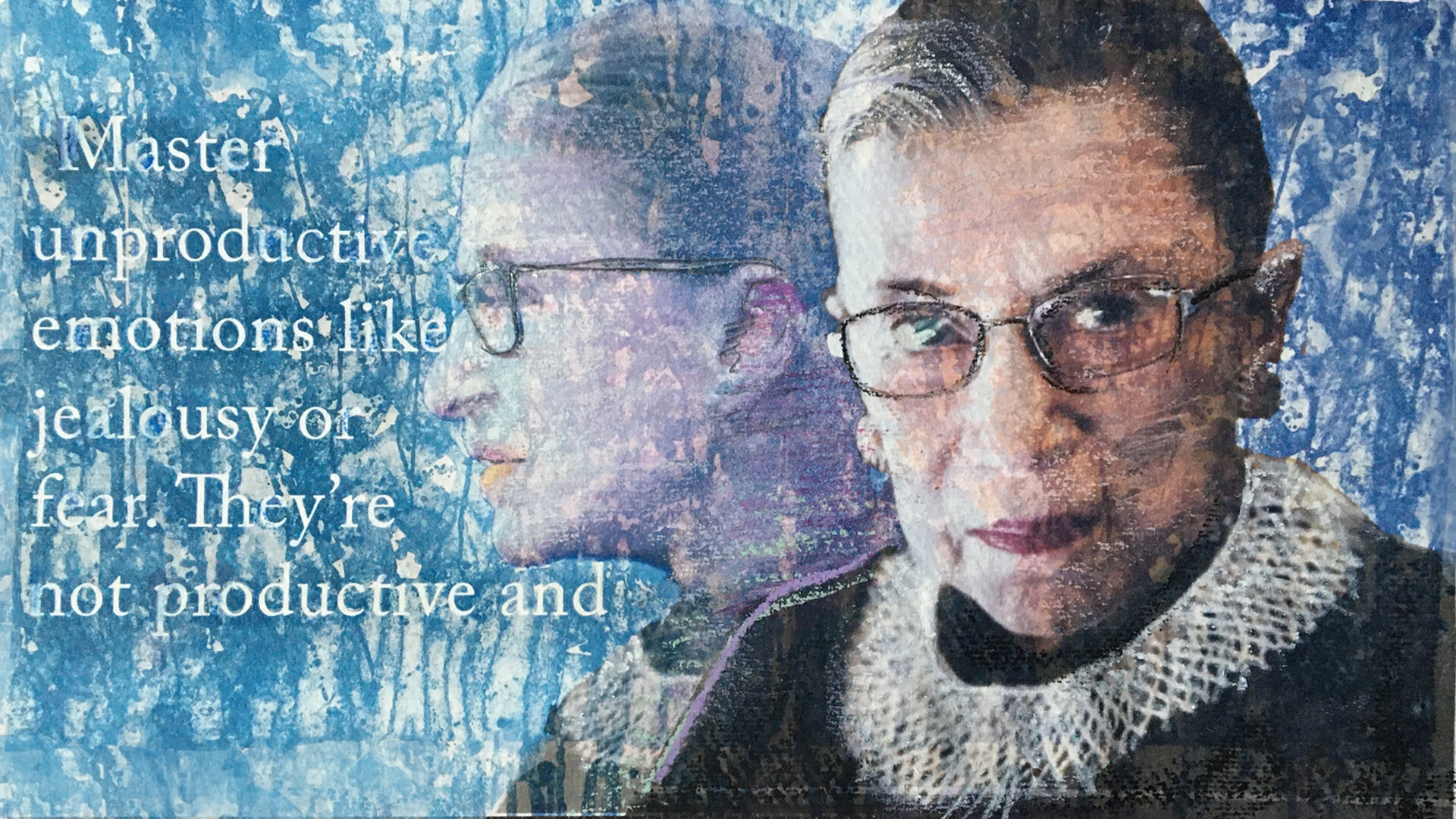
Well, I asked Justice Ginsburg a version of this question. It's an important question, obviously, I asked her what her advice for my then 13-year-old boys was. She said a few important things. First, she always repeats the advice that her mother gave her, which is to master unproductive emotions like jealousy or fear. They're not productive, and they can distract us from useful and productive work. And it's the ancient Stoic wisdom. It's extremely difficult to achieve. She achieved it more dazzlingly than almost anyone I've ever met. Her astonishing focus and self-discipline and refusal to be distracted from her path of pursuing justice and being a great justice was remarkable.

This interview was conducted by Mia Funk with the participation of collaborating universities and students. Associate Interviews Producer on this podcast was Dahlia Haddad. Digital Media Coordinator is Yu Young Lee.. “Winter Time” was composed by Nikolas Anadolis and performed by the Athenian Trio.
RUTH BADER GINSBURG · 1933-2020 · The Creative Process remembers RBG

RUTH BADER GINSBURG · 1933-2020 · The Creative Process remembers RBG

Ruth Bader Ginsburg became the second female justice of the U.S. Supreme Court. Born in 1933 in Brooklyn, New York, Bader taught at Rutgers University Law School and then at Columbia University, where she became its first female tenured professor. She served as the director of the Women’s Rights Project of the American Civil Liberties Union during the 1970s, and was appointed to the U.S. Court of Appeals for the District of Columbia in 1980. Named to the U.S. Supreme Court in 1993 by President Bill Clinton, she continued to argue for gender equality in such cases as United States v. Virginia. She died September 18, 2020 due to complications from metastatic pancreas cancer.

TANNER WOODFORD

TANNER WOODFORD

Tanner Woodford is founder and executive director of the Design Museum of Chicago. He teaches at the School of the Art Institute of Chicago and paints large scale typographic murals across public spaces. As a designer, educator, and entrepreneur, he has taught, lectured, and led workshops on design issues, social change, and design history in classrooms and at conferences. He is happy to be scrappy, irrepressibly optimistic, and believes design has the capacity to fundamentally improve the human condition. He lives and works in Chicago, Ill.

VLAD SOKHIN

VLAD SOKHIN

Vlad Sokhin is a Russia-born documentary photographer, videographer, and multimedia producer covering sociocultural, environmental, and human rights issues worldwide. His projects are supported by various UN agencies and international NGOs. Vlad’s work has been featured in over 40 publications, including National Geographic, NPR, Newsweek Japan, BBC, and The Guardian. In 2014, he was named Best Photographer in Russia, and in 2017, he was awarded the Visa d’or Franceinfo: Award for the Best Digital News Story for his “Warm Waters, Kamchatka” series. Vlad is a citizen of the world. He is currently based in the Asia-Pacfic region and continues to work on photography and video projects there, in addition to Africa, Europe, Russia, and the Middle East.

VLAD SOKHIN

It's not about money, as my teacher said, "If you want to be rich, go to advertising." It's about lifestyle. It's what you want to achieve, what you want to share with people. And in terms of topics I choose...somehow these topics choose me. I just happen to be there. For example, I moved to Australia, and then I was exploring the neighbouring countries, back in 2011. That's where I found my first big projects that I started working on. And one of them was gender-based violence in Papua New Guinea. So of course, I travel far away, but mostly it's something that is in my neighborhood, around me. And that's where I also encountered later on stories that are related to climate change. I was sent in 2013 to cover deforestation and illegal logging in Papua New Guinea. Australian online media sent me there, The Global Mail. I did one story, I did another for them. And then I thought, oh, it'd be interesting to keep telling these stories and connect the whole region together. And that's how Warm Waters was born.

In Alaska, they're moving villages. There's the village of Newtok. They're relocating the entire village to a new location where they hope that they won't be affected by permafrost thawing and coastal erosion. Those new houses they built, they already built them in such a way that they can be slid somewhere else. So, they have this in mind that you can put them on the slides and then move them somewhere else, easily. The village of Shishmaref in Alaska is where just a few years ago, they voted for the entire relocation of the village, and before they spent millions of dollars building big sea walls, hoping that this would protect them. But it doesn't work. In places like Tuvalu, for example, people also try to immigrate, try to move. It's not only because of climate change, it's also because of overpopulation. It's because of lack of jobs, many things. But climate change is also becoming one of those important factors. And yeah, they move to New Zealand. Tuvaluans try to move to Niue, another Pacific island that is more protected. It's a big volcanic elevated rock in the middle of the ocean, and they face the other problem of depopulation. There, people have New Zealand citizenship, so they move to New Zealand and nobody wants to stay there. So, these are interesting shifts and migrations we can see in the Pacific. But many of them now are associated with climate change, especially in tiny atolls, because the people there are most affected.

I'm sure there are some people who deny climate change, they have different reasons. And now I think, of course, every Pacific Islander who lives on this front line of climate change, they wouldn't say it doesn't exist. They see it every day. But also they have the understanding that some of the processes are also natural, or man-made, which makes effects of climate change more visible. You know, they feel more. But it's started by men. In Kiribati, there was an island in the middle of the lagoon. And then they started creating causeways, building roads between little islets, and the water flow changed and that island disappeared. And then people start with the same, "climate change, climate change, sea level rise," which it is not. So it's good to understand: this is what we do; this is what climate change does. Right? And how humans are involved in that.

THE CREATIVE PROCESS

And I'm curious also about your childhood, your upbringing, what drew you to your journey towards photography and why you decided that that would be your lens to tell these stories, as opposed to some other way of telling stories or engaging politically?

SOKHIN

Well, first of all, I'm trying to stay away from politics. I'm speaking generally without saying names. I'm trying to stay as far from politics as possible.This is not my thing. Photography is a natural thing. I'm a visual person. I like to see, I connect through it. But I'm not one of those photographers who always walk with the cameras, as well. If I work, I take my camera. If I don't, I like to enjoy life and take photos with my eyes. They inspire me. But, I do it every day. So for me, it was a natural choice. I just chose this path. Because, I do write as well. And for me, writing is also a way, especially if I accompany my story, but it's not as expressive as visual storytelling.

THE CREATIVE PROCESS

And in these societies there are, you know, they're vastly different, some of them, but from things that we understand, whether it's rituals or superstitions or being less inclusive in terms of gender preference. There's a lot of different customs and things that you're navigating, but what do you find are some universal truths that have ignited your experiences?

SOKHIN

The universal truth is probably: there is good and bad. That's the universal truth. Believing in witchcraft, for example. In some societies they do believe in it, in some they don't believe. But, in some societies you are a Democrat, and you're a Republican. And for those people, it's witchcraft as well. So it depends on the point of view. Good and bad is a division, and then people are divided. They believe that there is a duality that exists, that this is "me" and this is "other." In fact, there's no other. That's when I talk about changing the way you think, about climate change, about yourself. There is no other. It's not the "other" country, or these "primitive people," as some call them. No, it's us, as well; it's like your leg, or your finger. But humanity is one organism. If we understand that, there will be way less problems in the world. Some people are still in this stage of development. But, would you blame, let's say, your child for trying to walk and walking a little bit wobbly? No, just give it time. Papua New Guinea was a very remote country, isolated from the rest of the world. They didn't have universities. And then recently, suddenly they were introduced to the Western way of life. It's not better or worse, the way of life that they lived before. It's just different. So, when we introduce it, and we introduce it very fast, people may not be ready for that. That's it. We just need to understand that.

And I'm not saying that they are less developed, it is not that. It's like: there is yellow color; there's blue. Why is blue not yellow? Because it's blue. That's it. And that's what was with them. They just live differently. And now, there's a lot of people trying to reconnect. There's the thinking, "Ah, what do the elders say?" In the United States of America, or in Australia, every new big thing– they now call their native people, and they ask them, "Why don't you do a ceremony to call the spirits?" Now, it's changing. Now, they tap into this truth, to this, let's say, ancient knowledge, that probably people would forget. Now the governments invite these people. I've been to many festivals in Sydney that start with inviting Aboriginal people to do a water blessing ceremony. So, it becomes part of the shifting of awareness: your way of life is different from ours, it's not worse or better, it's just different. So, let's also include it in the way we live and share and exchange.

This interview was conducted by Mia Funk with the participation of collaborating universities and students. Associate Interviews Producer on this podcast was Khrystyna Tsunyak. Digital Media Coordinator is Yu Young Lee. “Winter Time” was composed by Nikolas Anadolis and performed by the Athenian Trio.
Mia Funk is an artist, interviewer and founder of The Creative Process.


JACK THORNE

JACK THORNE

Jack Thorne is an internationally acclaimed playwright and BAFTA award-winning screenwriter. His adaptation of Philip Pullman’s His Dark Materials is currently airing on HBO and the BBC, and his new series The Eddy was recently released for Netflix. Thorne’s screenwriting career began on the Channel 4 series Shameless and BBC series Skins. Later this year, his feature adaptation of The Secret Garden will be released and feature films Enola Holmes and Swimmers are on the way. Thorne’s films include The Aeronauts, starring Eddie Redmayne and Felicity Jones, Wonder, starring Julia Roberts and A Long Way Down starring Toni Collette. As a playwright, Jack’s credits include the Tony and Olivier award-winning West End and Broadway hit Harry Potter and the Cursed Child.

Photo by Gage Skidmore

CHARLES BAXTER

CHARLES BAXTER

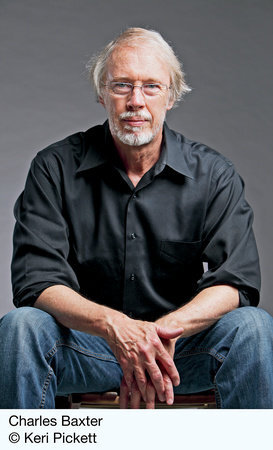
Charles Baxter is the author of the novels The Feast of Love (nominated for the National Book Award), First Light, Saul and Patsy, Shadow Play, The Soul Thief, and The Sun Collective, and the story collections Believers, Gryphon, Harmony of the World, A Relative Stranger, There’s Something I Want You to Do, and Through the Safety Net. His stories have been included in The Best American Short Stories. Baxter lives in Minneapolis and has taught at the University of Minnesota and in the MFA Program for Writers at Warren Wilson College.

MORGAN NEVILLE

MORGAN NEVILLE

Documentary Filmmaker

I think it's interesting because I feel like in scripted films people are trying to infuse a spontaneity and a reality and a being in the moment into something that's very artificial. And I feel a lot of what we do as documentarians is try and impose a structure or a form on something that is utterly real and alive and in the moment and uncategorizable in many ways. So, we're kind of the opposite, coming from opposite ends of the same goal, which is to kind of create something that is or feels authentic to a certain truth, an emotional truth, or a literal truth.

APRIL GORNIK

APRIL GORNIK

Artist and activist for people, places, and animals

I was in a group called the Women's Action Coalition in the early 90's. The fact that we couldn't get the ERA passed is insane. Although, now as I’m seeing it reintroduced, it should be a true equal rights amendment for everybody. Not just focused on women being equal to men, but a real update to the constitution. We still have things that we need to rewrite.

ALBERT SERRA

ALBERT SERRA

Albert Serra has been called one of the most radical and singular filmmakers working today. Born in Banyoles, Spain, he studied literature and art history at Barcelona University. In 2006 he wrote, directed and produced his first feature film, Honor of the Knights, followed by Birdsong; both were selected for the Directors’ Fortnight at Cannes. In 2010 he made Els noms de Crist before directing, a year later, El Senyor ha fet en mi meravelles for the exhibition Correspondencias at Barcelona. He is best known for his films Story of My Death and The Death of Louis XIV starring Jean-Pierre Léaud. His most recent feature film Liberté explores libertinism at the time of the French Revolution.


Mia Funk is an artist, interviewer and founder of The Creative Process.

JAMES McDANIEL

JAMES McDANIEL

James McDaniel is an actor and director best known for his award winning performances on NYPD Blue, Detroit 187, and Edge of America. When he’s not acting in front of the camera you can find James on and off-Broadway starring in works like Before it Hits Home, August Wilson’s Joe Turners Come and Gone, and most recently A Soldier’s Play. James also created the role Paul, in Six Degrees of Separation, setting the stage for future Black actors like Will Smith, who reprised the role in 1993. His television credits include Orange is the New Black, Madame Secretary, and most recently, Hysteria, streaming on Amazon Prime. Other film credits include The Battle for Bunker Hill, Steel City, and Malcolm X, amongst many others.

This interview was conducted by Mia Funk with the participation of collaborating universities and students. Associate Interviews Producer on this podcast was Ua Hayes. Digital Media Coordinator is Yu Young Lee. “Winter Time” was composed by Nikolas Anadolis and performed by the Athenian Trio.

HANS-ULRICH OBRIST

HANS-ULRICH OBRIST

Curator · Writer · Interviewer & Artistic Director of Serpentine Gallery

I always thought that curating has to do with junction making. I think when I wake up in the morning, I always think how can I bring people together? We haven't met each other yet. And I think my activity has always to do with junction making. When I do exhibitions, I make junctions between artworks. I make junctions between artists. I make junctions between art and different disciplines because I think we live in a society where there are a lot of silos. There are different very specialized worlds. And I've always seen it as my role to make connections between these different worlds. If we want to address the big questions or challenges of the 21st century–if it's extinction and ecology or if it's inequality or if it's the future of technology–I think it's very important that we go beyond the fear of pooling knowledge. We go beyond these silos of knowledge and bring the different disciplines together.