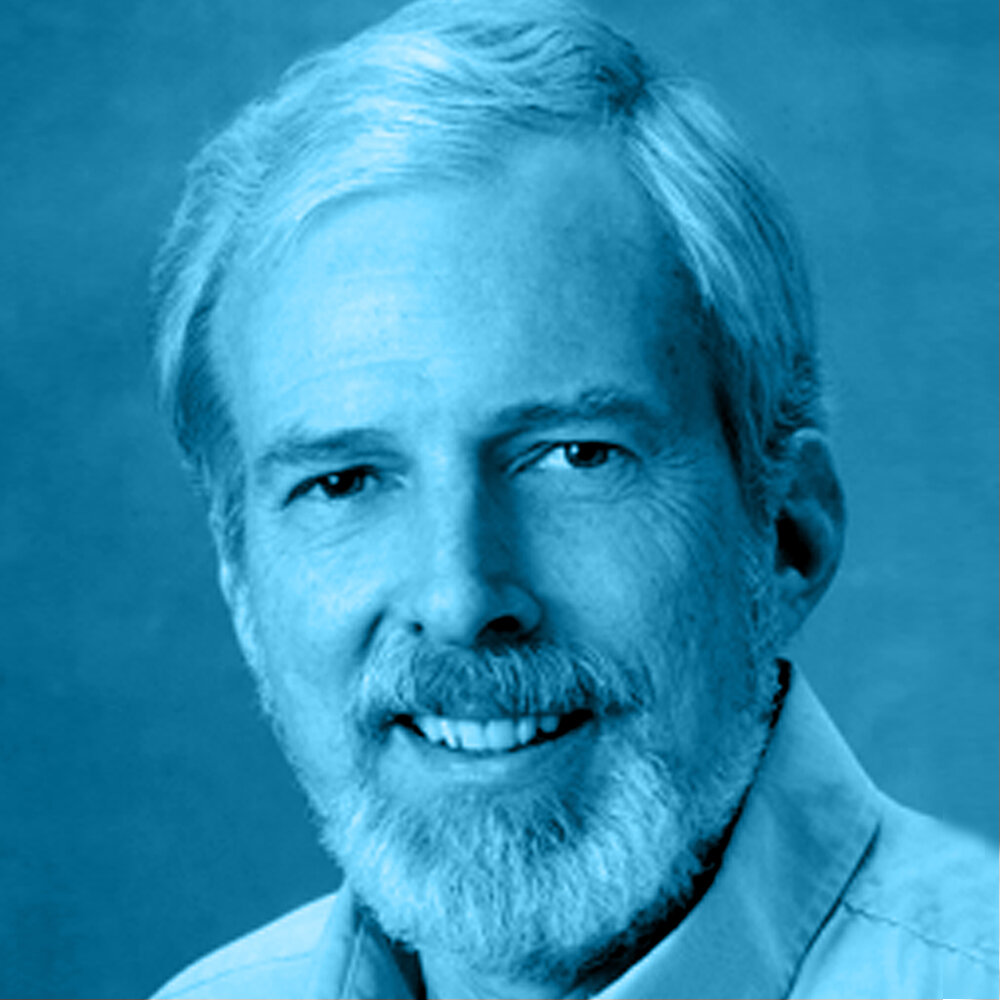
ROBERT J. LANG

ROBERT J. LANG

Master Origamist, Physicist & Author

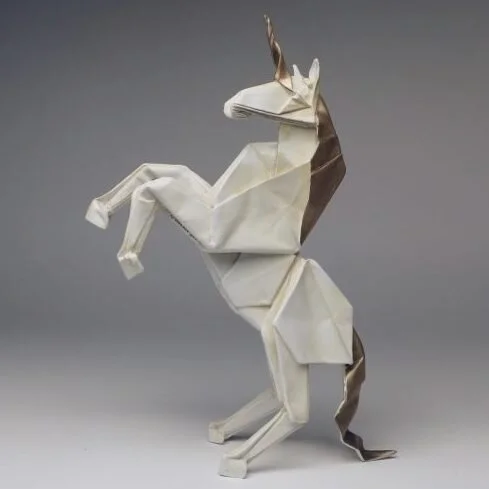
In origami design, historically people have always used their intuition. They probably started by folding traditional shapes or folding designs by others, developed an intuitive understanding of how the paper behaves and then from there they can explore that intuition to create new shapes. That was the way design worked for years and years, that was the way it worked for me, but I eventually hit a limit to what I could do with my intuition and so part of my motivation for exploring mathematical methods was to externalise some of the design process. If I could get some of the design process on paper in a meaningful way, then I could handle more complicated goals than I could just fit in my brain.

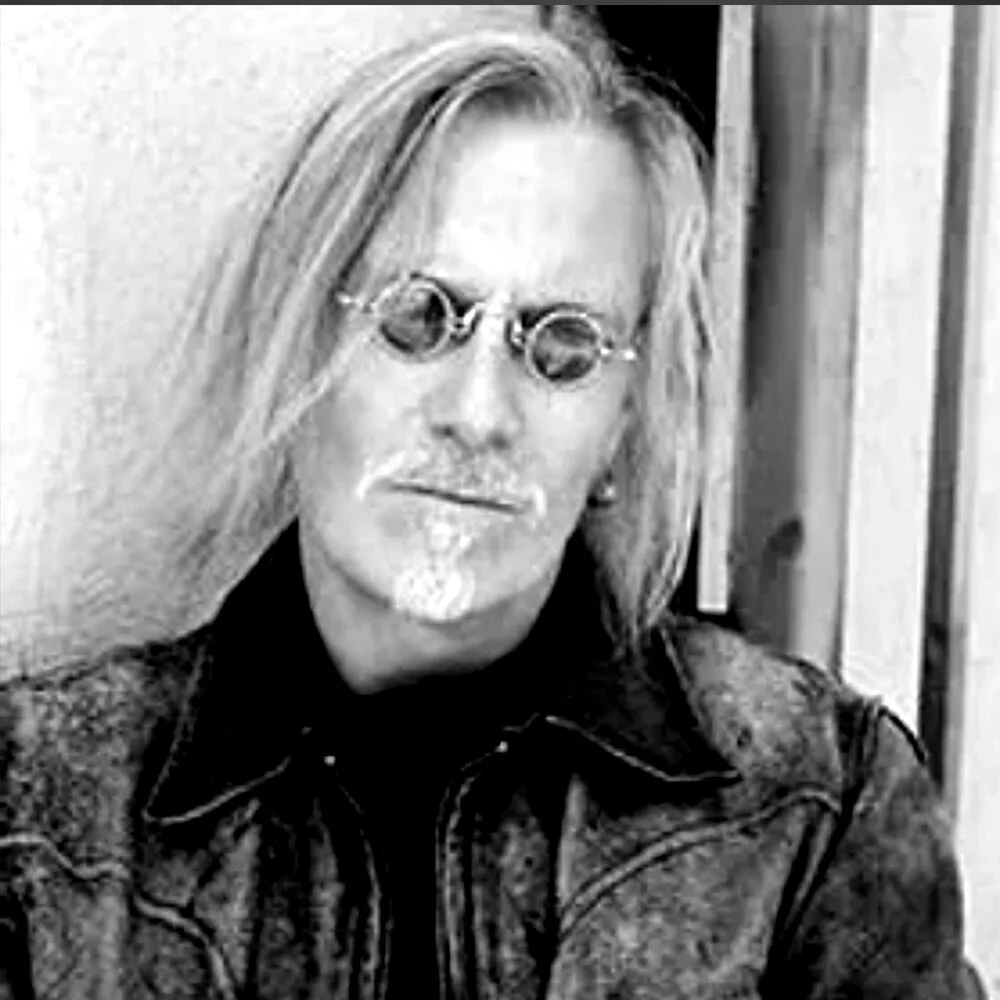
DAVID TOMAS MARTINEZ

DAVID TOMAS MARTINEZ

Pushcart Award-Winning Poet

When I was younger, I never really thought of living past twenty-five…I felt like I was in a movie. I thought that I was living this movie idea of things and there’d be gunshots around you. You hear it hitting the concrete, and you’re like ‘Oh, shit’. Seriously, I didn’t think of it as real life. When you’re young, the idea that I’d known people that were killed early, you go to prison. These just felt like matter of fact. They seemed to be this part of life and you just accepted them.

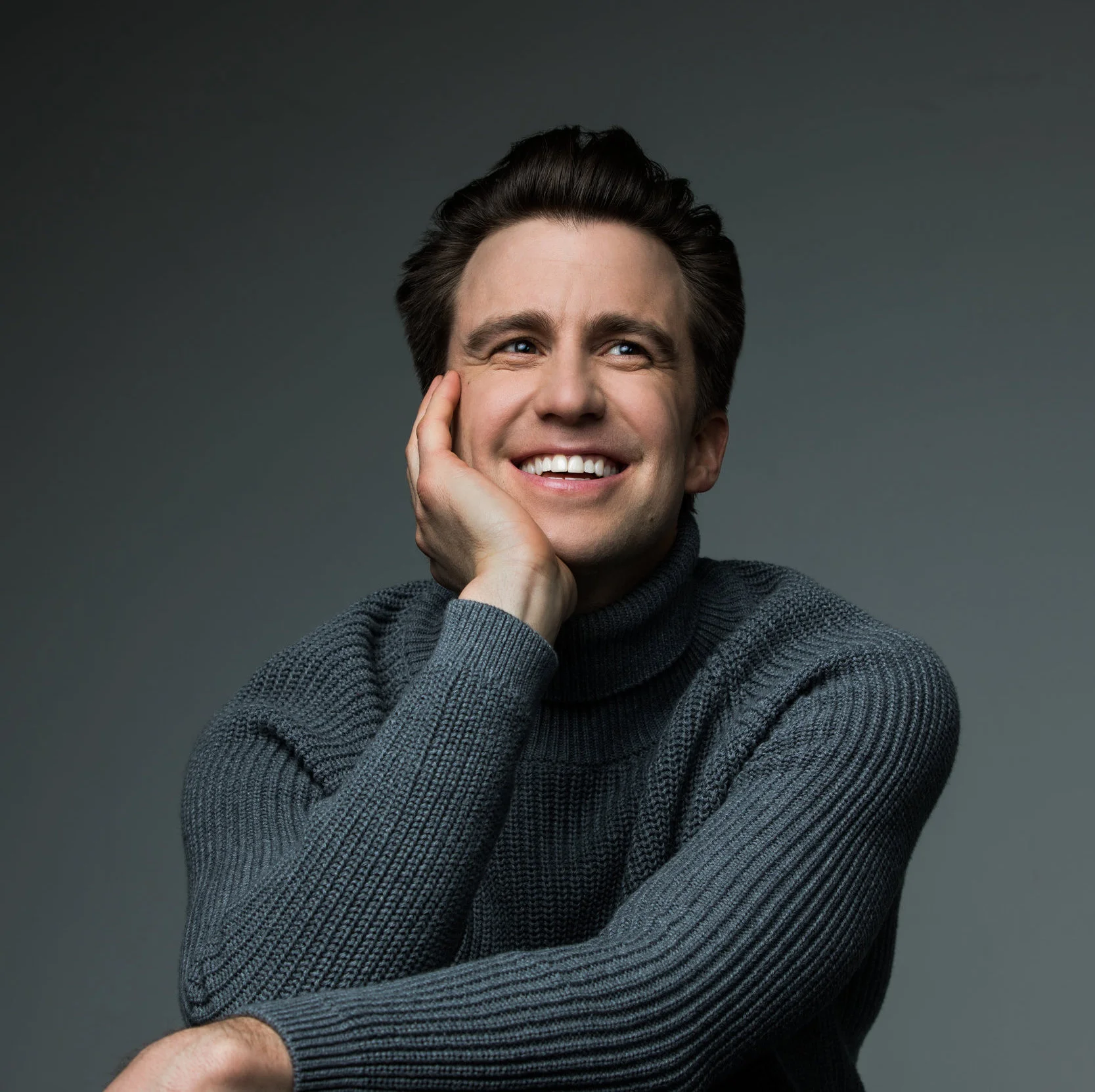
GAVIN JAMES CREEL

GAVIN JAMES CREEL

Tony & Olivier Award-Winning Actor, Singer & Songwriter

To not honor that we are all creative, beautiful, interesting deep, rich individuals. We’re not zeros and ones on a spreadsheet. We’re not scientifically explained. We are not mathematically judged. We are imperfect blobs of emotion and bone and spirit and life and when we come together there is nothing greater than the chemistry and the alchemy of musical theater… There’s a joy, there’s a bounce, there’s an effervescence that’s part of that music. I had a great teacher in college, the head of our program Brent Wagner said, 'With lyrics, I can tell you to open the door, but with music I can tell you how.’ Lyrics are information and music is emotion.

DR. FRANÇOIS CLEMMONS

DR. FRANÇOIS CLEMMONS

Singer · Author
1st African American Actor on Children’s TV · Officer Clemmons on Mister Rogers’ Neighborhood

I always find it an ironic thing to think about the fact that Fred Rogers was colour-blind. He could barely tell a blue from a grey. I was young and to him I was a child and I certainly played the role of a child and he played the role of parent… He was profoundly patient.

AVI LOEB

AVI LOEB

Harvard Astronomer · Theoretical Physicist
NY Times Bestselling Author of Extraterrestrial, The First Sign of Intelligent Life Beyond Earth

If we are not open to discover wonderful things, we will never discover them. It very much depends on us allowing ourselves to explore and find new things. My mother used to tell me when I was a kid that when I was born as an infant I was very different from the other babies in the room. I was looking around with open eyes, and I should say that’s where it all started. Once I got out of the womb of my mother and I started looking around, I was very curious. The great privilege of being a scientist is that you don’t need to give up on that curiosity. You can maintain your childhood curiosity.

TAL HEVER-CHYBOWSKI

TAL HEVER-CHYBOWSKI

Director of the Paris Yiddish Center (Maison de la Culture Yiddish) & Medem Library

A lot of people in my family and among my friends when they heard that I study Yiddish and that later made it my livelihood, they are very surprised. Yiddish? How come Yiddish? Why Yiddish? They even laugh sometimes, they are very surprised. And what I answer to them is that there is nothing surprising about the fact that I study or speak Yiddish. The real surprise, the real question that has to be asked is how come my parents, this last generation, didn’t speak Yiddish? Because, if you consider my family, for hundreds of years on all sides they spoke Yiddish.

ANANTHA DURAIAPPAH

ANANTHA DURAIAPPAH

Inaugural Director · UNESCO Mahatma Gandhi Institute of Education for Peace & Sustainable Development

I’ve always found that science and evidence has to be the guiding force in the way that we design our programs. Of course, understanding people as humans. People as not just rational human beings. That’s another thing that I also learned during my journey is that the whole notion of a rational human being is used as an assumption to make our economic models simple.

ETGAR KERET

ETGAR KERET

Writer and Director

When I compare novelists to short story writers or very short story writers, I can’t compare them, but one thing for sure, the purpose is different. I think that someone who writes tries to create or document a world. And when you write very short fiction you try to document a motion, some kind of movement.

PATON MILLER

PATON MILLER

Artist & World Traveler

When we moved back to Hawaii and lived on Molokai. I was teaching at the Kalaupapa Leprosy Colony, we had no money. And I was spearfishing, not for sport, but to get food for my family. And it was a beautiful time of our lives. We were so poor, but we were not poor. Poor is a state of mind. We were without money, but we were having so much fun.

STUART UMPLEBY

STUART UMPLEBY

Professor Emeritus of Management at George Washington University School of Business
Former President of the American Society of Cybernetics
Associate Editor of the Journal of Cybernetics and Systems

“Cybernetics is the Greek word for governor, that’s where it came from. It was introduced into the contemporary discussion with a book by Norbert Wiener in 1948 called Cybernetics: Or Control and Communication in the Animal and the Machine. These were the very early days of computers and they were looking for a theory to guide the creation of computers.”

DAVID RUBIN

DAVID RUBIN

Interview Highlights
You know, the camera lens reads thought and reads emotion as much as the human eye does, and anything that is false, anything that is premeditated, planned doesn't feel real. So a great actor has none of those false beats in their work. That's all extremely connected to who they are personally. The camera lens sees it, and the audience loves it.

GREGORY JBARA

GREGORY JBARA

Gregory Jbara is a Tony award-winning stage actor with a impressive career spanning over four decades . On Broadway, Gregory has stared in renditions of Chicago, Dirty Rotten Scoundrels, and Billy Elliot, which earned him the 2009 Tony award for Best Featured Actor in a Musical. Since departing from the stage, Gregory has spent ten seasons alongside Tom Selick in the CBS drama Blue Bloods.

PETER MCLAREN

PETER MCLAREN

Peter McLaren is Distinguished Professor in Critical Studies, the Donna Ford Attallah College of Educational Studies, Chapman University and Professor Emeritus, the University of California, Los Angeles. He is an award-winning author and editor of approximately 50 books. His writings have been translated into 25 languages. He is the recipient of numerous lifetime achievement awards and is a Fellow of the American Educational Research Association. One of the architects of critical pedagogy in North America, Professor McLaren is active politically in both North America and America Latina and is co-founder of Instituto McLaren de Pedagogia Critica in Ensenada, Mexico. His work is indebted to his mentor, Paulo Freire, and the Catholic social justice tradition of liberation theology. His latest book is He Walks Among Us: Christian Fascism Ushering in the End of Days.


ALICE NOTLEY

ALICE NOTLEY

Poet

I wrote "I the People" in about 1985. I was living in New York and it was one of those years when it was an anniversary of the Constitution…My first husband had died a few years previously, and I didn't feel like I was part of any "we." But I did feel that I was "the people," somehow. So, I just changed it to "I the People." It seemed to me that that could be something that anyone might say to themselves, I the people.

PAUL AUSTER
CINDY CHUPACK

CINDY CHUPACK

Writer · Producer · Director
Sex and the City, Modern Family, Everybody Loves Raymond, Otherhood

It was a long journey because I think I've been writing television now twenty-five years. I never really had the directing bug. I always loved writing and I like being behind the scenes and, in television, writers have so much control anyway to rise up the ranks and run the show and hire the directors, so I mostly had just great collaborations with directors.

Chris Dercon

Chris Dercon

Museum director, curator, and cultural producer at large, Chris Dercon is the President of the Réunion des musées nationaux – Grand Palais, an umbrella group of national museums in France. His career in major cultural institutions across Europe spans several decades. From 2011 to 2016, he was director of London's Tate Modern. He has been program director of MoMA PS1 in New York, and has served as director of the Witte de With Center of Contemporary Art in Rotterdam, Museum Boijmans Van Beuningen in Rotterdam, the Haus der Kunst in Munich, and Berlin's Volksbühne theater. He is also a presenter, writer and maker of cultural documentaries.
www.grandpalais.fr


DEBRA KERR

DEBRA KERR

Debra Kerr is the Executive Director of Intuit - the Center for Intuitive and Outsider Art in Chicago. She was previously at the John G. Shedd Aquarium for 17 years - she is a past board member of the Association of Zoos and Aquariums, past chair and instructor for its Professional Development Committee and management courses, past chair of the zoo and aquarium committee for the International Association of Amusement Parks and Attractions, and former board member of the National Veterans Art Museum. 

She currently serves on the board for the Merit School of Music and the National Wildlife Federation’s Great Lakes Leaders Council. She frequently presents on issues related to museum relevance, teen empowerment and activating the public for social good.

Mia Funk is an artist, interviewer and founder of The Creative Process. 

SUSAN FISHER STERLING

SUSAN FISHER STERLING

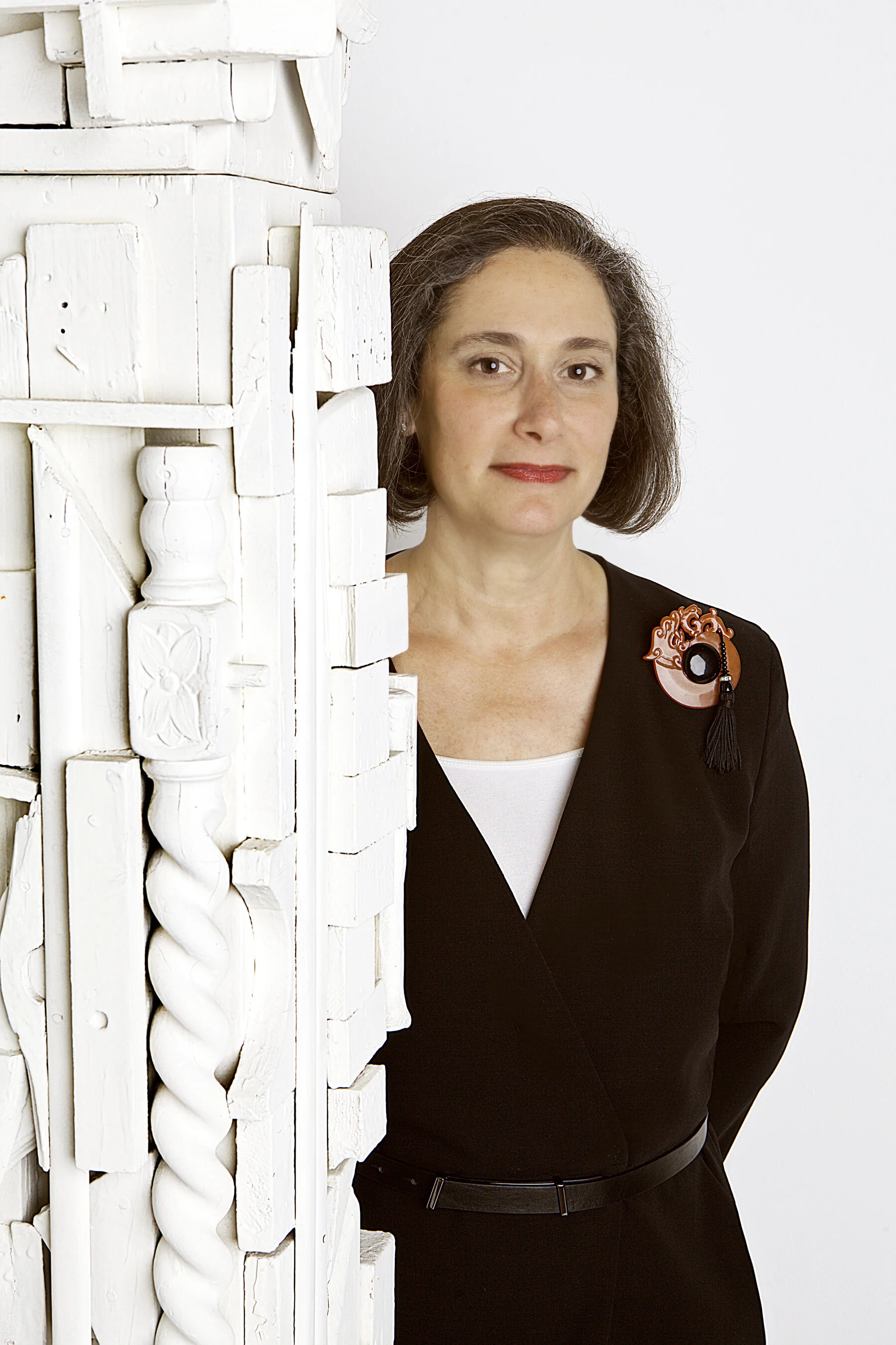
Director of the National Museum of Women in the Arts (NMWA) in Washington, D.C., Susan Fisher Sterling has built her career and the stature of the museum around the message of equity for women through excellence in the arts.

Unusual for the museum field, Sterling has dedicated her entire career to advancing NMWA’s mission.As an associate curator, curator of modern and contemporary art, and then chief curator/deputy director, she spent her first 20 years organizing exhibitions and publications of contemporary women artists.

Sterling assumed the directorship of the museum in 2008. During her ten-year tenure the museum has flourished, and has regularly received the highest Charity Navigator rating of 4 stars for sound fiscal and programmatic management. In 2017–18, NMWA celebrated its 30th anniversary with Washington Post “best pick” exhibitions like Women House and its annual gala honoring renowned photographer Annie Leibovitz.
A life-long champion of women through the arts, Sterling has received National Orders of Merit from Brazil and Norway and the President’s Award of the Women’s Caucus for Art. In 2017 she was named one of the Most Powerful Women in Washington by Washingtonian magazine.

Photo: Michele Mattei

THE CREATIVE PROCESS

The National Museum of Women in the Arts is such a necessary institution, and you've been here over 30 years, almost since the beginning. What was your vision coming in and how has that evolved over the years?

SUSAN FISHER STERLING

I came to work at the National Museum of Women in the Arts thirty-two years ago. I really took to the idea that the museum was controversial, that a lot of men said, "Why do you need a women's museum? There are so many other museums. Why do women have to be separated?" I think feminists also said similar things sometimes. "Do we need to have a separate museum for women? Couldn't we just make sure that women are in all the other museums?" It's interesting, too, because some of the people who were more conservative, more traditionalist, would say things like, "Well, we're not sure we like this feminist concept." So it was very interesting to see the triangulation of opinions about the museum.

The way we exhibit the collection is based on themes, themes that are developed by our curatorial team and often in conjunction with our educators as well as our library. The reason for this goes back a really long way. It goes back to the founding of the museum, at a time when I was a curator, and frankly, I did not have enough works to be able to show the collection thematically. So the question becomes, why did we want to do that? The answer is that in some ways, particularly with our collection, which is mostly European and American, when you take a look at Western art history, chronology tends to subvert or discount women and people of color, because technically we show up sort of late to the game. The training opportunities were different. If you look at the 18th century, you find a lot of portraits, you find still lifes, various sorts of imagery or types of painting that women were seen as being able to do, but men were able to do other kinds of work which were highest in this hierarchy. So we never were really comfortable with this notion of a chronology that perpetrated or put forward a hierarchy in the arts. Some four or five years ago, my charge to our chief curator and our team asked, do we have enough works now in the collection? Because the collection is about 5000 works now. When I started, it was about six hundred. So do we have enough works now to be able to create thematic installations within our galleries, our collection galleries that tease out themes that are important? Vis-à-vis women, but yet also just important. Can we mix the different eras in a way that's responsible, where the art really talks to one another?

Many, many people come to us because of contemporary art and they're very interested in seeing contemporary art, which goes a little bit against the idea of many museums where the historical work seems to be most important to people. I think that's partly a realization that women artists came later to the game and so modern and contemporary art is where women artists have really shown their stuff, if you will. The historical work, while it's very important to the story, needs to be interspersed and looked at in relation to contemporary art and contemporary themes so as to continue to have a real relevance. That's a curious thing for us because people are coming to us for something we have to offer that might be different from the large municipal or encyclopedic museum. So in a way, we've been able to shift the discussion and also still showcase those great persevering, exceptional talents of the past that really were able to succeed, way against the odds, totally against the odds.

The shift was from being a museum that reinserted women into the history of art to a more inclusive agenda, which is to champion women through the arts. It allows for the excellence of women. It enables the museum to have programs like the Women, Arts, and Social Change programming that involves women artists at the center of social change or social action. It also talks about women as change agents.

And so museums like the National Museum of Women in the Arts that are permissioned to do more were created with that new way of thinking about ourselves. While at the same time we continue to do the work of the past, reinserting women into the history of art, our programs enable us to showcase or bring to the fore contemporary women artists who are doing great work. It allows us to bridge the past with the present and see that sort of future for ourselves.

I mean, we really are ciphers and not just ciphers, but also integrally involved in these issues that are important to our communities. You can see how what's happening with the pandemic is now layered upon what was already a concern that was our focus for the year in that programming.

But it's a really good model for how you can bridge arts and social change and point to women and artists as being at the center of that. It will be interesting to talk about spirituality in the sense of how do you have joy, how do you keep a spiritual life? How do you feel connected to other spaces, other sorts of thoughts in the midst of difficult times? What kind of artwork might come of that? Is our spiritual life something that we should take very seriously, not just during the pandemic, but afterwards?

THE CREATIVE PROCESS

What do you feel about the idea of artistic genius?

FISHER STERLING

"Genius" is such an interesting term. Just like "visionary." Who decides? It's oftentimes the case that men decide.

And certainly, you have this idea of the solitary genius, the rebel, the working in the garret. The idea that genius will out, no matter what. Geniuses always know exactly what they're thinking about, and they create this amazing work and everybody recognizes it right away.

Certainly, there are interesting ways to think about mathematical genius. There are also interesting ways to think about artistic genius. Who is a genius for people who are social philosophers? All different manners of things that people call genius. The truth is there's a system that props that up and says this person's a genius, but that person's not.

Most often that leads to a whole body of folks who are left out, because at least in the past, with all kinds of 19th-century brain studies, there were all these studies that wanted to prove the inferiority of everybody other than a white male.

I think that the concept of genius at this point in my world is debunked. But that doesn't mean that I don't want women artists to be seen as geniuses, because that's a term that people understand in the world of the popular press or just the general population. So, you want to play on the field that's given. When I was working with Carrie Mae Weens, I liked to say, just because there's such a thing as the male gaze, doesn't mean you shouldn't stare that gaze down.

This interview was conducted by Mia Funk and Katherine Capristo with the participation of collaborating universities and students. Digital Media Coordinator is Yu Young Lee. “Winter Time” was composed by Nikolas Anadolis and performed by the Athenian Trio.
JOSH PAIS

JOSH PAIS

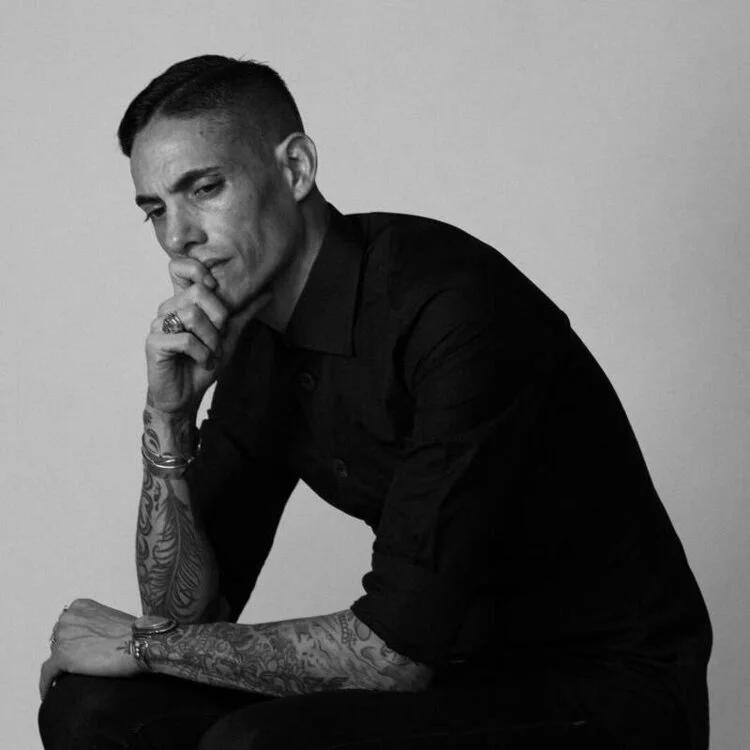
Joshua Pais has appeared in over a hundred movies and TV shows, including recurring roles in Ray Donovan, Mrs. Fletcher, The Good Wife, Maniac, The Sopranos, and Law and Order: SVU. His film work includes Motherless Brooklyn, Joker, Touchy Feely, Teenage Mutant Ninja Turtles, Music of the Heart, Assassination of a High School President, and I Saw the Light. The son of holocaust survivor and theoretical physicist Abraham Pais, Josh is the founder of Committed Impulse, a comprehensive acting technique which involves creating from the energetic (atomic) truth in the body.

This interview was conducted by Mia Funk with the participation of collaborating universities and students. Associate Interviews Producer on this podcast was Emma Ryan. Digital Media Coordinator is Hannah Story Brown.

Mia Funk is an artist, interviewer and founder of The Creative Process.