MIKE PONDSMITH

MIKE PONDSMITH

Creator of Cyberpunk · Origins Award-Winning Game Designer

One of the things I’ve noticed is that a lot of those younger people are actually much nicer than they need to be. And they have to realize that this is going to be your world. It turns out the way you want to make it and so you should be thinking now about what you want out of this. What do you want that world to be? Do not wait around until the two generations beyond you have gone ahead and done it the way they want it because, by the time they get done, you’re not going to have the chance to shift it to where you want it. So start thinking now about where do you want to be? What is the future you want? And don’t be nice about it, just go ahead and start planning it now.

GIULIO BOCCALETTI

GIULIO BOCCALETTI

Author of Water, A Biography
Natural Resource Security & Environmental Sustainability Expert

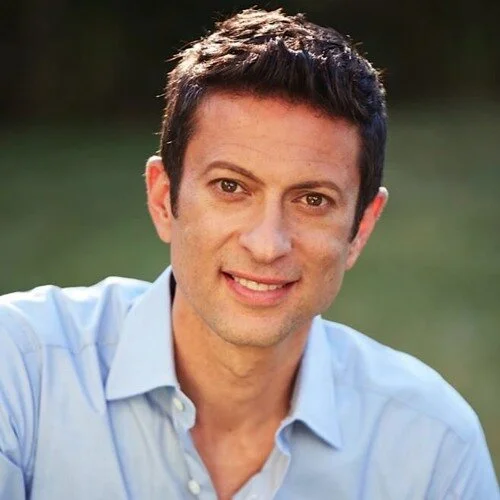
The problem doesn’t really reside there. The problem is that people have gotten used to thinking about water as a technical issue that can be solved by somebody sitting in a room somewhere with a white coat. The reality is that the history of water shows that this is probably the most political and salient issue of society–How we share the resources that make it possible for us to live is a fundamentally political problem. And in nations that live together under a social contract is fundamentally a constitutional problem. So my hope is that we elevate water to a much higher level of political discourse.

PAOLO SZOT

PAOLO SZOT

Tony Award-Winning Singer, Actor and Star of Chicago, the longest-running American Musical in Broadway History

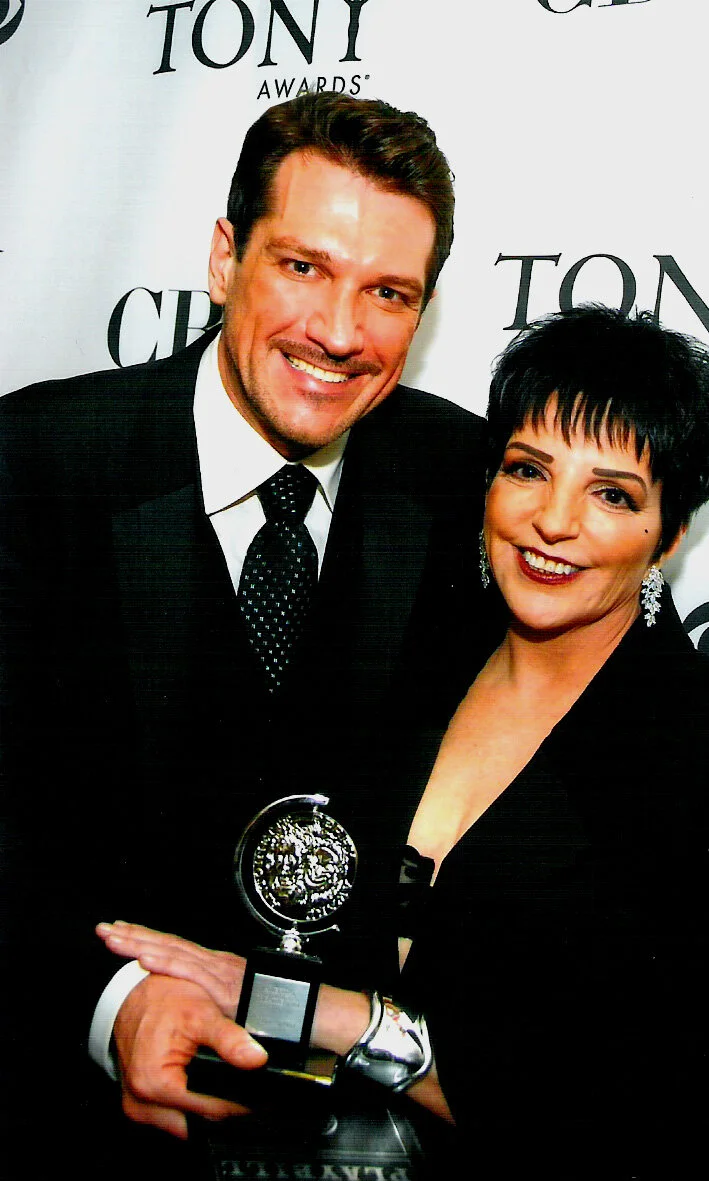
All the themes are very contemporary. I think what moves this story is the search for instantaneous celebrity. That’s what the girls are all about, Roxie and Velma. They want to be famous. Of course everything that you cited, corruption, crimes, the press focusing on sensational stories–it’s all there. And I think that’s why the public relates so much to it.

NICK MEYNEN

NICK MEYNEN

Senior Policy Officer Economic Transition at European Environmental Bureau
Author of Turning Point: The pandemic as an opportunity for change

Now with this crisis even the IMF, even the economists are saying we’re not going to go back to the neoliberal era. And they were defending this era for decades. So, I have hope that maybe we can now transition to something like a Wellbeing Era, where countries are already saying “we want to be a wellbeing economy. New Zealand is telling every ministry: Tell us how you are improving the wellbeing of the New Zealand people. So that means wellbeing has become the cop who rules over the others. There are countries like Bhutan who have thirty years of experience of doing that. They call it Gross National Happiness.

PAUL SHAPIRO

PAUL SHAPIRO

CEO of The Better Meat Co.
Author of Nat’l Bestseller Clean Meat: How Growing Meat Without Animals Will Revolutionize Dinner and the World

If you go fill up your car with gas in the United States, chances are high that probably about 10% of your gas is not actually coming from fossil fuels. It's coming from ethanol.You don't even contemplate the fact that there's ethanol in your gas. And I think that meat maybe come like that, where people will obtain meat. But the norm will be for that meat not to be totally animal in its nature. And I think that people will just have a different view of what meat is, and it will be far more diverse than what it is today.

RON GONEN

RON GONEN

Founder & CEO of Closed Loop Partners
Former Deputy Commissioner of Sanitation, Recycling & Sustainability, NYC

We live in buildings and cities because that’s what generates a living for a lot of people, but where we’re most comfortable as humans is when we’re in nature. Your generation owns this. Don’t let anybody take it from you or damage it because you own it. The next generation is the one that owns it and view it with a sense of ownership and a sense of pride and a sense of protection because there are a lot of benefits you get from nature.


(Highlights) BEN PRING

(Highlights) BEN PRING

Director of Cognizant’s Center for the Future of Work
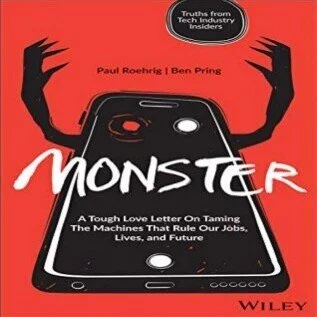
Author of Monster: A Tough Love Letter On Taming the Machines that Rule Our Jobs, Lives

They’re single-purpose engines doing one thing in extraordinary ways, and they’ve been encouraged in that by the ecosystem around them, by the funding that’s being pumped into them by people whose only motivation is simply to make more money–and you can see the results of that in the world as this technology has grown from a little acorn to now being the biggest Sequoia in the forest. And it’s shading every other tree, it’s taking all the light, it’s taking all the energy from the forest, and it’s distorting so much in the world.

BEN PRING

BEN PRING

Director of Cognizant’s Center for the Future of Work
Author of Monster: A Tough Love Letter On Taming the Machines that Rule Our Jobs, Lives

They’re single-purpose engines doing one thing in extraordinary ways, and they’ve been encouraged in that by the ecosystem around them, by the funding that’s being pumped into them by people whose only motivation is simply to make more money–and you can see the results of that in the world as this technology has grown from a little acorn to now being the biggest Sequoia in the forest. And it’s shading every other tree, it’s taking all the light, it’s taking all the energy from the forest, and it’s distorting so much in the world.

TODD MILLER

TODD MILLER

Journalist & Author
Build Bridges, Not Walls · Storming the Wall: Climate Change, Migration & Homeland Security

In 2003, the Pentagon commissioned a report titled something like An Abrupt Climate Scenario. They asked some independent researchers to look at what would happen in a worse case scenario. They found that the United States and Australia. They said that they would have to put up defensive fortresses ‘to stop unwanted starving immigrants’…

ANTONELLA WILBY

ANTONELLA WILBY

National Geographic Explorer
National Science Foundation Research Fellow · Contextual Robotics Institute, UCSD

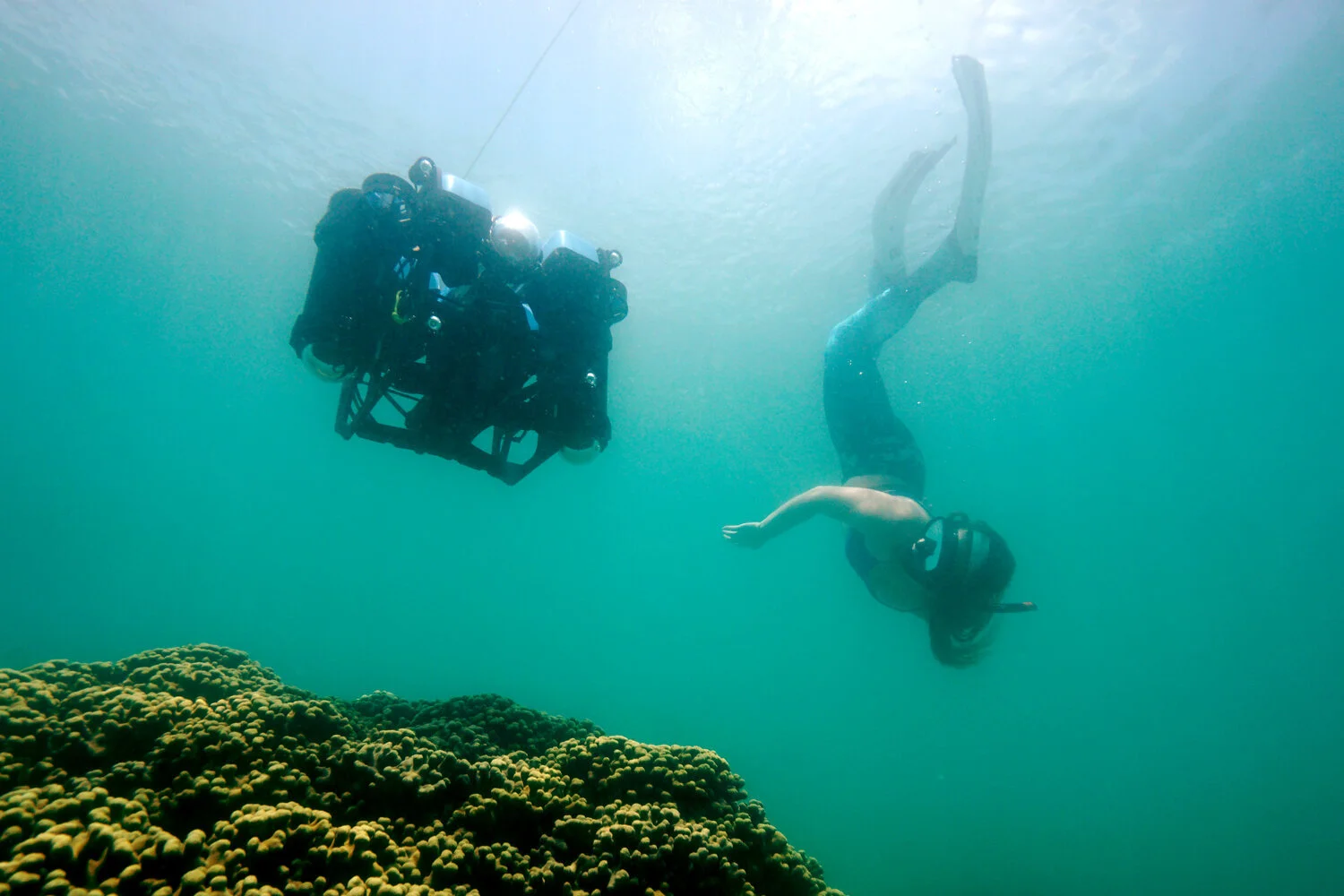
I’m grateful for the fact that through my work I’ve had a lot of opportunities to go to places that a lot of people just simply won’t ever get a chance to go. I like having those opportunities to try to share with people what that’s like. I honestly had no idea I would ever be here. I’m from a working-class background, didn’t have a huge amount of opportunities but now I can and that’s one thing that I particularly enjoy.

LORENDA RAMOU

LORENDA RAMOU

Pianist, Musicologist & Concert Curator for Contemporary Music · Onassis Cultural Centre, Athens

As a child, music felt very natural for me. I didn’t feel I needed to put any effort into learning the piano. I wanted to find all the musical information that was there. What was the purpose of studying the piano? Suddenly the whole thing became so creative. I felt that the sound is something malleable and you can have an infinite number of possibilities and ways of phrasing and expressing, so that opened a whole new area of possibilities and I found this just fascinating.

IBRAHIM ALHUSSEINI

IBRAHIM ALHUSSEINI

Founder and CEO of FullCycle Fund

Is it okay that you benefit at the expense of everyone and everything else? Is that a way that you really feel like you are winning at life? If not, then reconsider what you’re doing and just realize that we all live in this inextricably connected closed sphere in the middle of space. Anything that harms one area harms every area. There is nobody who can escape dirty air, dirty water, dirty food, economic political disruptions, etc. We’re all in this together. So don’t fool yourself by thinking somehow you’re going to come out this unscathed and having ‘won’ while everybody else loses.

JENNIFER MORGAN

JENNIFER MORGAN

Executive Director of Greenpeace International

I have always hoped and dreamt to work with young people because I’ve always felt that it is their future. It’s so inspiring to be working with young people all around the world. I feel that we are in the midst of transformational change and that working together around these key moments where you can see those shifts happening – unimaginable things that you never thought were going to happen can happen. That would be my other advice to young activists that just when you aren’t expecting it, something will happen and you’ll be like, “I can’t believe they just decided that! Holy cow!” And then you’ve got to celebrate.

McKENZIE FUNK

McKENZIE FUNK

Journalist & PEN Literary Award-Winning Author of Windfall

As a parent and especially through all this reporting, what I’ve tried to do is think through these solutions and these fixes we have for everything and make sure that we’re not forgetting…that we’re thinking about other people. Capitalism won’t do it. Self-interest isn’t going to do this for us. As silly as it is to think that empathy will do or caring about your fellow humans will do it, I don’t know what else there is to hope for. I don’t believe that people do stuff purely out of rational self-interest, this libertarian idea that I was quietly pushing against the entire time in Windfall. That we do things just for ourselves or just to make money–that’s not been the reality of my lifetime.

KAREN PINKUS

KAREN PINKUS

Author of Fuel: A Speculative Dictionary
Professor of Italian & Comparative Literature, Cornell University

For many years I wrote, taught, and published about climate change from a more philosophical, existential point of view, especially thinking about deep time, but I did come back to fuels with my Fuel book in part for the fact that so much of the press and so much of public discourse confuses fuel and energy, and it’s still happening today. I thought about this so long and the same themes, the same tropes are still being recycled.

PIERRE SOKOLSKY

PIERRE SOKOLSKY

Leader in field of Particle Astrophysics
Professor Emeritus of Physics & Astronomy U of Utah
Dean Emeritus of the College of Science

As an administrator for 15 years, I still tried to do science and it was difficult because being a dean, every day there is a problem. Every day you have to solve some personal issues, so it’s difficult to concentrate and what I would do was, whenever there was an opportunity to go to a conference away from the university, particularly in a different country, I would sit in the conference room listening to these lectures. You know how it is with meetings, maybe 10% of the speakers are exciting and interesting. What I found is even when I was not listening because I was in this atmosphere of people talking about physics, my mind was set free and would just start percolating. And all of a sudden ideas would come completely unrelated to what the speaker was talking about, except that they were scientific ideas. And I would jot them down and I found that this was really quite an interesting process because it was kind of an immersion process where you actually are not concentrating on what is exactly in front of you, but it puts you in this mood. The brain turns on a different lode and I think by association other ideas come up.

MITCH HOROWITZ

MITCH HOROWITZ

Historian of Alternative Spirituality & PEN Award-Winning Author

I’ve always considered myself a believing historian and, in fact, most historians of religion are actually believing historians. Very frequently they emerge from the congregations that they’re writing about, whether new religious movements or traditional religions, this is true of Kabbalistic scholar Gershom Scholem, it’s true of people who have written probably the most important biographies of more recent religious figures like Mary Baker Eddy or Joseph Smith, a Mormon prophet. Although, historians don’t frequently acknowledge being believing historians because they feel that it might seem to compromise their capacity for critical judgement, but my impression is different. My impression is that being in very direct proximity to the nature of the philosophical, religious, ethical, therapeutic movements that you’re writing about can heighten your critical acumen.

IAN SEABROOK

IAN SEABROOK

Award-Winning Underwater Director of Photography

It’s about leaving the planet in a better condition than it is currently. What you’re witnessing is years of neglect. It’s the humans who have screwed it all up, and the warming of the earth is no different. The oceans are changing. The topography is changing. Mussels are being fried when the tides recede. This is all unnatural. Or maybe it’s natural. I think it’s Mother Nature just being pissed off and saying, “This is what you get.” And so it’s up to everyone to change their ways. Their shopping habits, their eating habits, how much gas they use. All that stuff which people think “that can’t affect anything.” Well, you’re seeing the result of it now

DIANA CHAPLIN

DIANA CHAPLIN

Canopy Director of One Tree Planted

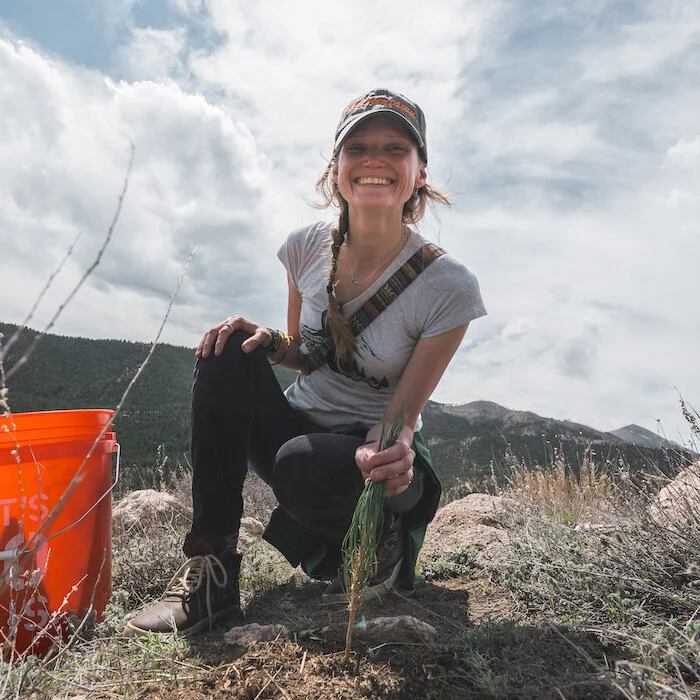
We planted over 10 million trees in 2020 alone. And it’s one tree planted for every dollar donated, so we make it as simple as possible, but when you add it all up together the impact is just tremendous and growing every day.”