BRUCE PIASECKI, PhD

BRUCE PIASECKI, PhD

NYT Bestselling Author of A New Way to Wealth · Doing More with Teams
Founder of AHC Group

Each day you wake up you make decisions that shape your own fate, your ascent, position, your own creativity. I like to think of it as fate is a personal construct. When I was at Cornell they had me teach an Emerson essay called “Freedom and Fate” where he said that fate was so overwhelming in some traditions that it’s as though we were each involved in a shipwreck and we were each thrown off the ship and all we had a chance to do was look at each other. I’ve come to believe is that not only is the future near you can design your own life.

KYLE HARPER

KYLE HARPER

Author of Plagues upon the Earth: Disease and the Course of Human History
G.T. & Libby Blankenship Chair in the History of Liberty, Professor of Classics & Letters, University of Oklahoma

Human well-being is both a question of social development in a very holistic sense that people have jobs that provide adequate food and clean water as well as the elimination of dangerous microbes, and so the question is how do societies continue to develop in a way that's globally equitable and sustainable and that's really one of wicked hardest problems on the planet is how do we continue to experience growth without having carbon emissions that make growth and impossible, that continue to hold societies in poverty, and that continue to imperil human health.

GEORGE ELLIS

GEORGE ELLIS

Cosmologist, Theoretical physicist & Star of South Africa Medal Recipient

Artistic creativity and it’s crucial to artistic creativity amongst many other things. In artistic creativity, from my viewpoint, is that you start off with an idea and you’re shaping and you’re totally in control and it doesn’t matter if it's music or sculpture or painting or a novel, eventually the thing sparks its own life, becomes itself, and at that point, the role of the artist is to stand back and let it become what its got to become. And that’s where you get the great art.

ETINOSA YVONNE

ETINOSA YVONNE

Photographer & Videographer
Winner of the World Press Photo 6*6 Global talent in Africa 2020

I’m not just taking beautiful pictures. I’m collecting their voices, collecting their movement, collecting different aspects, and preserving this moment because they will not always be here. I don’t just see myself as a photographer, an artist. I also see myself as an archiver. Someone who is archiving as a researcher.

E.J. KOH

E.J. KOH

Award-winning Memoirist & Poet
The Magical Language of Others · A Lesser Love

I had delayed speech, and I had quite a bit of trouble with speaking. I think I must have been five before I was uttering some of my first words and trying to articulate. Simple communication was very difficult for me and my family, especially in a family where we were speaking several languages. They hoped to instill English. It’s the language of survival. There was a lot of frustration and fear in my relationship to language, and the relationship these languages had to each other, that was something I felt very sensitive to since I was young. Since before I could speak.

ADA LIMÓN

ADA LIMÓN

National Book Critics Circle Award-winning Poet & Host of The Slowdown podcast

This poem was written for me when I was having a real moment of reckoning, not that I hadn't had it earlier, but where I was doing some deep reading about the climate crisis and really reckoning with myself, with where we were and what was happening, what the truth was. And I felt like it was so easy to slip down into a darkness, into a sort of numbness, and I didn't think that that numbness and darkness could be useful.

GAURAV GUPTA

GAURAV GUPTA

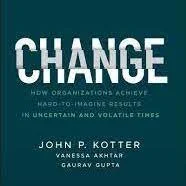
Director of Kotter International · Co-author of Change: How Organizations Achieve Hard to Imagine Results in Uncertain & Volatile Times

How do you get people to have a sense of urgency to actually take action and do something different? What we're finding is the learnings from business very much do apply to other spheres and also more generally do challenges like climate change. We’re facing the question of how do you get more people to actually be willing to take real meaningful action.

CLAUDIA BUENO

CLAUDIA BUENO

Artist in Light, Sculpture & Sound

Nature is my home because. It doesn't matter where I am. It’s available and it's there and it's always giving me the same sort of nourishment. All of us have had to develop a sense of home elsewhere. With me in particular, I've been traveling and living in different countries for the last 20 years since I was 22, so it's not even that I've had a geographical place that is my new home because I've moved around every four years. I'm in a new place a new community and new friends, so nature is my home.

JILL JOHNSON

JILL JOHNSON

Dancer · Choreographer and Ballet Stager · Fmr. Director Harvard Dance

Keeping people interested in dance is exposing folks, no matter how big or small an audience, to the different ways of seeing. How can you place a value on solace, joy, or tenderness and vulnerability?

ANDERS LEVERMANN

ANDERS LEVERMANN

Professor at Physics Institute of Potsdam University
Senior Research Scientist at Earth Institute, Columbia University

A lot of people think climate change is about avoiding the extinction of mankind. In my opinion, climate change is about putting pressure on society and disrupting society to an extent that it can't function properly anymore. So my greatest fear is that if we don't combat climate change, the weather extremes will hit us with a frequency and intensity that we will not be able to recover after each impact. And then we will start to fight with each other.

MARIAN MACGOWAN

MARIAN MACGOWAN

Executive Producer of Television, Feature Films & Documentaries
Hulu’s The Great starring Elle Fanning & Nicholas Hoult

As a filmmaker, what you are selling and your primary asset is yourself, so the clearer you are about yourself, the clearer you can “play yourself”, the more effective you’re going to be in expressing the ideas that you are particularly gifted to do. So that clarity of voice is as important for a writer or a director or producer as it is for a performer or a musician or anybody else. You want to find the best version of yourself and that is about recognizing when those moments of clarity are there and when they are not.

ROB NIXON

ROB NIXON

Author of Slow Violence and the Environmentalism of the Poor
Professor Environmental Humanities at Princeton

There are some recurrent threads in indigenous cultures across the world. One of those is–We don’t own the land. The land owns us. It’s not seen as property first. It’s seen as inalienable in that sense because you don’t own it in the first place. What we’re seeing now is a kind of movement where more and more indigenous people are living kind of amphibious lives. On the one hand, they have their indigenous cosmologies. And the other hand, in order to increase the likelihood that they can keep out big corporations, mining, logging, and so forth, their presence on the land needs to be bureaucratically recognized is to have recognition that “this is your property.” So in one sense many of these communities I find are both inside and outside private property regimes.

ROB PRINGLE

ROB PRINGLE

Ecology & Evolutionary Biology Professor Princeton University · Pringle Lab

For nature and natural beauty to survive, people have to want it. If they don’t ever experience it, why should they want it? What could see of value in it, something that you not only have never experienced but don’t ever expect to. We intellectually know that the Amazon is an important thing because it stores carbon and it’s home to many species, but I’ve been there. That’s a different thing entirely to be able to appreciate it on that level and care about it for the sheer beauty and magic and joy of being in a place that’s still so big and so wild. So that I think is the most important thing for the next generation.

IAN BURUMA

IAN BURUMA

Ian Buruma is the author of many books, including A Tokyo Romance, The Churchill Complex,Their Promised Land, Year Zero, The China Lover, Murder in Amsterdam, Occidentalism and God’s Dust. He teaches at Bard College and is a columnist for Project Syndicate and contributor to The New Yorker, The New York Times, and other publications. He was awarded the 2008 Erasmus Prize for making "an especially important contribution to European culture" and was voted one of the Top 100 Public Intellectuals
by the Foreign Policy magazine.

This interview was conducted by Mia Funk & Lexi Kayser with the participation of collaborating universities and students. Digital Media Coordinator is Phoebe Brous.

Mia Funk is an artist, interviewer and founder of The Creative Process & One Planet Podcast (Conversations about Climate Change & Environmental Solutions).

SETH M. SIEGEL

SETH M. SIEGEL

Entrepreneur, Public Speaker & NYTimes Bestselling Author
Let There Be Water: Israel’s Solution for a Water-Starved World · Troubled Water: What's Wrong with What We Drink

On average in advanced societies, about 70% of freshwater that’s consumed is consumed by agriculture. In less developed countries, sometimes as high as 95% of the freshwater goes to agriculture, which means that you’re depleting the amount of water available for the environment. You’re depleting amount of groundwater to preserve for the future, especially in dry times, and it creates a stress for the future…What are you going to do when you have hundreds of millions of water refugees coming from places where there used to be enough water where there’s now just not enough water? What is the world going to do then?

RICHARD D. WOLFF

RICHARD D. WOLFF

Founder of Democracy at Work · Host of Economic Update
Author of The Sickness is the System: When Capitalism Fails to Save Us from Pandemics or Itself

You can criticize many things in the United States, but there are taboos and the number one taboo is that you cannot criticize Capitalism. That is equated with disloyalty…This story about Capitalism being wonderful. This story is fading. You can’t do that anymore. The Right Wing cannot rally its troops around Capitalism. That’s why it doesn’t do it anymore. It rallies the troops around being hateful towards immigrants. It rallies the troops around “fake elections”, around the right to buy a gun, around White Supremacists. Those issues can get some support, but “Let’s get together for Capitalism!” That is bad. They can’t do anything with that. They have to sneak the Capitalism in behind those other issues because otherwise, they have no mass political support.

BRIAN WILCOX

BRIAN WILCOX

Chief Engineer & Co-founder of Marine BioEnergy
Grows Kelp in the Ocean to Provide Carbon-neutral Fuels

The kelp plant itself can grow to 30 meters easily, and sometimes 40 meters, so it’s a huge plant…When people look around the world today, seeing the news, making the world a better place is getting increasingly important. People have to pay attention to what they can do as individuals to make the world a better place. The world is not going to become a good place on its own. If there weren’t for thousands and millions of people, phenomenal sacrifices that people make. When you see what some people do and the risks they take. I have basically found my job for the remaining years that I have on the earth to try to make the world a better place.

GAIA VINCE

GAIA VINCE

Science Writer, Broadcaster & Author
Transcendence: How Humans Evolved Through Fire, Language, Beauty & Time · Adventures in the Anthropocene

The good thing about our species is that we create our own environment. What we’ve been doing so far is creating an environment where we’re much more successful. We live a lot longer, we’re much healthier than we have been in the past. There are many, many more of us, so we’re very successful as a species and that’s been at the expense of other ecosystems, but what’s happened is we are now dominating the planet to a dangerous degree, but we are also self-aware. We’re capable of understanding that.

MARY EDNA FRASER & ORRIN H. PILKEY (Copy)
JANE MADGWICK

JANE MADGWICK

Ecologist & CEO of Wetlands International
Co-author of Water Lands: A vision for the world’s wetlands and their people
Wetlands naturally absorb twice the amount of carbon than all the world’s forests combined.
I think everybody at school learns about the water cycle. That rings a bell with everybody. Maybe this is a good hook to show the place of wetlands in capturing and purifying and the story of water. And then in turn how this links to what we’re seeing every year: droughts, floods, fires, heat waves which are devastating and life-threatening. I think this may be one of the easiest routes in educating people, connecting wetlands with water and the direct impact of that.