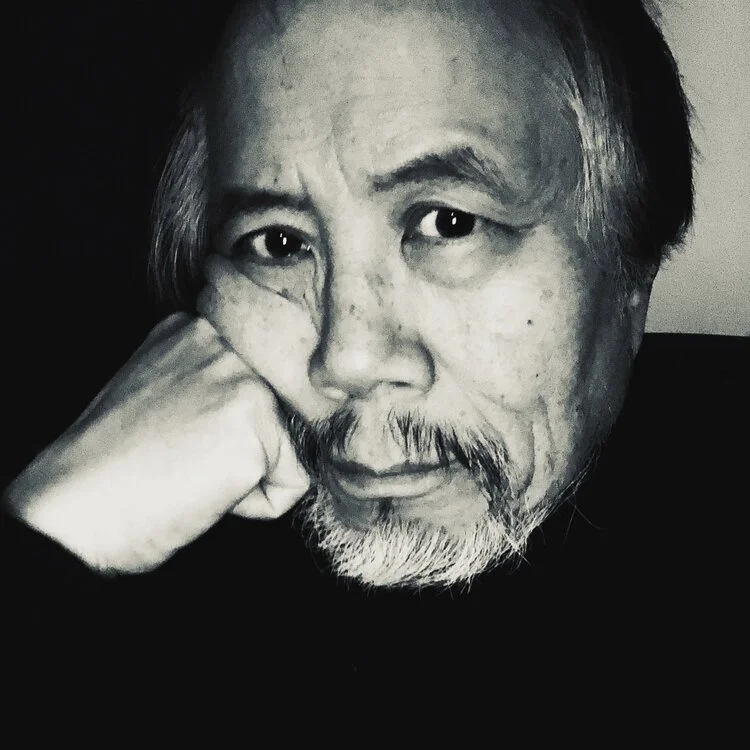
DAVID PALUMBO-LIU

DAVID PALUMBO-LIU

Writer, Activist, Comparative Literature Professor
Author of Speaking Out of Place: Getting Our Political Voices Back

To explore different worlds. That’s what literature has taught me. Reading has taught me how difficult it is to write well, to do you something other than the mundane or the expected, so all those things point to a kind of human creativity and a human capacity to both create and also to learn. To learn about life in different ways and to pass on those lessons to other people. One thing I think great teachers do is to embody what they talk about, the values that they profess, the things they feel are important in their everyday lives outside of the literature. So when I become involved in politics or a cause, it’s a reflection of what I've learned through any number of things including literature. Literature doesn’t stand alone. Literature is part of the world.

In Memory of TONY WALTON · 1934-2022 (Part 1)

In Memory of TONY WALTON · 1934-2022 (Part 1)

Art and Theater Director, Costume Designer

Creativity is perhaps the ultimate mystery. I veer wildly between opposing views on it and have different feelings depending on whether the creator is isolated or a collaborator.

PAULA PINHO

PAULA PINHO

Director of Just Transition at the European Commission Directorate-General for Energy

She is responsible for Just Transition, Consumers, Energy Efficiency, Innovation and Energy security. She has been previously Head of Unit at the Directorate-General Energy in the European Commission. She was responsible for Energy Strategy and Policy coordination and then for Renewables and Energy System Integration Policy and Decarbonisation and Sustainability of Energy Sources. She was Acting Director for Energy Policy where she has overseen notably the work of international energy relations, financial instruments and inter-institutional relations.

ASHLEY DAWSON

ASHLEY DAWSON

Author of People’s Power, Extreme Cities, Extinction
Professor of Postcolonial Studies at City University of New York

The political struggle is really hard today and I feel like we haven't been winning, but I think it's important not to think of this as either we win it, or there's catastrophe and that's the end. We win or lose, and there’s this big tidal wave that kills us all. That's not the way the climate crisis is going to play out. It’s going to be a long, slow, attritional crisis punctuated by forms of natural disaster that will decimate populations, but it's also going to be something that people will be impacted by for generations and that people will continue to mobilize around, so I think it's important to keep that in mind.

DOUGLAS WOLK

DOUGLAS WOLK

Author of NYTimes bestseller All of the Marvels, Eisner Award–winning Reading Comics
Host of the Voice of Latveria podcast

I like the idea that your actions in the world can be motivated by both idealism and realism about how to achieve those ideals. I like the idea that morality is not simple. There is this idea that there are the heroes and there's the villains and you can easily tell who's who, and that's not so true as it used to be in comics and that's meaningful. One thing that is interesting about the Marvel story is there’s basically nobody who's just a bad guy to be a bad guy. Everyone has their reasons. Almost everyone is capable of redemption in some way, even the worst of the worst are capable of tremendous heroism and tremendous idealism and genuinely wanting to heal the world make it a better place.

JP OUELLETTE & DYLAN MATLOCK

JP OUELLETTE & DYLAN MATLOCK

Producers of the Award-Winning Mass starring Reed Birney, Ann Dowd, Jason Isaacs & Martha Plimpton

“Usually we just see the soundbites and the news and then there's a new one or a new story, the politics that takes away from what these families are going. These people in these towns are just glossed over, looked over. And that's not the case in real life. They live with this trauma forever…What I hope the next generation takes us just to absorb everything from our generation and our parents’ generation. There are a lot of living generations right now. The longevity of people and the young families, it’s amazing. I had five generations of my family alive at one point in my life, and it was just the most amazing I've ever been a part of.” –JP Ouellette

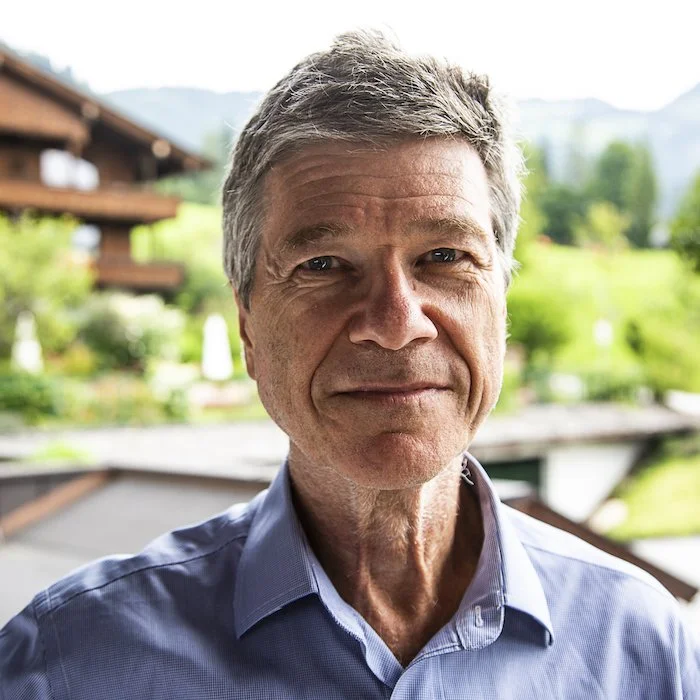
JEFFREY D. SACHS

JEFFREY D. SACHS

President of UN Sustainable Development Solutions Network
Director of Center for Sustainable Development, Columbia University

If we’re badly educated, we’re not going to make it on this planet. If I had to put my finger on one Sustainable Development Goal above all else, it is let’s empower young people so that they know the future. They know the world that they’re going to be leading soon. They can do something about it…If you’re in elementary school up to university, you should be learning–What is climate change? What is biodiversity? What can we do about it? And this kind of learning is not only book learning, but is also experiential learning.

DR. LINDA BIRNBAUM

DR. LINDA BIRNBAUM

There are thousands of chemicals in our water, just like there are in air, just like there are in food. We sometimes compartmentalize too much. We forget, but what is food? Food is made up of chemicals. And I think we need to be broader in our understanding because, for example, we all have on us and within us our Microbiomes and we think about the GI bacteria and we now know that if people are obese they have very different microbial content in their gut compared to people who are not obese. And we know that a baby born by C-section section has a different position than a baby born vaginally. And we know that these things have impacts. We know that many of the bacteria have the ability for example to metabolize the contaminants as well as things in our food. And we know that you can have a different response depending upon what people are eating.

BRUCE PIASECKI, PhD

BRUCE PIASECKI, PhD

NYT Bestselling Author of A New Way to Wealth · Doing More with Teams
Founder of AHC Group

Each day you wake up you make decisions that shape your own fate, your ascent, position, your own creativity. I like to think of it as fate is a personal construct. When I was at Cornell they had me teach an Emerson essay called “Freedom and Fate” where he said that fate was so overwhelming in some traditions that it’s as though we were each involved in a shipwreck and we were each thrown off the ship and all we had a chance to do was look at each other. I’ve come to believe is that not only is the future near you can design your own life.

KYLE HARPER

KYLE HARPER

Author of Plagues upon the Earth: Disease and the Course of Human History
G.T. & Libby Blankenship Chair in the History of Liberty, Professor of Classics & Letters, University of Oklahoma

Human well-being is both a question of social development in a very holistic sense that people have jobs that provide adequate food and clean water as well as the elimination of dangerous microbes, and so the question is how do societies continue to develop in a way that's globally equitable and sustainable and that's really one of wicked hardest problems on the planet is how do we continue to experience growth without having carbon emissions that make growth and impossible, that continue to hold societies in poverty, and that continue to imperil human health.

GEORGE ELLIS

GEORGE ELLIS

Cosmologist, Theoretical physicist & Star of South Africa Medal Recipient

Artistic creativity and it’s crucial to artistic creativity amongst many other things. In artistic creativity, from my viewpoint, is that you start off with an idea and you’re shaping and you’re totally in control and it doesn’t matter if it's music or sculpture or painting or a novel, eventually the thing sparks its own life, becomes itself, and at that point, the role of the artist is to stand back and let it become what its got to become. And that’s where you get the great art.

ETINOSA YVONNE

ETINOSA YVONNE

Photographer & Videographer
Winner of the World Press Photo 6*6 Global talent in Africa 2020

I’m not just taking beautiful pictures. I’m collecting their voices, collecting their movement, collecting different aspects, and preserving this moment because they will not always be here. I don’t just see myself as a photographer, an artist. I also see myself as an archiver. Someone who is archiving as a researcher.

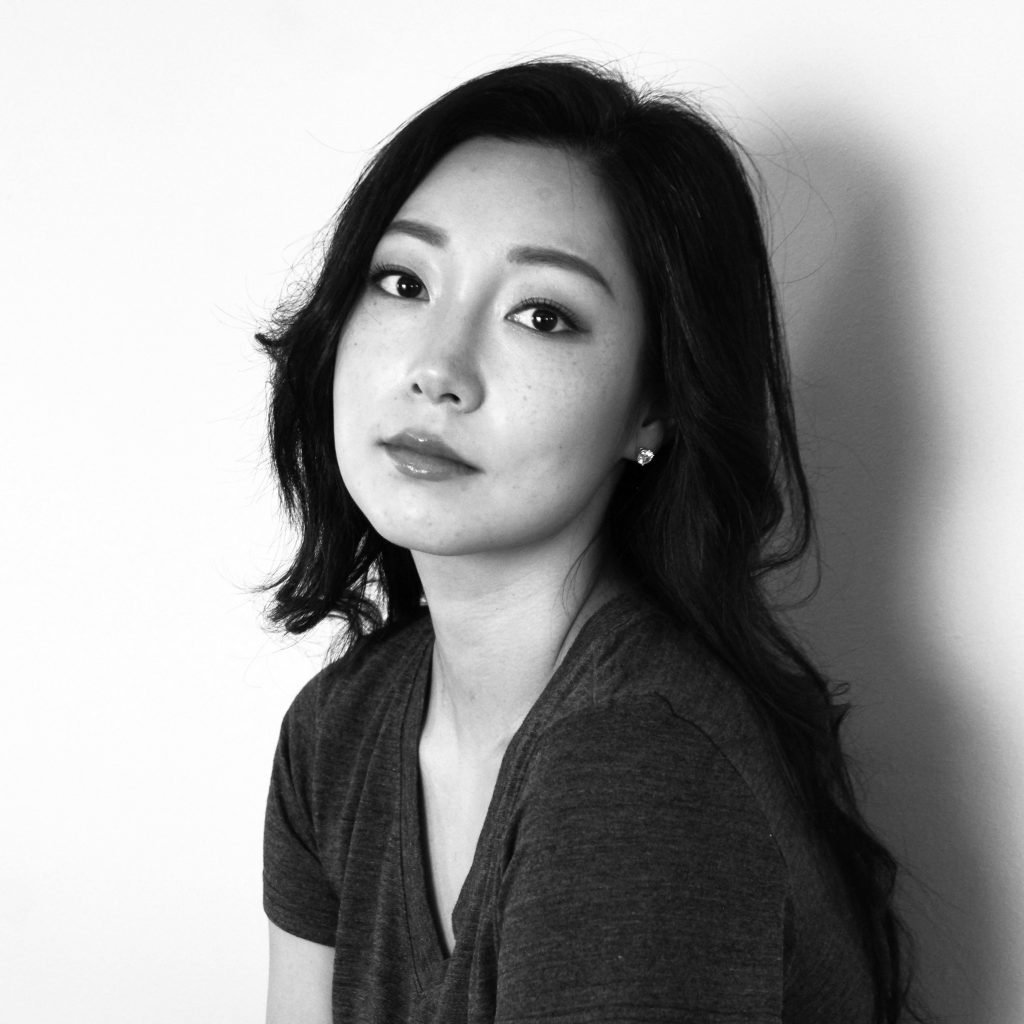
E.J. KOH

E.J. KOH

Award-winning Memoirist & Poet
The Magical Language of Others · A Lesser Love

I had delayed speech, and I had quite a bit of trouble with speaking. I think I must have been five before I was uttering some of my first words and trying to articulate. Simple communication was very difficult for me and my family, especially in a family where we were speaking several languages. They hoped to instill English. It’s the language of survival. There was a lot of frustration and fear in my relationship to language, and the relationship these languages had to each other, that was something I felt very sensitive to since I was young. Since before I could speak.

ADA LIMÓN

ADA LIMÓN

National Book Critics Circle Award-winning Poet & Host of The Slowdown podcast

This poem was written for me when I was having a real moment of reckoning, not that I hadn't had it earlier, but where I was doing some deep reading about the climate crisis and really reckoning with myself, with where we were and what was happening, what the truth was. And I felt like it was so easy to slip down into a darkness, into a sort of numbness, and I didn't think that that numbness and darkness could be useful.

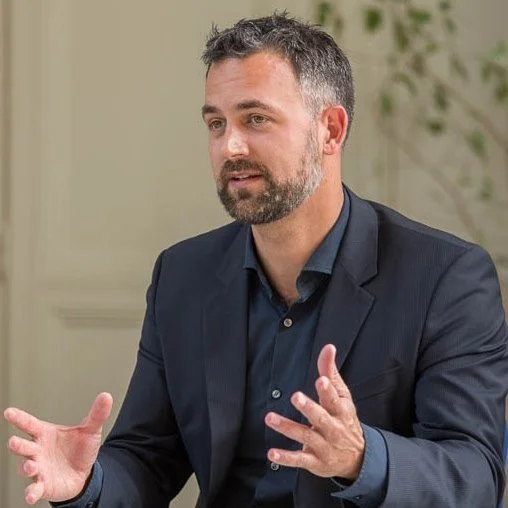
GAURAV GUPTA

GAURAV GUPTA

Director of Kotter International · Co-author of Change: How Organizations Achieve Hard to Imagine Results in Uncertain & Volatile Times

How do you get people to have a sense of urgency to actually take action and do something different? What we're finding is the learnings from business very much do apply to other spheres and also more generally do challenges like climate change. We’re facing the question of how do you get more people to actually be willing to take real meaningful action.

CLAUDIA BUENO

CLAUDIA BUENO

Artist in Light, Sculpture & Sound

Nature is my home because. It doesn't matter where I am. It’s available and it's there and it's always giving me the same sort of nourishment. All of us have had to develop a sense of home elsewhere. With me in particular, I've been traveling and living in different countries for the last 20 years since I was 22, so it's not even that I've had a geographical place that is my new home because I've moved around every four years. I'm in a new place a new community and new friends, so nature is my home.

JILL JOHNSON

JILL JOHNSON

Dancer · Choreographer and Ballet Stager · Fmr. Director Harvard Dance

Keeping people interested in dance is exposing folks, no matter how big or small an audience, to the different ways of seeing. How can you place a value on solace, joy, or tenderness and vulnerability?

ANDERS LEVERMANN

ANDERS LEVERMANN

Professor at Physics Institute of Potsdam University
Senior Research Scientist at Earth Institute, Columbia University

A lot of people think climate change is about avoiding the extinction of mankind. In my opinion, climate change is about putting pressure on society and disrupting society to an extent that it can't function properly anymore. So my greatest fear is that if we don't combat climate change, the weather extremes will hit us with a frequency and intensity that we will not be able to recover after each impact. And then we will start to fight with each other.

MARIAN MACGOWAN

MARIAN MACGOWAN

Executive Producer of Television, Feature Films & Documentaries
Hulu’s The Great starring Elle Fanning & Nicholas Hoult

As a filmmaker, what you are selling and your primary asset is yourself, so the clearer you are about yourself, the clearer you can “play yourself”, the more effective you’re going to be in expressing the ideas that you are particularly gifted to do. So that clarity of voice is as important for a writer or a director or producer as it is for a performer or a musician or anybody else. You want to find the best version of yourself and that is about recognizing when those moments of clarity are there and when they are not.

ROB NIXON

ROB NIXON

Author of Slow Violence and the Environmentalism of the Poor
Professor Environmental Humanities at Princeton

There are some recurrent threads in indigenous cultures across the world. One of those is–We don’t own the land. The land owns us. It’s not seen as property first. It’s seen as inalienable in that sense because you don’t own it in the first place. What we’re seeing now is a kind of movement where more and more indigenous people are living kind of amphibious lives. On the one hand, they have their indigenous cosmologies. And the other hand, in order to increase the likelihood that they can keep out big corporations, mining, logging, and so forth, their presence on the land needs to be bureaucratically recognized is to have recognition that “this is your property.” So in one sense many of these communities I find are both inside and outside private property regimes.