Robert Sternberg - Award-winning Educator - Author of “Adaptive Intelligence” - Fmr. President, American Psychological Assoc.

Robert Sternberg - Award-winning Educator - Author of “Adaptive Intelligence” - Fmr. President, American Psychological Assoc.

Award-winning Educator - Author of Adaptive Intelligence: Surviving and Thriving in Times of Uncertainty
Fmr. President of the American Psychological Association

Are we looking at intelligence wrong? There are an awful lot of people who have graduated from top schools who become leaders who are worse than incompetent. They make their countries worse rather than better. And the conclusion I came to is that we made a mistake, in that intelligence was originally defined by the founders of the field Alfred Binet, David Wechsler, and others, as the ability to adapt to the environment a requirement. And answering a vocabulary problem for an obscure word is not about adapting to the environment. So I began to wonder where we lost the train of thought. And the conclusion I came to is that colleges just forgot the original message of the founders of the field, and so we got immersed in these numbers that turn out not to mean that much. So I wrote about intelligence as the ability to get along in the world and hopefully make the world a little bit better

Julio Ottino - Founding Co-Director of Northwestern Institute on Complex Systems

Julio Ottino - Founding Co-Director of Northwestern Institute on Complex Systems

Julio Ottino is an artist, researcher, author, and educator at Northwestern University. He is the author, with Bruce Mau, of The Nexus: Augmented Thinking for a Complex World - The New Convergence of Art, Technology, and Science. He was the founding co-director of the Northwestern Institute on Complex Systems. In 2008, he was listed in the “One Hundred Engineers of the Modern Era”. In 2017, he was awarded the Bernard M. Gordon Prize for Innovation in Engineering and Technology Education from the National Academy of Engineering.

Today's complex problems demand a radically new way of thinking — one in which art, technology, and science converge to expand our creativity and augment our insight. Creativity must be combined with the ability to execute; the leaders and innovators of the future will have to understand this balance and manage such complexities as climate change and pandemics. The place of this convergence is THE NEXUS. In this provocative and visually striking book, Julio Mario Ottino and Bruce Mau offer a guide for navigating the intersections of art, technology, and science.

This interview was conducted by Mia Funk and Riya Patel with the participation of collaborating universities and students. Associate Interviews Producer on this episode was Riya Patel.

Mia Funk is an artist, interviewer and founder of The Creative Process & One Planet Podcast (Conversations about Climate Change & Environmental Solutions).

Florian Hoffmeister - Award-winning DP “TAR” starring Cate Blanchett

Florian Hoffmeister - Award-winning DP “TAR” starring Cate Blanchett

Florian Hoffmeister is a prolific director of photography. Recent works by Hoffmeister include his lensing on the Apple TV+ series Pachinko, the critically-acclaimed political thriller Official Secrets starring Keira Knightley, Ralph Fiennes, and Matt Smith, and TÁR starring Cate Blanchett. Hoffmeister is well-known for his collaboration with Terence Davies on feature films The Deep Blue Sea, starring Rachel Weisz, Tom Hiddleston and Simon Russel-Beale, and A Quiet Passion, starring Cynthia Nixon and Jennifer Ehle. His work on Brian Kirk’s television phenomenon Great Expectations earned him further distinction as well as numerous accolades, including a Primetime Emmy, a BAFTA, and an ASC Award.

Max Stossel - Award-winning Poet, Filmmaker, Creator of "Words That Move"

Max Stossel - Award-winning Poet, Filmmaker, Creator of "Words That Move"

Award-winning Poet, Filmmaker & Speaker
Creator of the Stand-Up Poetry Special Words That Move

Technology has very much changed the way we read and take in information and shortened it into quick bursts and attention spans. We're living in a new world, for sure. And how do we communicate in this new world? Not just in a way that gets the reach, because there are whole industries aimed at what do I do to get the most likes or the most attention, and all of that, which I don't think is very fulfilling as artists.

It's sort of a diminishing of our art form to try and play the game because then we're getting the attention and getting the hits, as opposed to what do I really want to create? How do I really want to create it? How do I want to display this? And can I do it in a way that breaks through so that if I do it my way, it's still going to get the attention, great. But if it doesn't, can I be cool with that? And can I be okay creating what I want to create, knowing that that's what it's about. It's about sharing in an honest, authentic way what I want to express without letting the tentacles of social media drip into my brain and take over why I'm literally doing the things that I'm doing.

Debra J. Fisher - Showrunner of Netflix’s “Ginny & Georgia” - Writer, Exec. Producer “Criminal Minds” , “Alias”

Debra J. Fisher - Showrunner of Netflix’s “Ginny & Georgia” - Writer, Exec. Producer “Criminal Minds” , “Alias”

Showrunner of Netflix’s Ginny & Georgia
Writer · Exec. Producer · Director · Alias · Criminal Minds · The OC · Charmed

I need a balance of light and dark. It can't be just one thing. I want you to be laughing one minute and by the end I want you to be crying. For me, character study is what is the most important. It all comes down to the characters. It's less about action or things like that, which you can have some of that, but it tonally, has to be female-centric and you have to be crying and laughing. There's so many interesting shows that walk that line of light and dark. I want to always live in the gray area with characters. Always. Nothing is ever black or white. It's always a weird gray area.

Adam Alter - Author of “Irresistible: The Rise of Addictive Technology”, “Anatomy of a Breakthrough"

Adam Alter - Author of “Irresistible: The Rise of Addictive Technology”, “Anatomy of a Breakthrough"

Author of NYTimes Bestseller Irresistible: The Rise of Addictive Technology and the Business of Keeping Us Hooked ·
Anatomy of a Breakthrough · Drunk Tank Pink

The other thing from a creativity perspective is we know that more people around you is good for creativity. It's one of the axioms in thinking about creativity in general. You need time. An artist, a writer. I'm a writer. I need time on my own. I also paint and draw. I cannot do that with other people around. It's just my process. But before you get there, before you get to that point where you need that time alone, that space apart, for almost everyone being around other people is good. It's good for creativity. It's both about diversity of opinion and idea and just about having more - just more information, more thoughts, more ways of looking at the world. And some of the most profound research I've come across in preparing for this book suggested that it's better to be around people who are deeply incompetent than it is to be around no one, which I found very surprising.

Joëlle Gergis - Lead Author  - IPCC Sixth Assessment Report - Author of “Humanity’s Moment”

Joëlle Gergis - Lead Author - IPCC Sixth Assessment Report - Author of “Humanity’s Moment”

Lead Author  of the IPCC Sixth Assessment Report · Author of Humanity’s Moment: A Climate Scientist’s Case for Hope · Sunburnt Country · Contributor to The Climate Book, ed. Greta Thunberg · Not Too Late, eds. Rebecca Solnit, Thelma Young Lutunatabua

We're really starting to witness serious climate extremes that can no longer be ignored. And the IPCC, one of our key conclusions to that report was that effectively the human fingerprint on the climate system is now undeniable. It is now an established fact that we have warmed every single continent, every ocean basin on the planet. And again, that's a pretty serious thing to contemplate that human activity from the burning of fossil fuels and the clearing of land has led to this energy imbalance in the earth system, which is leading to a rapidly shifting climate.

Etgar Keret - Cannes Film Festival Award-winning Director - Author of “Fly Already”, “Suddenly a Knock on the Door”

Etgar Keret - Cannes Film Festival Award-winning Director - Author of “Fly Already”, “Suddenly a Knock on the Door”

Cannes Film Festival Award-winning Director
Author of Fly Already · Suddenly a Knock on the Door · The Seven Good Years

For me, there is something about art, it's not a monologue, it's a dialogue. Some people, it doesn't matter who they speak to, they will speak in the same way they would speak to a five-year-old or to an intellectual or to somebody who doesn't speak the language very well. They would speak the same way and they don't care because this is what they have to say, but I think that the natural thing in the dialogue is really to look into the eyes of the person you speak to and see when he understands or when she doesn't understand or when she's moved or when he's angry. And basically out of that, kind of create your own language.

Manuel Billeter - Cinematographer - “The Gilded Age” “Inventing Anna” “Jessica Jones” “Luke Cage”

Manuel Billeter - Cinematographer - “The Gilded Age” “Inventing Anna” “Jessica Jones” “Luke Cage”

Cinematographer · The Gilded Age · Inventing Anna
Jessica Jones · Luke Cage

What I think made me want to pursue film or what started my fascination with film and cinema were definitely Fellini, Antonioni, and Bertolucci; the masters, if you will, that kind of make you dream - make you just go to a movie theater, enter this space, and just have a communal experience. I know looking at the screen and just being completely immersed and experiencing stories or experiencing things that make you understand life more - or make you understand life less - and create a dialogue between you and the rest of the world.

Abby Ajayi - Creator of “Riches” - Writer/Producer “Inventing Anna” “The First Lady”

Abby Ajayi - Creator of “Riches” - Writer/Producer “Inventing Anna” “The First Lady”

Creator of the Amazon series Riches
Writer/Producer on Inventing Anna · The First Lady · How to Get Away with Murder

I do feel that if one has the desire and the ability to be a much more big-picture showrunner, I think that's to the best. That benefits the show because there's a creative voice running all the way through. This isn't a movie, where it's a director's medium. It is the writer's medium, so I think the writer should be across producing and also empowering the director, but there is a clear vision. I think Riches has all the hallmarks of the things I've worked on before in terms of complex, slightly subversive women. At the heart of it, it is negotiating power dynamics. And at the heart of it, there are two very complex and yet vulnerable black women, but I've always loved family drama shows and particularly family businesses, whether it's fictional ones or in real life.

Nina Hall - Author of “Transnational Advocacy in the Digital Era: Think Global, Act Local”

Nina Hall - Author of “Transnational Advocacy in the Digital Era: Think Global, Act Local”

Author of Transnational Advocacy in the Digital Era: Think Global, Act Local
Assistant Professor · International Relations · Johns Hopkins School of Advanced International Studies (Europe)

Digital advocacy organizations are recognized as influential actors by the media, politicians, and some academics. In 2016, GetUp, an Australian digital advocacy organization, was named by the Australian Financial Review as one of the top ten actors with ‘covert power’ in Australia.1 Campact in Germany has powerfully mobilized public opinion against the Transatlantic Trade and Investment Partnership. MoveOn was one of the ‘leading advocacy organizations’ mobilizing people against the Iraq War in the United States. Meanwhile, Leadnow, a digital advocacy organization in Canada, helped to unseat Prime Minister Stephen Harper in the 2015 Canadian federal election. This new model of advocacy organization has spread around the world. Nineteen digital advocacy organizations claim to have a total of over 20 million members. What drove the global spread of digital advocacy organizations?

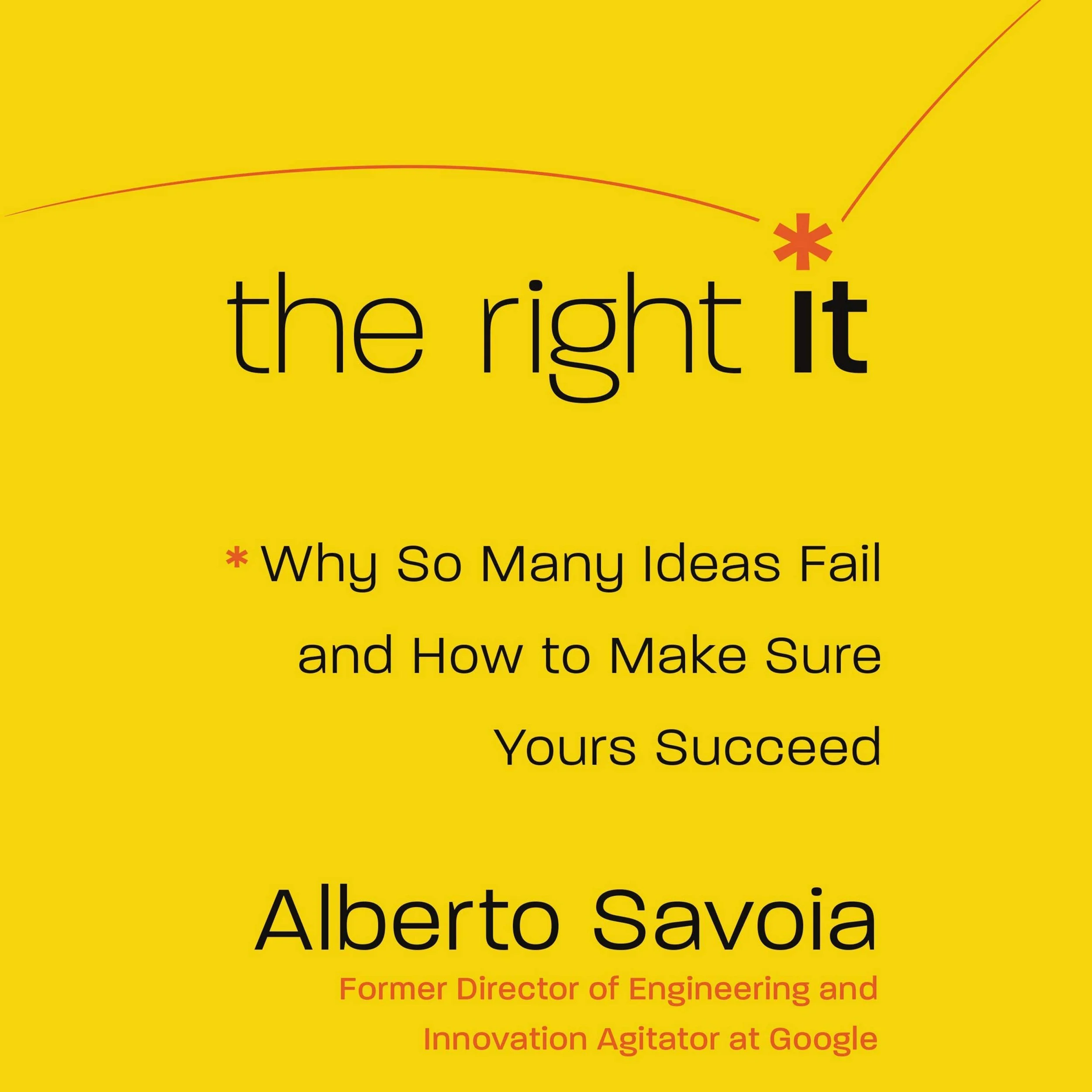
Alberto Savoia - Google’s 1st Engineering Director - Author of “The Right It”

Alberto Savoia - Google’s 1st Engineering Director - Author of “The Right It”

Google’s 1st Engineering Director · Innovation Agitator Emeritus
Author of The Right It: Why So Many Ideas Fail and How to Make Sure Yours Succeed

As much as I would love to take the credit, Google Ads was a big team, and I was fortunate to be brought in as a director that managed the team. I think the reason it was so successful is because innovations and new ideas, they compound. They build one upon the other. So the reason why ads was so successful for Google is because search was so successful for Google. So when you have search and you have billions of people coming in every day, maybe every hour, and searching all kinds of things, you have this treasure trove of data. If you have billion searches per day, you know how many experiments can you run? And so Google is very famous for doing a lot of A/B experiments. That's how we collect the data. So what actually enabled Google to be so successful and to grow is this mental attitude, which is the same one that Amazon and some of these really successful technology companies have, of doing a lot of experiments on small samples and continually refining their data based on that. If you're dealing with a lot of people, you can do those experiments and that's why these companies are successful. The sad thing or what happens with companies that do not operate in that way, that do not try to operate on data and do all of those experiments, those are the ones that are left behind. Innovation is experimentation.

Mathis Wackernagel - Founder, President, Global Footprint Network - World Sustainability Award Winner

Mathis Wackernagel - Founder, President, Global Footprint Network - World Sustainability Award Winner

Founder & President of Global Footprint Network
Winner of the World Sustainability Award · IAIA Global Environment Award

So shooting for one planet just means you would be totally dominant, and leave no space for other species. Ecologists say to maintain 85% of preindustrial biodiversity, it would take about at least half the planet left on its own. That would mean getting to half-planet. And now we use at least 1.75. I say at least because our assessments with about 15,000 data points per country in a year are based on UN statistics, and their demand side is probably an underestimate because not all demands are included. And also on the supply side or the regeneration side, the UN is very production oriented, so it's the FAO numbers, for example, look at agricultural production, and the depletion side or the destruction side is not factored in adequately. So that's why it's an underestimate. And still, it shows we use about 1.75 Earths, and that's more than three times half an Earth. So that's kind of the difference. But we also know overshoot will end one way or another. The question is do we choose to end it? Do we choose it by design, or do we let nature take the lead and end overshoot by disaster? So it's really ending overshoot by design or disaster. That's the big choice we need to make.

Sam Levy - Award-winning Cinematographer of “Lady Bird” “Frances Ha” “While We’re Young”

Sam Levy - Award-winning Cinematographer of “Lady Bird” “Frances Ha” “While We’re Young”

Award-winning Cinematographer of Lady Bird · Frances Ha · While We’re Young · Confess, Fletch

Every movie is different. Every story is different. I think if we're lucky in our lives, we can choose the path that we want to go down, whether it's something creative or in the arts or something else. And I think if you're lucky, you can spend your life or your career following something you really love or spending time following the path, whether it's a hobby or your career. And spending that time paying the attention that the craft or the hobby or the creative pursuit wants.

Oberon Sinclair - Founder CEO of Creative/Branding Agency My Young Auntie - Queen of Kale

Oberon Sinclair - Founder CEO of Creative/Branding Agency My Young Auntie - Queen of Kale

CEO & Founder of Creative/Branding Agency My Young Auntie

If someone comes to me, and they say, “Oh, I have a new brand. It's a startup.” First of all, I have to like the person, they have to like me. It's a two way street. And that's the most important thing with anyone in life, not just work. In life, why do we make friends with who we make friends with? They are relationships. And if you connect with someone, magic will happen. If you don't connect with someone, and someone doesn't understand or have the same aesthetic or a similar way of thinking – you have to have something in common with someone. And if you have those qualities, which I look for, honesty and loyalty, and they're genuine, and you just know if you're going to get on with someone or not.

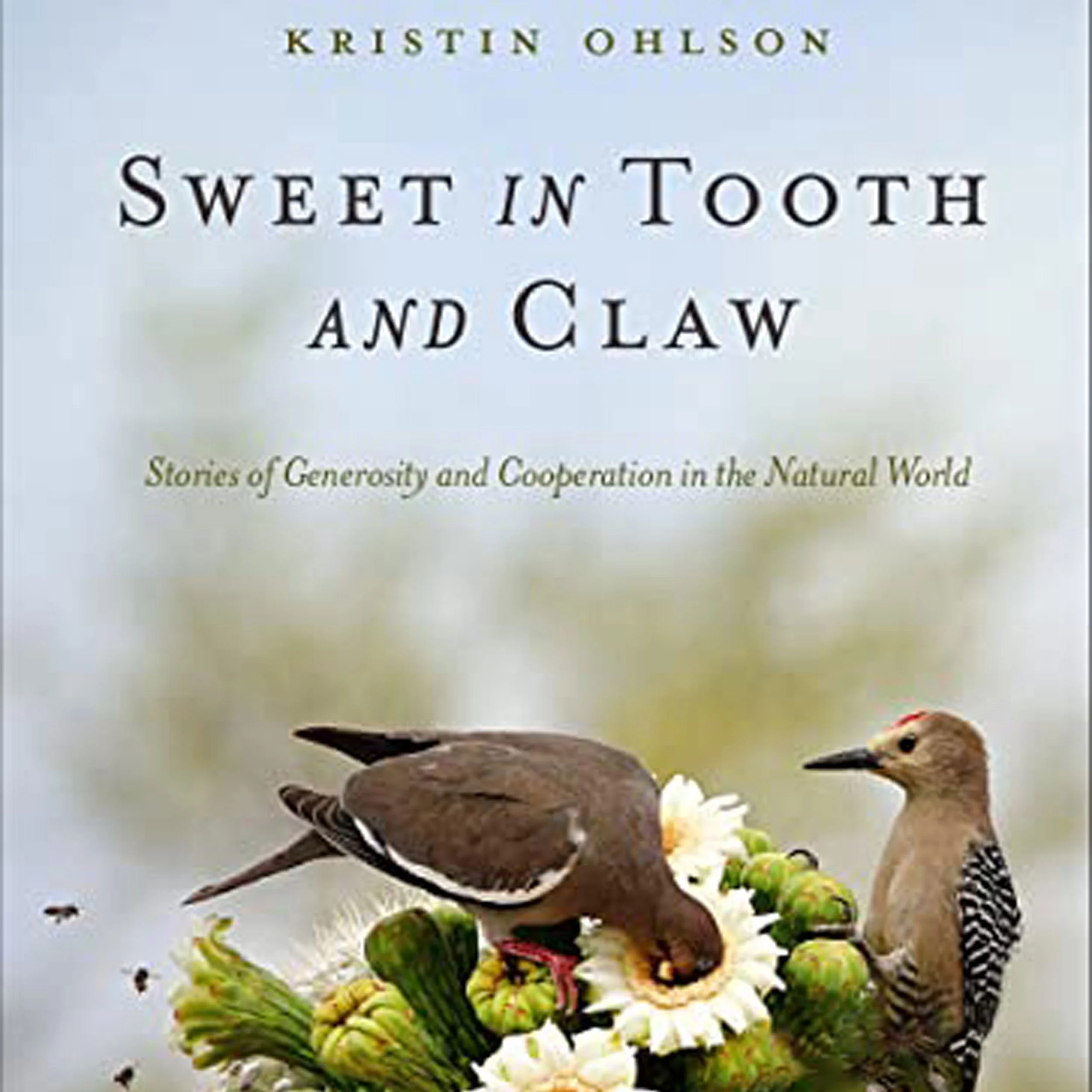
Kristin Ohlson - Author of Sweet in Tooth and Claw: Stories of Generosity and Cooperation in the Natural World

Kristin Ohlson - Author of Sweet in Tooth and Claw: Stories of Generosity and Cooperation in the Natural World

Author of Sweet in Tooth and Claw: Stories of Generosity and Cooperation in the Natural World
The Soil Will Save Us

I think it's this story of cooperation is important in terms of the story that we tell ourselves about nature, and seeing as how we are part of nature, it's important that we see ourselves as possibly a partner instead of a destroyer. I think that we have held onto the perspective that nature is all about competition and conflict. And when we shift that, when we look at nature as this vast web of interconnection and cooperation, and of course competition and conflict in there obviously in some places. But when we look at this vast web of cooperation and collaboration, I think that it changes our view. It changes our view of what's possible.

Dickie Landry - Composer, Musician, Photographer, Artist

Dickie Landry - Composer, Musician, Photographer, Artist

Composer, Musician, Photographer, Artist

Einstein on the Beach, it's a masterpiece. America, in 1976, was to be celebrating its 200th year of existence, and Michel Guy, the French Minister of Culture, came to New York to offer a commission to Philip Glass and Robert Wilson to write an opera. This was the gift that France would give for America's two-hundredth anniversary. That was the first time I met Robert Wilson.

Gloria Pacis - Artist

Gloria Pacis - Artist

Artist

I just feel there is already a connection, something I have to come to, but that I'm trying to search it out or see what's already there. I feel that we are truly connected as a world. And I'm just trying to make people aware of an existing connection we already have, to send that message out there. And I like to do it in the form of...I guess you'd call it a mundane image, where it's not really about bells and whistles, but it's about something in it makes you want to look, and you want to know why. And it's because you've been there before, regardless of whether you are a dancer or that particular guy in the subway, you know you've been in his head in that mood that he's experiencing.

Colin Steen - CEO of Legacy Agripartners - Pushing Farming Forward

Colin Steen - CEO of Legacy Agripartners - Pushing Farming Forward

CEO of Legacy Agripartners

It's interesting, as I've gotten older, I've really started to reflect back on that early time growing up on a farm. And I'm fiercely, fiercely proud of where my roots are. And Weldon, Saskatchewan, it's a town of 160 people there today. And just being in a spot where every day you have cattle to feed, you've got a grain crop you're trying to grow, right? The things are subject to weather. The sort of ups and downs of farm life are so dependent on the 6 pm news and the weather forecast each night. It's at times very stressful, but most times incredibly rewarding, right? There's nothing like sitting in a combine at harvest time with all the fruits of your labors all coming in at the same time. It's a great experience. We had cattle, which is just a never-ending thing, right? You know, our vacations were tied around going to cattle shows, cattle sales, bull sales, cow sales, anything that revolved around the farm. And we had a ton of fun on our vacations going to these events and seeing sites in those areas where we went to. But at the end of the day, you know, your life revolves around the cattle on the farm. It revolves around the farm. There's no sort of, we'll take four months off and not worry about it, right? Those cows have to be fed twice a day and looked after. So it's a lot of responsibility, and it's a great way to get yourself ready for life as an adult.

Todd Kashdan - Award-winning Author of The Art of Insubordination: How to Dissent and Defy Effectively

Todd Kashdan - Award-winning Author of The Art of Insubordination: How to Dissent and Defy Effectively

APA Award-winning Author of The Art of Insubordination: How to Dissent and Defy Effectively
Curious? · The Upside of Your Dark Side
Leading Authority on Well-being, Curiosity, Courage & Resilience

We're really talking about principled rebels. And when we talk about insubordination, we're talking about most of us live in these social hierarchies, and there's the idea, this started in the military and still goes on, where if someone at a lower rank questions or challenges a command or a norm that someone of a higher rank, that's considered an act of insubordination. And one of the main problems of that, I think anyone who's listening can acknowledge, is it depends on the quality of the idea of the person who's raising the question. I just realized there was this whole body of literature on minority influence that no one had put together into a book for the general public, and considering the racial reckoning that occurred during COVID-19, the extra attention to diversity, to disadvantaged groups, every moment of society, it just feels like it's more and more relevant of what I've been working on.