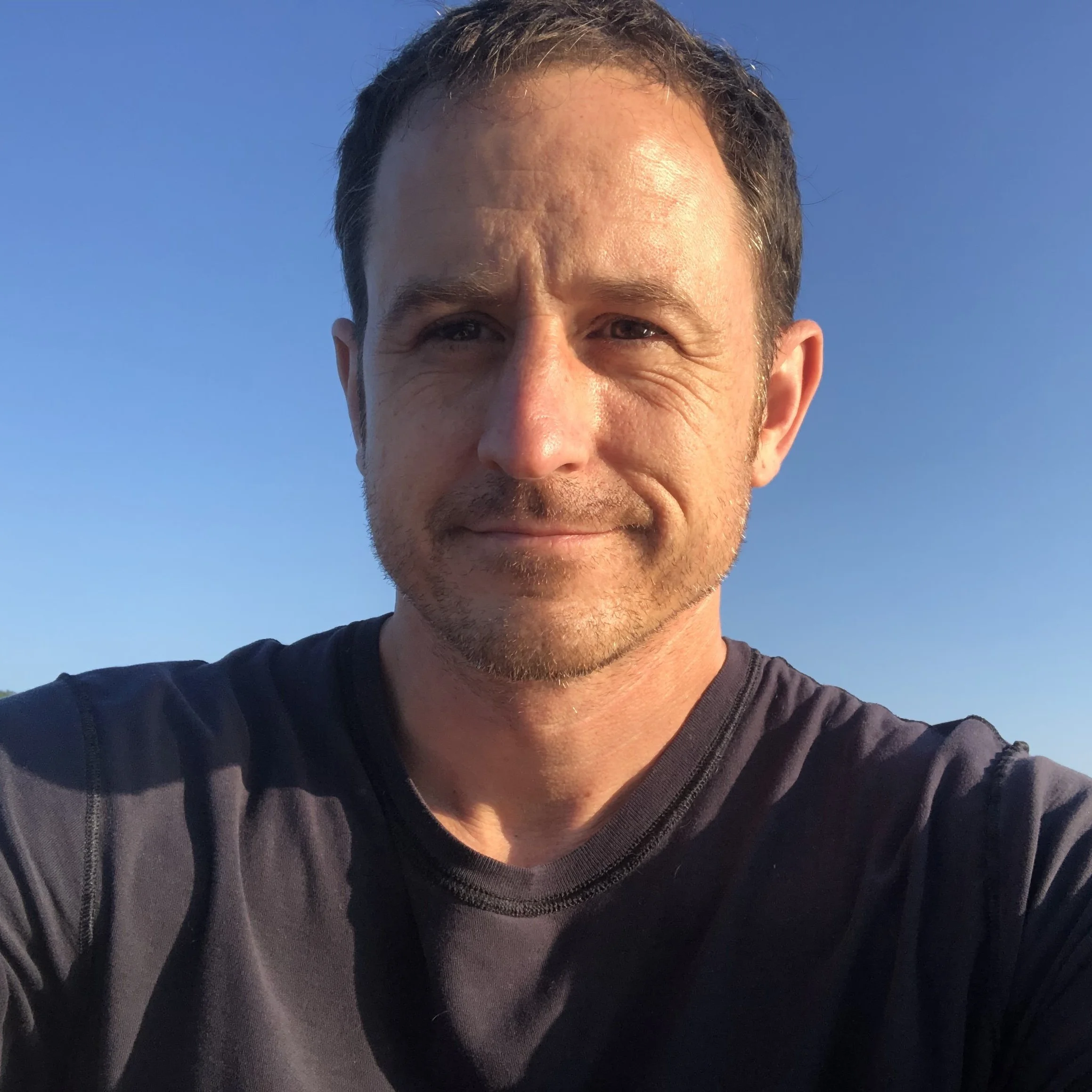
Lee Jaffe - Author of “Jean-Michel Basquiat: Crossroads” - Artist, Musician, Poet

Lee Jaffe - Author of “Jean-Michel Basquiat: Crossroads” - Artist, Musician, Poet

Artist, Musician, Poet
Author of Jean-Michel Basquiat: Crossroads

Jean-Michel Basquiat's combination of words and images, this visual poetry, just from a cultural standpoint has been so important. When I met him in 1983, black people were not allowed in the art market, pretty much. And you see that he broke down this barrier, which opened the door for all this multiculturalism within the art market. And you can't diminish the importance of that at all. It's helped to give a voice and an audience to all these incredible artists that might not have had that.

Highlights - Nick Bostrom - Founding Director, Future of Humanity Institute, Oxford

Highlights - Nick Bostrom - Founding Director, Future of Humanity Institute, Oxford

Founding Director of Future of Humanity Institute, University of Oxford
Philosopher, Author of Superintelligence: Paths, Dangers, Strategies

I do think though that there is a real possibility that within the lifetime of many people who are here today, we will see the arrival of transformative AI, machine intelligence systems that not only can automate specific tasks but can replicate the full generality of human thinking. So that everything that we humans can do with our brains, machines will be able to do, and in fact do faster and more efficiently. What the consequences of that are, is very much an open question and, I think, depends in part on the extent to which we manage to get our act together before these developments. In terms of, on the one hand, working out our technical issues in AI alignment, figuring out exactly the methods by which you could ensure that such very powerful cognitive engines will be aligned to our values, will actually do what we intend for them to do, as opposed to something else. And then, of course, also the political challenges of ensuring that such a powerful technology will be used for positive ends. So depending on how well we perform among those two challenges, the outcome, I think, could be extremely good or extremely bad. And I think all of those possibilities are still in the cards.

Nick Bostrom - Philosopher, Founding Director, Future of Humanity Institute, Oxford


Nick Bostrom - Philosopher, Founding Director, Future of Humanity Institute, Oxford


Founding Director of Future of Humanity Institute, University of Oxford
Philosopher, Author of Superintelligence: Paths, Dangers, Strategies

I do think though that there is a real possibility that within the lifetime of many people who are here today, we will see the arrival of transformative AI, machine intelligence systems that not only can automate specific tasks but can replicate the full generality of human thinking. So that everything that we humans can do with our brains, machines will be able to do, and in fact do faster and more efficiently. What the consequences of that are, is very much an open question and, I think, depends in part on the extent to which we manage to get our act together before these developments. In terms of, on the one hand, working out our technical issues in AI alignment, figuring out exactly the methods by which you could ensure that such very powerful cognitive engines will be aligned to our values, will actually do what we intend for them to do, as opposed to something else. And then, of course, also the political challenges of ensuring that such a powerful technology will be used for positive ends. So depending on how well we perform among those two challenges, the outcome, I think, could be extremely good or extremely bad. And I think all of those possibilities are still in the cards.

Highlights - Bruce Mau - Award-winning Designer, Author of “Mau MC24…24 Principles for Designing Massive Change”

Highlights - Bruce Mau - Award-winning Designer, Author of “Mau MC24…24 Principles for Designing Massive Change”

Award-winning Designer, Artist & Educator
Co-founder & CEO of Massive Change Network
Author/Co-author of Mau MC24 · The Nexus · S, M, L, XL

I would like them to know just how powerful they are, that they have the power to shape the world. At some point, I realized that the world is produced. The world is designed and produced, and since we designed and produced it, we can redesign it. And you can play a part in designing it. You can play a part in that production. It doesn't have to happen to you. And I think, for too many people, too much power and too much control is concentrated in too few hands. People need to have the power to control and design their own life.

Bruce Mau - Author of "Mau MC24…24 Principles for Designing Massive Change in Your Life and Work”

Bruce Mau - Author of "Mau MC24…24 Principles for Designing Massive Change in Your Life and Work”

Award-winning Designer, Artist & Educator
Co-founder & CEO of Massive Change Network
Author/Co-author of Mau MC24 · The Nexus · S, M, L, XL

I would like them to know just how powerful they are, that they have the power to shape the world. At some point, I realized that the world is produced. The world is designed and produced, and since we designed and produced it, we can redesign it. And you can play a part in designing it. You can play a part in that production. It doesn't have to happen to you. And I think, for too many people, too much power and too much control is concentrated in too few hands. People need to have the power to control and design their own life.

Highlights - Neil Grimmer - Fmr. Artist - Brand Pres. - SOURCE Global - Drinking Water Made from Sunlight and Air

Highlights - Neil Grimmer - Fmr. Artist - Brand Pres. - SOURCE Global - Drinking Water Made from Sunlight and Air

Brand President of SOURCE Global · Innovator of the SOURCE Hydropanel
Drinking Water Made from Sunlight and Air

Water insecurity and water scarcity is affecting all people in almost every part of the world. At this point, by 2025, we expect 1.8 billion people to suffer from water scarcity, which means they have no access to clean, safe drinking water within a 30-minute walk of their home. You fast forward to 2050, we expect 6 billion people will have water scarcity. So the rate at which this problem is increasing is far greater than the current infrastructure that has supported water for humans. And that's where innovation and rapid deployment of technology at scale is really essential. And that's what we're in the business to do.

Neil Grimmer - Fmr. Artist - Brand President - SOURCE Global - Innovator of SOURCE Hydropanel

Neil Grimmer - Fmr. Artist - Brand President - SOURCE Global - Innovator of SOURCE Hydropanel

Brand President of SOURCE Global · Innovator of the SOURCE Hydropanel
Drinking Water Made from Sunlight and Air

Water insecurity and water scarcity is affecting all people in almost every part of the world. At this point, by 2025, we expect 1.8 billion people to suffer from water scarcity, which means they have no access to clean, safe drinking water within a 30-minute walk of their home. You fast forward to 2050, we expect 6 billion people will have water scarcity. So the rate at which this problem is increasing is far greater than the current infrastructure that has supported water for humans. And that's where innovation and rapid deployment of technology at scale is really essential. And that's what we're in the business to do.

(Highlights) Petra Cortright · Digital Artist

(Highlights) Petra Cortright · Digital Artist

Artist

I think to pursue mystery and beauty, these things are a bit subjective, so you can't really tell people exactly what it shouldn't be about. And also I have to preserve these things for myself. I primarily make the work for myself, so if I don't have some questions that are unanswered, even for me, then there's not really an interest to like keep going otherwise. So it's also sort of protection and a preservation mindset that I have about leaving things really open for other people and for myself.

Petra Cortright · Digital Artist

Petra Cortright · Digital Artist

Digital Artist

I think to pursue mystery and beauty, these things are a bit subjective, so you can't really tell people exactly what it shouldn't be about. And also I have to preserve these things for myself. I primarily make the work for myself, so if I don't have some questions that are unanswered, even for me, then there's not really an interest to like keep going otherwise. So it's also sort of protection and a preservation mindset that I have about leaving things really open for other people and for myself.

(Highlights) Anthony Gardner · Prof. Contemporary Art History, Oxford · Fmr. Head, Ruskin School of Art

(Highlights) Anthony Gardner · Prof. Contemporary Art History, Oxford · Fmr. Head, Ruskin School of Art

Professor of Contemporary Art History, University of Oxford
Fmr. Head, Ruskin School of Art · Co-author of Biennials, Triennials and documenta: The Exhibitions That Created Contemporary Art

I think art can engage with the body, the mind, and the imagination in so many different ways that can compliment modes of thinking, other modes of creating and thinking through and working through and devising.
I was thinking about this in relation to the last 18 months and how the sciences have rightly been heralded as the great way of getting ourselves out of this pandemic, but culture is the way and art is the way that we've been getting through the pandemic.

Anthony Gardner · Prof. Contemporary Art History, Oxford · Fmr. Head, Ruskin School of Art

Anthony Gardner · Prof. Contemporary Art History, Oxford · Fmr. Head, Ruskin School of Art

Professor of Contemporary Art History, University of Oxford
Fmr. Head, Ruskin School of Art · Co-author of Biennials, Triennials and documenta: The Exhibitions That Created Contemporary Art

I think art can engage with the body, the mind, and the imagination in so many different ways that can compliment modes of thinking, other modes of creating and thinking through and working through and devising.
I was thinking about this in relation to the last 18 months and how the sciences have rightly been heralded as the great way of getting ourselves out of this pandemic, but culture is the way and art is the way that we've been getting through the pandemic.

(Highlights) Ami Vitale · Award-winning Photographer, Filmmaker & Exec. Director of Vital Impacts

(Highlights) Ami Vitale · Award-winning Photographer, Filmmaker & Exec. Director of Vital Impacts

Award-Winning Photographer & Filmmaker
Executive Director of Vital Impacts

When are we all going to start to care about one another? Because all of our individual choices do have impacts. And I just think the demands that we place on this planet, on the ecosystems, are what are driving conflict and human suffering. In some cases, it's really the scarcity of resources, just like water. In others, it's the changing climate and the loss of fertile lands to be able to grow food. But in the end, it's always the people living in these places that really suffer the most. All of my work today, it’s not really about wildlife, and it's not just about people either. It's about how deeply interconnected all of those things are. People and the human condition are the backdrop of every one of the stories on this planet.

Ami Vitale · Award-Winning Photographer, Filmmaker & Exec. Director of Vital Impacts

Ami Vitale · Award-Winning Photographer, Filmmaker & Exec. Director of Vital Impacts

Award-Winning Photographer & Filmmaker
Executive Director of Vital Impacts

When are we all going to start to care about one another? Because all of our individual choices do have impacts. And I just think the demands that we place on this planet, on the ecosystems, are what are driving conflict and human suffering. In some cases, it's really the scarcity of resources, just like water. In others, it's the changing climate and the loss of fertile lands to be able to grow food. But in the end, it's always the people living in these places that really suffer the most. All of my work today, it’s not really about wildlife, and it's not just about people either. It's about how deeply interconnected all of those things are. People and the human condition are the backdrop of every one of the stories on this planet.

Donald Sultan · Artist

Donald Sultan · Artist

Artist

I always feel that you can never fail if you don't know what you're doing. The best work is what you do when you don’t know what you’re doing…A lot of the images that have struck me, that I get drawn to, a lot of them were from painting. Some of them were from early movies. Some of them were from places I visited, but mostly gardens or wild gardens that had things in them I’d never seen before, and then learning what that was when I'd been working on it. Generally speaking most of what I do had to do with my feelings about other artists work that I admired. A lot of the industrial materials that are use, floor tiling and things like that came from site specific artists, sculptors, people who built into the buildings, Arte Povera. Using works that were just found, the poor materials, that kind of thing. Tar I kind of got from working in my fathers tire shop with the grinding of the rubber and so on. Things come together and I wasn’t even aware of it until people start asking me about it. I remember telling them about this man, being in black room with all this rubber, smoking Camels. It was a very cool image. I’ll never forget the guy, but when I was doing it myself, that’s not what I was thinking. I was really thinking about the materials I was using and inverting them.

(Highlights) JOHN POWERS

(Highlights) JOHN POWERS

Sculptor

The figure in my work is me. The figure in my work is you. It's me placing objects. It’s me putting things together. It’s you standing near it. It’s you in proximity moving back and forth, moving around it. It’s us. One of the reasons I make the things I do the way I make them is because I can't imagine them. I make things that I couldn't draw or even think about clearly. I can only look at them. I enjoy the complexity that I make because I'm striving to see it.

JOHN POWERS

JOHN POWERS

Sculptor

The figure in my work is me. The figure in my work is you. It's me placing objects. It’s me putting things together. It’s you standing near it. It’s you in proximity moving back and forth, moving around it. It’s us. One of the reasons I make the things I do the way I make them is because I can't imagine them. I make things that I couldn't draw or even think about clearly. I can only look at them. I enjoy the complexity that I make because I'm striving to see it.

(Highlights) AZBY BROWN

(Highlights) AZBY BROWN

Author of Just Enough · Small Spaces · Lead Researcher for Safecast
Authority on Japanese Architecture, Design & Environmentalism

In Edo Japan, basically life was pretty good, and they recycled everything. Everything was reused, upcycled. Waste was considered taboo. A person who was wasting was considered an ugly person. So there’s a lot that we could talk about design, the layout, scale. Buildings were rarely taller than two storeys. Very good use of environmental features, microclimates, use of wind for cooling, passive solar heating. Good use of planting, gardens, etc. But regarding cities of the future, I think the main thing is it needs to be a place where people feel like they belong and want to take responsibility.


AZBY BROWN

AZBY BROWN

Author of Just Enough · Small Spaces · Lead Researcher for Safecast
Authority on Japanese Architecture, Design & Environmentalism

In Edo Japan, basically life was pretty good, and they recycled everything. Everything was reused, upcycled. Waste was considered taboo. A person who was wasting was considered an ugly person. So there’s a lot that we could talk about design, the layout, scale. Buildings were rarely taller than two storeys. Very good use of environmental features, microclimates, use of wind for cooling, passive solar heating. Good use of planting, gardens, etc. But regarding cities of the future, I think the main thing is it needs to be a place where people feel like they belong and want to take responsibility.


In Memory of TONY WALTON · 1934-2022 (Part 2)

In Memory of TONY WALTON · 1934-2022 (Part 2)

Art and Theater Director, Costume Designer

Creativity is perhaps the ultimate mystery. I veer wildly between opposing views on it and have different feelings depending on whether the creator is isolated or a collaborator.

In Memory of TONY WALTON · 1934-2022 (Part 1)

In Memory of TONY WALTON · 1934-2022 (Part 1)

Art and Theater Director, Costume Designer

Creativity is perhaps the ultimate mystery. I veer wildly between opposing views on it and have different feelings depending on whether the creator is isolated or a collaborator.