(Highlights) DANIEL HANDLER a.k.a Lemony Snicket

(Highlights) DANIEL HANDLER a.k.a Lemony Snicket

Writer

I think what is most exciting is that it is a very passionate readership. You never love a book the way you love a book when you are ten. And I think to be a part of that sacred space and that kind of sacred exchange between a reader and literature is very exciting.

DANIEL HANDLER a.k.a Lemony Snicket

DANIEL HANDLER a.k.a Lemony Snicket

Writer

I think what is most exciting is that it is a very passionate readership. You never love a book the way you love a book when you are ten. And I think to be a part of that sacred space and that kind of sacred exchange between a reader and literature is very exciting.

ROXANE GAY

ROXANE GAY

Writer

As seductive as the virtual world can be – where there are fewer boundaries, where you can be anything, and you can be anyone – there's something very important about the tactile world and being grounded in the tactile world. And so far humanity has not lost sight of that collectively. And I do not think that we will.

(Highlights) ROXANE GAY

(Highlights) ROXANE GAY

Writer

As seductive as the virtual world can be – where there are fewer boundaries, where you can be anything, and you can be anyone – there's something very important about the tactile world and being grounded in the tactile world. And so far humanity has not lost sight of that collectively. And I do not think that we will.

RICK MOODY

RICK MOODY

Novelist & Memoirist

Words are the oldest information storage and retrieval system ever devised…The written word will remain, scribbled on collapsed highway overpasses, as a testament to love and rage, as evidence of the wanderers in the ruin.

CAROLYN WATERS BROE

CAROLYN WATERS BROE

Founding Conductor of the Four Seasons Orchestra
Principal Violist of the Scottsdale Philharmonic

I feel that the earth is like a classroom for soul growth and we’re put here to overcome challenges, and we may be working on something like humility or compassion or love of humanity. The challenges might be something like war or cancer. Everybody gets a challenge to work on in their lives, but they also get a great gift to help them through those challenges. You just have to know how to use those gifts.

(Highlights) CAROLYN WATERS BROE

(Highlights) CAROLYN WATERS BROE

Founding Conductor of the Four Seasons Orchestra
Principal Violist of the Scottsdale Philharmonic

I feel that the earth is like a classroom for soul growth and we’re put here to overcome challenges, and we may be working on something like humility or compassion or love of humanity. The challenges might be something like war or cancer. Everybody gets a challenge to work on in their lives, but they also get a great gift to help them through those challenges. You just have to know how to use those gifts.

(Highlights) EIMEAR McBRIDE

(Highlights) EIMEAR McBRIDE

Eimear McBride trained at The Drama Centre in London. Her debut novel A Girl is a Half-formed Thing received a number of awards, including the Bailey Women’s Prize for Fiction, and the Irish Novel of the Year. She occasionally writes interviews for The Guardian, TLS, and The New Statesman.

Eimear McBride · Award-Winning Novelist (Highlights)
The Creative Process Podcast

This interview was conducted by Justin Hayes and Mia Funk with the participation of collaborating universities and students. Associate Interviews Producer on this podcast was Reagan-Koffink. Digital Media Coordinator is Yu Young Lee. 


Mia Funk is an artist, interviewer and founder of The Creative Process.

EIMEAR McBRIDE

EIMEAR McBRIDE

Eimear McBride trained at The Drama Centre in London. Her debut novel A Girl is a Half-formed Thing received a number of awards, including the Bailey Women’s Prize for Fiction, and the Irish Novel of the Year. She occasionally writes interviews for The Guardian, TLS, and The New Statesman.

Eimear McBride · Award-Winning Novelist (49 mins)
The Creative Process Podcast

This interview was conducted by Justin Hayes and Mia Funk with the participation of collaborating universities and students. Associate Interviews Producer on this podcast was Reagan-Koffink. Digital Media Coordinator is Yu Young Lee. 


Mia Funk is an artist, interviewer and founder of The Creative Process.

(Highlights) YANN MARTEL

(Highlights) YANN MARTEL

Novelist

It's interesting to me that the West has been shaped by two works of fiction, The Iliad and The Odyssey and the Gospels, which are prehistoric artistic works. The West has two feet. They're both fictional feet, and after that we started being rational and reasonable.

YANN MARTEL

YANN MARTEL

Novelist

It's interesting to me that the West has been shaped by two works of fiction, The Iliad and The Odyssey and the Gospels, which are prehistoric artistic works. The West has two feet. They're both fictional feet, and after that we started being rational and reasonable.

(Highlights) JOHN D'AGATA

(Highlights) JOHN D'AGATA

John D’Agata is the author of Halls of Fame, About a Mountain, and The Lifespan of a Fact, as well as the editor of the 3-volume series  A New History of the Essay, which includes the anthologies The Next American Essay, The Making of the American Essay, and The Lost Origins of the Essay. His work has been supported by a Guggenheim Fellowship, a Howard Foundation Fellowship, an NEA Literature Fellowship, and a Lannan Foundation Fellowship. He holds a B.A. from Hobart College and two M.F.A.s from the University of Iowa, and recently his essays have appeared in The Believer, Harper's, Gulf Coast, and Conjunctions. John D’Agata lives in Iowa City where he teaches creative writing at the University of Iowa. The Lifespan of Fact was adapted into a Broadway play starring Daniel Radcliffe, Cherry Jones, and Bobby Cannavale.

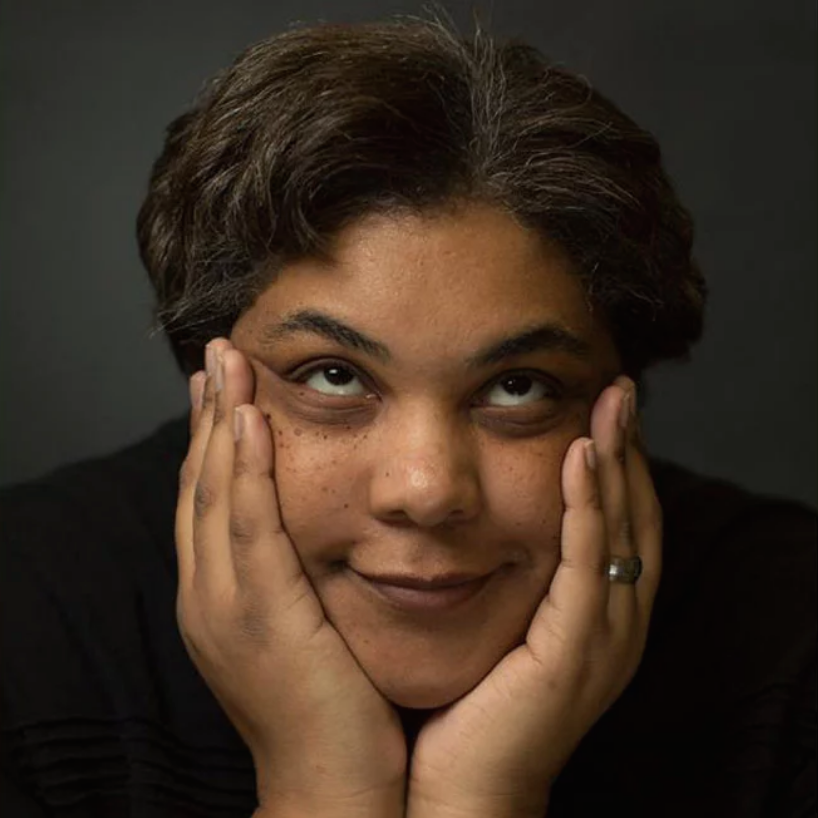
John D’Agata · Essayist (Highlights)
Interviewed by Mia Funk · Associate Podcast Producer Cameron McDonald

JOHN D'AGATA

For a writer of non-fiction or essayist that’s very difficult to work with because we aren’t, or at least some of us don’t consider ourselves journalists. The tools that we are working with aren’t–What your favorite color is. Where you grew up. Or what your favorite number is. If we’re writing a profile of something, the tools that we’re working with are long conversations in which people are sharing anecdotes about themselves. When I do an interview with somebody, I don’t take out a tape recorder. I don’t have a notebook. I invite them on a walk so that we can feel at least that we’re just chatting.

This interview was conducted by Mia Funk with the participation of collaborating universities and students. Associate Interviews Producer on this podcast was Cameron McDonald. Digital Media Coordinator is Hannah Story Brown. 

Mia Funk is an artist, interviewer and founder of The Creative Process.

JOHN D'AGATA

JOHN D'AGATA

John D’Agata is the author of Halls of Fame, About a Mountain, and The Lifespan of a Fact, as well as the editor of the 3-volume series  A New History of the Essay, which includes the anthologies The Next American Essay, The Making of the American Essay, and The Lost Origins of the Essay. His work has been supported by a Guggenheim Fellowship, a Howard Foundation Fellowship, an NEA Literature Fellowship, and a Lannan Foundation Fellowship. He holds a B.A. from Hobart College and two M.F.A.s from the University of Iowa, and recently his essays have appeared in The Believer, Harper's, Gulf Coast, and Conjunctions. John D’Agata lives in Iowa City where he teaches creative writing at the University of Iowa. The Lifespan of Fact was adapted into a Broadway play starring Daniel Radcliffe, Cherry Jones, and Bobby Cannavale.
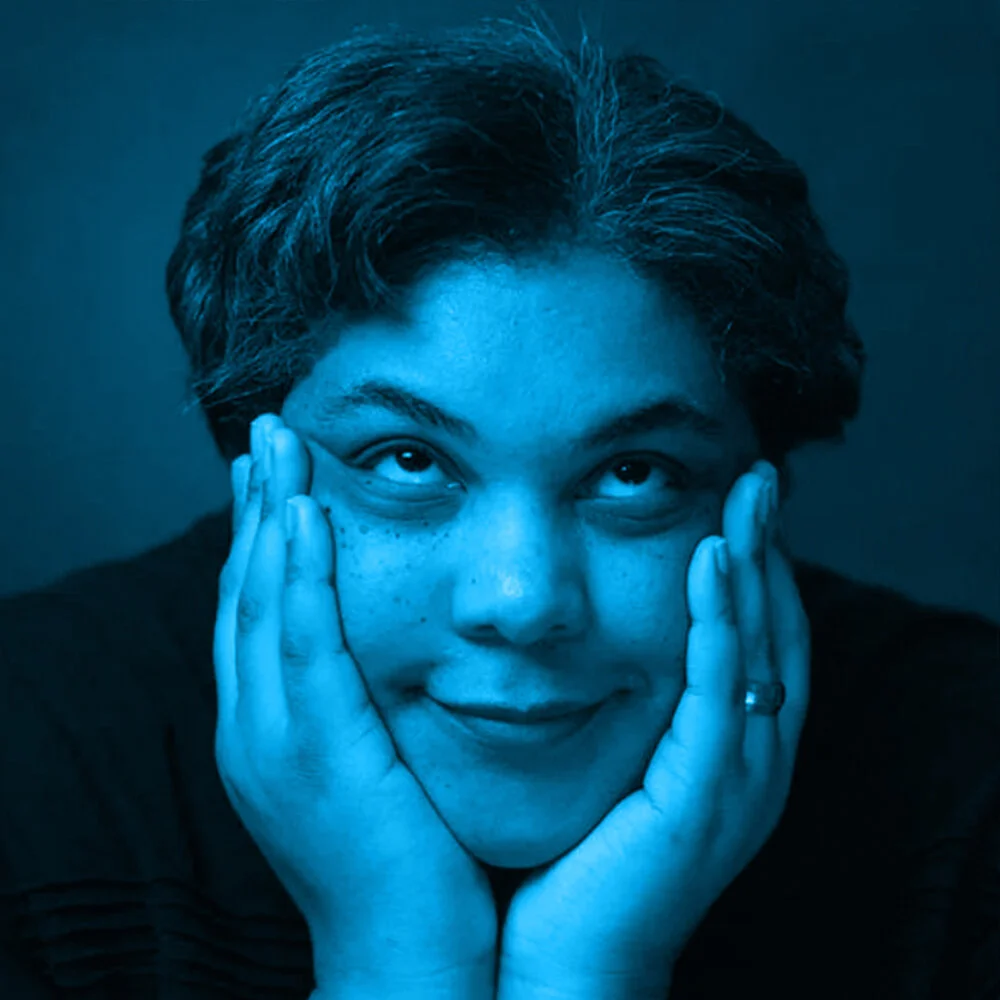
John D’Agata · Essayist (63 mins)
The Creative Process Podcast

JOHN D'AGATA

For a writer of non-fiction or essayist that’s very difficult to work with because we aren’t, or at least some of us don’t consider ourselves journalists. The tools that we are working with aren’t–What your favorite color is. Where you grew up. Or what your favorite number is. If we’re writing a profile of something, the tools that we’re working with are long conversations in which people are sharing anecdotes about themselves. When I do an interview with somebody, I don’t take out a tape recorder. I don’t have a notebook. I invite them on a walk so that we can feel at least that we’re just chatting.

This interview was conducted by Mia Funk with the participation of collaborating universities and students. Associate Interviews Producer on this podcast was Cameron McDonald. Digital Media Coordinator is Hannah Story Brown. 

Mia Funk is an artist, interviewer and founder of The Creative Process.

(Highlights) TAL HEVER-CHYBOWSKI

(Highlights) TAL HEVER-CHYBOWSKI

Director of the Paris Yiddish Center (Maison de la Culture Yiddish) & Medem Library

A lot of people in my family and among my friends when they heard that I study Yiddish and that later made it my livelihood, they are very surprised. Yiddish? How come Yiddish? Why Yiddish? They even laugh sometimes, they are very surprised. And what I answer to them is that there is nothing surprising about the fact that I study or speak Yiddish. The real surprise, the real question that has to be asked is how come my parents, this last generation, didn’t speak Yiddish? Because, if you consider my family, for hundreds of years on all sides they spoke Yiddish.

TAL HEVER-CHYBOWSKI

TAL HEVER-CHYBOWSKI

Director of the Paris Yiddish Center (Maison de la Culture Yiddish) & Medem Library

A lot of people in my family and among my friends when they heard that I study Yiddish and that later made it my livelihood, they are very surprised. Yiddish? How come Yiddish? Why Yiddish? They even laugh sometimes, they are very surprised. And what I answer to them is that there is nothing surprising about the fact that I study or speak Yiddish. The real surprise, the real question that has to be asked is how come my parents, this last generation, didn’t speak Yiddish? Because, if you consider my family, for hundreds of years on all sides they spoke Yiddish.

NICOLE FLEETWOOD

NICOLE FLEETWOOD

Dr. Nicole Fleetwood is an educator and author whose work explores Black cultural history, visual, media, and gender studies and mass incarceration. She earned her B.Phil from Miami University and her Ph.D. from Stanford University. Fleetwood currently serves as an Associate Professor of American Studies and Art History at Rutgers University and is a member of their press editorial committee. She has also been published in several scholarly journals, co/curated exhibitions on art and mass incarceration, and received prestigious grants and fellowships from the Whiting Foundation Public Engagement Fellowship, the Schomburg Center for Research on Black Culture, and many more.
Marking Time Exhibition is at MoMA PS1, through Apr 4, 2021
Marking Time - Art in the Age of Mass Incarceration is published by Harvard University Press

Nicole Fleetwood · MacArthur Fellow, Educator, Author & Curator (30 mins)
The Creative Process Podcast · Arts, Culture & Society
(Highlights) JEANNIE VANASCO

(Highlights) JEANNIE VANASCO

Award-Winning Memoirist, Author & Educator

What interested me about this particular experience is that I didn’t have the language to attach to it in the way I had the language to attach to a later experience that I would have no trouble calling rape, but happened to me and I call Mark in the book. I didn’t know what to call that for the longest time, so I didn’t know what to feel about it, and so as a writer that interests me. When I don’t have the words for something, when I sense that inevitably I’m going to fail.


JEANNIE VANASCO

JEANNIE VANASCO

Award-Winning Memoirist, Author & Educator

What interested me about this particular experience is that I didn’t have the language to attach to it in the way I had the language to attach to a later experience that I would have no trouble calling rape, but happened to me and I call Mark in the book. I didn’t know what to call that for the longest time, so I didn’t know what to feel about it, and so as a writer that interests me. When I don’t have the words for something, when I sense that inevitably I’m going to fail.


(Highlights) DR. FRANÇOIS CLEMMONS

(Highlights) DR. FRANÇOIS CLEMMONS

Singer · Author
1st African American Actor on Children’s TV · Officer Clemmons on Mister Rogers’ Neighborhood

I always find it an ironic thing to think about the fact that Fred Rogers was colour-blind. He could barely tell a blue from a grey. I was young and to him I was a child and I certainly played the role of a child and he played the role of parent… He was profoundly patient.

DR. FRANÇOIS CLEMMONS

DR. FRANÇOIS CLEMMONS

Singer · Author
1st African American Actor on Children’s TV · Officer Clemmons on Mister Rogers’ Neighborhood

I always find it an ironic thing to think about the fact that Fred Rogers was colour-blind. He could barely tell a blue from a grey. I was young and to him I was a child and I certainly played the role of a child and he played the role of parent… He was profoundly patient.