Highlights - JERICHO BROWN - Pulitzer Prize-winning Poet - Editor of How We Do It: Black Writers on Craft, Practice, and Skill

Highlights - JERICHO BROWN - Pulitzer Prize-winning Poet - Editor of How We Do It: Black Writers on Craft, Practice, and Skill

Pulitzer Prize-winning Poet · Director of Creative Writing Program · Emory University
Editor of How We Do It: Black Writers on Craft, Practice, and Skill

As writers, it's our job to write what will become clichés. Not to write clichés, but to be original enough that we make something that people are still saying for hundreds of years to come. And if that's what you're doing, that's pretty powerful. When I'm writing a poem I'm making a world. And if I can stick to that, then I have to believe that once a poem is out in the world, another world has been made, another way of living, another way of thinking, another way of seeing things.

JERICHO BROWN - Pulitzer Prize-winning Poet - Editor of “How We Do It: Black Writers on Craft, Practice, and Skill”

JERICHO BROWN - Pulitzer Prize-winning Poet - Editor of “How We Do It: Black Writers on Craft, Practice, and Skill”

Pulitzer Prize-winning Poet · Director of Creative Writing Program · Emory University
Editor of How We Do It: Black Writers on Craft, Practice, and Skill

As writers, it's our job to write what will become clichés. Not to write clichés, but to be original enough that we make something that people are still saying for hundreds of years to come. And if that's what you're doing, that's pretty powerful. When I'm writing a poem I'm making a world. And if I can stick to that, then I have to believe that once a poem is out in the world, another world has been made, another way of living, another way of thinking, another way of seeing things.

Highlights - ERICA BERRY - Author of Wolfish: Wolf, Self, and the Stories We Tell About Fear

Highlights - ERICA BERRY - Author of Wolfish: Wolf, Self, and the Stories We Tell About Fear

Author of Wolfish: Wolf, Self, and the Stories We Tell About Fear

And I think the ways that wolves converse with one another, there's also so much there that really conjures the way that we humans do. And I was trying to piece together: why did we feel so threatened by wolves? In part, I think because there's a sort of uncanny mirror that humans have seen in a wolf. And I'll give an example. Wolf packs will form a diversity of family structures very often. So they will have a nuclear family where you'll have two breeders, but they can also have an extended family where there's sort of aunts and uncles in the pack. Or (these are the biologist's names) they'll call it a step-family if a wolf pack welcomes an outside breeder. A foster family, if they welcome another outsider. And I think the way that a pack is its own ecosystem: if one wolf dies, there's one wolf in this pack that might be the one that teaches how to move through the territory. And if that one wolf dies, the whole pack has a much higher likelihood of disbanding. And so this idea that the interconnectivity between the packs and the individuality of the wolves is so critical. It is so beautiful, and you see that studying these different wolves, they have personalities.

ERICA BERRY - Author of Wolfish: Wolf, Self, and the Stories We Tell About Fear

ERICA BERRY - Author of Wolfish: Wolf, Self, and the Stories We Tell About Fear

Author of Wolfish: Wolf, Self, and the Stories We Tell About Fear

And I think the ways that wolves converse with one another, there's also so much there that really conjures the way that we humans do. And I was trying to piece together: why did we feel so threatened by wolves? In part, I think because there's a sort of uncanny mirror that humans have seen in a wolf. And I'll give an example. Wolf packs will form a diversity of family structures very often. So they will have a nuclear family where you'll have two breeders, but they can also have an extended family where there's sort of aunts and uncles in the pack. Or (these are the biologist's names) they'll call it a step-family if a wolf pack welcomes an outside breeder. A foster family, if they welcome another outsider. And I think the way that a pack is its own ecosystem: if one wolf dies, there's one wolf in this pack that might be the one that teaches how to move through the territory. And if that one wolf dies, the whole pack has a much higher likelihood of disbanding. And so this idea that the interconnectivity between the packs and the individuality of the wolves is so critical. It is so beautiful, and you see that studying these different wolves, they have personalities.

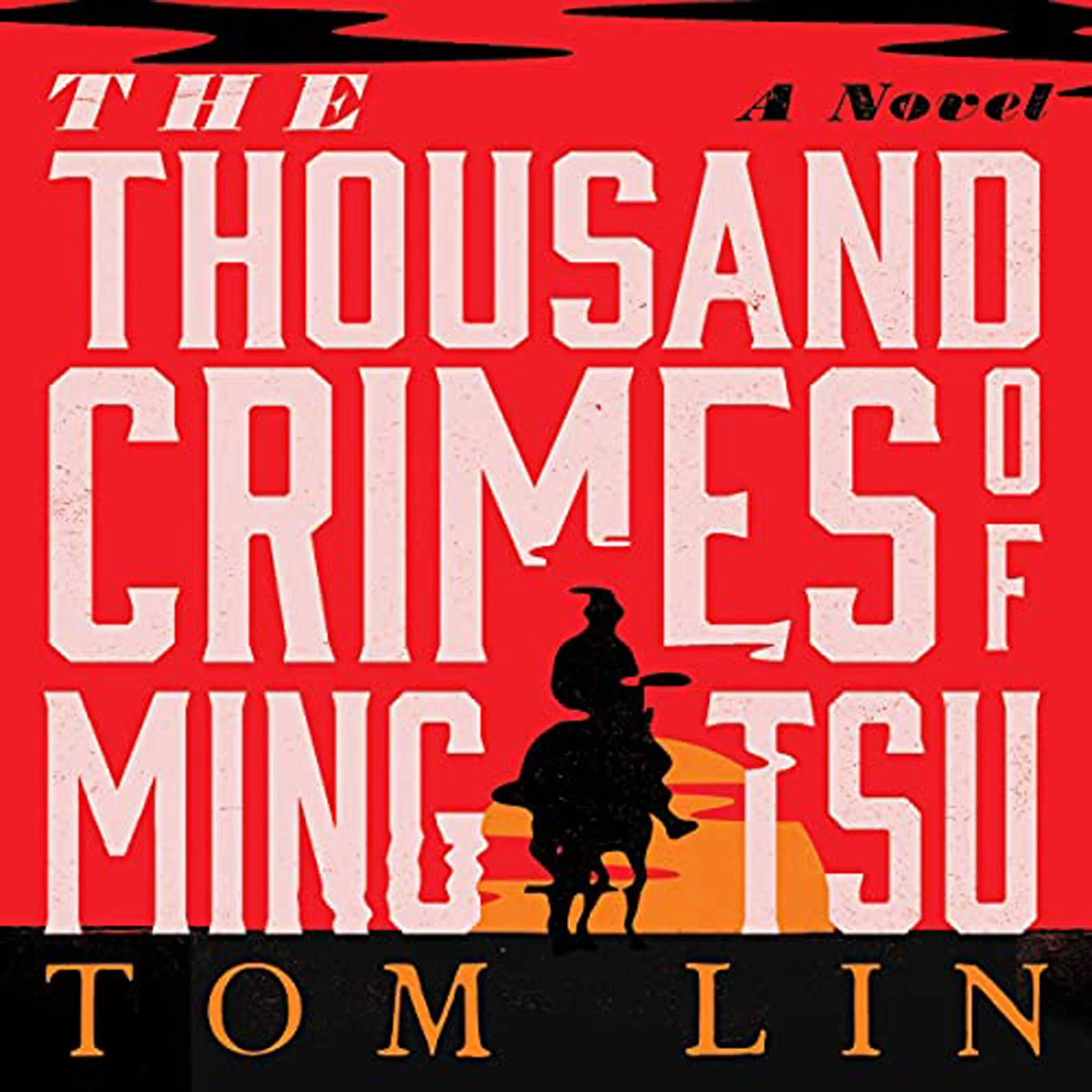
Highlights - TOM LIN - Author of The Thousand Crimes of Ming Tsu - Andrew Carnegie Medal for Excellence in Fiction 2022

Highlights - TOM LIN - Author of The Thousand Crimes of Ming Tsu - Andrew Carnegie Medal for Excellence in Fiction 2022

Author of The Thousand Crimes of Ming Tsu
Winner of the Andrew Carnegie Medal for Excellence in Fiction 2022

When I was growing up, it was all about representation. I think that was the thing that was being championed: we need more people of color in books, movies, across all media. And then I think what we saw was an extremely cynical and capitalistic-minded ruthless optimization of that, where someone said: Oh, you want representation? Then we'll just throw in token people of color into projects. And then we'll check that box. And I think that became so prevalent in so many pieces of media that that became what we thought of as representation. I think it's a salvageable concept because, I mean, when I encountered books growing up, they were all with white people in them. Front to back, start to finish. It was just white characters. And so when I started writing stories of my own in school as a middle schooler they - surprise - they had white people in them, right? There were just white people talking about other white people. I went to public school in Queens. I knew very few white people. And so I think what representation does at its best is that it informs the boundaries of possibility. By seeing yourself represented in media, you become able to imagine your own stories transpiring in media and being made available for everybody else to witness.

And so I think the point of representation is not just if we do a checklist of this piece of media, can we find a person of color. But I think the idea of representation is more that we want to be expanding the realm of storytelling, expanding what's possible by telling these stories that are not normally told.

TOM LIN - Author of The Thousand Crimes of Ming Tsu - Andrew Carnegie Medal for Excellence in Fiction 2022

TOM LIN - Author of The Thousand Crimes of Ming Tsu - Andrew Carnegie Medal for Excellence in Fiction 2022

Author of The Thousand Crimes of Ming Tsu
Winner of the Andrew Carnegie Medal for Excellence in Fiction 2022

When I was growing up, it was all about representation. I think that was the thing that was being championed: we need more people of color in books, movies, across all media. And then I think what we saw was an extremely cynical and capitalistic-minded ruthless optimization of that, where someone said: Oh, you want representation? Then we'll just throw in token people of color into projects. And then we'll check that box. And I think that became so prevalent in so many pieces of media that that became what we thought of as representation. I think it's a salvageable concept because, I mean, when I encountered books growing up, they were all with white people in them. Front to back, start to finish. It was just white characters. And so when I started writing stories of my own in school as a middle schooler they - surprise - they had white people in them, right? There were just white people talking about other white people. I went to public school in Queens. I knew very few white people. And so I think what representation does at its best is that it informs the boundaries of possibility. By seeing yourself represented in media, you become able to imagine your own stories transpiring in media and being made available for everybody else to witness.

And so I think the point of representation is not just if we do a checklist of this piece of media, can we find a person of color. But I think the idea of representation is more that we want to be expanding the realm of storytelling, expanding what's possible by telling these stories that are not normally told.

Highlights - MARK MASLIN - Author of How To Save Our Planet: The Facts - Professor, Earth System Science, UCLondon

Highlights - MARK MASLIN - Author of How To Save Our Planet: The Facts - Professor, Earth System Science, UCLondon

Author of How To Save Our Planet: The Facts
Professor of Earth System Science at University College London

I think the most important thing is realizing how much impact humans have had on the planet. For example, did you know that we move more rock and sediment than all the natural processes put together? We also have created enough concrete already to cover the whole world in a layer that's two millimeters thick, and that includes the oceans. We have also created and make something like 300 million tons of plastic every single year, which we know ends up in our rivers. It ends up in our oceans. And we've also found that microplastics have been found in human blood. So this is the impact we're having all around the world. We've also cut down 3 trillion trees, that's half the trees on the planet. We have doubled carbon dioxide in the atmosphere. We've increased methane by about 150%, which has led to a warming of the planet of about 1.2 degrees Celsius. And If you weigh the land mammals, 30% of that weight is us humans. There are 8 billion of us, and I have to say a few of us could lose a few pounds, but 67% of that weight is our livestock. And just 3% is those wild animals. So in less than 5,000 years, we've gone from 99% being wild animals to less than 3%. That's how much impact we humans have had on the planet.

MARK MASLIN - Author of How To Save Our Planet: The Facts - Professor, Earth System Science, University College London

MARK MASLIN - Author of How To Save Our Planet: The Facts - Professor, Earth System Science, University College London

Author of How To Save Our Planet: The Facts
Professor of Earth System Science at University College London

I think the most important thing is realizing how much impact humans have had on the planet. For example, did you know that we move more rock and sediment than all the natural processes put together? We also have created enough concrete already to cover the whole world in a layer that's two millimeters thick, and that includes the oceans. We have also created and make something like 300 million tons of plastic every single year, which we know ends up in our rivers. It ends up in our oceans. And we've also found that microplastics have been found in human blood. So this is the impact we're having all around the world. We've also cut down 3 trillion trees, that's half the trees on the planet. We have doubled carbon dioxide in the atmosphere. We've increased methane by about 150%, which has led to a warming of the planet of about 1.2 degrees Celsius. And If you weigh the land mammals, 30% of that weight is us humans. There are 8 billion of us, and I have to say a few of us could lose a few pounds, but 67% of that weight is our livestock. And just 3% is those wild animals. So in less than 5,000 years, we've gone from 99% being wild animals to less than 3%. That's how much impact we humans have had on the planet.

Speaking Out of Place: CYNTHIA G. FRANKLIN discusses “Narrating Humanity: Life Writing and Movement Politics from Palestine to Mauna Kea”

Speaking Out of Place: CYNTHIA G. FRANKLIN discusses “Narrating Humanity: Life Writing and Movement Politics from Palestine to Mauna Kea”

Author of Narrating Humanity: Life Writing and Movement Politics from Palestine to Mauna Kea
Professor of English at University of Hawai'i · Coeditor of the journal Biography

I posit narrated humanity as a lens through which to study how narratives participate in struggles to conceive human being beyond juridical and narrative humanity. What I was thinking about was just the kind of narrative codes and conventions and genres that help us to understand who counts as human in ways that people who are fighting for human rights as a thing that you have to do, even as there are all kinds of critiques that can and have been made rightly so of human rights, but that you have to do it.

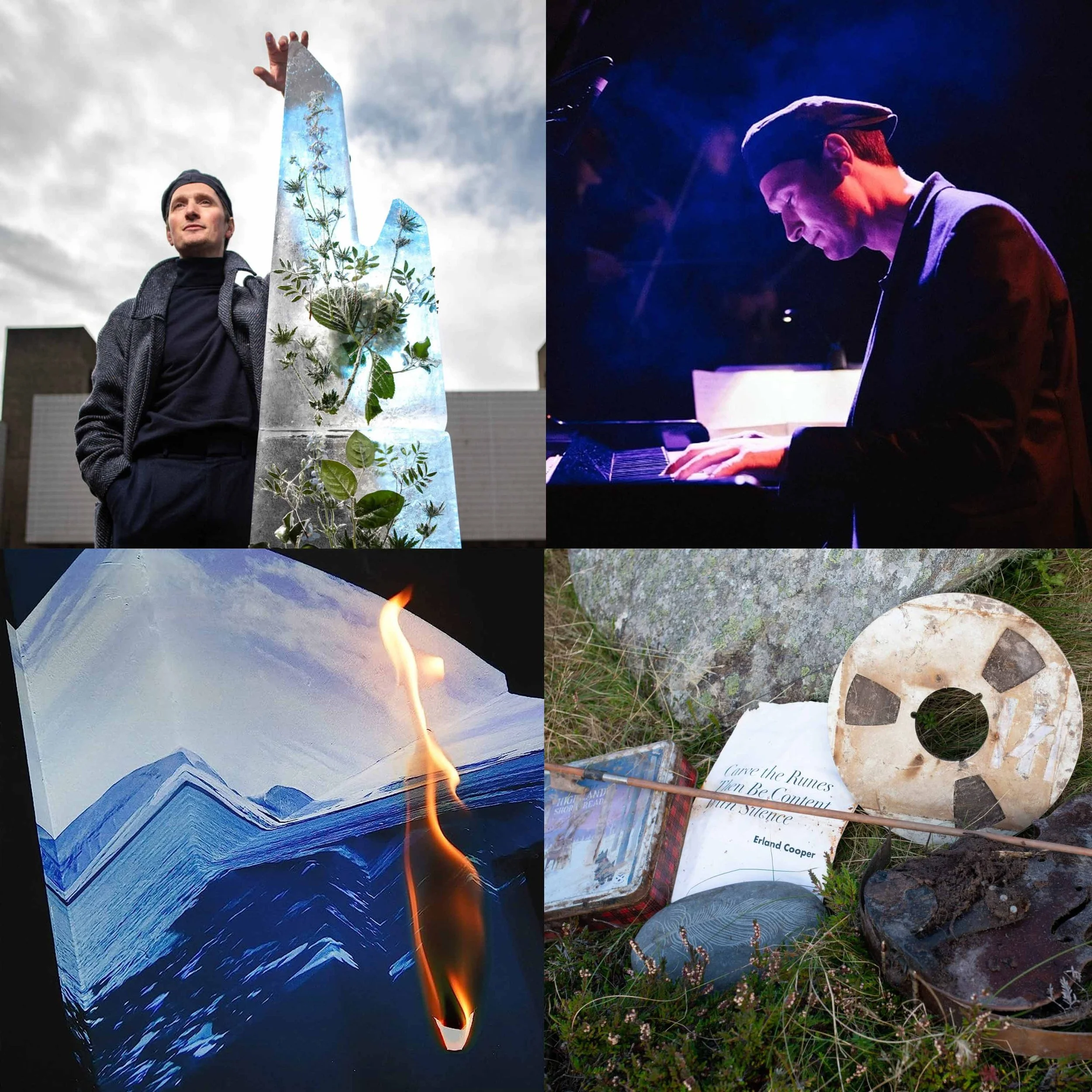
Highlights - Erland Cooper - Scottish Composer, Producer, Multi-instrumentalist

Highlights - Erland Cooper - Scottish Composer, Producer, Multi-instrumentalist

Nature’s Songwriter
Producer · Multi-instrumentalist · Composer of Folded Landscapes

Music has the ability to transport you to a place and create a sort of internal landscape. And we all have life-changing things that happened to us. And I remember I made it as a way to kind of ease a busy mind. And perhaps I was missing home. I still call Orkney home, even though I'm not there every day. I'm a thousand miles away today, and I still call Orkney home. For example, when I hear the voice of the curlew, it transports me back to Orkney with such a jolt. In a heartbeat. And music can do that too. It's very transformative. Visual arts have the ability to do that too. And you could stare at a Rothko painting and cry and not quite know why. It can take days to figure out perhaps certain meanings from it. But music I think is quite instant. It can really do that.

Erland Cooper - Nature’s Songwriter - Composer of “Folded Landscapes”

Erland Cooper - Nature’s Songwriter - Composer of “Folded Landscapes”

Nature’s Songwriter
Producer · Multi-instrumentalist · Composer of Folded Landscapes

Music has the ability to transport you to a place and create a sort of internal landscape. And we all have life-changing things that happened to us. And I remember I made it as a way to kind of ease a busy mind. And perhaps I was missing home. I still call Orkney home, even though I'm not there every day. I'm a thousand miles away today, and I still call Orkney home. For example, when I hear the voice of the curlew, it transports me back to Orkney with such a jolt. In a heartbeat. And music can do that too. It's very transformative. Visual arts have the ability to do that too. And you could stare at a Rothko painting and cry and not quite know why. It can take days to figure out perhaps certain meanings from it. But music I think is quite instant. It can really do that.

Highlights - SERGEI GURIEV - Political Economist - Provost of SciencesPo - Co-author of Spin Dictators

Highlights - SERGEI GURIEV - Political Economist - Provost of SciencesPo - Co-author of Spin Dictators

Political Economist · Provost of SciencesPo
Co-author of Spin Dictators: The Changing Face of Tyranny in the 21st Century

In Russia, I ran a university, a new economic school. And as an economist and a public intellectual, I was engaged in interactions with the government, including with Vladimir Putin. And there, of course, the situation was that Russia was already a nondemocratic country, meaning that it was a country where elections were not free and fair and partial censorship was already in place. Yet in those years, we could express ourselves openly, not on national TV, but at least in newspapers and on radio. And that eventually brought me into trouble with Vladimir Putin, who at some point suggested that I talked too much and I should not be in the same country. I was also interrogated. My office was searched. And at some point, common friends told me, 'Look, you shouldn't be here.' And I bought a one-way ticket for the next day and just left Russia. The dictators in the 20th century used military or paramilitary uniforms to project brute force and fear. Today, the situation is different. Successful dictators pretend to be democrats.

SERGEI GURIEV - Economist - Provost of SciencesPo - Co-author of Spin Dictators: The Changing Face of Tyranny in the 21st Century

SERGEI GURIEV - Economist - Provost of SciencesPo - Co-author of Spin Dictators: The Changing Face of Tyranny in the 21st Century

Political Economist · Provost of SciencesPo
Co-author of Spin Dictators: The Changing Face of Tyranny in the 21st Century

In Russia, I ran a university, a new economic school. And as an economist and a public intellectual, I was engaged in interactions with the government, including with Vladimir Putin. And there, of course, the situation was that Russia was already a nondemocratic country, meaning that it was a country where elections were not free and fair and partial censorship was already in place. Yet in those years, we could express ourselves openly, not on national TV, but at least in newspapers and on radio. And that eventually brought me into trouble with Vladimir Putin, who at some point suggested that I talked too much and I should not be in the same country. I was also interrogated. My office was searched. And at some point, common friends told me, 'Look, you shouldn't be here.' And I bought a one-way ticket for the next day and just left Russia. The dictators in the 20th century used military or paramilitary uniforms to project brute force and fear. Today, the situation is different. Successful dictators pretend to be democrats.

Highlights - JASON deCAIRES TAYLOR - Sculptor, Environmentalist, Creator of Underwater Museums

Highlights - JASON deCAIRES TAYLOR - Sculptor, Environmentalist, Creator of Underwater Museums

Sculptor · Environmentalist · Creator of Underwater Museums

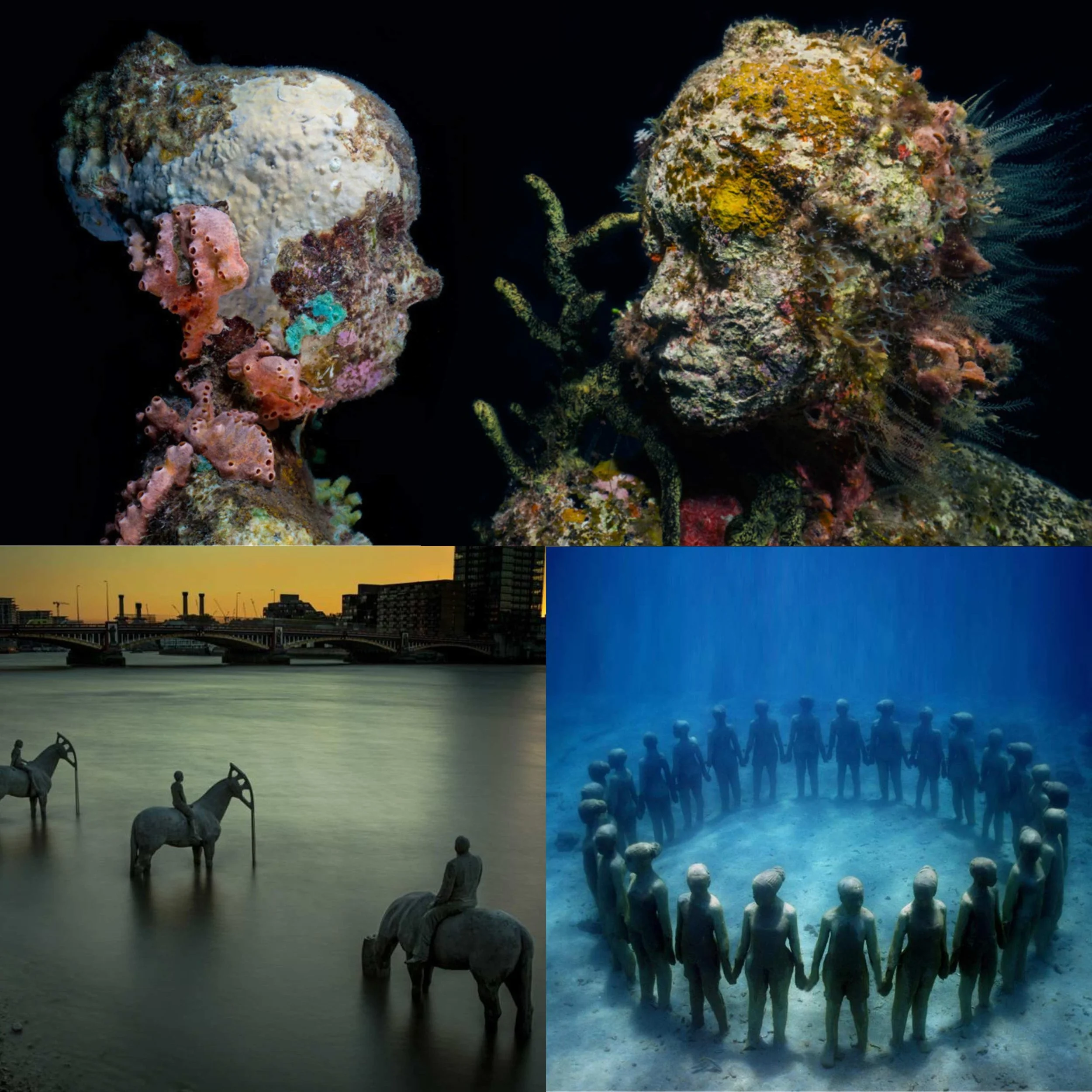
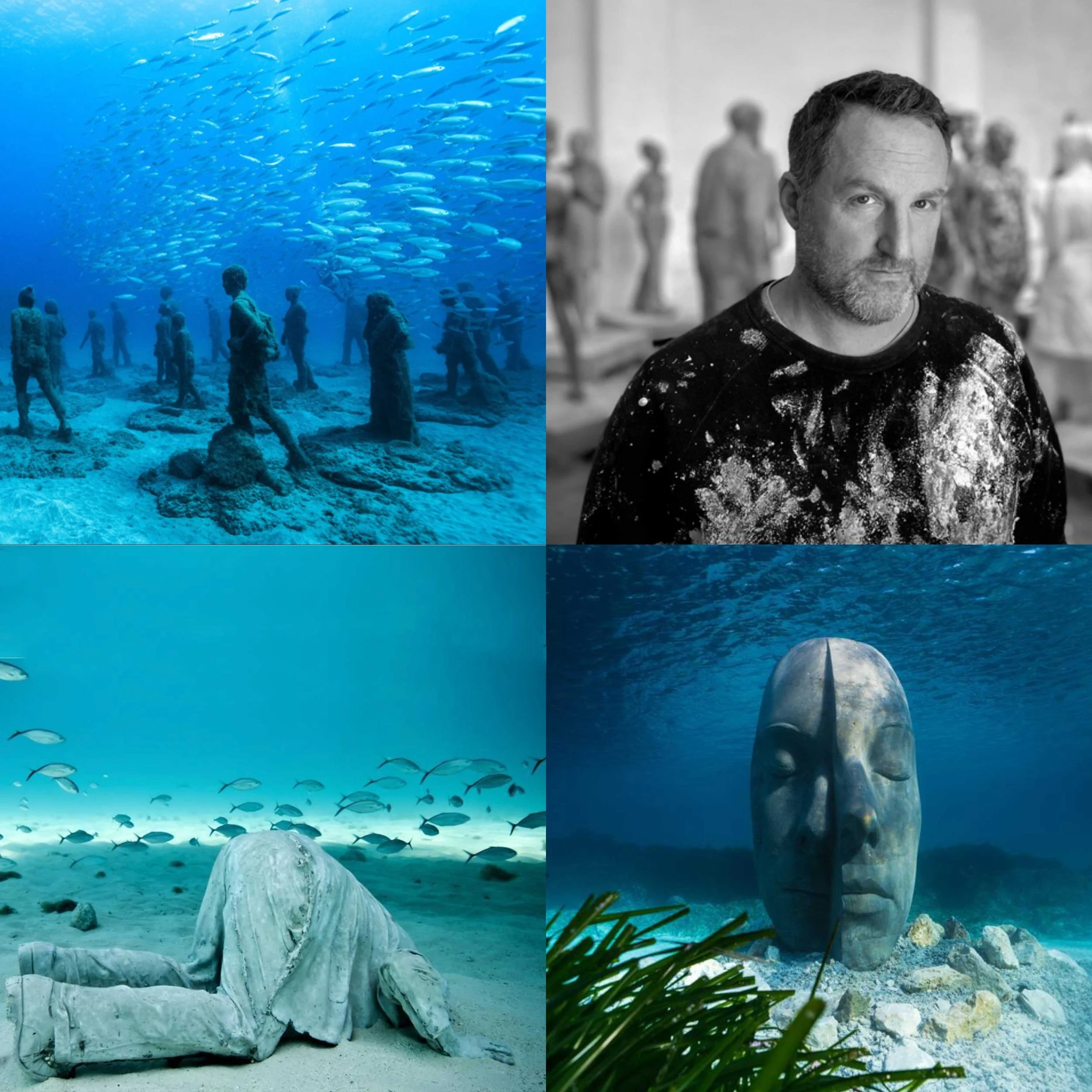
The sculptures get claimed and almost owned by the sea. And the textures that form the patterns, all things that could never be reproduced by human hands. And it's entirely unpredictable in many cases. I go to some of the "museums" expect to see this type of colonization or this type of growth, and it's nothing like how I've seen it envisaged it. It's completely different. Other times something has been made at its home, and there's an octopus that's built a house around it, or there's a school of fish that have nestled within the formations. There have been many, many different surprises along the way. I first started in the West Indies on an island called Grenada, which has a tropical reef system. And I expected the works to be sort of colonized. And I knew hard corals took a very long time to get established, to build their calcium skeletons, but actually, they were colonized within days. We saw white little calcareous worms, pink coraline algae, and green algae literally appeared sort of overnight.

JASON deCAIRES TAYLOR - Sculptor, Environmentalist, Creator of Underwater Museums

JASON deCAIRES TAYLOR - Sculptor, Environmentalist, Creator of Underwater Museums

Sculptor · Environmentalist · Creator of Underwater Museums

The sculptures get claimed and almost owned by the sea. And the textures that form the patterns, all things that could never be reproduced by human hands. And it's entirely unpredictable in many cases. I go to some of the "museums" expect to see this type of colonization or this type of growth, and it's nothing like how I've seen it envisaged it. It's completely different. Other times something has been made at its home, and there's an octopus that's built a house around it, or there's a school of fish that have nestled within the formations. There have been many, many different surprises along the way. I first started in the West Indies on an island called Grenada, which has a tropical reef system. And I expected the works to be sort of colonized. And I knew hard corals took a very long time to get established, to build their calcium skeletons, but actually, they were colonized within days. We saw white little calcareous worms, pink coraline algae, and green algae literally appeared sort of overnight.

Highlights - DOMINIC McAFEE - Marine Ecologist, University of Adelaide - Restoring Lost Oyster Reefs

Highlights - DOMINIC McAFEE - Marine Ecologist, University of Adelaide - Restoring Lost Oyster Reefs

Marine Ecologist · University of Adelaide · Restoring Lost Oyster Reefs

There's this real emergence of young people doing incredible things enabled by bio-modern technology and a more globalized and connected world and access to amazing educational resources about what the environment does and means for humanity. We've lost something like 85% of oyster reefs globally. In Australia it's over 99%. We've smashed this ecosystem to smithereens. It covered something like 7,000 kilometers of coastline and the flat oyster reef, for example, the flat oysters, one type of oyster that we work with were completely removed from the Australian mainland, and about 5,000 kilometers of reef destroyed in a very short period of time. And because of the intensity with which the coastlines were modified following European settlement of Australia, they haven't been able to come back naturally.

DOMINIC McAFEE - Marine Ecologist, University of Adelaide - Restoring Lost Oyster Reefs

DOMINIC McAFEE - Marine Ecologist, University of Adelaide - Restoring Lost Oyster Reefs

Marine Ecologist · University of Adelaide · Restoring Lost Oyster Reefs

There's this real emergence of young people doing incredible things enabled by bio-modern technology and a more globalized and connected world and access to amazing educational resources about what the environment does and means for humanity. We've lost something like 85% of oyster reefs globally. In Australia it's over 99%. We've smashed this ecosystem to smithereens. It covered something like 7,000 kilometers of coastline and the flat oyster reef, for example, the flat oysters, one type of oyster that we work with were completely removed from the Australian mainland, and about 5,000 kilometers of reef destroyed in a very short period of time. And because of the intensity with which the coastlines were modified following European settlement of Australia, they haven't been able to come back naturally.

FABRIZIO MANCINELLI - Composer, Songwriter, Conductor

FABRIZIO MANCINELLI - Composer, Songwriter, Conductor

Composer · Songwriter · Conductor
The Land of Dreams ·The Snow Queen 3 · The Boat · Food 2050 · Green Book

I'm always trying to find my place here because, yes, I'm American. I'm an immigrant. I don't want to talk about the difficulties I face in my coming here, but it was not easy. So when I was writing the song called “Give Up”, and it's like a song that I'm singing to myself. Those are things, like there is a lot of personal experience. I was a luxury immigrant on a Fulbright grant on a J-1 Sponsor Visa, you know, with a solid family I could go back to in Italy in case anything went wrong. But at the same time, it was not easy. I want to do my job with a smile on my face, and it brought me to write the lyrics like: 'It's my turn. My time is now.' It's like something that I'm trying, we all try to get our turn to be our moment, to shine our moment. We're all waiting. We don't know if it will happen, but we need to try at least. We need to grab our life with our hands and make it work one way or another. So that's what I mean in my song “Orlando Dreams.”

JEFFREY SACHS - Director, Center for Sustainable Development, Columbia - President, UN Sustainable Development Solutions Network

JEFFREY SACHS - Director, Center for Sustainable Development, Columbia - President, UN Sustainable Development Solutions Network

President of UN Sustainable Development Solutions Network
Director of Center for Sustainable Development, Columbia University

The US signed several statements in 2021 confirming that NATO would enlarge. Russia massed troops on its border and put on the table a draft US-Russia security agreement on December 17th, 2021 based on no NATO enlargement. The Biden administration formally replied that it was not willing to negotiate over that issue in a response in January. Then Russia invaded on February 24th, 2022. Four weeks later, Zelenskyy declared that Ukraine was accepting of neutrality. In other words, the initial Russian invasion brought Ukraine to the negotiating table, and during the second half of March, with the Turkish government being the mediators, Russia and Ukraine hammered out a peace agreement. Incredibly, the United States blocked it because the United States told the Ukrainian government: you fight on.

ANTHONY WHITE - Artist - What is the Role of Artists in Society?

ANTHONY WHITE - Artist - What is the Role of Artists in Society?

Artist

I think it is a job for artists, not all artists, but I think it's a job for artists to acknowledge that culture can make a difference towards these things and can hold people more accountable. Australians, myself included, grow up in this state of amnesia because what happened is that the British stole the land from the Aboriginal people. We made up a fiction, the fiction of Terra nullius. And then we basically disclaimed any relationship that the Aboriginal people had to the land. The National Day in Australia is the day marked by colonization, which is shameful. So that's another long conversation. And I think that, whether things are better or worse in the United States, but I do know that is the conversation that has only just begun in Australia. And there's a new openness that never has been before.