JONATHAN FURMANSKI

JONATHAN FURMANSKI

Cinematographer Jonathan Furmanski’s credits include the film Good Boys. For TV, he’s lensed the cult crime comedy Search Party, Inside Amy Schumer, and The Detour. He’s shot on massive glaciers, active volcanos, and in international combat zones. His documentary feature films include The Zen Diaries of Garry Shandling, May It Last: A Portrait of the Avett Brothers, 30 for 30: Doc & Darryl, Big Men and The Family Business: Trump and Taxes.

JONATHAN FURMANSKI

Directing is its own art form, so I have great respect and appreciation for directing and all the directors that I’ve had an opportunity to work with, but I just know that’s not me. So I’m happy that cinematography found me or I found it. I appreciate what you said about how cinematography, obviously is its own art form and can function as a character in a project and in the audience’s experience of watching that project. I think cinematography can–I don’t want to say make or break a project–because I think ultimately the writing and the performances are the foundation of any good project, but I think that cinematography can either elevate or undermine both the writing or the performances, depending on how it’s treated and how it’s executed. So, to me, it’s a fundamental part of the process.

This interview was conducted by Mia Funk with the participation of collaborating universities and students. Associate Interviews Producer on this podcast was Leni Sperry-Fromm. Digital Media Coordinator is Yu Young Lee. 


Mia Funk is an artist, interviewer and founder of The Creative Process. 
(Highlights) GEORGE PELECANOS

(Highlights) GEORGE PELECANOS

George Pelecanos is an award-winning author, essayist, screenwriter and producer from Washington, D.C. He has written over 20 novels and four series in the crime and detective fiction genre. He is also a recipient of the Los Angeles Times Book prize, the Raymond Chandler Award, the Hammett Prize, the Barry Award, the Gumshoe Award, and the Grand Prix Du Roman Noir Award. Pelecanos worked as a screenwriter for HBO’s The Wire, where his writing earned him an Emmy nomination as well as an Edgar and Writers Guild of America Award. Other shows he has written and/or produced for are The Pacific, The Deuce, and Treme.

Mia Funk is an artist, interviewer and founder of The Creative Process. 

GEORGE PELECANOS

GEORGE PELECANOS

George Pelecanos is an award-winning author, essayist, screenwriter and producer from Washington, D.C. He has written over 20 novels and four series in the crime and detective fiction genre. He is also a recipient of the Los Angeles Times Book prize, the Raymond Chandler Award, the Hammett Prize, the Barry Award, the Gumshoe Award, and the Grand Prix Du Roman Noir Award. Pelecanos worked as a screenwriter for HBO’s The Wire, where his writing earned him an Emmy nomination as well as an Edgar and Writers Guild of America Award. Other shows he has written and/or produced for are The Pacific, The Deuce, and Treme.

Mia Funk is an artist, interviewer and founder of The Creative Process. 

(Highlights) DAVID RUBIN

(Highlights) DAVID RUBIN

Interview Highlights
You know, the camera lens reads thought and reads emotion as much as the human eye does, and anything that is false, anything that is premeditated, planned doesn't feel real. So a great actor has none of those false beats in their work. That's all extremely connected to who they are personally. The camera lens sees it, and the audience loves it.

DAVID RUBIN

DAVID RUBIN

President of the Academy of Motion Pictures Arts & Sciences
Casting Director & Producer
What an academy was meant to be, going back to their founding, really is a group of people with a certain degree of passion and expertise and knowledge that want to get together and share. That's what I think academies are all about. So the fact that I've been helpful in spurring the Academy onto becoming a more international and global enterprise is a source of great satisfaction to me

(Highlights) MICHAEL MAREN

(Highlights) MICHAEL MAREN

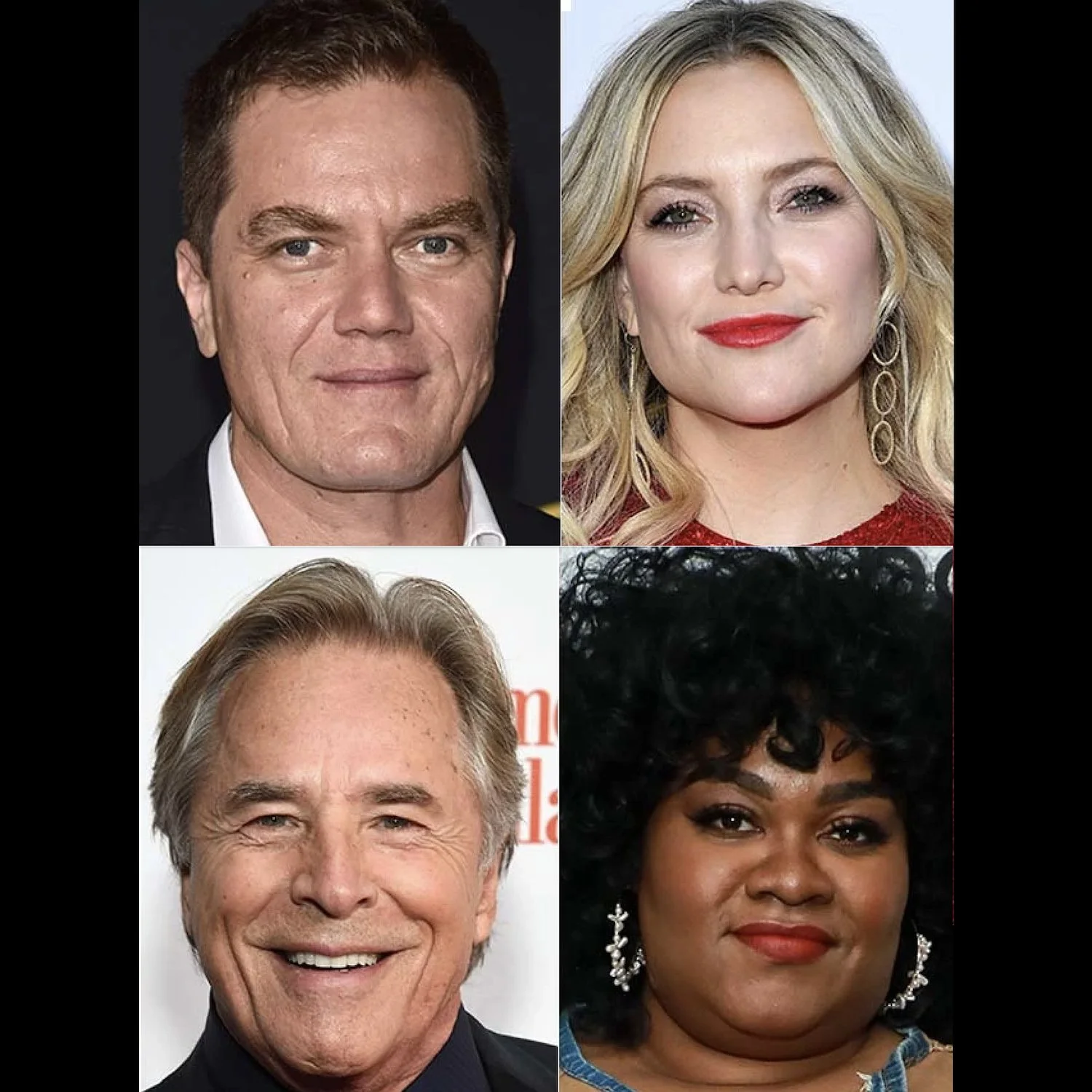
Michael Maren is a journalist, filmmaker and former aid worker. He’s written scripts for HBO, Sony Pictures, and many independent producers. His film, A Short History of Decay was a funny and moving examination of a writer  Bryan Greenberg visiting his ailing parents, played by Linda Lavin and  Harris Yulin. His forthcoming film is an adaptation of Chris Belden’s novel Shriver. It’s a comedy set at a writers conference and stars Michael Shannon, Kate Hudson, Don Johnson, and Zach Braff.  Maren has taught screenwriting at Wesleyan University, Provincetown Fine Arts Work Center, Taos Summer Writers’ Workshop, and co-directs the Sirenland Writers Conference. He created the film screening/discussion series Under the Influence: Writers on Film.

THE CREATIVE PROCESS

I don't know how you like to define yourself, you're a writer, you're a director. You came up as a foreign war correspondent, as a volunteer. It's quite an interesting trajectory, I think, for anyone who might want to become a director. Could you describe how you fell in love with telling stories?

MICHAEL MAREN

When I was in fifth grade. We used to have a little creative writing class, and people would write stories. And I don't know why I did this, but I remember when I was in the class, they started their student stories with–so I woke up in the morning and I went to the... I just thought, I'm nine years old, I just cut to the chase and talked about being in the air with the go-cart rolling over, and the teacher was blown away. In fifth grade, she said, "You're a really good writer." And I never forgot that.

-

So, I'm very, very much a natural journalist in that way. I had a lot of opportunities to get involved in things overseas, whether it was to stay in aid work or to work for, when I got out of graduate school, offers to like join financial institutions and World Bank kind of stuff or investment banking. I have a masters from Columbia, but I took a job for seventeen thousand dollars a year writing for this little magazine about Africa.

And it gave me the opportunity to keep traveling and keep reporting. And I just loved it. I loved it for years and years. And part of my interest in Africa came from watching movies set in Africa as a kid. And I actually tried my hand at writing screenplays during the 1980s a couple of times just by myself and actually trying to option them. I was reporting out of Uganda in the mid-80s when Yoweri Museveni, who's now the president, was still a guerrilla leader fighting against the regime.

And during that time, I was sort of sleeping outside and doing a lot of stuff. I read a copy of Patricia Highsmith's The Talented Mr. Ripley, and I thought, "Wow, this would make a great movie." When I got back to New York, I at one point I called, but I ended up realizing that the rights had been owned for many, many years, and I wasn't about to get the rights to make the screenplay.

My mentor in journalism was it was a guy named Richard Ben Cramer, one of the great journalists of all time. And I met Richard in Africa in the early 1980s. And Richard taught me one thing. He said every five minutes as a journalist, stop and ask yourself, what's the story? What's the story? And the point is, you can walk into any world and kind of get lost in the details. But when you know the story you're trying to tell, you know what the details are and pay attention to them.

This interview was conducted by Mia Funk with the participation of collaborating universities and students. Associate Interviews Producer on this podcast was Katherine Vasiliev. Digital Media Coordinator is Yu Young Lee. “Winter Time” was composed by Nikolas Anadolis* and performed by the Athenian Trio.

Mia Funk is an artist, interviewer and founder of The Creative Process.

 
MICHAEL MAREN

MICHAEL MAREN

Michael Maren is a journalist, filmmaker and former aid worker. He’s written scripts for HBO, Sony Pictures, and many independent producers. His film, A Short History of Decay was a funny and moving examination of a writer  Bryan Greenberg visiting his ailing parents, played by Linda Lavin and  Harris Yulin. His forthcoming film is an adaptation of Chris Belden’s novel Shriver. It’s a comedy set at a writers conference and stars Michael Shannon, Kate Hudson, Don Johnson, and Zach Braff.  Maren has taught screenwriting at Wesleyan University, Provincetown Fine Arts Work Center, Taos Summer Writers’ Workshop, and co-directs the Sirenland Writers Conference. He created the film screening/discussion series Under the Influence: Writers on Film.

THE CREATIVE PROCESS

I don't know how you like to define yourself, you're a writer, you're a director. You came up as a foreign war correspondent, as a volunteer. It's quite an interesting trajectory, I think, for anyone who might want to become a director. Could you describe how you fell in love with telling stories?

MICHAEL MAREN

When I was in fifth grade. We used to have a little creative writing class, and people would write stories. And I don't know why I did this, but I remember when I was in the class, they started their student stories with–so I woke up in the morning and I went to the... I just thought, I'm nine years old, I just cut to the chase and talked about being in the air with the go-cart rolling over, and the teacher was blown away. In fifth grade, she said, "You're a really good writer." And I never forgot that.

-

So, I'm very, very much a natural journalist in that way. I had a lot of opportunities to get involved in things overseas, whether it was to stay in aid work or to work for, when I got out of graduate school, offers to like join financial institutions and World Bank kind of stuff or investment banking. I have a masters from Columbia, but I took a job for seventeen thousand dollars a year writing for this little magazine about Africa.

And it gave me the opportunity to keep traveling and keep reporting. And I just loved it. I loved it for years and years. And part of my interest in Africa came from watching movies set in Africa as a kid. And I actually tried my hand at writing screenplays during the 1980s a couple of times just by myself and actually trying to option them. I was reporting out of Uganda in the mid-80s when Yoweri Museveni, who's now the president, was still a guerrilla leader fighting against the regime.

And during that time, I was sort of sleeping outside and doing a lot of stuff. I read a copy of Patricia Highsmith's The Talented Mr. Ripley, and I thought, "Wow, this would make a great movie." When I got back to New York, I at one point I called, but I ended up realizing that the rights had been owned for many, many years, and I wasn't about to get the rights to make the screenplay.

My mentor in journalism was it was a guy named Richard Ben Cramer, one of the great journalists of all time. And I met Richard in Africa in the early 1980s. And Richard taught me one thing. He said every five minutes as a journalist, stop and ask yourself, what's the story? What's the story? And the point is, you can walk into any world and kind of get lost in the details. But when you know the story you're trying to tell, you know what the details are and pay attention to them.

This interview was conducted by Mia Funk with the participation of collaborating universities and students. Associate Interviews Producer on this podcast was Katherine Vasiliev. Digital Media Coordinator is Yu Young Lee. “Winter Time” was composed by Nikolas Anadolis* and performed by the Athenian Trio.

Mia Funk is an artist, interviewer and founder of The Creative Process.

 
(Highlights) DR. FRANÇOIS CLEMMONS

(Highlights) DR. FRANÇOIS CLEMMONS

Singer · Author
1st African American Actor on Children’s TV · Officer Clemmons on Mister Rogers’ Neighborhood

I always find it an ironic thing to think about the fact that Fred Rogers was colour-blind. He could barely tell a blue from a grey. I was young and to him I was a child and I certainly played the role of a child and he played the role of parent… He was profoundly patient.

DR. FRANÇOIS CLEMMONS

DR. FRANÇOIS CLEMMONS

Singer · Author
1st African American Actor on Children’s TV · Officer Clemmons on Mister Rogers’ Neighborhood

I always find it an ironic thing to think about the fact that Fred Rogers was colour-blind. He could barely tell a blue from a grey. I was young and to him I was a child and I certainly played the role of a child and he played the role of parent… He was profoundly patient.

(Highlights) MARTIN RUHE

(Highlights) MARTIN RUHE

Martin Ruhe is the internationally-acclaimed German cinematographer behind the Netflix film The Midnight Sky directed by and starring George Clooney. Previously, Ruhe worked on Catch-22, also directed by Clooney, as well as the critically acclaimed Counterpart, Run All Night with Liam Neeson, and the British Independent film award winner Control. Ruhe photographed the dark spy thriller Page Eight for BBC Films, directed by David Hare. The film earned him an American Society of Cinematographers Outstanding Achievement in Cinematography in Motion Picture/Miniseries Television Award for his work on the film.

Working closely with director Anton Corbijn, Ruhe photographed The American. Starring Clooney as an aging assassin on an assignment to create a specialized weapon, Ruhe’s meticulously arranged shots helped to build the tone of The American, while reviews applauded the film’s beauty. Ruhe lensed Harry Brown, a Michael Caine-starring vigilante thriller which premiered at 2009’s Toronto International Film Festival. His photography on Harry Brown received critical acclaim; Joe Leydon of Variety saying, “The moody lensing by Martin Ruhe vividly conveys the no-hope squalor of a contemporary urban wasteland.” Combining the best cultural influences from the U.S. and Europe, Ruhe is fluent in English, German and Spanish. He loves stills photography and travel.

MARTIN RUHE

Early on in my career, I met a cameraman called Mike Southon. When I was working as a runner in London, on weekends I would try to go to shoots and see as many shoots as I could. Mike once told me our job would be. 10% is craft, 10% is talent, and 80% would be diplomacy. It’s actually interesting because quite often we caught in-between producers telling you, “Oh, you can’t have this.” Or, you have to do this. Or this is the framework. And then directors telling you, “I want to see the whole world at night.” And you go, “That’s a lot of money...” So, I think that’s one interesting thing I learned early on.

There are many people you meet along the way and you pick up things from them. I loved when I started working with Anton Corbijn. His photography is so…he mainly uses one lens. One camera. It’s not complicated, but he gets intimate with people in the way he is with them. That’s why his portrait photography is so stunning. Over the years, it’s relevant because he’s curious, he’s open, and he just allows things to happen. I love that. I love creative things.

Early on, I did some workshops with some of the great DPs like Robby Müller. And then you watch films, you read, you listen to what people have to say about them.


This interview was conducted by Mia Funk with the participation of collaborating universities and students. Associate Interviews Producer on this podcast was Bret Young. Digital Media Coordinator is Yu Young Lee. 

Mia Funk is an artist, interviewer and founder of The Creative Process.
Find us on Apple Podcasts, Spotify, Google Podcasts, Podcast Addict, Pocket Casts, Breaker, Castbox, TuneIn, Overcast, RadioPublic, Podtail, and Listen Notes, among others. 

MARTIN RUHE

MARTIN RUHE

Martin Ruhe is the internationally-acclaimed German cinematographer behind the Netflix film The Midnight Sky directed by and starring George Clooney. Previously, Ruhe worked on Catch-22, also directed by Clooney, as well as the critically acclaimed Counterpart, Run All Night with Liam Neeson, and the British Independent film award winner Control. Ruhe photographed the dark spy thriller Page Eight for BBC Films, directed by David Hare. The film earned him an American Society of Cinematographers Outstanding Achievement in Cinematography in Motion Picture/Miniseries Television Award for his work on the film.

Working closely with director Anton Corbijn, Ruhe photographed The American. Starring Clooney as an aging assassin on an assignment to create a specialized weapon, Ruhe’s meticulously arranged shots helped to build the tone of The American, while reviews applauded the film’s beauty. Ruhe lensed Harry Brown, a Michael Caine-starring vigilante thriller which premiered at 2009’s Toronto International Film Festival. His photography on Harry Brown received critical acclaim; Joe Leydon of Variety saying, “The moody lensing by Martin Ruhe vividly conveys the no-hope squalor of a contemporary urban wasteland.” Combining the best cultural influences from the U.S. and Europe, Ruhe is fluent in English, German and Spanish. He loves stills photography and travel.

MARTIN RUHE

Early on in my career, I met a cameraman called Mike Southon. When I was working as a runner in London, on weekends I would try to go to shoots and see as many shoots as I could. Mike once told me our job would be. 10% is craft, 10% is talent, and 80% would be diplomacy. It’s actually interesting because quite often we caught in-between producers telling you, “Oh, you can’t have this.” Or, you have to do this. Or this is the framework. And then directors telling you, “I want to see the whole world at night.” And you go, “That’s a lot of money...” So, I think that’s one interesting thing I learned early on.

There are many people you meet along the way and you pick up things from them. I loved when I started working with Anton Corbijn. His photography is so…he mainly uses one lens. One camera. It’s not complicated, but he gets intimate with people in the way he is with them. That’s why his portrait photography is so stunning. Over the years, it’s relevant because he’s curious, he’s open, and he just allows things to happen. I love that. I love creative things.

Early on, I did some workshops with some of the great DPs like Robby Müller. And then you watch films, you read, you listen to what people have to say about them.


This interview was conducted by Mia Funk with the participation of collaborating universities and students. Associate Interviews Producer on this podcast was Bret Young. Digital Media Coordinator is Yu Young Lee. 

Mia Funk is an artist, interviewer and founder of The Creative Process.

Find us on Apple Podcasts, Spotify, Google Podcasts, Podcast Addict, Pocket Casts, Breaker, Castbox, TuneIn, Overcast, RadioPublic, Podtail, and Listen Notes, among others. 

(Highlights) NEIL GAIMAN

(Highlights) NEIL GAIMAN

Interview Highlights

I've always, pretty much from the beginning, I've always wanted to write as if I were paying by the word to be published. So that's always gone in there. Whether it's film or television, whether it's comics, whether it's novels, and especially short stories. I want everything to count. I want every word to count.

NEIL GAIMAN

NEIL GAIMAN

Writer · Graphic Novelist · Producer

The idea that anything could be a door, the idea that the back of the wardrobe could open up unto a world in which it was winter and there were other worlds inches away from us, became just part of the way that I saw the world, that was how I assumed the way the world worked, when I was a kid that was the way that I saw.

SALVADOR PEREZ

SALVADOR PEREZ

President · Costume Designers Guild
The Mindy Project, Pitch Perfect trilogy, Four Weddings and a Funeral, Veronica Mars

Whether you're telling a story for the people at work or you're telling a story for your character on camera, I think that we tell a story every day by what we wear.

(Highlights) MATTHEW LIBATIQUE

(Highlights) MATTHEW LIBATIQUE

Twice Academy Award Nominated Cinematographer

As a cinematographer what you're trying to do is portray the story in the proper way. Of course, there is going to be an aesthetic that you place based on your own taste and what you believe in, maybe some of the things you're attracted to, inspired by, but ultimately everything, all the decisions are made with the narrative in mind. And that entails doing deep dives into research with photographs and art and music and things that you see in life and things that you remember from your past that sort of inform the things that you choose to do.

MATTHEW LIBATIQUE

MATTHEW LIBATIQUE

Cinematographer

As a cinematographer what you're trying to do is portray the story in the proper way. Of course, there is going to be an aesthetic that you place based on your own taste and what you believe in, maybe some of the things you're attracted to, inspired by, but ultimately everything, all the decisions are made with the narrative in mind. And that entails doing deep dives into research with photographs and art and music and things that you see in life and things that you remember from your past that sort of inform the things that you choose to do.

(Highlights) ROBERT NATHAN

(Highlights) ROBERT NATHAN

Robert Nathan is an award-winning television producer, screenwriter, journalist, and novelist. Best known for his work on the Law & Order television franchise and his novel The White Tiger. He has worked in politics, broadcast and print journalism, film, and television. Nathan joined the original writing staff of Law & Order, working on three series in the franchise. Nathan’s script for the episode “Manhood,” co-written with Walon Green, holds the franchise’s only Emmy nomination for Outstanding Writing for a Drama Series. He was also on the original staff of the TV series ER and received a Peabody Award. Nathan has received four Emmy nominations, an Edgar Award nomination, the GLAAD Media Award, the Silver Gavel Award, the Shine Award, and a Humanitas Award nomination.

This interview was conducted by Mia Funk with the participation of collaborating universities and students. Associate Interviews Producer on this podcast was Sophie Mackin. Digital Media Coordinator is Yu Young Lee. “Winter Time” was composed by Nikolas Anadolis and performed by the Athenian Trio.

ROBERT NATHAN

ROBERT NATHAN

Robert Nathan is an award-winning television producer, screenwriter, journalist, and novelist. Best known for his work on the Law & Order television franchise and his novel The White Tiger. He has worked in politics, broadcast and print journalism, film, and television. Nathan joined the original writing staff of Law & Order, working on three series in the franchise. Nathan’s script for the episode “Manhood,” co-written with Walon Green, holds the franchise’s only Emmy nomination for Outstanding Writing for a Drama Series. He was also on the original staff of the TV series ER and received a Peabody Award. Nathan has received four Emmy nominations, an Edgar Award nomination, the GLAAD Media Award, the Silver Gavel Award, the Shine Award, and a Humanitas Award nomination.

This interview was conducted by Mia Funk with the participation of collaborating universities and students. Associate Interviews Producer on this podcast was Sophie Mackin. Digital Media Coordinator is Yu Young Lee. “Winter Time” was composed by Nikolas Anadolis and performed by the Athenian Trio.

(Highlights) CAROLINE THOMPSON

(Highlights) CAROLINE THOMPSON

Award-Winning Screenwriter & Novelist
Edward Scissorhands · The Nightmare Before Christmas

Tim Burton had just Pee-wee’s Big Adventure. He was at some point in the making of Beetlejuice. Our agency didn’t know what to do with either of us with our off-kilter sensibility, so they introduced us, and we immediately felt a kinship and became friends. It was pretty clear from pretty early on that we wanted to work together. We threw out ideas. Among the ideas we talked about Tim mentioned to me a drawing he had made in high school of a character who had scissors instead of hands. And I said, ‘Stop right there!; First of all, this may surprise you, it was the stupidest thing I’d ever heard in my life, so I knew it was brilliant. It was so simple and so stupid and such an obvious metaphor, I knew that it had power beyond belief. I said, ‘Stop, I know exactly what to do with that!’