MADELEINE WATTS - Author of The Inland Sea - Creative Writing Professor, Columbia University

MADELEINE WATTS - Author of The Inland Sea - Creative Writing Professor, Columbia University

Author of The Inland Sea
Professor of Creative Writing at Columbia University

I was reading ecological history and also reading about violence against women and how violence perpetuates itself over many generations. And there was something about this European sort of supremacy of ideas about nature, their ideas about rationality, all of this stuff that sort of came from the Enlightenment. John Oxley's diaries made no mention of the Indigenous Australians who were at the time subject to genocide. So I was interested in these ideas about how they tried to tame the land, which is often talked about as "a woman" and the way that the kind of violence that comes from a particular kind of European colonial project that is enacted on the land intertwines with the way that violence is enacted upon women. And it was something that I felt growing up in Australia.
SAGARIKA SRIRAM - Founder of Kids4abetterworld, Dubai Youth Climate Change Initiative

SAGARIKA SRIRAM - Founder of Kids4abetterworld, Dubai Youth Climate Change Initiative

Founder of Kids4abetterworld
Climate Activist & Educator

Sagarika Sriram is currently a student at Jumeirah College in Dubai. She founded the organization Kids4abetterworld when she was 10 years old with a mission to educate and encourage young children to lead a more sustainable life and reduce their carbon footprint. Children are the worst affected by the effects of climate change,  yet most children do not participate in climate change discussions or take actions to live more sustainably because they do not have the awareness and capability to do so. Kids4abetterworld conducts awareness workshops on sustainability aiming to Educate, Motivate and Activate young children to  conserve natural resources, protect biodiversity, and positively  impact climate change. As a UN Climate Advisor, she has participated in the global consultations that will ensure children are made aware of their environmental rights and that UN member states protect and uphold these.

We All Live on One Planet We Call Home - Part 4 - Environmentalists, Economists, Policymakers & Architects Share their Stories

We All Live on One Planet We Call Home - Part 4 - Environmentalists, Economists, Policymakers & Architects Share their Stories

Environmentalists, Artists, Students & Teachers share their Love for the Planet

Today we’re streaming voices of environmentalists, artists, students, and teachers with music courtesy of composer Max Richter.

What Kind of World Are We Leaving for Future Generations? - Part 3 - Activists, Environmentalists & Teachers Share their Stories

What Kind of World Are We Leaving for Future Generations? - Part 3 - Activists, Environmentalists & Teachers Share their Stories

Environmentalists, Artists, Students & Teachers share their Love for the Planet

Today we’re streaming voices of environmentalists, artists, students, and teachers with music courtesy of composer Max Richter.

Earth Month Stories - Part 2 - Environmentalists, Artists, Students & Teachers Speak Out & Share How We Can Save the Planet

Earth Month Stories - Part 2 - Environmentalists, Artists, Students & Teachers Speak Out & Share How We Can Save the Planet

Environmentalists, Artists, Students & Teachers share their Love for the Planet

Today we’re streaming voices of environmentalists, artists, students, and teachers with music courtesy of composer Max Richter.

Special Earth Day Stories - Environmentalists, Artists, Students & Teachers share their Love for the Planet - Part 1

Special Earth Day Stories - Environmentalists, Artists, Students & Teachers share their Love for the Planet - Part 1

Environmentalists, Artists, Students & Teachers share their Love for the Planet

Today we’re streaming voices of environmentalists, artists, students, and teachers with music courtesy of composer Max Richter.

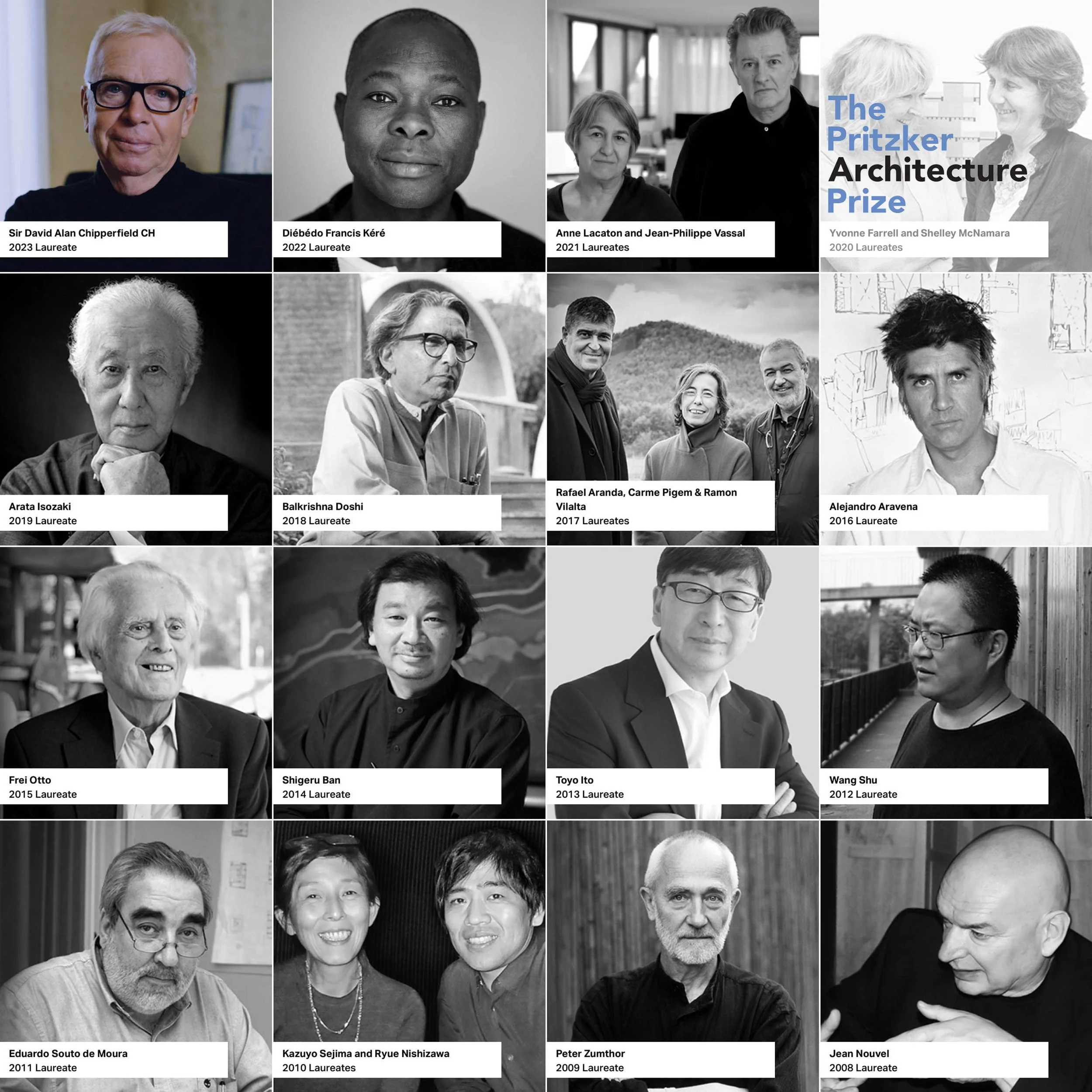
Highlights - MANUELA LUCÁ-DAZIO - Exec. Director of Pritzker Architecture Prize - Fmr. Exec. Director of Venice Biennale, Visual Arts & Architecture Dept.

Highlights - MANUELA LUCÁ-DAZIO - Exec. Director of Pritzker Architecture Prize - Fmr. Exec. Director of Venice Biennale, Visual Arts & Architecture Dept.

Executive Director of the Pritzker Architecture Prize
Fmr. Executive Director of Venice Biennale (Dept. of Visual Arts & Architecture)

When I started and I had to decide what to do in life - because I was working with museums, in exhibition design, and on the restoration of buildings - and then at some point, I had the chance to arrive at the Venice Biennale and my whole perspective changed. And it changed because I was working with living artists and architects. Until that moment, I was working around Old Masters, works in museums, and things that were there with the aura of history. And all of a sudden I was dealing with living architects and artists, and this was, for me, the most incredible experience. So I decided to leave all the rest, because I was doing quite a lot at the same time, and to concentrate on the Biennale.

MANUELA LUCÁ-DAZIO - Executive Director, Pritzker Architecture Prize - Fmr. Exec. Director of Venice Biennale, Visual Arts & Architecture Dept.

MANUELA LUCÁ-DAZIO - Executive Director, Pritzker Architecture Prize - Fmr. Exec. Director of Venice Biennale, Visual Arts & Architecture Dept.

Executive Director of the Pritzker Architecture Prize
Fmr. Executive Director of Venice Biennale (Dept. of Visual Arts & Architecture)

When I started and I had to decide what to do in life - because I was working with museums, in exhibition design, and on the restoration of buildings - and then at some point, I had the chance to arrive at the Venice Biennale and my whole perspective changed. And it changed because I was working with living artists and architects. Until that moment, I was working around Old Masters, works in museums, and things that were there with the aura of history. And all of a sudden I was dealing with living architects and artists, and this was, for me, the most incredible experience. So I decided to leave all the rest, because I was doing quite a lot at the same time, and to concentrate on the Biennale.

Highlights - ARMOND COHEN - Executive Director of Clean Air Task Force

Highlights - ARMOND COHEN - Executive Director of Clean Air Task Force

Executive Director of Clean Air Task Force

There's no such thing as completely clean energy. We use that term a lot, but it's not really true. We have low carbon energy, and lower carbon energy, but any kind of industrial system has requirements for materials and processing, and nothing is completely natural in the industrial world. If we can electrify transportation, I think we can clean up the grid, and then I think we can deal with these life cycle issues in a way that's responsible, but it'll never be zero. That's impossible. The good thing about technology is it can move very fast. And so my advice would be if you're interested in this topic, if you have a mathematical, scientific, or business orientation, or you just like solving problems, get trained to really be part of the technological business revolution that's going on right now.

ARMOND COHEN - Executive Director of Clean Air Task Force

ARMOND COHEN - Executive Director of Clean Air Task Force

Executive Director of Clean Air Task Force

There's no such thing as completely clean energy. We use that term a lot, but it's not really true. We have low carbon energy, and lower carbon energy, but any kind of industrial system has requirements for materials and processing, and nothing is completely natural in the industrial world. If we can electrify transportation, I think we can clean up the grid, and then I think we can deal with these life cycle issues in a way that's responsible, but it'll never be zero. That's impossible. The good thing about technology is it can move very fast. And so my advice would be if you're interested in this topic, if you have a mathematical, scientific, or business orientation, or you just like solving problems, get trained to really be part of the technological business revolution that's going on right now.

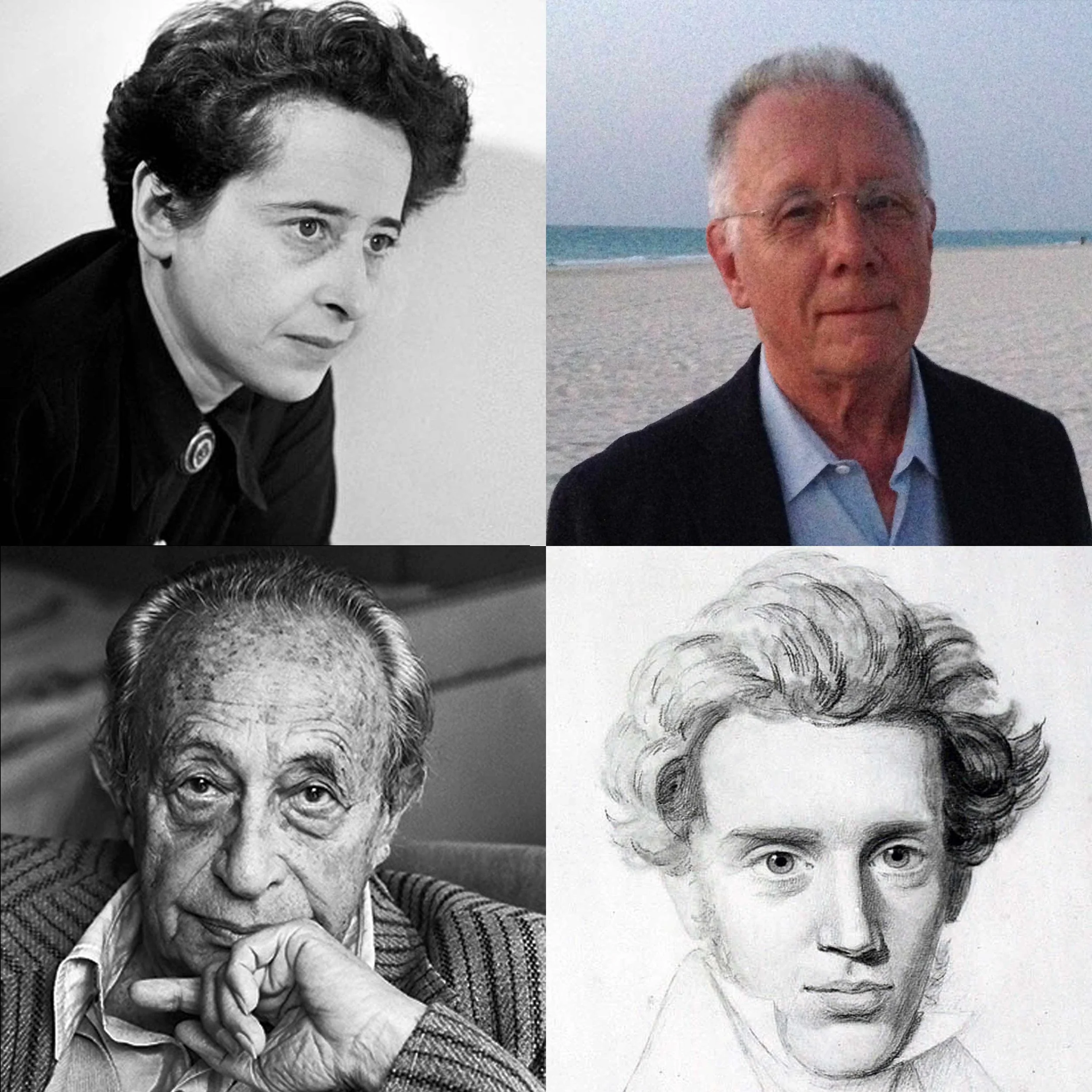
Highlights - HAROLD P. SJURSEN - Professor of Philosophy - Science, Technology, the Arts

Highlights - HAROLD P. SJURSEN - Professor of Philosophy - Science, Technology, the Arts

Professor of Philosophy focusing on Science, Technological Ethics, Engineering & the Arts

I have a granddaughter who's just going into high school, and she is filled with idealistic thoughts and is optimistic. She's a person who is both in love with art and in love with science. She's vivacious and just everything about her seems like life is beautiful, and “I'm going to be able to do this and that.” And, of course, when I talk to her, I do everything I can to encourage this kind of openness and optimism, and belief in herself and her ability to do worthwhile things. And not be too concerned about is she going to be able to have a job with enough income to be where she wants to be. And so it’s how to perpetuate and strengthen that kind of spirit and hope, that it can be validated by giving this generation the opportunity to do things. Because I believe that if she and people who think and feel like her were really given the opportunity to be influential and to do things that would have a tremendous shift in the way the world is going. She doesn't think in terms of quarterly profits. She thinks in terms of human happiness and human good, human fairness, and the beauty of nature. I think we need to do. I think the universities can play a part. Schools play a part, but there has to be a broader general sense that this is how we should conceive the future. And, you know, galleries, podcasts, books, newspapers, universities, schools, every kind of institution needs to offer something to help this.

HAROLD P. SJURSEN - Professor of Philosophy - Science, Technology, the Arts

HAROLD P. SJURSEN - Professor of Philosophy - Science, Technology, the Arts

Professor of Philosophy focusing on Science, Technological Ethics, Engineering & the Arts

I have a granddaughter who's just going into high school, and she is filled with idealistic thoughts and is optimistic. She's a person who is both in love with art and in love with science. She's vivacious and just everything about her seems like life is beautiful, and “I'm going to be able to do this and that.” And, of course, when I talk to her, I do everything I can to encourage this kind of openness and optimism, and belief in herself and her ability to do worthwhile things. And not be too concerned about is she going to be able to have a job with enough income to be where she wants to be. And so it’s how to perpetuate and strengthen that kind of spirit and hope, that it can be validated by giving this generation the opportunity to do things. Because I believe that if she and people who think and feel like her were really given the opportunity to be influential and to do things that would have a tremendous shift in the way the world is going. She doesn't think in terms of quarterly profits. She thinks in terms of human happiness and human good, human fairness, and the beauty of nature. I think we need to do. I think the universities can play a part. Schools play a part, but there has to be a broader general sense that this is how we should conceive the future. And, you know, galleries, podcasts, books, newspapers, universities, schools, every kind of institution needs to offer something to help this.

Highlights - SIR ANDY HAINES - Tyler Prize Award-winner - Fmr. Chair of WHO World Health Report - Chair InterAcademy Partnership

Highlights - SIR ANDY HAINES - Tyler Prize Award-winner - Fmr. Chair of WHO World Health Report - Chair InterAcademy Partnership

Tyler Prize Award-winner for Environmental Achievement
Professor of Environmental Change & Public Health
Fmr. Chair of WHO World Health Report · Rockefeller /Lancet Commission on Planetary Health

In terms of the impacts of climate change on health when we started 30 years ago, because there was very little data then, so we made suggestions as to what we thought the health outcomes we thought would be affected like vector-borne diseases, crop failures, water availability, sea level rise, increasing disasters related to climatic extreme events, and obviously the effects of extreme heat on vulnerable populations. In particular, elderly people, but not just elderly people. So we suggested a whole range of different health impacts that could occur. And I think, in general, those ideas have stood the test of time, but of course, as the situation has moved on, we've also become much more preoccupied with what kind of action we need to take.

SIR ANDY HAINES - Tyler Prize Award-winner for Environmental Achievement - Prof. Env. Change & Public Health

SIR ANDY HAINES - Tyler Prize Award-winner for Environmental Achievement - Prof. Env. Change & Public Health

Tyler Prize Award-winner for Environmental Achievement
Professor of Environmental Change & Public Health
Fmr. Chair of WHO World Health Report · Rockefeller /Lancet Commission on Planetary Health

In terms of the impacts of climate change on health when we started 30 years ago, because there was very little data then, so we made suggestions as to what we thought the health outcomes we thought would be affected like vector-borne diseases, crop failures, water availability, sea level rise, increasing disasters related to climatic extreme events, and obviously the effects of extreme heat on vulnerable populations. In particular, elderly people, but not just elderly people. So we suggested a whole range of different health impacts that could occur. And I think, in general, those ideas have stood the test of time, but of course, as the situation has moved on, we've also become much more preoccupied with what kind of action we need to take.

Highlights - MARK BURGMAN - Author of “Trusting Judgments: How to Get the Best Out of Experts”

Highlights - MARK BURGMAN - Author of “Trusting Judgments: How to Get the Best Out of Experts”

Director of the Centre for Environmental Policy, Imperial College London · Editor-in-Chief of Conservation Biology

Author of Trusting Judgments: How to Get the Best Out of Experts

The idea of expertise and expert judgment has been around and has been something that society depends upon for a long time, but there have been no serious empirical explorations of who's an expert, what a domain of expertise is, and what sort of frailties are experts susceptible to. Those things haven't been addressed in an empirical way until the last 30 years. Some of this work began in the fifties with Kahneman and Tversky. They began to explore the things that make people misjudge risky situations, and that led to a body of research on who makes good judgments and under what circumstances for things that might affect us in various ways.

MARK BURGMAN - Director, Centre for Environmental Policy, Imperial College London - Editor-in-Chief, Conservation Biology

MARK BURGMAN - Director, Centre for Environmental Policy, Imperial College London - Editor-in-Chief, Conservation Biology

Director of the Centre for Environmental Policy, Imperial College London · Editor-in-Chief of Conservation Biology

Author of Trusting Judgments: How to Get the Best Out of Experts

The idea of expertise and expert judgment has been around and has been something that society depends upon for a long time, but there have been no serious empirical explorations of who's an expert, what a domain of expertise is, and what sort of frailties are experts susceptible to. Those things haven't been addressed in an empirical way until the last 30 years. Some of this work began in the fifties with Kahneman and Tversky. They began to explore the things that make people misjudge risky situations, and that led to a body of research on who makes good judgments and under what circumstances for things that might affect us in various ways.

Highlights - Alberto Savoia - Google’s 1st Engineering Director - Author of “The Right It”

Highlights - Alberto Savoia - Google’s 1st Engineering Director - Author of “The Right It”

Google’s 1st Engineering Director · Innovation Agitator Emeritus
Author of The Right It: Why So Many Ideas Fail and How to Make Sure Yours Succeed

As much as I would love to take the credit, Google Ads was a big team, and I was fortunate to be brought in as a director that managed the team. I think the reason it was so successful is because innovations and new ideas, they compound. They build one upon the other. So the reason why ads was so successful for Google is because search was so successful for Google. So when you have search and you have billions of people coming in every day, maybe every hour, and searching all kinds of things, you have this treasure trove of data. If you have billion searches per day, you know how many experiments can you run? And so Google is very famous for doing a lot of A/B experiments. That's how we collect the data. So what actually enabled Google to be so successful and to grow is this mental attitude, which is the same one that Amazon and some of these really successful technology companies have, of doing a lot of experiments on small samples and continually refining their data based on that. If you're dealing with a lot of people, you can do those experiments and that's why these companies are successful. The sad thing or what happens with companies that do not operate in that way, that do not try to operate on data and do all of those experiments, those are the ones that are left behind. Innovation is experimentation.

Alberto Savoia - Google’s 1st Engineering Director - Author of “The Right It”

Alberto Savoia - Google’s 1st Engineering Director - Author of “The Right It”

Google’s 1st Engineering Director · Innovation Agitator Emeritus
Author of The Right It: Why So Many Ideas Fail and How to Make Sure Yours Succeed

As much as I would love to take the credit, Google Ads was a big team, and I was fortunate to be brought in as a director that managed the team. I think the reason it was so successful is because innovations and new ideas, they compound. They build one upon the other. So the reason why ads was so successful for Google is because search was so successful for Google. So when you have search and you have billions of people coming in every day, maybe every hour, and searching all kinds of things, you have this treasure trove of data. If you have billion searches per day, you know how many experiments can you run? And so Google is very famous for doing a lot of A/B experiments. That's how we collect the data. So what actually enabled Google to be so successful and to grow is this mental attitude, which is the same one that Amazon and some of these really successful technology companies have, of doing a lot of experiments on small samples and continually refining their data based on that. If you're dealing with a lot of people, you can do those experiments and that's why these companies are successful. The sad thing or what happens with companies that do not operate in that way, that do not try to operate on data and do all of those experiments, those are the ones that are left behind. Innovation is experimentation.

Highlights - Mathis Wackernagel - Founder, Pres., Global Footprint Network - World Sustainability Award Winner

Highlights - Mathis Wackernagel - Founder, Pres., Global Footprint Network - World Sustainability Award Winner

Founder & President of Global Footprint Network
Winner of the World Sustainability Award · IAIA Global Environment Award

So shooting for one planet just means you would be totally dominant, and leave no space for other species. Ecologists say to maintain 85% of preindustrial biodiversity, it would take about at least half the planet left on its own. That would mean getting to half-planet. And now we use at least 1.75. I say at least because our assessments with about 15,000 data points per country in a year are based on UN statistics, and their demand side is probably an underestimate because not all demands are included. And also on the supply side or the regeneration side, the UN is very production oriented, so it's the FAO numbers, for example, look at agricultural production, and the depletion side or the destruction side is not factored in adequately. So that's why it's an underestimate. And still, it shows we use about 1.75 Earths, and that's more than three times half an Earth. So that's kind of the difference. But we also know overshoot will end one way or another. The question is do we choose to end it? Do we choose it by design, or do we let nature take the lead and end overshoot by disaster? So it's really ending overshoot by design or disaster. That's the big choice we need to make.

Mathis Wackernagel - Founder, President, Global Footprint Network - World Sustainability Award Winner

Mathis Wackernagel - Founder, President, Global Footprint Network - World Sustainability Award Winner

Founder & President of Global Footprint Network
Winner of the World Sustainability Award · IAIA Global Environment Award

So shooting for one planet just means you would be totally dominant, and leave no space for other species. Ecologists say to maintain 85% of preindustrial biodiversity, it would take about at least half the planet left on its own. That would mean getting to half-planet. And now we use at least 1.75. I say at least because our assessments with about 15,000 data points per country in a year are based on UN statistics, and their demand side is probably an underestimate because not all demands are included. And also on the supply side or the regeneration side, the UN is very production oriented, so it's the FAO numbers, for example, look at agricultural production, and the depletion side or the destruction side is not factored in adequately. So that's why it's an underestimate. And still, it shows we use about 1.75 Earths, and that's more than three times half an Earth. So that's kind of the difference. But we also know overshoot will end one way or another. The question is do we choose to end it? Do we choose it by design, or do we let nature take the lead and end overshoot by disaster? So it's really ending overshoot by design or disaster. That's the big choice we need to make.