How Will Our Cities, Communities & Country Cope with Climate Migration - Highlights - ABRAHM LUSTGARTEN

How Will Our Cities, Communities & Country Cope with Climate Migration - Highlights - ABRAHM LUSTGARTEN

Senior Reporter at ProPublica · Filmmaker · Author
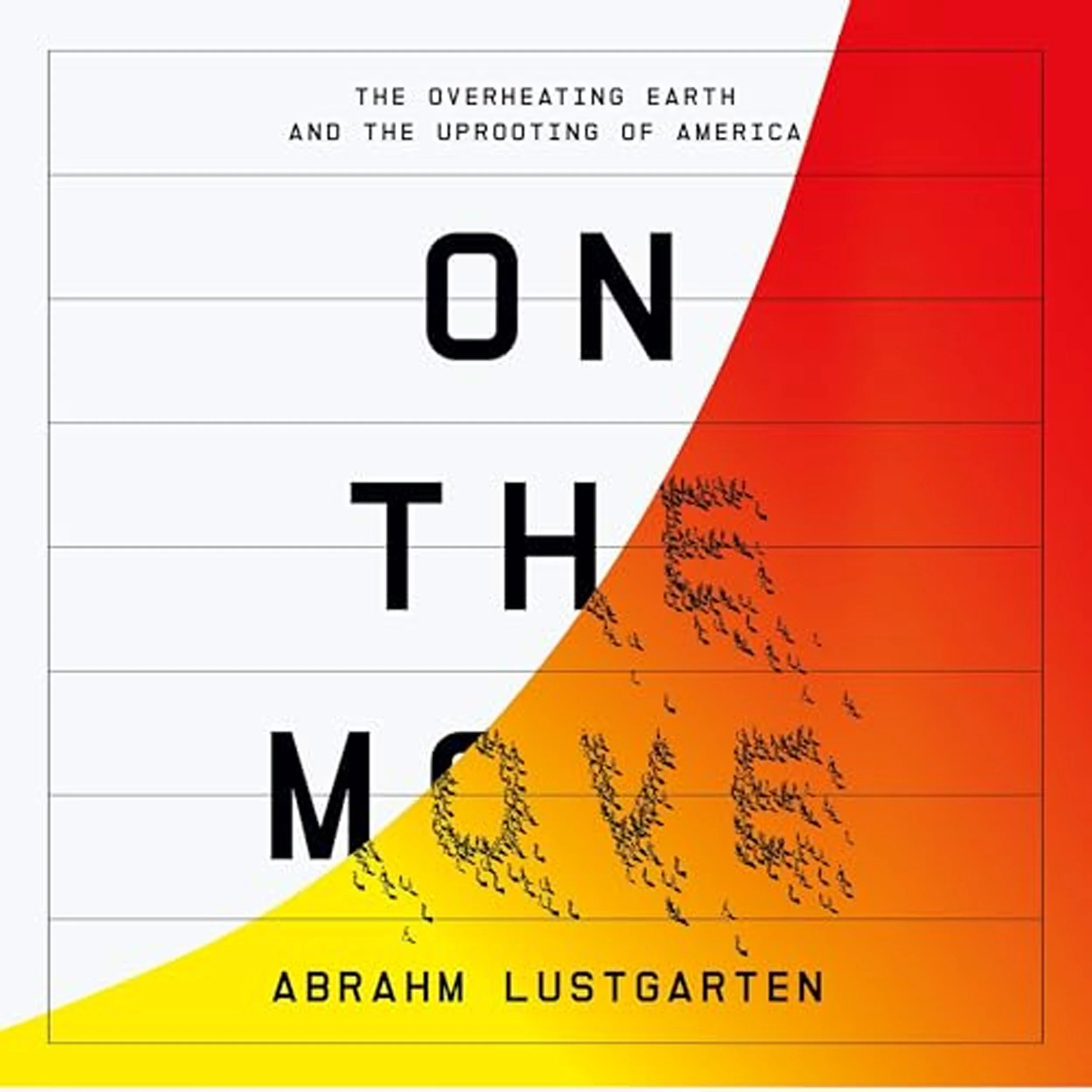
On The Move: The Overheating Earth and the Uprooting of America

Living in California, I've just come to accept the unsettledness of this era we're moving into. And I think that's really how I see the future. You know, we're living in an era of disruption, and there are others I talk to and write about in the book who also muse about the possibility of a more nomadic future. That maybe home isn't a permanent place with deep roots but is a transient place with shallow roots or two places that you alternate between. In addition to a lot of other dramatic changes that the book is about, a change in our sense of home and our sense of place is a part of this story.

On The Move: The Overheating Earth & the Uprooting of America with ABRAHM LUSTGARTEN

On The Move: The Overheating Earth & the Uprooting of America with ABRAHM LUSTGARTEN

Senior Reporter at ProPublica · Filmmaker · Author
On The Move: The Overheating Earth and the Uprooting of America

Living in California, I've just come to accept the unsettledness of this era we're moving into. And I think that's really how I see the future. You know, we're living in an era of disruption, and there are others I talk to and write about in the book who also muse about the possibility of a more nomadic future. That maybe home isn't a permanent place with deep roots but is a transient place with shallow roots or two places that you alternate between. In addition to a lot of other dramatic changes that the book is about, a change in our sense of home and our sense of place is a part of this story.

Apocalyptic Optimism: How We Can We Save Ourselves from the Climate Crisis? - Highlights - DANA FISHER
Saving Ourselves: From Climate Shocks to Climate Action - DANA FISHER
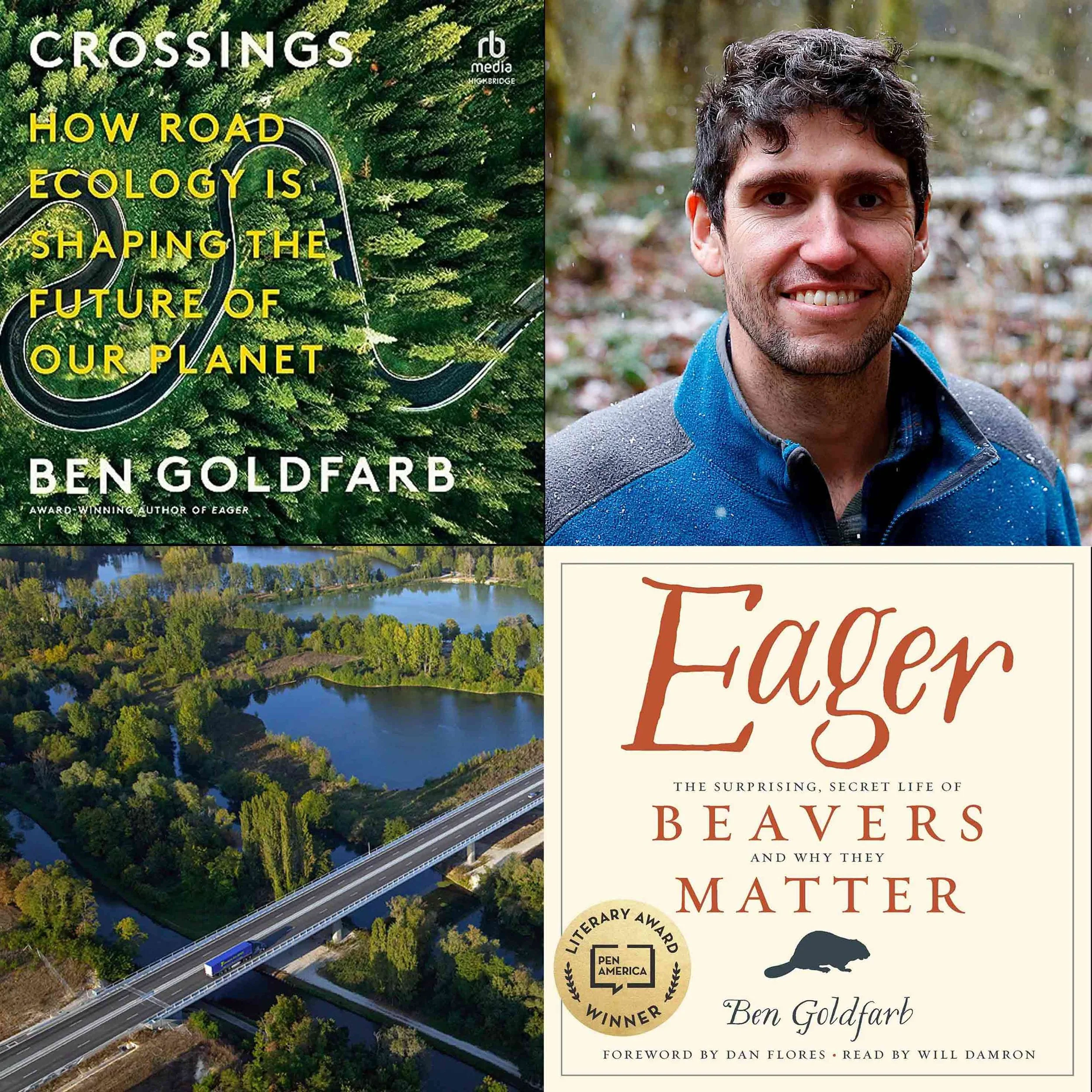
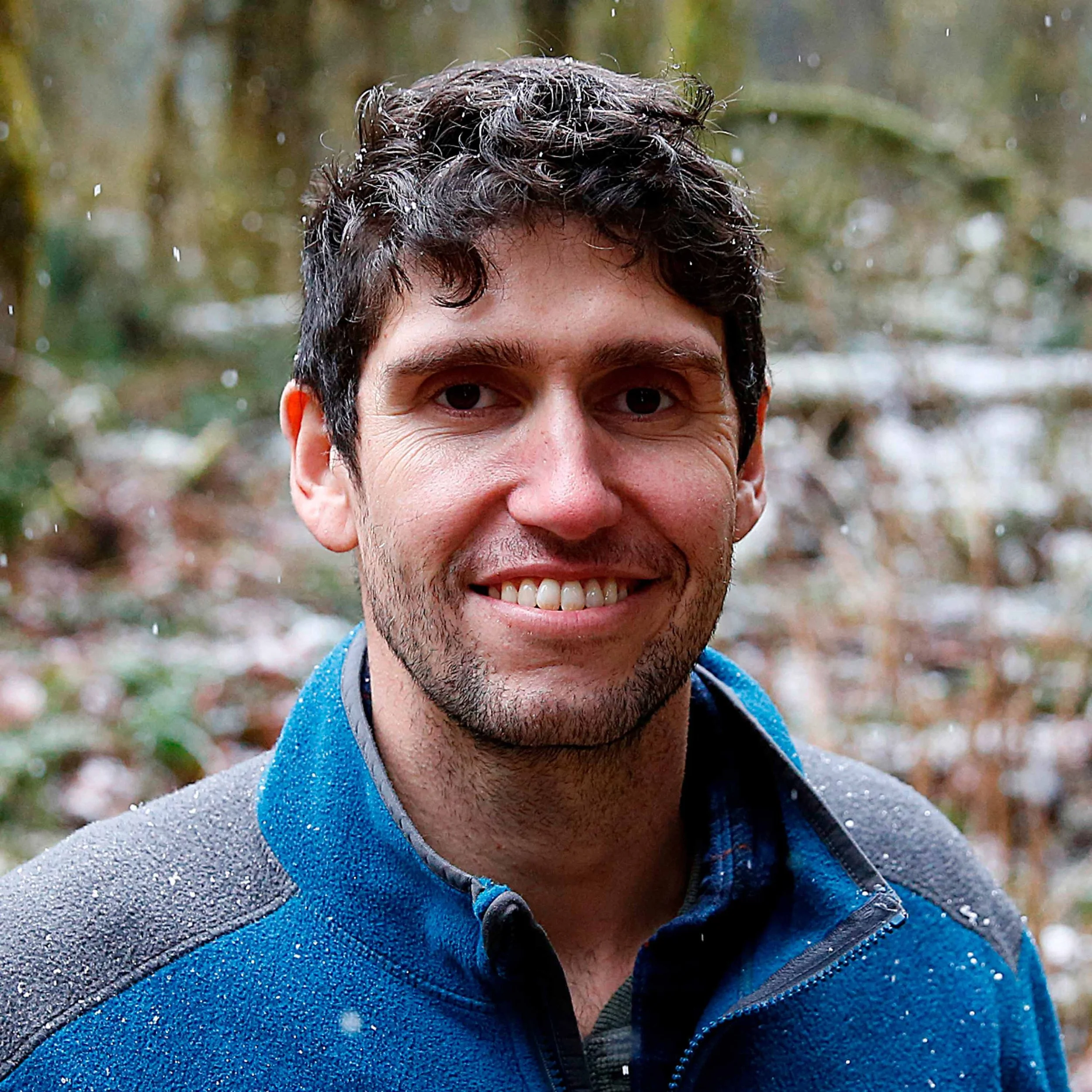
Road Ecology, Future Cities & Tech Solutions for Ecosystem Regeneration - Highlights - BEN GOLDFARB

Road Ecology, Future Cities & Tech Solutions for Ecosystem Regeneration - Highlights - BEN GOLDFARB

PEN/E.O. Wilson Literary Science Writing Award-winning Author

The creation of roads is this process that's sort of innate to all beings. We're all sort of inclined to create and follow trails. We just do it at a much vaster and more permanent and destructive scale. I think we need to reconceive how we think about roads. Roads aren't just symbols of movement and mobility and freedom for us. They're also preventing that mobility in basically all other life forms.

How Road Ecology is Shaping the Future of Our Planet with BEN GOLDFARB

How Road Ecology is Shaping the Future of Our Planet with BEN GOLDFARB

PEN/E.O. Wilson Literary Science Writing Award-winning Author

The creation of roads is this process that's sort of innate to all beings. We're all sort of inclined to create and follow trails. We just do it at a much vaster and more permanent and destructive scale. I think we need to reconceive how we think about roads. Roads aren't just symbols of movement and mobility and freedom for us. They're also preventing that mobility in basically all other life forms.

Voices of the Earth: Reflections on Nature, Humanity & Climate Change

Voices of the Earth: Reflections on Nature, Humanity & Climate Change

Environmentalists, writers, artists, activists, and public policy makers explore the interconnectedness of living beings and ecosystems. They highlight the importance of conservation, promote climate education, advocate for sustainable development, and underscore the vital role of creative and educational communities in driving positive change. Music courtesy of composer Max Richter.

How does a changing climate affect our minds, brains & bodies? - Highlights - CLAYTON ALDERN

How does a changing climate affect our minds, brains & bodies? - Highlights - CLAYTON ALDERN

Neuroscientist turned Environmental Journalist
Author of The Weight of Nature: How a Changing Climate Changes Our Minds, Brains, and Bodies

I want to be wowed by the world. I want to gaze at it in awe and wonder. And I think when we take a step back and begin to appreciate the complexity of the interactions around us. We're taking note of a very porous between the self and the rest of the world. We are literally observing our enmeshment in our environment. And it's that kind of a reference frameshift that I think is going to help us move out of some of the darkness. My mother is an artist, and I think growing up surrounded by her practice exposed me to the creative process and is probably that which afforded me a certain sympathy for those tools and those modes of exploring the world later in life.

How climate change is making us sick, angry & anxious - CLAYTON ALDERN - Neuroscientist turned Eco-Journalist

How climate change is making us sick, angry & anxious - CLAYTON ALDERN - Neuroscientist turned Eco-Journalist

Neuroscientist turned Environmental Journalist
Author of The Weight of Nature: How a Changing Climate Changes Our Minds, Brains, and Bodies

I want to be wowed by the world. I want to gaze at it in awe and wonder. And I think when we take a step back and begin to appreciate the complexity of the interactions around us. We're taking note of a very porous between the self and the rest of the world. We are literally observing our enmeshment in our environment. And it's that kind of a reference frameshift that I think is going to help us move out of some of the darkness. My mother is an artist, and I think growing up surrounded by her practice exposed me to the creative process and is probably that which afforded me a certain sympathy for those tools and those modes of exploring the world later in life.

Revolutionizing Sustainability: BERTRAND PICCARDS's Path to a Cleaner Planet - Highlights

Revolutionizing Sustainability: BERTRAND PICCARDS's Path to a Cleaner Planet - Highlights

Explorer & Aviator of the First Round-the-World Solar-powered Flight
Founder of Solar Impulse Foundation & Climate Impulse
UN Goodwill Ambassador for the Environment

The goal with Climate Impulse is to revolutionize aviation and show that we can decarbonize aviation. We can make it more efficient. Of course, it's not yet a jumbo jet with hydrogen. It's a two-seater airplane. But I want to make the ultimate flight to shake a little bit the certitudes of the people. If we go around the world nonstop with two people on board, this project can become like a flagship of climate action.

Beyond the Horizon: Pioneering Green Aviation with BERTRAND PICCARD - Aviator, Explorer, Environmentalist

Beyond the Horizon: Pioneering Green Aviation with BERTRAND PICCARD - Aviator, Explorer, Environmentalist

Explorer & Aviator of the First Round-the-World Solar-powered Flight
Founder of Solar Impulse Foundation & Climate Impulse
UN Goodwill Ambassador for the Environment

The goal with Climate Impulse is to revolutionize aviation and show that we can decarbonize aviation. We can make it more efficient. Of course, it's not yet a jumbo jet with hydrogen. It's a two-seater airplane. But I want to make the ultimate flight to shake a little bit the certitudes of the people. If we go around the world nonstop with two people on board, this project can become like a flagship of climate action.

How can we imagine future societies that are sustainable & enjoyable for all? - Highlights - PAOLA SPINOZZI

How can we imagine future societies that are sustainable & enjoyable for all? - Highlights - PAOLA SPINOZZI

Coordinator, Phd Programme, Environmental Sustainability & Wellbeing · University of Ferrara
Co-editor of Cultures of Sustainability and Wellbeing: Theories, Histories and Policies

The humanities are all about representing the world, while the sciences are all about knowing the world. But I believe the roles are deeply intertwined, and that literature, the humanities, philosophy, history, and the arts are all ways of knowing the world. They do exactly the same thing in our understanding of the world. And it is really important to try to put these things together to bring people closer in talking to each other.

Literature, Humanities & Sustainability: PAOLA SPINOZZI - Coordinator, Phd Programme, Environmental Sustainability & Wellbeing, UNIFE

Literature, Humanities & Sustainability: PAOLA SPINOZZI - Coordinator, Phd Programme, Environmental Sustainability & Wellbeing, UNIFE

Coordinator, Phd Programme, Environmental Sustainability & Wellbeing · University of Ferrara
Co-editor of Cultures of Sustainability and Wellbeing: Theories, Histories and Policies

The humanities are all about representing the world, while the sciences are all about knowing the world. But I believe the roles are deeply intertwined, and that literature, the humanities, philosophy, history, and the arts are all ways of knowing the world. They do exactly the same thing in our understanding of the world. And it is really important to try to put these things together to bring people closer in talking to each other.

What does the future hold for our late-stage capitalist society with mega-corps controlling everything? - Highlights - KYLE HIGGINS, KARINA MANASHIL & KID CUDI

What does the future hold for our late-stage capitalist society with mega-corps controlling everything? - Highlights - KYLE HIGGINS, KARINA MANASHIL & KID CUDI

Eisner Award-nominated Comic Book Author KYLE HIGGINS
Emmy-nominated Producer KARINA MANASHIL & KID CUDI on the Making of Moon Man

So, as we started talking and going through what this could look like. What a new black superhero in 2024 could look like? What would the threats be? What the world might look like if it's maybe not even five minutes in the future? I would argue it's like two and a half minutes in the future. And then what kind of really complex, emotionally layered journey we could put this character through?

Comics, Music, Ethics & AI: KYLE HIGGINS, KARINA MANASHIL & KID CUDI on the Making of Moon Man

Comics, Music, Ethics & AI: KYLE HIGGINS, KARINA MANASHIL & KID CUDI on the Making of Moon Man

Eisner Award-nominated Comic Book Author KYLE HIGGINS
Emmy-nominated Producer KARINA MANASHIL & KID CUDI on the Making of Moon Man

So, as we started talking and going through what this could look like. What a new black superhero in 2024 could look like? What would the threats be? What the world might look like if it's maybe not even five minutes in the future? I would argue it's like two and a half minutes in the future. And then what kind of really complex, emotionally layered journey we could put this character through?

DR. SASHA LUCCIONI - Founding Member Climate Change AI - Climate Lead & AI Researcher - Hugging Face

DR. SASHA LUCCIONI - Founding Member Climate Change AI - Climate Lead & AI Researcher - Hugging Face

Founding Member of Climate Change AI
AI Researcher & Climate Lead · Hugging Face

My work is really about figuring out how, right now, AI is using resources like energy and emitting greenhouse gases and how it's using our data without our consent. I feel that if we develop AI systems that are more respectful, ethical, and sustainable, we can help future generations so that AI will be less of a risk to society.  The way I got into this field was working on the environmentally beneficial applications of AI, and I do believe that that's an impactful way of using AI techniques because there's so much data about the climate, satellite data, and sensor data, and the way to go about this is to work with domain experts. AI is never going to solve the problem on its own, but it can be a tool. So I think that there's a lot of promise there.

How can we develop AI systems that are more respectful, ethical, and sustainable? - Highlights - DR. SASHA LUCCIONI

How can we develop AI systems that are more respectful, ethical, and sustainable? - Highlights - DR. SASHA LUCCIONI

Founding Member of Climate Change AI
AI Researcher & Climate Lead · Hugging Face

My work is really about figuring out how, right now, AI is using resources like energy and emitting greenhouse gases and how it's using our data without our consent. I feel that if we develop AI systems that are more respectful, ethical, and sustainable, we can help future generations so that AI will be less of a risk to society.  The way I got into this field was working on the environmentally beneficial applications of AI, and I do believe that that's an impactful way of using AI techniques because there's so much data about the climate, satellite data, and sensor data, and the way to go about this is to work with domain experts. AI is never going to solve the problem on its own, but it can be a tool. So I think that there's a lot of promise there.

How can enlightened self-interest advance social equity & climate action? - Highlights - DR. SHIV SOMESHWAR

How can enlightened self-interest advance social equity & climate action? - Highlights - DR. SHIV SOMESHWAR

Fmr. European Chair for Sustainable Development & Climate Transition · Sciences Po
Development Clinician focused on Diagnosing Development of Cities & Nation States

How do you have economic growth that is socially equitable and environmentally sustainable? It's not just that you have ecological sustainability; hence, that is sustainable development. Because lots of examples of economic, ecological, and ecologically sensitive growth need not be socially equitable. That's why this whole emphasis on just transition is not just about climate, but it's also about justice. It's about social equity in economic growth. Unlike in Europe, where there is now the call for degrowth or a circular economy, most parts of the world would look at you blankly if you talked about degrowth because they are hungry for growth. And so sustainable development is about managing these trade-offs.

DR. SHIV SOMESHWAR - Fmr. European Chair for Sustainable Development & Climate Transition - Sciences Po

DR. SHIV SOMESHWAR - Fmr. European Chair for Sustainable Development & Climate Transition - Sciences Po

Fmr. European Chair for Sustainable Development & Climate Transition · Sciences Po
Development Clinician focused on Diagnosing Development of Cities & Nation States

How do you have economic growth that is socially equitable and environmentally sustainable? It's not just that you have ecological sustainability; hence, that is sustainable development. Because lots of examples of economic, ecological, and ecologically sensitive growth need not be socially equitable. That's why this whole emphasis on just transition is not just about climate, but it's also about justice. It's about social equity in economic growth. Unlike in Europe, where there is now the call for degrowth or a circular economy, most parts of the world would look at you blankly if you talked about degrowth because they are hungry for growth. And so sustainable development is about managing these trade-offs.

MAX BENNETT - Author of A Brief History of Intelligence: Evolution, AI, and the Five Breakthroughs That Made Our Brains - CEO of Alby

MAX BENNETT - Author of A Brief History of Intelligence: Evolution, AI, and the Five Breakthroughs That Made Our Brains - CEO of Alby

Author of A Brief History of Intelligence: Evolution, AI, and the Five Breakthroughs That Made Our Brains
Cofounder & CEO of Alby · Fmr. Cofounder & CPO of Bluecore

So, modern neuroscientists are questioning if there really is one consistent limbic system. But usually when we're looking at the limbic system, we're thinking about things like emotion, volition, and goals. And those types of things, I would argue reinforcement learning algorithms, at least on a primitive level, we already have because the way that we get them to achieve goals like play a game of go and win is we give them a reward signal or a reward function. And then we let them self-play and teach themselves based on maximizing that reward. But that doesn't mean that they're self-aware, doesn't mean that they're experiencing anything at all. There's a fascinating set of questions in the AI community around what's called the reward hypothesis, which is how much of intelligent behavior can be understood through the lens of just trying to optimize a reward signal. We are more than just trying to optimize reward signals. We do things to try and reinforce our own identities. We do things to try and understand ourselves. These are attributes that are hard to explain from a simple reward signal, but do make sense. And other conceptions of intelligence like Karl Friston's active inference where we build a model of ourselves and try and reinforce that model.