ANTHONY JOSEPH - T.S. Eliot Award-winning Poet, Novelist & Musician, Lead vocalist of The Spasm Band

ANTHONY JOSEPH - T.S. Eliot Award-winning Poet, Novelist & Musician, Lead vocalist of The Spasm Band

T.S. Eliot Award-winning Poet, Novelist & Musician, Lead vocalist of The Spasm Band
Author of Sonnets for Albert

The life of Caribbean people is not really documented. So this idea of Caribbean life being fragmented is something that I've had in my mind for a long time. So when I came to write this collection for my father, I realized that it was the same process and what I had were fragments, especially with him, because he wasn't around in a physical sense all the time. So all I had were little photographs, scattered memories, and remembrances. They're little parts of his life and parts of my experience with him... I never disliked my father. I always loved him and always was fascinated and captivated by him.

ROBERT PLANT - DICKIE LANDRY - LIL' BAND O' GOLD

ROBERT PLANT - DICKIE LANDRY - LIL' BAND O' GOLD

I still have problems today. Some people call it stage fright. I don't know what it is, but I'm always right before a concert thinking, Why am I doing this? I should be doing this. I should be doing that. Why am I here? What am I going to do? And I walk up to the microphone, I'm still thinking this, and I start playing. And I'm still thinking, What am I doing here? Why, why, why? All the questions of how I'm going to sustain playing for 45 minutes or an hour, and I'm still playing and playing. And then all of a sudden I go, Well, Mr. Landry, you've got people sitting in the audience. You're getting paid for this. So enjoy yourself. So the next thing I know, the concert is over, and I don't know where I've been.

The Art of Reading Minds with Mentalist - HENRIK FEXEUS - Highlights

The Art of Reading Minds with Mentalist - HENRIK FEXEUS - Highlights

Mentalist, Internationally Bestselling Author & TV Host
The Art of Reading Minds · Mind Storm · Cult · BOX

A mentalist is a kind of magician, an illusionist. And a mentalist uses whatever techniques are at that person's disposal to create the illusion of being able to read minds or being able to contact a supernatural presence…The only rule is that that part is fake, but then you can use techniques for magic or from stagecraft or from psychology. A mentalist is really someone who creates this illusion of having an almost supernatural ability. Having said that, today a mentalist sort of has come to mean something else, mainly due to popular culture TV series like The Mentalist and so on. And now there's this understanding of a mentalist as someone being able to read body language and influence behavior. It sort of ties into it all. And I've had a lifelong passion for magic, and it started when I was seven. Because I was always interested in the question: what if there's a color in the sky that we can't see? What if a handkerchief actually can vanish? What does that mean in terms of how the world works?

HENRIK FEXEUS - Mentalist, Author & TV Host “The Art of Reading Minds”,“Mind Melt”,“Cult”

HENRIK FEXEUS - Mentalist, Author & TV Host “The Art of Reading Minds”,“Mind Melt”,“Cult”

Mentalist, Internationally Bestselling Author & TV Host
The Art of Reading Minds · Mind Storm · Cult · BOX

A mentalist is a kind of magician, an illusionist. And a mentalist uses whatever techniques are at that person's disposal to create the illusion of being able to read minds or being able to contact a supernatural presence…The only rule is that that part is fake, but then you can use techniques for magic or from stagecraft or from psychology. A mentalist is really someone who creates this illusion of having an almost supernatural ability. Having said that, today a mentalist sort of has come to mean something else, mainly due to popular culture TV series like The Mentalist and so on. And now there's this understanding of a mentalist as someone being able to read body language and influence behavior. It sort of ties into it all. And I've had a lifelong passion for magic, and it started when I was seven. Because I was always interested in the question: what if there's a color in the sky that we can't see? What if a handkerchief actually can vanish? What does that mean in terms of how the world works?

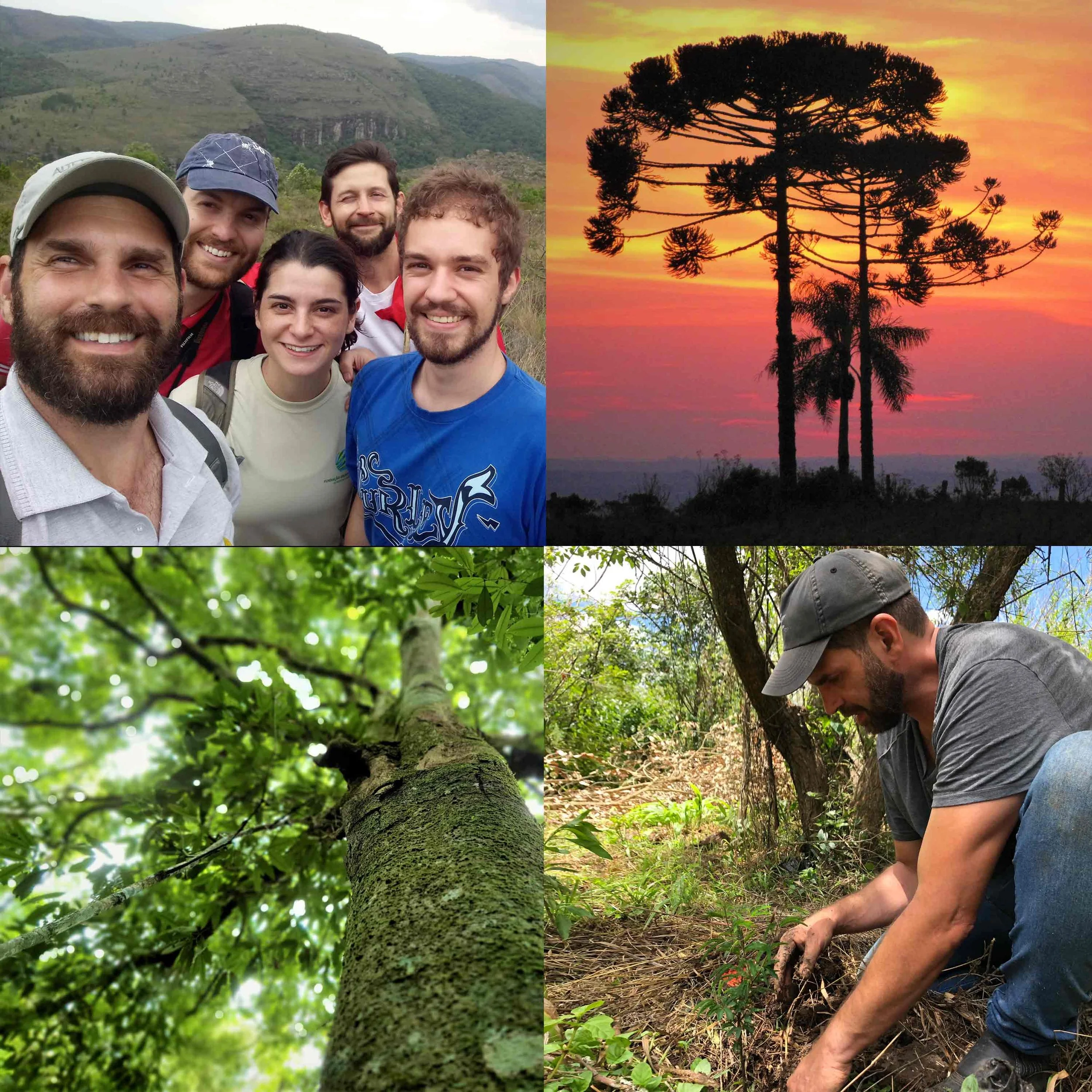
PABLO HOFFMAN - Whitley Award-winning Conservationist - Exec. Director & Co-Founder of Sociedade Chauá

PABLO HOFFMAN - Whitley Award-winning Conservationist - Exec. Director & Co-Founder of Sociedade Chauá

Whitley Award-winning Conservationist of Rare & Endangered Species
Executive Director & Co-Founder of Sociedade Chauá

Most of my family are cowboys and farmers. And I was like eight or nine years old. My grandmother was getting sick, and she always had a lot of plants at home in pots, and she asked me to help her to water the plants. And it was quite a good experience because when you start to like plants, it becomes like a viral thing. After some time I was growing my own plants, and I was very interested in doing her garden. And I would go to the forest and collect plants to grow at home like orchids that were beginning my first nursery. And it's a crazy love that grows when you start to understand how plants grow, and how the ecosystem functions. And how beautiful and amazing all this is. And we as humans are part of it, and I've always loved animals as well, but plants are my passion. And, of course, my, daughter's name is Flora. My wife, she's also a botanist, and she loves plants as well. So we live in the countryside where the farm has all kinds of plants. And I think one of the things that made me love and try to preserve and conserve the ecosystems and species is when you understand how slowly a plant or tree grows, and how much it takes to keep them healthy. And the interactions between the animals and plants, the pollinators and the dispersers within the ecosystem, it's something that everybody should know and see.

ADA LIMÓN - U.S. Poet Laureate - Author of The Hurting Kind - The Carrying - Highlights

ADA LIMÓN - U.S. Poet Laureate - Author of The Hurting Kind - The Carrying - Highlights

U.S. Poet Laureate · Host of The Slowdown podcast

This poem was written when I was having a real moment of reckoning, not that I hadn't had it earlier, but where I was doing some deep reading about the climate crisis and really reckoning with myself, with where we were and what was happening, what the truth was. And I felt like it was so easy to slip down into a darkness, into a sort of numbness, and I didn't think that that numbness and darkness could be useful.

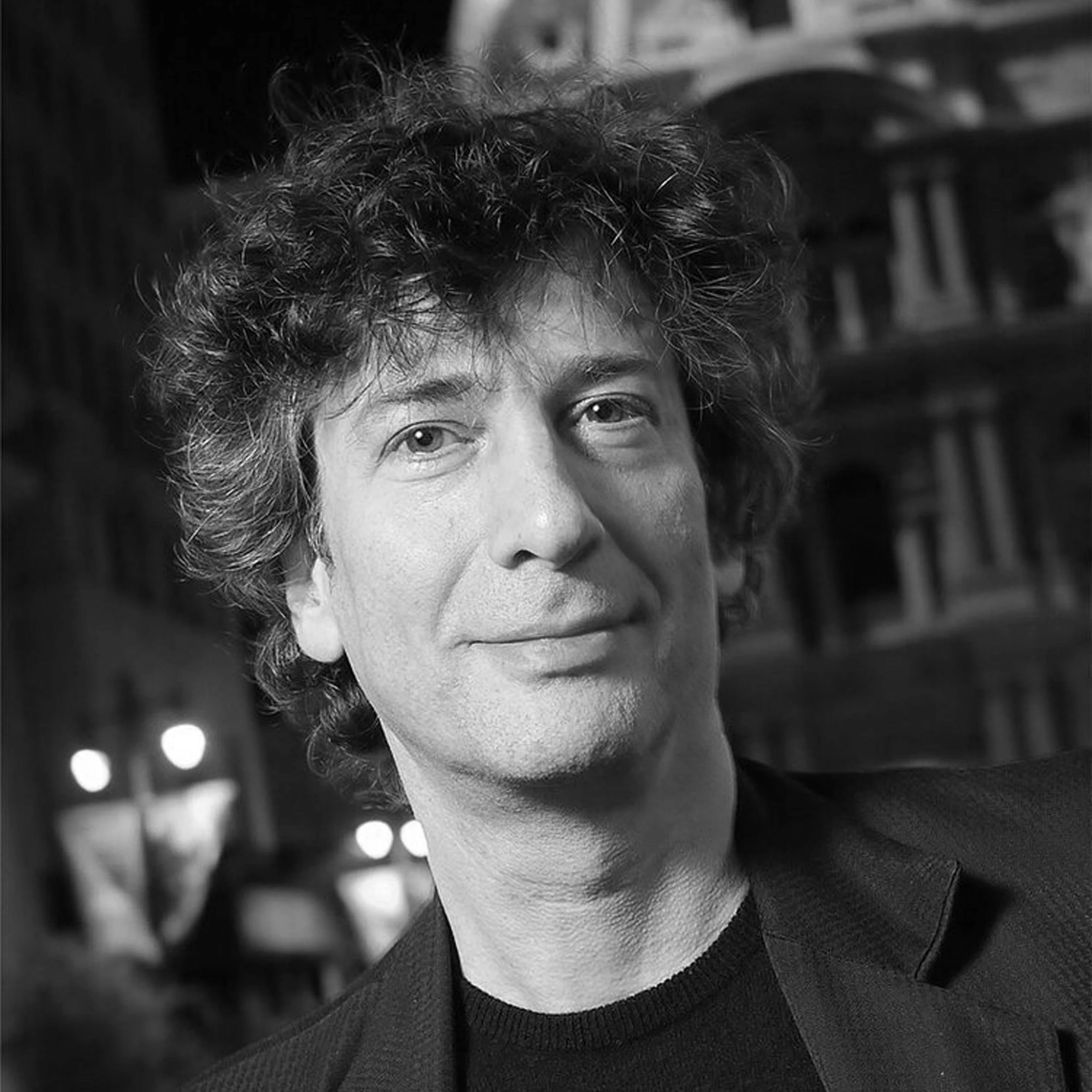
NEIL GAIMAN - Writer, Producer, Showrunner “The Sandman”, “American Gods”, “Good Omens”, “Coraline”

NEIL GAIMAN - Writer, Producer, Showrunner “The Sandman”, “American Gods”, “Good Omens”, “Coraline”

Author · Executive Producer · Showrunner
The Sandman American Gods · Good Omens · Coraline

Neil Gaiman is the #1 New York Times bestselling author of more than twenty books, including The Sandman, American Gods, Good Omens, Stardust, Coraline, Norse Mythology, Neverwhere, and The Graveyard Book. He’s adapted many of his books for television and film. Among his numerous literary awards are the Newbery and Carnegie medals, and the Hugo, Nebula, World Fantasy, and Will Eisner awards. He is a Global Goodwill Ambassador for United Nations High Commissioner for Refugees (UNHCR). In this episode, Gaiman reads his poems “A Writer’s Prayer” and “These Are Not Our Faces”. 

 The Other Side of Happiness: Embracing a More Fearless Approach to Living w/ BROCK BASTIAN - Highlights

The Other Side of Happiness: Embracing a More Fearless Approach to Living w/ BROCK BASTIAN - Highlights

Author of The Other Side of Happiness: Embracing a More Fearless Approach to Living
Professor at University of Melbourne’s School of Psychological Sciences

In today's world, feeling happy is no longer simply a state of mind. It's become a marker of mental health and success. On the flip side, pain and sadness are viewed as signals of failure and sickness. If we're not happy, then there is something wrong with us, and we need to fix it. It is no wonder that the painkiller and antidepressant markets, already worth billions of dollars, continue their rapid expansion. We've come to treat even commonplace experiences of pain and sadness as pathological, as things that need to be medicated and eradicated.

BROCK BASTIAN - Author of The Other Side of Happiness: Embracing a More Fearless Approach to Living

BROCK BASTIAN - Author of The Other Side of Happiness: Embracing a More Fearless Approach to Living

Author of The Other Side of Happiness: Embracing a More Fearless Approach to Living
Professor at University of Melbourne’s School of Psychological Sciences

In today's world, feeling happy is no longer simply a state of mind. It's become a marker of mental health and success. On the flip side, pain and sadness are viewed as signals of failure and sickness. If we're not happy, then there is something wrong with us, and we need to fix it. It is no wonder that the painkiller and antidepressant markets, already worth billions of dollars, continue their rapid expansion. We've come to treat even commonplace experiences of pain and sadness as pathological, as things that need to be medicated and eradicated.

On Time and Water with Author, Filmmaker ANDRI SNÆR MAGNASON - Highlights

On Time and Water with Author, Filmmaker ANDRI SNÆR MAGNASON - Highlights

Icelandic Writer & Documentary Filmmaker
On Time and Water · The Casket of Time · LoveStar · Not Ok · The Story of the Blue Planet

A letter to the future
Ok is the first Icelandic glacier to lose its status as a glacier.
In the next 200 years all our glaciers are expected to follow the same path.
This monument is to acknowledge that we know
what is happening and what needs to be done.
Only you know if we did it.

If you look at the Himalayas, the frozen glaciers are feeding 1 billion people with milky white water. The real tragedy is if the Himalayan glaciers go the same way as Iceland. In many places in the world, glaciers are very important for agriculture and the basic water supply of people.

ANDRI SNÆR MAGNASON - Icelandic Writer & Documentary Filmmaker - On Time and Water, The Casket of Time, LoveStar, Not Ok

ANDRI SNÆR MAGNASON - Icelandic Writer & Documentary Filmmaker - On Time and Water, The Casket of Time, LoveStar, Not Ok

Icelandic Writer & Documentary Filmmaker
On Time and Water · The Casket of Time · LoveStar · Not Ok · The Story of the Blue Planet

A letter to the future
Ok is the first Icelandic glacier to lose its status as a glacier.
In the next 200 years all our glaciers are expected to follow the same path.
This monument is to acknowledge that we know
what is happening and what needs to be done.
Only you know if we did it.

If you look at the Himalayas, the frozen glaciers are feeding 1 billion people with milky white water. The real tragedy is if the Himalayan glaciers go the same way as Iceland. In many places in the world, glaciers are very important for agriculture and the basic water supply of people.

How to Bring a Species Back from the Brink of Extinction w/ RACHEL ASHEGBOFEH IKEMEH - Highlights

How to Bring a Species Back from the Brink of Extinction w/ RACHEL ASHEGBOFEH IKEMEH - Highlights

Whitley Award-winning Conservationist
Founder/Director of the Southwest Niger Delta Forest Project

There's no question, we are in a state of conservation emergency. And we have a real situation on our hands and it's so fragile that if we take a step back, we could say goodbye to two types of chimpanzee species and the forest is also on the brink of disappearing forever. And when I started as a conservation researcher, there was kidnapping and insecurity throughout the Nile Delta region, and it was immersed in a lot of oil politics and civil conflicts. Kidnapping and insecurity ran throughout that region. Let's not forget that Nigeria is Africa's most populous nation now. We are over 200 million people in the country, and it's a growing population of young people who are looking for means of livelihood and on the lookout to find space to live. So parts of the forest within one year would suddenly become a new village.

RACHEL ASHEGBOFEH IKEMEH - Whitley Award-winning Conservationist - Founder/Director, Southwest Niger Delta Forest Project

RACHEL ASHEGBOFEH IKEMEH - Whitley Award-winning Conservationist - Founder/Director, Southwest Niger Delta Forest Project

Whitley Award-winning Conservationist
Founder/Director of the Southwest Niger Delta Forest Project

There's no question, we are in a state of conservation emergency. And we have a real situation on our hands and it's so fragile that if we take a step back, we could say goodbye to two types of chimpanzee species and the forest is also on the brink of disappearing forever. And when I started as a conservation researcher, there was kidnapping and insecurity throughout the Nile Delta region, and it was immersed in a lot of oil politics and civil conflicts. Kidnapping and insecurity ran throughout that region. Let's not forget that Nigeria is Africa's most populous nation now. We are over 200 million people in the country, and it's a growing population of young people who are looking for means of livelihood and on the lookout to find space to live. So parts of the forest within one year would suddenly become a new village.

The Inland Sea with Author MADELEINE WATTS - Highlights

The Inland Sea with Author MADELEINE WATTS - Highlights

Author of The Inland Sea
Professor of Creative Writing at Columbia University

I was reading ecological history and also reading about violence against women and how violence perpetuates itself over many generations. And there was something about this European sort of supremacy of ideas about nature, their ideas about rationality, all of this stuff that sort of came from the Enlightenment. John Oxley's diaries made no mention of the Indigenous Australians who were at the time subject to genocide. So I was interested in these ideas about how they tried to tame the land, which is often talked about as "a woman" and the way that the kind of violence that comes from a particular kind of European colonial project that is enacted on the land intertwines with the way that violence is enacted upon women. And it was something that I felt growing up in Australia.

MADELEINE WATTS - Author of The Inland Sea - Creative Writing Professor, Columbia University

MADELEINE WATTS - Author of The Inland Sea - Creative Writing Professor, Columbia University

Author of The Inland Sea
Professor of Creative Writing at Columbia University

I was reading ecological history and also reading about violence against women and how violence perpetuates itself over many generations. And there was something about this European sort of supremacy of ideas about nature, their ideas about rationality, all of this stuff that sort of came from the Enlightenment. John Oxley's diaries made no mention of the Indigenous Australians who were at the time subject to genocide. So I was interested in these ideas about how they tried to tame the land, which is often talked about as "a woman" and the way that the kind of violence that comes from a particular kind of European colonial project that is enacted on the land intertwines with the way that violence is enacted upon women. And it was something that I felt growing up in Australia.

Being You: A New Science of Consciousness with Neuroscientist ANIL SETH - Highlights

Being You: A New Science of Consciousness with Neuroscientist ANIL SETH - Highlights

Author of Being You: A New Science of Consciousness
Co-director of the Sackler Centre for Consciousness Science · Canadian Institute for Advanced Research Program on Brain, Mind & Consciousness

This is a point in philosophy that the world as it is can never be directly apprehended by our minds. We are shielded from it by what's called a sensory veil. There are, for instance, no such thing as colors that are out there. As the artist Cezanne said, "The colors are where the brain and the universe meet." And color is, I think, a really good example because it is, in a sense, less than what's there because our eyes are only sensitive to three wavelengths of this huge electromagnetic spectrum, which goes all the way from x-rays and gamma rays to radio waves. And we live in a tiny, thin slice of that reality. But then out of those three wavelengths we experience our brains generate many more than three colors and almost an infinite palette of colors. So there's no sense in which our perception could ever reveal the world as it really is, that it reveals the world in a way that's very useful for us as organisms hell-bent on continuing to live and to survive. 

ANIL SETH - Author of Being You: A New Science of Consciousness - Co-director of Sussex Centre for Consciousness Science

ANIL SETH - Author of Being You: A New Science of Consciousness - Co-director of Sussex Centre for Consciousness Science

Author of Being You: A New Science of Consciousness
Co-director of the Sackler Centre for Consciousness Science · Canadian Institute for Advanced Research Program on Brain, Mind & Consciousness

This is a point in philosophy that the world as it is can never be directly apprehended by our minds. We are shielded from it by what's called a sensory veil. There are, for instance, no such thing as colors that are out there. As the artist Cezanne said, "The colors are where the brain and the universe meet." And color is, I think, a really good example because it is, in a sense, less than what's there because our eyes are only sensitive to three wavelengths of this huge electromagnetic spectrum, which goes all the way from x-rays and gamma rays to radio waves. And we live in a tiny, thin slice of that reality. But then out of those three wavelengths we experience our brains generate many more than three colors and almost an infinite palette of colors. So there's no sense in which our perception could ever reveal the world as it really is, that it reveals the world in a way that's very useful for us as organisms hell-bent on continuing to live and to survive. 

SAGARIKA SRIRAM - Founder of Kids4abetterworld, Youth Climate Change Initiative

SAGARIKA SRIRAM - Founder of Kids4abetterworld, Youth Climate Change Initiative

Founder of Kids4abetterworld
Climate Activist & Educator

Sagarika Sriram is currently a student at Jumeirah College in Dubai. She founded the organization Kids4abetterworld when she was 10 years old with a mission to educate and encourage young children to lead a more sustainable life and reduce their carbon footprint. Children are the worst affected by the effects of climate change,  yet most children do not participate in climate change discussions or take actions to live more sustainably because they do not have the awareness and capability to do so. Kids4abetterworld conducts awareness workshops on sustainability aiming to Educate, Motivate and Activate young children to  conserve natural resources, protect biodiversity, and positively  impact climate change. As a UN Climate Advisor, she has participated in the global consultations that will ensure children are made aware of their environmental rights and that UN member states protect and uphold these.

Unique: The New Science of Human Individuality w/ Neurobiologist - DAVID J. LINDEN - Highlights

Unique: The New Science of Human Individuality w/ Neurobiologist - DAVID J. LINDEN - Highlights

Author of Unique: The New Science of Human Individuality · The Accidental Mind · The Compass of Pleasure · Touch
Professor of Neuroscience at Johns Hopkins University

It's a fundamental human question, how do we become individuals? It's a basic thing about being alive and thinking. Nature versus nurture is a phrase that was popularized by Francis Galton in the late 19th century. and the idea behind it is that if you were to look at a particular trait, say, shyness or height, you could say, well, to what degree can we attribute height to nature? In this case, meaning the gene variants that you inherit from your parents versus nurture in this case, meaning how you were raised by your parents and by your community. And I have many problems with this expression. Part of it is that the nature part shouldn't just mean genetics. In other words, there's all kinds of biological things that are not genetic things. If your mother fought off a viral infection while you were developing in utero, then you have a much higher chance of developing schizophrenia or autism when you grow up. Now that's biological, but it's not hereditary. That's not something that you would then acquire and then pass on to your own children. It only happens in the one generation. The other problem is when we hear the word nurture, we really focus on the family, how your parents raised you or failed to raise you, how your community was involved. And those things are very important, but they're far from everything that impinges upon you in your life. I take experience as the thing to substitute for nurture because it is much more inclusive and it includes not just social experience from your family and your peers and your community, but also experience in the more general sense.

DAVID J. LINDEN - Author of “Unique:The New Science of Human Individuality” “The Accidental Mind” “The Compass of Pleasure” “Touch”

DAVID J. LINDEN - Author of “Unique:The New Science of Human Individuality” “The Accidental Mind” “The Compass of Pleasure” “Touch”

Author of Unique: The New Science of Human Individuality · The Accidental Mind · The Compass of Pleasure · Touch
Professor of Neuroscience at Johns Hopkins University

It's a fundamental human question, how do we become individuals? It's a basic thing about being alive and thinking. Nature versus nurture is a phrase that was popularized by Francis Galton in the late 19th century. and the idea behind it is that if you were to look at a particular trait, say, shyness or height, you could say, well, to what degree can we attribute height to nature? In this case, meaning the gene variants that you inherit from your parents versus nurture in this case, meaning how you were raised by your parents and by your community. And I have many problems with this expression. Part of it is that the nature part shouldn't just mean genetics. In other words, there's all kinds of biological things that are not genetic things. If your mother fought off a viral infection while you were developing in utero, then you have a much higher chance of developing schizophrenia or autism when you grow up. Now that's biological, but it's not hereditary. That's not something that you would then acquire and then pass on to your own children. It only happens in the one generation. The other problem is when we hear the word nurture, we really focus on the family, how your parents raised you or failed to raise you, how your community was involved. And those things are very important, but they're far from everything that impinges upon you in your life. I take experience as the thing to substitute for nurture because it is much more inclusive and it includes not just social experience from your family and your peers and your community, but also experience in the more general sense.