A Life in Writing with T.C. BOYLE

A Life in Writing with T.C. BOYLE

Novelist · Short Story Writer

What I have done in my career is just try to assess who we are, what we are, why we are here, and how come we, as animals, are able to walk around and wear pants and dresses and talk on the internet, while the other animals are not. It's been my obsession since I was young. I think if I hadn't become a novelist, I might have been happy to be a naturalist or a field biologist.

Language, Music, Memory with Writer, Philosopher PATRICK HEALY - Highlights

Language, Music, Memory with Writer, Philosopher PATRICK HEALY - Highlights

Writer · Philosopher · Independent Scholar

You have all the different languages interplaying with each other. Little scraps of Irish languages and idioms have stories that have been told, but how Ireland actually comes about as an idea, as to where the Irish come from. A lot of these kinds of debates are just placed, you know, in day-to-day conversation, and then they trail off. People start something; they trail off and might come back to it later. That phenomenon of speaking over each other, tales that are known and not known, I always found very interesting. It was literally like a radio that was kept on all day in the kitchen.

You would come in and out, and you would hear certain things, and you'd have to work out the context and the conversation and the speakers. In some way, one of the big personalities in the book is just a radio that’s playing, and some of these conversations are not actually taking place between characters in real-time. They're just snippets that have been overheard on radios.

Beyond the Pale with Writer, Philosopher PATRCK HEALY

Beyond the Pale with Writer, Philosopher PATRCK HEALY

Writer · Philosopher · Independent Scholar

You have all the different languages interplaying with each other. Little scraps of Irish languages and idioms have stories that have been told, but how Ireland actually comes about as an idea, as to where the Irish come from. A lot of these kinds of debates are just placed, you know, in day-to-day conversation, and then they trail off. People start something; they trail off and might come back to it later. That phenomenon of speaking over each other, tales that are known and not known, I always found very interesting. It was literally like a radio that was kept on all day in the kitchen.

You would come in and out, and you would hear certain things, and you'd have to work out the context and the conversation and the speakers. In some way, one of the big personalities in the book is just a radio that’s playing, and some of these conversations are not actually taking place between characters in real-time. They're just snippets that have been overheard on radios.

On Regulating the Attention Market & Prevent Algorithmic Emotional Governance w/ FABIEN GANDON & FRANCK MICHEL

On Regulating the Attention Market & Prevent Algorithmic Emotional Governance w/ FABIEN GANDON & FRANCK MICHEL

The fact that technologies are being used and combined to capture our attention is concerning. This is currently being done with no limitations and no regulations. That's the main problem. Attention is a very private resource. No one should be allowed to extract it from us by exploiting what we know about the human mind and how it functions, including its weaknesses. We wrote this paper as a call to regulate the attention market and prevent algorithmic emotional governance.

PAY ATTENTION: A Call to Regulate the Attention Market & Prevent Algorithmic Emotional Governance

PAY ATTENTION: A Call to Regulate the Attention Market & Prevent Algorithmic Emotional Governance

The fact that technologies are being used and combined to capture our attention is concerning. This is currently being done with no limitations and no regulations. That's the main problem. Attention is a very private resource. No one should be allowed to extract it from us by exploiting what we know about the human mind and how it functions, including its weaknesses. We wrote this paper as a call to regulate the attention market and prevent algorithmic emotional governance.

We Grow the World Together: Parenting Toward Abolition with MAYA SCHENWAR & KIM WILSON

We Grow the World Together: Parenting Toward Abolition with MAYA SCHENWAR & KIM WILSON

Parenting Toward Abolition
A Conversation with MAYA SCHENWAR & KIM WILSON about what inspired them to commission a wide range of amazing activists, artists, scholars, and organizers to write whatever came to their minds about the topic of parenting and abolition. The result is a rich mosaic of unique insights expressed in diverse forms, but each one touching deeply on the interdependency of living beings and the importance of caregiving in all its forms. It is this commitment that leads us always to imagine an abolitionist future for ourselves, and all children.

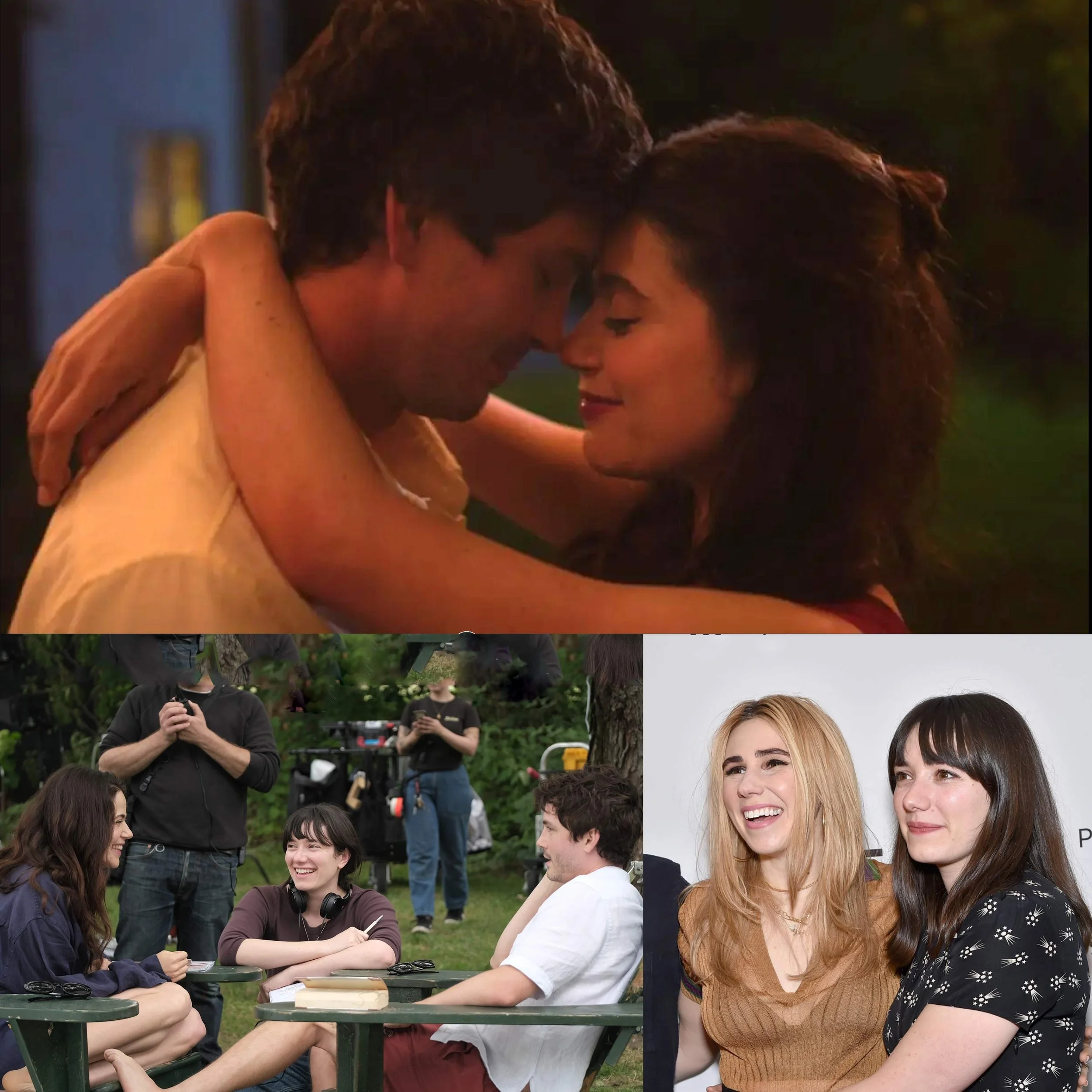
Relationships, Writing, Dyselxia & The Creative Process w/ Director SOPHIE BROOKS

Relationships, Writing, Dyselxia & The Creative Process w/ Director SOPHIE BROOKS

Writer Director
Oh, Hi! · The Boy Downstairs

In reality, we're all complex people with feelings and our own sets of baggage. I do think we are very good at self-sabotage, all of us. It's a very easy road to go down. It's safe because it's comfortable, and we know it. When you can find the ways you self-sabotage and try to stop that, it will hopefully lead to a happier life and things that are meaningful. When I was in my late twenties, I got out of a serious relationship and kind of reentered the dating scene. I was shocked by the simplification of a lot of complicated feelings around dating and how women are so easily labeled crazy, and men are so easily labeled assholes.

Modern Love - Writer, Director SOPHIE BROOKS on her new film OH, HI!

Modern Love - Writer, Director SOPHIE BROOKS on her new film OH, HI!

Writer Director
Oh, Hi! · The Boy Downstairs

In reality, we're all complex people with feelings and our own sets of baggage. I do think we are very good at self-sabotage, all of us. It's a very easy road to go down. It's safe because it's comfortable, and we know it. When you can find the ways you self-sabotage and try to stop that, it will hopefully lead to a happier life and things that are meaningful. When I was in my late twenties, I got out of a serious relationship and kind of reentered the dating scene. I was shocked by the simplification of a lot of complicated feelings around dating and how women are so easily labeled crazy, and men are so easily labeled assholes.

From Spy Thrillers to Police Dramas w/ Writer, Creator, Showrunner ALEXI HAWLEY

From Spy Thrillers to Police Dramas w/ Writer, Creator, Showrunner ALEXI HAWLEY

Showrunner · Writer · Creator
The Rookie · The Recruit

There used to be a time when leading men were okay with falling down as a character. Harrison Ford in Indiana Jones is a prime example of that. Even going back to the fifties, they understood that failure and falling down, but getting back up, is an endearing quality. It's a universal human quality. We have gotten to a point in the last 10 or 15 years, or maybe longer, where leading men often want to win every fight. It’s in their contract: "I have to win every fight" or "I can't fail" or "I can't fall down." It's just such a mistake because the audience roots for you more if they see you fail and then get back up again. Noah is totally comfortable playing that character who's just trying to figure it out on the fly. Sometimes, he gets it wrong, but he's never going to give up. You can really feel that coming off the screen.

Behind the Scenes of The Rookie & The Recruit w/ Showrunner ALEXI HAWLEY

Behind the Scenes of The Rookie & The Recruit w/ Showrunner ALEXI HAWLEY

Showrunner · Writer · Creator
The Rookie · The Recruit

There used to be a time when leading men were okay with falling down as a character. Harrison Ford in Indiana Jones is a prime example of that. Even going back to the fifties, they understood that failure and falling down, but getting back up, is an endearing quality. It's a universal human quality. We have gotten to a point in the last 10 or 15 years, or maybe longer, where leading men often want to win every fight. It’s in their contract: "I have to win every fight" or "I can't fail" or "I can't fall down." It's just such a mistake because the audience roots for you more if they see you fail and then get back up again. Noah is totally comfortable playing that character who's just trying to figure it out on the fly. Sometimes, he gets it wrong, but he's never going to give up. You can really feel that coming off the screen.

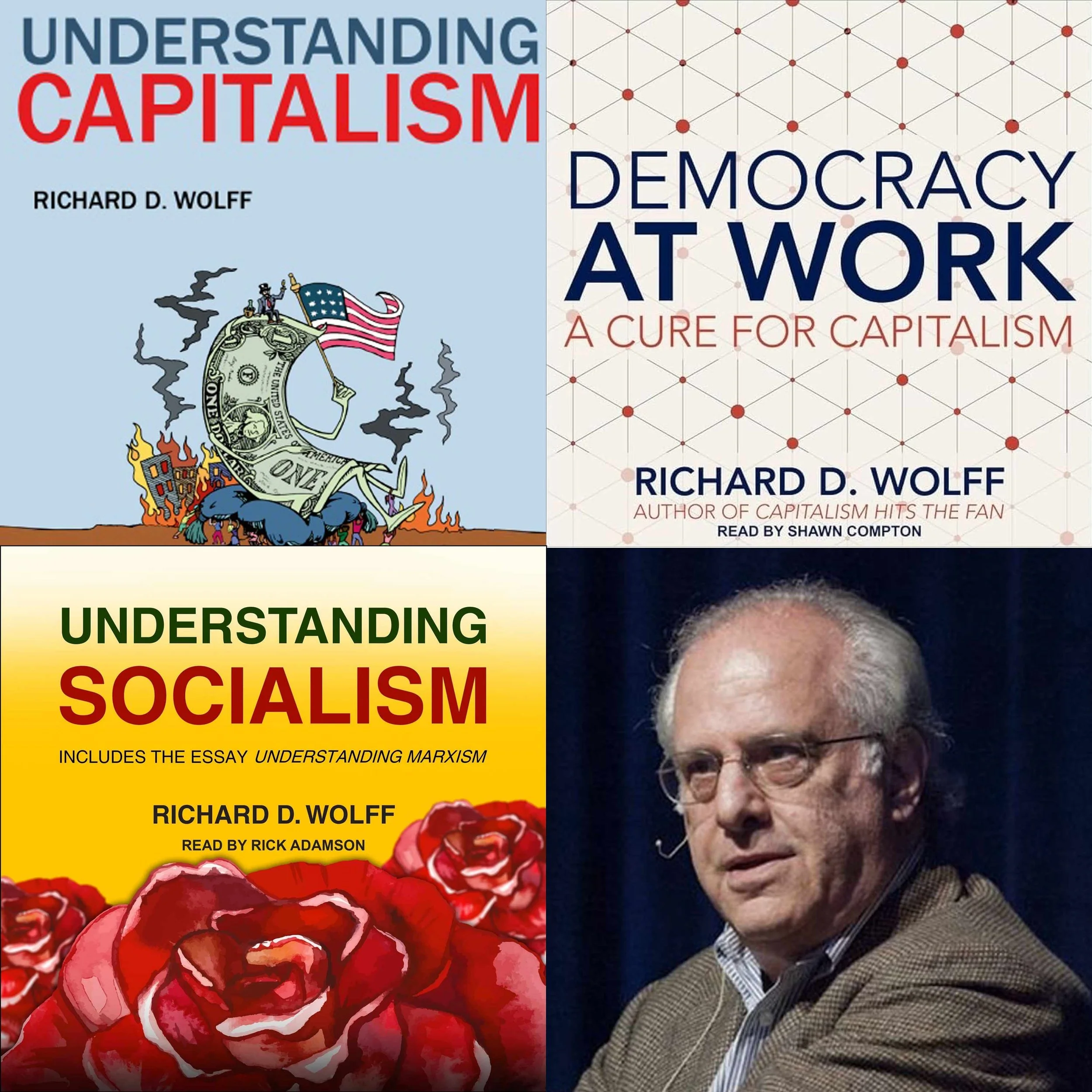
Are We Witnessing the Decline of the American Empire? RICHARD D. WOLFF - Highlights

Are We Witnessing the Decline of the American Empire? RICHARD D. WOLFF - Highlights

w/ Economist RICHARD D. WOLFF
Co-founder of Democracy at Work
Author · Host of Economic Update

The position of the United States in the world, economically and politically, is the weakest it has been in my lifetime. I was born in the middle of the 20th century, so I have watched the rise of the American empire and the success of American capitalism in the second half of the 20th century. However, over the last 20 years, I have watched that turn into its opposite—a decline. The decline is visible everywhere. Unless you live in the United States and consume mainstream media, there is a level of denial that will be recorded historically as one of the great examples, not just of a declining empire, which typically has people who cannot face it and who refuse to see it. You can go to Great Britain today and find quite a few people who think we still have the British Empire, even though everyone who isn't crazy knows that is silly. But we are earlier in the decline phase than the British are; they have had to endure it for a century while we have just had to do it for a couple of decades. It is fresh.

Understanding Capitalism with RICHARD D. WOLFF - Co-founder of Democracy at Work

Understanding Capitalism with RICHARD D. WOLFF - Co-founder of Democracy at Work

w/ Economist RICHARD D. WOLFF
Co-founder of Democracy at Work
Author · Host of Economic Update

The position of the United States in the world, economically and politically, is the weakest it has been in my lifetime. I was born in the middle of the 20th century, so I have watched the rise of the American empire and the success of American capitalism in the second half of the 20th century. However, over the last 20 years, I have watched that turn into its opposite—a decline. The decline is visible everywhere. Unless you live in the United States and consume mainstream media, there is a level of denial that will be recorded historically as one of the great examples, not just of a declining empire, which typically has people who cannot face it and who refuse to see it. You can go to Great Britain today and find quite a few people who think we still have the British Empire, even though everyone who isn't crazy knows that is silly. But we are earlier in the decline phase than the British are; they have had to endure it for a century while we have just had to do it for a couple of decades. It is fresh.

Who Defends the Defenders? UN Special Rapporteur on Environmental Defenders MICHEL FORST

Who Defends the Defenders? UN Special Rapporteur on Environmental Defenders MICHEL FORST

UN Special Rapporteur on Environmental Defenders MICHEL FORST on Protecting Environmental Activists

My mandate focuses on the protection of those trying to protect the planet. Protection of defenders is my main topic. When I'm speaking to states or companies, it's always related to cases of defenders facing threats, attacks, or penalization by companies or governments, like the recent case of Paul Watson (founder of Sea Shepherd) in Denmark… When I travel to places like Peru, Colombia, or Honduras and meet Indigenous people, I realize they have a relationship with nature that we don't have anymore. They express that the food they eat, the water they drink, and the air they breathe goes beyond just air and food; it represents what they call Pachamama or Mother Earth. This is a cosmovision shared across various communities, not only in Latin America but globally.

Why is it a Crime to Protest the Destruction of Our Planet? with MICHEL FORST

Why is it a Crime to Protest the Destruction of Our Planet? with MICHEL FORST

UN Special Rapporteur on Environmental Defenders MICHEL FORST on Protecting Environmental Activists

My mandate focuses on the protection of those trying to protect the planet. Protection of defenders is my main topic. When I'm speaking to states or companies, it's always related to cases of defenders facing threats, attacks, or penalization by companies or governments, like the recent case of Paul Watson (founder of Sea Shepherd) in Denmark… When I travel to places like Peru, Colombia, or Honduras and meet Indigenous people, I realize they have a relationship with nature that we don't have anymore. They express that the food they eat, the water they drink, and the air they breathe goes beyond just air and food; it represents what they call Pachamama or Mother Earth. This is a cosmovision shared across various communities, not only in Latin America but globally.

How to change our extractive mindset to a regenerative mindset? PAUL SHRIVASTAVA - Highlights

How to change our extractive mindset to a regenerative mindset? PAUL SHRIVASTAVA - Highlights

& The Limits to Growth with Co-President PAUL SHRIVASTAVA

Less than two weeks into the new year and the world’s wealthiest 1% have already used their fair share of the global carbon budget allocated for 2025. Climate change is here. It's already causing devastation to the most vulnerable populations. We are living with an extractive mindset, where we are extracting one way out of the life system of the Earth. We need to change from that extractive mindset to a regenerative mindset. And we need to change from the North Star of economic growth to a vision of eco civilizations. Those are the two main principles that I want to propose and that the Club of Rome suggests that we try to transform our current organization towards regenerative living and eco civilization.

The Club of Rome & The Limits to Growth w/ Co-President PAUL SHRIVASTAVA

The Club of Rome & The Limits to Growth w/ Co-President PAUL SHRIVASTAVA

& The Limits to Growth with Co-President PAUL SHRIVASTAVA

Less than two weeks into the new year and the world’s wealthiest 1% have already used their fair share of the global carbon budget allocated for 2025. Climate change is here. It's already causing devastation to the most vulnerable populations. We are living with an extractive mindset, where we are extracting one way out of the life system of the Earth. We need to change from that extractive mindset to a regenerative mindset. And we need to change from the North Star of economic growth to a vision of eco civilizations. Those are the two main principles that I want to propose and that the Club of Rome suggests that we try to transform our current organization towards regenerative living and eco civilization.

How to Build Relationships, Hook Up & Raise Hell Together: Conversation w/ DEAN SPADE - Highlights

How to Build Relationships, Hook Up & Raise Hell Together: Conversation w/ DEAN SPADE - Highlights

Conversation with DEAN SPADE about How to Build Relationships, Hook Up, and Raise Hell Together

This book has a lot of the wisdom of things that feminists and queers have learned in the community about sexuality, but the book is really for anybody who is political, even those just starting out and beginning to realize that there is something wrong with the systems they live under. I want to be in movements. Our movements are made of relationships. So, if you're just getting into our movements, or if you've been here for years and have been watching the ways we hurt each other and fall apart relationally, this book is about identifying these common patterns.

 LOVE in a F*cked-Up World: DEAN SPADE on How to Build Relationships, Hook Up & Raise Hell Together

LOVE in a F*cked-Up World: DEAN SPADE on How to Build Relationships, Hook Up & Raise Hell Together

This book has a lot of the wisdom of things that feminists and queers have learned in the community about sexuality, but the book is really for anybody who is political, even those just starting out and beginning to realize that there is something wrong with the systems they live under. I want to be in movements. Our movements are made of relationships. So, if you're just getting into our movements, or if you've been here for years and have been watching the ways we hurt each other and fall apart relationally, this book is about identifying these common patterns.

THREE WOMEN starring Shailene Woodley, DeWanda Wise, Betty Gilpin: Conversation w/ LAURA EASON - Highlights

THREE WOMEN starring Shailene Woodley, DeWanda Wise, Betty Gilpin: Conversation w/ LAURA EASON - Highlights

Emmy-nominated Producer, Writer, Playwright

I think the show conveys to the women watching that their lives matter. They don't have to be some gorgeous aspirational person, although Sloane absolutely fits that mold. But for others living in the Midwest, struggling and feeling unseen, hopefully, the mirrors of Lina and Maggie will help them not feel so alone and remind them that their stories are important and matter.

Female Desire, Sex & Intimacy: Emmy-nominated Producer, Writer, Playwright LAURA EASON on THREE WOMEN

Female Desire, Sex & Intimacy: Emmy-nominated Producer, Writer, Playwright LAURA EASON on THREE WOMEN

I think the show conveys to the women watching that their lives matter. They don't have to be some gorgeous aspirational person, although Sloane absolutely fits that mold. But for others living in the Midwest, struggling and feeling unseen, hopefully, the mirrors of Lina and Maggie will help them not feel so alone and remind them that their stories are important and matter.