How AI is Shaping Perception

How AI is Shaping Perception

How Deception is Sculpting Our Reality
A Conversation with Artist · Geographer · Author TREVOR PAGLEN

At the core of the work is that sense of curiosity, that sense of joy, that sense of beauty, and that sense of learning. I've been fortunate to have all kinds of strange and interesting experiences, whether that's seeing weird things in the sky over secret military bases in the middle of the Nevada desert, going scuba diving and finding internet cables on the bottom of the ocean, or tracking spy satellites in the sky and being able to predict when they'll appear in a flash against the backdrop of stars. The world around us is extraordinary and embodied, right? It is not on screens, and I’m very privileged to have that be so much a part of my process.

A Life in Acting

A Life in Acting

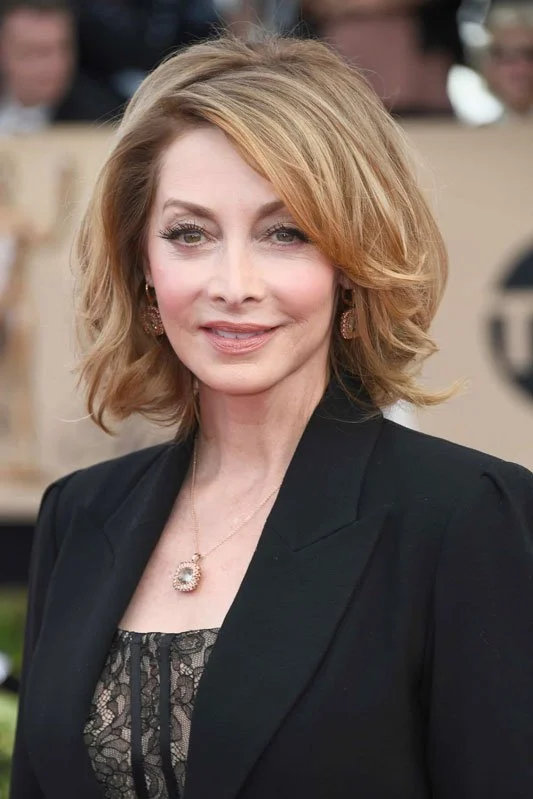
A Conversation with Emmy Award-winning Actor, Director, Writer CADY McCLAIN

I won my first Emmy when I was 21, which was the result of absolutely devoting myself day and night for two years to doing all the scene work. I attended classes simultaneously and did plays until my mother died. I studied with Michael Howard for eight years. Even when I was so tired I couldn't get up to do a scene, he would say, "Get up and do a poem." It helped me enormously; it saved me. The way I was trained and how I train others is that you know when you’re in the zone. Oh God, it feels so good. It feels like flying. And that's what you want. You want to be so unselfaware that you're on liftoff?

On Writing, America's Forever Wars & Challenging Power

On Writing, America's Forever Wars & Challenging Power

A Conversation with Pulitzer Prize-winning Author VIET THANH NGUYEN

What I've discovered as a writer is that fear is a good indicator that there is a truth. To speak the truth in a society is oftentimes an act that requires some courage. Those processes of being an other for me in the United States were obviously very fundamental to shaping who I am as a person and as a writer. It was very difficult to undergo, but to become a writer who could talk about those issues was also a lot of fun. Writing The Sympathizer was a lot of fun, and I hope that the novel was enjoyable and humorous to read as well, despite its very serious politics. When I wrote The Committed, I also had a lot of fun as an outsider to France. In writing the novel itself, The Committed, there was a lot of humor, satire, and these kinds of tools to confront the tragedy of othering. This is very important to me as literary and political devices. I think I could do that in both The Sympathizer and The Committed because I had a lot of distance from the time periods that those novels described. My challenge right now is to try to find my sense of humor in describing what the United States is undergoing and doing to other countries, its own immigrants, and its own people of color, and minorities in the present. That's proving to be a little more challenging at this moment.

.sqs-block-summary-v2 .summary-block-setting-text-size-small .summary-excerpt p { font-size: 10px; display: -webkit-box; /* Enable webkit box model */ -webkit-box-orient: vertical; /* Make the box orientation vertical */ overflow: hidden; /* Hide overflow text */ -webkit-line-clamp: 12; /* Limit text to 12 lines */ text-overflow: ellipsis; /* Show ellipsis (...) when text overflows */ }
A Barrister for the Earth

A Barrister for the Earth

MONICA FERIA-TINTA on Ten Cases of Hope for Our Future

I like young people to know that they're extremely powerful. I guess the book was about giving hope because I realized how much we could do together. If a person can manage to argue and make a major impact in the way we are understanding treaties in human rights or other things, imagine what could be if every single person is in their own place in some field, with that alertness and synced in the same way. I believe that ordinary people are the ones bringing changes here. I believe that the communities gathering together – for example, I am seeing that in this country around the protection of rivers – are the ones that will mark the change. It's not going to come from above; it's going to come from below, up. We all have a role. Working for the protection of what we love the most will make you happy. So get into a positive mindset. Learn all you can. Be part of things that make you feel positive. You will see how you will find your way, and there is no place for feeling disempowered. This is the moment where you should feel very powerful because it is us who are going to make the future of this Earth.

On Acting, Activism & The Art of Transformation

On Acting, Activism & The Art of Transformation

A Conversation with SHARON LAWRENCE

That transformation was key to my next step as an artist, to knowing that's what acting is. It isn't just posing; it isn't just being a version of yourself in a way that was free. Performing wasn't just performing; it was transforming. I think that artists find that in many different ways, and as actors, there are many ways into that.

Confronting White Supremacy in Art & Public Space

Confronting White Supremacy in Art & Public Space

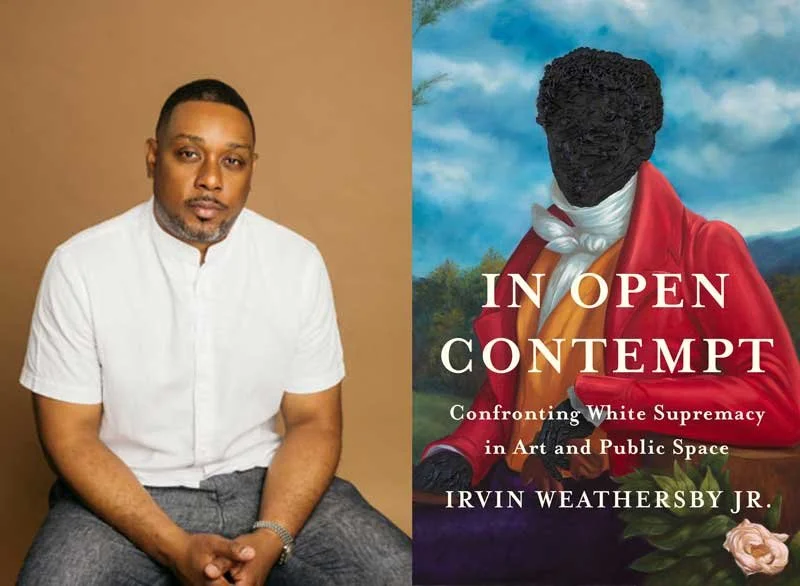
A Conversation with Author IRVIN WEATHERSBY JR.

One of the biggest symbols of America is Mount Rushmore. This monument, right? But I think most people fail to realize where it's located and why it's located there. Even more importantly, who did it? It's on a sacred Native American mountain, a place that was central to their creation stories. But then you think about who did it, and it was a Klansman. The guy who sculpted Mount Rushmore was a Klansman. People were like, "Wait, really?" Like, how is that a thing? But it seeps into our understanding and our embrace of white supremacy. This whole notion of us using Mount Rushmore as a metric of excellence is really sad. We are honoring slave owners and people who viciously killed natives, and those who pillage other lands in the name of capitalism. That's what America is, I guess.

I think there's such a disinterest in education in America that it is sickening. We can't even agree on facts. It's up to states' rights to decide. Really? States can say that this is true in one state, but it's not true in another? Although these states are united, it's very bizarre. I'm hopeful for revolution. I'm optimistic. I want radical change. I think we are repeating history. We are going through a cycle of fascism and greed, and I think we're going to see a lot of states collapse. As a result of that, I think people are going to be forced back to their primal needs and concerns, but I think they're going to be forced to think about what makes us human. How do we become more human? Because we've lost that. We've given it up to technology. How can we figure out what makes us a really powerful species again?

.sqs-block-summary-v2 .summary-block-setting-text-size-small .summary-excerpt p { font-size: 10px; display: -webkit-box; /* Enable webkit box model */ -webkit-box-orient: vertical; /* Make the box orientation vertical */ overflow: hidden; /* Hide overflow text */ -webkit-line-clamp: 12; /* Limit text to 12 lines */ text-overflow: ellipsis; /* Show ellipsis (...) when text overflows */ }
 On Motherhood & Memory · Trauma & Survival

On Motherhood & Memory · Trauma & Survival

Novelist · Poet · Psychologist HALA ALYAN
Author of I’ll Tell You When I’m Home: A Memoir

I want to live a life of consequence, and I want to live a life that has stakes in it because that means that things matter to you. I think, in some ways, this memoir was a project of sifting through and excavating the darkest hours, both for me and for the lineage and ancestry that I came from. I think the darkest hours were experienced by so many people I come from who have had to leave places they didn't want to leave. I live in exile and have been forced to leave behind houses, land, cities, and people. Oftentimes, this has happened more than once in a lifetime, so they have carried that trauma. Of course, it plays out intergenerationally in many different ways.

I think it's a time of fear. I don't think I'm alone in that. I am scared for people that I love. I am scared for people who are quite vulnerable. I worry for my students. I am concerned for the places that I feel are engaging in complicity because that will be such a heavy legacy to endure later on, how people, places, and entities comport themselves in moments like this. They will be remembered. There will always be people who remember it.

On Storytelling & The Human Condition

On Storytelling & The Human Condition

Booker Prize-winning Novelist PAUL LYNCH
Author of Prophet Song · Beyond the Sea · Red Sky in the Morning

We narrate the story of our lives to ourselves. We narrate it in linear fashion. And I know many writers have played with time in all sorts of amazing ways, but we're storytellers. This is what we do. And if you give the brain a story, a prepackaged story, you're giving a cheesecake. That's what it wants. That's why it loves stories. That's why our society is just built on stories. Politics is nothing but stories. Everything you do in the evenings – we sit down, we're watching Netflix – just stories. We consume them all the time. We are just machines for belief.

The Work of Art

The Work of Art

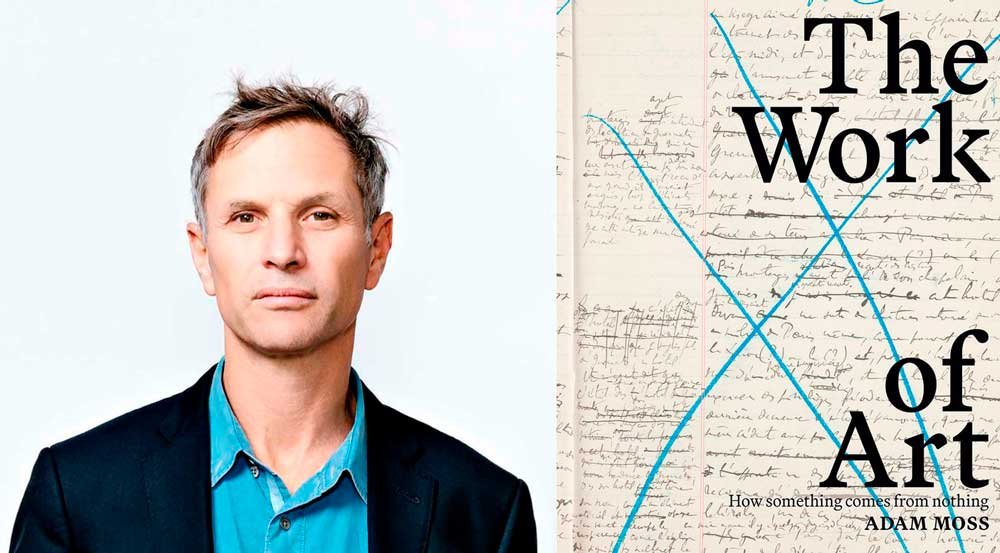
ADAM MOSS
Author · Artist · Fmr. Editor of New York magazine · The New York Times Magazine

 I was very interested in the state of mind of an artist as he or she goes about making. I think one of the things that artists have is not just an interest in their own subconscious, but also an ability to find ways, tricks, and hacks to access their subconscious. Over time, they understand how to make productive use of what they find there. We all have subconsciousness; we all dream and daydream. We all have disassociated thoughts that float through our head, but we don't generally know what to do with them. One of the traits that successful artists seem to have is this ability to cross borders into recesses of their own minds.

Art, Performance & the Illusion of Agency

Art, Performance & the Illusion of Agency

with KATIE KITAMURA · Author of Audition
Intimacies · A Separation

I'm really interested in the formal aspect of characters who are channeling language, who are speaking the words of other people, and in characters who are aware of how little agency they actually have, who have passivity forced upon them, who perhaps even embrace their passivity to a certain extent but eventually seek out where they can enact their agency.

AI · Virtual Reality & Dawn of the New Everything

AI · Virtual Reality & Dawn of the New Everything

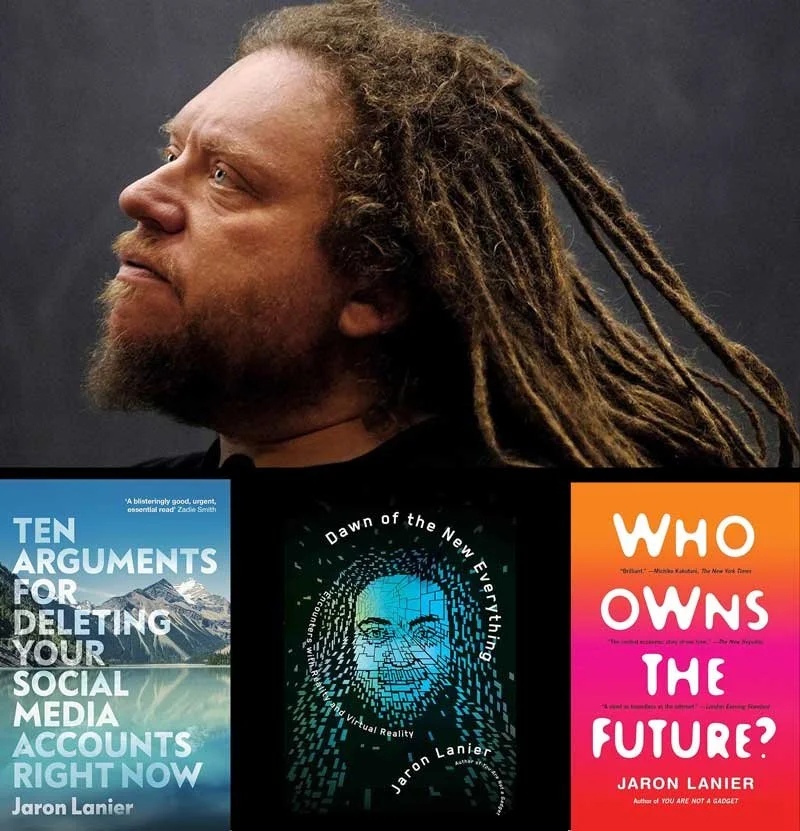
VR Pioneer · Musician · Author JARON LANIER
Who Owns the Future? · Dawn of the New Everything: Encounters with Reality & Virtual Reality · Ten Arguments for Deleting Your Social Media Accounts Right Now

AI is obviously the dominant topic in tech lately, and I think occasionally there's AI that's nonsense, and occasionally there's AI that's great. I love finding new proteins for medicine and so on. I don't think we serve ourselves well when we put our own technology up as if it were a new God that we created. I think we're really getting a little too full of ourselves to think that.

When we do that, I think we confuse ourselves too easily. This goes back to Alan Turing, the main founder of computer science, who had this idea of the Turing test. In the test, you can't tell whether the computer has gotten more human-like or the human has gotten more computer-like. People are very prone to becoming more computer-like. When we're on social media, we let ourselves be guided by the algorithms, so we start to become dumb in the way the algorithms want us to. You see that all the time. It's really degraded our psychologies and our society.

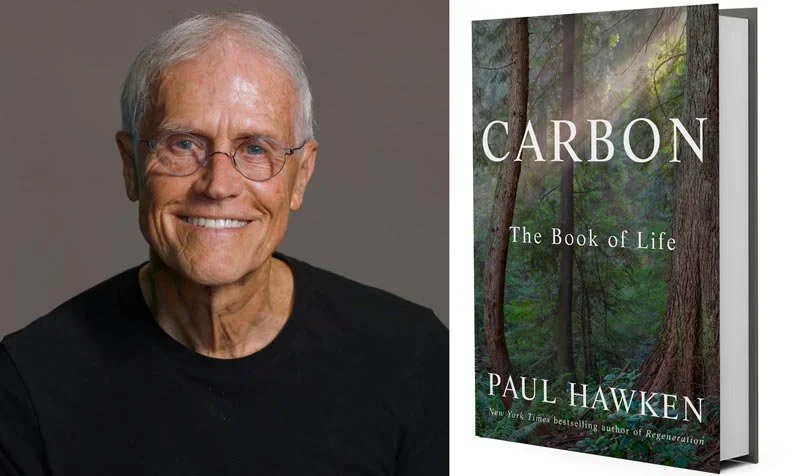
CARBON: The Book of Life

CARBON: The Book of Life

with PAUL HAWKEN
Environmentalist · Entrepreneur
Founder of Project Regeneration & Project Drawdown

We have 1.2 trillion carbon molecules in every cell. We have around 30 trillion cells, and that’s us. So carbon is really a flow that animates everything we love, enjoy, eat, and all plant life, all sea life—everything that's alive on this planet—is animated by the flow of carbon. We want to see the situation we're in as that, as a flow. Where are the flows coming from, and why are we interfering with them? Why are we crushing them? Why are we killing them? For sure. But also, we need to see the wonder, the awe, the astonishment of life itself and to have that sensibility as the overriding narrative of how we act in the world, how we live, and how we talk to each other. Unless we change the conversation about climate into something that's a conversation about more life—better conditions for people in terms of social justice, restoring so much of what we've lost—then we won’t get anywhere.

The French Spider-Man

The French Spider-Man

Famous Rock & Urban Climber ALAIN ROBERT
Known for Free Solo Climbing 200+ of the World’s Tallest Skyscrapers using no Climbing Equipment

You are fighting to stay alive. You are fully in the present moment; you don't have time to think about being afraid. You are focused on what you are doing. You struggle to pass another window, then another, and you don't have time to think about your problems. The only thing you are concerned about deep down in the back of your mind is that you need to stay alive, and for that, you need to remain calm and focused.

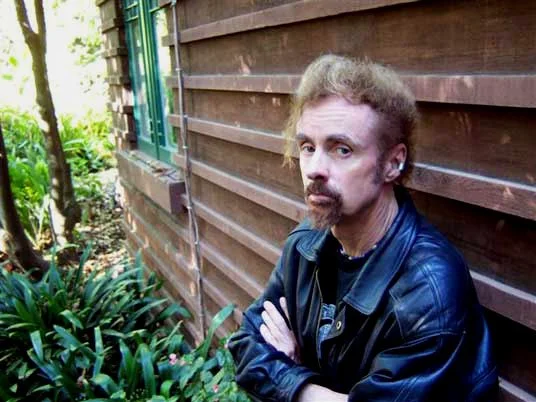
A Life in Writing with T.C. BOYLE

A Life in Writing with T.C. BOYLE

Novelist · Short Story Writer

What I have done in my career is just try to assess who we are, what we are, why we are here, and how come we, as animals, are able to walk around and wear pants and dresses and talk on the internet, while the other animals are not. It's been my obsession since I was young. I think if I hadn't become a novelist, I might have been happy to be a naturalist or a field biologist.

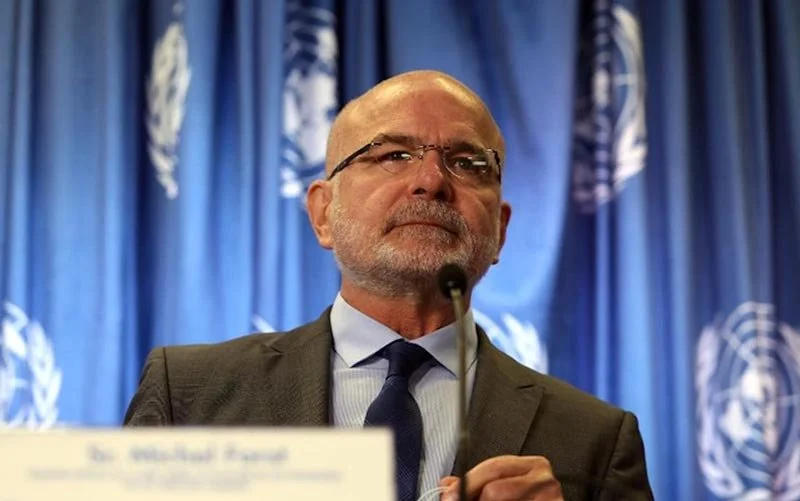
Why is it a Crime to Protest the Destruction of Our Planet?

Why is it a Crime to Protest the Destruction of Our Planet?

UN Special Rapporteur on Environmental Defenders MICHEL FORST on Protecting Environmental Activists

My mandate focuses on the protection of those trying to protect the planet. Protection of defenders is my main topic. When I'm speaking to states or companies, it's always related to cases of defenders facing threats, attacks, or penalization by companies or governments, like the recent case of Paul Watson (founder of Sea Shepherd) in Denmark… When I travel to places like Peru, Colombia, or Honduras and meet Indigenous people, I realize they have a relationship with nature that we don't have anymore. They express that the food they eat, the water they drink, and the air they breathe goes beyond just air and food; it represents what they call Pachamama or Mother Earth. This is a cosmovision shared across various communities, not only in Latin America but globally.

JULIAN LENNON

JULIAN LENNON

Singer-songwriter · Documentary Filmmaker · Founder of The White Feather Foundation
Photographer/Author of Life’s Fragile Moments

I think a lot of joy comes from helping others. One of the things that I've been really focusing on is finding that balance in life, what’s real and what’s true and what makes you happy. How can you help other people feel the same and have a happier life? I think whatever that takes. So if that's charity, if that's photography, if that's documentary, if that's music, and I can do it, then I'm going to do it.

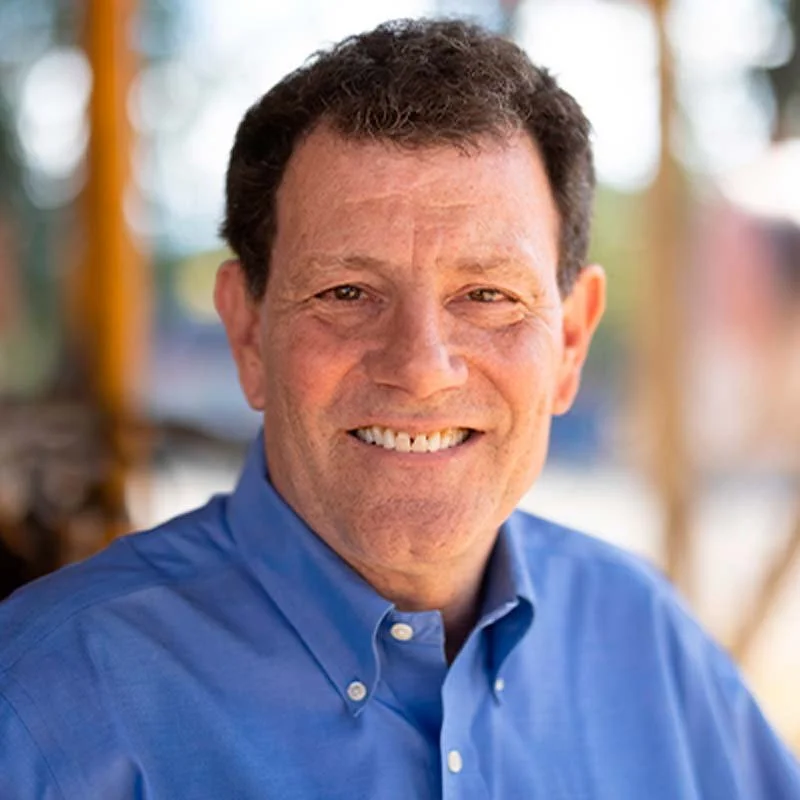
NICHOLAS KRISTOF

NICHOLAS KRISTOF

Pulitzer Prize-winning Journalist · NYTimes Op-Ed Columnist
Author of Chasing Hope, A Reporter's Life · Coauthor of Half the Sky · Tightrope · A Path Appears

I'm trying to get people to care about a crisis in ways that may bring solutions to it. And that's also how I deal with the terror and the fear to find a sense of purpose in what I do. It's incredibly heartbreaking to see some of the things and hear some of the stories, but at the end of the day, it feels like–inconsistently here and there–you can shine a light on problems, and by shining that light, you actually make a difference.

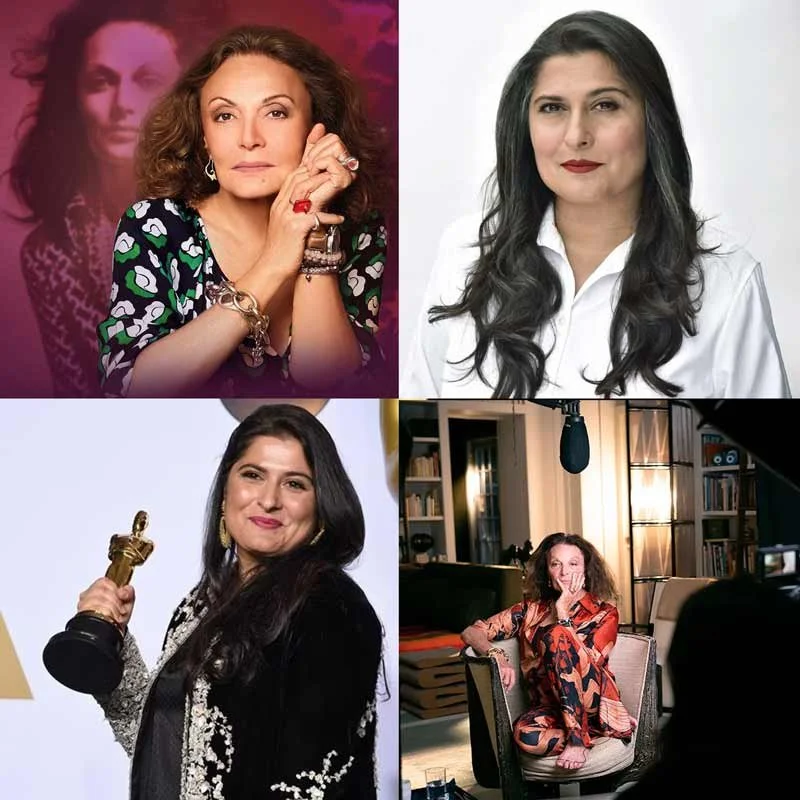
SHARMEEN OBAID-CHINOY

SHARMEEN OBAID-CHINOY

Oscar & Emmy-winning Director
Diane von Furstenberg: Woman in Charge · A Girl in the River
Forthcoming Star Wars film starring Daisy Ridley

As a filmmaker, I've always made films about extraordinary women whose lives are faced with extenuating circumstances who've had adversity thrown at them and who've risen to the occasion. And when I began to look at Diane's story, for me, Diane is a fashion designer, but she's so much more. Her central ethos is woman before fashion, and we felt it was very important to take that ethos and weave it into the spine of our film, and make it about the woman.

DAVID BYRNE'S THEATER OF THE MIND

DAVID BYRNE'S THEATER OF THE MIND

Stories of Impact · People’s TV

Q: Who is David Byrne?
David Byrne: …I have no idea.

Most people know me through music, but when I was in high school I saw science and the arts as being equally creative fields. More recently, I just started taking an interest in how the brain works, and there's been this explosion of literature. As much as I love reading about neuroscience, I realize that experiencing some of the phenomena is just on a different level. I wanted to create an experience that shows us we're not who we think we are. Theater of the Mind is an immersive Science Theater project. With this show, I've tried to marry a narrative to the experience of different scientific phenomena that reveal how malleable our perception memory and identity really are.

MAX RICHTER

MAX RICHTER

Award-winning Composer & Pianist
His album Sleep is the most streamed classical album of all time
Film & TV scores for Ad Astra · Black Mirror · Shutter Island · The Leftovers · Arrival · Taboo

For me, the creative process is a sort of a continuous thing in the sense that I'm writing kind of all the time, at some level. And that doesn't mean I'm sitting at my desk all the time, but it does mean that I've got a continuous thought process, a continuous engagement with the material I'm trying to shape. And it's many different kinds of processes. First of all, obviously an intention. You need to have an intention. What is it I'm trying to do? But then you get a process of making things, and then you get into a process of dialogue with the things you've made where they start to take on properties and it feels like the material has intentions of its own. So then you are trying to - it's like herding cats, you know? - sort of corralling this material into some kind of structure, some kind of formed object. Then it becomes like a sculptural process on the large scale.