Spirituality & Selfhood: TARA ISABELLA BURTON - Author of Here in Avalon, Strange Rites: New Religions for a Godless World

Spirituality & Selfhood: TARA ISABELLA BURTON - Author of Here in Avalon, Strange Rites: New Religions for a Godless World

Author of Here in Avalon · Social Creature
Strange Rites: New Religions for a Godless World 
Self-Made: Curating Our Image from Da Vinci to the Kardashians
So this idea that we can present ourselves as works of art, that we can create ourselves has always had a particular sort of aristocratic coding, historically associated with monarchs, who create their public image and their public persona, including through fashion. Today, if we don't self-promote, self-create, and self-brand, will we find the right partner? Get into the right college? Even secure the best job?
What makes a good life? - Highlights - ROBERT WALDINGER, Psychiatrist, Author, Zen Priest

What makes a good life? - Highlights - ROBERT WALDINGER, Psychiatrist, Author, Zen Priest

Co-Author of The Good Life: Lessons from the World's Longest Scientific Study of Happiness
Director of the Harvard Study of Adult Development
Psychiatrist · Psychoanalyst · Zen Priest

It's a study of adult lifespan development and when it was started in 1938, it was actually radical to study normal development for two reasons. One is that most of what had been studied was about what goes wrong in development, which we still do because we want to try to help people who are having developmental problems.

So that makes a lot of sense, but to study what goes right in development, that was unheard of. The other thing is that for a long time, we certainly thought about children as developing because you can watch children change every day. That change happens so fast, but many people thought that once you got to be in your 20s, you were kind of done with development. You found a partner, you found a line of work, you were set with regard to your personality, and that was it, then you just lived your life.

And of course, now we understand that there's so much that changes and develops through the course of adult life, but my predecessors (I'm the fourth director) were really, insightful in their understanding of how much there was to learn about all the changes that happen across the adult lifespan.

ROBERT WALDINGER - Co-Author of The Good Life: Lessons from the World's Longest Scientific Study of Happiness

ROBERT WALDINGER - Co-Author of The Good Life: Lessons from the World's Longest Scientific Study of Happiness

Co-Author of The Good Life: Lessons from the World's Longest Scientific Study of Happiness
Director of the Harvard Study of Adult Development
Psychiatrist · Psychoanalyst · Zen Priest

It's a study of adult lifespan development and when it was started in 1938, it was actually radical to study normal development for two reasons. One is that most of what had been studied was about what goes wrong in development, which we still do because we want to try to help people who are having developmental problems.

So that makes a lot of sense, but to study what goes right in development, that was unheard of. The other thing is that for a long time, we certainly thought about children as developing because you can watch children change every day. That change happens so fast, but many people thought that once you got to be in your 20s, you were kind of done with development. You found a partner, you found a line of work, you were set with regard to your personality, and that was it, then you just lived your life.

And of course, now we understand that there's so much that changes and develops through the course of adult life, but my predecessors (I'm the fourth director) were really, insightful in their understanding of how much there was to learn about all the changes that happen across the adult lifespan.

MARCIA DeSANCTIS - Author of “A Hard Place to Leave: Stories from a Restless Life"

MARCIA DeSANCTIS - Author of “A Hard Place to Leave: Stories from a Restless Life"

Journalist, Essayist, Author of A Hard Place to Leave: Stories from a Restless Life
100 Places in France Every Woman Should Go

I started looking over the stories that I had done. I would say the majority of the essays were not really about travel. They were more about aging and marriage and memory and all of those things, but I did find in the travel essays those kernels of things that I wanted to explore - bigger kernels of things that were sort of scratching at me from the inside like a piece of sand in my pocket that was irritating me and that I wanted to explore. What I found was that the theme of coming and going, the theme of arrivals and departures, the theme of entrances and exits, and the theme of home and away seemed to repeat itself. I felt that whenever I was somewhere, there was always a tide home. And when I was home, there was always the urge for going. And so I just weeded out and weeded out and really wanted to keep this theme of home and away.

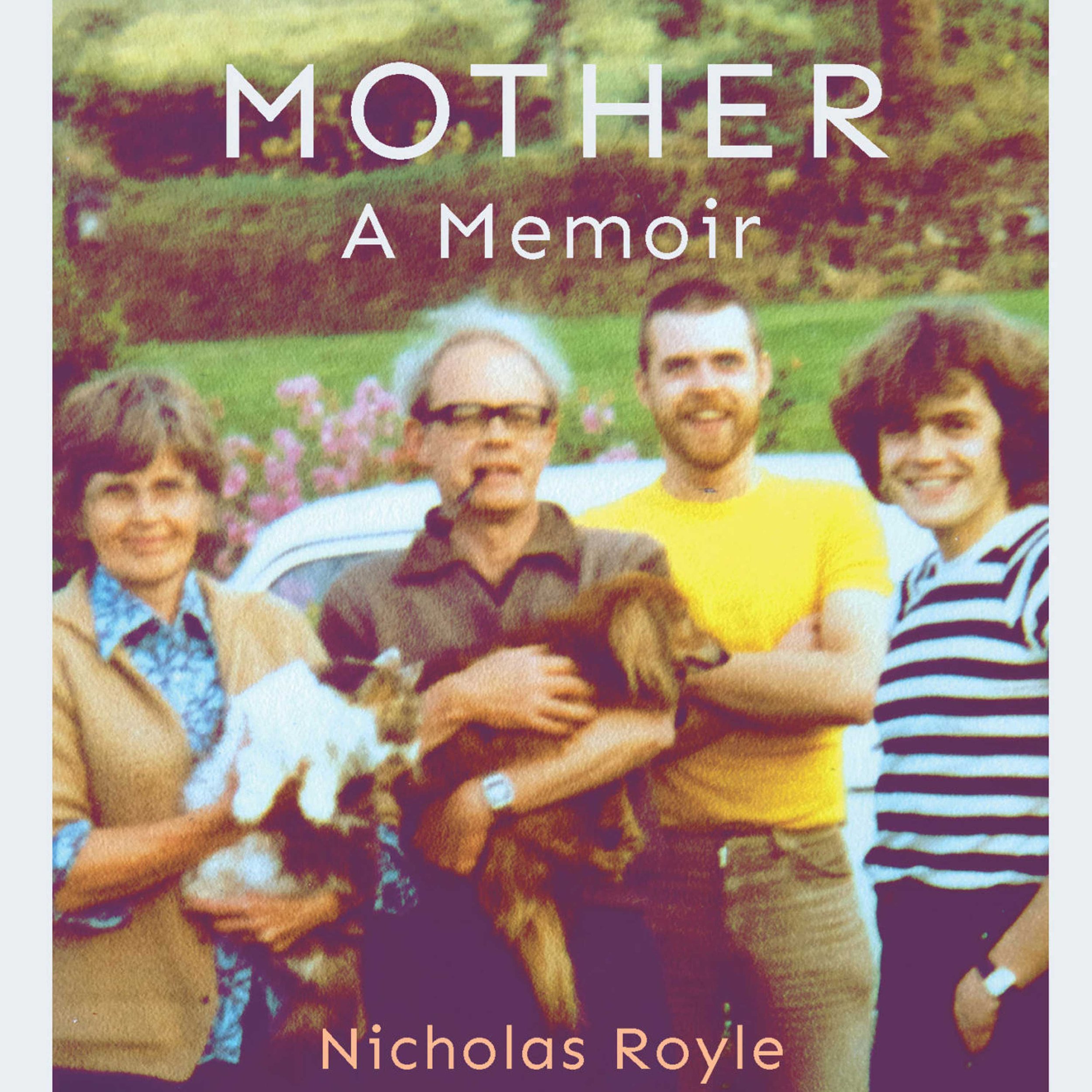
NICHOLAS ROYLE - Author, Editor, Educator reads “Mother: A Memoir”

NICHOLAS ROYLE - Author, Editor, Educator reads “Mother: A Memoir”

Co-author of An Introduction to Literature, Criticism and Theory
Author of Mother: A Memoir · Managing Editor of Oxford Literary Review

My mother died years ago. What has induced me to write about her after all this time remains mysterious to me. It is connected to the climate crisis. As the natural historian David Attenborough says: 'the collapse of our civilizations and the extinction of much of the natural world is on the horizon.' In ways I cannot pretend to fathom I have found that writing about my mother is bound up with writing about Mother Nature and Mother Earth. And no doubt it has to do also with my own aging and the buried life of mourning. The strange timetables of realization and loss. A memoir is 'a written record of a person's knowledge of events or of a person's own experiences'. 'A record of events written by a person having intimate knowledge of them and based on personal observation.' So the dictionaries tell us. But this memoir of my mother makes no attempt at a comprehensive record.

ALICE FULTON - Poet - Recipient of MacArthur “Genius”, NEA & Guggenheim Fellowships

ALICE FULTON - Poet - Recipient of MacArthur “Genius”, NEA & Guggenheim Fellowships

Alice Fulton’s books include Barely Composed, a poetry collection; The Nightingales Of Troy, linked stories; and Cascade Experiment: Selected Poems. Her book Felt received the Bobbitt Prize from the Library of Congress, awarded to the best book of poems published within a two-year period. She has received an American Academy of Arts and Letters Award in Literature and fellowships from the MacArthur Foundation, National Endowment for the Arts, Guggenheim Foundation, and Ingram Merrill Foundation.  Her other books include Sensual Math, Powers Of Congress, Palladium, Dance Script With Electric Ballerina, and an essay collection, Feeling As A Foreign Language. She lives in Ithaca, NY. 

ROBERT PLANT - DICKIE LANDRY - LIL' BAND O' GOLD

ROBERT PLANT - DICKIE LANDRY - LIL' BAND O' GOLD

I still have problems today. Some people call it stage fright. I don't know what it is, but I'm always right before a concert thinking, Why am I doing this? I should be doing this. I should be doing that. Why am I here? What am I going to do? And I walk up to the microphone, I'm still thinking this, and I start playing. And I'm still thinking, What am I doing here? Why, why, why? All the questions of how I'm going to sustain playing for 45 minutes or an hour, and I'm still playing and playing. And then all of a sudden I go, Well, Mr. Landry, you've got people sitting in the audience. You're getting paid for this. So enjoy yourself. So the next thing I know, the concert is over, and I don't know where I've been.

JERICHO BROWN -  Pulitzer Prize-Winning Poet, Author of The Tradition & The New Testament

JERICHO BROWN - Pulitzer Prize-Winning Poet, Author of The Tradition & The New Testament

Pulitzer Prize-winning Poet
Author of The Tradition & The New Testament

I just want to make the poems like a living being…There are moments that I’m not at the desk, but I’m living life. And living life is actually what leads to writing. You have to have experiences to write about. Whether or not you are aware of those experiences as you are writing them down because if you’re doing music first, maybe you’re not aware of what you’re writing. And yet, those experiences are what come to fruition in your writing. You become aware. Oh, I did come on that roller coaster that time that I haven’t thought about in twenty years. Oh I did make love to that cute person that I haven’t thought about in ten years, but you’ve got to make love, you’ve got to get on roller coasters, you’ve got to get your heart broken. You’ve got to dance. You gotta get out and do things and that, too, is a part of writing. You have to trust you’re a writer by identity. And if you can trust that you’re a writer by identity, then you don’t have to be at a desk.

WORLD OCEANS DAY

WORLD OCEANS DAY

Voices of environmentalists and artists.
Enjoy this Special Series with music courtesy of composer, producer and multi-instrumentalist Erland Cooper.

E.J. KOH - Award-Winning Memoirist & Poet - A Lesser Love - The Magical Language of Others

E.J. KOH - Award-Winning Memoirist & Poet - A Lesser Love - The Magical Language of Others

Award-winning Memoirist & Poet
The Magical Language of Others · A Lesser Love

I had delayed speech, and I had quite a bit of trouble with speaking. I think I must have been five before I was uttering some of my first words and trying to articulate. Simple communication was very difficult for me and my family, especially in a family where we were speaking several languages. They hoped to instill English. It’s the language of survival. There was a lot of frustration and fear in my relationship to language, and the relationship these languages had to each other, that was something I felt very sensitive to since I was young. Since before I could speak.

ADA LIMÓN - U.S. Poet Laureate - Host of The Slowdown podcast

ADA LIMÓN - U.S. Poet Laureate - Host of The Slowdown podcast

U.S. Poet Laureate · Host of The Slowdown podcast

This poem was written when I was having a real moment of reckoning, not that I hadn't had it earlier, but where I was doing some deep reading about the climate crisis and really reckoning with myself, with where we were and what was happening, what the truth was. And I felt like it was so easy to slip down into a darkness, into a sort of numbness, and I didn't think that that numbness and darkness could be useful.

Special World Environment Day Stories - Environmentalists, Students & Teachers share their Love for the Planet

Special World Environment Day Stories - Environmentalists, Students & Teachers share their Love for the Planet

Environmentalists, Artists, Students & Teachers share their Love for the Planet

Today we’re streaming voices of environmentalists, artists, students, and teachers with music courtesy of composer Max Richter.