LINCOLN CENTER: Celebrating the Performing Arts & the Human Spirit w/ SHANTA THAKE

LINCOLN CENTER: Celebrating the Performing Arts & the Human Spirit w/ SHANTA THAKE

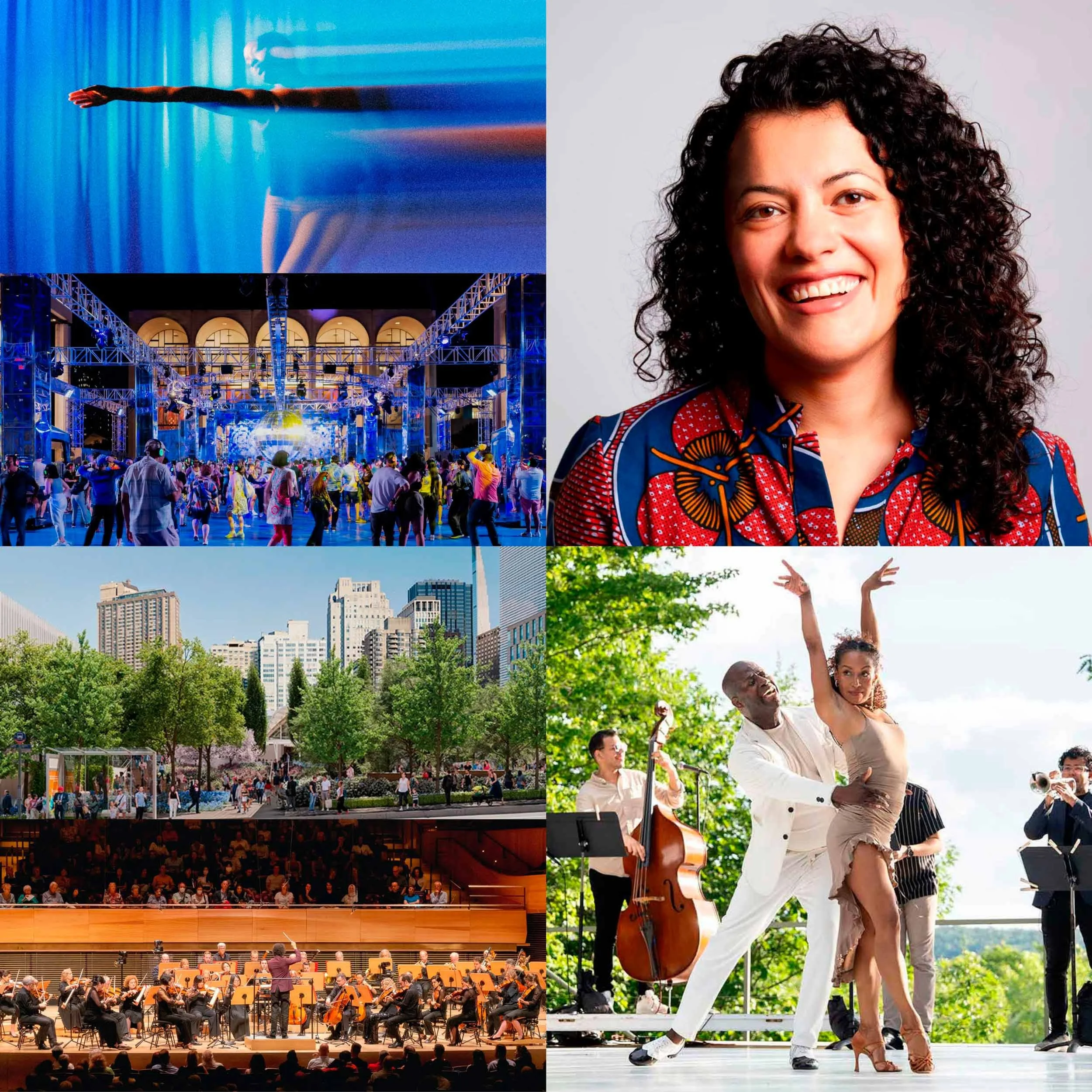
Lincoln Center is multiple stages. I think probably over three dozen stages across 16 acres. It is a vast canvas in and of itself. And then we have this beautiful plaza that leads to this beautiful campus, and that’s the visual I think that most people have when they think of Lincoln Center is this beautiful fountain in the center and these three gorgeous buildings.It’s New York’s biggest plaza, and it feels very vibrant and beautiful. In the summer, we really take that plaza and we transform it into a dance floor. So this idea of also interrupting what people’s notion of Lincoln Center is because it’s a space that is very aspirational, which is a great thing.
LINCOLN CENTER: Contemporary Dance, Global Music and Public Stages w/ Chief Artistic Officer SHANTA THAKE - Highlights

LINCOLN CENTER: Contemporary Dance, Global Music and Public Stages w/ Chief Artistic Officer SHANTA THAKE - Highlights

Lincoln Center is multiple stages. I think probably over three dozen stages across 16 acres. It is a vast canvas in and of itself. And then we have this beautiful plaza that leads to this beautiful campus, and that’s the visual I think that most people have when they think of Lincoln Center is this beautiful fountain in the center and these three gorgeous buildings.It’s New York’s biggest plaza, and it feels very vibrant and beautiful. In the summer, we really take that plaza and we transform it into a dance floor. So this idea of also interrupting what people’s notion of Lincoln Center is because it’s a space that is very aspirational, which is a great thing.
Finding Music in the Natural World: Composers and Poets on The Power of Stories

Finding Music in the Natural World: Composers and Poets on The Power of Stories

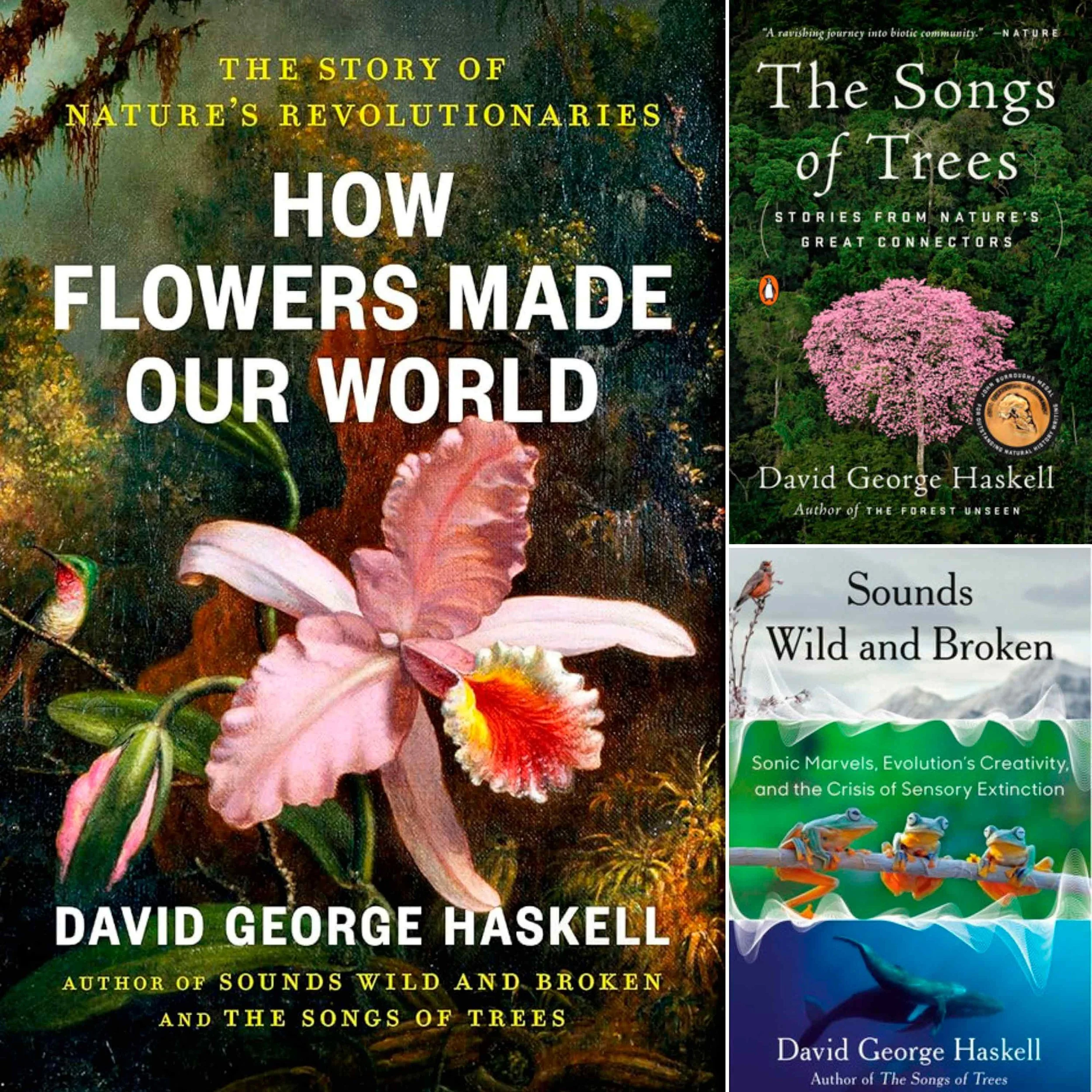
Why do we write? Today we explore the practice of writing as an awakening and a bridge to memory. We hear from poets and novelists, musicians, dancers, and science writers. Hala Alyan, Andre Dubus III, Jericho Brown, Ada Limón, Aimee Nezhukumatathil, Max Stossel, Sy Montgomery, Tiokasin Ghosthorse, Julian Lennon, Julia Christensen, and Erland Cooper discuss how to hold onto hope in a changing world.

Listening to the Living World: Biologist DAVID GEORGE HASKELL on Flowers, Forests & Songs of Nature - Highlights

Listening to the Living World: Biologist DAVID GEORGE HASKELL on Flowers, Forests & Songs of Nature - Highlights

For at least 150 years biological sciences emphasized individuality and aloneness. So individual species, individual genes, individual organisms. And that's a useful view, up to a point. I mean, it is true that I am an individual organism. I've got a skin, and then the air begins and there's a gap between me and the next person over. But that view is also utterly false in many ways, in that the human body is not just comprised of human cells. There are bacteria, fungi, and viruses, all these other creatures that we now know are essential to our health. Our minds are not solitary. They're formed in relation to other beings. Ecosystems work only through relationship. So relationship and interconnection, not separation. And atomism is in fact the fundamental nature of life. Even from the very, very first fossils that we have of living organisms way back more than 3 billion years ago, these little cells are sitting next to one another.

How Flowers Made Our World: DAVID GEORGE HASKELL on Deep Time, Plant Intelligence & Listening to the Living World

How Flowers Made Our World: DAVID GEORGE HASKELL on Deep Time, Plant Intelligence & Listening to the Living World

For at least 150 years biological sciences emphasized individuality and aloneness. So individual species, individual genes, individual organisms. And that's a useful view, up to a point. I mean, it is true that I am an individual organism. I've got a skin, and then the air begins and there's a gap between me and the next person over. But that view is also utterly false in many ways, in that the human body is not just comprised of human cells. There are bacteria, fungi, and viruses, all these other creatures that we now know are essential to our health. Our minds are not solitary. They're formed in relation to other beings. Ecosystems work only through relationship. So relationship and interconnection, not separation. And atomism is in fact the fundamental nature of life. Even from the very, very first fossils that we have of living organisms way back more than 3 billion years ago, these little cells are sitting next to one another.

The Wisdom of Nature: Artists & Scientists on The Beauty & Fragility of Our Planet

The Wisdom of Nature: Artists & Scientists on The Beauty & Fragility of Our Planet

Artists & Scientists on The Beauty & Fragility of Our Planet

The Earth is talking. Are we listening? In this special edition, we hear from our guests from across the arts and sciences. From composers and poets to forest ecologists and climate envoys, they tell the story of our planet. Moving beyond the data of destruction, we explore the intelligence of nature, the ethics of what we eat, and the empathy required to save our future.

The Musician Who Sings to Animals - PLUMES on Trust & Cross-Species Communication - Highlights

The Musician Who Sings to Animals - PLUMES on Trust & Cross-Species Communication - Highlights

Musician & Activist PLUMES

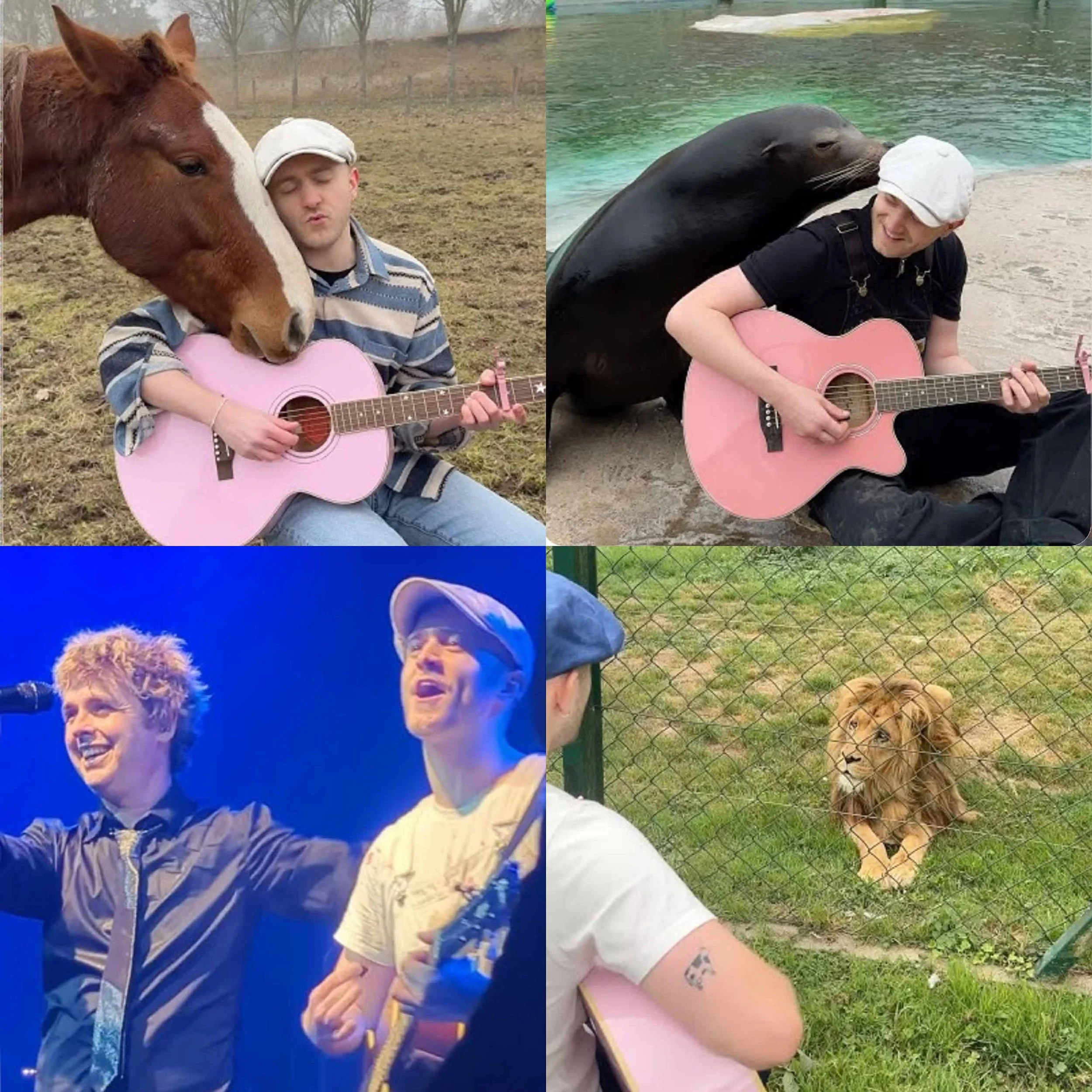
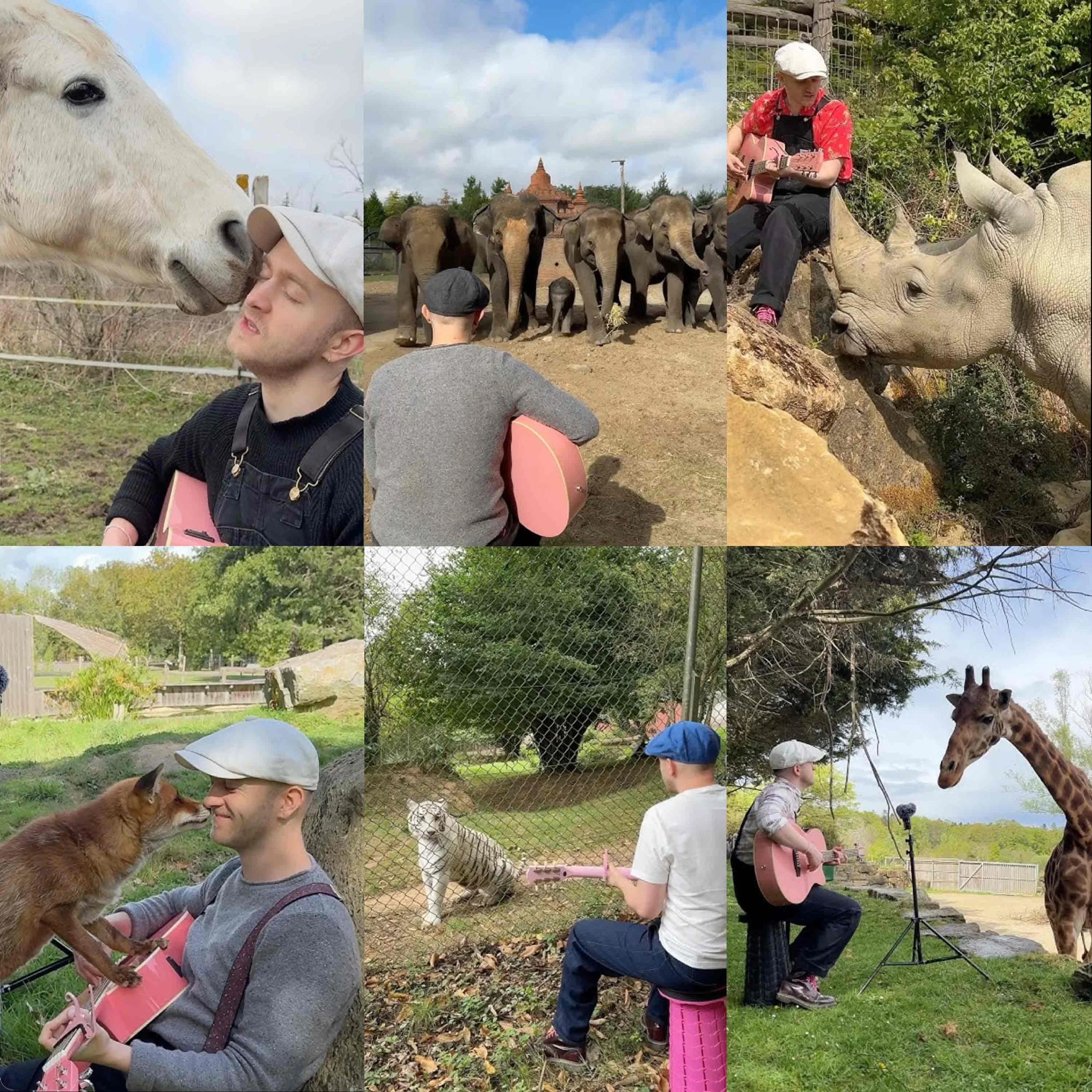
Mostly I’ll play in a minor key, something sad, which I think can work for an animal because they can sense the sadness, and they try to reassure me and comfort me. I chose love songs because I'm convinced they are very intuitive and they can sense what I am trying to say to them, and profess my love in a way. I think there's always a way to connect, and if you're being cautious and don't threaten the animals, something beautiful can happen.

The Musician Who Sings to Animals - PLUMES on Trust & Cross-Species Communication - Highlights

The Musician Who Sings to Animals - PLUMES on Trust & Cross-Species Communication - Highlights

Musician & Activist PLUMES

Mostly I’ll play in a minor key, something sad, which I think can work for an animal because they can sense the sadness, and they try to reassure me and comfort me. I chose love songs because I'm convinced they are very intuitive and they can sense what I am trying to say to them, and profess my love in a way. I think there's always a way to connect, and if you're being cautious and don't threaten the animals, something beautiful can happen.

Animals & The Healing Power of Music

Animals & The Healing Power of Music

Musician & Activist PLUMES

Mostly I’ll play in a minor key, something sad, which I think can work for an animal because they can sense the sadness, and they try to reassure me and comfort me. I chose love songs because I'm convinced they are very intuitive and they can sense what I am trying to say to them, and profess my love in a way. I think there's always a way to connect, and if you're being cautious and don't threaten the animals, something beautiful can happen.

Art, Empathy & Resilience with CADY McCLAIN, Actor, Director, Writer, Artist, Musician - Highlights

Art, Empathy & Resilience with CADY McCLAIN, Actor, Director, Writer, Artist, Musician - Highlights

A Conversation with Emmy Award-winning Actor, Director, Writer CADY McCLAIN

I won my first Emmy when I was 21, which was the result of absolutely devoting myself day and night for two years to doing all the scene work. I attended classes simultaneously and did plays until my mother died. I studied with Michael Howard for eight years. Even when I was so tired I couldn't get up to do a scene, he would say, "Get up and do a poem." It helped me enormously; it saved me. The way I was trained and how I train others is that you know when you’re in the zone. Oh God, it feels so good. It feels like flying. And that's what you want. You want to be so unselfaware that you're on liftoff?

A Life in Acting with Emmy Award-winning Actor, Director, Musician, Writer CADY McCLAIN

A Life in Acting with Emmy Award-winning Actor, Director, Musician, Writer CADY McCLAIN

A Conversation with Emmy Award-winning Actor, Director, Writer CADY McCLAIN

I won my first Emmy when I was 21, which was the result of absolutely devoting myself day and night for two years to doing all the scene work. I attended classes simultaneously and did plays until my mother died. I studied with Michael Howard for eight years. Even when I was so tired I couldn't get up to do a scene, he would say, "Get up and do a poem." It helped me enormously; it saved me. The way I was trained and how I train others is that you know when you’re in the zone. Oh God, it feels so good. It feels like flying. And that's what you want. You want to be so unselfaware that you're on liftoff?

The Theory of Water with LEANNE BETASAMOSAKE SIMPSON

The Theory of Water with LEANNE BETASAMOSAKE SIMPSON

World-Making, Life-Giving & Indigenous Internationalism with LEANNE BETASAMOSAKE SIMPSON

So I think that part of colonialism for Indigenous peoples has been this idea that Indigenous peoples aren't thinking peoples and that we don't have thought on a kind of systemic level. One of the things that I was interested in doing is intervening in that because I think Indigenous people have a lot of beautiful, very intellectual, theoretical contributions to make to the world. A lot of our theory is encoded in story, but a lot of our theory is also encoded in land-based practice. You can't learn about it from reading books or from going to lectures. You have to really be out on the land with elders for long periods of time. 

An Actor Prepares - SHARON LAWRENCE on Musical Theatre, Dance & Performing with the Whole Body to Create Complex Characters

An Actor Prepares - SHARON LAWRENCE on Musical Theatre, Dance & Performing with the Whole Body to Create Complex Characters

A Conversation with SHARON LAWRENCE

That transformation was key to my next step as an artist, to knowing that's what acting is. It isn't just posing; it isn't just being a version of yourself in a way that was free. Performing wasn't just performing; it was transforming. I think that artists find that in many different ways, and as actors, there are many ways into that.

SHARON LAWRENCE on Acting, Activism & The Art of Transformation

SHARON LAWRENCE on Acting, Activism & The Art of Transformation

A Conversation with SHARON LAWRENCE

That transformation was key to my next step as an artist, to knowing that's what acting is. It isn't just posing; it isn't just being a version of yourself in a way that was free. Performing wasn't just performing; it was transforming. I think that artists find that in many different ways, and as actors, there are many ways into that.

Childhood, Creativity & the Stories that Define Who We Are with MEGAN ABBOTT - Highlights

Childhood, Creativity & the Stories that Define Who We Are with MEGAN ABBOTT - Highlights

A Conversation with MEGAN ABBOTT
Author of Beware the Woman · You Will Know Me · Give Me Your Hand · The Turnout · Co-creator of Netflix’s Dare Me

I always say to young writers, you need to put your heart on the page. Don't worry about being like anyone else. I would say that foremost, in any of the arts, it is self-expression at its core… I think that it all goes back to childhood. I’ve always really been writing about family. I suppose we always are. I do think that it is the original wound, and it's where we are kind of wired and built from those early years. So I think every other relationship just replicates that. It's very natural for me to go there, I suppose because the feelings are most intense there. We just keep recycling these relationships and dynamics over and over again—until maybe someday we can catch ourselves and try to break the bad patterns. It feels the most visceral and real to me, always. You're always looking for that in writing. You want everything to be at this peak intensity, or at least I do. That seems the most natural place to start.

Exploring  Family Dynamics & Fierce Female Friendships with Novelist MEGAN ABBOTT

Exploring  Family Dynamics & Fierce Female Friendships with Novelist MEGAN ABBOTT

Author of Beware the Woman · You Will Know Me · Give Me Your Hand · The Turnout · Co-creator of Netflix’s Dare Me

I always say to young writers, you need to put your heart on the page. Don't worry about being like anyone else. I would say that foremost, in any of the arts, it is self-expression at its core… I think that it all goes back to childhood. I’ve always really been writing about family. I suppose we always are. I do think that it is the original wound, and it's where we are kind of wired and built from those early years. So I think every other relationship just replicates that. It's very natural for me to go there, I suppose because the feelings are most intense there. We just keep recycling these relationships and dynamics over and over again—until maybe someday we can catch ourselves and try to break the bad patterns. It feels the most visceral and real to me, always. You're always looking for that in writing. You want everything to be at this peak intensity, or at least I do. That seems the most natural place to start.

"We're connected to the lives of every creature on the planet" EIREN CAFFALL - Highlights

"We're connected to the lives of every creature on the planet" EIREN CAFFALL - Highlights

We are in a complex and delicately balanced relationship of connection to everything else on the planet. We begin to recognize, write into, and speak into the complex interdependence and interconnection of every gesture that we make on the planet. Most storytelling that I really respond to, whether it's from my own culture or from previous civilizations, acknowledges that we are in this complex relationship where every gesture we make is connected to the lives of every other creature on the planet. The more narratives we allow to be complex in that way and interconnected, the more we begin to change our brain chemistry around how we protect ourselves and everything that is in relation to us. The more that you have that evolving relationship with it, that's dynamic and alive to the moment you're in, and that's not afraid of the feelings of fear, hopelessness, grief, or pain that attend paying close attention to the world as it is evolving around you, the better we are able to be flexible in the relationship we need to form with fixing what we can and holding onto what we have.

All the Water in the World with Writer & Musician EIREN CAFFALL

All the Water in the World with Writer & Musician EIREN CAFFALL

A Conversation with Writer & Musician EIREN CAFFALL

We are in a complex and delicately balanced relationship of connection to everything else on the planet. We begin to recognize, write into, and speak into the complex interdependence and interconnection of every gesture that we make on the planet. Most storytelling that I really respond to, whether it's from my own culture or from previous civilizations, acknowledges that we are in this complex relationship where every gesture we make is connected to the lives of every other creature on the planet. The more narratives we allow to be complex in that way and interconnected, the more we begin to change our brain chemistry around how we protect ourselves and everything that is in relation to us. The more that you have that evolving relationship with it, that's dynamic and alive to the moment you're in, and that's not afraid of the feelings of fear, hopelessness, grief, or pain that attend paying close attention to the world as it is evolving around you, the better we are able to be flexible in the relationship we need to form with fixing what we can and holding onto what we have.