EDMAR CASTANEDA

EDMAR CASTANEDA

Jazz Harpist

The harp or the instrument that I play is a traditional instrument from Columbia (I’m from Bogota, Columbia). We have traditional music there called Janetta music. It’s the music from the plains of Colombia and Venezuala. It’s like the cowboy music… I met the harp when I was seven years old. That’s the first time I saw this instrument. I was like–Wow! I knew I was born to play the harp that day!

ROBERT DICK

ROBERT DICK

Award-winning Flutist, Composer, Teacher & Author

I decided that I wanted to explore the flute. I mean really explore the flute. People had known a few multi-phonics where you could play two notes. But they had been basically “special effects”, sort of sprinkled into a traditional line to spice it up. And I thought, why not just go the whole way? So my concept that first of all music is made by people. All art is made by people. Music is not made by instruments. The sound of the flute is silence. The sound of the piano is silence. The mark of a brush is a white canvas until the person makes the mark. So music comes from people. We use instruments.

MICHAEL DAUGHTERTY

MICHAEL DAUGHTERTY

Multiple GRAMMY Award-winning composer
One of the ten most performed composers in America

“Architecture is frozen music,” as Goethe said…There is something about when you’re exploring not knowing exactly where it’s going to go or how it’s going to turn out which creates an element of surprise and an element of intrigue.

ANTHONY JOSEPH

ANTHONY JOSEPH

Award-winning Poet, Novelist & Musician, Lead vocalist of The Spasm Band
Author of Sonnets for Albert

The life of Caribbean people is not really documented. So this idea of Caribbean life being fragmented is something that I've had in my mind for a long time. So when I came to write this collection for my father, I realized that it was the same process and what I had were fragments, especially with him, because he wasn't around in a physical sense all the time. So all I had were little photographs, scattered memories, and remembrances. They're little parts of his life and parts of my experience with him... I never disliked my father. I always loved him and always was fascinated and captivated by him.

BRIGHT SHENG

BRIGHT SHENG

MacArthur & ASCAP Award-Winning Composer, Conductor & Pianist
Founder & Artistic Director of Intimacy of Creativity at The Hong Kong University of Science and Technology

I try to preserve the Chinese music flavor. So, you imagine in Chinese band, the country music that people usually reserve for weddings or for big moments or for funerals. That kind of a feeling. Drums and music playing. I try to preserve it from my memory because what we have now is just a tune. You can probably recognize the tune, but the execution of translating that for a Western orchestra and make it sound like it’s a Chinese band playing Chinese instruments.

AI · Virtual Reality & Dawn of the New Everything

AI · Virtual Reality & Dawn of the New Everything

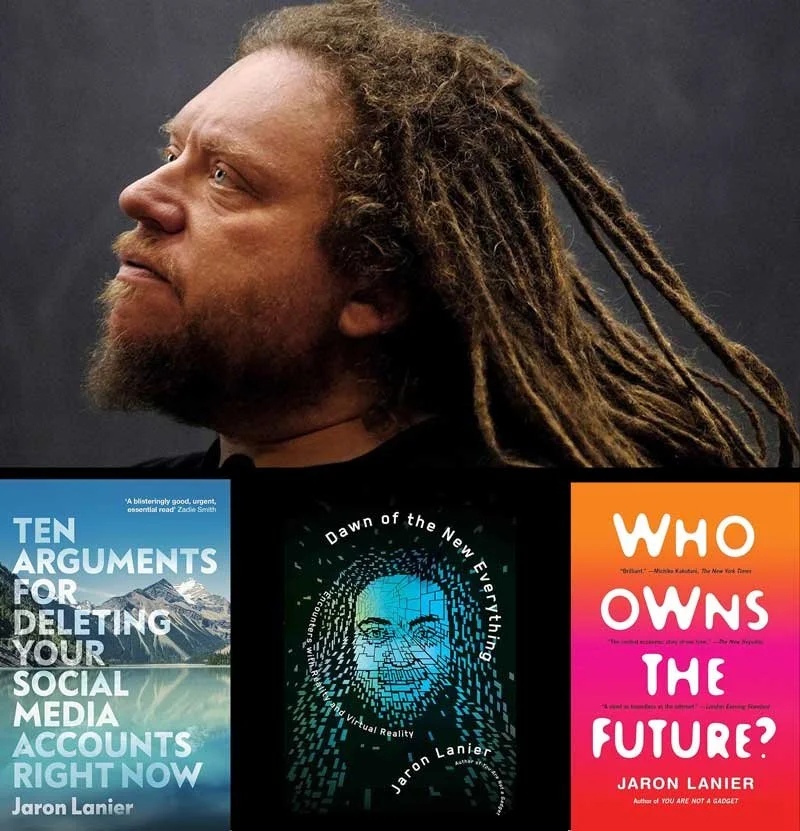
VR Pioneer · Musician · Author JARON LANIER
Who Owns the Future? · Dawn of the New Everything: Encounters with Reality & Virtual Reality · Ten Arguments for Deleting Your Social Media Accounts Right Now

AI is obviously the dominant topic in tech lately, and I think occasionally there's AI that's nonsense, and occasionally there's AI that's great. I love finding new proteins for medicine and so on. I don't think we serve ourselves well when we put our own technology up as if it were a new God that we created. I think we're really getting a little too full of ourselves to think that.

When we do that, I think we confuse ourselves too easily. This goes back to Alan Turing, the main founder of computer science, who had this idea of the Turing test. In the test, you can't tell whether the computer has gotten more human-like or the human has gotten more computer-like. People are very prone to becoming more computer-like. When we're on social media, we let ourselves be guided by the algorithms, so we start to become dumb in the way the algorithms want us to. You see that all the time. It's really degraded our psychologies and our society.

FABRIZIO MANCINELLI

FABRIZIO MANCINELLI

Composer · Songwriter · Conductor
The Land of Dreams ·The Snow Queen 3 · The Boat · Food 2050 · Green Book

I'm always trying to find my place here because, yes, I'm American. I'm an immigrant. I don't want to talk about the difficulties I face in my coming here, but it was not easy. So when I was writing the song called “Give Up”, and it's like a song that I'm singing to myself. Those are things, like there is a lot of personal experience. I was a luxury immigrant on a Fulbright grant on a J-1 Sponsor Visa, you know, with a solid family I could go back to in Italy in case anything went wrong. But at the same time, it was not easy. I want to do my job with a smile on my face, and it brought me to write the lyrics like: 'It's my turn. My time is now.' It's like something that I'm trying, we all try to get our turn to be our moment, to shine our moment. We're all waiting. We don't know if it will happen, but we need to try at least. We need to grab our life with our hands and make it work one way or another. So that's what I mean in my song “Orlando Dreams.”

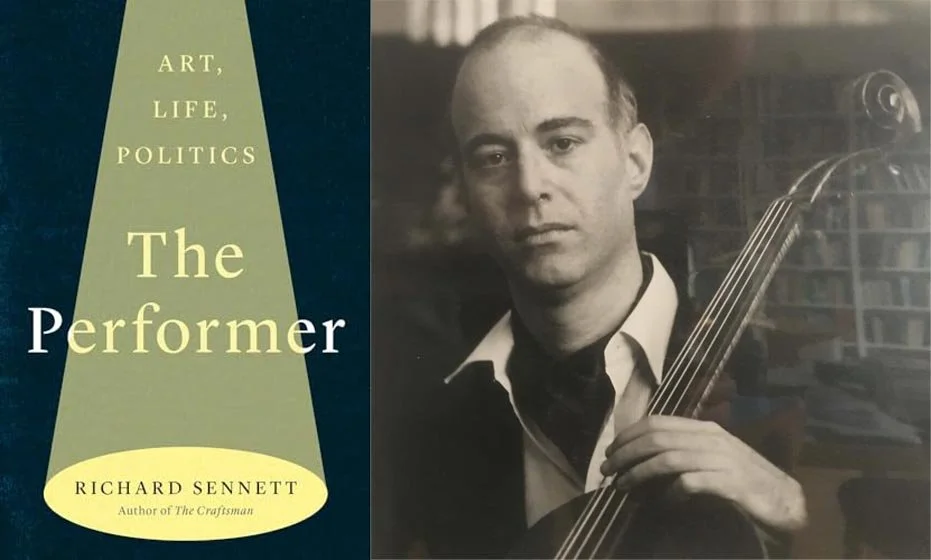
The Performer: Art · Life · Politics

The Performer: Art · Life · Politics

RICHARD SENNETT Centennial Professor of Sociology · London School of Economics · Fmr. Humanities Professor · NYU
Author of The Performer · The Fall of Public Man · The Culture of the New Capitalism · The Craftsman

We look at creative work as though the very creative process itself is something good. These are tools of expression, and like any tool, you can use them to damage something or to make something. They can be turned to very malign purposes, for instance, in the operas of Wagner. So I wanted to do this set of books, I want to show what is kind of the basic DNA that people use for good or for ill. What are the tools they use, if you like, of expression that they use in the creative process?

BERNARDO MOREIRA

BERNARDO MOREIRA

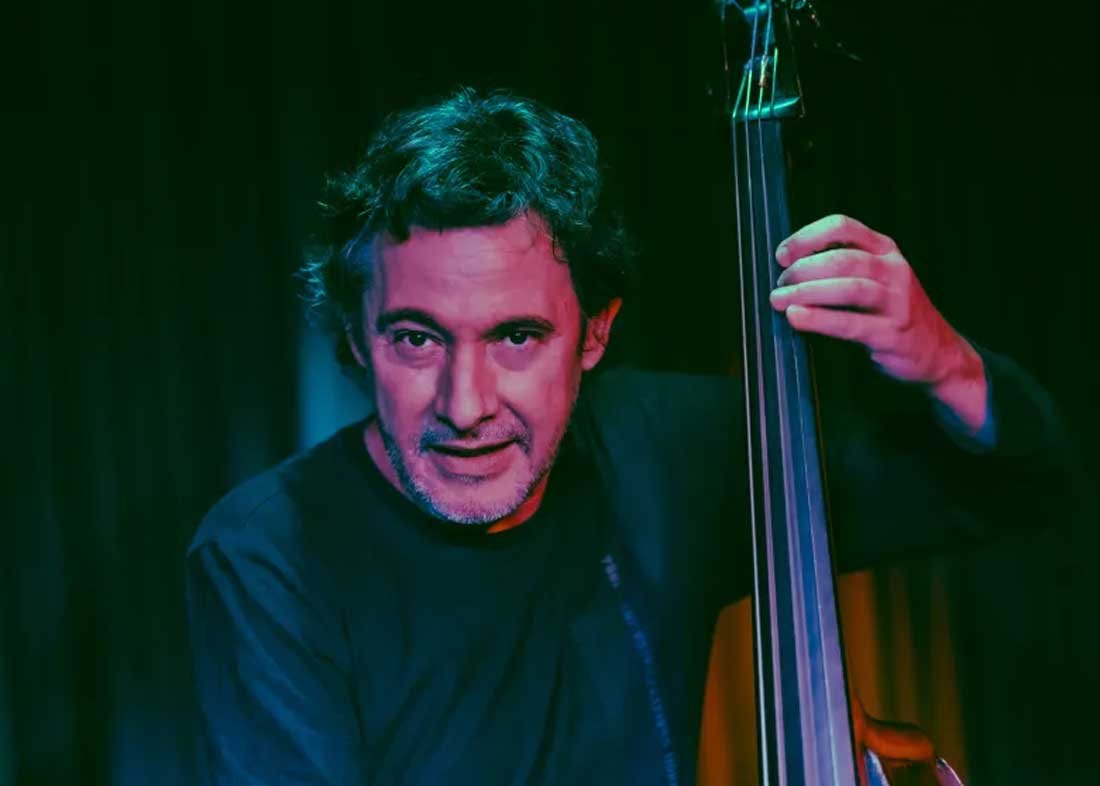
Jazz Musician

I play the double bass as a professional musician. I don't consider myself a piano player, but I play a little bit of piano, of course. Every musician should play a little bit of piano to understand harmony. And if you want to compose or to arrange music, you need to know basic piano. So I play a little bit of piano. Actually, I started to play guitar before the double bass, because it was not so easy to get a double bass 40 years ago. My father was a bass player, but he never had a bass at home. So I started to play guitar first, and I was really into Bossa Nova and those chords from João Gilberto, and it was a big influence in my early years. But then I found a double bass when I was sixteen or seventeen– it was a terrible double bass, but it was enough to start with. Today, that sounds kind of late to start learning an instrument, but back then it wasn’t so terrible. Now you have small double basses that kids of nine, ten years old can start playing. In the eighties, if you were small, you could not play double bass, basically.

SONNET L'ABBÉ

SONNET L'ABBÉ

Award-winning Poet · Songwriter · Author of Sonnet’s Shakespeare
Editor of Best Canadian Poetry in English

Sonnet’s Shakespeare itself came out of thinking about the form of erasure, what working in that form could do and mean… And I was looking at critical writing about it, and I couldn't find anything that talked about the role of the poet who is doing that as censorial or as somehow violencing the original text. I was thinking about my resonance with the word erasure and thinking about censoring and deleting what somebody else has already said resonates with me as an analogy for being black, being mixed race, being racialized, and non-European in spaces that are predominantly Anglo-Canadian. One tries very hard. At least I did as a child, as a teenager, to just try to fit in and make my visible difference as minimal, as invisible as possible. So it's a way of thinking about erasing the self. And so I took that theme and thought, How do I show through a poetic erasure this dynamic of self-erasure and feeling erased?