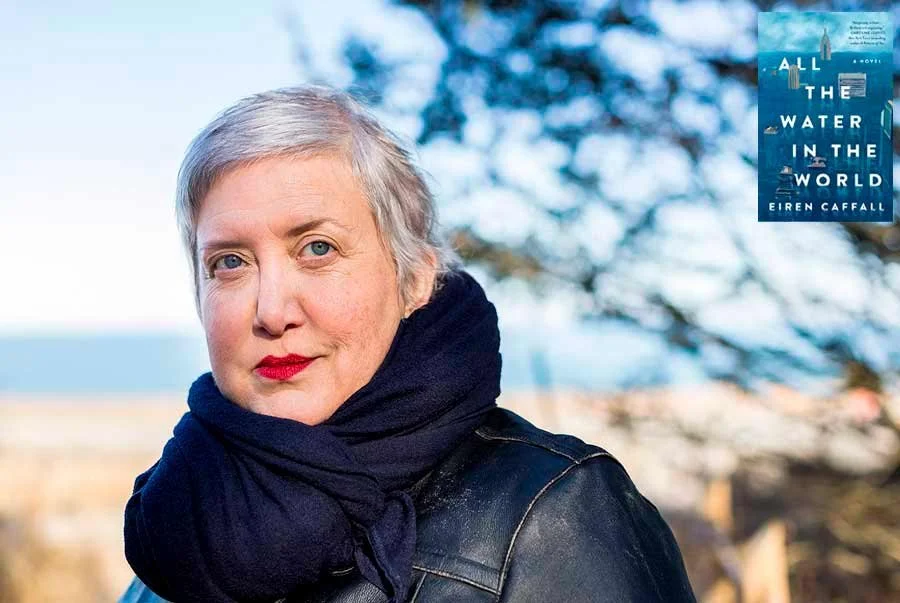
All the Water in the World

All the Water in the World

A Conversation with Writer & Musician EIREN CAFFALL

We are in a complex and delicately balanced relationship of connection to everything else on the planet. We begin to recognize, write into, and speak into the complex interdependence and interconnection of every gesture that we make on the planet. Most storytelling that I really respond to, whether it's from my own culture or from previous civilizations, acknowledges that we are in this complex relationship where every gesture we make is connected to the lives of every other creature on the planet. The more narratives we allow to be complex in that way and interconnected, the more we begin to change our brain chemistry around how we protect ourselves and everything that is in relation to us. The more that you have that evolving relationship with it, that's dynamic and alive to the moment you're in, and that's not afraid of the feelings of fear, hopelessness, grief, or pain that attend paying close attention to the world as it is evolving around you, the better we are able to be flexible in the relationship we need to form with fixing what we can and holding onto what we have.

MATTIA MAURÉE

MATTIA MAURÉE

Interdisciplinary Composer ·  AuDHD Coach
Host of the AuDHD Flourishing Podcast

So for me, just removing a lot of the shame and then a lot of the energy that I was wasting trying to fit myself into a neurotypical process or framework or way of thinking or being. So, you know, some people call that unmasking, just kind of removing. I was wasting a lot of energy, basically trying to be someone else and function in a different way. And then just beating myself up internally for not being able to do that. And throughout my healing journey, as I really realized, Oh, that's actually what's happening. Like there's not actually anything wrong with me being able to...That's why it's called Love Your Brain. It's not just, you know, tolerate your brain. Or, fine, you can work with this brain that you have. It's like, no, I genuinely love the weird experiences that my brain can give me and the incredibly rich, deep experience I have of the world. Like I experience nature so deeply and so intensely. I have really strong connections with animals. I have really great intuition, which I think is just from picking up all this sensory data and putting it together. All these experiences that I get to have, but I don't get to have those experiences if I'm just trying to make myself be something else, which I think is most people who are late diagnosed, I feel like that's their experience. It's just like I've been trying to be someone else for so long. It's exhausting. And then you don't have the energy then to be creative, the carving out the time, making the time to actually create.

ELLIOT LEE

ELLIOT LEE

Alt Pop Singer/Songwriter · LGBTQIA+ Openly Non-binary Musician
Autism Awareness Advocate

I struggle a lot with the feeling of being alone and not having a community. And I did even more as a teenager. That's kind of what my music is about, finding those people who get it so you don't feel like you're alone anymore. And that's why I talk about things that maybe I wouldn't talk about outside of music, because in music it's a safer and easier way to find people who really get it.

The Architecture of Oppression

The Architecture of Oppression

Jake Ferguson · Anthony Joseph · Jermain Jackman

I think as humans, we forget. We are often limited by our own stereotypes, and we don't see that in everyone there's the potential for beauty and love and all these things. And I think The Architecture of Oppression, both parts one and two, are really a reflection of all the community and civil rights work that I've been doing for the same amount of time, really - 25 years. And I wanted to try and mix my day job and my music side, so bringing those two sides of my life together. I wanted to create a platform for black artists, black singers, and poets who I really admire. And it was a no-brainer to give Anthony a call for this second album because I know of his pedigree, and he's much more able to put ideas and thoughts on paper than I would be able to.

FURY YOUNG & BL SHIRELLE

FURY YOUNG & BL SHIRELLE

Co-Executive Directors of DJC Records

I took this class on genocide that had a huge impact on me, and it also coincided, just the timing, with the Occupy Wall Street movement. So then two years later in 2013, I was reading The New Jim Crow by Michelle Alexander, and the book is about how mass incarceration is like a modern-day racial caste system. And I just got the idea to do an album, because I was listening to a lot of concept albums like Pink Floyd, The Wall. And it started from there, just a little seed and a spark of just this idea for this one album. And then over time, it just evolved into an EP, and then a record label and a nonprofit. –Fury Young

I think in the end, what our mission is, is to dismantle stereotypes around race and prison. But maybe from listening to that album, and you see this guy, he applied for your job, and he has a drug charge or something. Maybe you're not looking at it so crazy anymore. It's like, know what? I'll give him an interview. I'll see. And that interview may change, you know, your life and that person's life. So that's like the ideal scenario. – B.L. Shirelle