EARTHLIFE AFRICA

EARTHLIFE AFRICA

Earthlife Africa is a non-profit organisation, founded in Johannesburg, South Africa, in 1988, that seeks a better life for all people without exploiting other people or degrading their environment. We want to encourage and support individuals, businesses and industries to reduce pollution, minimise waste and protect our natural resources.

(Highlights) KATHLEEN ROGERS

(Highlights) KATHLEEN ROGERS

President · EARTH DAY.org


On the Importance of Climate Literacy & Training Programs
Not a single country in the world makes–probably one of the most important skills you’ll ever have–which is understanding the planet, a requirement. Nobody graduates from our high schools having those skills.

KATHLEEN ROGERS

KATHLEEN ROGERS

President · EARTH DAY.org


On the Importance of Climate Literacy & Training Programs
Not a single country in the world makes–probably one of the most important skills you’ll ever have–which is understanding the planet, a requirement. Nobody graduates from our high schools having those skills.

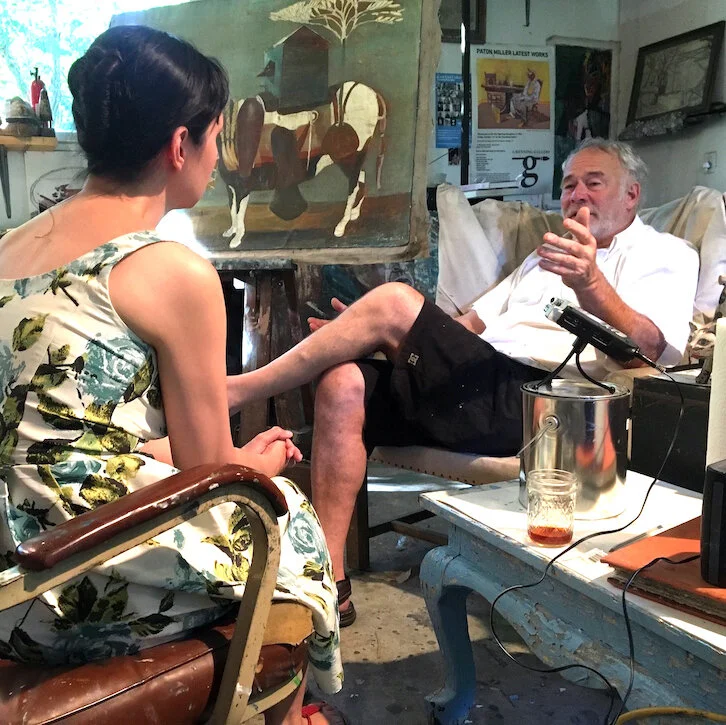
(Highlights) STEVE MILLER

(Highlights) STEVE MILLER

Artist & Environmentalist

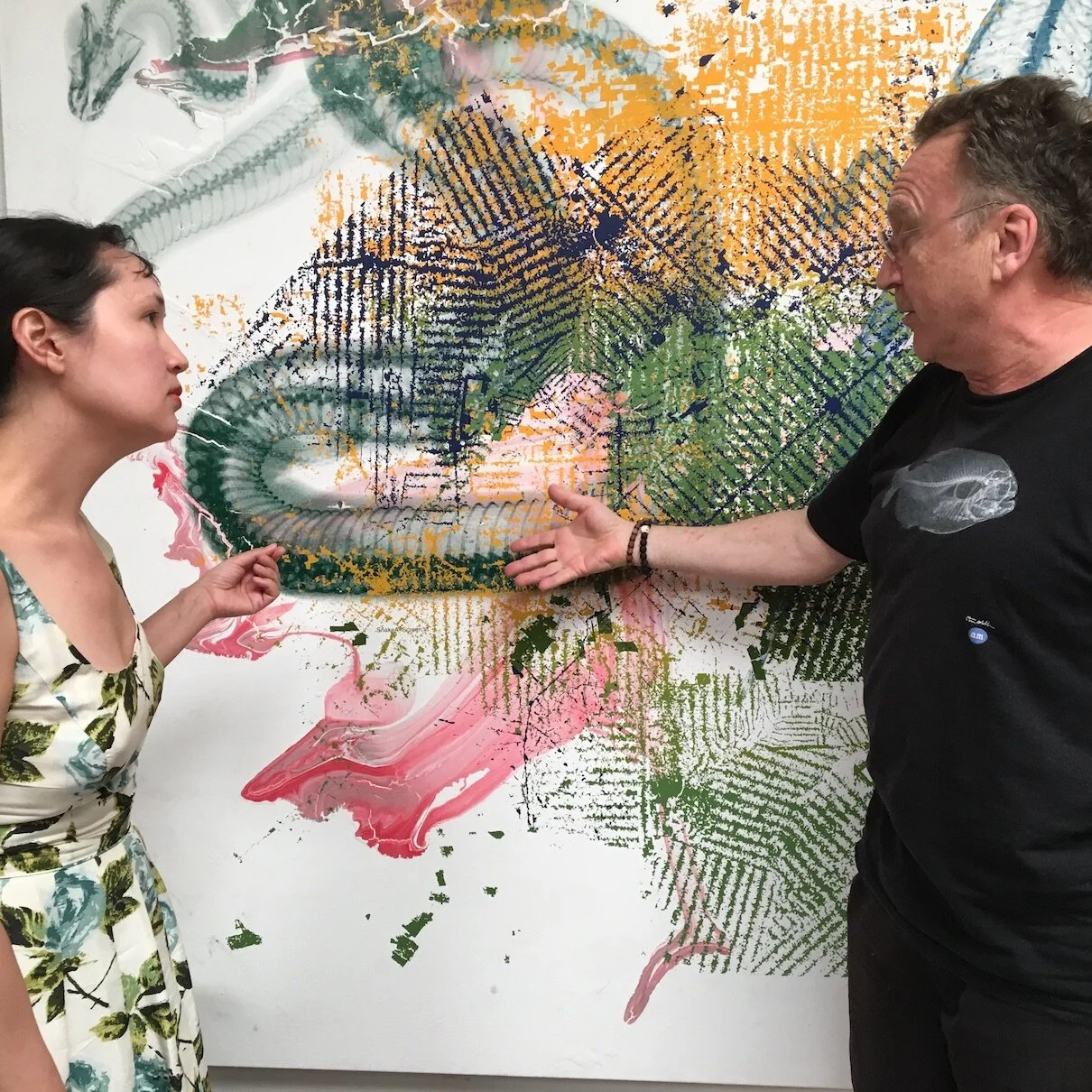
I have this idea art should be in the world in as many forms and ways as possible, and I love communicating with skate decks… It partially started out in Brazil because what I was doing in Brazil is x-raying animals in the Amazon and I thought there was this idea in the old days that you’d go to the Amazon, you’d kill an animal, stuff it, bag it, and then you’d have this trophy of your kill. The alligators that we x-rayed were alive. I got them from a zoo in a town called Belem, which means Bethlehem in Portuguese.

STEVE MILLER

STEVE MILLER

Artist & Environmentalist

I have this idea art should be in the world in as many forms and ways as possible, and I love communicating with skate decks… It partially started out in Brazil because what I was doing in Brazil is x-raying animals in the Amazon and I thought there was this idea in the old days that you’d go to the Amazon, you’d kill an animal, stuff it, bag it, and then you’d have this trophy of your kill. The alligators that we x-rayed were alive. I got them from a zoo in a town called Belem, which means Bethlehem in Portuguese.

SEBASTIEN GOKALP

SEBASTIEN GOKALP

Sébastien Gokalp · Director of France’s National Museum of Immigration
Curator of Exhibitions at Centre Pompidou, Musée d’art Moderne de la Ville de Paris & Louis Vuitton Foundation

We have a motto that says that ‘we want to change the gaze on immigration or to open the eyes on immigration’. We’re not here to make action in society, but we want people who come here to have elements of reflection, perception about the question of immigration. To change a mind, because immigration is about the stories of people who come from another country–they are someone else, basically–by assisting them we want to show how someone else can be great for us and not a stranger, foreigner, nor an enemy, but a friend. Someone who will bring us many things about culture, about work, about a way of meaning, of thinking. We have a historical point of view. We want to show that from the French Revolution until now, so two centuries of stories.

CRAIG KAUFFMAN

CRAIG KAUFFMAN

Associate Professor of Political Science at the University of Oregon
Member of the United Nations Knowledge Network on Harmony with Nature

The term Rights of Nature tends to be applied to two different things. One is this underlying legal philosophy that is actually broader than just Rights of Nature, that’s probably better understood as ecological jurisprudence that may or may not be expressed in terms of rights, but because Rights of Nature is getting a lot of attention that term tends to be applied to represent this broader underlying philosophy. Of course, the other way it’s used it to refer to the legal provisions that explicitly recognize Rights for ecosystems.

PETER SUTORIS

PETER SUTORIS

Anthropologist, Educator, Writer & Filmmaker

As a culture, how do we approach the environment? How do we approach the planet? Within our education systems are we emphasizing our arrogance? Or are we emphasizing our humility in the face of planetary-scale challenges? I think at the moment, from what I’ve seen in a number of countries, this huge focus on the natural sciences, hard science as a way of mastering nature. And perhaps less of a focus on social sciences, humanities that allow us to reflect a bit more deeply on our relationship more fundamentally with the planet.

ANDERS LEVERMANN

ANDERS LEVERMANN

Professor at Physics Institute of Potsdam University
Senior Research Scientist at Earth Institute, Columbia University

A lot of people think climate change is about avoiding the extinction of mankind. In my opinion, climate change is about putting pressure on society and disrupting society to an extent that it can't function properly anymore. So my greatest fear is that if we don't combat climate change, the weather extremes will hit us with a frequency and intensity that we will not be able to recover after each impact. And then we will start to fight with each other.

JON GERTNER

JON GERTNER

Jon Gertner is a journalist and historian whose stories on science, technology, and nature have appeared in a host of national magazines. Since 2003 he has worked mainly as a feature writer for The New York Times Magazine. He is the author of The Idea Factory: Bell Labs and the Great Age of American Innovation and The Ice at the End of the World. A frequent lecturer on technology and science history, Gertner lives with his family in New Jersey.

This interview was conducted by Mia Funk & Lila Muscosky with the participation of collaborating universities and students. Associate Interviews Producers on this podcast were Panisara Jaijongkit & Lila Muscosky. Digital Media Coordinator is Hannah Story Brown.

Mia Funk is an artist, interviewer and founder of The Creative Process.

Make it stand out

Whatever it is, the way you tell your story online can make all the difference.

MELISSA CRISTINA MARQUEZ

MELISSA CRISTINA MARQUEZ

Shark Scientist, Science Communicator, TV Presenter & Author

A lot of people when you think of sharks, you think of hammerheads, great white sharks, tiger sharks, but there’s so much more diversity than just that. There’s over 500 different species and on average we’re discovering new species every two weeks, not just of sharks, but also their cousins, the stingrays, skates and sometimes the chimeras as well. And so knowing that diversity exists, for me it’s really important to get that message out there.

MARTIN RUHE

MARTIN RUHE

Martin Ruhe is the internationally-acclaimed German cinematographer behind the Netflix film The Midnight Sky directed by and starring George Clooney. Previously, Ruhe worked on Catch-22, also directed by Clooney, as well as the critically acclaimed Counterpart, Run All Night with Liam Neeson, and the British Independent film award winner Control. Ruhe photographed the dark spy thriller Page Eight for BBC Films, directed by David Hare. The film earned him an American Society of Cinematographers Outstanding Achievement in Cinematography in Motion Picture/Miniseries Television Award for his work on the film.

Working closely with director Anton Corbijn, Ruhe photographed The American. Starring Clooney as an aging assassin on an assignment to create a specialized weapon, Ruhe’s meticulously arranged shots helped to build the tone of The American, while reviews applauded the film’s beauty. Ruhe lensed Harry Brown, a Michael Caine-starring vigilante thriller which premiered at 2009’s Toronto International Film Festival. His photography on Harry Brown received critical acclaim; Joe Leydon of Variety saying, “The moody lensing by Martin Ruhe vividly conveys the no-hope squalor of a contemporary urban wasteland.” Combining the best cultural influences from the U.S. and Europe, Ruhe is fluent in English, German and Spanish. He loves stills photography and travel.

MARTIN RUHE

The Midnight Sky is a film with big scopes. We have big vistas, we’re in space, we are on the moon, in the Arctic. Also, it’s a very intimate film because it’s a lot about connection, so we when we see people we get close to them and we feel intimate with them because we are literally with the camera quite close to them and looking into their faces. In this film, it helped that we went on 65mm. We shot on a large format. First of all we started that for the big landscapes, but I think it’s great also for faces because the face also becomes like a landscape.

Early on in my career, I met a cameraman called Mike Southon. When I was working as a runner in London, on weekends I would try to go to shoots and see as many shoots as I could. Mike once told me our job would be. 10% is craft, 10% is talent, and 80% would be diplomacy. It’s actually interesting because quite often we caught in-between producers telling you, “Oh, you can’t have this.” Or, you have to do this. Or this is the framework. And then directors telling you, “I want to see the whole world at night.” And you go, “That’s a lot of money...” So, I think that’s one interesting thing I learned early on.

There are many people you meet along the way and you pick up things from them. I loved when I started working with Anton Corbijn. His photography is so…he mainly uses one lens. One camera. It’s not complicated, but he gets intimate with people in the way he is with them. That’s why his portrait photography is so stunning. Over the years, it’s relevant because he’s curious, he’s open, and he just allows things to happen. I love that. I love creative things.

Early on, I did some workshops with some of the great DPs like Robby Müller. And then you watch films, you read, you listen to what people have to say about them.


This interview was conducted by Mia Funk with the participation of collaborating universities and students. Associate Interviews Producer on this podcast was Bret Young. Digital Media Coordinator is Yu Young Lee. 

Mia Funk is an artist, interviewer and founder of The Creative Process.

Find us on Apple Podcasts, Spotify, Google Podcasts, Podcast Addict, Pocket Casts, Breaker, Castbox, TuneIn, Overcast, RadioPublic, Podtail, and Listen Notes, among others. 

ALAN JACOBSEN

ALAN JACOBSEN

Director of Photography
Emmy & Sundance Special Jury Award-Winning & Oscar Nominated Documentaries

I hope that film and the story can help people get their heads around these huge ideas that are pretty terrifying and almost hopeless to think about. What can we do? Are we on this track? What have we done to the earth? I think scientists are very much starting to agree that it’s getting to the point where it’s almost too late. So can humans see that far ahead? Can we understand the track we’re on in time? I don’t know, but I’m willing to use whatever tools possible to try to help that conversation happen.

CARLOS SOUZA, JR.

CARLOS SOUZA, JR.

Senior Research Associate at Imazon
Technical & Scientific Coordinator at MapBiomas

Find a balance. Use technology. And connect with nature. I think that’s really critical. There is big hope for your generation because you have better environmental education. I can see this. You are more aware of these issues. In terms of the environmental issues that we face now, we need to connect more with nature, to open up your heart for that. You have this amazing opportunity to reach out information to explore technologies through the Internet. What you choose now what we’re going to focus on, it’s really critical.

MATS HJELM

MATS HJELM

Artist, Documentary Filmmaker & Multimedia Installation Creator

Art can be part healing process. There's a lot of research being done. People heal faster a garden rather than a parking lot, for example. The theory is that an opening in the woods with a little bit of water is probably the most healing place. That's the safest because that's what we have built-in as humans as the safe spot. The ocean is not safe, but the little pond. So, what I've done in this particular project with the radiotherapy rooms is that I've taken images from healing wells, partly from Stellenbosch National Park in Capetown, in Rio. I've been filming these water surfaces. I’ve been filming the trees through the water surface basically to create that water pond and the trees around, but from these places that have kind of a healing history.

PATON MILLER

PATON MILLER

Artist & World Traveler

When we moved back to Hawaii and lived on Molokai. I was teaching at the Kalaupapa Leprosy Colony, we had no money. And I was spearfishing, not for sport, but to get food for my family. And it was a beautiful time of our lives. We were so poor, but we were not poor. Poor is a state of mind. We were without money, but we were having so much fun.

TIES VAN DER HOEVEN

TIES VAN DER HOEVEN

Creative Director & Co-founder of The Weather Makers holistic engineering company

The story behind The Weather Makers and the whole intention is that five years by accident, I was working in a dredging company and one of the commercial people from Egypt approached me on a question about a lagoon where the fish were disappearing. So we started with this very small thing and set up a whole flow modelling approach, so really from the hydraulics, we could determine what would happen with the fish. And that really was the regretting the Sinai could have a very big impact on the world.

PETER SINGER & ANANTHA DURAIAPPAH

PETER SINGER & ANANTHA DURAIAPPAH

Human & Animal Rights Activists

“74 billion animals, according to the United National Food & Agriculture Organization, that we raise and kill each year on this planet. If we can’t make inroads into that and change attitudes to that, then I still have fears for where we are going.” – Peter Singer

DIANA CHAPLIN

DIANA CHAPLIN

Canopy Director of One Tree Planted

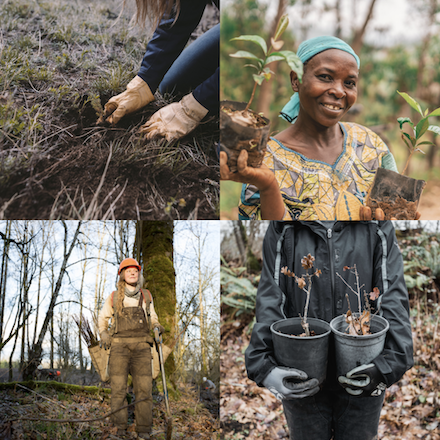
We planted over 10 million trees in 2020 alone. And it’s one tree planted for every dollar donated, so we make it as simple as possible, but when you add it all up together the impact is just tremendous and growing every day.”


(Highlights) DR. SUZANNE SIMARD

(Highlights) DR. SUZANNE SIMARD

Professor of Forest Ecology
Author of Finding the Mother Tree

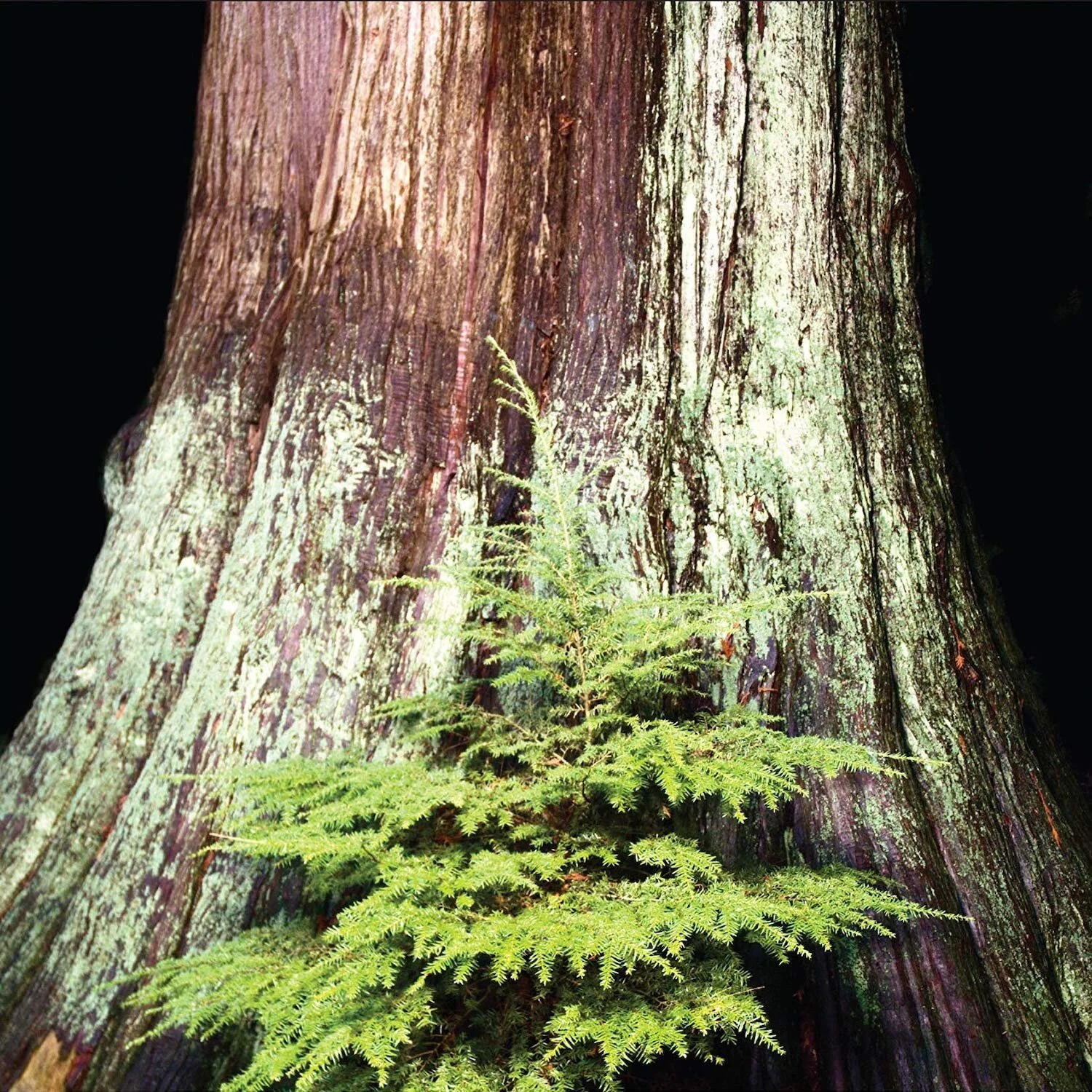
Think of yourself as a tree. You’ve got neighbours that you live beside for hundreds if not thousands of years, and none of you can move around, so you just have to communicate in other ways. And so trees have evolved to have these ways of communicating with each other, and they’re sophisticated, they’re nuanced. They include things like transmitting information through these root networks that link them together. They transmit information to each other through the air, so they perceive each other, they communicate and then they respond to each other. And that language is complex.