DR. JOERI ROGELJ

DR. JOERI ROGELJ

Director of Research at Grantham Institute, Imperial College
Author on UN Environment Programme & Intergovernmental Panel on Climate Change

A key part of how I go about doing my research is being involved in policy discussions, policy conversations, and also by following the international climate negotiations very closely. Actually, I started my research career as a part of the Presidency of the International Climate Negotiations in 2009. After that I remained an advisor to country delegations in the international negotiations, particularly small island development states or least developed countries. That really helped me to get a sense of what the real questions are that they are struggling with.

(Highlights) MERLIN SHELDRAKE

(Highlights) MERLIN SHELDRAKE

Merlin Sheldrake is a biologist and bestselling author of Entangled Life: How Fungi Make Our Worlds, Change Our Minds, and Shape Our Futures. Merlin received a Ph.D. in tropical ecology from Cambridge University for his work on underground fungal networks in tropical forests in Panama, where he was a predoctoral research fellow of the Smithsonian Tropical Research Institute. Entangled Life won the Wainwright Prize 2021, and has been nominated for a number of other prizes. Merlin is a research associate of the Vrije University Amsterdam, Head of Science and Communications Strategy for the Society for the Protection of Underground Networks, and sits on the advisory board of the Fungi Foundation.

MERLIN SHELDRAKE

Humans have been partnering with fungi for an unknowably long time, no doubt for longer than we’ve been humans. Whether as foods, eating mushrooms, as medicines, dosing ourselves with moulds and other mushrooms that might help, parasites or others helpers with infection, mushrooms as tinder or ways to carry a spark, this very important thing that humans needed to do for a very long time, and as agents of fermentation, as in yeasts creating alcohol. So humans have partnered with fungi to solve all sorts of problems and so fungi have found themselves enveloped within human societies and cultures for a long time.

This interview was conducted by Mia Funk & Cooper Berkoff with the participation of collaborating universities and students. Associate Interviews Producer on this podcast was Cooper Berkoff. Digital Media Coordinator is Phoebe Brous.

Mia Funk is an artist, interviewer and founder of The Creative Process & One Planet Podcast (Conversations about Climate Change & Environmental Solutions).

MERLIN SHELDRAKE

MERLIN SHELDRAKE

Merlin Sheldrake is a biologist and bestselling author of Entangled Life: How Fungi Make Our Worlds, Change Our Minds, and Shape Our Futures. Merlin received a Ph.D. in tropical ecology from Cambridge University for his work on underground fungal networks in tropical forests in Panama, where he was a predoctoral research fellow of the Smithsonian Tropical Research Institute. Entangled Life won the Wainwright Prize 2021, and has been nominated for a number of other prizes. Merlin is a research associate of the Vrije University Amsterdam, Head of Science and Communications Strategy for the Society for the Protection of Underground Networks, and sits on the advisory board of the Fungi Foundation.

MERLIN SHELDRAKE

Humans have been partnering with fungi for an unknowably long time, no doubt for longer than we’ve been humans. Whether as foods, eating mushrooms, as medicines, dosing ourselves with moulds and other mushrooms that might help, parasites or others helpers with infection, mushrooms as tinder or ways to carry a spark, this very important thing that humans needed to do for a very long time, and as agents of fermentation, as in yeasts creating alcohol. So humans have partnered with fungi to solve all sorts of problems and so fungi have found themselves enveloped within human societies and cultures for a long time.

This interview was conducted by Mia Funk & Cooper Berkoff with the participation of collaborating universities and students. Associate Interviews Producer on this podcast was Cooper Berkoff. Digital Media Coordinator is Phoebe Brous.

Mia Funk is an artist, interviewer and founder of The Creative Process & One Planet Podcast (Conversations about Climate Change & Environmental Solutions).

(Highlights) PROF. BAYYINAH BELLO

(Highlights) PROF. BAYYINAH BELLO

Founder of Fondasyon Felicitee
Afrodescendant Ourstorian, Educator, Writer & Humanitarian

It’s true. In Haiti, to a large degree more women were involved in the Revolution, in the war, in the fighting for the nation for the very simple reason that women had more opportunities. After a certain time, we became invisible. Once you’re in your 60’s, you are missing a few front teeth, in fact, some of the women used to take a stone and break up their front teeth so that they wouldn’t be noticed anymore. “That’s just an old lady with no front teeth. Okay, she goes about her business, nobody looks at her. She can do nothing.” And those were the fighters–the greatest fighters of our revolution.

PROF. BAYYINAH BELLO

PROF. BAYYINAH BELLO

Founder of Fondasyon Felicitee
Afrodescendant Ourstorian, Educator, Writer & Humanitarian

It’s true. In Haiti, to a large degree more women were involved in the Revolution, in the war, in the fighting for the nation for the very simple reason that women had more opportunities. After a certain time, we became invisible. Once you’re in your 60’s, you are missing a few front teeth, in fact, some of the women used to take a stone and break up their front teeth so that they wouldn’t be noticed anymore. “That’s just an old lady with no front teeth. Okay, she goes about her business, nobody looks at her. She can do nothing.” And those were the fighters–the greatest fighters of our revolution.

(Highlights) DR. FARHANA SULTANA

(Highlights) DR. FARHANA SULTANA

Dr. Farhana Sultana is an Associate Professor in the Department of Geography and the Environment at the Maxwell School of Citizenship and Public Affairs of Syracuse University, where she is also the Research Director for Environmental Collaboration and Conflicts at the Program for the Advancement of Research on Conflicts and Collaboration (PARCC).

Dr. Sultana is an internationally recognized interdisciplinary scholar of political ecology, water governance, post‐colonial development, social and environmental justice, climate change, and feminism. Her research and scholar-activism draw from her experiences of having lived and worked on three continents as well as from her backgrounds in the natural sciences, social sciences, and policy experience.

Prior to joining Syracuse, she taught at King’s College London and worked at United Nations Development Programme (UNDP). Author of several dozen publications, her recent books are “The Right to Water: Politics, Governance and Social Struggles” (2012), “Eating, Drinking: Surviving” (2016) and “Water Politics: Governance, Justice, and the Right to Water” (2020). Dr. Sultana graduated Cum Laude from Princeton University (in Geosciences and Environmental Studies) and obtained her Masters and PhD (in Geography) from the University of Minnesota, where she was a John D. and Catherine T. MacArthur Foundation Fellow.

She was awarded the Glenda Laws Award from the American Association of Geographers for “outstanding contributions to geographic research on social issues” in 2019.

DR. FARHANA SULTANA

We are always students. We are students of the earth. We need to do better and we can do better because the capacity of the human spirit is quite expansive and we owe it to future generations to do the best we can do while we can…It’s about who is at the table or rather what is the table, meaning what are the terms of the debate. Setting the terms of the debate, but how do we even know what the terms of the debate are, who is being included, who is being heeded, and part of that is, therefore, a decolonizing of knowledge and power structures because it’s centrally or fundamentally a justice issue.

One of the issues is that, yes, it is harder to be a woman of color in any field, but it is harder to be a very outspoken vocal woman of color. That has been my reality because I don’t think silence is an option. Too many centuries of my people were silenced in various ways, and if I have the privilege of education and voice it is an absolute unending responsibility to therefore speak out and share my knowledge and expertise.

This interview was conducted by Mia Funk & Mariana Monahan Negron with the participation of collaborating universities and students. Associate Interviews Producer on this podcast was Mariana Monahan Negron. Digital Media Coordinator is Phoebe Brous.

Mia Funk is an artist, interviewer and founder of The Creative Process & One Planet Podcast (Conversations about Climate Change & Environmental Solutions).

DR. FARHANA SULTANA

DR. FARHANA SULTANA

Co-author: Water Politics: Governance, Justice & the Right to Water
Fmr. UNDP Programme Officer, United Nations Development Programme

We are always students. We are students of the earth. We need to do better and we can do better because the capacity of the human spirit is quite expansive and we owe it to future generations to do the best we can do while we can…It’s about who is at the table or rather what is the table, meaning what are the terms of the debate. Setting the terms of the debate, but how do we even know what the terms of the debate are, who is being included, who is being heeded, and part of that is, therefore, a decolonizing of knowledge and power structures because it’s centrally or fundamentally a justice issue.

(Highlights) TIEMEN TER HOEVEN

(Highlights) TIEMEN TER HOEVEN

Founder & CEO of Roetz · Manufacturer of Circular Bicycles & e-Bikes

I think the next crisis is going to be a materials crisis. The whole point of moving from a zero-sum game–like who makes the best cheapest product at the lowest price and can find lowest labor somewhere around the world so someone can be happy with a new laundry machine and buy another one in five years–that’s not going to work for us.

TIEMEN TER HOEVEN

TIEMEN TER HOEVEN

Founder & CEO of Roetz · Manufacturer of Circular Bicycles & e-Bikes

I think the next crisis is going to be a materials crisis. The whole point of moving from a zero-sum game–like who makes the best cheapest product at the lowest price and can find lowest labor somewhere around the world so someone can be happy with a new laundry machine and buy another one in five years–that’s not going to work for us.

(Highlights) MASTER SHI HENG YI

(Highlights) MASTER SHI HENG YI

35th Generation of Shaolin Masters
Headmaster of the Shaolin Temple Europe

Just getting to know what is Buddhism, which is the foundation of every monastery. The Shaolin Temple is in the core, first of all, it’s a Buddhist monastery and when you are starting to read about Buddhism, one of the key sentences, in the beginning, is: With your thoughts, you are creating the world…So it’s very rarely clearly stated that it is the thoughts that are creating the world. Nevertheless, if you are now looking at the practices that the Shaolin Temple offers, that is quite physical. There is a lot of physicality in there, so you might think but why are you saying with thoughts you create the world, but you have so many different physical activities. It is because if you want to have mental freedom. If you want to approach freedom, you cannot just approach freedom by doing things or trying to chase freedom. The freedom that we are looking for is the type of freedom that is derived and that is very closely related to its counterpart, which is very hard restriction or very hard structure. So if you want to experience what freedom is, look at the restrictions of your life.

MASTER SHI HENG YI

MASTER SHI HENG YI

35th Generation of Shaolin Masters
Headmaster of the Shaolin Temple Europe

Just getting to know what is Buddhism, which is the foundation of every monastery. The Shaolin Temple is in the core, first of all, it’s a Buddhist monastery and when you are starting to read about Buddhism, one of the key sentences, in the beginning, is: With your thoughts, you are creating the world…So it’s very rarely clearly stated that it is the thoughts that are creating the world. Nevertheless, if you are now looking at the practices that the Shaolin Temple offers, that is quite physical. There is a lot of physicality in there, so you might think but why are you saying with thoughts you create the world, but you have so many different physical activities. It is because if you want to have mental freedom. If you want to approach freedom, you cannot just approach freedom by doing things or trying to chase freedom. The freedom that we are looking for is the type of freedom that is derived and that is very closely related to its counterpart, which is very hard restriction or very hard structure. So if you want to experience what freedom is, look at the restrictions of your life.

(Highlights) GARY GRIGGS

(Highlights) GARY GRIGGS

Gary Griggs received his B.A. in Geological Sciences from the University of California Santa Barbara and a Ph.D. in Oceanography from Oregon State University. He has been a Professor of Earth Sciences at the University of California Santa Cruz since 1968 and was Director of the Institute of Marine Sciences from 1991 to 2017. His research and teaching have been focused on the coast of California and include coastal processes, hazards and engineering, and sea-level rise. Dr. Griggs has written over 185 articles for professional journals as well as authored or co-authored eleven books.

In 1998 he was given the Outstanding Faculty Award at UC Santa Cruz and the Alumni Association honored him with a Distinguished Teaching Award in 2006. The California Coastal Commission and Sunset Magazine named him one of California’s Coastal Heroes in 2009. He has served on three National Academy of Sciences Committees. He has served on the Science Advisory Team to the Governor’s Ocean Protection Council since 2008 and in 2015 was appointed to the California Ocean Sciences Trust.

This interview was conducted by Mia Funk & Hannah Besly with the participation of collaborating universities and students. Associate Interviews Producer on this podcast was Hannah Besly. Digital Media Coordinator is Phoebe Brous.

Mia Funk is an artist, interviewer and founder of The Creative Process & One Planet Podcast (Conversations about Climate Change & Environmental Solutions).

GARY GRIGGS

GARY GRIGGS

Gary Griggs received his B.A. in Geological Sciences from the University of California Santa Barbara and a Ph.D. in Oceanography from Oregon State University. He has been a Professor of Earth Sciences at the University of California Santa Cruz since 1968 and was Director of the Institute of Marine Sciences from 1991 to 2017. His research and teaching have been focused on the coast of California and include coastal processes, hazards and engineering, and sea-level rise. Dr. Griggs has written over 185 articles for professional journals as well as authored or co-authored eleven books.

In 1998 he was given the Outstanding Faculty Award at UC Santa Cruz and the Alumni Association honored him with a Distinguished Teaching Award in 2006. The California Coastal Commission and Sunset Magazine named him one of California’s Coastal Heroes in 2009. He has served on three National Academy of Sciences Committees. He has served on the Science Advisory Team to the Governor’s Ocean Protection Council since 2008 and in 2015 was appointed to the California Ocean Sciences Trust.

This interview was conducted by Mia Funk & Hannah Besly with the participation of collaborating universities and students. Associate Interviews Producer on this podcast was Hannah Besly. Digital Media Coordinator is Phoebe Brous.

Mia Funk is an artist, interviewer and founder of The Creative Process & One Planet Podcast (Conversations about Climate Change & Environmental Solutions).

(Highlights) ANA CASTILLO

(Highlights) ANA CASTILLO

Award-winning Xicana Activist, Editor, Poet, Novelist, Artist
Author of My Book of the Dead

One of the things that is dying is our planet. We hear these sirens every single day. We’re being warned daily by experts and concerned people how vast that squandering is going. It’s a case of urgency and it’s astounding and a very sad, a very pathetic comment on modern life that most people are ignoring those signs. As a poet, it seems to me that one of the tasks that the poet takes on, it’s a vocation that’s born with it, it’s this consciousness, this serving as witness.

ANA CASTILLO

ANA CASTILLO

Award-winning Xicana Activist, Editor, Poet, Novelist, Artist
Author of My Book of the Dead

One of the things that is dying is our planet. We hear these sirens every single day. We’re being warned daily by experts and concerned people how vast that squandering is going. It’s a case of urgency and it’s astounding and a very sad, a very pathetic comment on modern life that most people are ignoring those signs. As a poet, it seems to me that one of the tasks that the poet takes on, it’s a vocation that’s born with it, it’s this consciousness, this serving as witness.

(Highlights) MARGE PIERCY

(Highlights) MARGE PIERCY

Novelist, Poet & Activist

People who take care of sick people and AIDS and teachers and garbage collectors and people who work in daycare…all the things that have to happen in society we pay shit for. We pay an enormous amount of money to people who can throw a ball through a hoop. We pay an enormous amount of hedge fund people. All the people who take over corporations go in and destroy get immensely rich while the people who do what we actually need doing, what we must have to survive, the people who grow food, the independent farmers that used to exist…

MARGE PIERCY

MARGE PIERCY

Novelist, Poet & Activist

People who take care of sick people and AIDS and teachers and garbage collectors and people who work in daycare…all the things that have to happen in society we pay shit for. We pay an enormous amount of money to people who can throw a ball through a hoop. We pay an enormous amount of hedge fund people. All the people who take over corporations go in and destroy get immensely rich while the people who do what we actually need doing, what we must have to survive, the people who grow food, the independent farmers that used to exist…

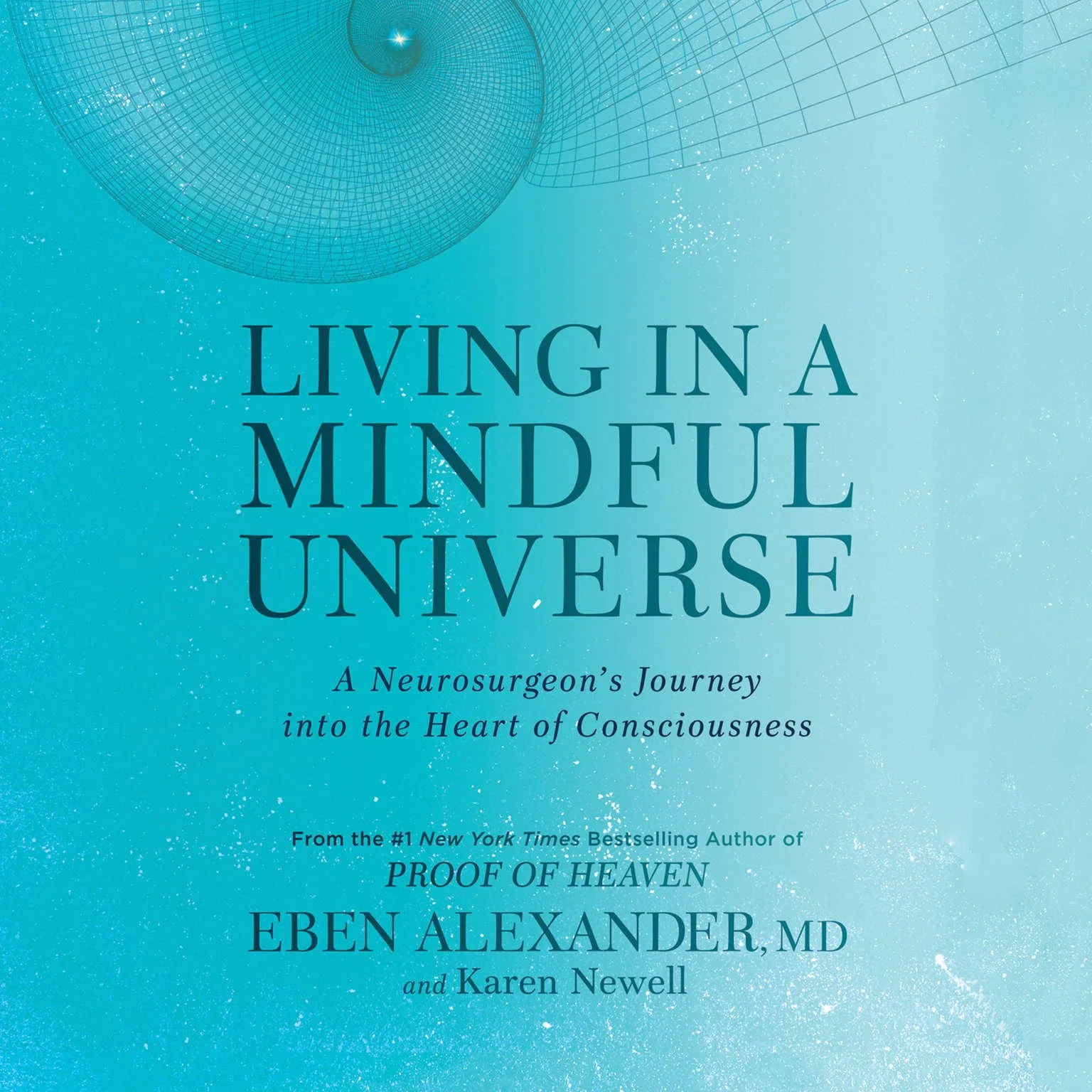
(Highlights) DR. EBEN ALEXANDER

(Highlights) DR. EBEN ALEXANDER

Neurosurgeon
Author of NYTimes #1 Bestseller Proof of Heaven, Seeking Heaven, The Map of Heaven & Living in a Mindful Universe.

Take care of yourself. Bring that love and kindness and compassion into your dealings with self and others. And this world will change dramatically. I think you’ll find great reason for optimism and hope and viewing the way our world can go, but it absolutely involves a change from the status quo from our current direction.

DR. EBEN ALEXANDER

DR. EBEN ALEXANDER

Neurosurgeon
Author of NYTimes #1 Bestseller Proof of Heaven, Seeking Heaven, The Map of Heaven & Living in a Mindful Universe.

Take care of yourself. Bring that love and kindness and compassion into your dealings with self and others. And this world will change dramatically. I think you’ll find great reason for optimism and hope and viewing the way our world can go, but it absolutely involves a change from the status quo from our current direction.

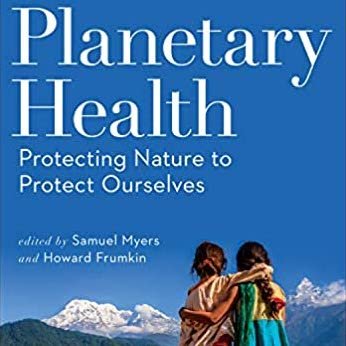
(Highlights) SAMUEL MYERS MD, MPH

(Highlights) SAMUEL MYERS MD, MPH

Founding Director of Planetary Health Alliance
Principal Research Scientist at Harvard T.H. Chan School of Public Health

I think the environmental community has been guilty of a lot of catastrophism, a lot of statements like ‘Game Over for the Planet’, and we’ve painted a lot of very dark pictures about where we’re going, but when you look across these different sectors and all the solutions that are out there, there’s no reason to believe that our grandchildren couldn’t live in an incredibly exciting world.