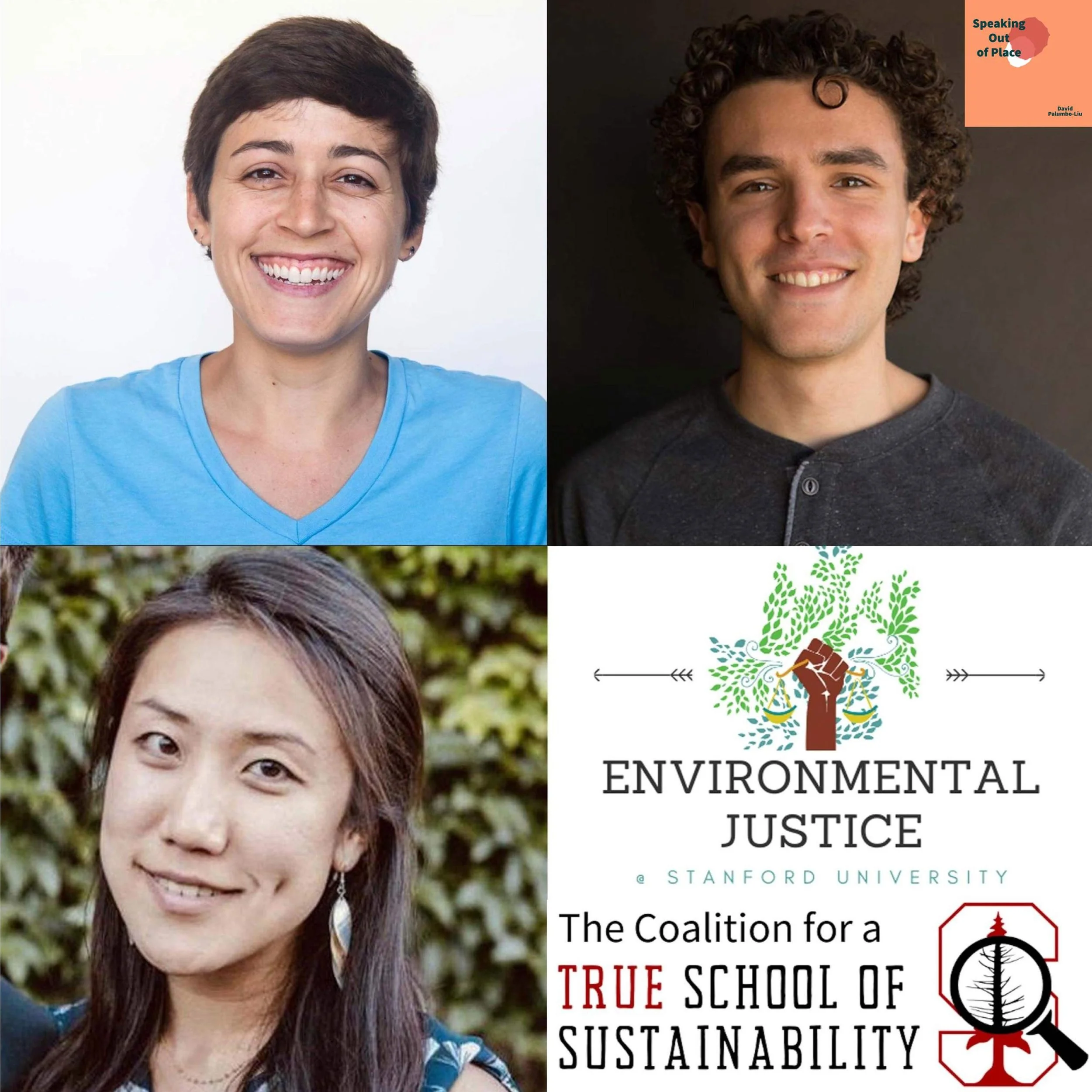
Speaking Out of Place: JUNE CHOI, YANNAI KASHTAN & BELINDA RAMIREZ on the Coalition for a True School of Sustainability
/Coalition for a True School of Sustainability
Coalition for a True School of Sustainability
Environmentalist & Story Prize Award-winning Author
Why I Came West · For a Little While · The Traveling Feast
I grieve the changes to the four seasons that are happening here in Montana. One of the great things about this place is having four distinct seasons, and now they're tilted. Some are short, some are long, and some don't exist anymore. And that's unsettling, to say the least. It's not a fear of what's coming. It's a grief for what's gone away. I'm mindful of the pressure that we are putting on the generations who follow us and the mandate to have fun, to be fully human, to be joyous, to celebrate, and to enjoy being in the midst of nature's beauty.
Environmentalist & Story Prize Award-winning Author
Why I Came West · For a Little While · The Traveling Feast
I grieve the changes to the four seasons that are happening here in Montana. One of the great things about this place is having four distinct seasons, and now they're tilted. Some are short, some are long, and some don't exist anymore. And that's unsettling, to say the least. It's not a fear of what's coming. It's a grief for what's gone away. I'm mindful of the pressure that we are putting on the generations who follow us and the mandate to have fun, to be fully human, to be joyous, to celebrate, and to enjoy being in the midst of nature's beauty.
Journalist · Essayist · Author · Teacher
Columnist Jacobin Magazine · New Republic
We have passed the Build Public Renewables Act which mandates and requires the state's power authority the New York State Power Authority to build its own publicly funded renewables: renewable energy, wind, and solar. And this was a long, long hard hard-fought victory. And to say how it happened, we need to think back to the early Bernie days just after the Bernie Sanders' 2016 presidential campaign. Obviously, people were very disappointed that Bernie Sanders didn't win, but a lot of people were also very politicized by that campaign and by that moment. And so a lot of people were joining DSA (Democratic Socialists of America). At the same time, a lot of young people were becoming very aware and very anxious, disturbed, and deeply depressed by the climate crisis.
Whale Researcher
President of the Center for Cetacean Research & Conservation
Director, Cook Islands Whale Research
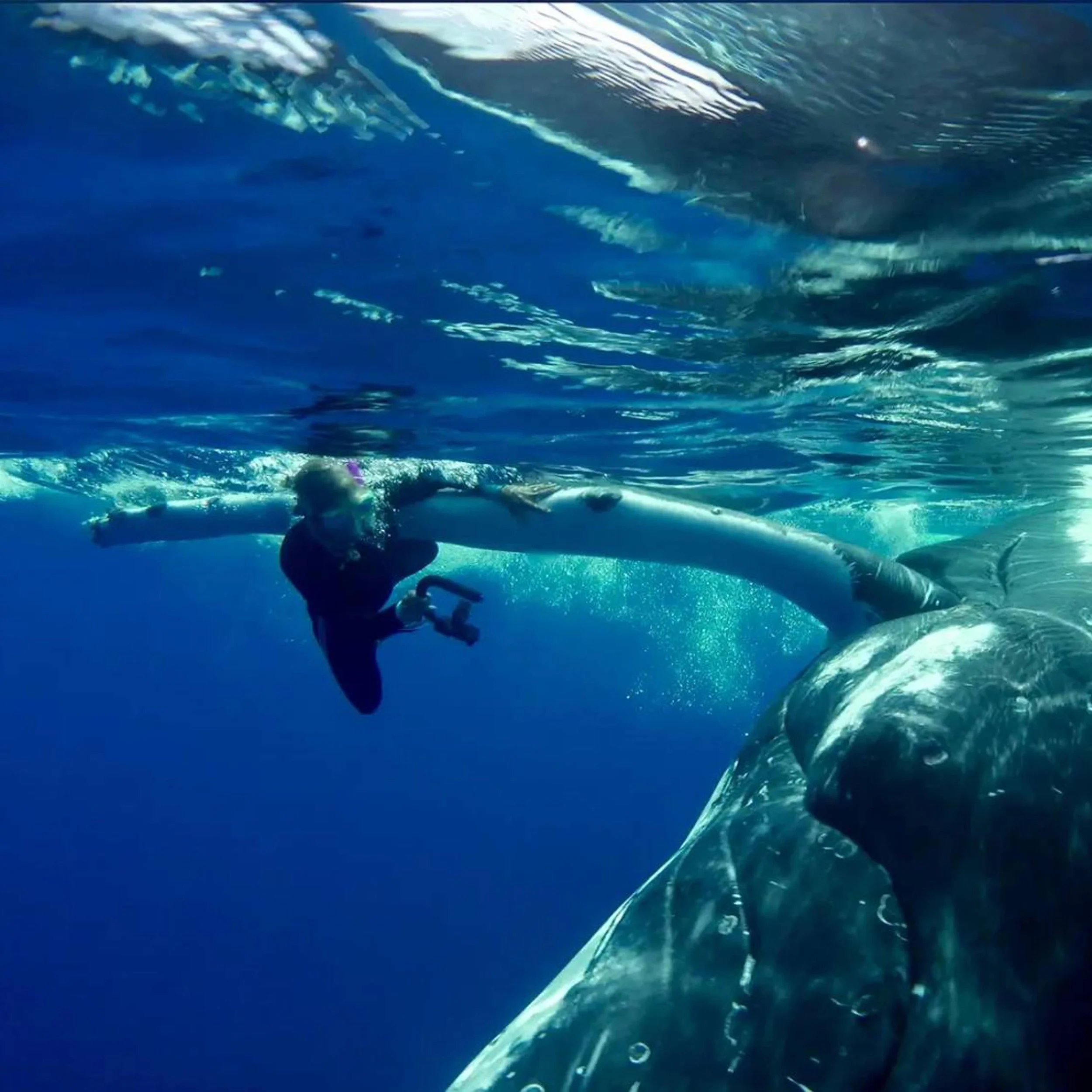
I don't think a lot of people realize how absolutely important whales are, and not just because they're beautiful and they make people happy, but whales carry nutrients from the depths they feed back to the surface. And there's this liquidy plume of fecal matter, and it's called the whale pump. And they bring all these nutrients upward with their tails by swimming up and down the water column, it's like an upward biological pump. And there's an incredible amount of nitrogen that's released in these plumes. And we get this great soup of nutrients. We get more from this nitrogen than all the rivers combined. And in the past, we recognized microbes and plankton and fish and that they recycled nutrients in the ocean, yet whales and other marine mammals have largely been overlooked and that's too bad because they are bioengineers. They help the climate so much because of all this creates more plankton by circulating the nutrients and fertilizing the phytoplankton with their poo.
Whale Researcher
President of the Center for Cetacean Research & Conservation
Director, Cook Islands Whale Research
I don't think a lot of people realize how absolutely important whales are, and not just because they're beautiful and they make people happy, but whales carry nutrients from the depths they feed back to the surface. And there's this liquidy plume of fecal matter, and it's called the whale pump. And they bring all these nutrients upward with their tails by swimming up and down the water column, it's like an upward biological pump. And there's an incredible amount of nitrogen that's released in these plumes. And we get this great soup of nutrients. We get more from this nitrogen than all the rivers combined. And in the past, we recognized microbes and plankton and fish and that they recycled nutrients in the ocean, yet whales and other marine mammals have largely been overlooked and that's too bad because they are bioengineers. They help the climate so much because of all this creates more plankton by circulating the nutrients and fertilizing the phytoplankton with their poo.
Leading Scholar of Disaster & Climate Change Law
EPA Official under the Obama Administration · President of the Center for Progressive Reform
Author of The Octopus in the Parking Garage: A Call for Climate Resilience
I believe that the strongest machine we have, the strongest empathy machine that we have is literature. The best way to get people to feel what someone else is feeling is through literature and stories. And I also think that feeling and emotion are an important part of reasoning and governing too. It's not the only part, but I think you have to understand how people see the world and how they feel about the world. So in my classes, I teach law classes. I teach policy classes. I often assign novels. We read in one of my classes Their Eyes Were Watching God, the case about a hypothetical hurricane in Florida written by Zora Neale Hurston. We read Oryx and Crake by Margaret Atwood, which is a kind of dystopian novel that involves climate change. We've read The Handmaid's Tale in my classes. What's interesting about them is that they make us, they open up our imaginations and say, Oh, I never thought something like that could happen. We hope it doesn't, but it could, right? And so how do we change the way we look at the future? And it also changes, I think, the way that we understand people's lives.
Lead Author of IPCC 4th & 5th Assessment Reports
Director & Councillor of Climate Council of Australia
It's certainly not the case that scientists should be the only people communicating. We have to have everybody in this mix because we're all in this together. So we have to have good science that's communicated. We have to have smart engineers who can work on the technological solutions. We have to have lawyers who are undertaking climate litigation. We have to have creative artists who can tell stories and appeal to people's emotions. No one group should have a responsibility to solve the climate crisis. It's got to be all of those groups bringing what they call the time, the talent, and the treasure to work together on this. We are all in this together, and we've all got a suite of different skills that have to be harnessed to solve this problem.
Lead Author of IPCC 4th & 5th Assessment Reports
Director & Councillor of Climate Council of Australia
It's certainly not the case that scientists should be the only people communicating. We have to have everybody in this mix because we're all in this together. So we have to have good science that's communicated. We have to have smart engineers who can work on the technological solutions. We have to have lawyers who are undertaking climate litigation. We have to have creative artists who can tell stories and appeal to people's emotions. No one group should have a responsibility to solve the climate crisis. It's got to be all of those groups bringing what they call the time, the talent, and the treasure to work together on this. We are all in this together, and we've all got a suite of different skills that have to be harnessed to solve this problem.
Founder & Executive Director of F Minus
a Research & Advocacy Group Calling for Divestment from Fossil Fuel Lobbyists
Author of the novel The Fracking King
The lobbyists that represent the fossil fuel companies like ExxonMobil, Koch companies, and the American Petroleum Institute, they knew for years that the climate crisis would happen, and they've been telling us that it wouldn't. And right now in every state capital, the lobbyists are doing everything they can to slow the transition from fossil fuel to renewables. The sad fact is, these oil and gas lobbyists will never wake up one morning and say: I am worried about the climate crisis. I'm worried about my children. I am going to cut off ties with these oil and gas companies and stop taking their money. That will never happen. And I'm sad to say this, but it's been a long, long road to try to change their behavior with facts or reason.
Founder & Executive Director of F Minus
a Research & Advocacy Group Calling for Divestment from Fossil Fuel Lobbyists
Author of the novel The Fracking King
The lobbyists that represent the fossil fuel companies like ExxonMobil, Koch companies, and the American Petroleum Institute, they knew for years that the climate crisis would happen, and they've been telling us that it wouldn't. And right now in every state capital, the lobbyists are doing everything they can to slow the transition from fossil fuel to renewables. The sad fact is, these oil and gas lobbyists will never wake up one morning and say: I am worried about the climate crisis. I'm worried about my children. I am going to cut off ties with these oil and gas companies and stop taking their money. That will never happen. And I'm sad to say this, but it's been a long, long road to try to change their behavior with facts or reason.
Co-founder of Scientist Rebellion · Climate Activist · Astrophysicist
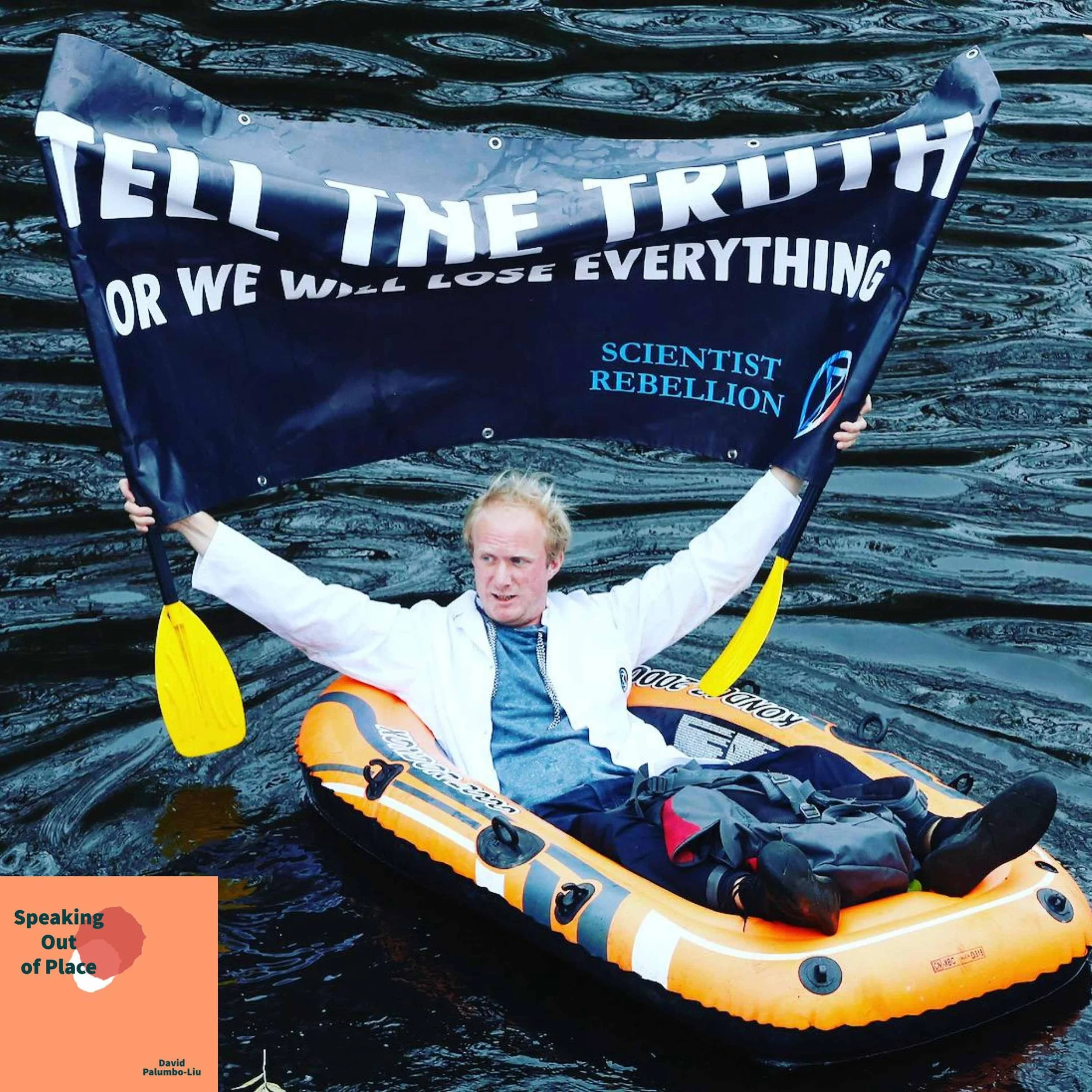
I think the more pernicious aspect is the way that science as a set of institutions fits into a paradigm that is doomed from the outset. For instance, if you look at the framing of the science within the IPCC reports and how that informs the construction of policy related to the climate around the globe, well, it's foundationally dishonest. If you frame an entire report around the need to keep temperatures below 1.5 degrees or 2 degrees, and all of the efforts that societies are going to make to do that, and you omit from the public discussion the fact that we have no chance whatsoever of achieving those goals.
Co-Editors of Voices of a People’s History of the United States in the 21st Century
(Arnove) Producer of the Academy Award-nominated Dirty Wars · Director of Roam Agency
We have to create alternative institutions to understand history. And to have conversations about how we can intervene because these conversations are increasingly being criminalized, and librarians are being fired and punished. Teachers are also being fired. Whole colleges are being taken over and certain courses are being labeled as not credit-worthy and being canceled. And while conversations around critical race theory and other topics are being declared illegal, there's a long history of book banning in this country. There's a long history of criminalizing dissent in this country, but I do think we all have to recognize that we're in a much more dangerous moment right now, where a new form of McCarthyism is emboldened and we have to speak out against that. - Anthony Arnove
"I don't know why we would really want to tell stories without being connected to the meaning. And I think that's especially for women, but I do think for human beings, that is how we can work as hard and be able to get up the next morning and keep going. Because we are working through the meaning, and it feeds us as we're like making sense of it all, trying to make sense of it, and for being in community and communion.” - Kate Mueth
”What we've done today is we've made everything so fast and so easy that I think there's something to the creative process about it being a little bit more of an exploration than it is wham bam, it's done. Let's go have lunch. And I think there is something to the creative process where it's allowed to develop. It's called process because it is a process. I'm always glad to just relax in the creative process, and I'm always very grateful for that. I think it's why I do so much indie film because it's really fun.” -Catherine Curtin
Population & Sustainability Director of the Center for Biological Diversity
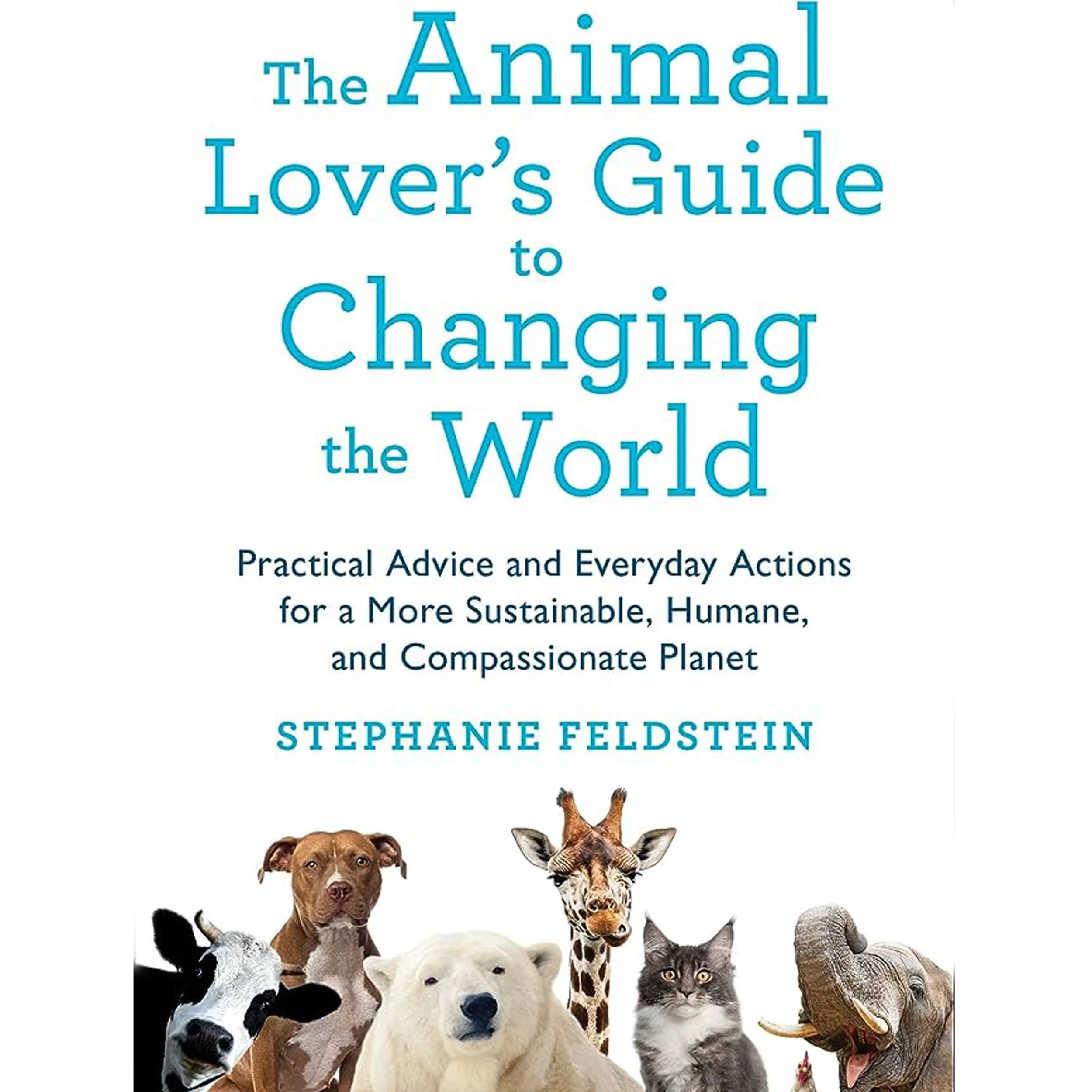
Author of The Animal Lover’s Guide to Changing the World
Take Action: Save Life on Earth
Pretty much everything we do in our lives from the moment we wake up and take a shower, we're using water – that's shared resources. We're using energy that, for most of us, unfortunately, still comes from fossil fuels. We are making decisions about what we eat. We're making purchases that have an impact on the planet and on other animals based on where they came from and what they're made of. There are so many entry points for people to take action and start making changes in their own lives. And that's really important for people to start with what feels right to them. That's a great way to start getting involved in this.
Population & Sustainability Director of the Center for Biological Diversity
Author of The Animal Lover’s Guide to Changing the World
Take Action: Save Life on Earth
Pretty much everything we do in our lives from the moment we wake up and take a shower, we're using water – that's shared resources. We're using energy that, for most of us, unfortunately, still comes from fossil fuels. We are making decisions about what we eat. We're making purchases that have an impact on the planet and on other animals based on where they came from and what they're made of. There are so many entry points for people to take action and start making changes in their own lives. And that's really important for people to start with what feels right to them. That's a great way to start getting involved in this.
Scholar · Educator · Feminist Activist
Author of Caliban and the Witch
Re-enchanting the World: Feminism and the Politics of the Commons
When I came to America I had a shock. I never knew what it meant to be in a country that seems to have no history, being in a place where you feel like you are nowhere, you could have been dropped by a plane in a cultural, historical desert. In the United States, they're destroying historic buildings. They've paved over cemeteries of African slaves. They're changing the environment so that memory is destroyed.
Because you are placing yourself in a broader arc of time, I asked a woman from Guatemala: how can women keep fighting for so much power? And she said, "Because, for us, the dead are not dead." This gives them the courage to go on when everything seems to be lost. I think that this is the kind of struggle that we need to make against war, against the destruction of nature.
Director of the Climate Change Institute at The Australian National University
Vice Chair of the Intergovernmental Panel on Climate Change (IPCC)
Co-recipient of the 2007 NOBEL PEACE PRIZE
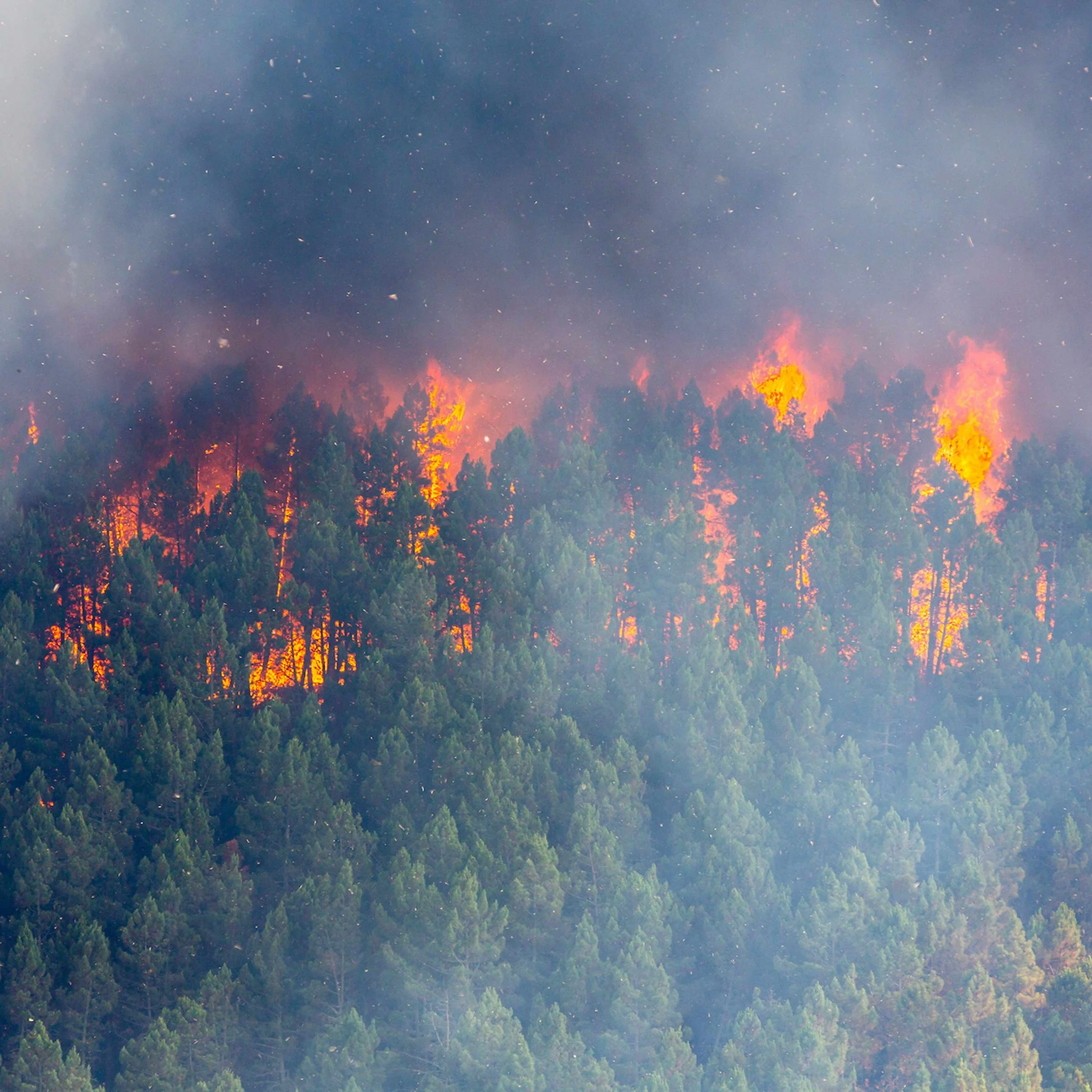
We live in a diverse world, and we're in a funny time where we sometimes see the best of humanity and the worst of humanity. And I think what we need to do is be very strong in wanting to lift the game of each other and ourselves. And so I think that's one of the sort of key things. Particularly, young people should be more demanding that we behave better towards each other and care more about each other and the world that we live in. In terms of these heatwaves, droughts, and fires that the world is seeing, which we thought were going to hit us in 2050 or 2070, are hitting us now in 2023. So, those risks are coming much faster and harder than we thought they were going to come. And so, in many cases, we're unprepared for the severity of these changes.
Director of the Climate Change Institute at The Australian National University
Vice Chair of the Intergovernmental Panel on Climate Change (IPCC)
Co-recipient of the 2007 NOBEL PEACE PRIZE
We live in a diverse world, and we're in a funny time where we sometimes see the best of humanity and the worst of humanity. And I think what we need to do is be very strong in wanting to lift the game of each other and ourselves. And so I think that's one of the sort of key things. Particularly, young people should be more demanding that we behave better towards each other and care more about each other and the world that we live in. In terms of these heatwaves, droughts, and fires that the world is seeing, which we thought were going to hit us in 2050 or 2070, are hitting us now in 2023. So, those risks are coming much faster and harder than we thought they were going to come. And so, in many cases, we're unprepared for the severity of these changes.
Author of Advocating for the Environment: How to Gather Your Power and Take Action
Environmental Advocate · Educator · Fmr. Director, Maine Department of Marine Resources
Fmr. Deputy Director, State Planning Office
So to me, the connection is just being outdoors. It really brings energy, to my life and it brings energy to my work. And I think for a lot of people, this is true, that nature is kind of the place where they can regenerate their energy. And if people haven't experienced that, I encourage them to try it, because nature can be very restorative. So, absolutely there's a connection between health, the outdoors, and between environmental issues and creating a healthy, clean environment for future generations.
The Creative Process: Podcast Interviews & Portraits of the World’s Leading Authors & Creative Thinkers
Inspiring Students – Encouraging Reading - Connecting through Stories
The Creative Process exhibition is traveling to universities and museums. The Creative Process exhibition consists of interviews with over 100 esteemed writers, including Joyce Carol Oates, Hilary Mantel, Neil Gaiman, Viet Thanh Nguyen, Tobias Wolff, Richard Ford, Junot Díaz, Marie Darrieussecq, Michel Faber, T.C. Boyle, Jay McInerney, George Saunders, Geoff Dyer, Etgar Keret, Douglas Kennedy, Sam Lipsyte, and Yiyun Li, among others. Artist and interviewer: Mia Funk.