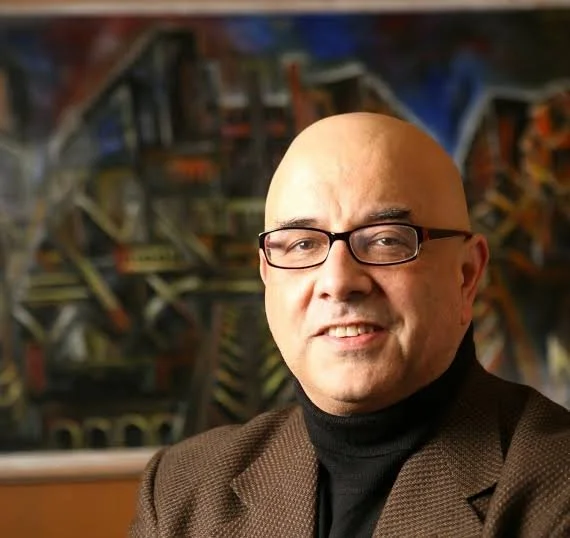
Highlights - CHRIS BLACKWELL - Founder of Island Records - Author of “The Islander: My Life in Music and Beyond"

Highlights - CHRIS BLACKWELL - Founder of Island Records - Author of “The Islander: My Life in Music and Beyond"

Founder of Island Records, which launched the careers of Bob Marley, U2, Cat Stevens, Grace Jones, Roxy Music, Amy Winehouse…
Author of The Islander: My Life in Music and Beyond

I think you need to be aware and see people be open to what can happen and get a feel, get an instinct. I think I've been blessed with instinct. I mean, I did not do well at school. I passed zero exams. I'm unemployable, but I've been blessed with having instincts. The instinct of U2 was seeing their determination, the fact that the music itself initially wasn't close to what most of my music was because most of my music was bass and drum. And most of their music was vocal, so it wasn't a certain kind of music that I like all the time. I like music from all different kinds of levels…I absolutely felt for Bob Marley to really make it worldwide as it were, he needed to change something a little bit. I didn't want him to change what he was doing, not his lyrics and everything else like that. It was more the instrumentation of it. I felt for Bob to be able to reach a wider audience that he needed to move away a little bit from that and focus more and more on his lyrics. When I finally met Cat Stevens, and we just sort of sat down and then when he played the song ‘Father and Son,’ then suddenly the lyrics of the song and what it meant and everything, I suddenly felt this guy is fantastic.

CHRIS BLACKWELL - Founder of Island Records featuring Bob Marley, U2, Cat Stevens, Grace Jones, Roxy Music, Amy Winehouse…

CHRIS BLACKWELL - Founder of Island Records featuring Bob Marley, U2, Cat Stevens, Grace Jones, Roxy Music, Amy Winehouse…

Founder of Island Records, which launched the careers of Bob Marley, U2, Cat Stevens, Grace Jones, Roxy Music, Amy Winehouse…
Author of The Islander: My Life in Music and Beyond

I think you need to be aware and see people be open to what can happen and get a feel, get an instinct. I think I've been blessed with instinct. I mean, I did not do well at school. I passed zero exams. I'm unemployable, but I've been blessed with having instincts. The instinct of U2 was seeing their determination, the fact that the music itself initially wasn't close to what most of my music was because most of my music was bass and drum. And most of their music was vocal, so it wasn't a certain kind of music that I like all the time. I like music from all different kinds of levels…I absolutely felt for Bob Marley to really make it worldwide as it were, he needed to change something a little bit. I didn't want him to change what he was doing, not his lyrics and everything else like that. It was more the instrumentation of it. I felt for Bob to be able to reach a wider audience that he needed to move away a little bit from that and focus more and more on his lyrics. When I finally met Cat Stevens, and we just sort of sat down and then when he played the song ‘Father and Son,’ then suddenly the lyrics of the song and what it meant and everything, I suddenly felt this guy is fantastic.

Highlights - Robert Sternberg - Fmr. President, American Psychological Assoc. - Author of “Adaptive Intelligence”

Highlights - Robert Sternberg - Fmr. President, American Psychological Assoc. - Author of “Adaptive Intelligence”

Award-winning Educator - Author of Adaptive Intelligence: Surviving and Thriving in Times of Uncertainty
Fmr. President of the American Psychological Association

Are we looking at intelligence wrong? There are an awful lot of people who have graduated from top schools who become leaders who are worse than incompetent. They make their countries worse rather than better. And the conclusion I came to is that we made a mistake, in that intelligence was originally defined by the founders of the field Alfred Binet, David Wechsler, and others, as the ability to adapt to the environment a requirement. And answering a vocabulary problem for an obscure word is not about adapting to the environment. So I began to wonder where we lost the train of thought. And the conclusion I came to is that colleges just forgot the original message of the founders of the field, and so we got immersed in these numbers that turn out not to mean that much. So I wrote about intelligence as the ability to get along in the world and hopefully make the world a little bit better

Robert Sternberg - Award-winning Educator - Author of “Adaptive Intelligence” - Fmr. President, American Psychological Assoc.

Robert Sternberg - Award-winning Educator - Author of “Adaptive Intelligence” - Fmr. President, American Psychological Assoc.

Award-winning Educator - Author of Adaptive Intelligence: Surviving and Thriving in Times of Uncertainty
Fmr. President of the American Psychological Association

Are we looking at intelligence wrong? There are an awful lot of people who have graduated from top schools who become leaders who are worse than incompetent. They make their countries worse rather than better. And the conclusion I came to is that we made a mistake, in that intelligence was originally defined by the founders of the field Alfred Binet, David Wechsler, and others, as the ability to adapt to the environment a requirement. And answering a vocabulary problem for an obscure word is not about adapting to the environment. So I began to wonder where we lost the train of thought. And the conclusion I came to is that colleges just forgot the original message of the founders of the field, and so we got immersed in these numbers that turn out not to mean that much. So I wrote about intelligence as the ability to get along in the world and hopefully make the world a little bit better

Highlights - Julio Ottino - Founding Co-Director of Northwestern Institute on Complex Systems

Highlights - Julio Ottino - Founding Co-Director of Northwestern Institute on Complex Systems

Julio Ottino is an artist, researcher, author, and educator at Northwestern University. He is the author, with Bruce Mau, of The Nexus: Augmented Thinking for a Complex World - The New Convergence of Art, Technology, and Science. He was the founding co-director of the Northwestern Institute on Complex Systems. In 2008, he was listed in the “One Hundred Engineers of the Modern Era”. In 2017, he was awarded the Bernard M. Gordon Prize for Innovation in Engineering and Technology Education from the National Academy of Engineering.

Today's complex problems demand a radically new way of thinking — one in which art, technology, and science converge to expand our creativity and augment our insight. Creativity must be combined with the ability to execute; the leaders and innovators of the future will have to understand this balance and manage such complexities as climate change and pandemics. The place of this convergence is THE NEXUS. In this provocative and visually striking book, Julio Mario Ottino and Bruce Mau offer a guide for navigating the intersections of art, technology, and science.

This interview was conducted by Mia Funk and Riya Patel with the participation of collaborating universities and students. Associate Interviews Producer on this episode was Riya Patel.

Mia Funk is an artist, interviewer and founder of The Creative Process & One Planet Podcast (Conversations about Climate Change & Environmental Solutions).

Julio Ottino - Author of “The Nexus: Augmented Thinking for a Complex World - The New Convergence of Art, Technology, and Science”


Julio Ottino - Author of “The Nexus: Augmented Thinking for a Complex World - The New Convergence of Art, Technology, and Science”


Julio Ottino is an artist, researcher, author, and educator at Northwestern University. He is the author, with Bruce Mau, of The Nexus: Augmented Thinking for a Complex World - The New Convergence of Art, Technology, and Science. He was the founding co-director of the Northwestern Institute on Complex Systems. In 2008, he was listed in the “One Hundred Engineers of the Modern Era”. In 2017, he was awarded the Bernard M. Gordon Prize for Innovation in Engineering and Technology Education from the National Academy of Engineering.

Today's complex problems demand a radically new way of thinking — one in which art, technology, and science converge to expand our creativity and augment our insight. Creativity must be combined with the ability to execute; the leaders and innovators of the future will have to understand this balance and manage such complexities as climate change and pandemics. The place of this convergence is THE NEXUS. In this provocative and visually striking book, Julio Mario Ottino and Bruce Mau offer a guide for navigating the intersections of art, technology, and science.

This interview was conducted by Mia Funk and Riya Patel with the participation of collaborating universities and students. Associate Interviews Producer on this episode was Riya Patel.

Mia Funk is an artist, interviewer and founder of The Creative Process & One Planet Podcast (Conversations about Climate Change & Environmental Solutions).

Highlights - Max Stossel - Award-winning Poet, Filmmaker, Creator of "Words That Move"

Highlights - Max Stossel - Award-winning Poet, Filmmaker, Creator of "Words That Move"

Award-winning Poet, Filmmaker & Speaker
Creator of the Stand-Up Poetry Special Words That Move

Technology has very much changed the way we read and take in information and shortened it into quick bursts and attention spans. We're living in a new world, for sure. And how do we communicate in this new world? Not just in a way that gets the reach, because there are whole industries aimed at what do I do to get the most likes or the most attention, and all of that, which I don't think is very fulfilling as artists.

It's sort of a diminishing of our art form to try and play the game because then we're getting the attention and getting the hits, as opposed to what do I really want to create? How do I really want to create it? How do I want to display this? And can I do it in a way that breaks through so that if I do it my way, it's still going to get the attention, great. But if it doesn't, can I be cool with that? And can I be okay creating what I want to create, knowing that that's what it's about. It's about sharing in an honest, authentic way what I want to express without letting the tentacles of social media drip into my brain and take over why I'm literally doing the things that I'm doing.

Max Stossel - Award-winning Poet, Filmmaker, Creator of "Words That Move"

Max Stossel - Award-winning Poet, Filmmaker, Creator of "Words That Move"

Award-winning Poet, Filmmaker & Speaker
Creator of the Stand-Up Poetry Special Words That Move

Technology has very much changed the way we read and take in information and shortened it into quick bursts and attention spans. We're living in a new world, for sure. And how do we communicate in this new world? Not just in a way that gets the reach, because there are whole industries aimed at what do I do to get the most likes or the most attention, and all of that, which I don't think is very fulfilling as artists.

It's sort of a diminishing of our art form to try and play the game because then we're getting the attention and getting the hits, as opposed to what do I really want to create? How do I really want to create it? How do I want to display this? And can I do it in a way that breaks through so that if I do it my way, it's still going to get the attention, great. But if it doesn't, can I be cool with that? And can I be okay creating what I want to create, knowing that that's what it's about. It's about sharing in an honest, authentic way what I want to express without letting the tentacles of social media drip into my brain and take over why I'm literally doing the things that I'm doing.

Highlights - Adam Alter - NYTimes Bestselling Author of “Irresistible: The Rise of Addictive Technology”

Highlights - Adam Alter - NYTimes Bestselling Author of “Irresistible: The Rise of Addictive Technology”

Author of NYTimes Bestseller Irresistible: The Rise of Addictive Technology and the Business of Keeping Us Hooked ·
Anatomy of a Breakthrough · Drunk Tank Pink

The other thing from a creativity perspective is we know that more people around you is good for creativity. It's one of the axioms in thinking about creativity in general. You need time. An artist, a writer. I'm a writer. I need time on my own. I also paint and draw. I cannot do that with other people around. It's just my process. But before you get there, before you get to that point where you need that time alone, that space apart, for almost everyone being around other people is good. It's good for creativity. It's both about diversity of opinion and idea and just about having more - just more information, more thoughts, more ways of looking at the world. And some of the most profound research I've come across in preparing for this book suggested that it's better to be around people who are deeply incompetent than it is to be around no one, which I found very surprising.

Adam Alter - Author of “Irresistible: The Rise of Addictive Technology”, “Anatomy of a Breakthrough"

Adam Alter - Author of “Irresistible: The Rise of Addictive Technology”, “Anatomy of a Breakthrough"

Adam Alter is a Professor of Marketing at NYU’s Stern School of Business and the Robert Stansky Teaching Excellence Faculty Fellow. Adam is the New York Times bestselling author of Irresistible: The Rise of Addictive Technology and the Business of Keeping Us Hooked, and Drunk Tank Pink, which investigates how hidden forces in the world around us shape our thoughts, feelings, and behaviors. He has written for the New York Times, New Yorker, The Atlantic, Washington Post, and a host of TV, radio, and publications. His next book Anatomy of a Breakthrough will be published in 2023.

Highlights - Joëlle Gergis - Lead Author  - IPCC Sixth Assessment Report - Author of “Humanity’s Moment”

Highlights - Joëlle Gergis - Lead Author - IPCC Sixth Assessment Report - Author of “Humanity’s Moment”

Lead Author  of the IPCC Sixth Assessment Report
Author of Humanity’s Moment: A Climate Scientist’s Case for Hope
Sunburnt Country: The History and Future of Climate Change in Australia

Contributor to The Climate Book, ed. Greta Thunberg · Not Too Late, eds. Rebecca Solnit, Thelma Young Lutunatabua

is an award-winning climate scientist and writer at the Australian National University. She served as a lead author for the IPCC Sixth Assessment Report and is the author of and Sunburnt Country: The History and Future of Climate Change in Australia. Joëlle has also contributed chapters to The Climate Book by Greta Thunberg, and Not Too Late: Changing the Climate Story from Despair to Possibility, edited by Rebecca Solnit and Thelma Young Lutunatabua.

Joëlle Gergis - Lead Author  - IPCC Sixth Assessment Report - Author of “Humanity’s Moment”

Joëlle Gergis - Lead Author - IPCC Sixth Assessment Report - Author of “Humanity’s Moment”

Lead Author  of the IPCC Sixth Assessment Report · Author of Humanity’s Moment: A Climate Scientist’s Case for Hope · Sunburnt Country · Contributor to The Climate Book, ed. Greta Thunberg · Not Too Late, eds. Rebecca Solnit, Thelma Young Lutunatabua

We're really starting to witness serious climate extremes that can no longer be ignored. And the IPCC, one of our key conclusions to that report was that effectively the human fingerprint on the climate system is now undeniable. It is now an established fact that we have warmed every single continent, every ocean basin on the planet. And again, that's a pretty serious thing to contemplate that human activity from the burning of fossil fuels and the clearing of land has led to this energy imbalance in the earth system, which is leading to a rapidly shifting climate.

Highlights - Etgar Keret - Cannes Film Festival Award-winning Director - Author of “Fly Already”, “The Seven Good Years”

Highlights - Etgar Keret - Cannes Film Festival Award-winning Director - Author of “Fly Already”, “The Seven Good Years”

Cannes Film Festival Award-winning Director
Author of Fly Already · Suddenly a Knock on the Door · The Seven Good Years

For me, there is something about art, it's not a monologue, it's a dialogue. Some people, it doesn't matter who they speak to, they will speak in the same way they would speak to a five-year-old or to an intellectual or to somebody who doesn't speak the language very well. They would speak the same way and they don't care because this is what they have to say, but I think that the natural thing in the dialogue is really to look into the eyes of the person you speak to and see when he understands or when she doesn't understand or when she's moved or when he's angry. And basically out of that, kind of create your own language.

Etgar Keret - Cannes Film Festival Award-winning Director - Author of “Fly Already”, “Suddenly a Knock on the Door”

Etgar Keret - Cannes Film Festival Award-winning Director - Author of “Fly Already”, “Suddenly a Knock on the Door”

Cannes Film Festival Award-winning Director
Author of Fly Already · Suddenly a Knock on the Door · The Seven Good Years

For me, there is something about art, it's not a monologue, it's a dialogue. Some people, it doesn't matter who they speak to, they will speak in the same way they would speak to a five-year-old or to an intellectual or to somebody who doesn't speak the language very well. They would speak the same way and they don't care because this is what they have to say, but I think that the natural thing in the dialogue is really to look into the eyes of the person you speak to and see when he understands or when she doesn't understand or when she's moved or when he's angry. And basically out of that, kind of create your own language.

Highlights -Manuel Billeter - Cinematographer -  “The Gilded Age” “Inventing Anna” “Jessica Jones” “Luke Cage”

Highlights -Manuel Billeter - Cinematographer - “The Gilded Age” “Inventing Anna” “Jessica Jones” “Luke Cage”

Cinematographer · The Gilded Age · Inventing Anna
Jessica Jones · Luke Cage

What I think made me want to pursue film or what started my fascination with film and cinema were definitely Fellini, Antonioni, and Bertolucci; the masters, if you will, that kind of make you dream - make you just go to a movie theater, enter this space, and just have a communal experience. I know looking at the screen and just being completely immersed and experiencing stories or experiencing things that make you understand life more - or make you understand life less - and create a dialogue between you and the rest of the world.

Manuel Billeter - Cinematographer - “The Gilded Age” “Inventing Anna” “Jessica Jones” “Luke Cage”

Manuel Billeter - Cinematographer - “The Gilded Age” “Inventing Anna” “Jessica Jones” “Luke Cage”

Cinematographer · The Gilded Age · Inventing Anna
Jessica Jones · Luke Cage

What I think made me want to pursue film or what started my fascination with film and cinema were definitely Fellini, Antonioni, and Bertolucci; the masters, if you will, that kind of make you dream - make you just go to a movie theater, enter this space, and just have a communal experience. I know looking at the screen and just being completely immersed and experiencing stories or experiencing things that make you understand life more - or make you understand life less - and create a dialogue between you and the rest of the world.

Highlights - Nina Hall - Author of “Transnational Advocacy in the Digital Era”


Highlights - Nina Hall - Author of “Transnational Advocacy in the Digital Era”


Author of Transnational Advocacy in the Digital Era: Think Global, Act Local
Assistant Professor · International Relations · Johns Hopkins School of Advanced International Studies (Europe)

Digital advocacy organizations are recognized as influential actors by the media, politicians, and some academics. In 2016, GetUp, an Australian digital advocacy organization, was named by the Australian Financial Review as one of the top ten actors with ‘covert power’ in Australia.1 Campact in Germany has powerfully mobilized public opinion against the Transatlantic Trade and Investment Partnership. MoveOn was one of the ‘leading advocacy organizations’ mobilizing people against the Iraq War in the United States. Meanwhile, Leadnow, a digital advocacy organization in Canada, helped to unseat Prime Minister Stephen Harper in the 2015 Canadian federal election. This new model of advocacy organization has spread around the world. Nineteen digital advocacy organizations claim to have a total of over 20 million members. What drove the global spread of digital advocacy organizations?

Nina Hall - Author of “Transnational Advocacy in the Digital Era: Think Global, Act Local”

Nina Hall - Author of “Transnational Advocacy in the Digital Era: Think Global, Act Local”

Author of Transnational Advocacy in the Digital Era: Think Global, Act Local
Assistant Professor · International Relations · Johns Hopkins School of Advanced International Studies (Europe)

Digital advocacy organizations are recognized as influential actors by the media, politicians, and some academics. In 2016, GetUp, an Australian digital advocacy organization, was named by the Australian Financial Review as one of the top ten actors with ‘covert power’ in Australia.1 Campact in Germany has powerfully mobilized public opinion against the Transatlantic Trade and Investment Partnership. MoveOn was one of the ‘leading advocacy organizations’ mobilizing people against the Iraq War in the United States. Meanwhile, Leadnow, a digital advocacy organization in Canada, helped to unseat Prime Minister Stephen Harper in the 2015 Canadian federal election. This new model of advocacy organization has spread around the world. Nineteen digital advocacy organizations claim to have a total of over 20 million members. What drove the global spread of digital advocacy organizations?

Highlights - Alberto Savoia - Google’s 1st Engineering Director - Author of “The Right It”

Highlights - Alberto Savoia - Google’s 1st Engineering Director - Author of “The Right It”

Google’s 1st Engineering Director · Innovation Agitator Emeritus
Author of The Right It: Why So Many Ideas Fail and How to Make Sure Yours Succeed

As much as I would love to take the credit, Google Ads was a big team, and I was fortunate to be brought in as a director that managed the team. I think the reason it was so successful is because innovations and new ideas, they compound. They build one upon the other. So the reason why ads was so successful for Google is because search was so successful for Google. So when you have search and you have billions of people coming in every day, maybe every hour, and searching all kinds of things, you have this treasure trove of data. If you have billion searches per day, you know how many experiments can you run? And so Google is very famous for doing a lot of A/B experiments. That's how we collect the data. So what actually enabled Google to be so successful and to grow is this mental attitude, which is the same one that Amazon and some of these really successful technology companies have, of doing a lot of experiments on small samples and continually refining their data based on that. If you're dealing with a lot of people, you can do those experiments and that's why these companies are successful. The sad thing or what happens with companies that do not operate in that way, that do not try to operate on data and do all of those experiments, those are the ones that are left behind. Innovation is experimentation.

Alberto Savoia - Google’s 1st Engineering Director - Author of “The Right It”

Alberto Savoia - Google’s 1st Engineering Director - Author of “The Right It”

Google’s 1st Engineering Director · Innovation Agitator Emeritus
Author of The Right It: Why So Many Ideas Fail and How to Make Sure Yours Succeed

As much as I would love to take the credit, Google Ads was a big team, and I was fortunate to be brought in as a director that managed the team. I think the reason it was so successful is because innovations and new ideas, they compound. They build one upon the other. So the reason why ads was so successful for Google is because search was so successful for Google. So when you have search and you have billions of people coming in every day, maybe every hour, and searching all kinds of things, you have this treasure trove of data. If you have billion searches per day, you know how many experiments can you run? And so Google is very famous for doing a lot of A/B experiments. That's how we collect the data. So what actually enabled Google to be so successful and to grow is this mental attitude, which is the same one that Amazon and some of these really successful technology companies have, of doing a lot of experiments on small samples and continually refining their data based on that. If you're dealing with a lot of people, you can do those experiments and that's why these companies are successful. The sad thing or what happens with companies that do not operate in that way, that do not try to operate on data and do all of those experiments, those are the ones that are left behind. Innovation is experimentation.