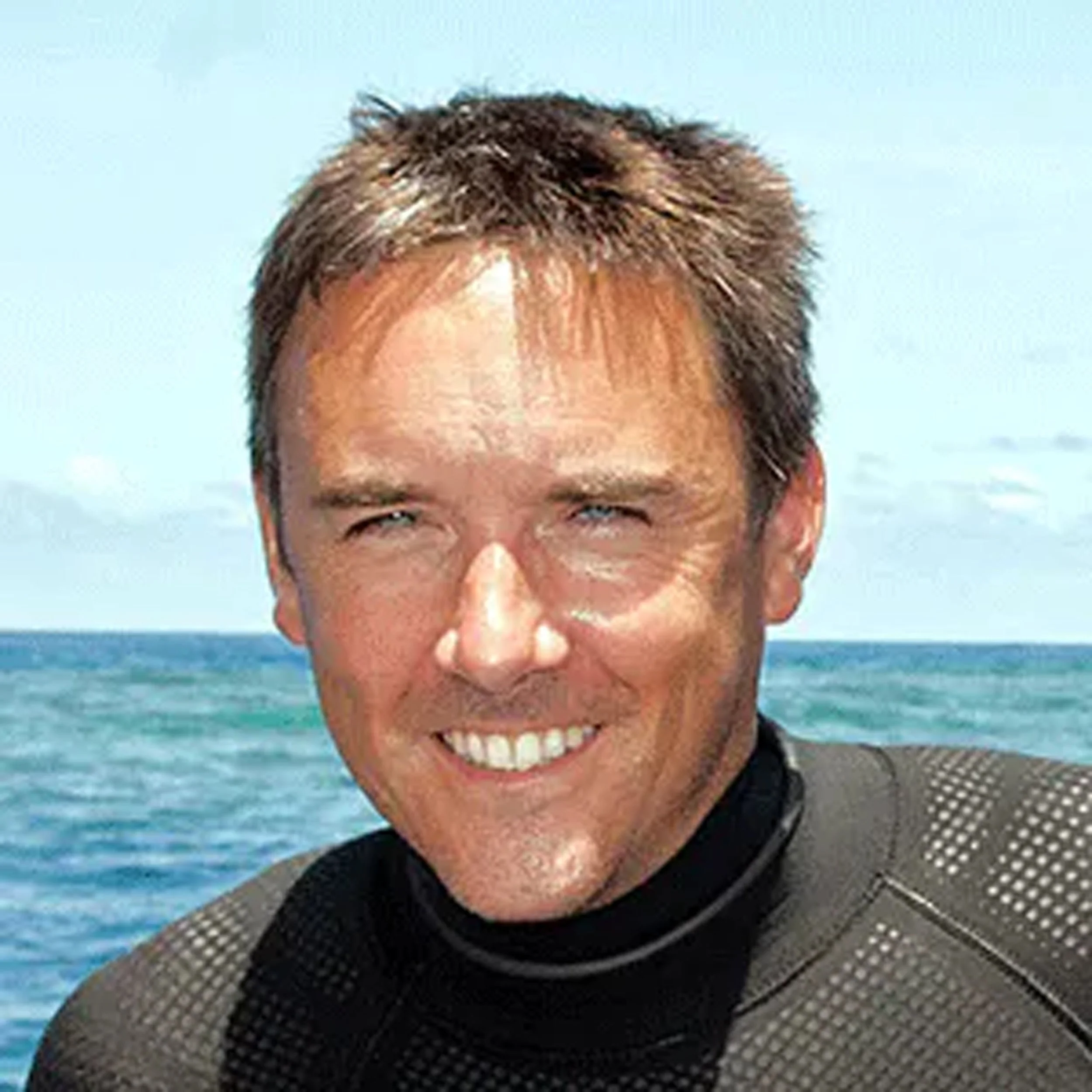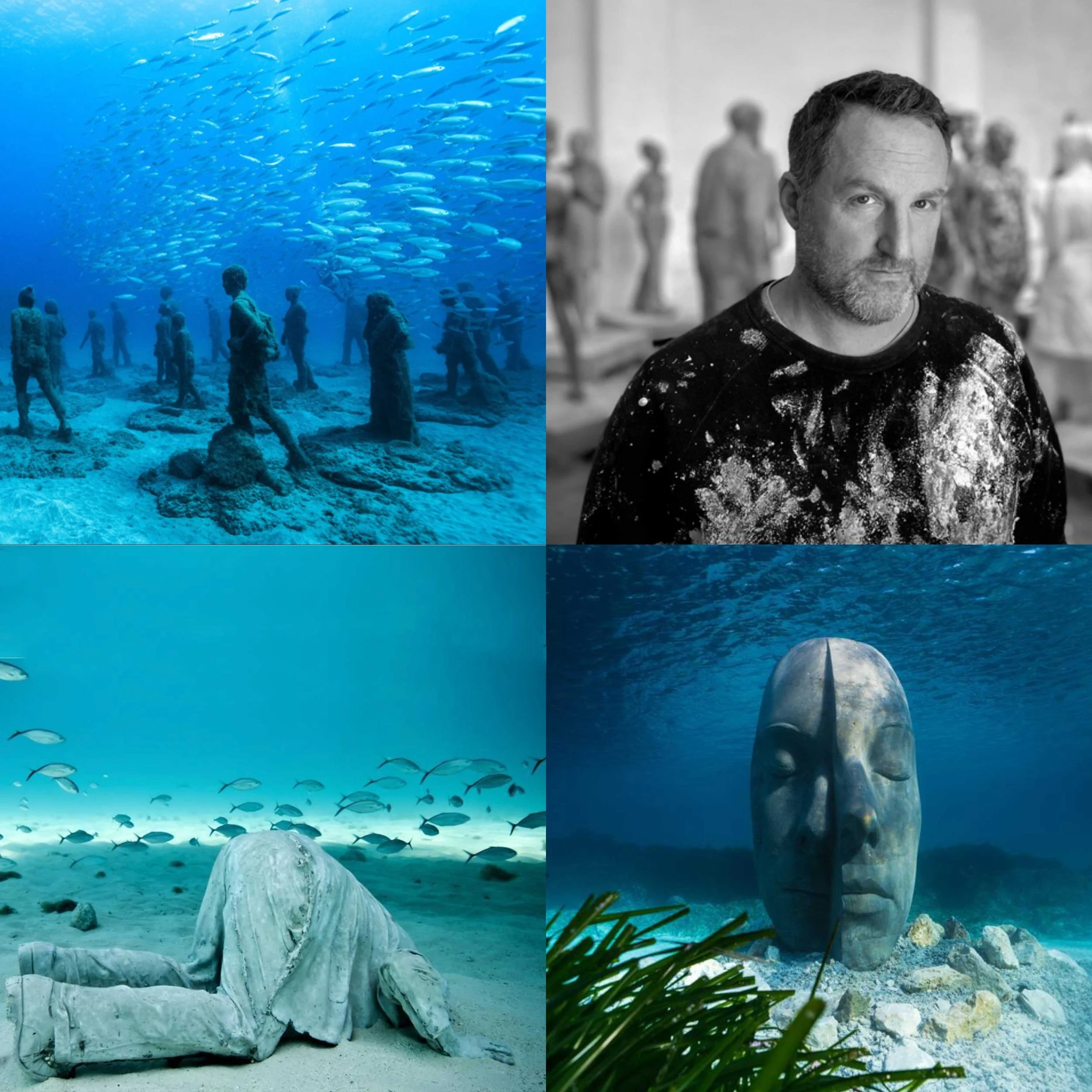
JASON deCAIRES TAYLOR - Sculptor, Environmentalist, Creator of Underwater Museums

JASON deCAIRES TAYLOR - Sculptor, Environmentalist, Creator of Underwater Museums

Sculptor · Environmentalist · Creator of Underwater Museums

The sculptures get claimed and almost owned by the sea. And the textures that form the patterns, all things that could never be reproduced by human hands. And it's entirely unpredictable in many cases. I go to some of the "museums" expect to see this type of colonization or this type of growth, and it's nothing like how I've seen it envisaged it. It's completely different. Other times something has been made at its home, and there's an octopus that's built a house around it, or there's a school of fish that have nestled within the formations. There have been many, many different surprises along the way. I first started in the West Indies on an island called Grenada, which has a tropical reef system. And I expected the works to be sort of colonized. And I knew hard corals took a very long time to get established, to build their calcium skeletons, but actually, they were colonized within days. We saw white little calcareous worms, pink coraline algae, and green algae literally appeared sort of overnight.

Highlights - DOMINIC McAFEE - Marine Ecologist, University of Adelaide - Restoring Lost Oyster Reefs

Highlights - DOMINIC McAFEE - Marine Ecologist, University of Adelaide - Restoring Lost Oyster Reefs

Marine Ecologist · University of Adelaide · Restoring Lost Oyster Reefs

There's this real emergence of young people doing incredible things enabled by bio-modern technology and a more globalized and connected world and access to amazing educational resources about what the environment does and means for humanity. We've lost something like 85% of oyster reefs globally. In Australia it's over 99%. We've smashed this ecosystem to smithereens. It covered something like 7,000 kilometers of coastline and the flat oyster reef, for example, the flat oysters, one type of oyster that we work with were completely removed from the Australian mainland, and about 5,000 kilometers of reef destroyed in a very short period of time. And because of the intensity with which the coastlines were modified following European settlement of Australia, they haven't been able to come back naturally.

DOMINIC McAFEE - Marine Ecologist, University of Adelaide - Restoring Lost Oyster Reefs

DOMINIC McAFEE - Marine Ecologist, University of Adelaide - Restoring Lost Oyster Reefs

Marine Ecologist · University of Adelaide · Restoring Lost Oyster Reefs

There's this real emergence of young people doing incredible things enabled by bio-modern technology and a more globalized and connected world and access to amazing educational resources about what the environment does and means for humanity. We've lost something like 85% of oyster reefs globally. In Australia it's over 99%. We've smashed this ecosystem to smithereens. It covered something like 7,000 kilometers of coastline and the flat oyster reef, for example, the flat oysters, one type of oyster that we work with were completely removed from the Australian mainland, and about 5,000 kilometers of reef destroyed in a very short period of time. And because of the intensity with which the coastlines were modified following European settlement of Australia, they haven't been able to come back naturally.

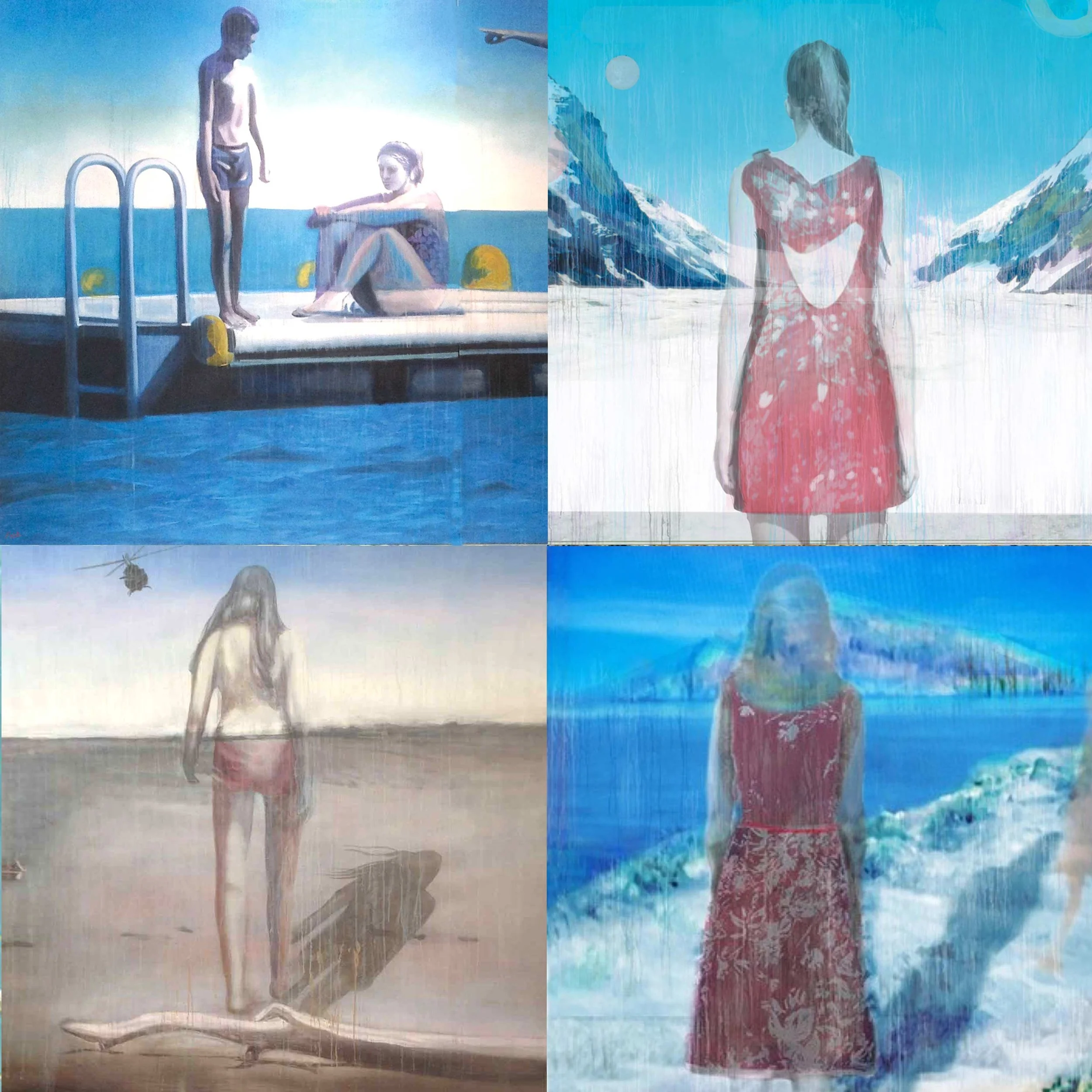
FABRIZIO MANCINELLI - Composer, Songwriter, Conductor

FABRIZIO MANCINELLI - Composer, Songwriter, Conductor

Composer · Songwriter · Conductor
The Land of Dreams ·The Snow Queen 3 · The Boat · Food 2050 · Green Book

I'm always trying to find my place here because, yes, I'm American. I'm an immigrant. I don't want to talk about the difficulties I face in my coming here, but it was not easy. So when I was writing the song called “Give Up”, and it's like a song that I'm singing to myself. Those are things, like there is a lot of personal experience. I was a luxury immigrant on a Fulbright grant on a J-1 Sponsor Visa, you know, with a solid family I could go back to in Italy in case anything went wrong. But at the same time, it was not easy. I want to do my job with a smile on my face, and it brought me to write the lyrics like: 'It's my turn. My time is now.' It's like something that I'm trying, we all try to get our turn to be our moment, to shine our moment. We're all waiting. We don't know if it will happen, but we need to try at least. We need to grab our life with our hands and make it work one way or another. So that's what I mean in my song “Orlando Dreams.”

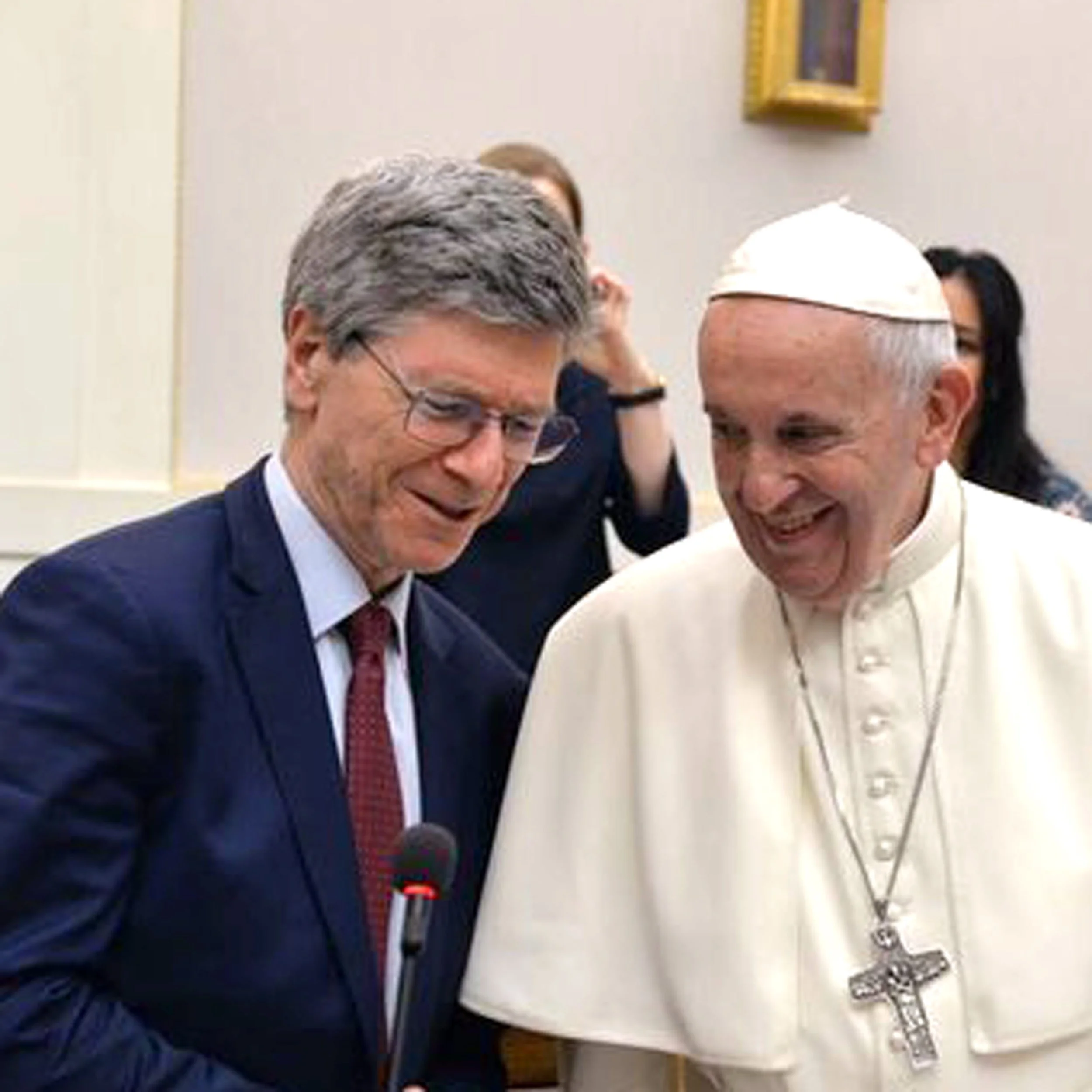
JEFFREY SACHS - Director, Center for Sustainable Development, Columbia - President, UN Sustainable Development Solutions Network

JEFFREY SACHS - Director, Center for Sustainable Development, Columbia - President, UN Sustainable Development Solutions Network

President of UN Sustainable Development Solutions Network
Director of Center for Sustainable Development, Columbia University

The US signed several statements in 2021 confirming that NATO would enlarge. Russia massed troops on its border and put on the table a draft US-Russia security agreement on December 17th, 2021 based on no NATO enlargement. The Biden administration formally replied that it was not willing to negotiate over that issue in a response in January. Then Russia invaded on February 24th, 2022. Four weeks later, Zelenskyy declared that Ukraine was accepting of neutrality. In other words, the initial Russian invasion brought Ukraine to the negotiating table, and during the second half of March, with the Turkish government being the mediators, Russia and Ukraine hammered out a peace agreement. Incredibly, the United States blocked it because the United States told the Ukrainian government: you fight on.

RICHARD VEVERS -  Founder & CEO of The Ocean Agency · Featured in Netflix’s Chasing Coral

RICHARD VEVERS - Founder & CEO of The Ocean Agency · Featured in Netflix’s Chasing Coral

Founder & CEO of The Ocean Agency · Featured in Netflix’s Chasing Coral

People just forget the importance of the ocean. It controls the climate system and sustains life. For example, there are 20 billion carbon-capturing sea creatures for every human being. They are sucking carbon out of the system and pooping it to the ocean floor. And this is one of the solutions happening on an epic scale in the ocean. And there are so many other examples like that. And if you think about our bodies, we're 60% water. And that water was once in the ocean with fish swimming through it.

WORLD OCEANS DAY

WORLD OCEANS DAY

Voices of environmentalists and artists.
Enjoy this Special Series with music courtesy of composer, producer and multi-instrumentalist Erland Cooper.

Highlights - DITTE LYSGAARD VIND - Circular Economy & Design Expert - Founder of The Circular Way

Highlights - DITTE LYSGAARD VIND - Circular Economy & Design Expert - Founder of The Circular Way

Circular Economy & Design Expert · Founder of The Circular Way
Author of Danish Design Heritage & Global Sustainability

Putting design first, it really enables us to shape a future that we don't yet know. But we need to be super tactile and practical about it as well. And then seeing that is something that design very much has the ability to do. And at the same time, having this growing frustration that wherever you go, wherever you talk about sustainability, it was a compromise. It was something that meant uglier, less convenient, more expensive, all these different things, but then diving into the Danish Design heritage, seeing that what set them apart was that after the World Wars, they had a social purpose of democratizing and rebuilding the welfare state, and that was not something that lessened the final result. On the contrary, it heightened the ambition, the final design, and the solutions.

DITTE LYSGAARD VIND - Circular Economy & Design Expert - Author of Danish Design Heritage & Global Sustainability

DITTE LYSGAARD VIND - Circular Economy & Design Expert - Author of Danish Design Heritage & Global Sustainability

Circular Economy & Design Expert · Founder of The Circular Way
Author of Danish Design Heritage & Global Sustainability

Putting design first, it really enables us to shape a future that we don't yet know. But we need to be super tactile and practical about it as well. And then seeing that is something that design very much has the ability to do. And at the same time, having this growing frustration that wherever you go, wherever you talk about sustainability, it was a compromise. It was something that meant uglier, less convenient, more expensive, all these different things, but then diving into the Danish Design heritage, seeing that what set them apart was that after the World Wars, they had a social purpose of democratizing and rebuilding the welfare state, and that was not something that lessened the final result. On the contrary, it heightened the ambition, the final design, and the solutions.

Special World Environment Day Stories - Environmentalists, Students & Teachers share their Love for the Planet

Special World Environment Day Stories - Environmentalists, Students & Teachers share their Love for the Planet

Environmentalists, Artists, Students & Teachers share their Love for the Planet

Today we’re streaming voices of environmentalists, artists, students, and teachers with music courtesy of composer Max Richter.

CARL SAFINA - Ecologist - Founding President of Safina Center - NYTimes Bestselling Author

CARL SAFINA - Ecologist - Founding President of Safina Center - NYTimes Bestselling Author

Ecologist, Founding President of Safina Center
NYTimes Bestselling Author of Becoming Wild · Song for the Blue Ocean · Beyond Words: What Animals Think and Feel

So we tend to take living for granted. I think that might be the biggest limitation of human intelligence is to not understand with awe and reverence and love that we live in a miracle that we are part of and that we have the ability to either nurture or destroy. The living world is enormously enriching to human life. I just loved animals. They're always just totally fascinating. They're not here for us. They're just here like we're just here. They are of this world as much as we are of this world. They really have the same claim to life and death and the circle of being.

Highlights - HENRIK FEXEUS - Mentalist, Author & TV Host - The Art of Reading Minds, Mind Melt

Highlights - HENRIK FEXEUS - Mentalist, Author & TV Host - The Art of Reading Minds, Mind Melt

Mentalist, Internationally Bestselling Author & TV Host
The Art of Reading Minds · Mind Storm · Cult · BOX

A mentalist is a kind of magician, an illusionist. And a mentalist uses whatever techniques are at that person's disposal to create the illusion of being able to read minds or being able to contact a supernatural presence…The only rule is that that part is fake, but then you can use techniques for magic or from stagecraft or from psychology. A mentalist is really someone who creates this illusion of having an almost supernatural ability. Having said that, today a mentalist sort of has come to mean something else, mainly due to popular culture TV series like The Mentalist and so on. And now there's this understanding of a mentalist as someone being able to read body language and influence behavior. It sort of ties into it all. And I've had a lifelong passion for magic, and it started when I was seven. Because I was always interested in the question: what if there's a color in the sky that we can't see? What if a handkerchief actually can vanish? What does that mean in terms of how the world works?

HENRIK FEXEUS - Mentalist, Author & TV Host “The Art of Reading Minds”,“Mind Melt”,“Cult”

HENRIK FEXEUS - Mentalist, Author & TV Host “The Art of Reading Minds”,“Mind Melt”,“Cult”

Mentalist, Internationally Bestselling Author & TV Host
The Art of Reading Minds · Mind Storm · Cult · BOX

A mentalist is a kind of magician, an illusionist. And a mentalist uses whatever techniques are at that person's disposal to create the illusion of being able to read minds or being able to contact a supernatural presence…The only rule is that that part is fake, but then you can use techniques for magic or from stagecraft or from psychology. A mentalist is really someone who creates this illusion of having an almost supernatural ability. Having said that, today a mentalist sort of has come to mean something else, mainly due to popular culture TV series like The Mentalist and so on. And now there's this understanding of a mentalist as someone being able to read body language and influence behavior. It sort of ties into it all. And I've had a lifelong passion for magic, and it started when I was seven. Because I was always interested in the question: what if there's a color in the sky that we can't see? What if a handkerchief actually can vanish? What does that mean in terms of how the world works?

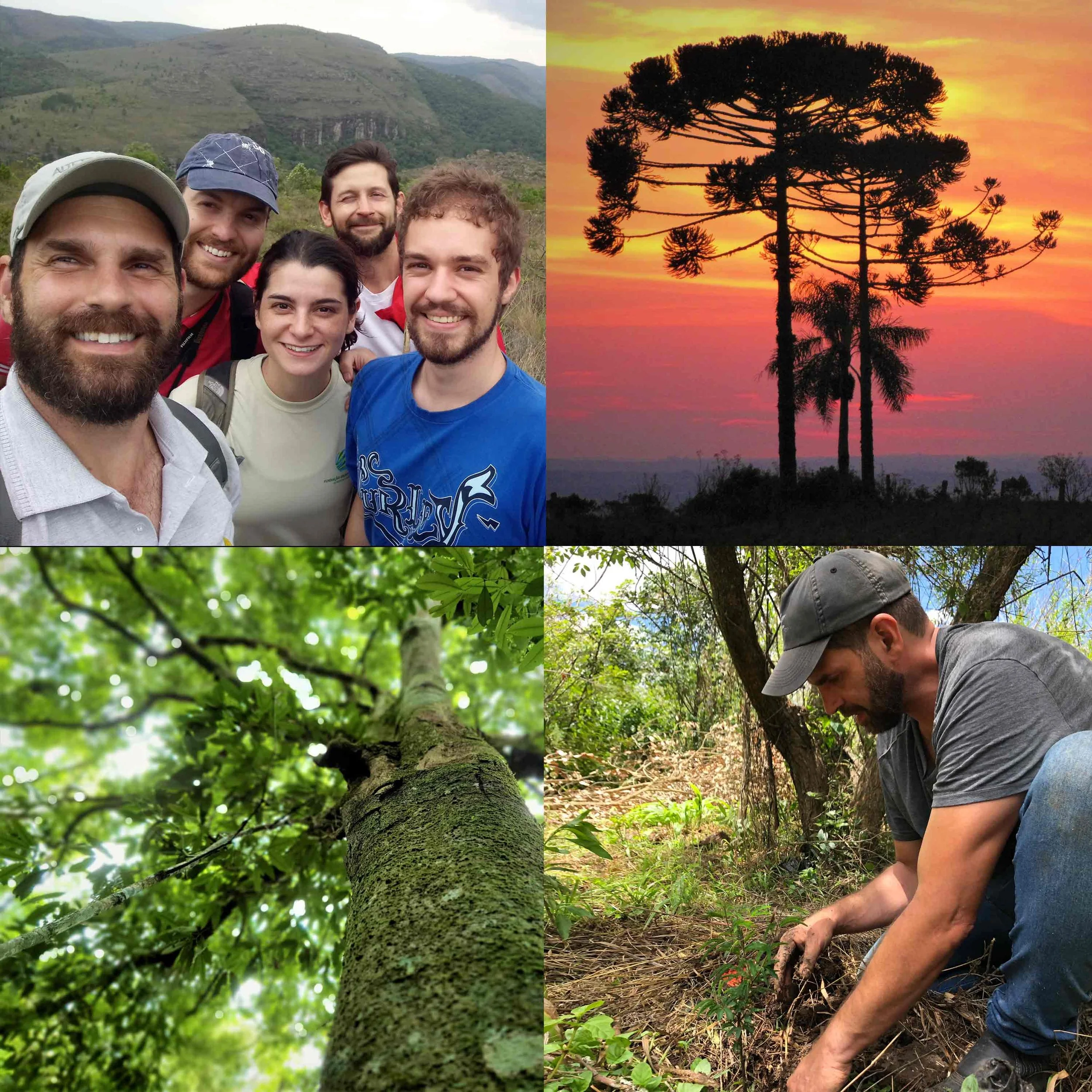
PABLO HOFFMAN - Whitley Award-winning Conservationist - Exec. Director & Co-Founder of Sociedade Chauá

PABLO HOFFMAN - Whitley Award-winning Conservationist - Exec. Director & Co-Founder of Sociedade Chauá

Whitley Award-winning Conservationist of Rare & Endangered Species
Executive Director & Co-Founder of Sociedade Chauá

Most of my family are cowboys and farmers. And I was like eight or nine years old. My grandmother was getting sick, and she always had a lot of plants at home in pots, and she asked me to help her to water the plants. And it was quite a good experience because when you start to like plants, it becomes like a viral thing. After some time I was growing my own plants, and I was very interested in doing her garden. And I would go to the forest and collect plants to grow at home like orchids that were beginning my first nursery. And it's a crazy love that grows when you start to understand how plants grow, and how the ecosystem functions. And how beautiful and amazing all this is. And we as humans are part of it, and I've always loved animals as well, but plants are my passion. And, of course, my, daughter's name is Flora. My wife, she's also a botanist, and she loves plants as well. So we live in the countryside where the farm has all kinds of plants. And I think one of the things that made me love and try to preserve and conserve the ecosystems and species is when you understand how slowly a plant or tree grows, and how much it takes to keep them healthy. And the interactions between the animals and plants, the pollinators and the dispersers within the ecosystem, it's something that everybody should know and see.

Highlights - BROCK BASTIAN - Author of The Other Side of Happiness: Embracing a More Fearless Approach to Living

Highlights - BROCK BASTIAN - Author of The Other Side of Happiness: Embracing a More Fearless Approach to Living

Author of The Other Side of Happiness: Embracing a More Fearless Approach to Living
Professor at University of Melbourne’s School of Psychological Sciences

In today's world, feeling happy is no longer simply a state of mind. It's become a marker of mental health and success. On the flip side, pain and sadness are viewed as signals of failure and sickness. If we're not happy, then there is something wrong with us, and we need to fix it. It is no wonder that the painkiller and antidepressant markets, already worth billions of dollars, continue their rapid expansion. We've come to treat even commonplace experiences of pain and sadness as pathological, as things that need to be medicated and eradicated.

BROCK BASTIAN - Author of The Other Side of Happiness: Embracing a More Fearless Approach to Living

BROCK BASTIAN - Author of The Other Side of Happiness: Embracing a More Fearless Approach to Living

Author of The Other Side of Happiness: Embracing a More Fearless Approach to Living
Professor at University of Melbourne’s School of Psychological Sciences

In today's world, feeling happy is no longer simply a state of mind. It's become a marker of mental health and success. On the flip side, pain and sadness are viewed as signals of failure and sickness. If we're not happy, then there is something wrong with us, and we need to fix it. It is no wonder that the painkiller and antidepressant markets, already worth billions of dollars, continue their rapid expansion. We've come to treat even commonplace experiences of pain and sadness as pathological, as things that need to be medicated and eradicated.

Highlights - ANDRI SNÆR MAGNASON - Writer & Documentary Filmmaker - On Time and Water, The Casket of Time, LoveStar, Not Ok

Highlights - ANDRI SNÆR MAGNASON - Writer & Documentary Filmmaker - On Time and Water, The Casket of Time, LoveStar, Not Ok

Icelandic Writer & Documentary Filmmaker
On Time and Water · The Casket of Time · LoveStar · Not Ok · The Story of the Blue Planet

A letter to the future
Ok is the first Icelandic glacier to lose its status as a glacier.
In the next 200 years all our glaciers are expected to follow the same path.
This monument is to acknowledge that we know
what is happening and what needs to be done.
Only you know if we did it.

If you look at the Himalayas, the frozen glaciers are feeding 1 billion people with milky white water. The real tragedy is if the Himalayan glaciers go the same way as Iceland. In many places in the world, glaciers are very important for agriculture and the basic water supply of people.

ANDRI SNÆR MAGNASON - Icelandic Writer & Documentary Filmmaker - On Time and Water, The Casket of Time, LoveStar, Not Ok

ANDRI SNÆR MAGNASON - Icelandic Writer & Documentary Filmmaker - On Time and Water, The Casket of Time, LoveStar, Not Ok

Icelandic Writer & Documentary Filmmaker
On Time and Water · The Casket of Time · LoveStar · Not Ok · The Story of the Blue Planet

A letter to the future
Ok is the first Icelandic glacier to lose its status as a glacier.
In the next 200 years all our glaciers are expected to follow the same path.
This monument is to acknowledge that we know
what is happening and what needs to be done.
Only you know if we did it.

If you look at the Himalayas, the frozen glaciers are feeding 1 billion people with milky white water. The real tragedy is if the Himalayan glaciers go the same way as Iceland. In many places in the world, glaciers are very important for agriculture and the basic water supply of people.

Highlights - RACHEL ASHEGBOFEH IKEMEH - Whitley Award Winner - Founder of Southwest Niger Delta Forest Project

Highlights - RACHEL ASHEGBOFEH IKEMEH - Whitley Award Winner - Founder of Southwest Niger Delta Forest Project

Whitley Award-winning Conservationist
Founder/Director of the Southwest Niger Delta Forest Project

There's no question, we are in a state of conservation emergency. And we have a real situation on our hands and it's so fragile that if we take a step back, we could say goodbye to two types of chimpanzee species and the forest is also on the brink of disappearing forever. And when I started as a conservation researcher, there was kidnapping and insecurity throughout the Nile Delta region, and it was immersed in a lot of oil politics and civil conflicts. Kidnapping and insecurity ran throughout that region. Let's not forget that Nigeria is Africa's most populous nation now. We are over 200 million people in the country, and it's a growing population of young people who are looking for means of livelihood and on the lookout to find space to live. So parts of the forest within one year would suddenly become a new village.

RACHEL ASHEGBOFEH IKEMEH - Whitley Award-winning Conservationist - Founder/Director, Southwest Niger Delta Forest Project

RACHEL ASHEGBOFEH IKEMEH - Whitley Award-winning Conservationist - Founder/Director, Southwest Niger Delta Forest Project

Whitley Award-winning Conservationist
Founder/Director of the Southwest Niger Delta Forest Project

There's no question, we are in a state of conservation emergency. And we have a real situation on our hands and it's so fragile that if we take a step back, we could say goodbye to two types of chimpanzee species and the forest is also on the brink of disappearing forever. And when I started as a conservation researcher, there was kidnapping and insecurity throughout the Nile Delta region, and it was immersed in a lot of oil politics and civil conflicts. Kidnapping and insecurity ran throughout that region. Let's not forget that Nigeria is Africa's most populous nation now. We are over 200 million people in the country, and it's a growing population of young people who are looking for means of livelihood and on the lookout to find space to live. So parts of the forest within one year would suddenly become a new village.