ADA LIMΓ“N

ADA LIMΓ“N

National Book Critics Circle Award-winning Poet & Host of The Slowdown podcast

This poem was written when I was having a real moment of reckoning, not that I hadn't had it earlier, but where I was doing some deep reading about the climate crisis and really reckoning with myself, with where we were and what was happening, what the truth was. And I felt like it was so easy to slip down into a darkness, into a sort of numbness, and I didn't think that that numbness and darkness could be useful.

(Highlights) JERICHO BROWN

(Highlights) JERICHO BROWN

Pulitzer Prize-winning Poet
Author of The Tradition & The New Testament

I just want to make the poems like a living being…There are moments that I’m not at the desk, but I’m living life. And living life is actually what leads to writing. You have to have experiences to write about. Whether or not you are aware of those experiences as you are writing them down because if you’re doing music first, maybe you’re not aware of what you’re writing. And yet, those experiences are what come to fruition in your writing. You become aware. Oh, I did come on that roller coaster that time that I haven’t thought about in twenty years. Oh I did make love to that cute person that I haven’t thought about in ten years, but you’ve got to make love, you’ve got to get on roller coasters, you’ve got to get your heart broken. You’ve got to dance. You gotta get out and do things and that, too, is a part of writing. You have to trust you’re a writer by identity. And if you can trust that you’re a writer by identity, then you don’t have to be at a desk.

JERICHO BROWN

JERICHO BROWN

Pulitzer Prize-winning Poet
Author of The Tradition & The New Testament

I just want to make the poems like a living being…There are moments that I’m not at the desk, but I’m living life. And living life is actually what leads to writing. You have to have experiences to write about. Whether or not you are aware of those experiences as you are writing them down because if you’re doing music first, maybe you’re not aware of what you’re writing. And yet, those experiences are what come to fruition in your writing. You become aware. Oh, I did come on that roller coaster that time that I haven’t thought about in twenty years. Oh I did make love to that cute person that I haven’t thought about in ten years, but you’ve got to make love, you’ve got to get on roller coasters, you’ve got to get your heart broken. You’ve got to dance. You gotta get out and do things and that, too, is a part of writing. You have to trust you’re a writer by identity. And if you can trust that you’re a writer by identity, then you don’t have to be at a desk.

MASTER SHI HENG YI

MASTER SHI HENG YI

35th Generation of Shaolin Masters
Headmaster of the Shaolin Temple Europe

Just getting to know what is Buddhism, which is the foundation of every monastery. The Shaolin Temple is in the core, first of all, it’s a Buddhist monastery and when you are starting to read about Buddhism, one of the key sentences, in the beginning, is: With your thoughts, you are creating the world…So it’s very rarely clearly stated that it is the thoughts that are creating the world. Nevertheless, if you are now looking at the practices that the Shaolin Temple offers, that is quite physical. There is a lot of physicality in there, so you might think but why are you saying with thoughts you create the world, but you have so many different physical activities. It is because if you want to have mental freedom. If you want to approach freedom, you cannot just approach freedom by doing things or trying to chase freedom. The freedom that we are looking for is the type of freedom that is derived and that is very closely related to its counterpart, which is very hard restriction or very hard structure. So if you want to experience what freedom is, look at the restrictions of your life.

REBECCA WALKER

REBECCA WALKER

Award-Winning Writer, Producer & Co-founder of Third Wave Fund

The idea of writing memoir is about listening carefully. The way to find a story or, at least the story that needs to be told is that moment that you’re writing is the emerges from a deep kind of inner listening and finding the memories that are charged that don’t want to leave that have a certain kind of energy to them and, if you listen to them, and you allow them to be born in the writing, you discover your own story because your story is basically made up of all the memories that continue to hold the charge for you. All the memories that are lodged in your mind that you’ve secreted away and when you can excavate that story and you can write it down, then you can make sense of it and you can understand why you’re living the way you’re living and why you feel the way you feel. And you can also decide to to release those memories so that you can have new memories that can define and can shape your life.

(Highlights) ANA CASTILLO

(Highlights) ANA CASTILLO

Award-winning Xicana Activist, Editor, Poet, Novelist, Artist
Author of My Book of the Dead
One of the things that is dying is our planet. We hear these sirens every single day. We’re being warned daily by experts and concerned people how vast that squandering is going. It’s a case of urgency and it’s astounding and a very sad, a very pathetic comment on modern life that most people are ignoring those signs. As a poet, it seems to me that one of the tasks that the poet takes on, it’s a vocation that’s born with it, it’s this consciousness, this serving as witness.

ANA CASTILLO

ANA CASTILLO

Award-winning Xicana Activist, Editor, Poet, Novelist, Artist
Author of My Book of the Dead
One of the things that is dying is our planet. We hear these sirens every single day. We’re being warned daily by experts and concerned people how vast that squandering is going. It’s a case of urgency and it’s astounding and a very sad, a very pathetic comment on modern life that most people are ignoring those signs. As a poet, it seems to me that one of the tasks that the poet takes on, it’s a vocation that’s born with it, it’s this consciousness, this serving as witness.

(Highlights) MARGE PIERCY

(Highlights) MARGE PIERCY

Novelist, Poet & Activist

People who take care of sick people and AIDS and teachers and garbage collectors and people who work in daycare…all the things that have to happen in society we pay shit for. We pay an enormous amount of money to people who can throw a ball through a hoop. We pay an enormous amount of hedge fund people. All the people who take over corporations go in and destroy get immensely rich while the people who do what we actually need doing, what we must have to survive, the people who grow food, the independent farmers that used to exist…

MARGE PIERCY

MARGE PIERCY

Novelist, Poet & Activist

People who take care of sick people and AIDS and teachers and garbage collectors and people who work in daycare…all the things that have to happen in society we pay shit for. We pay an enormous amount of money to people who can throw a ball through a hoop. We pay an enormous amount of hedge fund people. All the people who take over corporations go in and destroy get immensely rich while the people who do what we actually need doing, what we must have to survive, the people who grow food, the independent farmers that used to exist…

(Highlights) DAVID TOMAS MARTINEZ

(Highlights) DAVID TOMAS MARTINEZ

Pushcart Award-Winning Poet

When I was younger, I never really thought of living past twenty-five…I felt like I was in a movie. I thought that I was living this movie idea of things and there’d be gunshots around you. You hear it hitting the concrete, and you’re like β€˜Oh, shit’. Seriously, I didn’t think of it as real life. When you’re young, the idea that I’d known people that were killed early, you go to prison. These just felt like matter of fact. They seemed to be this part of life and you just accepted them.

DAVID TOMAS MARTINEZ

DAVID TOMAS MARTINEZ

Pushcart Award-Winning Poet

When I was younger, I never really thought of living past twenty-five…I felt like I was in a movie. I thought that I was living this movie idea of things and there’d be gunshots around you. You hear it hitting the concrete, and you’re like β€˜Oh, shit’. Seriously, I didn’t think of it as real life. When you’re young, the idea that I’d known people that were killed early, you go to prison. These just felt like matter of fact. They seemed to be this part of life and you just accepted them.

(Highlights) AIMEE NEZHUKUMATATHIL

(Highlights) AIMEE NEZHUKUMATATHIL

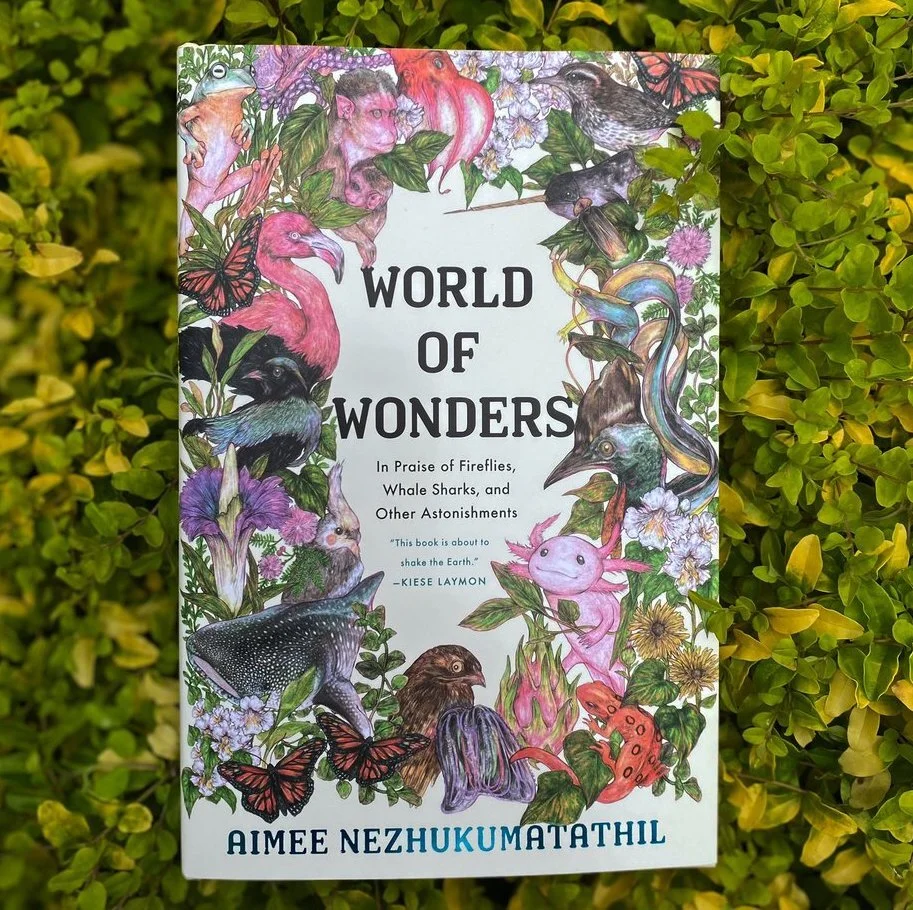
Poet & Author of World of Wonders: In Praise of Fireflies, Whale Sharks & Other Astonishments

I think something happened in 2016, where I just snapped. There was a lot of a hateful news going around with American politics, and I didn’t know how to answer a lot of my kids questions then. Something I know I can do is to tell them things that I loved about this planet or things that I loved in other people because all they saw or heard about was just this weird ugliness, school shootings, leaders who were saying β€˜build that wall’ to anybody who looked different than them, and so I remember the night I shut myself up in my office after the kids went to bed and just started writing about plants and animals that I loved from my childhood.

AIMEE NEZHUKUMATATHIL

AIMEE NEZHUKUMATATHIL

Poet & Author of World of Wonders: In Praise of Fireflies, Whale Sharks & Other Astonishments

I think something happened in 2016, where I just snapped. There was a lot of a hateful news going around with American politics, and I didn’t know how to answer a lot of my kids questions then. Something I know I can do is to tell them things that I loved about this planet or things that I loved in other people because all they saw or heard about was just this weird ugliness, school shootings, leaders who were saying β€˜build that wall’ to anybody who looked different than them, and so I remember the night I shut myself up in my office after the kids went to bed and just started writing about plants and animals that I loved from my childhood.

POETRY & PROSE

POETRY & PROSE

Welcome to The Creative Process’s poetry and prose series. In this episode, we’ll be hearing powerful readings of poems and prose from various writers. 

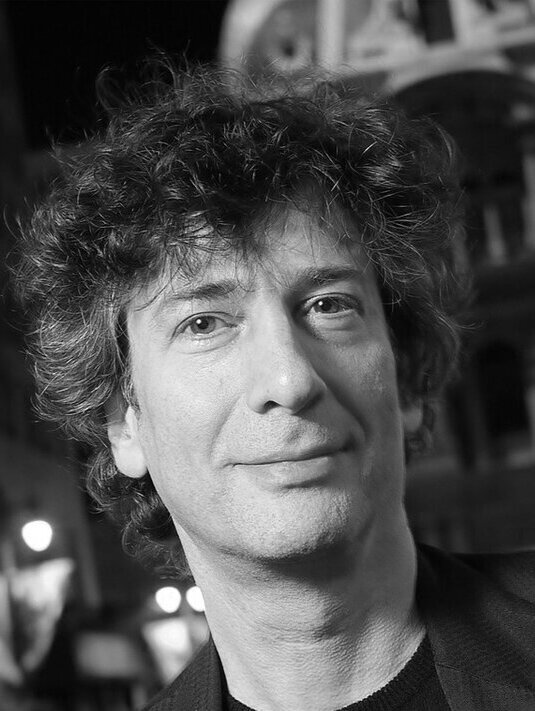
To begin, we have Neil Gaiman (www.neilgaiman.com), acclaimed writer of The Sandman, American Gods, Stardust, and Coraline, read some of his poetry. His contributions to practically every literary genre have earned him a place in the Dictionary of Literary Biography as one of the top ten living postmodern writers. Gaiman’s work has been honored with many awards internationally, including the Newbery and Carnegie Medals. Gaiman reads his poems β€œA Writer’s Prayer” and β€œThese Are Not Our Faces”. 

Poet and novelist Marge Piercy (www.margepiercy.com) reads poems from her newest collection, On the Way Out, Turn Off the Light. She has written 17 novels including The New York Times Bestseller Gone To Soldiers, 19 volumes of poetry, and critically acclaimed memoir, Sleeping with Cats. She is active in antiwar, feminist and environmental causes. In her segment, she reads β€œβ€œLanguage has shaped my life”; β€œWho can hold them, what can save them?”; β€œCan’t you hear them?”; and β€œThis is our legacy”. 

Alice Fulton, (www.alicefulton.com) shares poems from her most recent work, Barely Composed. She has received an American Academy of Arts and Letters Award in Literature and fellowships from the MacArthur Foundation, National Endowment for the Arts, Guggenheim Foundation, and Ingram Merrill Foundation. Her other books include Sensual Math, Powers Of Congress, Palladium, Dance Script With Electric Ballerina, and an essay collection, Feeling As A Foreign Language. Fulton reads β€œBecause We Never Practiced With The Escape Chamber” and β€œTriptych For Topological Heart”. 

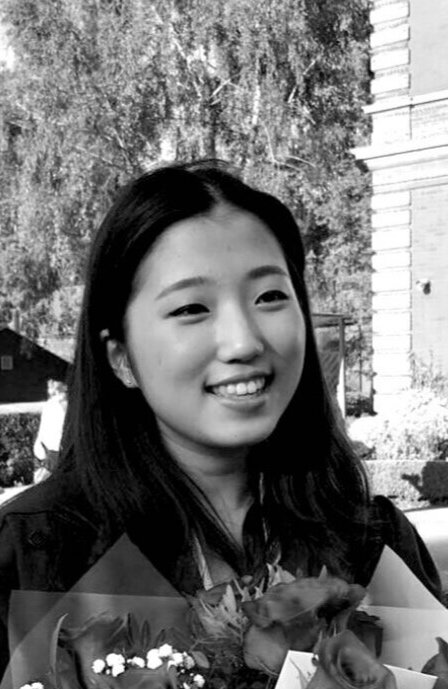
EJ Koh (www.thisisejkoh.com) reads an excerpt from her memoir, The Magical Language of Others, the winner of the Pacific Northwest Book Award and Longlist for the PEN Open Book Award. She also has written the poetry collection A Lesser Love (Louisiana State University Press, 2017), winner of the Pleiades Press Editors Prize for Poetry. Her poems, translations, and stories have appeared in Boston Review, Los Angeles Review of Books, Slate, and World Literature Today. 

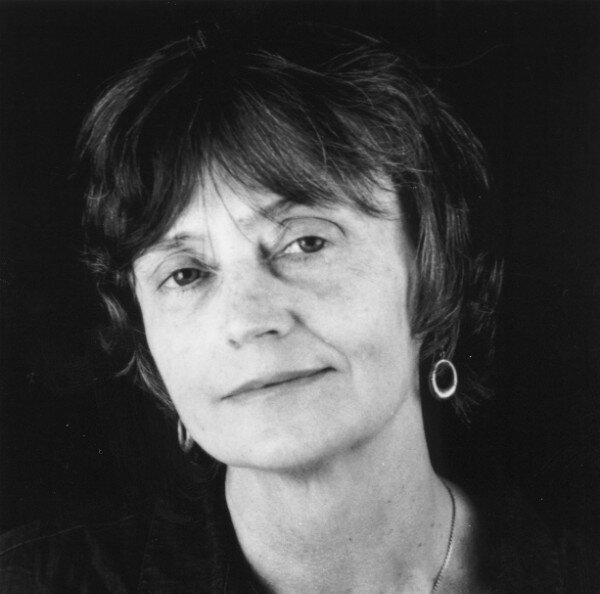
Alice Notley, writer of over 40 volumes of poetry, reads from her newest collection Certain Magical Acts. Notley has received many awards including the Academy of American Poets’ Lenore Marshall Prize,  the Poetry Society of America’s Shelley Award,  the Griffin International Prize, two NEA Grants, the Los Angeles Times Book Award for Poetry, and the Ruth Lilly Poetry Prize, a lifetime achievement award. She is also a visual artist and collagist, and a book of her poem-drawings is forthcoming from Archway Editions. Notley reads two poems β€œTwo of Swords” and β€œI The People”.

Margo Berdeshevsky, NYC born, writes from Paris. Her latest collection: β€œBefore The Drought” (Glass Lyre Press/ National Poetry Series finalist.) Newest poetry collection, β€œIt Is Still Beautiful To Hear The Heart Beat” is forthcoming from Salmon Poetry. Author of β€œBetween Soul & Stone” and β€œBut a Passage in Wilderness” (Sheep Meadow Press), β€œBeautiful Soon Enough” (1st Ronald Sukenick Innovative Fiction Award, for FC2) Other honors include Robert H. Winner Award from Poetry Society of America. Published in Poetry International, New Letters, Kenyon Review, Plume, The American Journal of Poetry, The Collagist, Prairie Schooner, Big Other, PN Review, Under the Radar, Beltway, and many more. β€œKneel Said The Night” waits at the gate.

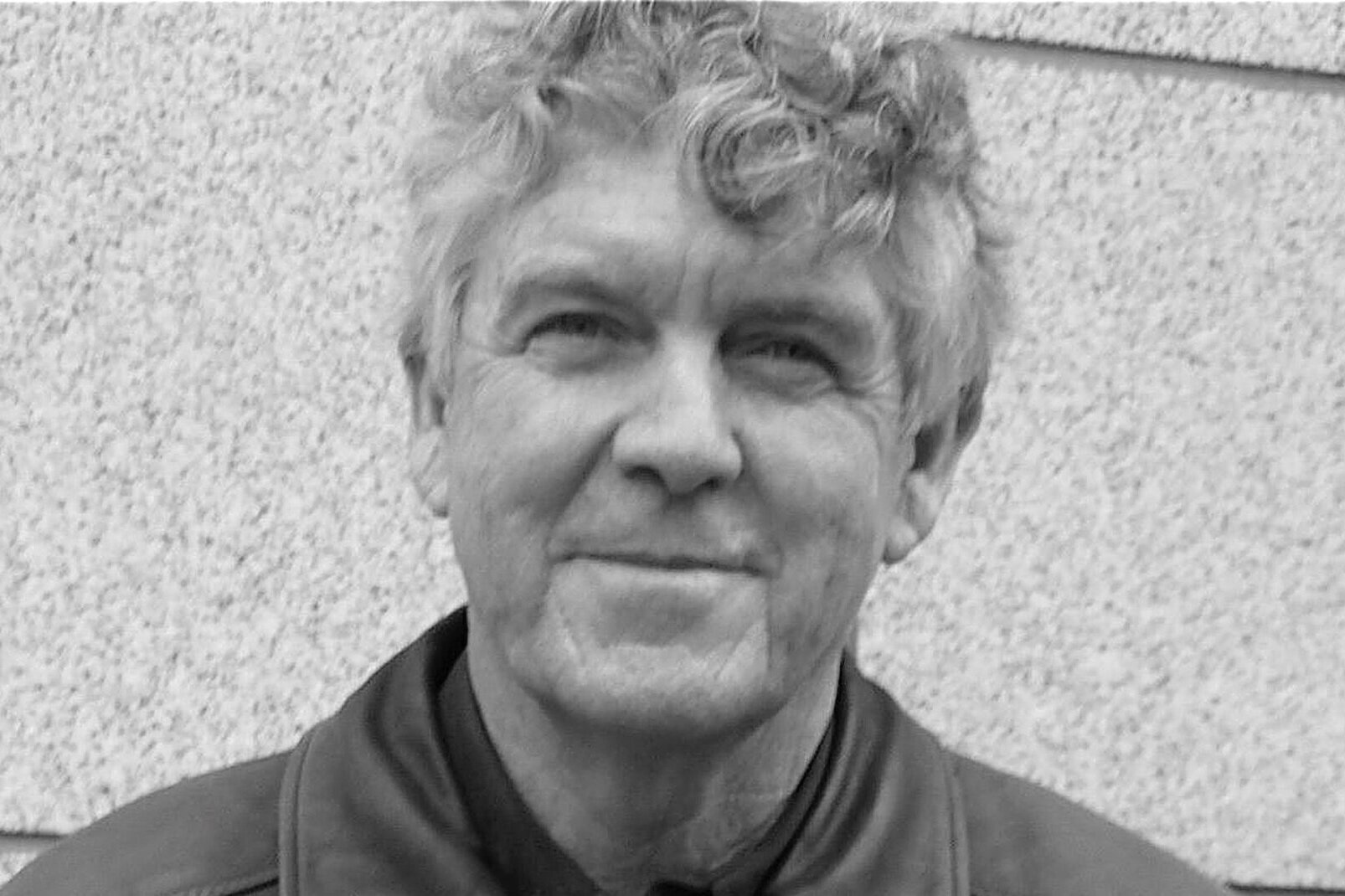
Gerald Fleming is the author of the poetry collections One (Hanging Loose Press, 2016), The Choreographer, Night of Pure Breathing, and Swimmer Climbing onto Shore. His work has appeared in many magazines over the decades, including New Letters, Michigan Quarterly Review, Hanging Loose, Carolina Quarterly, New World Writing, Volt, and The Prose Poem. The former editor of the magazines Barnabe Mountain Review and Forward to Velma, he is currently editing the limited-edition vitreous magazine One (More) Glass and The Collected Poetry & Prose of Lawrence Fixel

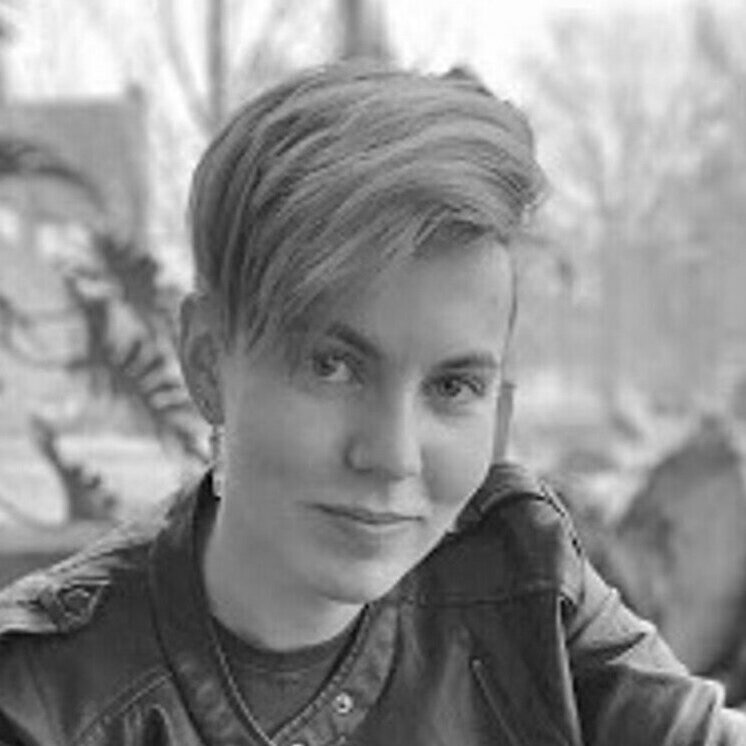
Jess Wilber is a recent graduate of Oberlin College, where she double-majored in Environmental Studies & East Asian Studies with a double-minor in Politics & History and a concentration in International Affairs. She has been working with Citizens’ Climate Lobby (CCL) since her freshman year of college and helped to pioneer their current programs for students in Higher Education. She was among the first members of the Campus Leaders Program, which seeks to educate and empower students to become effective climate advocates and organizers in their communities.Beyond her climate work, Jess is a musician, poet, certified mediator, and nationally and world-ranked equestrian in the Morgan Horse circuit. 


To be included in special podcasts celebrating poetry and prose. You can submit a reading of your work at www.creativeprocess.info/poetryprose and we'll get in touch about the possibility of taking part in an interview for the creative process.

-

.sqs-block-summary-v2 .summary-block-setting-text-size-small .summary-excerpt p { font-size: 10px; }
The Creative Process Β· Poetry & Prose

The Creative Process Β· Poetry & Prose

YU YOUNG LEE

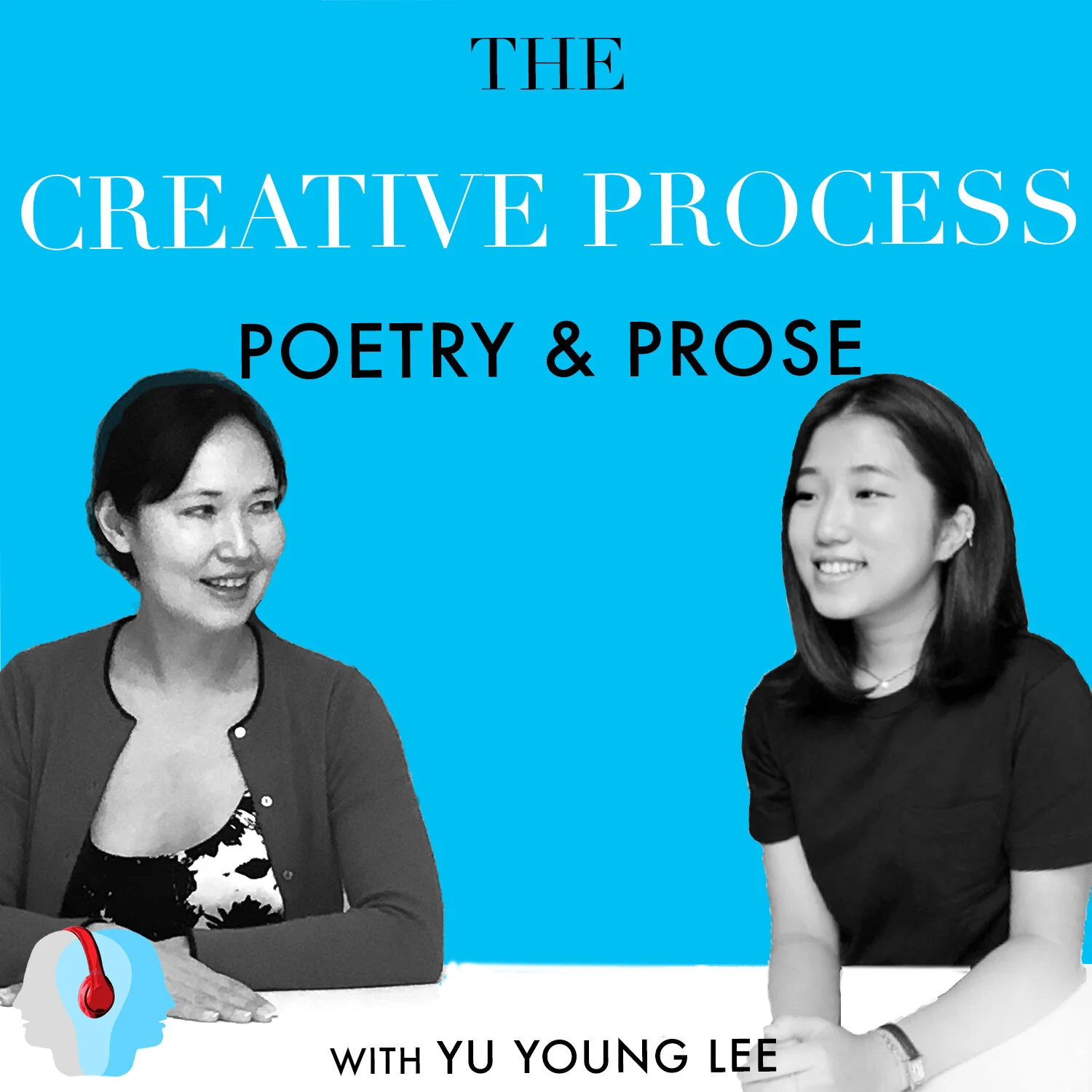
Welcome to this podcast series, a new chapter of The Creative Process dedicated to celebrating and sharing poetry and short prose. My name is Yu Young Lee, and I'm joined by Mia Funk, the founder of The Creative Process, to talk more in depth about this project and our hopes and visions for it. Would you like to describe what kind of organization The Creative Process is? 

μ•ˆλ…•ν•˜μ„Έμš”. μ‹œμ™€ λ‹¨νŽΈ μ†Œμ„€/산문을 λ‚˜λˆ„κ³  ν•¨κ»˜ κ°μƒν•˜κΈ° μœ„ν•΄ μ‹œμž‘ν•œ The Creative Process의 μƒˆλ‘œμš΄ ν”„λ‘œμ νŠΈ μ‹œλ¦¬μ¦ˆμ— ν™˜μ˜ν•΄μš”. 제 이름은 μ΄μœ μ˜μ΄μ—μš”. 였늘 이 ν”„λ‘œμ νŠΈμ— λŒ€ν•΄μ„œ ν•¨κ»˜ 이야기λ₯Ό λ‚˜λˆŒ, 이 κΈ°κ΄€μ˜ 창립자, Mia Funkλ₯Ό μ†Œκ°œν•΄ λ“œλ €μš”. The Creative Process μ΄λž€ 기관은 무슨 일을 ν•˜λ‚˜μš”? 

MIA FUNK

The Creative Process is a traveling exhibition and international educational initiative and podcast. During Coronavirus times, some of our exhibitions have been postponed, but we’ve been continuing the podcasting process and various other initiatives that we have with universities. We have the participation of over 70 leading universities, schools and educational groups, as well as parallel projects to do with the environment that we're now working with a number of green groups in the run up to the UN Conference for Climate Change. 

I feel so fortunate to work with wonderful groups of passionate students, young poets, and then those more established in their careersβ€”leading artists, writers, creative thinkers across the arts and sciences. They’ve added their voice to The Creative Process whose works appear in the traveling exhibition, which is so inspiring.

The Creative ProcessλŠ” μˆœνšŒν•˜λŠ” ꡭ제 μ „μ‹œνšŒ, ꡐ윑 μ΄λ‹ˆμ…”ν‹°λΈŒ 및 νŒŸμΊμŠ€νŠΈμ΄μ—μš”. μ§€κΈˆμ€ μ½”λ‘œλ‚˜ λ°”μ΄λŸ¬μŠ€λ‘œ 인해 μ „μ‹œνšŒλŠ” μž μ‹œ μ€‘λ‹¨λ˜μ—ˆμ§€λ§Œ,  팟캐슀트 ν”„λ‘œμ νŠΈμ™€ λŒ€ν•™κ³Ό ν•¨κ»˜ν•˜λŠ” λ‹€λ₯Έ λ‹€μ–‘ν•œ ν”„λ‘œκ·Έλž¨μ„ 적극적으둜 μš΄μ˜ν•˜κ³  μžˆμ–΄μš”. λ”°λΌμ„œ μš°λ¦¬λŠ” 70개 μ΄μƒμ˜ λŒ€ν•™κ΅ 및 ꡐ윑 그룹이 μ°Έμ—¬ν•˜κ³  μžˆμ–΄μš”. ν˜„μž¬ μš°λ¦¬λŠ” κΈ°ν›„λ³€ν™”λ₯Ό μœ„ν•œ UNνšŒμ˜μ™€ μ—¬λŸ¬ 녹색 κ·Έλ£Ήμ΄λž‘ 같이 콜라보λ₯Ό ν•˜λ©΄μ„œ ν™˜κ²½κ³Ό κ΄€λ ¨λœ λͺ‡ κ°€μ§€ ν”„λ‘œμ νŠΈλ₯Ό μ§„ν–‰ν•˜κ³  μžˆμ–΄μš”. 

개인적으둜, 열정적인 학생, 창쑰적인 μ²­λ…„λ“€κ³Ό 그리고 더 λ§Žμ€ κ²½λ ₯을 μŒ“μ€ 예술과 κ³Όν•™ λΆ„μ•Όμ˜ 선도적인 μ‚¬λžŒλ“€ 또 ν›Œλ₯­ν•˜κ³  μ˜κ°μ„ μ£ΌλŠ” μ—¬λŸ¬λΆ„λ“€κ³Ό ν•¨κ»˜ ν•  수 μžˆμ–΄μ„œ 정말 ν–‰μš΄μ΄λΌκ³  μƒκ°ν•΄μš”.

YL

There are so many projects that The Creative Process is part of, with so many different voices. How would this branch fit into the whole picture?

The Creative Processκ°€ μ‹œμž‘ν–ˆκ±°λ‚˜ μ§€κΈˆ μ°Έμ—¬ν•˜λŠ” ν”„λ‘œμ νŠΈκ°€ λ§Žμ€λ°μš”, 이 μƒˆλ‘œμš΄ μ‹œμ™€ μ‚°λ¬Έ λΆ„μ•ΌλŠ” 전체 그림에 μ–΄λ–»κ²Œ λ“€μ–΄ λ§žμ„ 수 μžˆμ„κΉŒμš”?

MF

We'll be sharing it as part of our main podcasts. We have been interviewing short fiction writers and poets from the beginning, but we haven’t had a chance to focus on them in as much depth as we would have liked to. Those who have already participated or will shortly be participating include Marge Piercy, Etgar Keret, Alice Fulton, Amy Gerstler, Alice Notley, Yusef Komunyakaa Daniel Khalastchi, David Tomas Martinez. With this project, we really want to celebrate the important work that poets and flash fiction writers do, particularly in these times where we're going through this pandemic. Many of us are reaching for comfort or ways of understanding the world. And one of those ways has always been poetry.

μ£Όμš” 팟캐슀트의 일뢀λ₯Ό 곡유 ν•  μ˜ˆμ •μ΄μ—μš”. μ €ν¬λŠ” μ²˜μŒλΆ€ν„° λ‹¨νŽΈ μ†Œμ„€ μž‘κ°€μ™€ μ‹œμΈλΆ„λ“€μ΄λž‘ 인터뷰λ₯Ό ν•΄μ™”μ§€λ§Œ, μš°λ¦¬κ°€ λ°”λΌλŠ” 만큼 μ§‘μ€‘μ μœΌλ‘œ 깊게 이해할 수 μžˆλŠ” κΈ°νšŒκ°€ μ—†μ—ˆμ–΄μš”. 이미 μ°Έμ—¬ν–ˆκ±°λ‚˜ κ³§ μ°Έμ—¬ν•  μž‘κ°€λŠ” Marge Piercy, Etgar Keret, Alice Fulton, Alice Notley, Amy Gerstler, Yusef Komunyakaa, Daniel Khalastchi, David Tomas Martinez, 그리고 더 λ§Žμ€ μ‹œμΈλΆ„λ“€κ³Ό 콜라보λ₯Ό ν•  κ±°μ—μš”. 

이 ν”„λ‘œμ νŠΈλ₯Ό 톡해 μ‹œμΈκ³Ό β€˜ν”Œλž˜μ‹œ ν”½μ…˜β€™ μž‘κ°€λ“€μ΄ 우리 μ‚¬νšŒμ—μ„œ 정말 μ€‘μš”ν•œ 역할이 μžˆλ‹€κ³  λ”λ”μš± κ°•μ‘°ν•˜κ³  μ‹Άμ–΄μš”. 특히 이 μ‹œκΈ°μ— μš°λ¦¬λŠ” μ½”λ‘œλ‚˜λ₯Ό κ²ͺκ³  있으며, λ§Žμ€ μ‚¬λžŒλ“€μ€ 글을 톡해 세상을 쑰금 더 μ΄ν•΄ν•˜κ³ , μ‹œλ₯Ό 읽으며 마음의 μœ„λ‘œλ₯Ό λ°›μ£ . 

YL

Yes, I'm really excited to hear all the different perspectives that these poets and writers will share, especially during this unprecedented time. Each poet or writer will bring something new to each episode. Are we looking to do themed episodes? Or will we have open submissions, allowing episodes to emerge based on the pieces we receive?

μ§€κΈˆ 이 μ „λ‘€μ—†λŠ” μ‹œλŒ€μ— κ΄€ν•œ μ‹œμΈλ“€κ³Ό μž‘κ°€λ“€μ˜ 감상과 μž‘ν’ˆμ„ 듀을 생각에 저도 κΈ°λŒ€λ˜λ„€μš”. μ•„λ§ˆ 각각 μ—ν”Όμ†Œλ“œμ— μƒˆλ‘œμš΄ 관점이 λ°ν˜€μ§€κ² μ£ . 이 ν”„λ‘œμ νŠΈλŠ” ν…Œλ§ˆλ₯Ό λ”°λΌμ„œ μ—ν”Όμ†Œλ“œλ₯Ό μ°Ύκ³  μžˆκ±°λ‚˜, μ•„λ‹ˆλ©΄ 상관 없이, λ§Žμ€ 주제의 제좜된 μ‹œλ₯Ό κ³΅κ°œν•  κ³„νšμΈκ°€μš”?  

MF

Well, I think that people tend to think about a lot of the same things, and many of the things are eternal. Like right now, these times have made us think about isolation, or familyβ€”these kinds of broad themes. We could possibly have some thematic podcasts, but I don't like to limit it to just that. I always say people should submit their best or more representative work, just work that is most meaningful to them. 

κΈ€μŽ„μš”, μ €λŠ” μ‚¬λžŒλ“€μ΄ λΉ„μŠ·ν•œ μƒκ°μ΄λ‚˜ 감정을 κ°–κ³  μžˆλŠ” 것 κ°™μ•„μš”. 그리고 그런 ν…Œλ§ˆλŠ” μ—­μ‚¬μ μœΌλ‘œ 항상 μžˆμ—ˆκ³ , μ˜μ›ν•˜λ‹€κ³  μƒκ°ν•΄μš”. μ™Έλ‘œμ›€, κ°€μ‘±, 이런 μ’…λ₯˜μ˜ κ΄‘λ²”μœ„ν•œ μ£Όμ œμ— λŒ€ν•΄ μƒκ°ν•˜κ²Œ λ§Œλ“€μ—ˆμ£ . μ£Όμ œλ³„ νŒŸμΊμŠ€νŠΈκ°€ μžˆμ„ μˆ˜λŠ” μžˆμ§€λ§Œ 여기에 μ œν•œν•˜κ³  μ‹Άμ§€λŠ” μ•Šμ•„μš”. μ €λŠ” 항상 μžμ‹ μ˜ 졜고의 μž‘ν’ˆμ΄λ‚˜ κ°€μž₯ μ˜λ―ΈμžˆλŠ” λŒ€ν‘œ μž‘ν’ˆμ„ μ œμΆœν•΄μ•Όν•œλ‹€κ³  λ§ν•΄μš”.

YL

Literally, there's an infinite amount of themes and topics and ideas to write about. And for me, personally, I find it really interesting how we gather around and explore very similar spaces. You know, the fact that we have different but similar ideas about themes you said, like isolation, love, family. It seems like there are matters that universally call upon us to write about. 

말 κ·ΈλŒ€λ‘œ, μ“Έ μˆ˜μžˆλŠ” μ£Όμ œμ™€ μ•„μ΄λ””μ–΄λŠ” λ¬΄ν•œν•˜μ£ . 개인적으둜 μš°λ¦¬κ°€ λͺ¨μ—¬μ„œ 맀우 μœ μ‚¬ν•œ 아이디어λ₯Ό νƒμƒ‰ν•˜λŠ” 것이 정말 ν₯λ―Έλ‘œμ›Œμš”. μ„œλ‘œ λ‹€λ₯΄μ§€λ§Œ 또 λΉ„μŠ·ν•œ 생각을 κ°€μ§€κ³  μžˆλ‹€λŠ” 사싀, 예λ₯Ό λ“€λ©΄ μ™Έλ‘œμ›€, κ°€μ‘±, μ‚¬λž‘, 이런 주제둜, κΈ€μ—μ„œλŠ” 우리 μΈμƒμ—μ„œλŠ” μ˜μ›ν•˜λ‹€κ³  λ΄μš”. 보편적으둜 μš°λ¦¬κ°€ 글을 μ¨μ•Όν•˜λŠ” μ΄μœ μ΄κΈ°λ„ ν•œ 것 κ°™μ•„μš”. 

MF

So I like to leave the submissions open ended. I think if anything, we wouldn't do short fiction, mainly just because of space. I mean, properly long, short stories. I just don't think there's the space for it. 

You also asked about how this will be a little bit different, because before we'd focus mainly on interviews. So this project will include interviews with an episode focusing on a single poet, but then we'll also be having episodes that are readings of poetry. Tell me about why poetry is the medium that speaks most to your imagination.

κ·Έλž˜μ„œ μ£Όμ œλŠ” ν•œμ •λ˜μ§€ μ•Šμ€ λ‹€μ–‘ν•œ 주제둜 ν•˜κ³  μ‹Άμ–΄μš”. 글이 λ„ˆλ¬΄ κΈΈμ§€λ§Œ μ•ŠμœΌλ©΄, μ‹œλ“  λ‹¨νŽΈ μ†Œμ„€ β€˜ν”Œλž˜μ‹œ ν”½μ…˜β€™μ΄λ“ , λͺ¨λ‘ 쒋을 것 κ°™μ•„μš”. 이 ν”„λ‘œμ νŠΈμ˜ μ•½κ°„ λ‹€λ₯Έ 점은 ν•˜λ‚˜ μžˆμ–΄μš”. μ΄μ „μ—λŠ” μš°λ¦¬κ°€ 주둜 인터뷰에 μ΄ˆμ μ„ λ§žμΆ”μ—ˆλ‹€λ©΄, μ΄λ²ˆμ—λŠ” 특히 μž‘ν’ˆμ— λ§Žμ€ 관심을 λ‘˜κ±°μ—μš”. κ·Έλž˜μ„œ 이것도 ν•œ λΆ„μ˜ μ‹œμΈκ³Ό 인터뷰도 ν•˜κ³ , μ‹œλ„ λ‚­λ…ν•˜λŠ” κΈ°νšŒλ„ κ°€μ§ˆ κ±°μ˜ˆμš”. μ‹œλ₯Ό μ™œ μ’‹μ•„ν•˜μ„Έμš”? μœ μ˜μ”¨μ˜ μ‹œλŠ” 무슨 μ˜λ―Έκ°€ μžˆλ‚˜μš”? 

YL

I like poetry because it's very fragmentary in its nature. And I like how raw and bare it can be, how space can be so purposeful, in terms of how it looks on the page, but also just how it permeates our sense of hearing. The pauses that come with poetry. And I like the things that are missing in poetry. I think it makes it whole, which is kind of contradictory. 

μ €λŠ” 쑰각처럼 λ‹¨νŽΈμ μΈ μ‹œκ°€ λŒλ €μš”. 읽을 λ•Œ κ°€κ³΅λ˜μ§€ μ•Šμ€ μˆœμˆ˜ν•œ 감정이 λ…ΈμΆœ λ˜μ–΄ μžˆλŠ” 것 κ°™μ•„μ„œ 계속 μ‹œλ₯Ό 찾게 λΌμš”. 글을 κ°μ‹ΈλŠ” 여백이 예쁘고 κ°•λ ¬ν•˜κΈ°λ„ ν•˜μ§€λ§Œ, 그것이 우리의 청각에 μ–΄λ–»κ²Œ μŠ€λ©°λ“œλŠ” μ§€, 그리고 μ‹œμ™€ ν•¨κ»˜ μ˜€λŠ” μ°°λ‚˜μ˜ 멈좀이 μžˆμ–΄μ„œ μ‹œκ°€ μ’‹μ•„μš”. 그리고 μ €λŠ” μ‹œμ—μ„œ μƒλž΅λœ 것듀도 μ’‹μ•„ν•΄μš”, μ™œλƒλ©΄ 그것이 전체λ₯Ό 이루고 μžˆλ‹€κ³  μƒκ°ν•΄μš”. μΌμ’…μ˜ λͺ¨μˆœμ΄μ£ .

MF

Alice Notley once said to me that poetry is about now, that we are poetry. Novels or other kinds of sequential fiction are always focused on what happens next. And I had never seen it in that perspective before. But that goes back to what's close to you. You’re holding a poem in the present, really, you personally, individually have to experience it. And, of course, as you speak about empty spaces, and you're also a ceramicist.

μ˜ˆμ „μ— μ‹œμΈ Alice Notleyκ°€ μ €ν•œν…Œ ν•œ 말이 μƒκ°λ‚˜λ„€μš”. 우리 인생은 μ‹œκ°™λ‹€κ³ , μ‹œλŠ” μ§€κΈˆμ— κ΄€ν•œ 것이고 μ†Œμ„€μ΄λ‚˜ λ‹€λ₯Έ 순차적인 글은 β€œλ‹€μŒβ€μ΄λž€, λ―Έλž˜μ— 일어날 일에 κ΄€ν•œ 것이라고 μ–˜κΈ°ν–ˆμ£ . 처음으둜 그런 κ΄€μ μ—μ„œ λ΄€μ–΄μš”. μš°λ¦¬λŠ” μ‹œλ‘œ ν†΅ν•΄μ„œ β€˜μ§€κΈˆβ€™μ„ λΆ™μž‘κ³  μžˆλŠ” κ±°μ—μš”. μ†Œμ„€μ€ 거리감이 μžˆμ„ μˆ˜λ„ μžˆμ§€λ§Œ, μ‹œλŠ” 우리 κ³μ—μ„œ μΉœλ°€ν•˜κ²Œ λŠλ‚„ 수 있죠. κ·Έλž˜μ„œ μ‹œλ₯Ό κ²½ν—˜ν•΄μ•Ό ν•˜λŠ” μ΄μœ κΈ°λ„ ν•˜μ§€μš”. ν•˜μ§€λ§Œ λ˜‘κ°™μ€ μ‹œλ„ λ‹€λ₯΄κ²Œ κ²½ν—˜ν•  μˆ˜λ„ 있겠죠. 

그리고 μœ μ˜μ”¨λŠ” μ‹œμ˜ 느끼과 λΉ„μŠ·ν•œ β€˜κ³΅ν—ˆν•¨β€™, 빈 곡간에 λŒ€ν•΄ μƒκ°ν•˜κ²Œν•˜λŠ” λ„μžκΈ°λ₯Ό λ§Œλ“€μ£ . 

YL

I do make ceramics. Both by hand building and on the wheel. I love it so much. And I think that my experience writing poetry and my experience working with clay, they really go together. Because in this medium of ceramics, you're always thinking about space as well, and how you're shaping it and how you're working with a very difficult material. Clay, I noticed it's more fickle. And it takes time to understand the rhythm and how it wants to be shaped. 

λ„€, μ§€κΈˆ λ„μžκΈ° μˆ˜μ—…ν•˜κ³  μžˆμ–΄μš”. μ†μž‘μ—…κ³Ό λ¬Όλ ˆμž‘μ—… λ‘˜λ‹€ 배우고 μžˆμ–΄μš”. 개인적으둜 λ„ˆλ¬΄ μ’‹μ•„μš”. μ‹œλ₯Ό μ“°λŠ” 것과 ν™μ˜ ν˜•νƒœλ₯Ό λ§Œλ“œλŠ” 것이 λΉ„μŠ·ν•œ κ²½ν—˜μ΄λΌκ³  μƒκ°ν•΄μš”. μ™œλƒν•˜λ©΄ 이 λ„μžκΈ°λ₯Ό ν•˜λ©΄μ„œ 항상 곡간에 λŒ€ν•΄μ„œλ„ μƒκ°ν•˜κ³  그것을 μ–΄λ–»κ²Œ ν˜•μ„±ν•˜κ³ , μ ν† λ‘œ λ„μžκΈ°λ₯Ό μž‘μ—…ν•˜λŠ” 것이 μ–Όλ§ˆλ‚˜ νž˜λ“ μ§€λ₯Ό κΉ¨λ‹¬μ•˜μ–΄μš”. 제 κ²½ν—˜μƒ μ ν† λŠ” 생각보닀 μ—„μ²­λ‚œ λ‹€μ–‘μ„±κ³Ό μœ μ—°μ„±μ„ κ°–κ³  μžˆλŠ” μž¬λ£Œμ΄μ—μš”. 그리고 κ·Έ λ³€ν™”λ₯Ό μ‘°μ ˆν•˜λŠ” 리듬을 μ΄ν•΄ν•˜λŠ”λ° μ‹œκ°„μ΄ κ±Έλ €μš”.


MF

So the pandemic has brought you back to Korea. And of course, you were born in Korea, but I know that like myself, you've lived in different countries. You left when you were two, so I wondered what it was like experiencing Korea, almost for the first time. 

μœ μ˜μ”¨λŠ” μ½”λ‘œλ‚˜λ‘œ μΈν•΄μ„œ μ§€κΈˆ ν•œκ΅­μ— 있죠. λ¬Όλ‘  ν•œκ΅­μ—μ„œ νƒœμ–΄λ‚˜μ„œ 두살 λ•Œ 떠났고 λ‹€λ₯Έ λ‚˜λΌμ—μ„œ μžλž€ 것을 μ•Œκ³  μžˆμ–΄μš”. μ§€κΈˆ ν•œκ΅­μ— μž μ‹œ λŒμ•„μ™€μ„œ κ²½ν—˜ν•˜λŠ” 것은 μ–΄λ–€μ§€ κΆκΈˆν•˜λ„€μš”.

YL

Yes, because of the pandemic, I've moved back to Korea to be with my family. And I'm finally here, rooted at least for the time being. I've actually never lived in Korea, the way I'm living in it right now.

λ„€, μ½”λ‘œλ‚˜ λ•Œλ¬Έμ— κ°€μ‘±κ³Ό ν•¨κ»˜μžˆκΈ° μœ„ν•΄ ν•œκ΅­μœΌλ‘œ λŒμ•„μ™”μ–΄μš”. μ§€κΈˆ μ„œμšΈμ— μžˆλŠ”λ°, λ§Žμ€ 것을 κ²½ν—˜ν•  수 μžˆμ–΄μ„œ μƒˆλ‘­κ³  μ‹ κΈ°ν•΄μš”. 

MF

I think it's interesting to come back home. It's almost like a new place, you're a stranger in your own land. I should also mention here that alongside interviews with poets and flash fiction writers that we’ll also be conducting some interviews with Korean artists, and writers, and those who are in the Korean diaspora.

μ§‘μœΌλ‘œ λŒμ•„μ˜¨λ‹€λŠ” 것은 νŠΉλ³„ν•œ κ²½ν—˜μΈ 것 κ°™μ•„μš”. 거의 μƒˆλ‘œμš΄ μž₯μ†Œ, λ‹Ήμ‹ μ˜ λ•…μ—μ„œ 당신은 λ‚―μ„  μ‚¬λžŒμ΄ λ˜λŠ” 것이죠. The Creative ProcessλŠ” ν•œκ΅­, ν•œκ΅­ λ””μ•„μŠ€ν¬λΌμ˜ μ‹œμΈκ³Ό ν”Œλž˜μ‹œ ν”½μ…˜ μž‘κ°€μ™€μ˜ 인터뷰도 ν•¨κ»˜ ν•  μ˜ˆμ •μ΄μ—μš”.

YL

And Mia, you’re also a very creative person, as an artist, a painter, and I was wondering if you could share some insight into your creative process.

그리고 Mia씨 μ—­μ‹œ μ˜ˆμˆ κ°€, ν™”κ°€λ‘œμ„œ 맀우 창의적인 μ‚¬λžŒμ΄μ£ . λ‹Ήμ‹ μ˜ μ°½μž‘κ³Όμ •μ—μ„œ μ–΄λ–»κ²Œ μ˜κ°μ„ λ°›λŠ”μ§€ μ–˜κΈ°ν•΄μ€„ 수 μžˆμ–΄μš”? 

MF

Well, I grew up around artists of many disciplines. I also grew up on university campusesβ€”they were kind of my preschool. So I think I've always been asking questions. I had a realization through guest lecturing universities that maybe some students didn't have the same experience that I did. They were interested in the arts, but maybe didn't have access to some of these artists in the fields that they wanted to go into. And so I felt fortunate, because I helped launch a number of cultural centers, and because I’ve been working with literary museums for over 20 years, I could act as a bridge to bring together these people.  

I could involve students in this project, so that they can start off on their artistic path. I like to be useful in that way. I love to see how they get inspired by these conversations, and in turn, how they inspire these notable artists who are maybe more advanced in their careers. And you know what, it reminds them about how they themselves got started. Sometimes you’re doing something so long, and you kind of forget what was the initial impetus. But then they remember. And it’s important never to forget, why we became artists in the first place.

물둠이죠. μ €λŠ” μ—¬λŸ¬ λΆ„μ•Όμ˜ μ˜ˆμˆ κ°€λ“€κ³Ό ν•¨κ»˜ μžλžμ–΄μš”. 그리고 μ €λŠ” λŒ€ν•™ μΊ νΌμŠ€μ—μ„œ μžλžμŠ΅λ‹ˆλ‹€. μΌμ’…μ˜ μœ μΉ˜μ›μ΄μ—ˆμ£ . μ €λŠ” 항상 μ§ˆλ¬Έμ„ ν•΄μ™”λ˜ 것 κ°™μ•„μš”, κ·Έλž˜μ„œ 어렸을 λ•ŒλΆ€ν„° λ°°μš°λŠ” 것을 μ’‹μ•„ν•˜κ²Œ 된 것 κ°™μ•„μš”.  

그리고 μ œκ°€ μ§μž‘ν–ˆλ“―μ΄ μ–΄λ–€ 학생듀은 μ˜ˆμˆ μ— 관심이 μžˆμ§€λ§Œ, 그듀이 μ›ν•˜λŠ” λΆ„μ•Όμ—μ„œ ν™œλ™ν•˜λŠ” μ˜ˆμˆ κ°€λ“€μ„ μ‰½κ²Œ μ ‘ν•  수 μ—†λ‹€λŠ” 것을 κΉ¨λ‹¬μ•˜μ–΄μš”. κ·Έλž˜μ„œ μ €λŠ” μ—¬λŸ¬ λ¬Έν™” μ„Όν„°λ₯Ό μ„€λ¦½ν•˜λŠ” 것을 도왔고, 20λ…„ λ„˜κ²Œ λ¬Έν•™ λ°•λ¬Όκ΄€μ—μ„œ μΌν•˜λ©΄μ„œ μΌμ’…μ˜ β€œλ‹€λ¦¬ 역할”을 ν•  수 μžˆμ–΄μ„œ μ°Έ 닀행이라고 μƒκ°ν•΄μš”. 학생듀이 예술적 길을 μ‹œμž‘ν•˜λ„λ‘ μ €λŠ” 학생을 도와주고 μ‹Άμ–΄μš”. 

μ Šμ€μ΄λ“€μ΄ μ΄λŸ¬ν•œ λŒ€ν™”μ—μ„œ μ–΄λ–»κ²Œ μ˜κ°μ„ μ–»μ—ˆλŠ”μ§€, 그리고 λ˜ν•œ 그듀은 μ–΄λ–»κ²Œ 유λͺ…ν•œ μ˜ˆμˆ κ°€λ“€μ—κ²Œ μ˜κ°μ„ μ£ΌλŠ”μ§€ μ•Œμ•„λ³΄κΈ°λ„ ν•˜μ£ . 유λͺ…ν•œ μ˜ˆμˆ κ°€λ“€μ—κ²Œ μžμ‹ μ΄ μ–΄λ–»κ²Œ μ‹œμž‘ν–ˆλŠ”μ§€ μƒκΈ°μ‹œμΌœ 주기도 ν•΄μš”. μ•Œμž–μ•„μš”, λ•Œλ•Œλ‘œ 당신은 무언가λ₯Ό λ„ˆλ¬΄ μ˜€λž˜ν•˜κ³  μžˆμ„ λ•ŒλŠ”, 초기의 μΆ”μ§„λ ₯이 λ¬΄μ—‡μ΄μ—ˆλŠ”μ§€ μžŠμ–΄ 버릴 λ•Œκ°€ μžˆμ–΄μš”. 

The Creative Processλ₯Ό ν†΅ν•΄μ„œ 이런 것에 λŒ€ν•΄μ„œ μƒκ°ν•˜κ²Œ λΌμš”.

________________

To be included in special podcasts celebrating poetry and flash fiction. You can submit a reading of your work at www.creativeprocess.info/poetryprose and we'll get in touch about the possibility of taking part in an interview for the creative process.
μ‹œμ™€ ν”Œλž˜μ‹œ ν”½μ…˜μ„ λ‚˜λˆ„κ³  κ°μƒν•˜κΈ° μœ„ν•œ νŠΉλ³„ νŒŸμΊμŠ€νŠΈμ— μ°Έμ—¬ ν•˜κ³  μ‹ΆμœΌμ‹œλ©΄, www.creativeprocess.info/poetryproseμ—μ„œ λ‹Ήμ‹ μ˜ 글을 λ‚­λ…ν•œ μŒμ„± νŒŒμΌμ„ μ œμΆœν•΄μ£Όμ‹œλ©΄, 인터뷰에도 μ°Έμ—¬κΈ°νšŒμ— λŒ€ν•΄ 연락 λ“œλ¦¬κ² μŠ΅λ‹ˆλ‹€.

Yu Young Lee is an Associate Podcast Producer and Digital Media Coordinator at The Creative Process. She is a student at Georgetown University and is majoring in English. Yu Young is passionate about the arts and humanities, and likes to spend her time reading, writing, and making ceramics. You can find her personal creative works at her website.

Mia Funk is an artist, interviewer and founder of The Creative Process. 

Find us on Apple Podcasts, Spotify, Google Podcasts, Podcast Addict, Pocket Casts, Breaker, Castbox, TuneIn, Overcast, RadioPublic, Podtail, and Listen Notes, among others.

-

.sqs-block-summary-v2 .summary-block-setting-text-size-small .summary-excerpt p { font-size: 10px; }
(Highlights) ALICE FULTON

(Highlights) ALICE FULTON

Alice Fulton’s books include Barely Composed, a poetry collection; The Nightingales Of Troy, linked stories; and Cascade Experiment: Selected Poems. Her book Felt received the Bobbitt Prize from the Library of Congress, awarded to the best book of poems published within a two-year period. She has received an American Academy of Arts and Letters Award in Literature and fellowships from the MacArthur Foundation, National Endowment for the Arts, Guggenheim Foundation, and Ingram Merrill Foundation.  Her other books include Sensual Math, Powers Of Congress, Palladium, Dance Script With Electric Ballerina, and an essay collection, Feeling As A Foreign Language. She lives in Ithaca, NY. 

ALICE FULTON

ALICE FULTON

Alice Fulton’s books include Barely Composed, a poetry collection; The Nightingales Of Troy, linked stories; and Cascade Experiment: Selected Poems. Her book Felt received the Bobbitt Prize from the Library of Congress, awarded to the best book of poems published within a two-year period. She has received an American Academy of Arts and Letters Award in Literature and fellowships from the MacArthur Foundation, National Endowment for the Arts, Guggenheim Foundation, and Ingram Merrill Foundation.  Her other books include Sensual Math, Powers Of Congress, Palladium, Dance Script With Electric Ballerina, and an essay collection, Feeling As A Foreign Language. She lives in Ithaca, NY. 

(Highlights) ALICE NOTLEY

(Highlights) ALICE NOTLEY

Poet

I wrote "I the People" in about 1985. I was living in New York and it was one of those years when it was an anniversary of the Constitution…My first husband had died a few years previously, and I didn't feel like I was part of any "we." But I did feel that I was "the people," somehow. So, I just changed it to "I the People." It seemed to me that that could be something that anyone might say to themselves, I the people.

ALICE NOTLEY