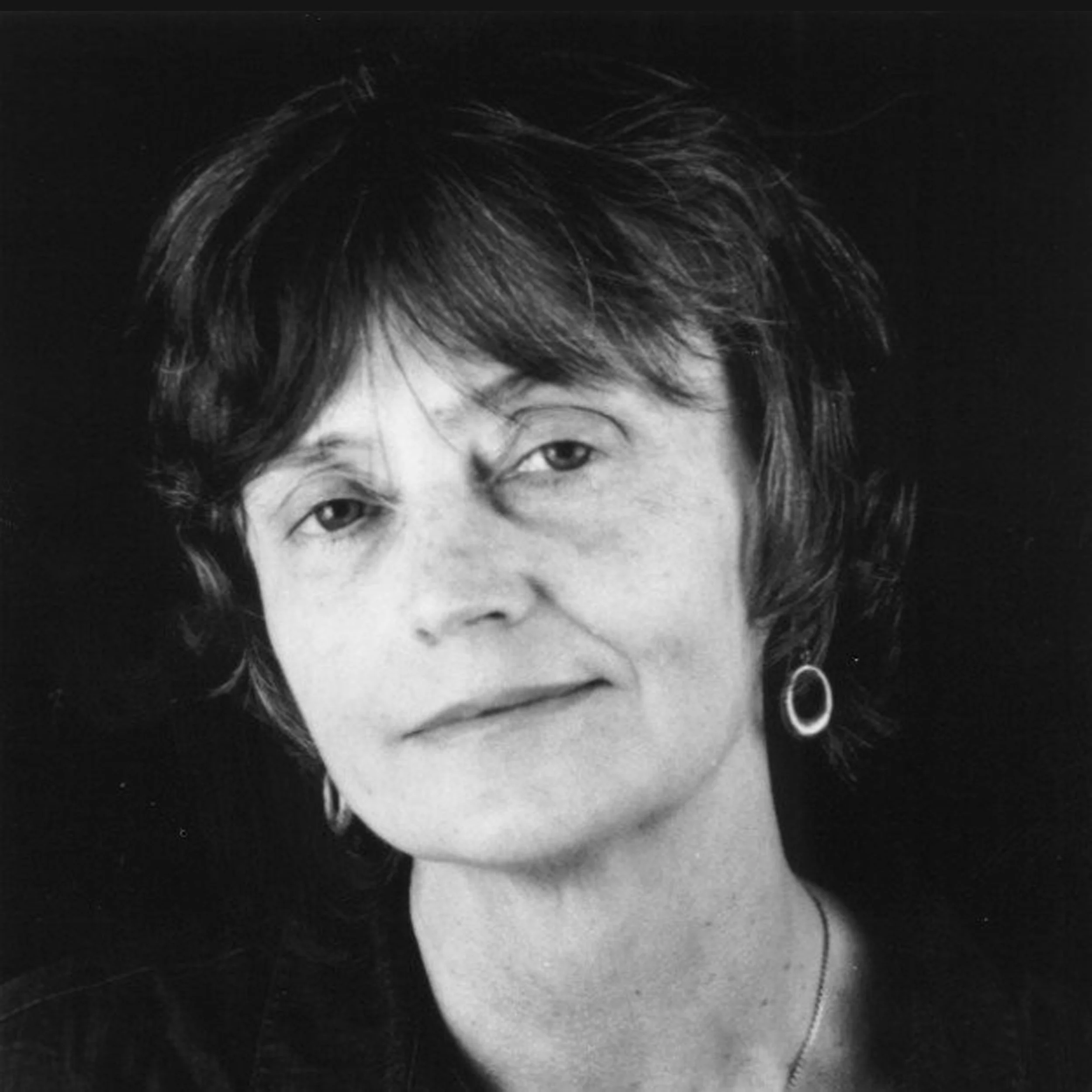
ALICE NOTLEY - Poet & Artist - Academy of American Poets Award Winner
/Poet
It's all-inclusive – poetry– and everything is poetry in a certain way, and poetic measure is like what we're composed of. It's what we are. I mean, we're poetry.
Poet
It's all-inclusive – poetry– and everything is poetry in a certain way, and poetic measure is like what we're composed of. It's what we are. I mean, we're poetry.
Alice Fulton’s books include Barely Composed, a poetry collection; The Nightingales Of Troy, linked stories; and Cascade Experiment: Selected Poems. Her book Felt received the Bobbitt Prize from the Library of Congress, awarded to the best book of poems published within a two-year period. She has received an American Academy of Arts and Letters Award in Literature and fellowships from the MacArthur Foundation, National Endowment for the Arts, Guggenheim Foundation, and Ingram Merrill Foundation. Her other books include Sensual Math, Powers Of Congress, Palladium, Dance Script With Electric Ballerina, and an essay collection, Feeling As A Foreign Language. She lives in Ithaca, NY.
Award-winning Memoirist & Poet
The Magical Language of Others · A Lesser Love
I had delayed speech, and I had quite a bit of trouble with speaking. I think I must have been five before I was uttering some of my first words and trying to articulate. Simple communication was very difficult for me and my family, especially in a family where we were speaking several languages. They hoped to instill English. It’s the language of survival. There was a lot of frustration and fear in my relationship to language, and the relationship these languages had to each other, that was something I felt very sensitive to since I was young. Since before I could speak.
T.S. Eliot Award-winning Poet, Novelist & Musician, Lead vocalist of The Spasm Band
Author of Sonnets for Albert
The life of Caribbean people is not really documented. So this idea of Caribbean life being fragmented is something that I've had in my mind for a long time. So when I came to write this collection for my father, I realized that it was the same process and what I had were fragments, especially with him, because he wasn't around in a physical sense all the time. So all I had were little photographs, scattered memories, and remembrances. They're little parts of his life and parts of my experience with him... I never disliked my father. I always loved him and always was fascinated and captivated by him.
U.S. Poet Laureate · Host of The Slowdown podcast
This poem was written when I was having a real moment of reckoning, not that I hadn't had it earlier, but where I was doing some deep reading about the climate crisis and really reckoning with myself, with where we were and what was happening, what the truth was. And I felt like it was so easy to slip down into a darkness, into a sort of numbness, and I didn't think that that numbness and darkness could be useful.
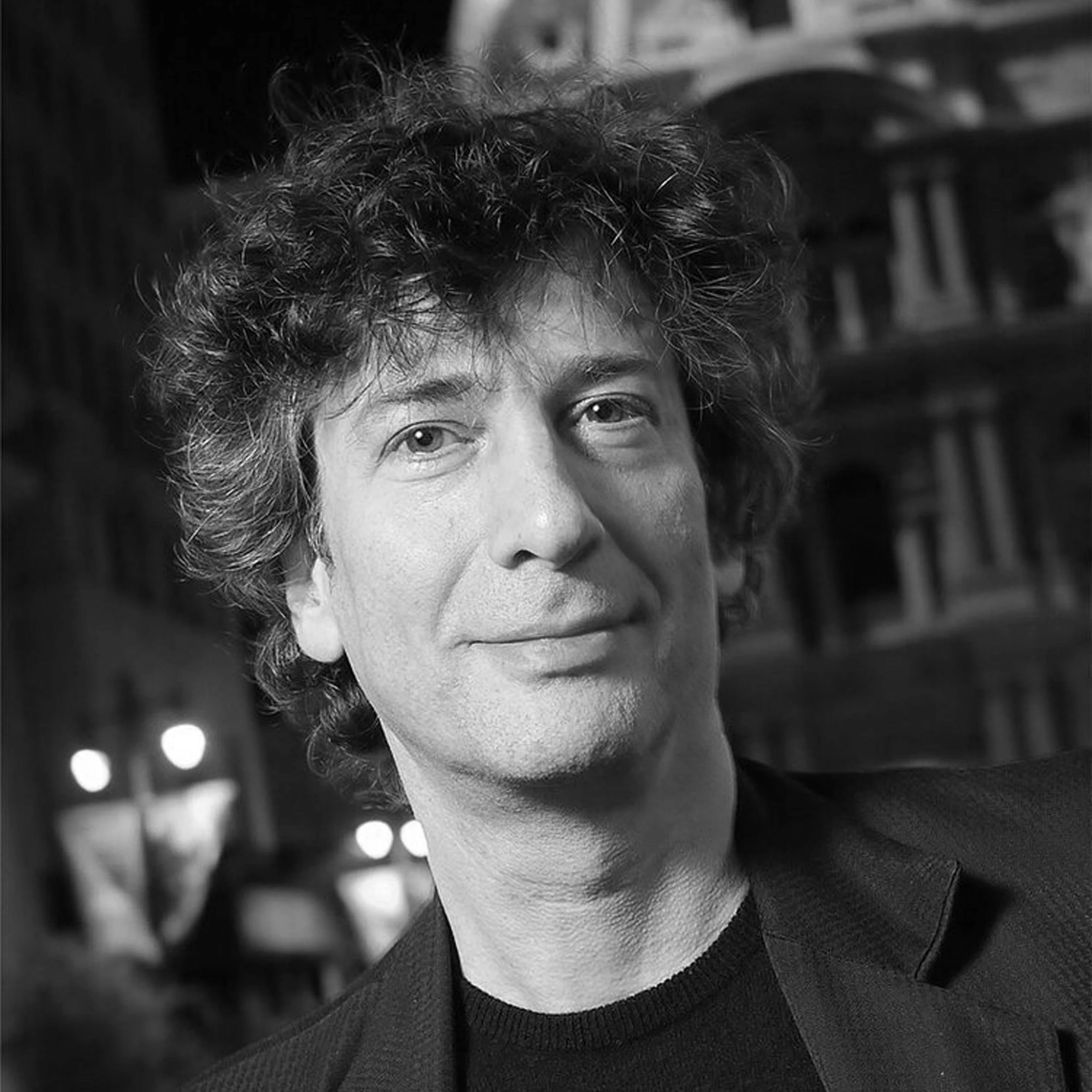
Author · Executive Producer · Showrunner
The Sandman American Gods · Good Omens · Coraline
Neil Gaiman is the #1 New York Times bestselling author of more than twenty books, including The Sandman, American Gods, Good Omens, Stardust, Coraline, Norse Mythology, Neverwhere, and The Graveyard Book. He’s adapted many of his books for television and film. Among his numerous literary awards are the Newbery and Carnegie medals, and the Hugo, Nebula, World Fantasy, and Will Eisner awards. He is a Global Goodwill Ambassador for United Nations High Commissioner for Refugees (UNHCR). In this episode, Gaiman reads his poems “A Writer’s Prayer” and “These Are Not Our Faces”.
Icelandic Writer & Documentary Filmmaker
On Time and Water · The Casket of Time · LoveStar · Not Ok · The Story of the Blue Planet
A letter to the future
Ok is the first Icelandic glacier to lose its status as a glacier.
In the next 200 years all our glaciers are expected to follow the same path.
This monument is to acknowledge that we know
what is happening and what needs to be done.
Only you know if we did it.
If you look at the Himalayas, the frozen glaciers are feeding 1 billion people with milky white water. The real tragedy is if the Himalayan glaciers go the same way as Iceland. In many places in the world, glaciers are very important for agriculture and the basic water supply of people.
Icelandic Writer & Documentary Filmmaker
On Time and Water · The Casket of Time · LoveStar · Not Ok · The Story of the Blue Planet
A letter to the future
Ok is the first Icelandic glacier to lose its status as a glacier.
In the next 200 years all our glaciers are expected to follow the same path.
This monument is to acknowledge that we know
what is happening and what needs to be done.
Only you know if we did it.
If you look at the Himalayas, the frozen glaciers are feeding 1 billion people with milky white water. The real tragedy is if the Himalayan glaciers go the same way as Iceland. In many places in the world, glaciers are very important for agriculture and the basic water supply of people.
Environmentalists, Artists, Students & Teachers share their Love for the Planet
Today we’re streaming voices of environmentalists, artists, students, and teachers with music courtesy of composer Max Richter.
Environmentalists, Artists, Students & Teachers share their Love for the Planet
Today we’re streaming voices of environmentalists, artists, students, and teachers with music courtesy of composer Max Richter.
Environmentalists, Artists, Students & Teachers share their Love for the Planet
Today we’re streaming voices of environmentalists, artists, students, and teachers with music courtesy of composer Max Richter.
Environmentalists, Artists, Students & Teachers share their Love for the Planet
Today we’re streaming voices of environmentalists, artists, students, and teachers with music courtesy of composer Max Richter.
Filmmakers, poets, aviators, musicians, cave divers, environmentalists, writers, and artists explore what love means to them
Award-winning Poet, Filmmaker & Speaker
Creator of the Stand-Up Poetry Special Words That Move
Technology has very much changed the way we read and take in information and shortened it into quick bursts and attention spans. We're living in a new world, for sure. And how do we communicate in this new world? Not just in a way that gets the reach, because there are whole industries aimed at what do I do to get the most likes or the most attention, and all of that, which I don't think is very fulfilling as artists.
It's sort of a diminishing of our art form to try and play the game because then we're getting the attention and getting the hits, as opposed to what do I really want to create? How do I really want to create it? How do I want to display this? And can I do it in a way that breaks through so that if I do it my way, it's still going to get the attention, great. But if it doesn't, can I be cool with that? And can I be okay creating what I want to create, knowing that that's what it's about. It's about sharing in an honest, authentic way what I want to express without letting the tentacles of social media drip into my brain and take over why I'm literally doing the things that I'm doing.
Award-winning Poet, Filmmaker & Speaker
Creator of the Stand-Up Poetry Special Words That Move
Technology has very much changed the way we read and take in information and shortened it into quick bursts and attention spans. We're living in a new world, for sure. And how do we communicate in this new world? Not just in a way that gets the reach, because there are whole industries aimed at what do I do to get the most likes or the most attention, and all of that, which I don't think is very fulfilling as artists.
It's sort of a diminishing of our art form to try and play the game because then we're getting the attention and getting the hits, as opposed to what do I really want to create? How do I really want to create it? How do I want to display this? And can I do it in a way that breaks through so that if I do it my way, it's still going to get the attention, great. But if it doesn't, can I be cool with that? And can I be okay creating what I want to create, knowing that that's what it's about. It's about sharing in an honest, authentic way what I want to express without letting the tentacles of social media drip into my brain and take over why I'm literally doing the things that I'm doing.
Award-winning Poet · Songwriter · Author of Sonnet’s Shakespeare
Editor of Best Canadian Poetry in English
Sonnet’s Shakespeare itself came out of thinking about the form of erasure, what working in that form could do and mean… And I was looking at critical writing about it, and I couldn't find anything that talked about the role of the poet who is doing that as censorial or as somehow violencing the original text. I was thinking about my resonance with the word erasure and thinking about censoring and deleting what somebody else has already said resonates with me as an analogy for being black, being mixed race, being racialized, and non-European in spaces that are predominantly Anglo-Canadian. One tries very hard. At least I did as a child, as a teenager, to just try to fit in and make my visible difference as minimal, as invisible as possible. So it's a way of thinking about erasing the self. And so I took that theme and thought, How do I show through a poetic erasure this dynamic of self-erasure and feeling erased?
Award-winning Poet · Songwriter · Author of Sonnet’s Shakespeare
Editor of Best Canadian Poetry in English
Sonnet’s Shakespeare itself came out of thinking about the form of erasure, what working in that form could do and mean… And I was looking at critical writing about it, and I couldn't find anything that talked about the role of the poet who is doing that as censorial or as somehow violencing the original text. I was thinking about my resonance with the word erasure and thinking about censoring and deleting what somebody else has already said resonates with me as an analogy for being black, being mixed race, being racialized, and non-European in spaces that are predominantly Anglo-Canadian. One tries very hard. At least I did as a child, as a teenager, to just try to fit in and make my visible difference as minimal, as invisible as possible. So it's a way of thinking about erasing the self. And so I took that theme and thought, How do I show through a poetic erasure this dynamic of self-erasure and feeling erased?
Award-winning Poet, Novelist & Musician, Lead vocalist of The Spasm Band
Author of Sonnets for Albert
The life of Caribbean people is not really documented. So this idea of Caribbean life being fragmented is something that I've had in my mind for a long time. So when I came to write this collection for my father, I realized that it was the same process and what I had were fragments, especially with him, because he wasn't around in a physical sense all the time. So all I had were little photographs, scattered memories, and remembrances. They're little parts of his life and parts of my experience with him... I never disliked my father. I always loved him and always was fascinated and captivated by him.
Award-winning Poet, Novelist & Musician, Lead vocalist of The Spasm Band
Author of Sonnets for Albert
The life of Caribbean people is not really documented. So this idea of Caribbean life being fragmented is something that I've had in my mind for a long time. So when I came to write this collection for my father, I realized that it was the same process and what I had were fragments, especially with him, because he wasn't around in a physical sense all the time. So all I had were little photographs, scattered memories, and remembrances. They're little parts of his life and parts of my experience with him... I never disliked my father. I always loved him and always was fascinated and captivated by him.
Author of Footprints: In Search of Future Fossils · Anthropocene Poetics
Professor of Literature & the Environment · University of Edinburgh.
Just thinking about how our actions play out over multiple generations who will have to live with the consequences of these decisions. I think we need to stretch our sense of time, and within that stretch our sense of empathy. The philosopher Roman Krznaric talks about that in his book The Good Ancestor, that we need a more elastic sense of empathy that can encompass not just those close to us or living alongside us, but those who have yet to be born will have to inherit the world that we passed down to them. But I think in stretching that sense of empathy and stretching that sense of the times that we touch, if you like, because all of us are engaged in activities that will lead long legacies, long tails, in terms of the fossil fuels we're consuming. And so, alongside that, I think we need to accept that the time we live in is a strange one, and time itself is doing strange things in the anthropocene.
The Creative Process: Podcast Interviews & Portraits of the World’s Leading Authors & Creative Thinkers
Inspiring Students – Encouraging Reading - Connecting through Stories
The Creative Process exhibition is traveling to universities and museums. The Creative Process exhibition consists of interviews with over 100 esteemed writers, including Joyce Carol Oates, Hilary Mantel, Neil Gaiman, Viet Thanh Nguyen, Tobias Wolff, Richard Ford, Junot Díaz, Marie Darrieussecq, Michel Faber, T.C. Boyle, Jay McInerney, George Saunders, Geoff Dyer, Etgar Keret, Douglas Kennedy, Sam Lipsyte, and Yiyun Li, among others. Artist and interviewer: Mia Funk.