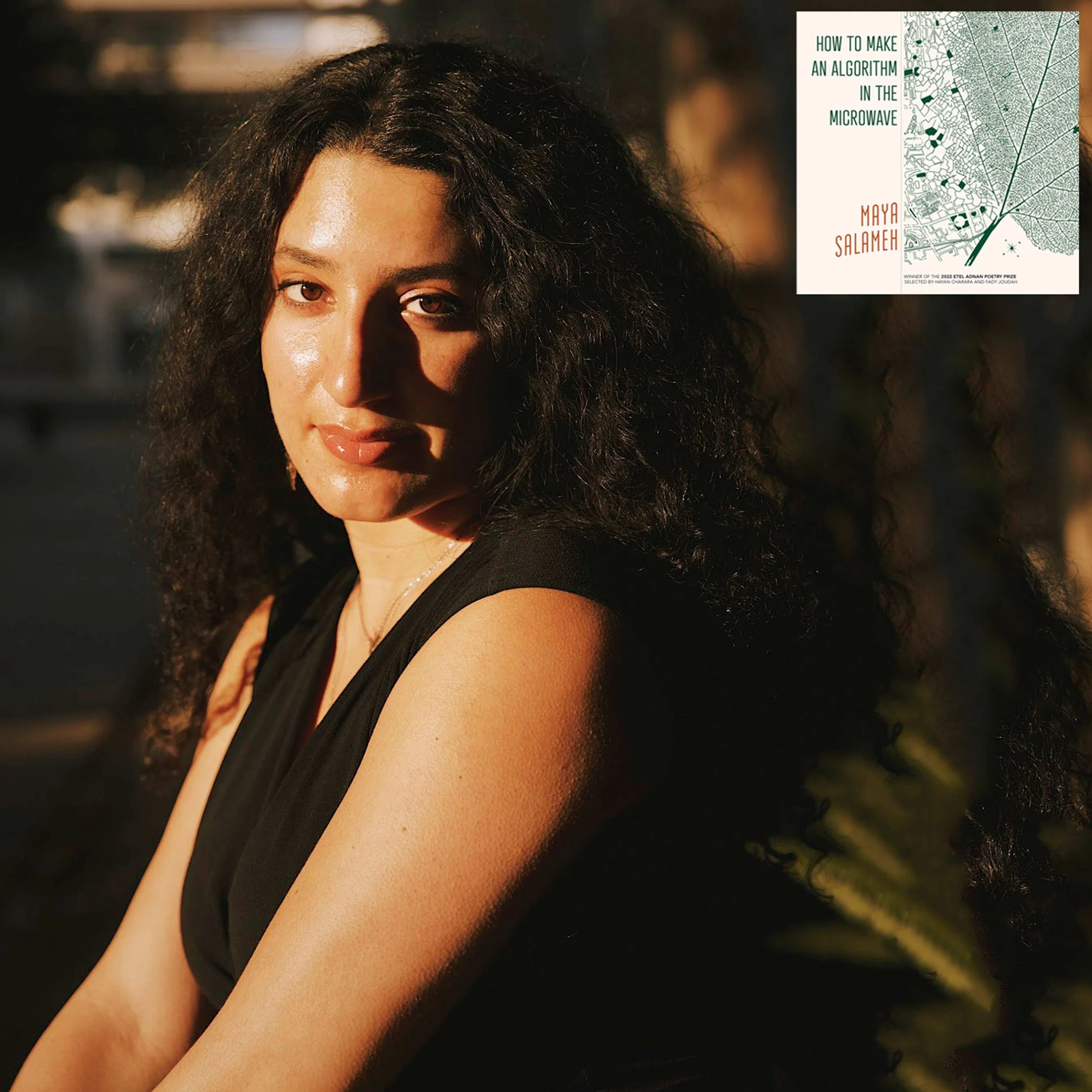
How to Make an Algorithm in the Microwave with Poet MAYA SALAMEH

How to Make an Algorithm in the Microwave with Poet MAYA SALAMEH

Poetry is like one of the great loves of my life, and I think it's probably the longest relationship I'll ever have. I read a lot of poetry. I also wrote these short stories even when I was pretty young, like in second grade, and the stories kept getting shorter and shorter. My family used to go to Damascus in Syria and Lebanon every summer for three months until 2011, when the Civil War broke out in Syria. In 2015, we made our first return after that gap, and my father and I went to Lebanon for two weeks. It's the first time I felt that I belong. To the extent that was true or not, I'm obviously irrevocably American. I speak broken Arabic. I don't think I could ever live in Lebanon or Syria. But for what it was worth at 15 years old, it was a life-changing trip. I wrote my first official poem on the plane back to San Diego from that trip, and I feel that was a formative moment for me. I felt that I had a story to tell and wanted to put it to paper in the form of poetry.

In 2015, we made our first return after that gap, and my father and I went to Lebanon for two weeks. Being back in one of my two homelands as a more fully formed person and not like a young child, I thought, "Wow, this is the first time I've been in an Arabic-speaking Arab place as a teenager." 
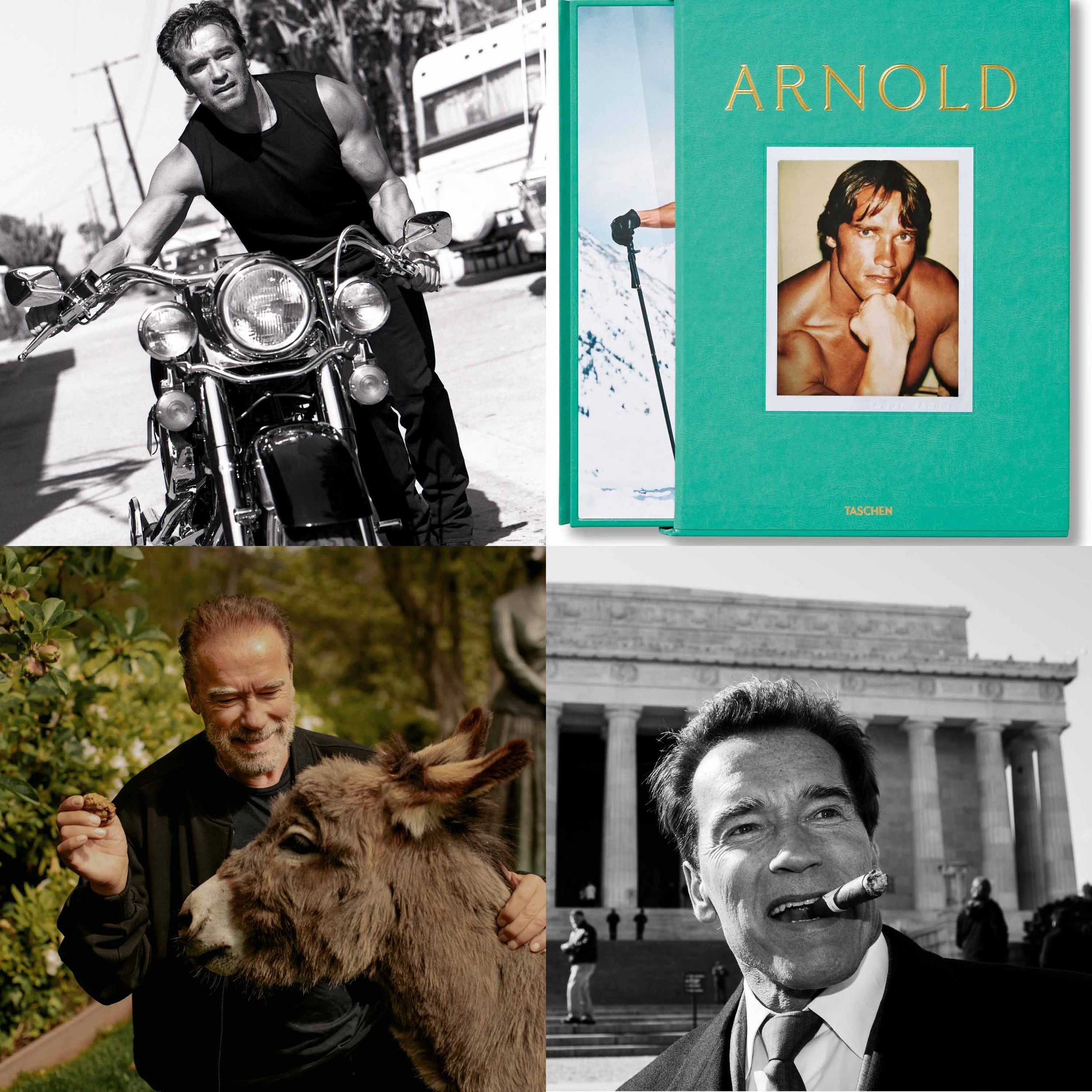
Highlights - ARNOLD SCHWARZENEGGER: Athlete, Actor, American, Activist - Conversation with Editor DIAN HANSON

Highlights - ARNOLD SCHWARZENEGGER: Athlete, Actor, American, Activist - Conversation with Editor DIAN HANSON

ATHLETE · ACTOR · AMERICAN · ACTIVIST
DIAN HANSON discusses photographic homage to ARNOLD SCHWARZENEGGER

Why I was different from all the other boys in my town I cannot tell you. I was simply born with the gift of vision.
– ARNOLD SCHWARZENEGGER

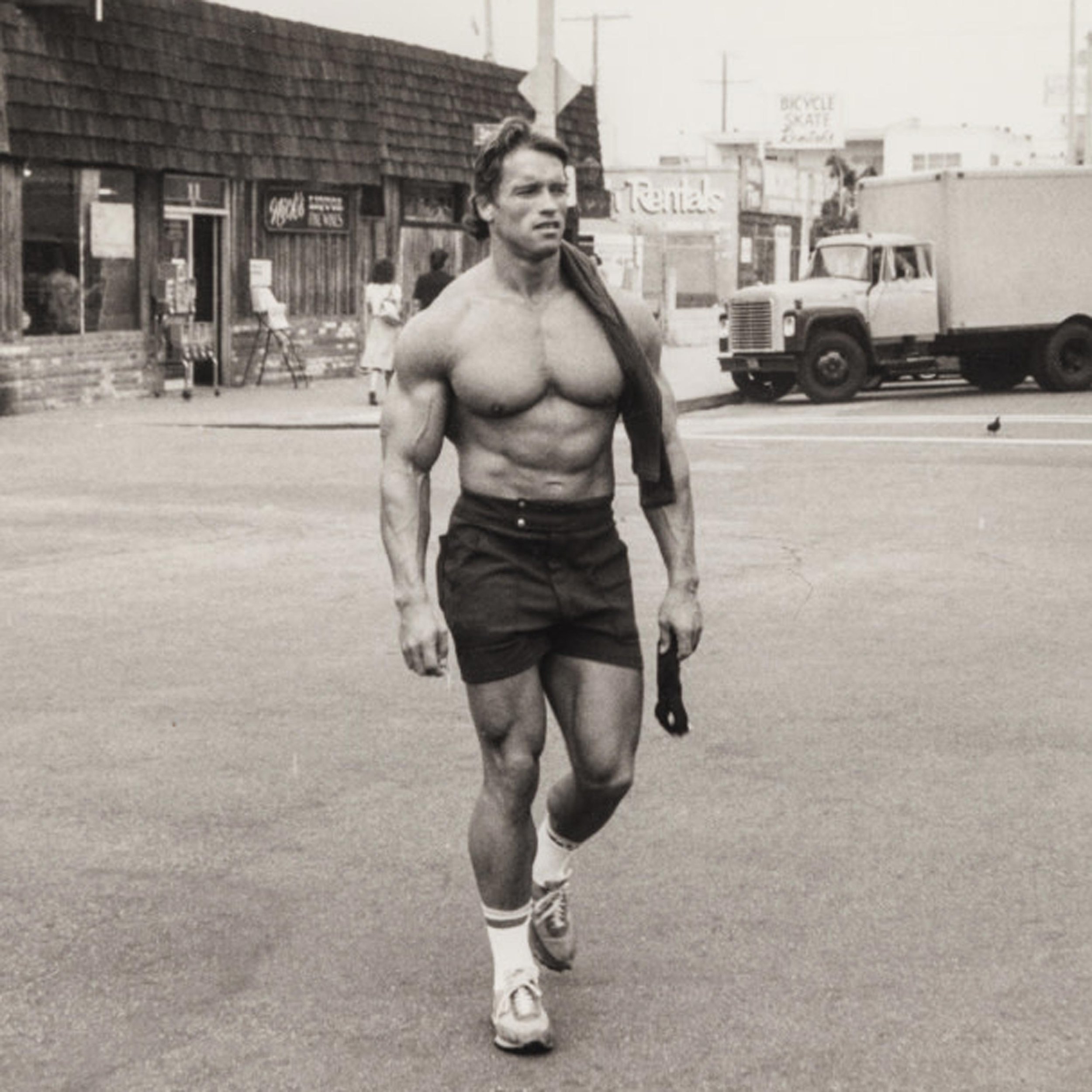
It's not just that he grew up in a rural environment too. He was born on July 30th, 1947. And most of us today don't have any understanding or relationship to what Europe was like right after World War II. The winter of 1946/1947 in Austria was the most brutal in decades. The people already had too little food. They were in an occupied country. The summer potato crops failed. As Arnold has said, his mother had to go from farm to farm to farm, begging for food to be able to feed her children. His father, like all the men in the village, was defeated by the war. And he saw them all physically, emotionally, intellectually defeated and taking it out on their wives and children, that he was beaten and his mother was beaten. All the neighbor kids were beaten, and they were beaten into a kind of placid defeat. And he alone would not accept that. He could not see that life for himself. And so he wanted out of that. And as a poor boy, he had nothing but his body to work with. That was it. There was not going to be any college. There was not going to be any of that. There was going to be some kind of menial job, or he could use what he had - his body - to get him out of there.

ARNOLD SCHWARZENEGGER: Athlete, Actor, American, Activist - Conversation with Editor DIAN HANSON

ARNOLD SCHWARZENEGGER: Athlete, Actor, American, Activist - Conversation with Editor DIAN HANSON

ATHLETE · ACTOR · AMERICAN · ACTIVIST
DIAN HANSON discusses photographic homage to ARNOLD SCHWARZENEGGER

Why I was different from all the other boys in my town I cannot tell you. I was simply born with the gift of vision.
– ARNOLD SCHWARZENEGGER

It's not just that he grew up in a rural environment too. He was born on July 30th, 1947. And most of us today don't have any understanding or relationship to what Europe was like right after World War II. The winter of 1946/1947 in Austria was the most brutal in decades. The people already had too little food. They were in an occupied country. The summer potato crops failed. As Arnold has said, his mother had to go from farm to farm to farm, begging for food to be able to feed her children. His father, like all the men in the village, was defeated by the war. And he saw them all physically, emotionally, intellectually defeated and taking it out on their wives and children, that he was beaten and his mother was beaten. All the neighbor kids were beaten, and they were beaten into a kind of placid defeat. And he alone would not accept that. He could not see that life for himself. And so he wanted out of that. And as a poor boy, he had nothing but his body to work with. That was it. There was not going to be any college. There was not going to be any of that. There was going to be some kind of menial job, or he could use what he had - his body - to get him out of there.