(Highlights) VOICES OF THE SHINNECOCK INDIAN NATION
/We're all part of a web like a dreamcatcher. Everybody knows a dreamcatcher and whatever you do that’s wrong will eventually come back and affect you because we’re all connected.
We're all part of a web like a dreamcatcher. Everybody knows a dreamcatcher and whatever you do that’s wrong will eventually come back and affect you because we’re all connected.
We're all part of a web like a dreamcatcher. Everybody knows a dreamcatcher and whatever you do that’s wrong will eventually come back and affect you because we’re all connected.
Producers of the Award-Winning Mass starring Reed Birney, Ann Dowd, Jason Isaacs & Martha Plimpton
“Usually we just see the soundbites and the news and then there's a new one or a new story, the politics that takes away from what these families are going. These people in these towns are just glossed over, looked over. And that's not the case in real life. They live with this trauma forever…What I hope the next generation takes us just to absorb everything from our generation and our parents’ generation. There are a lot of living generations right now. The longevity of people and the young families, it’s amazing. I had five generations of my family alive at one point in my life, and it was just the most amazing I've ever been a part of.” –JP Ouellette
Producers of the Award-Winning Mass starring Reed Birney, Ann Dowd, Jason Isaacs & Martha Plimpton
“Usually we just see the soundbites and the news and then there's a new one or a new story, the politics that takes away from what these families are going. These people in these towns are just glossed over, looked over. And that's not the case in real life. They live with this trauma forever…What I hope the next generation takes us just to absorb everything from our generation and our parents’ generation. There are a lot of living generations right now. The longevity of people and the young families, it’s amazing. I had five generations of my family alive at one point in my life, and it was just the most amazing I've ever been a part of.” –JP Ouellette
President of UN Sustainable Development Solutions Network
Director of Center for Sustainable Development, Columbia University
If we’re badly educated, we’re not going to make it on this planet. If I had to put my finger on one Sustainable Development Goal above all else, it is let’s empower young people so that they know the future. They know the world that they’re going to be leading soon. They can do something about it…If you’re in elementary school up to university, you should be learning–What is climate change? What is biodiversity? What can we do about it? And this kind of learning is not only book learning, but is also experiential learning.
President of UN Sustainable Development Solutions Network
Director of Center for Sustainable Development, Columbia University
If we’re badly educated, we’re not going to make it on this planet. If I had to put my finger on one Sustainable Development Goal above all else, it is let’s empower young people so that they know the future. They know the world that they’re going to be leading soon. They can do something about it…If you’re in elementary school up to university, you should be learning–What is climate change? What is biodiversity? What can we do about it? And this kind of learning is not only book learning, but is also experiential learning.
Cosmologist, Theoretical physicist & Star of South Africa Medal Recipient
Artistic creativity and it’s crucial to artistic creativity amongst many other things. In artistic creativity, from my viewpoint, is that you start off with an idea and you’re shaping and you’re totally in control and it doesn’t matter if it's music or sculpture or painting or a novel, eventually the thing sparks its own life, becomes itself, and at that point, the role of the artist is to stand back and let it become what its got to become. And that’s where you get the great art.
Cosmologist, Theoretical physicist & Star of South Africa Medal Recipient
Artistic creativity and it’s crucial to artistic creativity amongst many other things. In artistic creativity, from my viewpoint, is that you start off with an idea and you’re shaping and you’re totally in control and it doesn’t matter if it's music or sculpture or painting or a novel, eventually the thing sparks its own life, becomes itself, and at that point, the role of the artist is to stand back and let it become what its got to become. And that’s where you get the great art.
Photographer & Videographer
Winner of the World Press Photo 6*6 Global talent in Africa 2020
I’m not just taking beautiful pictures. I’m collecting their voices, collecting their movement, collecting different aspects, and preserving this moment because they will not always be here. I don’t just see myself as a photographer, an artist. I also see myself as an archiver. Someone who is archiving as a researcher.
Musician and Songwriter
So, I started the program called Shelter Songs. I'm in two shelters now and expanding to 4 or 5 throughout the city. It's a nice thing to just look at them and say, "I'm with you for an hour. I'm here to serve you. Whatever you want. I have no agenda on what we're going to write.
Author & Mystery Writers of America “Grand Master”
I started writing out of a desire to counter stereotypes of the roles that women traditionally played in crime fiction, in which case they were wicked. They used their bodies to do good boys to do bad things. Or they were virgins who couldn’t tie their shoes couldn’t tie their shoes without adult supervisions. Or they were victims, most often. And so I wanted a detective who was like the women that I knew who could solve their own problems, who didn’t need to be rescued, who could have a sex life that didn’t make her a bad person…
Sara Paretsky is the author of nineteen books, including sixteen V.I. Warshawski novels. She was named 2011 Grand Master by the Mystery Writers of America and is the winner of many awards, including the Cartier Diamond Dagger Award for lifetime achievement from the British Crime Writers' Association and the CWA Gold Dagger for Blacklist.
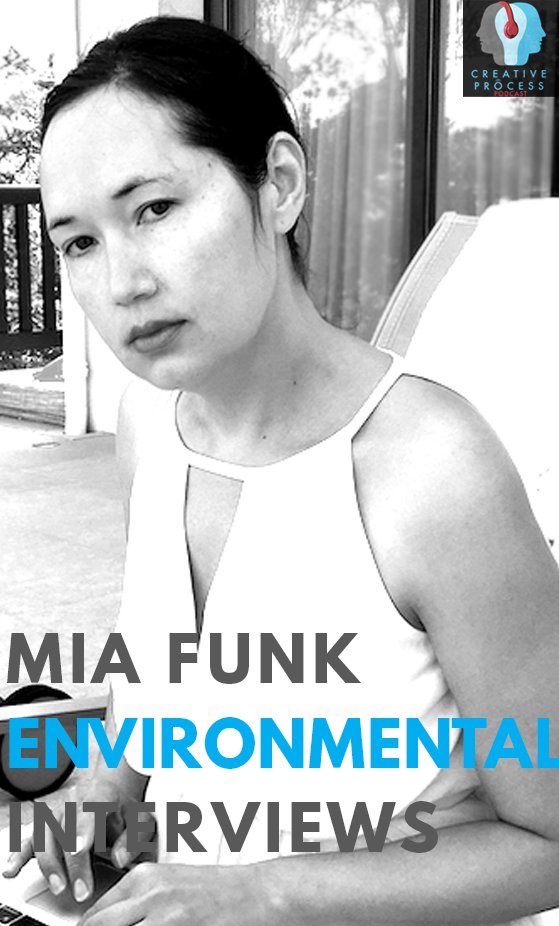
This interview was conducted by Mia Funk with the participation of collaborating universities and students. Associate Interviews Producer on this podcast was Lilian Liu. Digital Media Coordinator is Hannah Story Brown.

Mia Funk is an artist, interviewer and founder of The Creative Process.
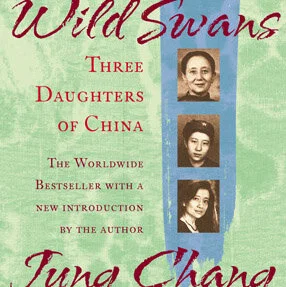
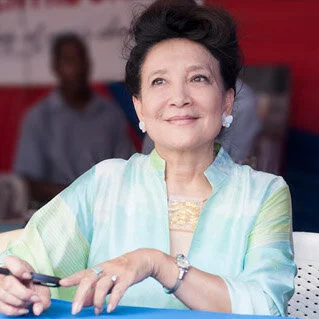
Historian & Author of International Bestseller Wild Swans
Writing Wild Swans was the thing that resolved the trauma for me. When I first came to Britain in 1978, I was one of the first people to leave China and come to the West. I wrote about the experience in Wild Swans. And for many years I had nightmares of the horrible things I saw and experienced. Writing Wild Swans made all these nightmares disappear. It was a wonderful process. The writing process turned trauma in memory. I am now able to talk to you about my book, my life, to read it without too much pain. I think this is a luxury people in China still don’t have.
Historian & Author of International Bestseller Wild Swans
Writing Wild Swans was the thing that resolved the trauma for me. When I first came to Britain in 1978, I was one of the first people to leave China and come to the West. I wrote about the experience in Wild Swans. And for many years I had nightmares of the horrible things I saw and experienced. Writing Wild Swans made all these nightmares disappear. It was a wonderful process. The writing process turned trauma in memory. I am now able to talk to you about my book, my life, to read it without too much pain. I think this is a luxury people in China still don’t have.
Founder & President of People for the Ethical Treatment of Animals (PETA)
They’re not human traits. They’re all shared traits because, of course, we all love. We all love our families, or not. We all grieve if somebody we love disappears or dies. A family dog, perhaps. A grandfather. We all feel loneliness, we all feel joy. We all really value our freedom. And so I think, if anything, looking into the eyes of the animal, even online, you see a person in there. There’s a someone in whatever the shape or the physical properties of that individual are. And that lesson is that I am you. You are me, only different. We are all the same in all the ways that count…Any living being teaches you– Look into my eyes. And there you are, the reflection of yourself.
Author of Slow Violence and the Environmentalism of the Poor
Professor Environmental Humanities at Princeton
There are some recurrent threads in indigenous cultures across the world. One of those is–We don’t own the land. The land owns us. It’s not seen as property first. It’s seen as inalienable in that sense because you don’t own it in the first place. What we’re seeing now is a kind of movement where more and more indigenous people are living kind of amphibious lives. On the one hand, they have their indigenous cosmologies. And the other hand, in order to increase the likelihood that they can keep out big corporations, mining, logging, and so forth, their presence on the land needs to be bureaucratically recognized is to have recognition that “this is your property.” So in one sense many of these communities I find are both inside and outside private property regimes.
Founder & President of People for the Ethical Treatment of Animals (PETA)
They’re not human traits. They’re all shared traits because, of course, we all love. We all love our families, or not. We all grieve if somebody we love disappears or dies. A family dog, perhaps. A grandfather. We all feel loneliness, we all feel joy. We all really value our freedom. And so I think, if anything, looking into the eyes of the animal, even online, you see a person in there. There’s a someone in whatever the shape or the physical properties of that individual are. And that lesson is that I am you. You are me, only different. We are all the same in all the ways that count…Any living being teaches you– Look into my eyes. And there you are, the reflection of yourself.
Rob Nixon is a nonfiction writer and the Barron Family Professor in Environmental Humanities at Princeton University. He is the author of four books, most recently Slow Violence and the Environmentalism of the Poor. Nixon is currently writing a book on environmental martyrs and the defense of the great tropical forests. He writes frequently for the New York Times. His writing has also appeared in The New Yorker, Atlantic Monthly, The Guardian, The Nation, London Review of Books, The Village Voice, Aeon and elsewhere. Much of his writing engages environmental justice struggles in the global South. He has a particular interest in understanding the roles that artists can play in effecting change at the interface with social movements.
ROB NIXON
There are some recurrent threads in indigenous cultures across the world. One of those is–We don’t own the land. The land owns us. It’s not seen as property first. It’s seen as inalienable in that sense because you don’t own it in the first place. What we’re seeing now is a kind of movement where more and more indigenous people are living kind of amphibious lives. On the one hand, they have their indigenous cosmologies. And the other hand, in order to increase the likelihood that they can keep out big corporations, mining, logging, and so forth, their presence on the land needs to be bureaucratically recognized is to have recognition that “this is your property.” So in one sense many of these communities I find are both inside and outside private property regimes.
This interview was conducted by Mia Funk & Phil Kehoe with the participation of collaborating universities and students. Associate Interviews Producer on this podcast was Phil Kehoe. Digital Media Coordinator is Phoebe Brous.
Mia Funk is an artist, interviewer and founder of The Creative Process & One Planet Podcast (Conversations about Climate Change & Environmental Solutions).
Acting Associate Director for Curatorial Affairs · Curator of Music and Performing Arts
National Museum of African American History and Culture · Smithsonian Institution
This museum, this institution has a long history and actually, the idea of a museum goes back to maybe 100 years ago when Civil War veterans wanted a monument recognizing the service and the sacrifice of African Americans during the war effort. It wasn't until the mid-late 80s when congressman John Lewis with some other colleagues started to bring forth the idea that the Smithsonian needed to have a presence to recognize the significance and contributions of African Americans to the history of this country.
Acting Associate Director for Curatorial Affairs · Curator of Music and Performing Arts
National Museum of African American History and Culture · Smithsonian Institution
This museum, this institution has a long history and actually, the idea of a museum goes back to maybe 100 years ago when Civil War veterans wanted a monument recognizing the service and the sacrifice of African Americans during the war effort. It wasn't until the mid-late 80s when congressman John Lewis with some other colleagues started to bring forth the idea that the Smithsonian needed to have a presence to recognize the significance and contributions of African Americans to the history of this country.
The Creative Process: Podcast Interviews & Portraits of the World’s Leading Authors & Creative Thinkers
Inspiring Students – Encouraging Reading - Connecting through Stories
The Creative Process exhibition is traveling to universities and museums. The Creative Process exhibition consists of interviews with over 100 esteemed writers, including Joyce Carol Oates, Hilary Mantel, Neil Gaiman, Viet Thanh Nguyen, Tobias Wolff, Richard Ford, Junot Díaz, Marie Darrieussecq, Michel Faber, T.C. Boyle, Jay McInerney, George Saunders, Geoff Dyer, Etgar Keret, Douglas Kennedy, Sam Lipsyte, and Yiyun Li, among others. Artist and interviewer: Mia Funk.