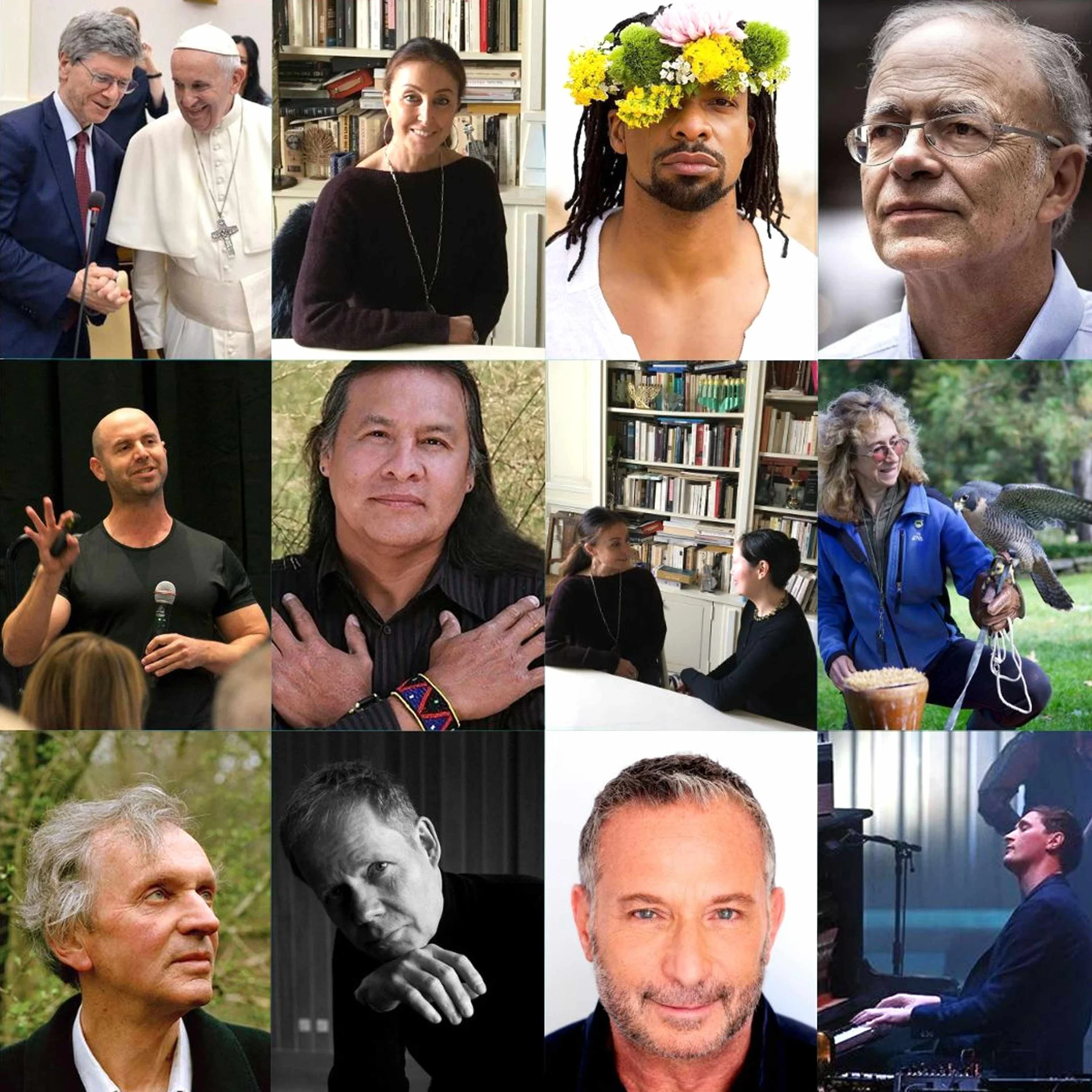
What Do We Do with the One Life We’re Given? - Scientists, Writers, Philosophers & Changemakers Share their Stories

What Do We Do with the One Life We’re Given? - Scientists, Writers, Philosophers & Changemakers Share their Stories

In this time of rapid technological change, how do we hold onto our humanity? How do stories, traditions, and community help us find meaning in loss and face an uncertain future? How can science, art, and spirituality open new pathways to understanding ourselves and the human experience?

The Evolutionary Brain - DR. FERNANDO GARCÍA-MORENO on Creativity & Survival

The Evolutionary Brain - DR. FERNANDO GARCÍA-MORENO on Creativity & Survival

I think creative thinking is rooted in different parts of the brain. I believe that creativity is mostly a cultural expression of how our brains react to the world. It is our culture and our lives that make our brains creative in different manners. Even though you and I have very similar brains containing exactly the same cell types, we have evolved alongside each other for 300 million years. We share a lot of features, yet we express our ideas through creative thinking differently. In my opinion, this is cultural evolution—an expression of how our brains have evolved throughout our lives, how we learn, and what experiences we have over time: what we read, the movies we see, and the people we talk to.

We are working in the lab to understand this moment in development, which is called phenotypic. This is something that has been known for over a hundred years. When you see many vertebrate embryos at this early embryonic time point, all embryos look very, very similar. We are extrapolating these ideas to the brain. We have seen that at this time point, the phenotypic period, all brains of these species are very simple but very closely related. We share the same features with a fish or with a gecko or with any other mammalian species at this early time point. We have the same brain with the same genes active and the same cell types involved in it.

"We're connected to the lives of every creature on the planet" EIREN CAFFALL - Highlights

"We're connected to the lives of every creature on the planet" EIREN CAFFALL - Highlights

We are in a complex and delicately balanced relationship of connection to everything else on the planet. We begin to recognize, write into, and speak into the complex interdependence and interconnection of every gesture that we make on the planet. Most storytelling that I really respond to, whether it's from my own culture or from previous civilizations, acknowledges that we are in this complex relationship where every gesture we make is connected to the lives of every other creature on the planet. The more narratives we allow to be complex in that way and interconnected, the more we begin to change our brain chemistry around how we protect ourselves and everything that is in relation to us. The more that you have that evolving relationship with it, that's dynamic and alive to the moment you're in, and that's not afraid of the feelings of fear, hopelessness, grief, or pain that attend paying close attention to the world as it is evolving around you, the better we are able to be flexible in the relationship we need to form with fixing what we can and holding onto what we have.

All the Water in the World with Writer & Musician EIREN CAFFALL

All the Water in the World with Writer & Musician EIREN CAFFALL

A Conversation with Writer & Musician EIREN CAFFALL

We are in a complex and delicately balanced relationship of connection to everything else on the planet. We begin to recognize, write into, and speak into the complex interdependence and interconnection of every gesture that we make on the planet. Most storytelling that I really respond to, whether it's from my own culture or from previous civilizations, acknowledges that we are in this complex relationship where every gesture we make is connected to the lives of every other creature on the planet. The more narratives we allow to be complex in that way and interconnected, the more we begin to change our brain chemistry around how we protect ourselves and everything that is in relation to us. The more that you have that evolving relationship with it, that's dynamic and alive to the moment you're in, and that's not afraid of the feelings of fear, hopelessness, grief, or pain that attend paying close attention to the world as it is evolving around you, the better we are able to be flexible in the relationship we need to form with fixing what we can and holding onto what we have.

The Art of Writing w/ Neil Gaiman, Ada Limón, Jericho Brown, E.J. Koh, Marge Piercy & Max Stossel

The Art of Writing w/ Neil Gaiman, Ada Limón, Jericho Brown, E.J. Koh, Marge Piercy & Max Stossel

This episode explores the enduring power of storytelling to shape our world and illuminate the human experience. Writers Neil Gaiman, Ada Limón, Jericho Brown, E.J. Koh, Marge Piercy, and Max Stossel discuss creativity, resilience, and the power of words to heal and bring people together.

What Does It Mean to Live a Good Life? Artists, Writers, Visionaries & Educators Share their Stories

What Does It Mean to Live a Good Life? Artists, Writers, Visionaries & Educators Share their Stories

Artists, Writers, Visionaries & Educators Share their Stories

How can the arts help us learn to speak the language of the Earth and cultivate our intuitive intelligence? What is the power of mentorship for forging character and creative vision? How can we hold onto our cultural heritage and traditions, while preparing students for the needs of the 21st century?

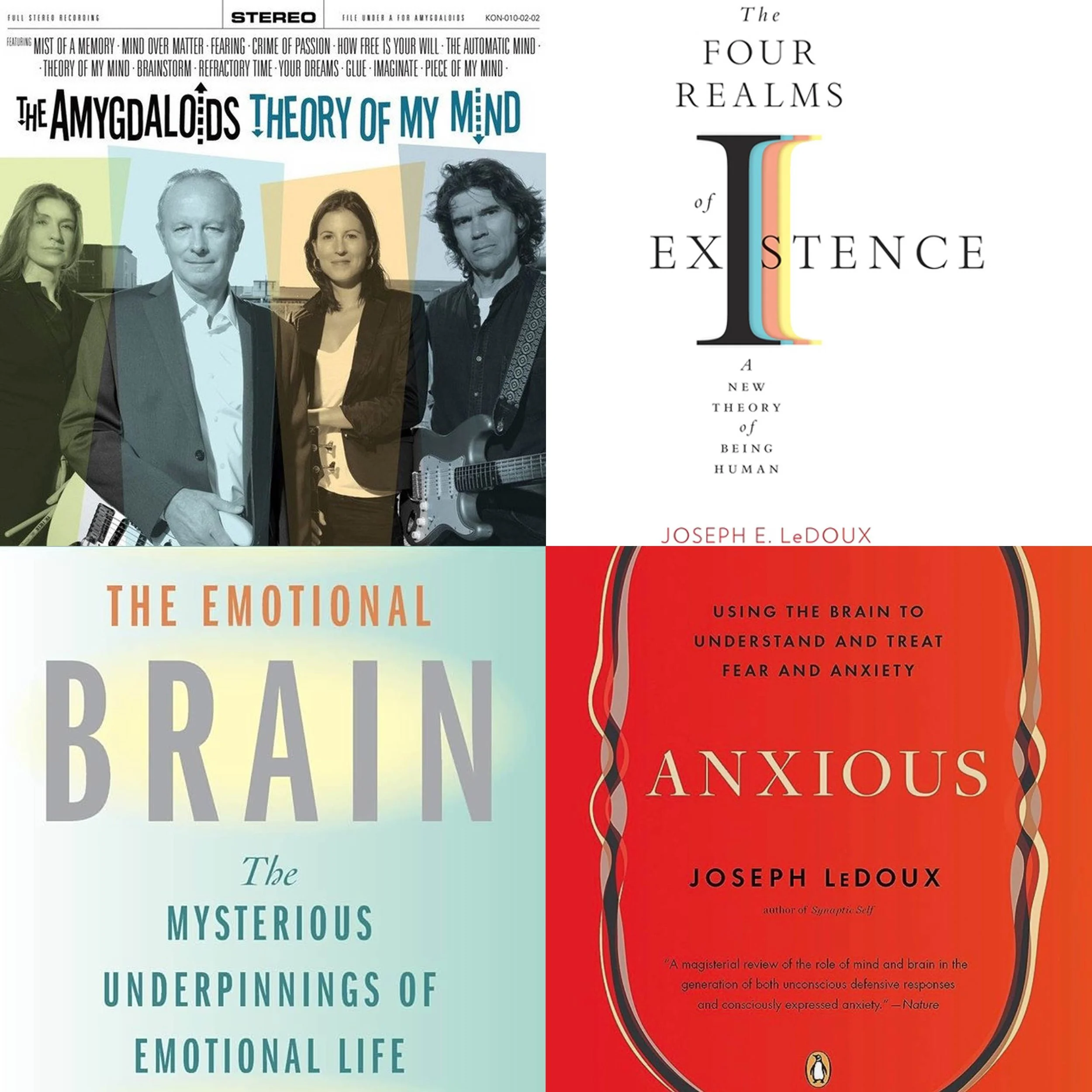
Music as a Healing Process with JOSEPH LEDOUX - Highlights

Music as a Healing Process with JOSEPH LEDOUX - Highlights

Neuroscientist · Musician · Author
The Emotional Brain · Anxious · The Deep History of Ourselves

The Four Realms of Existence: A New Theory of Being Human

We've got four billion years of biological accidents that created all of the intricate aspects of everything about life, including consciousness. And it's about what's going on in each of those cells at the time that allows it to be connected to everything else and for the information to be understood as it's being exchanged between those things with their multifaceted, deep, complex processing.

How does the brain process emotions and music? JOSEPH LEDOUX - Neuroscientist, Author, Musician

How does the brain process emotions and music? JOSEPH LEDOUX - Neuroscientist, Author, Musician

Neuroscientist · Musician · Author
The Emotional Brain · Anxious · The Deep History of Ourselves

The Four Realms of Existence: A New Theory of Being Human

We've got four billion years of biological accidents that created all of the intricate aspects of everything about life, including consciousness. And it's about what's going on in each of those cells at the time that allows it to be connected to everything else and for the information to be understood as it's being exchanged between those things with their multifaceted, deep, complex processing.

Highlights - ANIL SETH - Co-director of Sussex Centre for Consciousness Science & Canadian Institute for Advanced Research Program on Brain, Mind & Consciousness

Highlights - ANIL SETH - Co-director of Sussex Centre for Consciousness Science & Canadian Institute for Advanced Research Program on Brain, Mind & Consciousness

Author of Being You: A New Science of Consciousness
Co-director of the Sackler Centre for Consciousness Science · Canadian Institute for Advanced Research Program on Brain, Mind & Consciousness

This is a point in philosophy that the world as it is can never be directly apprehended by our minds. We are shielded from it by what's called a sensory veil. There are, for instance, no such thing as colors that are out there. As the artist Cezanne said, "The colors are where the brain and the universe meet." And color is, I think, a really good example because it is, in a sense, less than what's there because our eyes are only sensitive to three wavelengths of this huge electromagnetic spectrum, which goes all the way from x-rays and gamma rays to radio waves. And we live in a tiny, thin slice of that reality. But then out of those three wavelengths we experience our brains generate many more than three colors and almost an infinite palette of colors. So there's no sense in which our perception could ever reveal the world as it really is, that it reveals the world in a way that's very useful for us as organisms hell-bent on continuing to live and to survive. 

ANIL SETH - Author of Being You: A New Science of Consciousness - Co-director of Sussex Centre for Consciousness Science

ANIL SETH - Author of Being You: A New Science of Consciousness - Co-director of Sussex Centre for Consciousness Science

Author of Being You: A New Science of Consciousness
Co-director of the Sackler Centre for Consciousness Science · Canadian Institute for Advanced Research Program on Brain, Mind & Consciousness

This is a point in philosophy that the world as it is can never be directly apprehended by our minds. We are shielded from it by what's called a sensory veil. There are, for instance, no such thing as colors that are out there. As the artist Cezanne said, "The colors are where the brain and the universe meet." And color is, I think, a really good example because it is, in a sense, less than what's there because our eyes are only sensitive to three wavelengths of this huge electromagnetic spectrum, which goes all the way from x-rays and gamma rays to radio waves. And we live in a tiny, thin slice of that reality. But then out of those three wavelengths we experience our brains generate many more than three colors and almost an infinite palette of colors. So there's no sense in which our perception could ever reveal the world as it really is, that it reveals the world in a way that's very useful for us as organisms hell-bent on continuing to live and to survive.