What Kind of World Are We Leaving for Future Generations? - Part 3 - Activists, Environmentalists & Teachers Share their Stories

What Kind of World Are We Leaving for Future Generations? - Part 3 - Activists, Environmentalists & Teachers Share their Stories

Environmentalists, Artists, Students & Teachers share their Love for the Planet

Today we’re streaming voices of environmentalists, artists, students, and teachers with music courtesy of composer Max Richter.

Earth Month Stories - Part 2 - Environmentalists, Artists, Students & Teachers Speak Out & Share How We Can Save the Planet

Earth Month Stories - Part 2 - Environmentalists, Artists, Students & Teachers Speak Out & Share How We Can Save the Planet

Environmentalists, Artists, Students & Teachers share their Love for the Planet

Today we’re streaming voices of environmentalists, artists, students, and teachers with music courtesy of composer Max Richter.

Special Earth Day Stories - Environmentalists, Artists, Students & Teachers share their Love for the Planet - Part 1

Special Earth Day Stories - Environmentalists, Artists, Students & Teachers share their Love for the Planet - Part 1

Environmentalists, Artists, Students & Teachers share their Love for the Planet

Today we’re streaming voices of environmentalists, artists, students, and teachers with music courtesy of composer Max Richter.

JERICHO BROWN -  Pulitzer Prize-Winning Poet, Author of The Tradition & The New Testament

JERICHO BROWN - Pulitzer Prize-Winning Poet, Author of The Tradition & The New Testament

Pulitzer Prize-winning Poet
Author of The Tradition & The New Testament

I just want to make the poems like a living being…There are moments that I’m not at the desk, but I’m living life. And living life is actually what leads to writing. You have to have experiences to write about. Whether or not you are aware of those experiences as you are writing them down because if you’re doing music first, maybe you’re not aware of what you’re writing. And yet, those experiences are what come to fruition in your writing. You become aware. Oh, I did come on that roller coaster that time that I haven’t thought about in twenty years. Oh I did make love to that cute person that I haven’t thought about in ten years, but you’ve got to make love, you’ve got to get on roller coasters, you’ve got to get your heart broken. You’ve got to dance. You gotta get out and do things and that, too, is a part of writing. You have to trust you’re a writer by identity. And if you can trust that you’re a writer by identity, then you don’t have to be at a desk.

DOLEN PERKINS-VALDEZ - NAACP Image Award-winning Author reads “Take My Hand” - Chair, Board of PEN/Faulkner Foundation

DOLEN PERKINS-VALDEZ - NAACP Image Award-winning Author reads “Take My Hand” - Chair, Board of PEN/Faulkner Foundation

NYTimes Best-selling Author of the books Take My Hand · Balm, & Wench
Chair of the Board of the PEN/Faulkner Foundation

My dad graduated from Tuskegee, and he often told me about the Tuskegee Syphilis Experiment. He really wanted me to understand the history, not only of medical experimentation but more specifically, medical experimentation in the state of Alabama. So my feeling about medical experimentation is that there's a long history in this country of medical experimentation on black bodies, particularly based behind this racist notion that black people don't feel pain in the same way. And so I've always sort of known that, but once I started to research this book, I began to really understand more specifically what it has meant for black women.

JEANNIE VANASCO -  Award-Winning Memoirist, Educator, Author of "Things We Didn't Talk About When I Was a Girl"

JEANNIE VANASCO - Award-Winning Memoirist, Educator, Author of "Things We Didn't Talk About When I Was a Girl"

Award-Winning Memoirist, Author & Educator

What interested me about this particular experience is that I didn’t have the language to attach to it in the way I had the language to attach to a later experience that I would have no trouble calling rape, but happened to me and I call Mark in the book. I didn’t know what to call that for the longest time, so I didn’t know what to feel about it, and so as a writer that interests me. When I don’t have the words for something, when I sense that inevitably I’m going to fail.


AZBY BROWN - Leading authority on Japanese architecture, design & environment reads “Just Enough”

AZBY BROWN - Leading authority on Japanese architecture, design & environment reads “Just Enough”

Author of Just Enough · Small Spaces · Lead Researcher for Safecast
Authority on Japanese Architecture, Design & Environmentalism

In Edo Japan, basically life was pretty good, and they recycled everything. Everything was reused, upcycled. Waste was considered taboo. A person who was wasting was considered an ugly person. So there’s a lot that we could talk about design, the layout, scale. Buildings were rarely taller than two storeys. Very good use of environmental features, microclimates, use of wind for cooling, passive solar heating. Good use of planting, gardens, etc. But regarding cities of the future, I think the main thing is it needs to be a place where people feel like they belong and want to take responsibility.


TANSY E. HOSKINS - Award-winning Journalist reads "The Anti-Capitalist Book Of Fashion”

TANSY E. HOSKINS - Award-winning Journalist reads "The Anti-Capitalist Book Of Fashion”

Author of The Anti-Capitalist Book Of Fashion · Foot Work · Stitched Up
Freelance Fashion & Beauty Writer Award Winner

I definitely believe at the moment that fashion brands, big fashion in particular, they just exist to exploit people. It's an excuse to exploit the poor, basically. I see fashion as part of this very extractive global economic society where 100, 150 years ago, that extraction was very obvious. You had the enslavement of people. You had taxation. You had literally armies turning up and occupying the land that they wanted and just taking resources or land. These days it's more subtle, but the brands are still following those colonial pathways.

E.J. KOH - Award-Winning Memoirist & Poet - “The Magical Language of Others”, “A Lesser Love”

E.J. KOH - Award-Winning Memoirist & Poet - “The Magical Language of Others”, “A Lesser Love”

Award-winning Memoirist & Poet
The Magical Language of Others · A Lesser Love

I had delayed speech, and I had quite a bit of trouble with speaking. I think I must have been five before I was uttering some of my first words and trying to articulate. Simple communication was very difficult for me and my family, especially in a family where we were speaking several languages. They hoped to instill English. It’s the language of survival. There was a lot of frustration and fear in my relationship to language, and the relationship these languages had to each other, that was something I felt very sensitive to since I was young. Since before I could speak.

ALICE FULTON - Poet - Recipient of MacArthur “Genius”, NEA & Guggenheim Fellowships

ALICE FULTON - Poet - Recipient of MacArthur “Genius”, NEA & Guggenheim Fellowships

Alice Fulton’s books include Barely Composed, a poetry collection; The Nightingales Of Troy, linked stories; and Cascade Experiment: Selected Poems. Her book Felt received the Bobbitt Prize from the Library of Congress, awarded to the best book of poems published within a two-year period. She has received an American Academy of Arts and Letters Award in Literature and fellowships from the MacArthur Foundation, National Endowment for the Arts, Guggenheim Foundation, and Ingram Merrill Foundation.  Her other books include Sensual Math, Powers Of Congress, Palladium, Dance Script With Electric Ballerina, and an essay collection, Feeling As A Foreign Language. She lives in Ithaca, NY. 

MARGE PIERCY - NYTimes Bestselling Novelist, Poet & Activist

MARGE PIERCY - NYTimes Bestselling Novelist, Poet & Activist

Novelist, Poet & Activist

People who take care of sick people and AIDS and teachers and garbage collectors and people who work in daycare…all the things that have to happen in society we pay shit for. We pay an enormous amount of money to people who can throw a ball through a hoop. We pay an enormous amount of hedge fund people. All the people who take over corporations go in and destroy get immensely rich while the people who do what we actually need doing, what we must have to survive, the people who grow food, the independent farmers that used to exist…

CARL SAFINA - Ecologist - Founding President of Safina Center - NYTimes Bestselling Author

CARL SAFINA - Ecologist - Founding President of Safina Center - NYTimes Bestselling Author

Ecologist, Founding President of Safina Center
NYTimes Bestselling Author of Becoming Wild · Song for the Blue Ocean · Beyond Words: What Animals Think and Feel

So we tend to take living for granted. I think that might be the biggest limitation of human intelligence is to not understand with awe and reverence and love that we live in a miracle that we are part of and that we have the ability to either nurture or destroy. The living world is enormously enriching to human life. I just loved animals. They're always just totally fascinating. They're not here for us. They're just here like we're just here. They are of this world as much as we are of this world. They really have the same claim to life and death and the circle of being.

MIA FUNK - Artist, Writer & Host of The Creative Process reads “Waiting for Dark"

MIA FUNK - Artist, Writer & Host of The Creative Process reads “Waiting for Dark"

Artist · Interviewer · Creative Educator
Founder of The Creative Process international educational initiative, podcast, and traveling exhibition

Her varied work sees her leading workshops and mentoring students around creativity, critical thinking, environmental ethics, arts and humanities disciplines. Her work appears in public and private collections, including the U.S. Library of Congress, Dublin Writers Museum, Office of Public Works, and other museums and culture centers. She has received awards and honors, including the Prix de Peinture from the Salon d’Automne and exhibited in the Grand Palais. Her paintings of Francis Bacon have won prizes and were exhibited in Paris and Brussels for Bacon’s centenary. As a writer and interviewer, she contributes to various national publications. Funk served on the National Advisory Council of the American Writers Museum and serves on the advisory board of the European Conference for the Humanities.

.sqs-block-summary-v2 .summary-block-setting-text-size-small .summary-excerpt p { font-size: 10px; }
MARCIA DeSANCTIS - Author of “A Hard Place to Leave: Stories from a Restless Life"

MARCIA DeSANCTIS - Author of “A Hard Place to Leave: Stories from a Restless Life"

Journalist, Essayist, Author of A Hard Place to Leave: Stories from a Restless Life
100 Places in France Every Woman Should Go

I started looking over the stories that I had done. I would say the majority of the essays were not really about travel. They were more about aging and marriage and memory and all of those things, but I did find in the travel essays those kernels of things that I wanted to explore - bigger kernels of things that were sort of scratching at me from the inside like a piece of sand in my pocket that was irritating me and that I wanted to explore. What I found was that the theme of coming and going, the theme of arrivals and departures, the theme of entrances and exits, and the theme of home and away seemed to repeat itself. I felt that whenever I was somewhere, there was always a tide home. And when I was home, there was always the urge for going. And so I just weeded out and weeded out and really wanted to keep this theme of home and away.

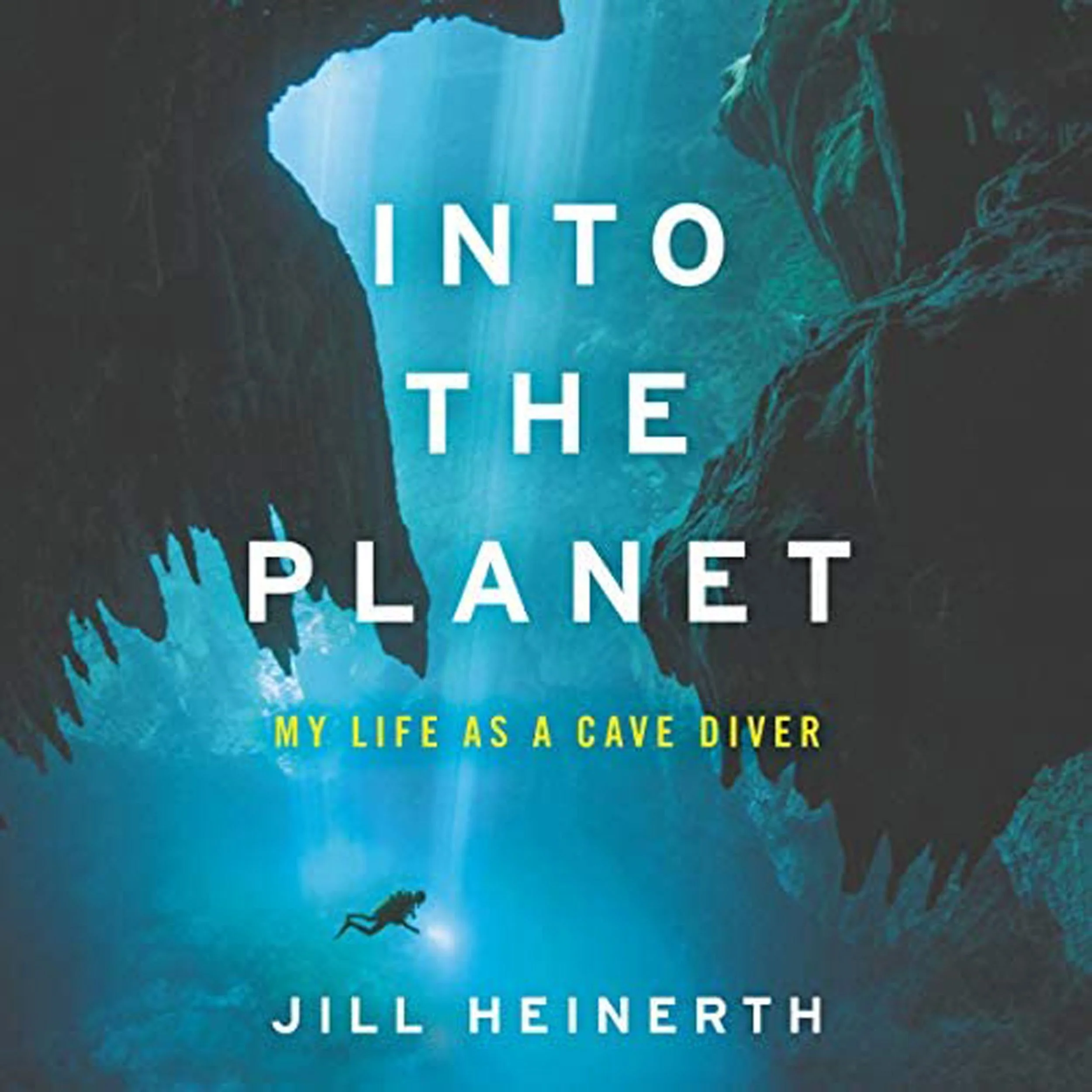
JILL HEINERTH - Explorer, Presenter, Author of “Into The Planet: My Life as a Cave Diver”

JILL HEINERTH - Explorer, Presenter, Author of “Into The Planet: My Life as a Cave Diver”

Explorer, Presenter, Author of Into The Planet: My Life as a Cave Diver

She is a veteran of over thirty years of filming, photography, and exploration on projects in submerged caves around the world. She has made TV series, consulted on movies, written several books and is a frequent corporate keynote speaker. Jill is the first Explorer in Residence for the Royal Canadian Geographical Society, recipient of Canada’s prestigious Polar Medal and is a Fellow of the International Scuba Divers Hall of Fame. In recognition of her lifetime achievement, Jill was awarded the Sir Christopher Ondaatje Medal for Exploration from the RCGS and the William Beebe Award from the Explorers Club.

ROBERT PLANT - DICKIE LANDRY - LIL' BAND O' GOLD

ROBERT PLANT - DICKIE LANDRY - LIL' BAND O' GOLD

I still have problems today. Some people call it stage fright. I don't know what it is, but I'm always right before a concert thinking, Why am I doing this? I should be doing this. I should be doing that. Why am I here? What am I going to do? And I walk up to the microphone, I'm still thinking this, and I start playing. And I'm still thinking, What am I doing here? Why, why, why? All the questions of how I'm going to sustain playing for 45 minutes or an hour, and I'm still playing and playing. And then all of a sudden I go, Well, Mr. Landry, you've got people sitting in the audience. You're getting paid for this. So enjoy yourself. So the next thing I know, the concert is over, and I don't know where I've been.

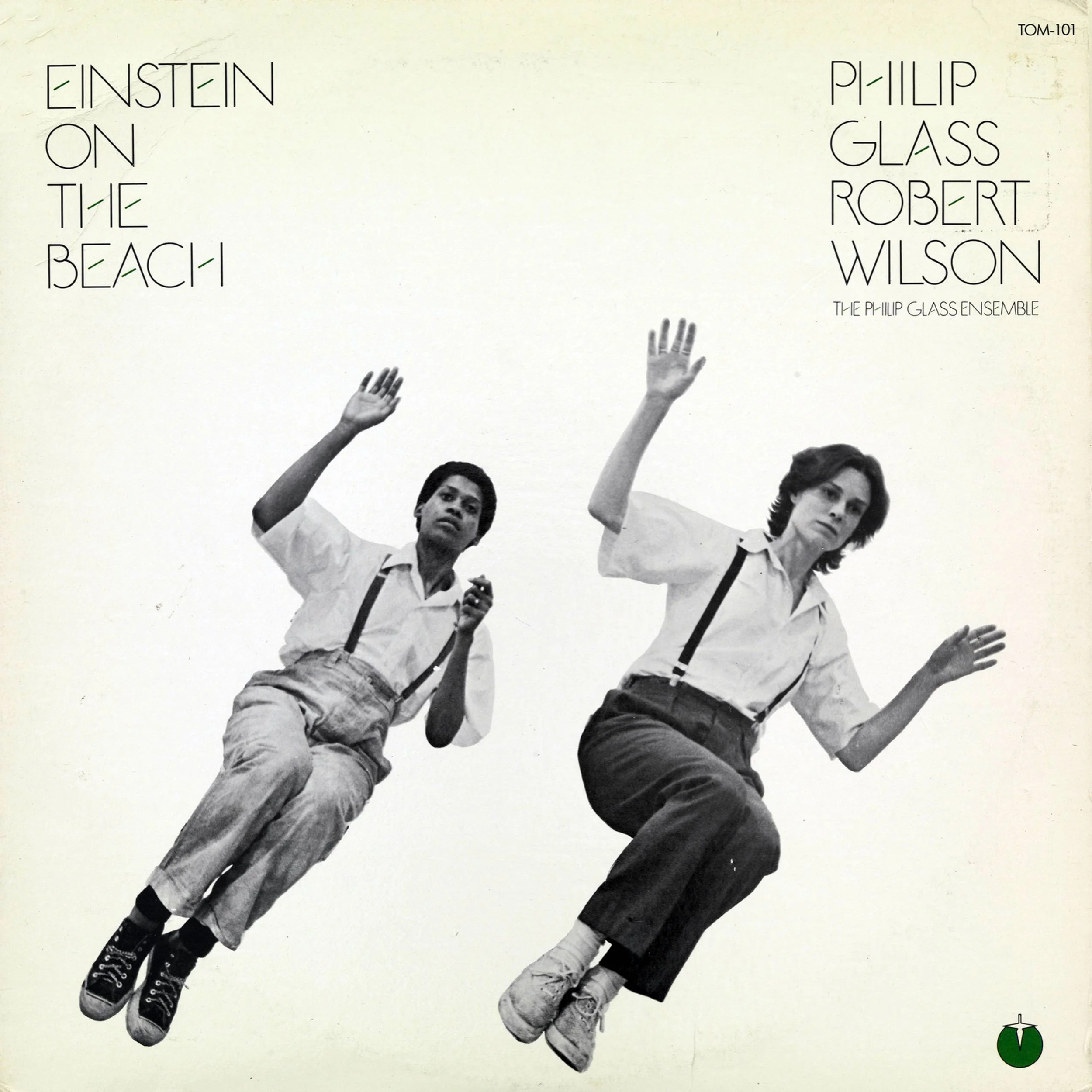
PHILIP GLASS - DICKIE LANDRY - "EINSTEIN ON THE BEACH"

PHILIP GLASS - DICKIE LANDRY - "EINSTEIN ON THE BEACH"

Einstein on the Beach, it's a masterpiece. America, in 1976, was to be celebrating its 200th year of existence, and Michel Guy, the French Minister of Culture, came to New York to offer a commission to Philip Glass and Robert Wilson to write an opera. This was the gift that France would give for America's two-hundredth anniversary. That was the first time I met Robert Wilson.

ANTHONY JOSEPH - T.S. Eliot Award-winning Poet, Novelist & Musician, Lead vocalist of The Spasm Band

ANTHONY JOSEPH - T.S. Eliot Award-winning Poet, Novelist & Musician, Lead vocalist of The Spasm Band

T.S. Eliot Award-winning Poet, Novelist & Musician, Lead vocalist of The Spasm Band
Author of Sonnets for Albert

The life of Caribbean people is not really documented. So this idea of Caribbean life being fragmented is something that I've had in my mind for a long time. So when I came to write this collection for my father, I realized that it was the same process and what I had were fragments, especially with him, because he wasn't around in a physical sense all the time. So all I had were little photographs, scattered memories, and remembrances. They're little parts of his life and parts of my experience with him... I never disliked my father. I always loved him and always was fascinated and captivated by him.