Highlights - Carl Safina - Author of “Becoming Wild: How Animal Cultures Raise Families, Create Beauty, and Achieve Peace”

Highlights - Carl Safina - Author of “Becoming Wild: How Animal Cultures Raise Families, Create Beauty, and Achieve Peace”

Ecologist, Founding President of Safina Center
NYTimes Bestselling Author of Becoming Wild · Song for the Blue Ocean · Beyond Words: What Animals Think and Feel

So we tend to take living for granted. I think that might be the biggest limitation of human intelligence is to not understand with awe and reverence and love that we live in a miracle that we are part of and that we have the ability to either nurture or destroy. The living world is enormously enriching to human life. I just loved animals. They're always just totally fascinating. They're not here for us. They're just here like we're just here. They are of this world as much as we are of this world. They really have the same claim to life and death and the circle of being.

Carl Safina - Ecologist - Founding President of Safina Center - NYTimes Bestselling Author

Carl Safina - Ecologist - Founding President of Safina Center - NYTimes Bestselling Author

Ecologist, Founding President of Safina Center
NYTimes Bestselling Author of Becoming Wild · Song for the Blue Ocean · Beyond Words: What Animals Think and Feel

So we tend to take living for granted. I think that might be the biggest limitation of human intelligence is to not understand with awe and reverence and love that we live in a miracle that we are part of and that we have the ability to either nurture or destroy. The living world is enormously enriching to human life. I just loved animals. They're always just totally fascinating. They're not here for us. They're just here like we're just here. They are of this world as much as we are of this world. They really have the same claim to life and death and the circle of being.

Highlights - Nick Bostrom - Founding Director, Future of Humanity Institute, Oxford

Highlights - Nick Bostrom - Founding Director, Future of Humanity Institute, Oxford

Founding Director of Future of Humanity Institute, University of Oxford
Philosopher, Author of Superintelligence: Paths, Dangers, Strategies

I do think though that there is a real possibility that within the lifetime of many people who are here today, we will see the arrival of transformative AI, machine intelligence systems that not only can automate specific tasks but can replicate the full generality of human thinking. So that everything that we humans can do with our brains, machines will be able to do, and in fact do faster and more efficiently. What the consequences of that are, is very much an open question and, I think, depends in part on the extent to which we manage to get our act together before these developments. In terms of, on the one hand, working out our technical issues in AI alignment, figuring out exactly the methods by which you could ensure that such very powerful cognitive engines will be aligned to our values, will actually do what we intend for them to do, as opposed to something else. And then, of course, also the political challenges of ensuring that such a powerful technology will be used for positive ends. So depending on how well we perform among those two challenges, the outcome, I think, could be extremely good or extremely bad. And I think all of those possibilities are still in the cards.

Nick Bostrom - Philosopher, Founding Director, Future of Humanity Institute, Oxford


Nick Bostrom - Philosopher, Founding Director, Future of Humanity Institute, Oxford


Founding Director of Future of Humanity Institute, University of Oxford
Philosopher, Author of Superintelligence: Paths, Dangers, Strategies

I do think though that there is a real possibility that within the lifetime of many people who are here today, we will see the arrival of transformative AI, machine intelligence systems that not only can automate specific tasks but can replicate the full generality of human thinking. So that everything that we humans can do with our brains, machines will be able to do, and in fact do faster and more efficiently. What the consequences of that are, is very much an open question and, I think, depends in part on the extent to which we manage to get our act together before these developments. In terms of, on the one hand, working out our technical issues in AI alignment, figuring out exactly the methods by which you could ensure that such very powerful cognitive engines will be aligned to our values, will actually do what we intend for them to do, as opposed to something else. And then, of course, also the political challenges of ensuring that such a powerful technology will be used for positive ends. So depending on how well we perform among those two challenges, the outcome, I think, could be extremely good or extremely bad. And I think all of those possibilities are still in the cards.

Highlights - Mona Sarfaty - Medical Society Consortium on Climate and Health | Ed Maibach - Communication Scientist

Highlights - Mona Sarfaty - Medical Society Consortium on Climate and Health | Ed Maibach - Communication Scientist

Executive Director & Founder of the Medical Society Consortium on Climate and Health
Director of the George Mason University Center for Climate Change Communication

Humanity needs to do three things if it wants to continue to flourish, and it will. The three things that humanity needs to do are decarbonize the global economy, drawdown, capture, harvest much of that heat-trapping pollution that we've already pumped into the atmosphere over the past hundred years because as long as it's up in our atmosphere, we're going to have continued warming. And the third thing that humanity needs to do is become more resilient to the impacts of climate change, which unfortunately will continue for the next several generations at least, even as we succeed in decarbonizing the global economy and harvesting that heat-trapping pollution from the atmosphere.

So these are the three things that have to happen. These three things will happen. The open question is how rapidly will they happen? Any business that can play a vital role in making any one or two or all three of those things happen, those are businesses that are going to flourish going forward. And any business that's sitting on the side and not contributing to one of those three areas, I really think they will become increasingly irrelevant, if not completely antiquated and increasingly understood to be harmful.

Dr. Mona Sarfaty - Medical Society Consortium on Climate and Health | Dr. Ed Maibach - Communication Scientist

Dr. Mona Sarfaty - Medical Society Consortium on Climate and Health | Dr. Ed Maibach - Communication Scientist

Executive Director & Founder of the Medical Society Consortium on Climate and Health
Director of the George Mason University Center for Climate Change Communication

Humanity needs to do three things if it wants to continue to flourish, and it will. The three things that humanity needs to do are decarbonize the global economy, drawdown, capture, harvest much of that heat-trapping pollution that we've already pumped into the atmosphere over the past hundred years because as long as it's up in our atmosphere, we're going to have continued warming. And the third thing that humanity needs to do is become more resilient to the impacts of climate change, which unfortunately will continue for the next several generations at least, even as we succeed in decarbonizing the global economy and harvesting that heat-trapping pollution from the atmosphere.

So these are the three things that have to happen. These three things will happen. The open question is how rapidly will they happen? Any business that can play a vital role in making any one or two or all three of those things happen, those are businesses that are going to flourish going forward. And any business that's sitting on the side and not contributing to one of those three areas, I really think they will become increasingly irrelevant, if not completely antiquated and increasingly understood to be harmful.

Highlights - Jack Horner - Renowned Paleontologist - Technical Advisor, Jurassic Park/World Films

Highlights - Jack Horner - Renowned Paleontologist - Technical Advisor, Jurassic Park/World Films

Renowned Dinosaur Paleontologist
Technical Advisor on all Jurassic Park / Jurassic World Films

I found my first fossil when I was six years old. And I found my first dinosaur bone when I was eight, my first dinosaur skeleton when I was 13. When I was a kid, I knew I wanted to be a paleontologist, and I didn't think there was much hope for it, though. I was doing very poorly in school. I think I was always a pretty positive kid. And so even though I wasn't doing well in school, I was really happy about the fact that I was finding all these cool fossils, and I was making collections. I don't know when it came to me that I would do this, but I think I just was born this way.

Jack Horner - Renowned Dinosaur Paleontologist - Technical Advisor, Jurassic Park/World Films

Jack Horner - Renowned Dinosaur Paleontologist - Technical Advisor, Jurassic Park/World Films

Renowned Dinosaur Paleontologist
Technical Advisor on all Jurassic Park / Jurassic World Films

I found my first fossil when I was six years old. And I found my first dinosaur bone when I was eight, my first dinosaur skeleton when I was 13. When I was a kid, I knew I wanted to be a paleontologist, and I didn't think there was much hope for it, though. I was doing very poorly in school. I think I was always a pretty positive kid. And so even though I wasn't doing well in school, I was really happy about the fact that I was finding all these cool fossils, and I was making collections. I don't know when it came to me that I would do this, but I think I just was born this way.

Highlights - Michael Sticka - President/CEO of the GRAMMY Museum

Highlights - Michael Sticka - President/CEO of the GRAMMY Museum

President/CEO of the GRAMMY Museum

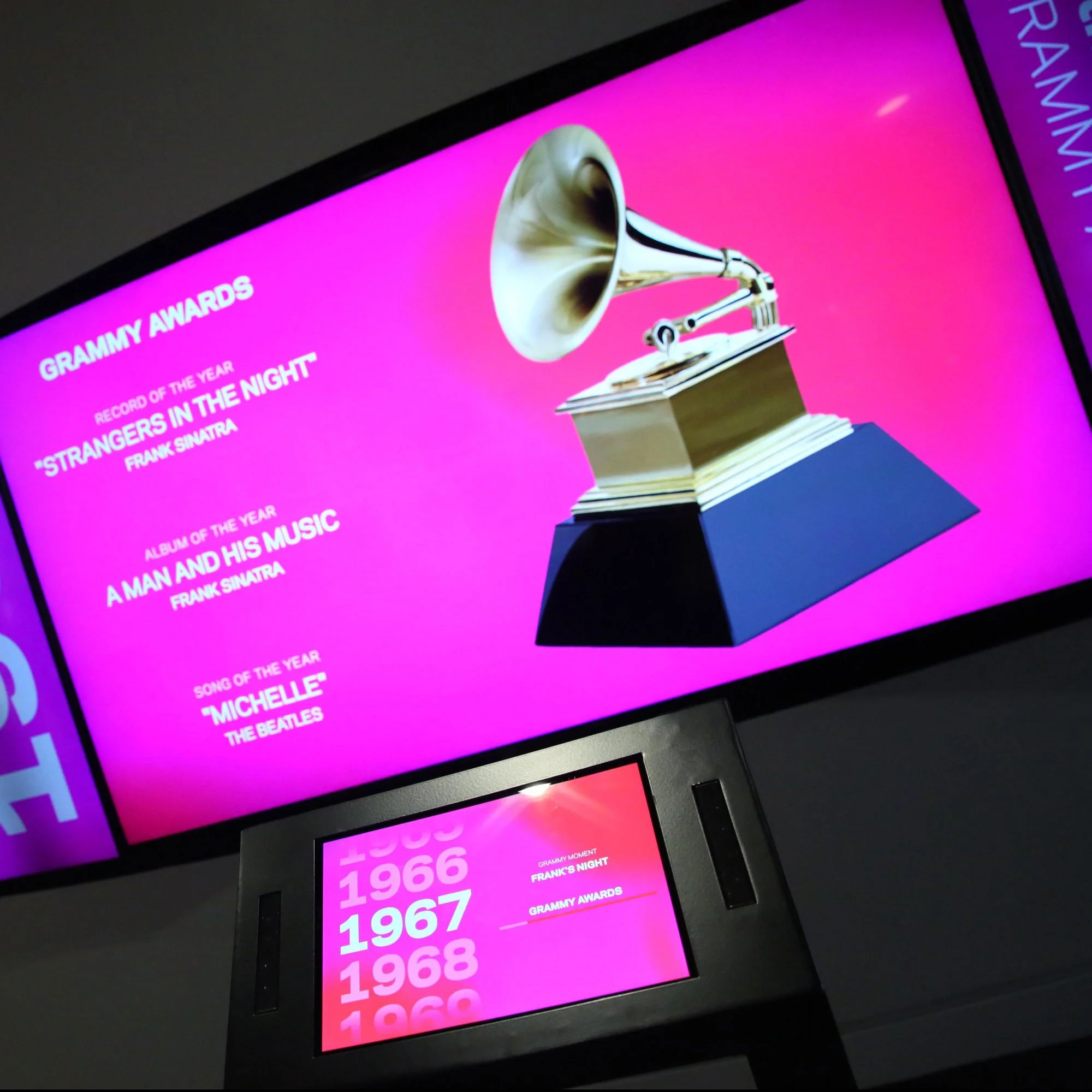
It's actually right in our mission statement that “we celebrate the music of yesterday and today to inspire the music of tomorrow.” And we do it through our exhibits. We have 35,000 square feet of galleries. We travel exhibits, really, all over the world over the world for the past 15 years. And through our education programs, we really focus on the next generation of music's creators and leaders. We do that through really specific curricula that is designed to educate particularly young people, K-12, about the business of music, especially for those who want to go into the industry.

Michael Sticka - President/CEO of the GRAMMY Museum

Michael Sticka - President/CEO of the GRAMMY Museum

President/CEO of the GRAMMY Museum

It's actually right in our mission statement that “we celebrate the music of yesterday and today to inspire the music of tomorrow.” And we do it through our exhibits. We have 35,000 square feet of galleries. We travel exhibits, really, all over the world over the world for the past 15 years. And through our education programs, we really focus on the next generation of music's creators and leaders. We do that through really specific curricula that is designed to educate particularly young people, K-12, about the business of music, especially for those who want to go into the industry.

Highlights - Bruce Mau - Award-winning Designer, Author of “Mau MC24…24 Principles for Designing Massive Change”

Highlights - Bruce Mau - Award-winning Designer, Author of “Mau MC24…24 Principles for Designing Massive Change”

Award-winning Designer, Artist & Educator
Co-founder & CEO of Massive Change Network
Author/Co-author of Mau MC24 · The Nexus · S, M, L, XL

I would like them to know just how powerful they are, that they have the power to shape the world. At some point, I realized that the world is produced. The world is designed and produced, and since we designed and produced it, we can redesign it. And you can play a part in designing it. You can play a part in that production. It doesn't have to happen to you. And I think, for too many people, too much power and too much control is concentrated in too few hands. People need to have the power to control and design their own life.

Bruce Mau - Author of "Mau MC24…24 Principles for Designing Massive Change in Your Life and Work”

Bruce Mau - Author of "Mau MC24…24 Principles for Designing Massive Change in Your Life and Work”

Award-winning Designer, Artist & Educator
Co-founder & CEO of Massive Change Network
Author/Co-author of Mau MC24 · The Nexus · S, M, L, XL

I would like them to know just how powerful they are, that they have the power to shape the world. At some point, I realized that the world is produced. The world is designed and produced, and since we designed and produced it, we can redesign it. And you can play a part in designing it. You can play a part in that production. It doesn't have to happen to you. And I think, for too many people, too much power and too much control is concentrated in too few hands. People need to have the power to control and design their own life.

Highlights - Donald Hoffman - Author of “The case against reality: Why evolution hid the truth from our eyes”

Highlights - Donald Hoffman - Author of “The case against reality: Why evolution hid the truth from our eyes”

Professor of Cognitive Sciences, UC Irvine
Author of The case against reality: Why evolution hid the truth from our eyes

This is really what life, I think, is about - learning to not believe your thoughts. Watch your thoughts, see their patterns and learn that you are not at the whim and beck and call of your thoughts. You can watch your thoughts, and you can choose to let go of thoughts and just be present and let go of the complaints. And that then opens up a level of creativity that's surprising. It could be in dance, science, it could be in music, or art. Wherever you have creative expression, letting go of thought and having this balance between thinking and no thinking, going into complete silence and then pulling ideas back for your art, your science, your dance, whatever it might be, is really the dance of life.

Donald Hoffman - Prof. of Cognitive Sciences, UC Irvine - Author of “The case against reality”

Donald Hoffman - Prof. of Cognitive Sciences, UC Irvine - Author of “The case against reality”

Professor of Cognitive Sciences, UC Irvine
Author of The case against reality: Why evolution hid the truth from our eyes

This is really what life, I think, is about - learning to not believe your thoughts. Watch your thoughts, see their patterns and learn that you are not at the whim and beck and call of your thoughts. You can watch your thoughts, and you can choose to let go of thoughts and just be present and let go of the complaints. And that then opens up a level of creativity that's surprising. It could be in dance, science, it could be in music, or art. Wherever you have creative expression, letting go of thought and having this balance between thinking and no thinking, going into complete silence and then pulling ideas back for your art, your science, your dance, whatever it might be, is really the dance of life.

Highlights - Kevin Trenberth - Nobel Prize Winner - Author of “The Changing Flow of Energy Through the Climate System”

Highlights - Kevin Trenberth - Nobel Prize Winner - Author of “The Changing Flow of Energy Through the Climate System”

Nobel Prize-winning Climate Scientist · Lead Author of IPCC Assessment Reports
Author of The Changing Flow of Energy Through the Climate System

This is an intergenerational problem. The response to climate change relates very much to value systems. And one of the questions people ask, or should ask is: How much do you value the future generations? How much do you value the world that you're leaving your children and your grandchildren? And what kind of a climate you're leaving them with? And some people don't care, and some people don't have children. And they say, "Eh, it's not an issue for me. It's not one of my values." And so this is part of the problem, but if you're thinking about peoples as a whole, all of the community that you're leaving behind, this is a collective problem.

Kevin Trenberth - Nobel Prize-winning Climate Scientist - Author of “The Changing Flow of Energy Through the Climate System”

Kevin Trenberth - Nobel Prize-winning Climate Scientist - Author of “The Changing Flow of Energy Through the Climate System”

Nobel Prize-winning Climate Scientist · Lead Author of IPCC Assessment Reports
Author of The Changing Flow of Energy Through the Climate System

This is an intergenerational problem. The response to climate change relates very much to value systems. And one of the questions people ask, or should ask is: How much do you value the future generations? How much do you value the world that you're leaving your children and your grandchildren? And what kind of a climate you're leaving them with? And some people don't care, and some people don't have children. And they say, "Eh, it's not an issue for me. It's not one of my values." And so this is part of the problem, but if you're thinking about peoples as a whole, all of the community that you're leaving behind, this is a collective problem.

Highlights - Bertrand Piccard - Explorer, Founder, Solar Impulse Foundation: 1000+ Profitable Climate Solutions

Highlights - Bertrand Piccard - Explorer, Founder, Solar Impulse Foundation: 1000+ Profitable Climate Solutions

Psychiatrist, Explorer, Aviator of the First Round-the-World Solar-powered Flight
Founder and Chairman of Solar Impulse Foundation: 1000+ Profitable Climate Solutions
United Nations Goodwill Ambassador for the Environment

So this is why I prefer to speak with a really down to earth language. So maybe the people who love nature are going to say, “Oh, Bertrand Piccard, now he is too down to earth. He's speaking about profitable solutions. He's speaking to the industries that are polluting,” but we have to speak to the industries that are polluting and bring them profitable solutions, otherwise the world will never change, or humankind will never change. And don't forget one thing, what we are damaging is not the beauty of nature. What is being damaged is the quality of life of human beings on Earth because we can still have beautiful things to see, but if we have climate change, if we have tropical disease in Europe, if we have heat waves, floods, droughts, millions of climate refugees, life will be miserable, even if nature is still beautiful.

Bertrand Piccard - Explorer, Founder, Solar Impulse Foundation: 1000+ Profitable Climate Solutions

Bertrand Piccard - Explorer, Founder, Solar Impulse Foundation: 1000+ Profitable Climate Solutions

Psychiatrist, Explorer, Aviator of the First Round-the-World Solar-powered Flight
Founder and Chairman of Solar Impulse Foundation: 1000+ Profitable Climate Solutions
United Nations Goodwill Ambassador for the Environment

So this is why I prefer to speak with a really down to earth language. So maybe the people who love nature are going to say, “Oh, Bertrand Piccard, now he is too down to earth. He's speaking about profitable solutions. He's speaking to the industries that are polluting,” but we have to speak to the industries that are polluting and bring them profitable solutions, otherwise the world will never change, or humankind will never change. And don't forget one thing, what we are damaging is not the beauty of nature. What is being damaged is the quality of life of human beings on Earth because we can still have beautiful things to see, but if we have climate change, if we have tropical disease in Europe, if we have heat waves, floods, droughts, millions of climate refugees, life will be miserable, even if nature is still beautiful.

Highlights - Dr. Charles D. Koven - Lead Author - IPCC Report - Earth System Scientist

Highlights - Dr. Charles D. Koven - Lead Author - IPCC Report - Earth System Scientist

Earth System Scientist, Climate Sciences Department, Lawrence Berkeley National Laboratory
Lead Author on the IPCC Report

Looking into the future, as a scientist, what I've learned how to do is hold multiple futures in my head at the same time because we just don't know. We don't know what the future holds. We need to fight for the futures that we want, and against the futures that we don't want. All I can really say is that it's up to us. It's up to us to fight and advocate for the future we want, and what does that look like, and how do we get there?

Dr. Charles D. Koven - Earth System Scientist - Lead Author on the IPCC Report

Dr. Charles D. Koven - Earth System Scientist - Lead Author on the IPCC Report

Earth System Scientist, Climate Sciences Department, Lawrence Berkeley National Laboratory
Lead Author on the IPCC Report

Looking into the future, as a scientist, what I've learned how to do is hold multiple futures in my head at the same time because we just don't know. We don't know what the future holds. We need to fight for the futures that we want, and against the futures that we don't want. All I can really say is that it's up to us. It's up to us to fight and advocate for the future we want, and what does that look like, and how do we get there?