ELIZABETH KARCHER

ELIZABETH KARCHER

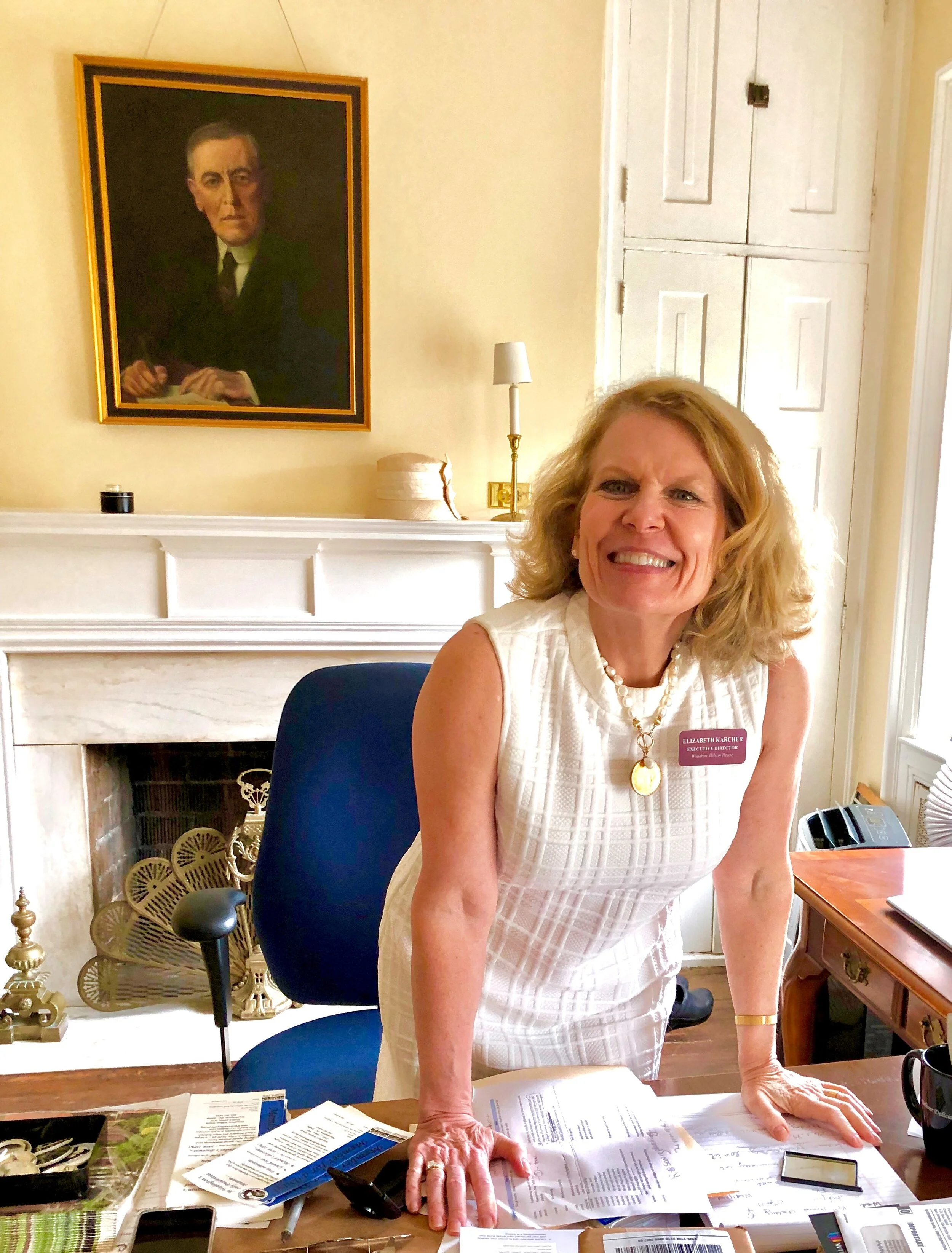
Executive Director of the President Wilson House in Washington, D.C.


I have three missions, topics of conversation, ideas for exhibitions and really discussions that we want to bring to life at the House, and those are stories of African-Americans, racial conflict, and social justice, as well as women and women’s stories, suffrage, and finally Wilson’s international legacy and how he was seen after the Great War. I think those three topics are topics that resonate today. So, even though they’re 100 years old and issues that he faced in his Presidency, these are topics that are still relevant. We’re still talking about social and racial justice. We’re still about women being enfranchised and women, not just in the vote, but having positions in Board of Directors, museums, companies, and corporations across the United States.
SEBASTIEN GOKALP

SEBASTIEN GOKALP

Sébastien Gokalp · Director of France’s National Museum of Immigration
Curator of Exhibitions at Centre Pompidou, Musée d’art Moderne de la Ville de Paris & Louis Vuitton Foundation

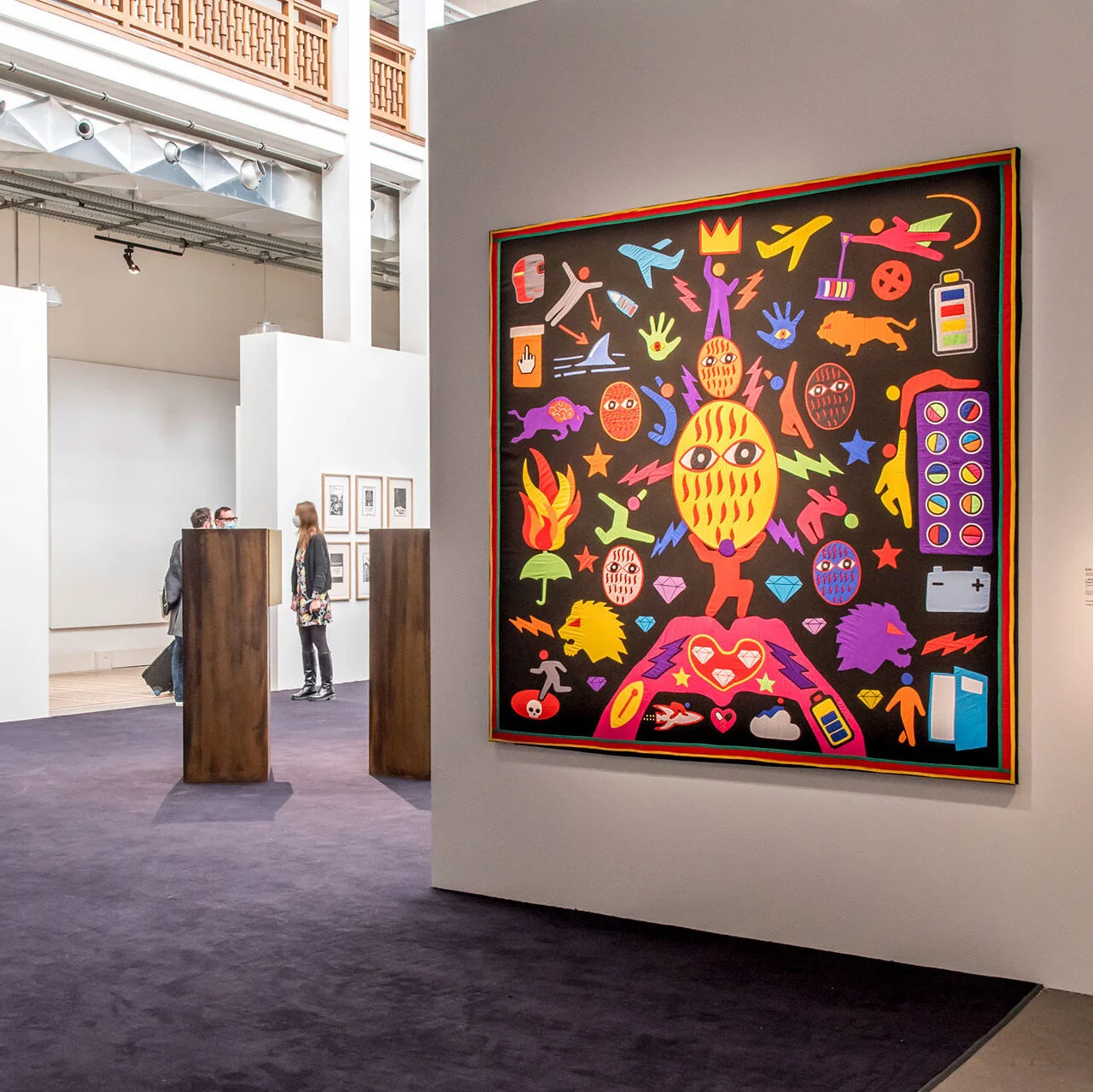
We have a motto that says that ‘we want to change the gaze on immigration or to open the eyes on immigration’. We’re not here to make action in society, but we want people who come here to have elements of reflection, perception about the question of immigration. To change a mind, because immigration is about the stories of people who come from another country–they are someone else, basically–by assisting them we want to show how someone else can be great for us and not a stranger, foreigner, nor an enemy, but a friend. Someone who will bring us many things about culture, about work, about a way of meaning, of thinking. We have a historical point of view. We want to show that from the French Revolution until now, so two centuries of stories.

HALA ALYAN

HALA ALYAN

Dayton Literary Peace Prize Winning Novelist, Poet & Clinical Psychologist

We become the stories we tell ourselves…I started writing around the time I learned English because we moved to the States soon after my fourth birthday, and so I was here for kindergarten into elementary school. I grasped this new language just as I was learning how to also put things onto the page. Those two things really happened at the same time for me. I entered this world where I felt very different and very other, for all intents and purposes I was set to be raised in Kuwait. And then that of course got turned upside down after the invasion by Saddam. I think that so much of my trying to make sense of the world had to do with the displacement, exile and these experiences that my parents had experienced but then that I had as well as we were fleeing the war. It’s hard to know because I think that language was being formed in my brain at the same time that these things were happening.

MICHAEL DAUGHTERTY

MICHAEL DAUGHTERTY

Multiple GRAMMY Award-winning composer
One of the ten most performed composers in America

“Architecture is frozen music,” as Goethe said…There is something about when you’re exploring not knowing exactly where it’s going to go or how it’s going to turn out which creates an element of surprise and an element of intrigue.

JEANNIE VANASCO

JEANNIE VANASCO

Award-Winning Memoirist, Author & Educator

What interested me about this particular experience is that I didn’t have the language to attach to it in the way I had the language to attach to a later experience that I would have no trouble calling rape, but happened to me and I call Mark in the book. I didn’t know what to call that for the longest time, so I didn’t know what to feel about it, and so as a writer that interests me. When I don’t have the words for something, when I sense that inevitably I’m going to fail.


JENNY BHATT

JENNY BHATT

Writer, Literary Translator, Book Critic & Host of Desi Books Podcast

People talk about the work life, the line between your work and your life and keeping them separate and keeping the balance. For me, it’s always been that my work defines who I am and who I am in my personal life also defines who I am at my workplace. I don’t know how you separate those identities because I take all my belief systems and who I am to my workplace.

PETER WELLER

PETER WELLER

Peter Weller is a renowned theater and Hollywood actor. His performance in films such as Robocop and Naked Lunch garnering him much critical and commercial success over the years. Unbeknownst to most, Weller has spent much of his time over the decades, honing his appreciation for the visual and musical arts through his studies of the Renaissance era. Earning a Masters in  Roman architecture from Syracuse University before moving onto a PHD in Renaissance art from UCLA, Weller has even penned numerous academic papers covering the era’s influence on modern art. Recently, Weller has even returned to the setting of RoboCop in Detroit, Michigan to deliver a lecture on “The Crisis in Beauty”. Peter has also contributed an essay to a music anthology The Creative Process has co-curated for Routledge Press. Weller’s essay details his memories of the late Miles Davis, who was both a friend and an inspiration.

Photo by Steve Granitz - © WireImage.com

BRIGHT SHENG

BRIGHT SHENG

MacArthur & ASCAP Award-Winning Composer, Conductor & Pianist

I try to preserve the Chinese music flavor. So, you imagine in Chinese band, the country music that people usually reserve for weddings or for big moments or for funerals. That kind of a feeling. Drums and music playing. I try to preserve it from my memory because what we have now is just a tune. You can probably recognize the tune, but the execution of translating that for a Western orchestra and make it sound like it’s a Chinese band playing Chinese instruments.

KIRIAKOS SPIROU

KIRIAKOS SPIROU

Editor, Writer, Curator, Content Creator, Pianist & Composer

This particular exhibition definitely had to do with my close relationship to dance. I have collaborated a lot with choreographers for contemporary dance theater, and I was often advising collaborators, so we would create the tasks and the content of the choreography together. We would exchange the tasks. We would create the score and narrative together. Also, because I’m a pianist, which is a very physically demanding instrument, you have this geography of the piano. I think this exhibitions links to my own experience as a performer and composer for dance and the relationship that music has with the body.

JANET BURROWAY

JANET BURROWAY

Novelist, Playwright & Author of Most Widely Used Creative Writing Text in America

There’s a lot of controversy about that idea at the moment, about whether fiction is truly empathic and how much freedom the imagination should have because, as one of my friends says, the imagination is not free. It comes from all of the places that we come from. So it’s a controversial notion, but I am firmly on the side of literature is empathic. In fact, I think that all the arts are empathic because all the arts basically say, ‘Wait a minute. Look at it this way.’ And they allow us to see from some other vantage point than our extremely self-interested selves.

ROBERT AXELROD

ROBERT AXELROD

Former Consultant for the UN, World Bank & US Department of Defense
Professor Emeritus of Political Science & Public Policy at University of Michigan
National Medal of Science Award-Winner

I think the most critical thing is education for critical thinking. The ability to listen to a political argument or an argument of any sort, on COVID, for example, or climate change, and not necessarily understand the science behind that, but to understand how to evaluate the credibility of the speaker, how to evaluate the logic of the arguments and to see whether a conspiracy theory is behind this that has no grounding… And so I think what’s especially important in would be an educational in critical thinking.

TOM PERROTTA

TOM PERROTTA

Tom Perrotta is the bestselling author of nine works of fiction, including Election and Little Children, both of which were made into Oscar-nominated films, and The Leftovers, which was adapted into a critically acclaimed, Peabody Award-winning HBO series. His other books include Bad Haircut, The Wishbones, Joe College, The Abstinence Teacher, Nine Inches, and his newest, Mrs. Fletcher. His work has been translated into a multitude of languages. Perrotta grew up in New Jersey and lives outside of Boston.

MARCIA SCHEINER

MARCIA SCHEINER

President & Founder of Integrate Autism Employment Advisors

For autistic individuals, there’s really sort of two paths. There are those today, about 35% percent of 18 year olds with an autism diagnosis who do go on to college or some form of post-secondary education, and then those who don’t. Of those who don’t and want to work, there’s about a 55% unemployment rate. And those who go to college and then look for employment afterwards, there’s about a 75 to 85% underemployment rate. So you can see the unemployment rates whether you go to college or not are astronomical, but they’re even higher if you go to college, which is sort of counterintuitive.

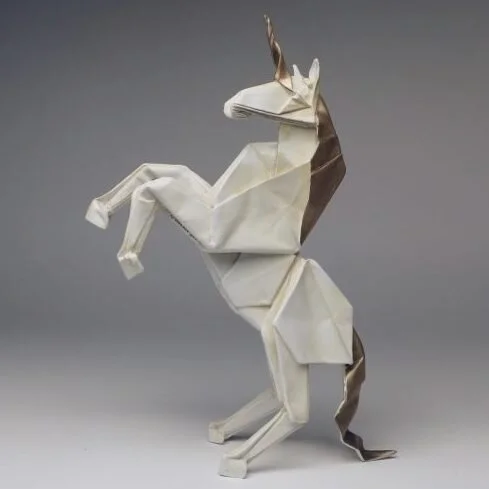
ROBERT J. LANG

ROBERT J. LANG

Master Origamist, Physicist & Author

In origami design, historically people have always used their intuition. They probably started by folding traditional shapes or folding designs by others, developed an intuitive understanding of how the paper behaves and then from there they can explore that intuition to create new shapes. That was the way design worked for years and years, that was the way it worked for me, but I eventually hit a limit to what I could do with my intuition and so part of my motivation for exploring mathematical methods was to externalise some of the design process. If I could get some of the design process on paper in a meaningful way, then I could handle more complicated goals than I could just fit in my brain.

DAVID TOMAS MARTINEZ

DAVID TOMAS MARTINEZ

Pushcart Award-Winning Poet

When I was younger, I never really thought of living past twenty-five…I felt like I was in a movie. I thought that I was living this movie idea of things and there’d be gunshots around you. You hear it hitting the concrete, and you’re like ‘Oh, shit’. Seriously, I didn’t think of it as real life. When you’re young, the idea that I’d known people that were killed early, you go to prison. These just felt like matter of fact. They seemed to be this part of life and you just accepted them.

GAVIN JAMES CREEL

GAVIN JAMES CREEL

Tony & Olivier Award-Winning Actor, Singer & Songwriter

To not honor that we are all creative, beautiful, interesting deep, rich individuals. We’re not zeros and ones on a spreadsheet. We’re not scientifically explained. We are not mathematically judged. We are imperfect blobs of emotion and bone and spirit and life and when we come together there is nothing greater than the chemistry and the alchemy of musical theater… There’s a joy, there’s a bounce, there’s an effervescence that’s part of that music. I had a great teacher in college, the head of our program Brent Wagner said, 'With lyrics, I can tell you to open the door, but with music I can tell you how.’ Lyrics are information and music is emotion.

DR. FRANÇOIS CLEMMONS

DR. FRANÇOIS CLEMMONS

Singer · Author
1st African American Actor on Children’s TV · Officer Clemmons on Mister Rogers’ Neighborhood

I always find it an ironic thing to think about the fact that Fred Rogers was colour-blind. He could barely tell a blue from a grey. I was young and to him I was a child and I certainly played the role of a child and he played the role of parent… He was profoundly patient.

AVI LOEB

AVI LOEB

Harvard Astronomer · Theoretical Physicist
NY Times Bestselling Author of Extraterrestrial, The First Sign of Intelligent Life Beyond Earth

If we are not open to discover wonderful things, we will never discover them. It very much depends on us allowing ourselves to explore and find new things. My mother used to tell me when I was a kid that when I was born as an infant I was very different from the other babies in the room. I was looking around with open eyes, and I should say that’s where it all started. Once I got out of the womb of my mother and I started looking around, I was very curious. The great privilege of being a scientist is that you don’t need to give up on that curiosity. You can maintain your childhood curiosity.

TAL HEVER-CHYBOWSKI

TAL HEVER-CHYBOWSKI

Director of the Paris Yiddish Center (Maison de la Culture Yiddish) & Medem Library

A lot of people in my family and among my friends when they heard that I study Yiddish and that later made it my livelihood, they are very surprised. Yiddish? How come Yiddish? Why Yiddish? They even laugh sometimes, they are very surprised. And what I answer to them is that there is nothing surprising about the fact that I study or speak Yiddish. The real surprise, the real question that has to be asked is how come my parents, this last generation, didn’t speak Yiddish? Because, if you consider my family, for hundreds of years on all sides they spoke Yiddish.

ANANTHA DURAIAPPAH

ANANTHA DURAIAPPAH

Inaugural Director · UNESCO Mahatma Gandhi Institute of Education for Peace & Sustainable Development

I’ve always found that science and evidence has to be the guiding force in the way that we design our programs. Of course, understanding people as humans. People as not just rational human beings. That’s another thing that I also learned during my journey is that the whole notion of a rational human being is used as an assumption to make our economic models simple.