AMANDA E. MACHADO - Writer, Public Speaker, Facilitator - Founder of Reclaiming Nature Writing

AMANDA E. MACHADO - Writer, Public Speaker, Facilitator - Founder of Reclaiming Nature Writing

Writer, Public Speaker, Facilitator · Founder of Reclaiming Nature Writing

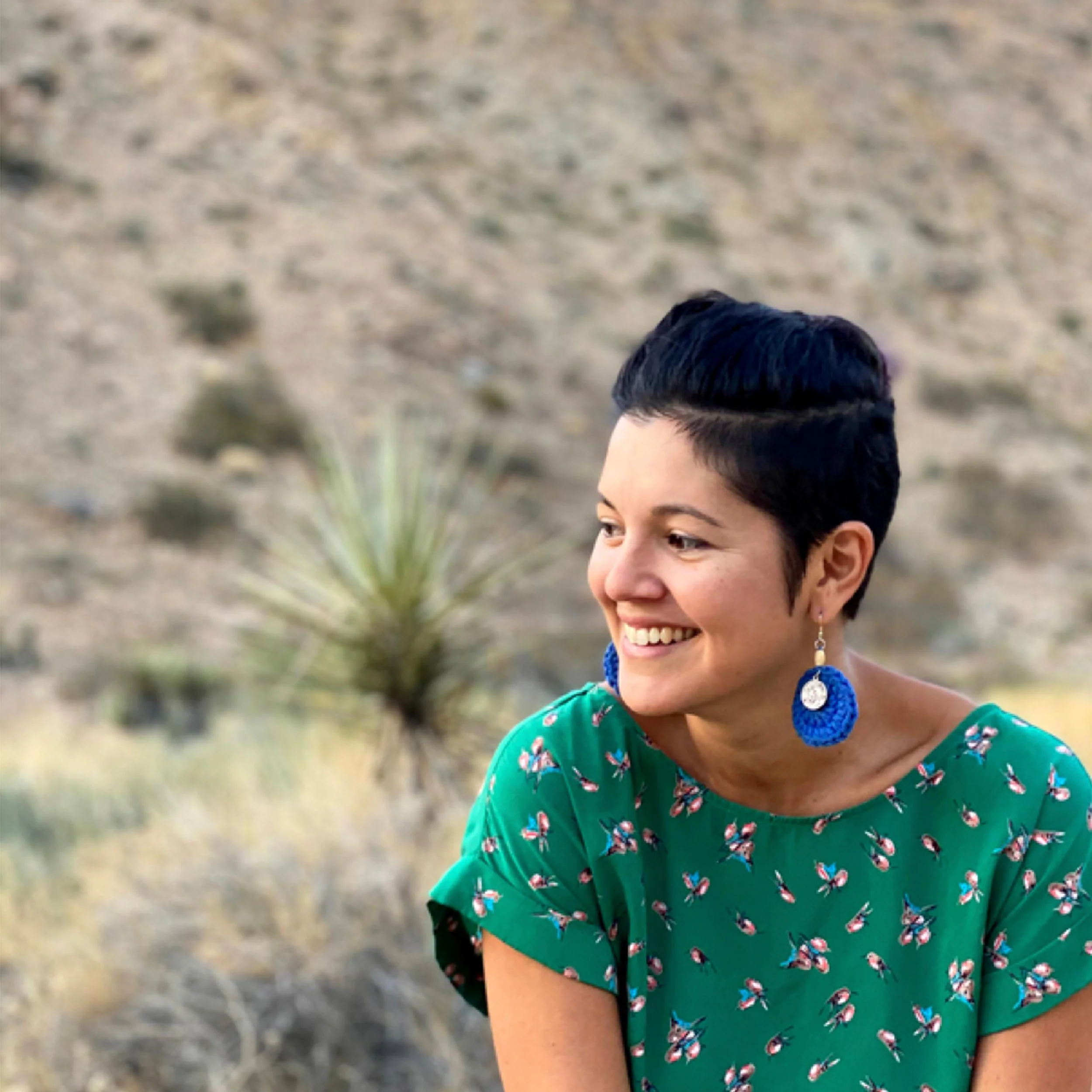
So much of the travel industry was built on the idea of colonialism which really makes us all inherit this idea that whatever we need in life is going to come from seeking it elsewhere and grabbing it from somewhere else, I think looking at that, really deeply thinking about what is lost from that mindset and the harm that is caused by it has been something I've been trying to do over the last few years. And a lot of that has to do with land trauma, right? Like really acknowledging where our settlement of land comes from and how we can heal that in the ways that we travel.

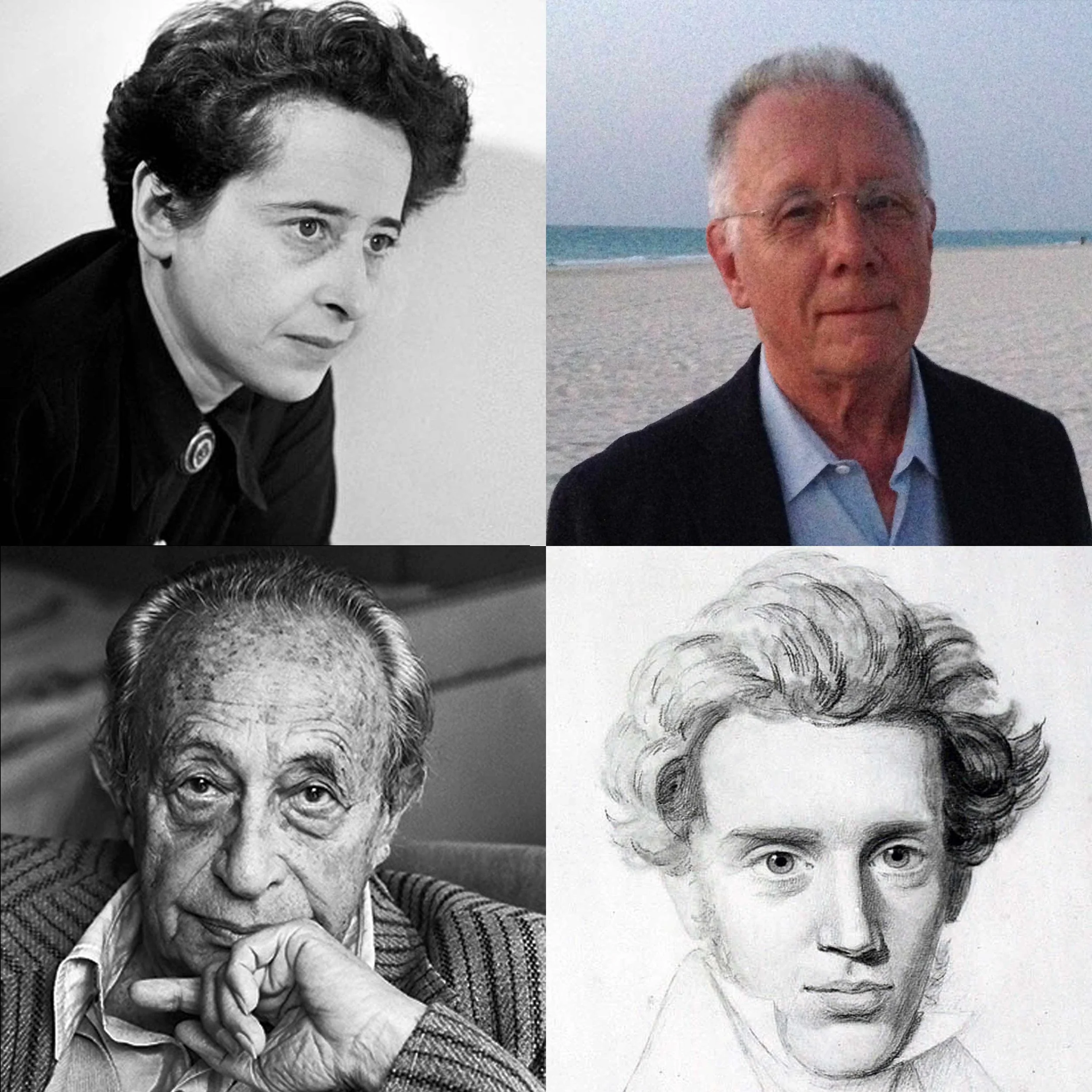
HAROLD P. SJURSEN - Professor of Philosophy - Science, Technology, the Arts

HAROLD P. SJURSEN - Professor of Philosophy - Science, Technology, the Arts

Professor of Philosophy focusing on Science, Technological Ethics, Engineering & the Arts

I have a granddaughter who's just going into high school, and she is filled with idealistic thoughts and is optimistic. She's a person who is both in love with art and in love with science. She's vivacious and just everything about her seems like life is beautiful, and “I'm going to be able to do this and that.” And, of course, when I talk to her, I do everything I can to encourage this kind of openness and optimism, and belief in herself and her ability to do worthwhile things. And not be too concerned about is she going to be able to have a job with enough income to be where she wants to be. And so it’s how to perpetuate and strengthen that kind of spirit and hope, that it can be validated by giving this generation the opportunity to do things. Because I believe that if she and people who think and feel like her were really given the opportunity to be influential and to do things that would have a tremendous shift in the way the world is going. She doesn't think in terms of quarterly profits. She thinks in terms of human happiness and human good, human fairness, and the beauty of nature. I think we need to do. I think the universities can play a part. Schools play a part, but there has to be a broader general sense that this is how we should conceive the future. And, you know, galleries, podcasts, books, newspapers, universities, schools, every kind of institution needs to offer something to help this.
JOY GORMAN WETTELS - Exec. Producer “UnPrisoned” starring Kerry Washington, “13 Reasons Why”, Founder of Joy Coalition

JOY GORMAN WETTELS - Exec. Producer “UnPrisoned” starring Kerry Washington, “13 Reasons Why”, Founder of Joy Coalition

Award-winning Executive Producer of UnPrisoned starring Kerry Washington & Delroy Lindo
13 Reasons Why · Home Before Dark · Eyes on the Prize: Hallowed Ground
Founder of Joy Coalition

With UnPrisoned and with really my whole body of work as a producer, I'm really drawn to stories that make people feel seen that take issues that have stigma and shame attached to them, and making those issues just more palatable and more human. And few people realize that 50% of American families are touched by incarceration. And when you meet someone like Tracy McMillan, who really is a miracle, this is a woman who's now in her fifties who grew up in 22 different foster homes because her father was incarcerated when she was so little. And yet for all of his mistakes, the fact that he was a career criminal, he still, when he could change her diapers, he was present when he could be there. He braided her hair, and there was real love there. But they were separated not only by his mistakes, but by a system that is really unforgiving and really unfair, especially to black and brown men. So, the idea that we could tell a story where a young woman who was raised that way and by that person turns out to be Kerry Washington. You know, turns out to be somebody who you want to be, turns out to be "Olivia Pope", this woman that we all see as so beautiful and such a hero and so strong and so powerful, I felt was just an incredible opportunity. And when we first put Tracy and Kerry in the same room, Kerry said to Tracy, "You know you're a miracle, right?"

MAGGIE GROUT -  Founder & CEO of Thinking Huts tackling Global Education Crisis with 3D Printing

MAGGIE GROUT - Founder & CEO of Thinking Huts tackling Global Education Crisis with 3D Printing

Founder & CEO of Thinking Huts: tackling the Global Education Crisis with 3D Printing

I think being a young Asian woman and trying to lead people can be difficult in the sense that they have those assumptions in place. I do think the typical archetype of Asian women is that you're supposed to be quiet. And maybe those aren't going to be perceived leadership qualities, but in terms of what I have done to overcome that, I've really focused on building the trust and showing people that I genuinely care about them and valuing long-term relationships, especially on the business side. So with the construction team, just showing them that I'll stand up for them if I see behavior that's not okay in my perception. And just being a good person with ethics, I think is maybe what sets me apart because then people respect that and they'll follow you.

TANSY E. HOSKINS - Author of "The Anti-Capitalist Book Of Fashion” - Freelance Fashion & Beauty Writer Award Winner

TANSY E. HOSKINS - Author of "The Anti-Capitalist Book Of Fashion” - Freelance Fashion & Beauty Writer Award Winner

Author of The Anti-Capitalist Book Of Fashion · Foot Work · Stitched Up
Freelance Fashion & Beauty Writer Award Winner

I definitely believe at the moment that fashion brands, big fashion in particular, they just exist to exploit people. It's an excuse to exploit the poor, basically. I see fashion as part of this very extractive global economic society where 100, 150 years ago, that extraction was very obvious. You had the enslavement of people. You had taxation. You had literally armies turning up and occupying the land that they wanted and just taking resources or land. These days it's more subtle, but the brands are still following those colonial pathways.

SIR ANDY HAINES - Tyler Prize Award-winner for Environmental Achievement - Prof. Env. Change & Public Health

SIR ANDY HAINES - Tyler Prize Award-winner for Environmental Achievement - Prof. Env. Change & Public Health

Tyler Prize Award-winner for Environmental Achievement
Professor of Environmental Change & Public Health
Fmr. Chair of WHO World Health Report · Rockefeller /Lancet Commission on Planetary Health

In terms of the impacts of climate change on health when we started 30 years ago, because there was very little data then, so we made suggestions as to what we thought the health outcomes we thought would be affected like vector-borne diseases, crop failures, water availability, sea level rise, increasing disasters related to climatic extreme events, and obviously the effects of extreme heat on vulnerable populations. In particular, elderly people, but not just elderly people. So we suggested a whole range of different health impacts that could occur. And I think, in general, those ideas have stood the test of time, but of course, as the situation has moved on, we've also become much more preoccupied with what kind of action we need to take.

MARK BURGMAN - Author of “Trusting Judgments: How to Get the Best Out of Experts”

MARK BURGMAN - Author of “Trusting Judgments: How to Get the Best Out of Experts”

Director of the Centre for Environmental Policy, Imperial College London · Editor-in-Chief of Conservation Biology

Author of Trusting Judgments: How to Get the Best Out of Experts

The idea of expertise and expert judgment has been around and has been something that society depends upon for a long time, but there have been no serious empirical explorations of who's an expert, what a domain of expertise is, and what sort of frailties are experts susceptible to. Those things haven't been addressed in an empirical way until the last 30 years. Some of this work began in the fifties with Kahneman and Tversky. They began to explore the things that make people misjudge risky situations, and that led to a body of research on who makes good judgments and under what circumstances for things that might affect us in various ways.

JILL JOHNSON - Dancer - Choreographer & Ballet Stager - Fmr. Dance Director, Harvard

JILL JOHNSON - Dancer - Choreographer & Ballet Stager - Fmr. Dance Director, Harvard

Dancer · Choreographer and Ballet Stager · Fmr. Director Harvard Dance

Keeping people interested in dance is exposing folks, no matter how big or small an audience, to the different ways of seeing. How can you place a value on solace, joy, or tenderness and vulnerability?

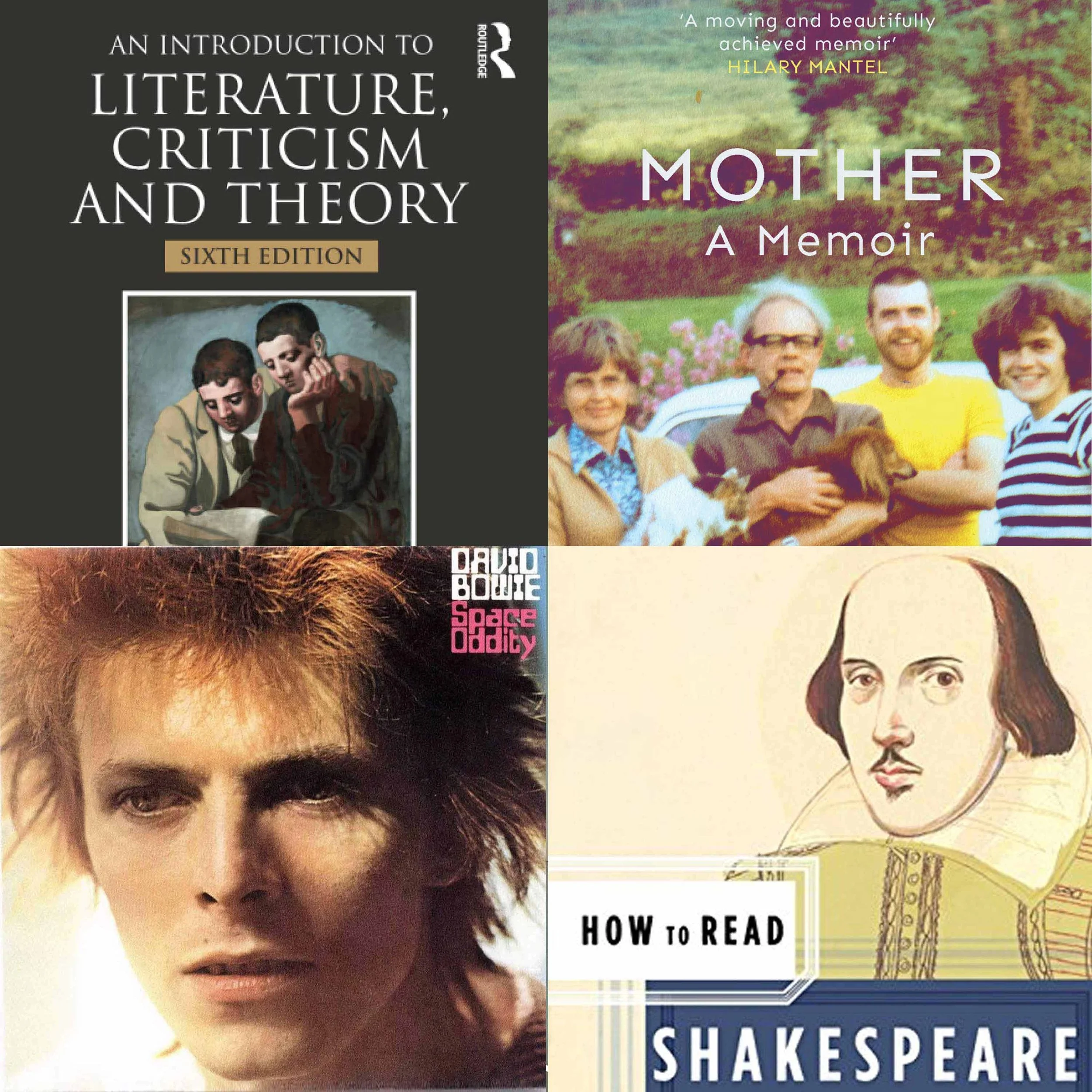
NICHOLAS ROYLE - Co-author of "An Introduction to Literature, Criticism and Theory" - Author of “Mother: A Memoir”

NICHOLAS ROYLE - Co-author of "An Introduction to Literature, Criticism and Theory" - Author of “Mother: A Memoir”

Co-author of An Introduction to Literature, Criticism and Theory
Author of Mother: A Memoir · Managing Editor of Oxford Literary Review

My mother died years ago. What has induced me to write about her after all this time remains mysterious to me. It is connected to the climate crisis. As the natural historian David Attenborough says: 'the collapse of our civilizations and the extinction of much of the natural world is on the horizon.' In ways I cannot pretend to fathom I have found that writing about my mother is bound up with writing about Mother Nature and Mother Earth. And no doubt it has to do also with my own aging and the buried life of mourning. The strange timetables of realization and loss. A memoir is 'a written record of a person's knowledge of events or of a person's own experiences'. 'A record of events written by a person having intimate knowledge of them and based on personal observation.' So the dictionaries tell us. But this memoir of my mother makes no attempt at a comprehensive record.

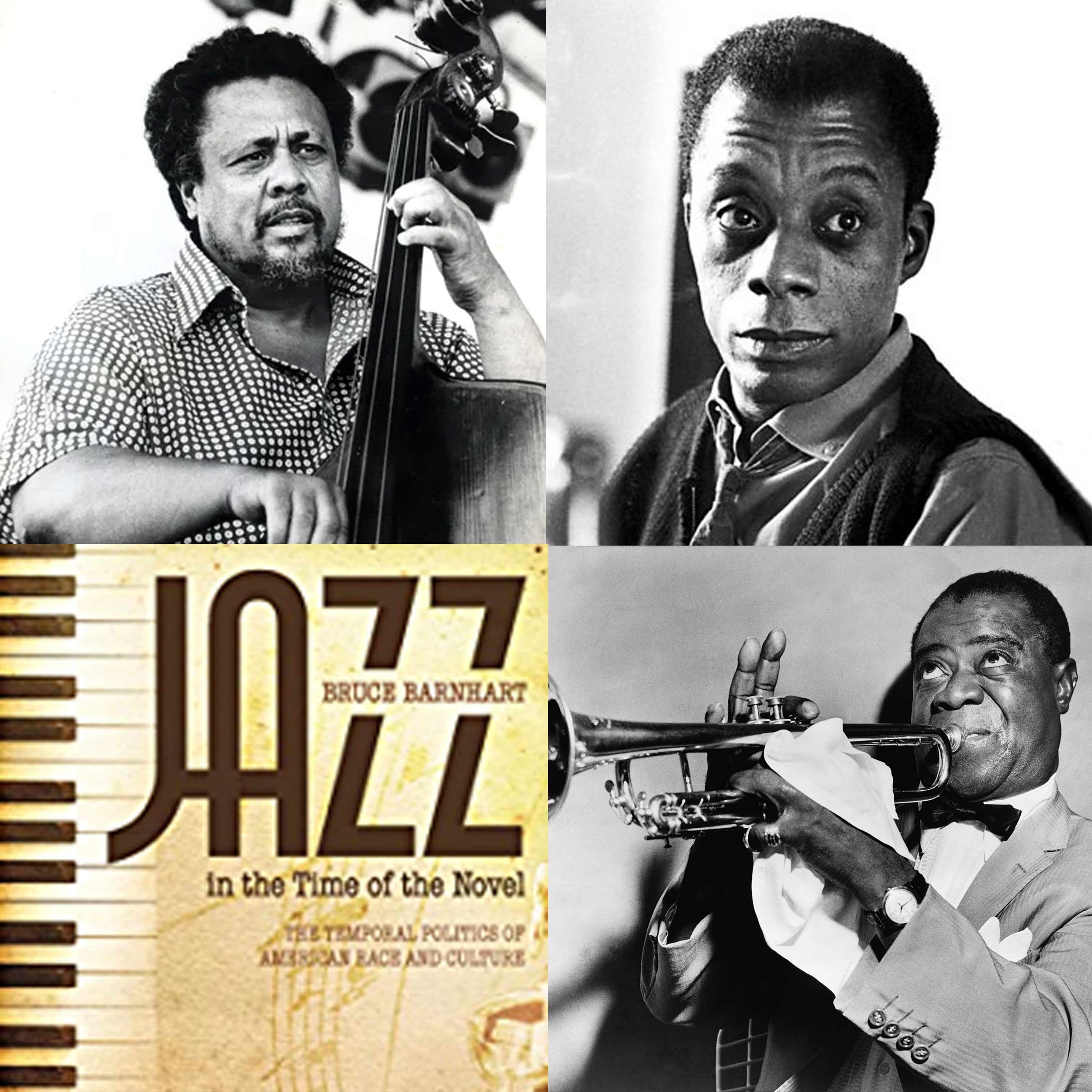
BRUCE EVAN BARNHART - Author of “Jazz in the Time of the Novel: The Temporal Politics of American Race and Culture”

BRUCE EVAN BARNHART - Author of “Jazz in the Time of the Novel: The Temporal Politics of American Race and Culture”

Author of Jazz in the Time of the Novel: The Temporal Politics of American Race and Culture
Temporal Experiments: Seven Ways of Configuring Time in Art and Literature
Co-director of University of Oslo’s Literature, Rights & Imagined Communities

I really admire how James Baldwin always talks about jazz as a kind of model for his writing style. But music has certainly had a profound influence on the way I see the world, especially in terms of the social world. One of the big problems we have in all sorts of different places around the world is the question of how to coordinate difference. All sorts of people have different modes of living, different cultural rhythms, and different ideas about the future. Jazz is brilliant at a lot of things, but it notably brings together different people and allows them to retain their own sense of time and rhythm while playing together. It's a really profound model of social coordination. Now, of course, it says something particularly pressing about the United States, but I think as a model for how differences go together, jazz is perhaps unparalleled.

ANNA ABRAHAM - Author of “The Neuroscience of Creativity” - Director of Torrance Center for Creativity & Talent Development

ANNA ABRAHAM - Author of “The Neuroscience of Creativity” - Director of Torrance Center for Creativity & Talent Development

Author of The Neuroscience of Creativity
Director of the Torrance Center for Creativity & Talent Development, University of Georgia

I love podcasts and things like that, if only to listen to people who've done incredible things. We live in a kind of unusual time where we can hear firsthand people talking about their own experiences, and what they went through when they were creating something. And while artists differ greatly from one another in terms of the specifics of their process, what certainly seems to be the case is that they're extraordinarily interested in their own mind, and they have what we would call a metacognitive awareness. They know almost quite precisely, at least what doesn't work for them. They're very cued into what to avoid and how to sort of generate the mental conditions that are necessary in order to be as generative or as creative as they're likely to be in a specific situation. So that is a deep medical awareness that they have about their own process that is really quite something. They know themselves very well.

JILL HEINERTH - Explorer, Presenter, Author of “Into The Planet: My Life as a Cave Diver”

JILL HEINERTH - Explorer, Presenter, Author of “Into The Planet: My Life as a Cave Diver”

Explorer · Presenter · Author of Into The Planet: My Life as a Cave Diver

If I die, it will be in the most glorious place that nobody has ever seen. I can no longer feel the fingers in my left hand. The glacial Antarctic water to see through a tiny puncture in my formerly waterproof glove. If this water were one-tenth of a degree colder, the ocean will become solid. Finding the knife-edged freeze is depleting my strength, my blood vessels throbbing in a futile attempt to deliver warmth to my extremities. The archway of ice above our heads is furrowed like the surface of a golf ball, carved by the hand of the sea. Iridescent blue, Wedgewood, azure, cerulean, cobalt, and pastel robin’s egg meld with chalk and silvery alabaster. The ice is vibrant, right, and at the same time ghostly. The beauty contradicts the danger. We are the first people to cave dive inside an iceberg. And we may not live to tell the story.

CHRIS BLACKWELL - Founder of Island Records featuring Bob Marley, U2, Cat Stevens, Grace Jones, Roxy Music, Amy Winehouse…

CHRIS BLACKWELL - Founder of Island Records featuring Bob Marley, U2, Cat Stevens, Grace Jones, Roxy Music, Amy Winehouse…

Founder of Island Records, which launched the careers of Bob Marley, U2, Cat Stevens, Grace Jones, Roxy Music, Amy Winehouse…
Author of The Islander: My Life in Music and Beyond

I think you need to be aware and see people be open to what can happen and get a feel, get an instinct. I think I've been blessed with instinct. I mean, I did not do well at school. I passed zero exams. I'm unemployable, but I've been blessed with having instincts. The instinct of U2 was seeing their determination, the fact that the music itself initially wasn't close to what most of my music was because most of my music was bass and drum. And most of their music was vocal, so it wasn't a certain kind of music that I like all the time. I like music from all different kinds of levels…I absolutely felt for Bob Marley to really make it worldwide as it were, he needed to change something a little bit. I didn't want him to change what he was doing, not his lyrics and everything else like that. It was more the instrumentation of it. I felt for Bob to be able to reach a wider audience that he needed to move away a little bit from that and focus more and more on his lyrics. When I finally met Cat Stevens, and we just sort of sat down and then when he played the song ‘Father and Son,’ then suddenly the lyrics of the song and what it meant and everything, I suddenly felt this guy is fantastic.

Robert Sternberg - Award-winning Educator - Author of “Adaptive Intelligence” - Fmr. President, American Psychological Assoc.

Robert Sternberg - Award-winning Educator - Author of “Adaptive Intelligence” - Fmr. President, American Psychological Assoc.

Award-winning Educator - Author of Adaptive Intelligence: Surviving and Thriving in Times of Uncertainty
Fmr. President of the American Psychological Association

Are we looking at intelligence wrong? There are an awful lot of people who have graduated from top schools who become leaders who are worse than incompetent. They make their countries worse rather than better. And the conclusion I came to is that we made a mistake, in that intelligence was originally defined by the founders of the field Alfred Binet, David Wechsler, and others, as the ability to adapt to the environment a requirement. And answering a vocabulary problem for an obscure word is not about adapting to the environment. So I began to wonder where we lost the train of thought. And the conclusion I came to is that colleges just forgot the original message of the founders of the field, and so we got immersed in these numbers that turn out not to mean that much. So I wrote about intelligence as the ability to get along in the world and hopefully make the world a little bit better

Julio Ottino - Founding Co-Director of Northwestern Institute on Complex Systems

Julio Ottino - Founding Co-Director of Northwestern Institute on Complex Systems

Julio Ottino is an artist, researcher, author, and educator at Northwestern University. He is the author, with Bruce Mau, of The Nexus: Augmented Thinking for a Complex World - The New Convergence of Art, Technology, and Science. He was the founding co-director of the Northwestern Institute on Complex Systems. In 2008, he was listed in the “One Hundred Engineers of the Modern Era”. In 2017, he was awarded the Bernard M. Gordon Prize for Innovation in Engineering and Technology Education from the National Academy of Engineering.

Today's complex problems demand a radically new way of thinking — one in which art, technology, and science converge to expand our creativity and augment our insight. Creativity must be combined with the ability to execute; the leaders and innovators of the future will have to understand this balance and manage such complexities as climate change and pandemics. The place of this convergence is THE NEXUS. In this provocative and visually striking book, Julio Mario Ottino and Bruce Mau offer a guide for navigating the intersections of art, technology, and science.

This interview was conducted by Mia Funk and Riya Patel with the participation of collaborating universities and students. Associate Interviews Producer on this episode was Riya Patel.

Mia Funk is an artist, interviewer and founder of The Creative Process & One Planet Podcast (Conversations about Climate Change & Environmental Solutions).

Florian Hoffmeister - Award-winning DP “TAR” starring Cate Blanchett

Florian Hoffmeister - Award-winning DP “TAR” starring Cate Blanchett

Florian Hoffmeister is a prolific director of photography. Recent works by Hoffmeister include his lensing on the Apple TV+ series Pachinko, the critically-acclaimed political thriller Official Secrets starring Keira Knightley, Ralph Fiennes, and Matt Smith, and TÁR starring Cate Blanchett. Hoffmeister is well-known for his collaboration with Terence Davies on feature films The Deep Blue Sea, starring Rachel Weisz, Tom Hiddleston and Simon Russel-Beale, and A Quiet Passion, starring Cynthia Nixon and Jennifer Ehle. His work on Brian Kirk’s television phenomenon Great Expectations earned him further distinction as well as numerous accolades, including a Primetime Emmy, a BAFTA, and an ASC Award.

Max Stossel - Award-winning Poet, Filmmaker, Creator of "Words That Move"

Max Stossel - Award-winning Poet, Filmmaker, Creator of "Words That Move"

Award-winning Poet, Filmmaker & Speaker
Creator of the Stand-Up Poetry Special Words That Move

Technology has very much changed the way we read and take in information and shortened it into quick bursts and attention spans. We're living in a new world, for sure. And how do we communicate in this new world? Not just in a way that gets the reach, because there are whole industries aimed at what do I do to get the most likes or the most attention, and all of that, which I don't think is very fulfilling as artists.

It's sort of a diminishing of our art form to try and play the game because then we're getting the attention and getting the hits, as opposed to what do I really want to create? How do I really want to create it? How do I want to display this? And can I do it in a way that breaks through so that if I do it my way, it's still going to get the attention, great. But if it doesn't, can I be cool with that? And can I be okay creating what I want to create, knowing that that's what it's about. It's about sharing in an honest, authentic way what I want to express without letting the tentacles of social media drip into my brain and take over why I'm literally doing the things that I'm doing.

Debra J. Fisher - Showrunner of Netflix’s “Ginny & Georgia” - Writer, Exec. Producer “Criminal Minds” , “Alias”

Debra J. Fisher - Showrunner of Netflix’s “Ginny & Georgia” - Writer, Exec. Producer “Criminal Minds” , “Alias”

Showrunner of Netflix’s Ginny & Georgia
Writer · Exec. Producer · Director · Alias · Criminal Minds · The OC · Charmed

I need a balance of light and dark. It can't be just one thing. I want you to be laughing one minute and by the end I want you to be crying. For me, character study is what is the most important. It all comes down to the characters. It's less about action or things like that, which you can have some of that, but it tonally, has to be female-centric and you have to be crying and laughing. There's so many interesting shows that walk that line of light and dark. I want to always live in the gray area with characters. Always. Nothing is ever black or white. It's always a weird gray area.

Adam Alter - Author of “Irresistible: The Rise of Addictive Technology”, “Anatomy of a Breakthrough"

Adam Alter - Author of “Irresistible: The Rise of Addictive Technology”, “Anatomy of a Breakthrough"

Author of NYTimes Bestseller Irresistible: The Rise of Addictive Technology and the Business of Keeping Us Hooked ·
Anatomy of a Breakthrough · Drunk Tank Pink

The other thing from a creativity perspective is we know that more people around you is good for creativity. It's one of the axioms in thinking about creativity in general. You need time. An artist, a writer. I'm a writer. I need time on my own. I also paint and draw. I cannot do that with other people around. It's just my process. But before you get there, before you get to that point where you need that time alone, that space apart, for almost everyone being around other people is good. It's good for creativity. It's both about diversity of opinion and idea and just about having more - just more information, more thoughts, more ways of looking at the world. And some of the most profound research I've come across in preparing for this book suggested that it's better to be around people who are deeply incompetent than it is to be around no one, which I found very surprising.

Joëlle Gergis - Lead Author  - IPCC Sixth Assessment Report - Author of “Humanity’s Moment”

Joëlle Gergis - Lead Author - IPCC Sixth Assessment Report - Author of “Humanity’s Moment”

Lead Author  of the IPCC Sixth Assessment Report · Author of Humanity’s Moment: A Climate Scientist’s Case for Hope · Sunburnt Country · Contributor to The Climate Book, ed. Greta Thunberg · Not Too Late, eds. Rebecca Solnit, Thelma Young Lutunatabua

We're really starting to witness serious climate extremes that can no longer be ignored. And the IPCC, one of our key conclusions to that report was that effectively the human fingerprint on the climate system is now undeniable. It is now an established fact that we have warmed every single continent, every ocean basin on the planet. And again, that's a pretty serious thing to contemplate that human activity from the burning of fossil fuels and the clearing of land has led to this energy imbalance in the earth system, which is leading to a rapidly shifting climate.