ANTHONY LEISEROWITZ - Founding Director of Yale Program on Climate Change Communication - Host of Climate Connections

ANTHONY LEISEROWITZ - Founding Director of Yale Program on Climate Change Communication - Host of Climate Connections

Founding Director of the Yale Program on Climate Change Communication
Host of Climate Connections · Senior Research Scientist at the Yale School of the Environment

Storytelling is still one of the most powerful ways we have to communicate from one person to another, from one person to millions, and from millions back to one. At the Yale Program on Climate Change Communication, we study how people respond to climate change. So what do people around the world understand or misunderstand about the causes, the consequences, and solutions? How do they perceive the risks: the likelihood and severity of different types of impacts from sea level rise to the health impacts? What kinds of policies do they support or oppose? And then what kinds of behaviors are people engaged in or willing to change to be part of climate solutions? There are lots of different things there, but our ultimate question is answering why. What are the psychological, cultural, the political reasons why some people get engaged with this issue? While others are kind of apathetic and some are downright dismissive and hostile, or at least they are in the United States, which thankfully is not the case in most of the rest of the world.
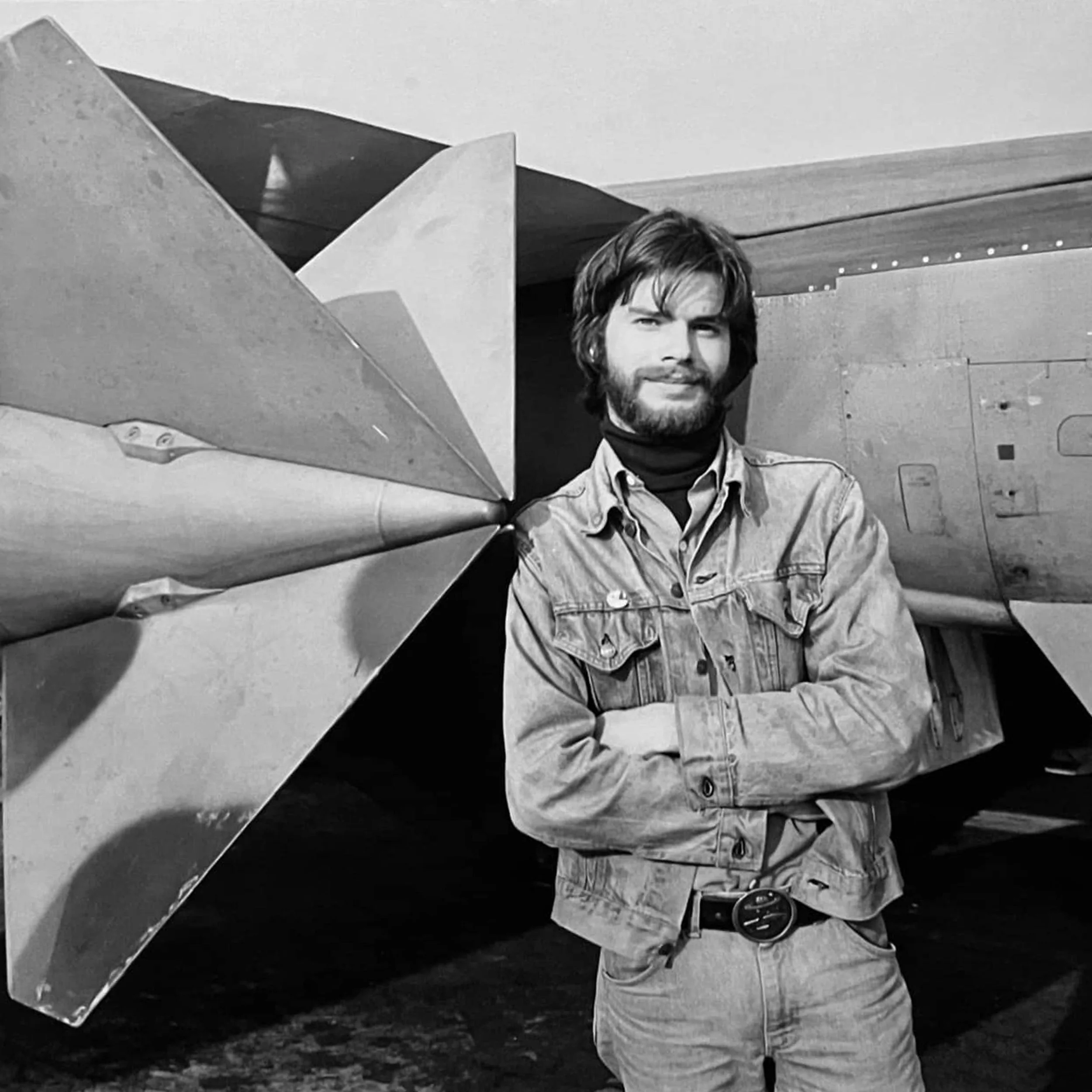
ALLEN STEELE - Hugo Award-winning Science Fiction Author of the Coyote Trilogy, Arkwright

ALLEN STEELE - Hugo Award-winning Science Fiction Author of the Coyote Trilogy, Arkwright

Winner of the Hugo · Asimov's Readers & Locus Awards
Served on the Board of Directors of Science Fiction & Fantasy Writers of America

I'm really very glad. I was happy to see that within my lifetime that the prospects of not just Mars, but in fact interstellar space is being taken seriously. I've been at two conferences where we were talking about building the first starship within this century. One of my later books, Arkwright, is about such a project. I saw that Elon Musk is building Starship One, I wish him all the best. And I envy anybody who goes.

I wish I were a younger person and in better health. Somebody asked me some time ago, would you go to Mars? And I said, “I can't do it now. I've got a bum pancreas, and I'm 65 years old, and I'm not exactly the prime prospect for doing this. If you asked me 40 years ago would I go, I would have said: in a heartbeat!” I would gladly leave behind almost everything. I don't think I'd be glad about leaving my wife and family behind, but I'd be glad to go live on another planet, perhaps for the rest of my life, just for the chance to explore a new world, to be one of the settlers in a new world. We've got to be careful about how we do this. And we've got to be careful, particularly about the rationale of the people who are doing this.

RALPH GIBSON - Award-winning Photographer - Leica Hall of Fame Inductee

RALPH GIBSON - Award-winning Photographer - Leica Hall of Fame Inductee

Award-winning Photographer
Leica Hall of Fame Inductee · Recipient of the French Legion of Honor

I wouldn't be able to effectively delineate where my life ends and photography begins. They're one and the same. If my eyes are open, I'm seeing. If I'm seeing, I'm essentially in that valence within which, or from within which come the images. In that book, Self Exposure, one of the things I did realize as I was writing it: all autobiographies are chronological and anecdotal. That's the way they unfold. And I realized that there were certain decisions I had made along the way that were crucial. And there was really only a handful of them. But I was very fortunate because I had that initial desire to be a photographer. I don't even know if it was a desire. I think it was something much further beyond that. I would have to say it was more of a...I didn't really choose photography, it sort of chose me, you know. I mean, nolo contendere. I just did what I knew I had to do. There was a sense of devoir, you know, you just do it. Claude Lévi-Strauss the great social anthropologist has made this sort of thing clear: Society changes and with it the context through which we observe something has changed as well. And so I like the role of art in society and my relationship to my society and to art in my society. Now I'm interested in this phase of my life and how does the mind influence the mind? 

IAN ROBERTSON - Author of How Confidence Works: The New Science of Self-belief - Co-Director of the Global Brain Health Institute

IAN ROBERTSON - Author of How Confidence Works: The New Science of Self-belief - Co-Director of the Global Brain Health Institute

Author of How Confidence Works: The New Science of Self-belief
Co-Director of the Global Brain Health Institute · Co-Leader of The BrainHealth Project

The book probes the science and neuroscience behind the idea that confidence can be learned, or whether it is something you inherit. Optimism, hope, and self-esteem are all concepts that are easily confused with confidence. But, as I show, they differ in one fundamental way - confidence empowers action. You can be an optimist who is hopeful that things will work out okay in the end without ever believing that you can play a part in that outcome, or indeed have any realistic grounds for that optimism. And you can have high self-esteem and feel good about yourself without feeling confident that you can achieve a particular goal.

RICK BASS - Environmentalist & Story Prize Award-winning Author of “Why I Came West”, “For a Little While”

RICK BASS - Environmentalist & Story Prize Award-winning Author of “Why I Came West”, “For a Little While”

Environmentalist & Story Prize Award-winning Author
Why I Came West · For a Little While · The Traveling Feast

I grieve the changes to the four seasons that are happening here in Montana. One of the great things about this place is having four distinct seasons, and now they're tilted. Some are short, some are long, and some don't exist anymore. And that's unsettling, to say the least. It's not a fear of what's coming. It's a grief for what's gone away. I'm mindful of the pressure that we are putting on the generations who follow us and the mandate to have fun, to be fully human, to be joyous, to celebrate, and to enjoy being in the midst of nature's beauty.

NAN HAUSER - Whale Researcher - President, Center for Cetacean Research & Conservation - Director, Cook Islands Whale Research

NAN HAUSER - Whale Researcher - President, Center for Cetacean Research & Conservation - Director, Cook Islands Whale Research

Whale Researcher
President of the Center for Cetacean Research & Conservation
Director, Cook Islands Whale Research

I don't think a lot of people realize how absolutely important whales are, and not just because they're beautiful and they make people happy, but whales carry nutrients from the depths they feed back to the surface. And there's this liquidy plume of fecal matter, and it's called the whale pump. And they bring all these nutrients upward with their tails by swimming up and down the water column, it's like an upward biological pump. And there's an incredible amount of nitrogen that's released in these plumes. And we get this great soup of nutrients. We get more from this nitrogen than all the rivers combined. And in the past, we recognized microbes and plankton and fish and that they recycled nutrients in the ocean, yet whales and other marine mammals have largely been overlooked and that's too bad because they are bioengineers. They help the climate so much because of all this creates more plankton by circulating the nutrients and fertilizing the phytoplankton with their poo.

JIM SHEPARD - Author of The Book of Aron, Project X, The World to Come starring Casey Affleck, Vanessa Kirby, Katherine Waterston

JIM SHEPARD - Author of The Book of Aron, Project X, The World to Come starring Casey Affleck, Vanessa Kirby, Katherine Waterston

Author of The Book of Aron · Project X · The World to Come starring Casey Affleck, Vanessa Kirby, Katherine Waterston
Winner of the PEN New England Award · The Story Prize · Ribalow Prize for Jewish Literature

In terms of what I'm writing, I'm always trying to make myself a more interesting human being. And so that means I'm coming across these human dilemmas where I'm like what would it have been like to be in that position? And that snags my emotional imagination. I do think that literature is all about extending the empathetic imagination. And so I'm always looking to educate myself in emotional terms, too. Because I'm very interested in the way we respond in those situations where it feels like we both have responsibility, and we don't have responsibility.

LESLEY HUGHES - Lead Author of IPCC 4th & 5th Assessment Reports - Director of Climate Council of Australia

LESLEY HUGHES - Lead Author of IPCC 4th & 5th Assessment Reports - Director of Climate Council of Australia

Lead Author of IPCC 4th & 5th Assessment Reports
Director & Councillor of Climate Council of Australia

It's certainly not the case that scientists should be the only people communicating. We have to have everybody in this mix because we're all in this together. So we have to have good science that's communicated. We have to have smart engineers who can work on the technological solutions. We have to have lawyers who are undertaking climate litigation. We have to have creative artists who can tell stories and appeal to people's emotions. No one group should have a responsibility to solve the climate crisis. It's got to be all of those groups bringing what they call the time, the talent, and the treasure to work together on this. We are all in this together, and we've all got a suite of different skills that have to be harnessed to solve this problem.

JAMES BROWNING - Founder of F Minus: Calling for Divestment from Fossil Fuel Lobbyists

JAMES BROWNING - Founder of F Minus: Calling for Divestment from Fossil Fuel Lobbyists

Founder & Executive Director of F Minus
a Research & Advocacy Group Calling for Divestment from Fossil Fuel Lobbyists
Author of the novel The Fracking King

The lobbyists that represent the fossil fuel companies like ExxonMobil, Koch companies, and the American Petroleum Institute, they knew for years that the climate crisis would happen, and they've been telling us that it wouldn't. And right now in every state capital, the lobbyists are doing everything they can to slow the transition from fossil fuel to renewables. The sad fact is, these oil and gas lobbyists will never wake up one morning and say: I am worried about the climate crisis. I'm worried about my children. I am going to cut off ties with these oil and gas companies and stop taking their money. That will never happen. And I'm sad to say this, but it's been a long, long road to try to change their behavior with facts or reason.

SHEHAN KARUNATILAKA - Booker Prize-winning Author of The Seven Moons of Maali Almeida

SHEHAN KARUNATILAKA - Booker Prize-winning Author of The Seven Moons of Maali Almeida

Booker Prize-winning Author
The Seven Moons of Maali Almeida
Chinaman: The Legend of Pradeep Mathew

So this was the decision to write in the second person. A lot of people ask me: why? There are not many examples of this technique. The reason I opted for that is I was trying to figure out interviewing a ghost. And one of the challenges was: what does a disembodied voice sound like? The narrator's body has been chopped up and chucked in a lake. So, I figured that if anything survives the death of your body, it's perhaps the voice in your head. The voice in my head is in the second person. I don't know about your head or anyone else's head, but in mine, it's the second person. 

Actress CATHERINE CURTIN (Stranger Things) & Artistic Director KATE MUETH (Neo-Political Cowgirls)

Actress CATHERINE CURTIN (Stranger Things) & Artistic Director KATE MUETH (Neo-Political Cowgirls)

"I don't know why we would really want to tell stories without being connected to the meaning. And I think that's especially for women, but I do think for human beings, that is how we can work as hard and be able to get up the next morning and keep going. Because we are working through the meaning, and it feeds us as we're like making sense of it all, trying to make sense of it, and for being in community and communion.” - Kate Mueth
”What we've done today is we've made everything so fast and so easy that I think there's something to the creative process about it being a little bit more of an exploration than it is wham bam, it's done. Let's go have lunch. And I think there is something to the creative process where it's allowed to develop. It's called process because it is a process. I'm always glad to just relax in the creative process, and I'm always very grateful for that. I think it's why I do so much indie film because it's really fun.” -Catherine Curtin

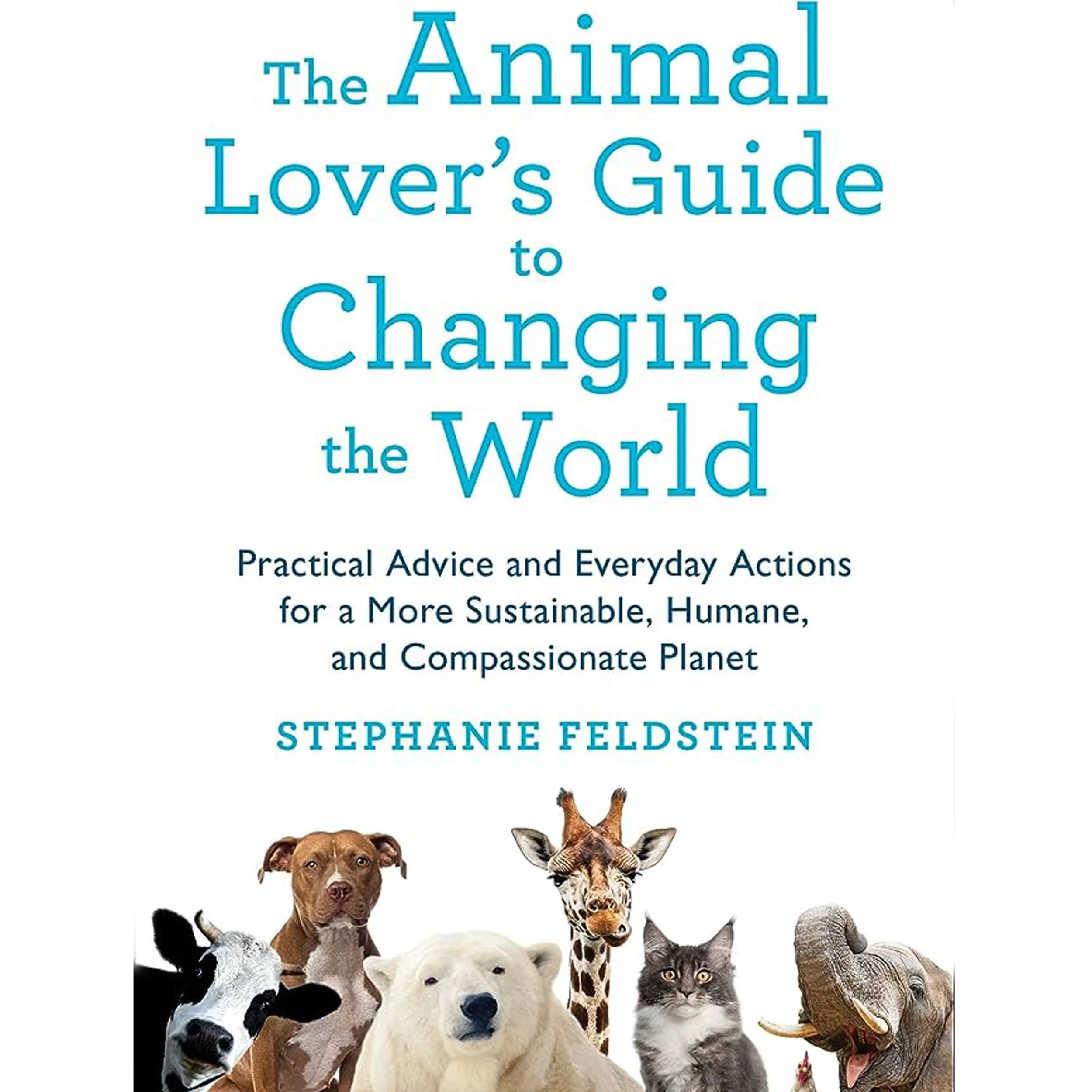
STEPHANIE FELDSTEIN - Author of The Animal Lover’s Guide to Changing the World & Take Action: Save Life on Earth


STEPHANIE FELDSTEIN - Author of The Animal Lover’s Guide to Changing the World & Take Action: Save Life on Earth


Population & Sustainability Director of the Center for Biological Diversity
Author of The Animal Lover’s Guide to Changing the World
Take Action: Save Life on Earth

Pretty much everything we do in our lives from the moment we wake up and take a shower, we're using water – that's shared resources. We're using energy that, for most of us, unfortunately, still comes from fossil fuels. We are making decisions about what we eat. We're making purchases that have an impact on the planet and on other animals based on where they came from and what they're made of. There are so many entry points for people to take action and start making changes in their own lives. And that's really important for people to start with what feels right to them. That's a great way to start getting involved in this.

MARK HOWDEN - Vice Chair, Intergovernmental Panel on Climate Change - Director, Climate Change Institute at The Australian National University

MARK HOWDEN - Vice Chair, Intergovernmental Panel on Climate Change - Director, Climate Change Institute at The Australian National University

Director of the Climate Change Institute at The Australian National University
Vice Chair of the Intergovernmental Panel on Climate Change (IPCC)
Co-recipient of the 2007 NOBEL PEACE PRIZE

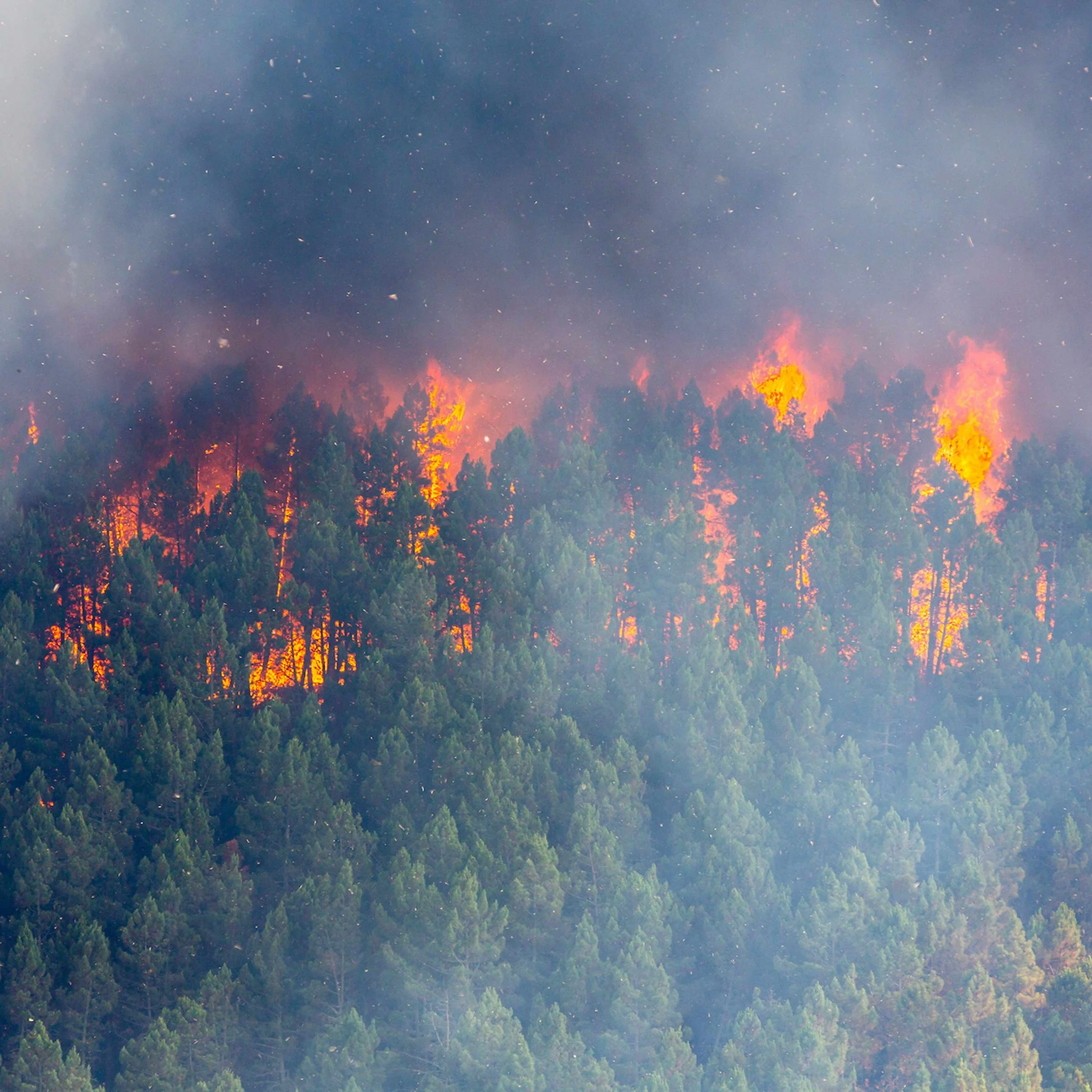
We live in a diverse world, and we're in a funny time where we sometimes see the best of humanity and the worst of humanity. And I think what we need to do is be very strong in wanting to lift the game of each other and ourselves. And so I think that's one of the sort of key things. Particularly, young people should be more demanding that we behave better towards each other and care more about each other and the world that we live in. In terms of these heatwaves, droughts, and fires that the world is seeing, which we thought were going to hit us in 2050 or 2070, are hitting us now in 2023. So, those risks are coming much faster and harder than we thought they were going to come. And so, in many cases, we're unprepared for the severity of these changes.

ERICA BERRY - Author of Wolfish: Wolf, Self, and the Stories We Tell About Fear

ERICA BERRY - Author of Wolfish: Wolf, Self, and the Stories We Tell About Fear

Author of Wolfish: Wolf, Self, and the Stories We Tell About Fear

And I think the ways that wolves converse with one another, there's also so much there that really conjures the way that we humans do. And I was trying to piece together: why did we feel so threatened by wolves? In part, I think because there's a sort of uncanny mirror that humans have seen in a wolf. And I'll give an example. Wolf packs will form a diversity of family structures very often. So they will have a nuclear family where you'll have two breeders, but they can also have an extended family where there's sort of aunts and uncles in the pack. Or (these are the biologist's names) they'll call it a step-family if a wolf pack welcomes an outside breeder. A foster family, if they welcome another outsider. And I think the way that a pack is its own ecosystem: if one wolf dies, there's one wolf in this pack that might be the one that teaches how to move through the territory. And if that one wolf dies, the whole pack has a much higher likelihood of disbanding. And so this idea that the interconnectivity between the packs and the individuality of the wolves is so critical. It is so beautiful, and you see that studying these different wolves, they have personalities.

JERICHO BROWN - Pulitzer Prize-winning Poet - Editor of How We Do It: Black Writers on Craft, Practice, and Skill

JERICHO BROWN - Pulitzer Prize-winning Poet - Editor of How We Do It: Black Writers on Craft, Practice, and Skill

Pulitzer Prize-winning Poet · Director of Creative Writing Program · Emory University
Editor of How We Do It: Black Writers on Craft, Practice, and Skill

As writers, it's our job to write what will become clichés. Not to write clichés, but to be original enough that we make something that people are still saying for hundreds of years to come. And if that's what you're doing, that's pretty powerful. When I'm writing a poem I'm making a world. And if I can stick to that, then I have to believe that once a poem is out in the world, another world has been made, another way of living, another way of thinking, another way of seeing things.

SUE INCHES - Author of Advocating for the Environment: How to Gather Your Power and Take Action

SUE INCHES - Author of Advocating for the Environment: How to Gather Your Power and Take Action

Author of Advocating for the Environment: How to Gather Your Power and Take Action
Environmental Advocate · Educator · Fmr. Director, Maine Department of Marine Resources
Fmr. Deputy Director, State Planning Office

So to me, the connection is just being outdoors. It really brings energy, to my life and it brings energy to my work. And I think for a lot of people, this is true, that nature is kind of the place where they can regenerate their energy. And if people haven't experienced that, I encourage them to try it, because nature can be very restorative. So, absolutely there's a connection between health, the outdoors, and between environmental issues and creating a healthy, clean environment for future generations.

ARNOLD SCHWARZENEGGER: Athlete, Actor, American, Activist - Conversation with Editor DIAN HANSON

ARNOLD SCHWARZENEGGER: Athlete, Actor, American, Activist - Conversation with Editor DIAN HANSON

ATHLETE · ACTOR · AMERICAN · ACTIVIST
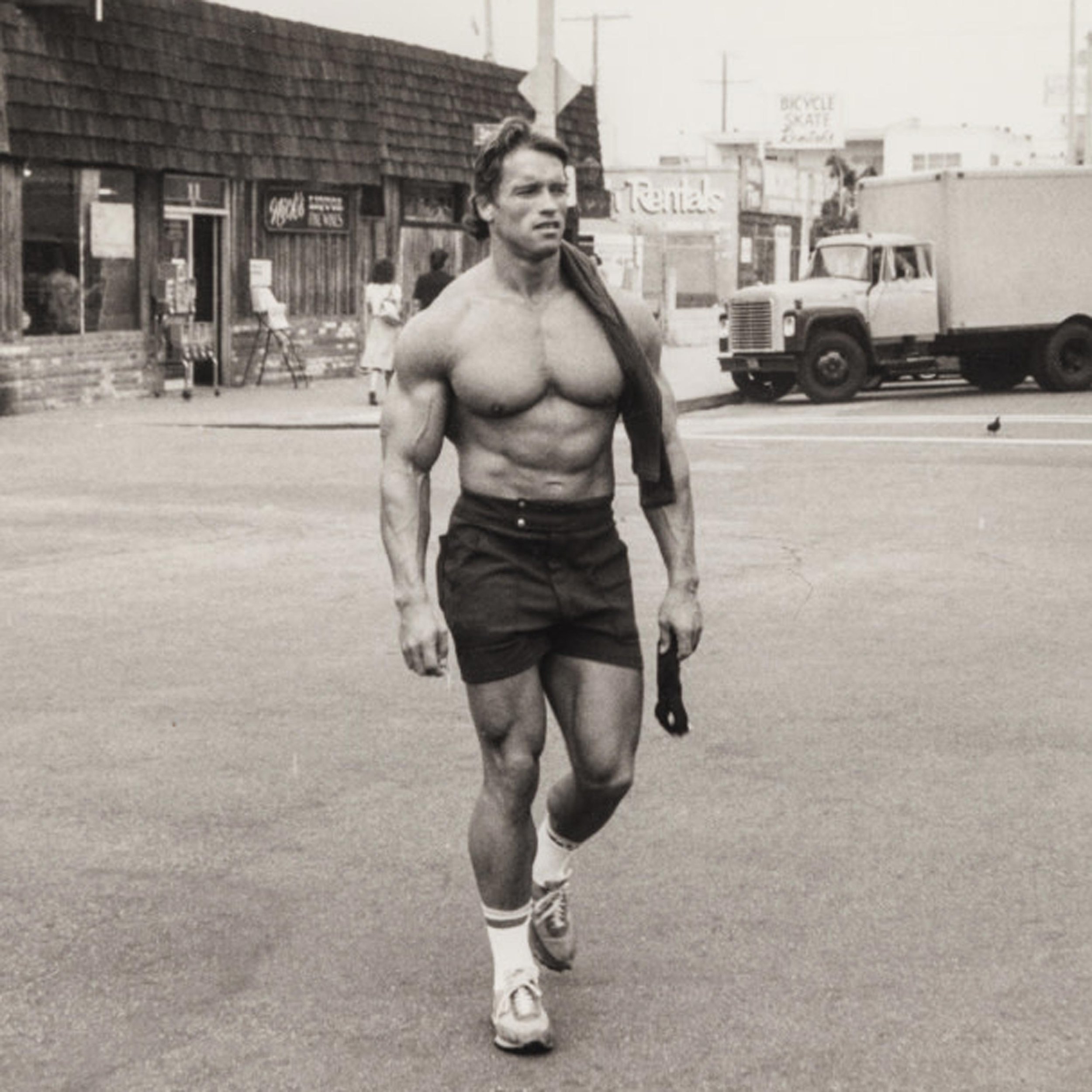
DIAN HANSON discusses photographic homage to ARNOLD SCHWARZENEGGER

Why I was different from all the other boys in my town I cannot tell you. I was simply born with the gift of vision.
– ARNOLD SCHWARZENEGGER

It's not just that he grew up in a rural environment too. He was born on July 30th, 1947. And most of us today don't have any understanding or relationship to what Europe was like right after World War II. The winter of 1946/1947 in Austria was the most brutal in decades. The people already had too little food. They were in an occupied country. The summer potato crops failed. As Arnold has said, his mother had to go from farm to farm to farm, begging for food to be able to feed her children. His father, like all the men in the village, was defeated by the war. And he saw them all physically, emotionally, intellectually defeated and taking it out on their wives and children, that he was beaten and his mother was beaten. All the neighbor kids were beaten, and they were beaten into a kind of placid defeat. And he alone would not accept that. He could not see that life for himself. And so he wanted out of that. And as a poor boy, he had nothing but his body to work with. That was it. There was not going to be any college. There was not going to be any of that. There was going to be some kind of menial job, or he could use what he had - his body - to get him out of there.

DAVID FENTON - Founder of Fenton Communications, Author of The Activist’s Media Handbook: Lessons From 50 Years as a Progressive Agitator

DAVID FENTON - Founder of Fenton Communications, Author of The Activist’s Media Handbook: Lessons From 50 Years as a Progressive Agitator

Author of The Activist’s Media Handbook: Lessons From 50 Years as a Progressive Agitator
Founder of Fenton Communications: The Social Change Agency
JStreet · Climate Nexus · The Death Penalty Information Center

It sounds like a cliche, but it really is true that history moves in pendulums and waves. And whatever is happening today is not going to last. It will change. So you have periods of concentrations of wealth and power, and then you have periods of rebellion. And I'm quite sure we're headed for another period of rebellion. You can see it a little bit now in the labor strife in the United States and the strikes. You can certainly see it in the massive demonstrations in France and Israel. Excessive concentrations of power breeds rebellion, and that's just inevitable. And the climate crisis is going to cause a lot of rebellion as people figure this out. And I think it's coming very soon, actually, because as you've noticed, the weather is getting very bad. It's become a non-linear accelerating phenomenon. And people will wake up to that. I just hope they wake up in time.

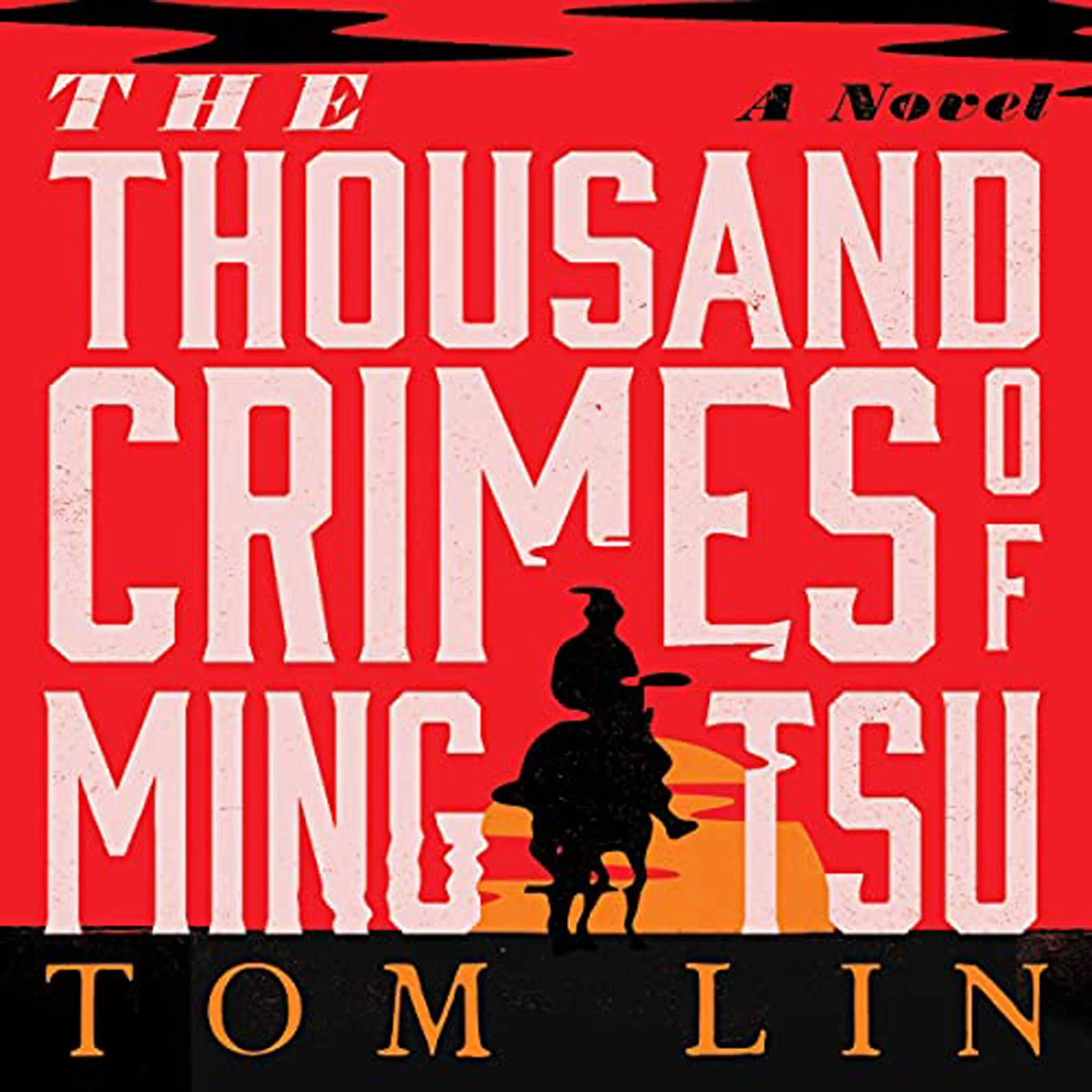
TOM LIN - Author of The Thousand Crimes of Ming Tsu - Andrew Carnegie Medal for Excellence in Fiction 2022

TOM LIN - Author of The Thousand Crimes of Ming Tsu - Andrew Carnegie Medal for Excellence in Fiction 2022

Author of The Thousand Crimes of Ming Tsu
Winner of the Andrew Carnegie Medal for Excellence in Fiction 2022

When I was growing up, it was all about representation. I think that was the thing that was being championed: we need more people of color in books, movies, across all media. And then I think what we saw was an extremely cynical and capitalistic-minded ruthless optimization of that, where someone said: Oh, you want representation? Then we'll just throw in token people of color into projects. And then we'll check that box. And I think that became so prevalent in so many pieces of media that that became what we thought of as representation. I think it's a salvageable concept because, I mean, when I encountered books growing up, they were all with white people in them. Front to back, start to finish. It was just white characters. And so when I started writing stories of my own in school as a middle schooler they - surprise - they had white people in them, right? There were just white people talking about other white people. I went to public school in Queens. I knew very few white people. And so I think what representation does at its best is that it informs the boundaries of possibility. By seeing yourself represented in media, you become able to imagine your own stories transpiring in media and being made available for everybody else to witness.

And so I think the point of representation is not just if we do a checklist of this piece of media, can we find a person of color. But I think the idea of representation is more that we want to be expanding the realm of storytelling, expanding what's possible by telling these stories that are not normally told.

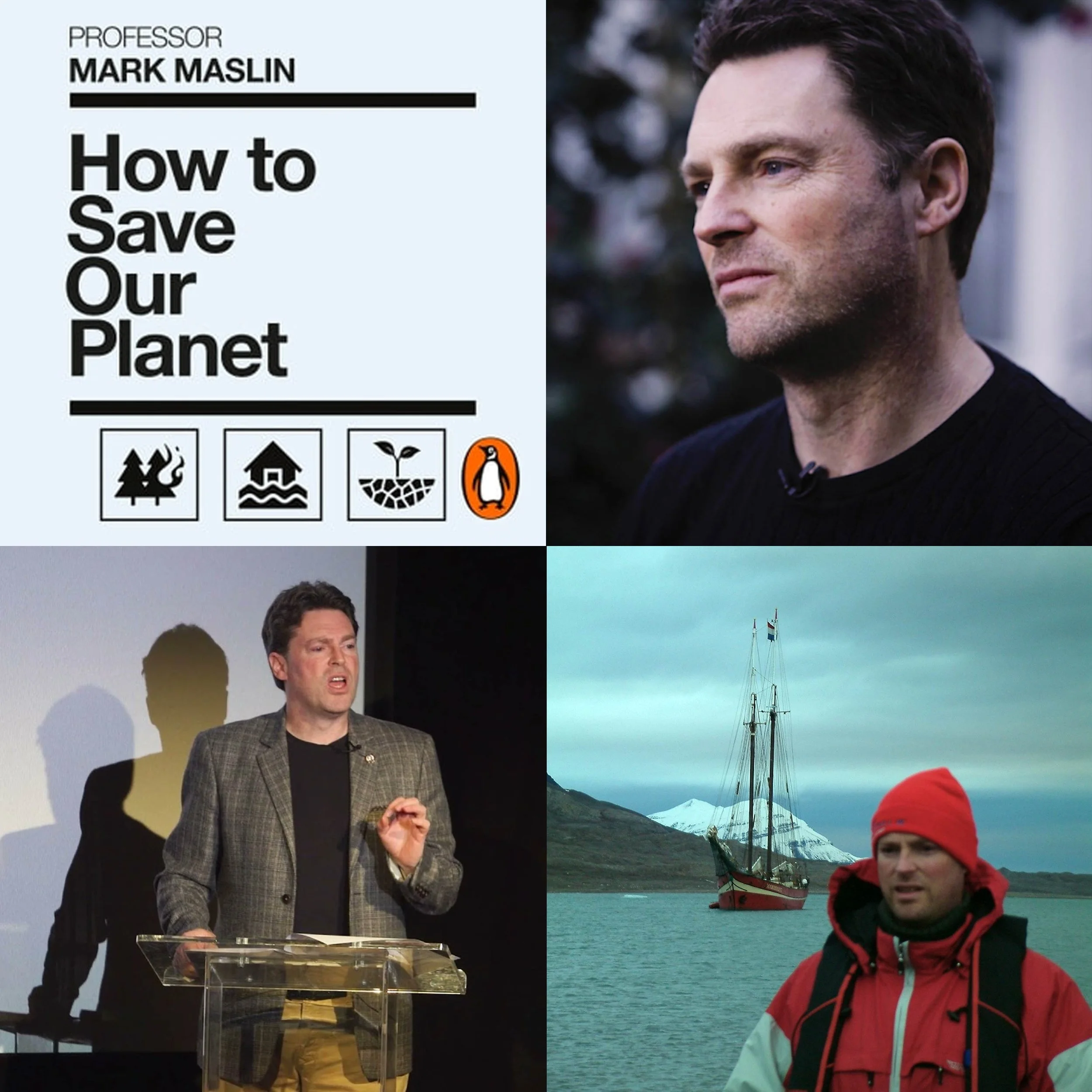
MARK MASLIN - Author of How To Save Our Planet: The Facts - Professor, Earth System Science, University College London

MARK MASLIN - Author of How To Save Our Planet: The Facts - Professor, Earth System Science, University College London

Author of How To Save Our Planet: The Facts
Professor of Earth System Science at University College London

I think the most important thing is realizing how much impact humans have had on the planet. For example, did you know that we move more rock and sediment than all the natural processes put together? We also have created enough concrete already to cover the whole world in a layer that's two millimeters thick, and that includes the oceans. We have also created and make something like 300 million tons of plastic every single year, which we know ends up in our rivers. It ends up in our oceans. And we've also found that microplastics have been found in human blood. So this is the impact we're having all around the world. We've also cut down 3 trillion trees, that's half the trees on the planet. We have doubled carbon dioxide in the atmosphere. We've increased methane by about 150%, which has led to a warming of the planet of about 1.2 degrees Celsius. And If you weigh the land mammals, 30% of that weight is us humans. There are 8 billion of us, and I have to say a few of us could lose a few pounds, but 67% of that weight is our livestock. And just 3% is those wild animals. So in less than 5,000 years, we've gone from 99% being wild animals to less than 3%. That's how much impact we humans have had on the planet.