The City Authentic: How the Attention Economy Builds Urban America - DAVID BANKS - Highlights

The City Authentic: How the Attention Economy Builds Urban America - DAVID BANKS - Highlights

Director of Globalization Studies University of Albany at SUNY
Author of The City Authentic: How the Attention Economy Builds Urban America (forthcoming)

I think that is often what tourism is starting to move towards. Is this existential authentic? And what that means is that you're not even really looking to meet expectations or validate that the thing in front of you is what it says it is. You are trying to recreate who you think you should be in a time that is disconnected from your usual life. Because we're a pretty jaded and suspicious society now. “Is it a deep fake?”We live in this world of make-believe and fakeness, and you want to get to something that's real. And what's more real than yourself and the story that you tell to yourself about yourself. And if you can really connect to that, you'll feel really good.

DAVID A. BANKS - Dir. of Globalization Studies - SUNY Albany - Author of The City Authentic

DAVID A. BANKS - Dir. of Globalization Studies - SUNY Albany - Author of The City Authentic

Director of Globalization Studies University of Albany at SUNY
Author of The City Authentic: How the Attention Economy Builds Urban America (forthcoming)

Author of “The City Authentic”I think that is often what tourism is starting to move towards. Is this existential authentic? And what that means is that you're not even really looking to meet expectations or validate that the thing in front of you is what it says it is. You are trying to recreate who you think you should be in a time that is disconnected from your usual life. Because we're a pretty jaded and suspicious society now. “Is it a deep fake?” We live in this world of make-believe and fakeness, and you want to get to something that's real. And what's more real than yourself and the story that you tell to yourself about yourself. And if you can really connect to that, you'll feel really good.

 Reimagining Growth: KC LEGACION on De-Growth & Sustainability - Highlights

Reimagining Growth: KC LEGACION on De-Growth & Sustainability - Highlights

Member of Web Collective degrowth.info
Master of Environmental Studies candidate, University of Pennsylvania

Degrowth as an idea has intellectual roots in the environmental critiques of the sixties and seventies found in landmark works like Rachel Carson's Silent Spring, the Club of Rome's Limits to Growth report, Nicholas Georgescu-Roegen's The Entropy Law and the Economic Process, which was a seminal piece of economic theory that applied the laws of thermodynamics to the economy and was very influential for ecological economics, which is intertwined with degrowth. Degrowth was first formulated in 1972 by French philosopher André Gorz in a public debate where he used the term décroissance to question whether planetary stability was compatible with capitalism.

KC Legacion on Degrowth, Technology and Social Media

KC Legacion on Degrowth, Technology and Social Media

Member of Web Collective degrowth.info
Master of Environmental Studies candidate, University of Pennsylvania

Degrowth as an idea has intellectual roots in the environmental critiques of the sixties and seventies found in landmark works like Rachel Carson's Silent Spring, the Club of Rome's Limits to Growth report, Nicholas Georgescu-Roegen's The Entropy Law and the Economic Process, which was a seminal piece of economic theory that applied the laws of thermodynamics to the economy and was very influential for ecological economics, which is intertwined with degrowth. Degrowth was first formulated in 1972 by French philosopher André Gorz in a public debate where he used the term décroissance to question whether planetary stability was compatible with capitalism.

Drought, Flood, Fire: How Climate Change Contributes to Catastrophes - CHRIS FUNK - Highlights

Drought, Flood, Fire: How Climate Change Contributes to Catastrophes - CHRIS FUNK - Highlights

Director of the Climate Hazards Center at UC Santa Barbara
Author of Drought, Flood, Fire: How Climate Change Contributes to Recent Catastrophes

The work that we're doing here at the Climate Hazards Center is trying to build out the science to cope with a two-degree world. And I think that we can do that. It's not going to be easy, but I think that's definitely within our capabilities, and it is already making human beings be smarter together in very empowering ways. And these are examples of people in Boulder, Colorado getting ready for the next big flood event and having conversations between the National Weather Service and local communities, or me on a zoom call at seven in the morning with my friends in East Africa as they're getting ready to cope with the next extreme. There are great examples of radio clubs in Niger who are working with their meteorological agencies and local farming communities that are pulling data that we're producing here in Santa Barbara, precipitation estimates, but then using them to decide whether they should fertilize their millet crops or not. And so there are ways that we can counter climate hazards and weather hazards by being smarter.

CHRIS FUNK - Director, Climate Hazards Center - Author of Drought, Flood, Fire

CHRIS FUNK - Director, Climate Hazards Center - Author of Drought, Flood, Fire

Director of the Climate Hazards Center at UC Santa Barbara
Author of Drought, Flood, Fire: How Climate Change Contributes to Recent Catastrophes

The work that we're doing here at the Climate Hazards Center is trying to build out the science to cope with a two-degree world. And I think that we can do that. It's not going to be easy, but I think that's definitely within our capabilities, and it is already making human beings be smarter together in very empowering ways. And these are examples of people in Boulder, Colorado getting ready for the next big flood event and having conversations between the National Weather Service and local communities, or me on a zoom call at seven in the morning with my friends in East Africa as they're getting ready to cope with the next extreme. There are great examples of radio clubs in Niger who are working with their meteorological agencies and local farming communities that are pulling data that we're producing here in Santa Barbara, precipitation estimates, but then using them to decide whether they should fertilize their millet crops or not. And so there are ways that we can counter climate hazards and weather hazards by being smarter.

Dance, Literature, Music & the Interdisciplinary Arts with MARIO ALBERTO ZAMBRANO - Highlights

Dance, Literature, Music & the Interdisciplinary Arts with MARIO ALBERTO ZAMBRANO - Highlights

Dancer, Writer, Choreographer
Associate Director of Dance at The Juilliard School, NYC

In both writing a first draft and in the improvisation of a dancing body, what is so key and relevant and exposed is voice. That internal voice of the artist of what they're writing on the page or what they're writing in space. If you go to fiction workshop, you talk about plot, structure, and you talk about character development, but there are very few classes within a dance curriculum where you break down an improvisation and you talk about voice, point of view, metaphor, or musical composition within a phrase. The lifespan of a phrase. And so this realisation is helping me understand that a one minute post of improvisation or even a ten-minute span of improvisation if it’s recorded is very similar to a first draft of creative writing, where then the artist is in a position to evaluate those 10 minutes and identify what is the setting? What is the voice that has come out of my experience of writing this first draft of an improvisation? And how can I give it structure? How can I give it form?

MARIO ALBERTO ZAMBRANO - Dancer, Writer, Assoc. Director of Dance, The Juilliard School

MARIO ALBERTO ZAMBRANO - Dancer, Writer, Assoc. Director of Dance, The Juilliard School

Dancer, Writer, Choreographer
Associate Director of Dance at The Juilliard School, NYC

In both writing a first draft and in the improvisation of a dancing body, what is so key and relevant and exposed is voice. That internal voice of the artist of what they're writing on the page or what they're writing in space. If you go to fiction workshop, you talk about plot, structure, and you talk about character development, but there are very few classes within a dance curriculum where you break down an improvisation and you talk about voice, point of view, metaphor, or musical composition within a phrase. The lifespan of a phrase. And so this realisation is helping me understand that a one minute post of improvisation or even a ten-minute span of improvisation if it’s recorded is very similar to a first draft of creative writing, where then the artist is in a position to evaluate those 10 minutes and identify what is the setting? What is the voice that has come out of my experience of writing this first draft of an improvisation? And how can I give it structure? How can I give it form?

The Journey of Humanity: The Origins of Wealth & Inequality with ODED GALOR - Highlights

The Journey of Humanity: The Origins of Wealth & Inequality with ODED GALOR - Highlights

Author of The Journey of Humanity · Founding Thinker behind Unified Growth Theory
Herbert H. Goldberger Professor of Economics at Brown University

If we reduce population growth by 1% in the world economy, we can have growth in income per capita at a level of about 7% and still hold carbon emissions unchanged. Namely, by reducing population growth, we can permit growth in income per capita without polluting planet earth more than otherwise. So this is very important because it suggests to us that policies that target gender equality, the diffusion of contraceptive methods, and the rewards of education are policies that could mitigate population growth and ultimately permit the growth of income per capita without the liability of greater carbon emissions.

ODED GALOR - Author of The Journey of Humanity - Founder of Unified Growth Theory

ODED GALOR - Author of The Journey of Humanity - Founder of Unified Growth Theory

Author of The Journey of Humanity · Founding Thinker behind Unified Growth Theory
Herbert H. Goldberger Professor of Economics at Brown University

If we reduce population growth by 1% in the world economy, we can have growth in income per capita at a level of about 7% and still hold carbon emissions unchanged. Namely, by reducing population growth, we can permit growth in income per capita without polluting planet earth more than otherwise. So this is very important because it suggests to us that policies that target gender equality, the diffusion of contraceptive methods, and the rewards of education are policies that could mitigate population growth and ultimately permit the growth of income per capita without the liability of greater carbon emissions.

Can We Really Plant a Trillion Trees to Combat Climate Change? YEE LEE - Highlights

Can We Really Plant a Trillion Trees to Combat Climate Change? YEE LEE - Highlights

Chief of Growth at Terraformation · Silicon Valley Entrepreneur

We're trying to help the world's forestry organizations collectively plant a trillion trees in the next decade and cover 3 billion acres of net new forest. That's a very, very large number. Some of the very largest tree-planting organizations in the world collectively plant something like half a billion to three-quarters of a billion trees per year. And even that number sounds large, too, but then you realize that's actually three full orders of magnitude smaller than the actual number we need to hit in the next decade. So we actually need to take all of the world's largest forestry organizations as a group and multiply by a thousand their efforts. So that's a very large undertaking, and I just can't underscore enough the scale at which we as a human species seeks to operate when we talk about tree-planting and forestry operations.

YEE LEE - Chief of Growth at Terraformation - Silicon Valley Entrepreneur

YEE LEE - Chief of Growth at Terraformation - Silicon Valley Entrepreneur

Chief of Growth at Terraformation · Silicon Valley Entrepreneur

We're trying to help the world's forestry organizations collectively plant a trillion trees in the next decade and cover 3 billion acres of net new forest. That's a very, very large number. Some of the very largest tree-planting organizations in the world collectively plant something like half a billion to three-quarters of a billion trees per year. And even that number sounds large, too, but then you realize that's actually three full orders of magnitude smaller than the actual number we need to hit in the next decade. So we actually need to take all of the world's largest forestry organizations as a group and multiply by a thousand their efforts. So that's a very large undertaking, and I just can't underscore enough the scale at which we as a human species seeks to operate when we talk about tree-planting and forestry operations.

Compassionate Camera: ISABEL SANDOVAL on Her Directorial Journey - Highlights

Compassionate Camera: ISABEL SANDOVAL on Her Directorial Journey - Highlights

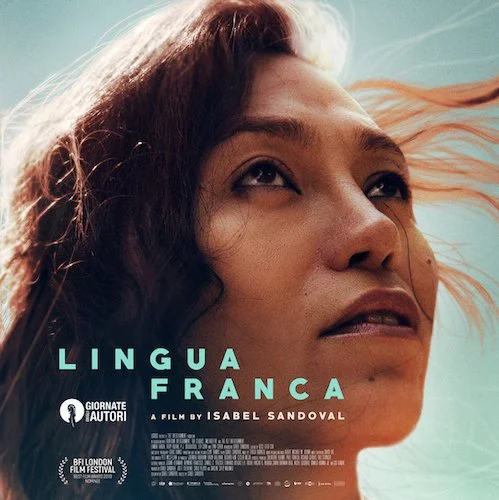
Director of Lingua Franca & Under the Banner of Heaven

Before coming on board Under the Banner of Heaven, I had very little knowledge of Mormonism, but having read the script by Academy Award-winning screenwriter Dustin Lance Black, who is also the showrunner for the show, I resonated deeply with Jeb Pyre (played by Andrew Garfield) when it comes to his growing ambivalence and his crisis of faith. And the more he learned about the gruesome, grisly history of the founding Mormonism, and also about the case that he was investigating, the more disillusioned and disenchanted he was becoming. And that resonated with me because I was raised Catholic in the Philippines, but as I grew older, actually went to Catholic schools and universities from kindergarten until college, and then the more I learned about the history of the Catholic Church and the atrocities and the injustices that it has committed, especially in the name of colonialist and imperialist pursuits in the Middle ages, the more I questioned its control over me and my life.

Isabel Sandoval - Director of “Lingua Franca” - “Under the Banner of Heaven”

Isabel Sandoval - Director of “Lingua Franca” - “Under the Banner of Heaven”

Director of Lingua Franca & Under the Banner of Heaven

Before coming on board Under the Banner of Heaven, I had very little knowledge of Mormonism, but having read the script by Academy Award-winning screenwriter Dustin Lance Black, who is also the showrunner for the show, I resonated deeply with Jeb Pyre (played by Andrew Garfield) when it comes to his growing ambivalence and his crisis of faith. And the more he learned about the gruesome, grisly history of the founding Mormonism, and also about the case that he was investigating, the more disillusioned and disenchanted he was becoming. And that resonated with me because I was raised Catholic in the Philippines, but as I grew older, actually went to Catholic schools and universities from kindergarten until college, and then the more I learned about the history of the Catholic Church and the atrocities and the injustices that it has committed, especially in the name of colonialist and imperialist pursuits in the Middle ages, the more I questioned its control over me and my life.

Empowering Girls: MEMORY BANDA's Vision for Leadership & Cultural Change - Highlights

Empowering Girls: MEMORY BANDA's Vision for Leadership & Cultural Change - Highlights

Human & Girls’ Rights Activist
Founder & Executive Director of Foundation for Girls Leadership

One thing that we should remember as young people is that everything allowed us is political by nature. We shouldn't be really scared of getting ourselves into different political aspects of issues around us. Be bold enough to speak out on the biggest challenges that are around you. And at the same time, it's in us to understand what kind of environment I am in? What is it that I can contribute to the problems that I am facing? That young people or people in general facing? So just go on. Be a part of that, and you'll be surprised that you will be the biggest game-changer.

MEMORY BANDA - Human and Girls’ Rights Activist - Founder of Foundation for Girls Leadership

MEMORY BANDA - Human and Girls’ Rights Activist - Founder of Foundation for Girls Leadership

Human & Girls’ Rights Activist
Founder & Executive Director of Foundation for Girls Leadership

One thing that we should remember as young people is that everything allowed us is political by nature. We shouldn't be really scared of getting ourselves into different political aspects of issues around us. Be bold enough to speak out on the biggest challenges that are around you. And at the same time, it's in us to understand what kind of environment I am in? What is it that I can contribute to the problems that I am facing? That young people or people in general facing? So just go on. Be a part of that, and you'll be surprised that you will be the biggest game-changer.

Another World Is Possible: How to Reignite Social & Political Imagination w/ SIR GEOFF MULGAN - Highlights

Another World Is Possible: How to Reignite Social & Political Imagination w/ SIR GEOFF MULGAN - Highlights

Author of Another World is Possible: How to Reignite Social & Political Imagination
Professor of Collective Intelligence, Public Policy & Social Innovation at University College London

The great thing about a complex society is there is space for lots of different kinds of people. There's space for wildly visionary poets and accountants and actuaries and engineers. And they all have a slightly different outlook, but it's the combination of this huge diversity, which makes our societies work. But what we probably do need a bit more of are the bilingual people, the trilingual people who are as at ease spending a day, a week, a year designing how a criminal justice system could look in 50 years and then getting back to perhaps working in a real court or real lawyer's office.

Sir Geoff Mulgan, Author of “Another World is Possible”

Sir Geoff Mulgan, Author of “Another World is Possible”

Author of Another World is Possible: How to Reignite Social & Political Imagination
Professor of Collective Intelligence, Public Policy & Social Innovation at University College London

The great thing about a complex society is there is space for lots of different kinds of people. There's space for wildly visionary poets and accountants and actuaries and engineers. And they all have a slightly different outlook, but it's the combination of this huge diversity, which makes our societies work. But what we probably do need a bit more of are the bilingual people, the trilingual people who are as at ease spending a day, a week, a year designing how a criminal justice system could look in 50 years and then getting back to perhaps working in a real court or real lawyer's office.

The Evolutionary Origins of a Good Society w/ NICHOLAS CHRISTAKIS - Dir. - Human Nature Lab, Yale - Highlights

The Evolutionary Origins of a Good Society w/ NICHOLAS CHRISTAKIS - Dir. - Human Nature Lab, Yale - Highlights

Author of Blueprint: The Evolutionary Origins of a Good Society
Director of the Human Nature Lab at Yale · Co-director of the Yale Institute for Network Science

So these kinds of problems in what I call hybrid systems of humans and machines are a key focus of my lab right now. Margaret Traeger, who's now at Notre Dame, she did a wonderful project in which we made these groups of three humans and a humanoid robot work together to solve a problem.

We manipulated the humanity of the robot. For example, sometimes we had the robot tell stupid dad jokes, like corny jokes. Or we had the robot break the ice by saying, "You know, robots can make mistakes, too." This kind of stuff. And what we found was that the human interactions could be changed by the simple programming of the robot.

NICHOLAS CHRISTAKIS - Author of Blueprint: The Evolutionary Origins of a Good Society

NICHOLAS CHRISTAKIS - Author of Blueprint: The Evolutionary Origins of a Good Society

Author of Blueprint: The Evolutionary Origins of a Good Society
Director of the Human Nature Lab at Yale · Co-director of the Yale Institute for Network Science

We're not attempting to invent super smart AI to replace human cognition. We are inventing dumb AI to supplement human interaction. Are there simple forms of artificial intelligence, simple programming of bots, such that when they are added to groups of humans – because those humans are smart or otherwise positively inclined - that help the humans to help themselves? Can we get groups of people to work better together, for instance, to confront climate change, or to reduce racism online, or to foster innovation within firms?

Can we have simple forms of AI that are added into our midst that make us work better together? And the work we're doing in that part of my lab shows that abundantly that's the case. And we published a stream of papers showing that we can do that.