Healing Indigenous Landscapes through Indigenous Science - DR. JESSICA HERNANDEZ - Highlights

Healing Indigenous Landscapes through Indigenous Science - DR. JESSICA HERNANDEZ - Highlights

Transnational Indigenous Scholar, Scientist
Author of Fresh Banana Leaves: Healing Indigenous Landscapes through Indigenous Science

I live my life embodying the teaching my grandmother instilled in me – that no matter which lens I walked on, I had to learn how to build relationships with the land and the Indigenous peoples whose land I reside on to become a welcome guest. As a displaced Indigenous woman, my longing to return to my ancestral homelands will always be there, and this is why I continue to support my communities in the diaspora. However, my relationships are not only with my community, but also the Indigenous communities whose land I am displaced on, and this is the foundation of my work while residing in the Pacific Northwest. I strongly believe that in order to start healing Indigenous landscapes, everyone must understand their positionality as either settlers, unwanted guests, or welcomed guests, and that is ultimately determined by the Indigenous communities whose land you currently reside on or occupy. This teaching has also helped me envision my goals in life. Every day I get closer to becoming an ancestor because life is not guaranteed but rather a gift we are granted from our ancestors who are now in the spiritual world.

DR. JESSICA HERNANDEZ - Transnational Indigenous Scholar, Scientist, Author of Fresh Banana Leaves

DR. JESSICA HERNANDEZ - Transnational Indigenous Scholar, Scientist, Author of Fresh Banana Leaves

Transnational Indigenous Scholar, Scientist
Author of Fresh Banana Leaves: Healing Indigenous Landscapes through Indigenous Science

I live my life embodying the teaching my grandmother instilled in me – that no matter which lens I walked on, I had to learn how to build relationships with the land and the Indigenous peoples whose land I reside on to become a welcome guest. As a displaced Indigenous woman, my longing to return to my ancestral homelands will always be there, and this is why I continue to support my communities in the diaspora. However, my relationships are not only with my community, but also the Indigenous communities whose land I am displaced on, and this is the foundation of my work while residing in the Pacific Northwest. I strongly believe that in order to start healing Indigenous landscapes, everyone must understand their positionality as either settlers, unwanted guests, or welcomed guests, and that is ultimately determined by the Indigenous communities whose land you currently reside on or occupy. This teaching has also helped me envision my goals in life. Every day I get closer to becoming an ancestor because life is not guaranteed but rather a gift we are granted from our ancestors who are now in the spiritual world.

How Occam’s Razor Set Science Free and Shapes the Universe - JOHNJOE McFADDEN - Highlights

How Occam’s Razor Set Science Free and Shapes the Universe - JOHNJOE McFADDEN - Highlights

Author of Life is Simple: How Occam’s Razor Set Science Free and Shapes the Universe
Co-author of Life on the Edge: The Coming of Age of Quantum Biology
Professor of Molecular Genetics & Assoc. Dean (Int’l) · University of Surrey

I think that's what art is all about is communicating these big, complex objects, which are ideas inside our head, but in a non-dissected way in which the object isn't completely dissected, or it's dissected in such a way it can be reassembled in somebody else's mind. So you get a full experience of what the artist had or as close as he or she can make it. So I think that to me is what art does. It's a way of communicating these wonderful ideas and feelings that we have inside our heads. And they're trapped there, and art allows you - by playing music or painting, or writing poetry... - it allows you to communicate this in this holistic kind of way.

JOHNJOE McFADDEN - Author of “Life is Simple: How Occam’s Razor Set Science Free and Shapes the Universe”

JOHNJOE McFADDEN - Author of “Life is Simple: How Occam’s Razor Set Science Free and Shapes the Universe”

Author of Life is Simple: How Occam’s Razor Set Science Free and Shapes the Universe
Co-author of Life on the Edge: The Coming of Age of Quantum Biology
Professor of Molecular Genetics & Assoc. Dean (Int’l) · University of Surrey

I think that's what art is all about is communicating these big, complex objects, which are ideas inside our head, but in a non-dissected way in which the object isn't completely dissected, or it's dissected in such a way it can be reassembled in somebody else's mind. So you get a full experience of what the artist had or as close as he or she can make it. So I think that to me is what art does. It's a way of communicating these wonderful ideas and feelings that we have inside our heads. And they're trapped there, and art allows you - by playing music or painting, or writing poetry... - it allows you to communicate this in this holistic kind of way.

The Making of "Entergalactic" & "X" with KARINA MANASHIL - Highlights

The Making of "Entergalactic" & "X" with KARINA MANASHIL - Highlights

President of Mad Solar · Creative Confidante & Industry Catalyst for Scott Mescudi a.k.a. Kid Cudi
Exec. Producer: Entergalactic starring Mescudi, Jessica Williams & Timothée Chalamet
Pearl · X
starring Mia Goth

And what was so moving was when we went into Netflix to the theater to screen the finished product for the first time. You're sitting there and at the end of it, Scott was crying, and I looked over - it made me cry low-key - but Scott was crying and he said – This completely blows my mind because this is the first time I had a vision up here in my head and tried to express it, and then had to trust all 300 plus people, all around the world, working in different time zones, in different places, and each of them putting a hand to it and seeing exactly that vision. And then watching the product, and it is the best version of anything I could have ever possibly had in my head.
So, to us, that's the purest, most beautiful... Again, how fortunate that every hand was moving in tandem and moving in lockstep, and all of it. But that was the beauty of collaboration, this opportunity for a small vision to touch so many hands and become the big vision.

KARINA MANASHIL - President of Mad Solar - Creative Confidante for Kid Cudi - Exec. Producer of “Entergalactic”

KARINA MANASHIL - President of Mad Solar - Creative Confidante for Kid Cudi - Exec. Producer of “Entergalactic”

President of Mad Solar · Creative Confidante & Industry Catalyst for Scott Mescudi a.k.a. Kid Cudi
Exec. Producer: Entergalactic starring Mescudi, Jessica Williams & Timothée Chalamet
Pearl · X
starring Mia Goth

And what was so moving was when we went into Netflix to the theater to screen the finished product for the first time. You're sitting there and at the end of it, Scott was crying, and I looked over - it made me cry low-key - but Scott was crying and he said – This completely blows my mind because this is the first time I had a vision up here in my head and tried to express it, and then had to trust all 300 plus people, all around the world, working in different time zones, in different places, and each of them putting a hand to it and seeing exactly that vision. And then watching the product, and it is the best version of anything I could have ever possibly had in my head.
So, to us, that's the purest, most beautiful... Again, how fortunate that every hand was moving in tandem and moving in lockstep, and all of it. But that was the beauty of collaboration, this opportunity for a small vision to touch so many hands and become the big vision.

BASQUIAT & BOB MARLEY: A Life in Art with Photographer & Author LEE JAFFE - Highlights

BASQUIAT & BOB MARLEY: A Life in Art with Photographer & Author LEE JAFFE - Highlights

Artist, Musician, Poet
Author of Jean-Michel Basquiat: Crossroads

Jean-Michel Basquiat's combination of words and images, this visual poetry, just from a cultural standpoint has been so important. When I met him in 1983, black people were not allowed in the art market, pretty much. And you see that he broke down this barrier, which opened the door for all this multiculturalism within the art market. And you can't diminish the importance of that at all. It's helped to give a voice and an audience to all these incredible artists that might not have had that.

JEAN-MICHEL BASQUIAT: Crossroads with Artist, Musician, Poet LEE JAFFE

JEAN-MICHEL BASQUIAT: Crossroads with Artist, Musician, Poet LEE JAFFE

Artist, Musician, Poet
Author of Jean-Michel Basquiat: Crossroads

Jean-Michel Basquiat's combination of words and images, this visual poetry, just from a cultural standpoint has been so important. When I met him in 1983, black people were not allowed in the art market, pretty much. And you see that he broke down this barrier, which opened the door for all this multiculturalism within the art market. And you can't diminish the importance of that at all. It's helped to give a voice and an audience to all these incredible artists that might not have had that.

How Law Corrupts the Struggle for Equality & How the Laws of Fashion Made History w/ RICHARD THOMPSON FORD - Highlights

How Law Corrupts the Struggle for Equality & How the Laws of Fashion Made History w/ RICHARD THOMPSON FORD - Highlights

Stanford Professor of Law · Expert on Civil Rights & Antidiscrimination Law
Author of Dress Codes · Rights Gone Wrong · The Race Card

One of the things that I've tried to do in my work is demonstrate the way that laws that don't seem to be directly related to social equality, to equality of opportunity, to racial justice in fact are and that it's only through also reforming these kind of systemic and institutionalized forms of discrimination that we could truly achieve an egalitarian society. So what I've really wanted to argue against is the idea that civil rights are kind of a magic bullet and that those kinds of laws alone would be sufficient to achieve.

RICHARD THOMPSON FORD - Author of “Dress Codes” - Stanford Prof. of Law - Expert on Civil Rights - Antidiscrimination Law

RICHARD THOMPSON FORD - Author of “Dress Codes” - Stanford Prof. of Law - Expert on Civil Rights - Antidiscrimination Law

Stanford Professor of Law · Expert on Civil Rights & Antidiscrimination Law
Author of Dress Codes · Rights Gone Wrong · The Race Card

One of the things that I've tried to do in my work is demonstrate the way that laws that don't seem to be directly related to social equality, to equality of opportunity, to racial justice in fact are and that it's only through also reforming these kind of systemic and institutionalized forms of discrimination that we could truly achieve an egalitarian society. So what I've really wanted to argue against is the idea that civil rights are kind of a magic bullet and that those kinds of laws alone would be sufficient to achieve.

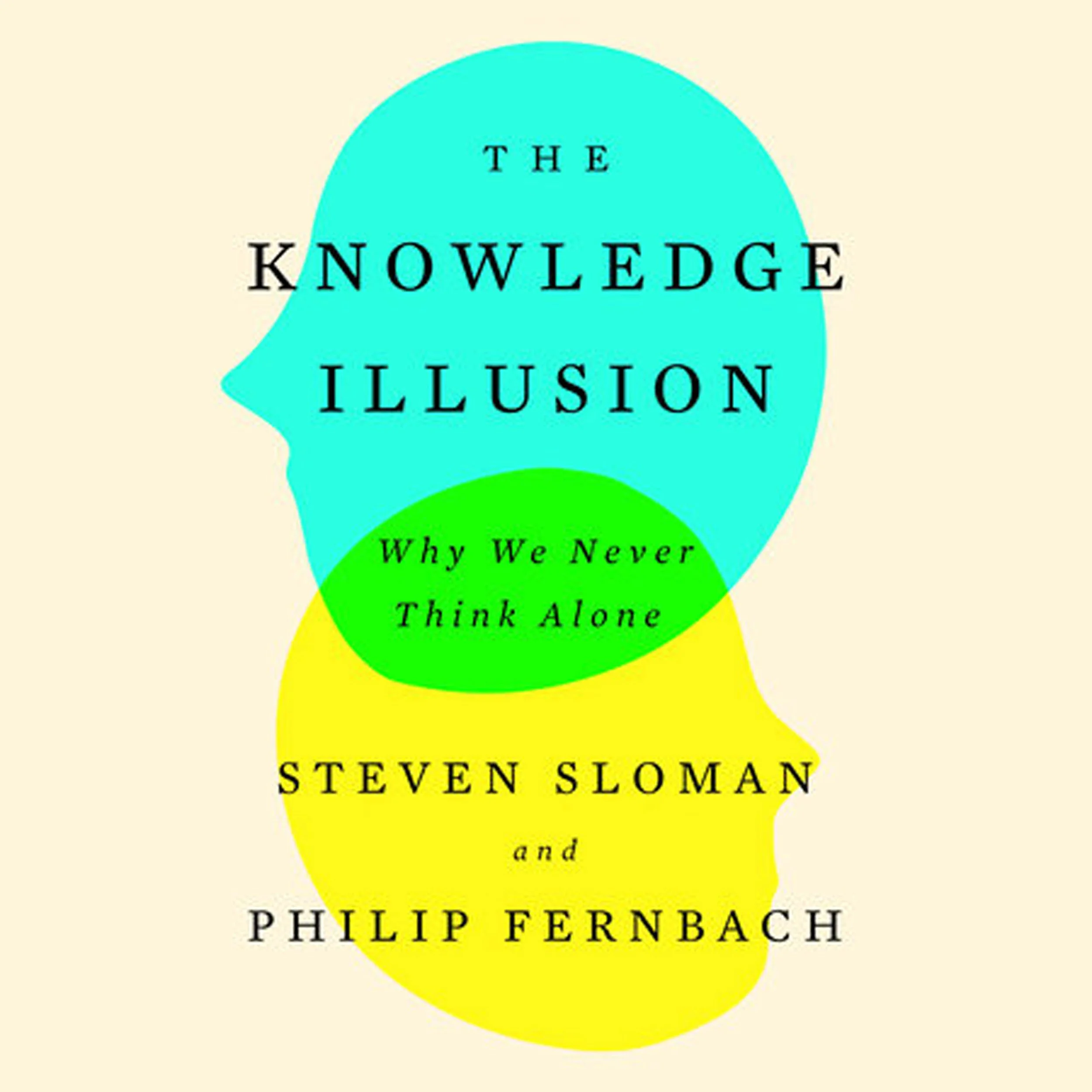
The Knowledge Illusion: The myth of individual thought and the power of collective wisdom w/ PHILIP FERNBACH

The Knowledge Illusion: The myth of individual thought and the power of collective wisdom w/ PHILIP FERNBACH

Co-author of The Knowledge Illusion: Why We Never Think Alone
Cognitive Scientist · Co-Director of Center for Research on Consumer Financial Decision Making, CU Boulder

The human mind is both genius and pathetic, brilliant and idiotic. People are capable of the most remarkable feats, achievements that defy the gods. We went from discovering the atomic nucleus in 1911 to megaton nuclear weapons in just over forty years. We have mastered fire, created democratic institutions, stood on the moon, and developed genetically modified tomatoes. And yet we are equally capable of the most remarkable demonstrations of hubris and foolhardiness. Each of us is error-prone, sometimes irrational, and often ignorant… How is it that people can simultaneously bowl us over with their ingenuity and disappoint us with their ignorance? How have we mastered so much despite how limited our understanding often is?

PHILIP FERNBACH - Co-author of The Knowledge Illusion - Cognitive Scientist - Co-Director of Ctr. for Research on Consumer Financial Decision Making

PHILIP FERNBACH - Co-author of The Knowledge Illusion - Cognitive Scientist - Co-Director of Ctr. for Research on Consumer Financial Decision Making

Co-author of The Knowledge Illusion: Why We Never Think Alone
Cognitive Scientist · Co-Director of Center for Research on Consumer Financial Decision Making, CU Boulder

The human mind is both genius and pathetic, brilliant and idiotic. People are capable of the most remarkable feats, achievements that defy the gods. We went from discovering the atomic nucleus in 1911 to megaton nuclear weapons in just over forty years. We have mastered fire, created democratic institutions, stood on the moon, and developed genetically modified tomatoes. And yet we are equally capable of the most remarkable demonstrations of hubris and foolhardiness. Each of us is error-prone, sometimes irrational, and often ignorant… How is it that people can simultaneously bowl us over with their ingenuity and disappoint us with their ignorance? How have we mastered so much despite how limited our understanding often is?

Gender Equality & The Path to Inclusive Workplaces - ANIELA UNGURESAN - Highlights

Gender Equality & The Path to Inclusive Workplaces - ANIELA UNGURESAN - Highlights

Co-founder of EDGE Certified Foundation (Economic Dividends for Gender Equality)
Champion of Diversity, Equity & Inclusion in the Workplace

I co-founded what has become EDGE for gender and intersectional equity back in 2009, and at that time workplace gender and intersectional equity were still very much seen as a societal issue rather than a business issue. Organizations were asking themselves if it's within their role to tackle these issues of equity, diversity, and inclusion in the workplace, or if they are the mere recipients of what is going on in societies, following the beliefs around what men and women should be doing at work and at home. So at that time we wanted to contribute to this transition from making gender and intersectional equity a business issue and help organizations see that how they manage their talent and how they are able to attract, develop, motivate, and retain diverse talent is a key component of their sustainable business success.

ANIELA UNGURESAN - Co-founder, Economic Dividends for Gender Equality - EDGE Cert. Foundation

ANIELA UNGURESAN - Co-founder, Economic Dividends for Gender Equality - EDGE Cert. Foundation

Co-founder of EDGE Certified Foundation (Economic Dividends for Gender Equality)
Champion of Diversity, Equity & Inclusion in the Workplace

I co-founded what has become EDGE for gender and intersectional equity back in 2009, and at that time workplace gender and intersectional equity were still very much seen as a societal issue rather than a business issue. Organizations were asking themselves if it's within their role to tackle these issues of equity, diversity, and inclusion in the workplace, or if they are the mere recipients of what is going on in societies, following the beliefs around what men and women should be doing at work and at home. So at that time we wanted to contribute to this transition from making gender and intersectional equity a business issue and help organizations see that how they manage their talent and how they are able to attract, develop, motivate, and retain diverse talent is a key component of their sustainable business success.

Becoming Wild: How Animal Cultures Raise Families, Create Beauty & Achieve Peace w/ CARL SAFINA - Highlights

Becoming Wild: How Animal Cultures Raise Families, Create Beauty & Achieve Peace w/ CARL SAFINA - Highlights

Ecologist, Founding President of Safina Center
NYTimes Bestselling Author of Becoming Wild · Song for the Blue Ocean · Beyond Words: What Animals Think and Feel

So we tend to take living for granted. I think that might be the biggest limitation of human intelligence is to not understand with awe and reverence and love that we live in a miracle that we are part of and that we have the ability to either nurture or destroy. The living world is enormously enriching to human life. I just loved animals. They're always just totally fascinating. They're not here for us. They're just here like we're just here. They are of this world as much as we are of this world. They really have the same claim to life and death and the circle of being.

CARL SAFINA - Ecologist - Founding President of Safina Center - NYTimes Bestselling Author

CARL SAFINA - Ecologist - Founding President of Safina Center - NYTimes Bestselling Author

Ecologist, Founding President of Safina Center
NYTimes Bestselling Author of Becoming Wild · Song for the Blue Ocean · Beyond Words: What Animals Think and Feel

So we tend to take living for granted. I think that might be the biggest limitation of human intelligence is to not understand with awe and reverence and love that we live in a miracle that we are part of and that we have the ability to either nurture or destroy. The living world is enormously enriching to human life. I just loved animals. They're always just totally fascinating. They're not here for us. They're just here like we're just here. They are of this world as much as we are of this world. They really have the same claim to life and death and the circle of being.

"Nothing More to Tell" with NYTimes Bestselling Author KAREN McMANUS - Highlights

"Nothing More to Tell" with NYTimes Bestselling Author KAREN McMANUS - Highlights

NYTimes Bestselling Author of Nothing More to Tell, One of Us is Lying

Well, I had a wonderful teacher in second grade who kind of inspired me to start writing and really stuck with me through elementary school and beyond as I made attempts to find my voice, but think part of the reason it never really went anywhere for me as a young person was because I was too afraid to share that with anyone except for that one teacher. I never showed friends. I didn't even really show family. I just always felt that it wasn't quite good enough. And so the thing I always tell writers now if they ask for, you know, "What's one tip?" It's let someone else tell you no, because I just told myself no for pretty much my entire young adulthood. And once I let other people tell me no, they did a lot, you know, but that is how I got better.

KAREN McMANUS - NYTimes Bestselling Author of “Nothing More to Tell”, “One of Us is Lying”

KAREN McMANUS - NYTimes Bestselling Author of “Nothing More to Tell”, “One of Us is Lying”

NYTimes Bestselling Author of Nothing More to Tell, One of Us is Lying

Well, I had a wonderful teacher in second grade who kind of inspired me to start writing and really stuck with me through elementary school and beyond as I made attempts to find my voice, but think part of the reason it never really went anywhere for me as a young person was because I was too afraid to share that with anyone except for that one teacher. I never showed friends. I didn't even really show family. I just always felt that it wasn't quite good enough. And so the thing I always tell writers now if they ask for, you know, "What's one tip?" It's let someone else tell you no, because I just told myself no for pretty much my entire young adulthood. And once I let other people tell me no, they did a lot, you know, but that is how I got better.

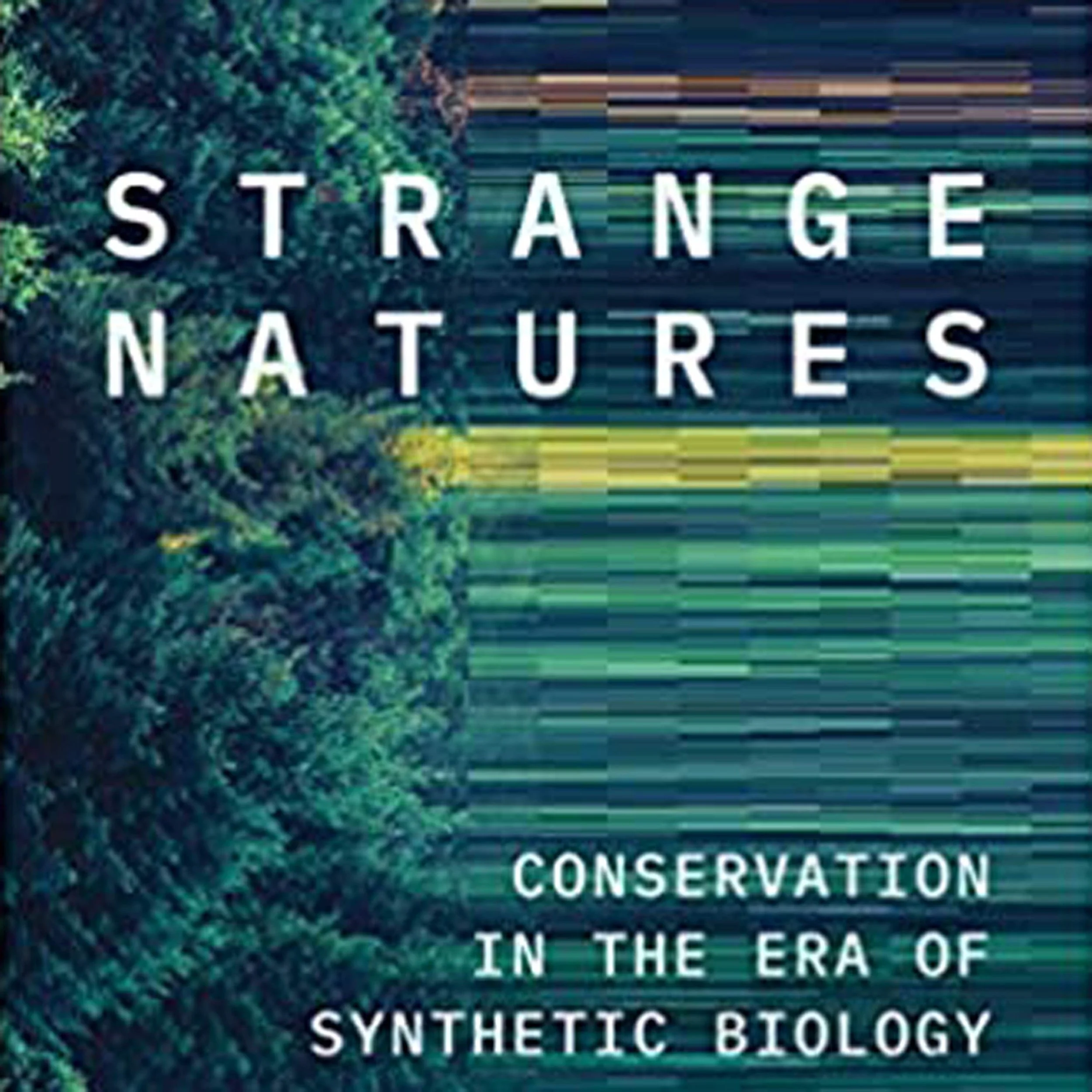
Conservation in the Era of Synthetic Biology with KENT REDFORD - Highlights

Conservation in the Era of Synthetic Biology with KENT REDFORD - Highlights

Co-author of Strange Natures: Conservation in the Era of Synthetic Biology
Principal at Archipelago Consulting · Former VP for Conservation Science & Strategy, Wildlife Conservation Society

The field of synthetic biology, which is known by some as extreme genetic engineering – that's a name mostly used by people who don't like it. It amounts to a set of tools that humans have developed to be able to very precisely and accurately change the genetic code, the DNA of living organisms in order to get those organisms to do things that humans want. So the applications in medicine are predominantly devoted to trying to make us healthier people, and they range from some really exciting work on tumor biology to work on the microbiome, which is all of the thousands and tens of thousands of species that live on our lips, our mouths, our guts, our skin. And in agriculture, it's primarily directed at crop genetics, trying to improve the productivity of crops, the nutritional value of crops, the ability of crops to respond to climate change, and a whole variety of other things. Some people may have heard of one of these tools called CRISPR used to very precisely alter the sequences of DNA.

KENT REDFORD - Co-author of Strange Natures: Conservation in the Era of Synthetic Biology

KENT REDFORD - Co-author of Strange Natures: Conservation in the Era of Synthetic Biology

Co-author of Strange Natures: Conservation in the Era of Synthetic Biology
Principal at Archipelago Consulting · Former VP for Conservation Science & Strategy, Wildlife Conservation Society

The field of synthetic biology, which is known by some as extreme genetic engineering – that's a name mostly used by people who don't like it. It amounts to a set of tools that humans have developed to be able to very precisely and accurately change the genetic code, the DNA of living organisms in order to get those organisms to do things that humans want. So the applications in medicine are predominantly devoted to trying to make us healthier people, and they range from some really exciting work on tumor biology to work on the microbiome, which is all of the thousands and tens of thousands of species that live on our lips, our mouths, our guts, our skin. And in agriculture, it's primarily directed at crop genetics, trying to improve the productivity of crops, the nutritional value of crops, the ability of crops to respond to climate change, and a whole variety of other things. Some people may have heard of one of these tools called CRISPR used to very precisely alter the sequences of DNA.