Highlights - HALA ALYAN - Dayton Literary Peace Prize Winner - Palestinian-American Poet, Novelist & Clinical Psychologist

Highlights - HALA ALYAN - Dayton Literary Peace Prize Winner - Palestinian-American Poet, Novelist & Clinical Psychologist

Dayton Literary Peace Prize Winning Novelist, Poet & Clinical Psychologist

We become the stories we tell ourselves…I started writing around the time I learned English because we moved to the States soon after my fourth birthday, and so I was here for kindergarten into elementary school. I grasped this new language just as I was learning how to also put things onto the page. Those two things really happened at the same time for me. I entered this world where I felt very different and very other, for all intents and purposes I was set to be raised in Kuwait. And then that of course got turned upside down after the invasion by Saddam. I think that so much of my trying to make sense of the world had to do with the displacement, exile and these experiences that my parents had experienced but then that I had as well as we were fleeing the war. It’s hard to know because I think that language was being formed in my brain at the same time that these things were happening.

HALA ALYAN - Palestinian-American Poet, Novelist & Clinical Psychologist - Dayton Literary Peace Prize Winner

HALA ALYAN - Palestinian-American Poet, Novelist & Clinical Psychologist - Dayton Literary Peace Prize Winner

Dayton Literary Peace Prize Winning Novelist, Poet & Clinical Psychologist

We become the stories we tell ourselves…I started writing around the time I learned English because we moved to the States soon after my fourth birthday, and so I was here for kindergarten into elementary school. I grasped this new language just as I was learning how to also put things onto the page. Those two things really happened at the same time for me. I entered this world where I felt very different and very other, for all intents and purposes I was set to be raised in Kuwait. And then that of course got turned upside down after the invasion by Saddam. I think that so much of my trying to make sense of the world had to do with the displacement, exile and these experiences that my parents had experienced but then that I had as well as we were fleeing the war. It’s hard to know because I think that language was being formed in my brain at the same time that these things were happening.

AI & THE FUTURE OF HUMANITY

AI & THE FUTURE OF HUMANITY

What will the future look like? What are the risks and opportunities of AI? What role can we play in designing the future we want to live in? In this first episode of our new channel, philosophers, futurists, AI experts, science fiction authors, activists, and lawyers reflect on AI, technology, and the Future of Humanity..

Highlights - Carl Safina - Author of “Becoming Wild: How Animal Cultures Raise Families, Create Beauty, and Achieve Peace”

Highlights - Carl Safina - Author of “Becoming Wild: How Animal Cultures Raise Families, Create Beauty, and Achieve Peace”

Ecologist, Founding President of Safina Center
NYTimes Bestselling Author of Becoming Wild · Song for the Blue Ocean · Beyond Words: What Animals Think and Feel

So we tend to take living for granted. I think that might be the biggest limitation of human intelligence is to not understand with awe and reverence and love that we live in a miracle that we are part of and that we have the ability to either nurture or destroy. The living world is enormously enriching to human life. I just loved animals. They're always just totally fascinating. They're not here for us. They're just here like we're just here. They are of this world as much as we are of this world. They really have the same claim to life and death and the circle of being.

CARL SAFINA - Ecologist - Founding President of Safina Center - NYTimes Bestselling Author

CARL SAFINA - Ecologist - Founding President of Safina Center - NYTimes Bestselling Author

Ecologist, Founding President of Safina Center
NYTimes Bestselling Author of Becoming Wild · Song for the Blue Ocean · Beyond Words: What Animals Think and Feel

So we tend to take living for granted. I think that might be the biggest limitation of human intelligence is to not understand with awe and reverence and love that we live in a miracle that we are part of and that we have the ability to either nurture or destroy. The living world is enormously enriching to human life. I just loved animals. They're always just totally fascinating. They're not here for us. They're just here like we're just here. They are of this world as much as we are of this world. They really have the same claim to life and death and the circle of being.

We All Live on One Planet We Call Home - Part 4 - Environmentalists, Economists, Policymakers & Architects Share their Stories

We All Live on One Planet We Call Home - Part 4 - Environmentalists, Economists, Policymakers & Architects Share their Stories

Environmentalists, Artists, Students & Teachers share their Love for the Planet

Today we’re streaming voices of environmentalists, artists, students, and teachers with music courtesy of composer Max Richter.

Highlights - DAVID FENTON - Author of The Activist’s Media Handbook: Lessons From 50 Years as a Progressive Agitator

Highlights - DAVID FENTON - Author of The Activist’s Media Handbook: Lessons From 50 Years as a Progressive Agitator

Author of The Activist’s Media Handbook: Lessons From 50 Years as a Progressive Agitator
Founder of Fenton Communications: The Social Change Agency
JStreet · Climate Nexus · The Death Penalty Information Center

It sounds like a cliche, but it really is true that history moves in pendulums and waves. And whatever is happening today is not going to last. It will change. So you have periods of concentrations of wealth and power, and then you have periods of rebellion. And I'm quite sure we're headed for another period of rebellion. You can see it a little bit now in the labor strife in the United States and the strikes. You can certainly see it in the massive demonstrations in France and Israel. Excessive concentrations of power breeds rebellion, and that's just inevitable. And the climate crisis is going to cause a lot of rebellion as people figure this out. And I think it's coming very soon, actually, because as you've noticed, the weather is getting very bad. It's become a non-linear accelerating phenomenon. And people will wake up to that. I just hope they wake up in time.

DAVID FENTON - Founder of Fenton Communications, Author of The Activist’s Media Handbook: Lessons From 50 Years as a Progressive Agitator

DAVID FENTON - Founder of Fenton Communications, Author of The Activist’s Media Handbook: Lessons From 50 Years as a Progressive Agitator

Author of The Activist’s Media Handbook: Lessons From 50 Years as a Progressive Agitator
Founder of Fenton Communications: The Social Change Agency
JStreet · Climate Nexus · The Death Penalty Information Center

It sounds like a cliche, but it really is true that history moves in pendulums and waves. And whatever is happening today is not going to last. It will change. So you have periods of concentrations of wealth and power, and then you have periods of rebellion. And I'm quite sure we're headed for another period of rebellion. You can see it a little bit now in the labor strife in the United States and the strikes. You can certainly see it in the massive demonstrations in France and Israel. Excessive concentrations of power breeds rebellion, and that's just inevitable. And the climate crisis is going to cause a lot of rebellion as people figure this out. And I think it's coming very soon, actually, because as you've noticed, the weather is getting very bad. It's become a non-linear accelerating phenomenon. And people will wake up to that. I just hope they wake up in time.

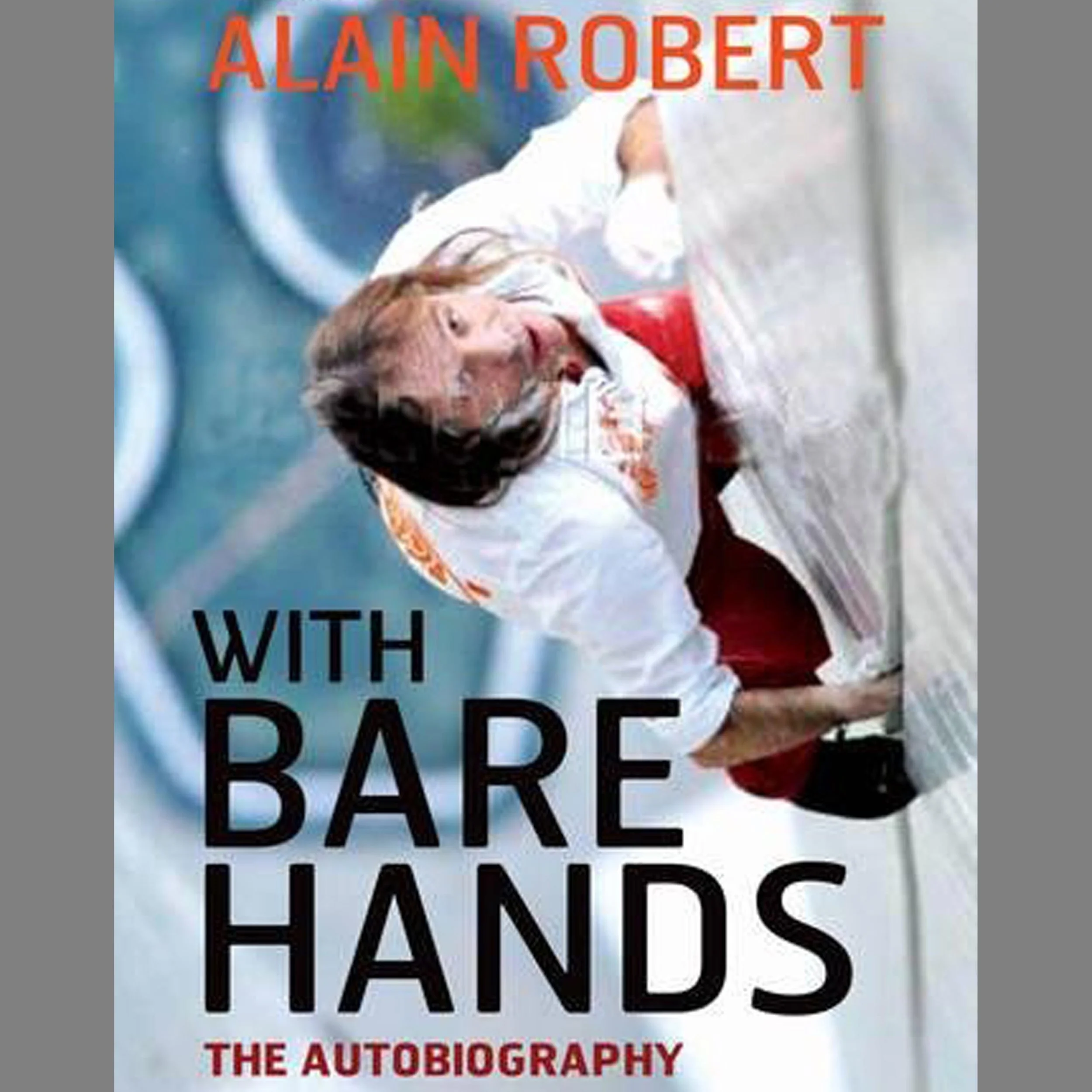
ALAIN ROBERT - Famous Rock and Urban Climber - Author of With Bare Hands

ALAIN ROBERT - Famous Rock and Urban Climber - Author of With Bare Hands

Famous Rock & Urban Climber · "The French Spider-Man”
Known for Free Solo Climbing the World’s Tallest Skyscrapers using no Climbing Equipment

First of all, yes, I need to know what I will be climbing, whether it's on rocks or whether it's on buildings. And then there is physical preparation. And regarding the mindset, it's more something that became a bit automatic over the years because I have been free soloing for almost 50 years. So it is pretty much my whole life. So that means that for me, being mentally ready, it's kind of simple. It's almost always the same mental process, meaning, I can be afraid before an ascent, but I know myself actually very well. And I know that once I am starting to climb, I feel fine. I put my fear aside, and I'm just climbing.

Highlights - DAVID FARRIER - Author of Footprints: In Search of Future Fossils

Highlights - DAVID FARRIER - Author of Footprints: In Search of Future Fossils

Author of Footprints: In Search of Future Fossils · Anthropocene Poetics
Professor of Literature & the Environment · University of Edinburgh.

Just thinking about how our actions play out over multiple generations who will have to live with the consequences of these decisions. I think we need to stretch our sense of time, and within that stretch our sense of empathy. The philosopher Roman Krznaric talks about that in his book The Good Ancestor, that we need a more elastic sense of empathy that can encompass not just those close to us or living alongside us, but those who have yet to be born will have to inherit the world that we passed down to them. But I think in stretching that sense of empathy and stretching that sense of the times that we touch, if you like, because all of us are engaged in activities that will lead long legacies, long tails, in terms of the fossil fuels we're consuming. And so, alongside that, I think we need to accept that the time we live in is a strange one, and time itself is doing strange things in the anthropocene.

DAVID FARRIER - Author of Footprints: In Search of Future Fossils - Prof. U of Edinburgh

DAVID FARRIER - Author of Footprints: In Search of Future Fossils - Prof. U of Edinburgh

Author of Footprints: In Search of Future Fossils · Anthropocene Poetics
Professor of Literature & the Environment · University of Edinburgh.

Just thinking about how our actions play out over multiple generations who will have to live with the consequences of these decisions. I think we need to stretch our sense of time, and within that stretch our sense of empathy. The philosopher Roman Krznaric talks about that in his book The Good Ancestor, that we need a more elastic sense of empathy that can encompass not just those close to us or living alongside us, but those who have yet to be born will have to inherit the world that we passed down to them. But I think in stretching that sense of empathy and stretching that sense of the times that we touch, if you like, because all of us are engaged in activities that will lead long legacies, long tails, in terms of the fossil fuels we're consuming. And so, alongside that, I think we need to accept that the time we live in is a strange one, and time itself is doing strange things in the anthropocene.

Highlights - ALAIN ROBERT - Famous Rock and Urban Climber - Author of With Bare Hands

Highlights - ALAIN ROBERT - Famous Rock and Urban Climber - Author of With Bare Hands

Famous Rock & Urban Climber · "The French Spider-Man”
Known for Free Solo Climbing the World’s Tallest Skyscrapers using no Climbing Equipment

First of all, yes, I need to know what I will be climbing, whether it's on rocks or whether it's on buildings. And then there is physical preparation. And regarding the mindset, it's more something that became a bit automatic over the years because I have been free soloing for almost 50 years. So it is pretty much my whole life. So that means that for me, being mentally ready, it's kind of simple. It's almost always the same mental process, meaning, I can be afraid before an ascent, but I know myself actually very well. And I know that once I am starting to climb, I feel fine. I put my fear aside, and I'm just climbing.

What Kind of World Are We Leaving for Future Generations? - Part 3 - Activists, Environmentalists & Teachers Share their Stories

What Kind of World Are We Leaving for Future Generations? - Part 3 - Activists, Environmentalists & Teachers Share their Stories

Environmentalists, Artists, Students & Teachers share their Love for the Planet

Today we’re streaming voices of environmentalists, artists, students, and teachers with music courtesy of composer Max Richter.

Highlights - SHEHAN KARUNATILAKA - Booker Prize-winning Author of The Seven Moons of Maali Almeida

Highlights - SHEHAN KARUNATILAKA - Booker Prize-winning Author of The Seven Moons of Maali Almeida

Booker Prize-winning Author
The Seven Moons of Maali Almeida
Chinaman: The Legend of Pradeep Mathew

So this was the decision to write in the second person. A lot of people ask me: why? There are not many examples of this technique. The reason I opted for that is I was trying to figure out interviewing a ghost. And one of the challenges was: what does a disembodied voice sound like? The narrator's body has been chopped up and chucked in a lake. So, I figured that if anything survives the death of your body, it's perhaps the voice in your head. The voice in my head is in the second person. I don't know about your head or anyone else's head, but in mine, it's the second person. 

SHEHAN KARUNATILAKA - Booker Prize-winning Author of The Seven Moons of Maali Almeida

SHEHAN KARUNATILAKA - Booker Prize-winning Author of The Seven Moons of Maali Almeida

What happens when we die? What happens to our memories and consciousness when our bodies cease to be? In the end, is it the things we did and the people we loved that give our lives meaning?

Shehan Karunatilaka is the multi-award winning author. He is known for his novels dealing with the history, politics, and folklore of his home country of Sri Lanka. He won the Commonwealth Book Prize and the DSC Prize for South Asian Literature for his debut novel, Chinaman: The Legend of Pradeep Mathew, and the Booker Prize 2022 for his second novel, The Seven Moons of Maali Almeida. In addition to novels, he has written rock songs, screenplays and travel stories. Born in Colombo, he studied in New Zealand and has lived and worked in London, Amsterdam, and Singapore.

THE CREATIVE PROCESS

In your book, there are ghosts who go around whispering ideas into the ears of the living, so that we think the idea is in our head, but it's something that's been whispered by a vengeful or mischievous ghost.

SHEHAN KARUNATILAKA

So this was the decision to write in the second person. A lot of people ask me: why? There are not many examples of this technique. The reason I opted for that is I was trying to figure out interviewing a ghost. And one of the challenges was: what does a disembodied voice sound like? The narrator's body has been chopped up and chucked in a lake.

So, I figured that if anything survives the death of your body, it's perhaps the voice in your head. The voice in my head is in the second person. I don't know about your head or anyone else's head, but in mine, it's the second person. 

It's almost like someone else telling me: Yeah, you should have worn a better shirt for this interview. You should have read a better chapter. And it's almost like someone is talking to me. And I tried this technique, and I think Maali Almeida also questions. Who is the you that's telling the story? And this is addressed. We've all had experiences where we've done something or said something and we've thought: what was I thinking? Why did I do that? And what made me do that? And so Maali also ponders: Is the voice telling the story, is that me, or is it someone else? Is there a spirit? Because he observes that spirits, because they're so bored - because I have to also figure out what ghosts do all day? Because we know in horror movies, ghosts turn up and be scary. And I don't know if there are resolutions in the book, but there is the idea that maybe are your thoughts your own? Or is someone else whispering them to you? 

THE CREATIVE PROCESS

The figure of the leopard recurs in the book. And I think if you watch leopards in the savannah, you can see that they're at repose until they need to be. And then they just take off, and you can't even follow them with your eyes. So it's kind of like, we conserve our energies and our imagination and we just take off when we have an idea.

As you were writing, you were absorbing different religious, spiritual and artistic traditions. Which were those that resonated the most?

KARUNATILAKA

I was very inspired to know that humans are not the be-all and end-all. We're just one state. But you could be in this state of consciousness, this kind of godly state, even a demonic state, but also the fact that all living creatures had souls and were affected by karma. And this is something we tend to forget, especially because animals are so tasty and therefore we have to justify slaughtering them on such a mass scale. So we want to believe that they don't count. Or they are somehow lesser souls than us. The cat doesn't believe that it's a pet. The cat believes they are the center of the universe. I'm sure the cockroach believes that they are the center of the universe, just as we do. And back to the thing you said: how our bodies inform our view. I think every living creature suffers and experiences joy. And therefore it's convenient for us to say that certain things don't have souls...whatever the soul is.

THE CREATIVE PROCESS

I sometimes feel that I trust an idea more when it comes suddenly from the outside. When you're like a vessel. I feel like it's stronger and it has a momentum. I feel we can go wrong when we're the only author. It's like our ego contaminates our imagination. So I feel like there's a natural order that one becomes a vessel.

KARUNATILAKA

The notion that the idea is out there, but you just need to be in a state to receive it, that's a very comforting thought because it takes the onus off of you. You don't have to be a genius. You don't have to be this big creator. You just have to read and keep healthy and keep yourself open and the idea will arrive. And the funny thing is, usually it arrives to you and then you're typing.

THE CREATIVE PROCESS

Maali Almeida is also a closeted gay man. Why did you choose that? Or did it just seem natural? You also had some inspiration from the life of a real journalist?

KARUNATILAKA

I think when the novel went through many revisions and reiterations, a lot of Richard de Zoysa's biography got shared, and Maali Almeida emerged as a character. But that one detail stayed, the fact that he was a closeted gay man. Again, you write by instinct, and also I had to explain why was this privileged Colombo kid, going to these very dangerous places and hanging out with very dodgy characters. So one reason was perhaps ego. He found something he was very good at, and he thought he was bearing witness and doing this great service.

I think another reason - and also this idealism that he thought his photographs could change the world - but also I think as a closeted gay man, he could express himself sexually in the war zone. Normal rules didn't apply. And also I think this informed his world. He just believed in being a hedonist and enjoying his sexuality. And the only way he could do that was to go to these dangerous places where no one he knew would be watching.

I don't know if I could revise it now and make him heterosexual and have the story work quite as well. So that was the reason. Since then I've been questioned because now that debate is alive and well: the cultural appropriation debate. Are we allowed to write novels from the perspective of characters of different sexualities, genders, and ethnicities?

I think we are. I think that's the whole point of being a novelist or being a storyteller is that you are allowed to inhabit other consciousnesses and see the world through other points of view. Of course, you have to do it well. You have to do it with respect. You have to do the empathy. And you have to do it responsibly.

So if I had done it, and hopefully I've done it well, because I was very careful to do my research properly and get my story read by my friends, by friends who are gay men, and get them to kind of critique it as well. So I think you need to do that, but I don't think we should be placing boundaries because otherwise, I have to write from a Sinhalese Buddhist, Sri Lankan, middle-aged dude...which is quite boring.

I'd like to explore different characters if I'm allowed to write more. So that was really the thinking. It wasn't a political decision. It just felt right for the character, and in the end, it was true to who the character was. And in the end, I think with the plot as well, it gives the novel another dimension.

THE CREATIVE PROCESS

As you think of the future and new technologies like AI and ChatGBT, what for you is the importance of the humanities and their role in helping us navigate new technologies and give our lives meaning?

KARUNATILAKA

But I always think new ideas are what have led us forward. And new ideas, they come out of the humanities. They come out of understanding the classics, psychology, philosophy, and sociology, and being able to think.

I think I'm okay for a couple more books before the robots start writing Booker Prize-winning novels. At the moment I think we're okay because I've tried this technology, and I think it's at the level of a junior copywriter who works hard. The first draft and all of that. But who knows where it's going to go? And we're all reminded this technology is in its infancy. So it's conceivable that these things are going to be writing novels and writing pretty good novels. Perhaps AI can write a formulaic detective thriller? But I don't think it's going to produce a Margaret Atwood or a Salman Rushdie. I think the real challenge is to write stuff that hasn't been written before. And that's what we are all trying to do. So the technology can replicate what's been done before, but the real novels that are going to move us, the stories that are going to move us, are the stuff that hasn't been done before. And that's where I think writers come in. And that's where an understanding of the humanities and being able to come up with new ideas rather than just replicate or rehash new ideas...I think we're still going to need human brains. And there's still room for originality because we think everything's been done, but I think it's just a fraction. There are lots of ideas out there, so I'm hopeful. I'm not too worried. And if this ChatGPT will help me. Instead of spending seven years on a novel, if I can knock out a novel in seven weeks, I'll be happier. The more writing I can do.

Photo credit: David Parry/Booker Prize Foundation

This interview was conducted by Mia Funk with the participation of collaborating universities and students. Associate Interviews Producers on this episode were Sam Myers and Aaron Goldberg. The Creative Process is produced by Mia Funk. Additional production support by Sophie Garnier.

Mia Funk is an artist, interviewer and founder of The Creative Process & One Planet Podcast (Conversations about Climate Change & Environmental Solutions).

Highlights - ERICA BERRY - Author of Wolfish: Wolf, Self, and the Stories We Tell About Fear

Highlights - ERICA BERRY - Author of Wolfish: Wolf, Self, and the Stories We Tell About Fear

Author of Wolfish: Wolf, Self, and the Stories We Tell About Fear

And I think the ways that wolves converse with one another, there's also so much there that really conjures the way that we humans do. And I was trying to piece together: why did we feel so threatened by wolves? In part, I think because there's a sort of uncanny mirror that humans have seen in a wolf. And I'll give an example. Wolf packs will form a diversity of family structures very often. So they will have a nuclear family where you'll have two breeders, but they can also have an extended family where there's sort of aunts and uncles in the pack. Or (these are the biologist's names) they'll call it a step-family if a wolf pack welcomes an outside breeder. A foster family, if they welcome another outsider. And I think the way that a pack is its own ecosystem: if one wolf dies, there's one wolf in this pack that might be the one that teaches how to move through the territory. And if that one wolf dies, the whole pack has a much higher likelihood of disbanding. And so this idea that the interconnectivity between the packs and the individuality of the wolves is so critical. It is so beautiful, and you see that studying these different wolves, they have personalities.

ERICA BERRY - Author of Wolfish: Wolf, Self, and the Stories We Tell About Fear

ERICA BERRY - Author of Wolfish: Wolf, Self, and the Stories We Tell About Fear

Author of Wolfish: Wolf, Self, and the Stories We Tell About Fear

And I think the ways that wolves converse with one another, there's also so much there that really conjures the way that we humans do. And I was trying to piece together: why did we feel so threatened by wolves? In part, I think because there's a sort of uncanny mirror that humans have seen in a wolf. And I'll give an example. Wolf packs will form a diversity of family structures very often. So they will have a nuclear family where you'll have two breeders, but they can also have an extended family where there's sort of aunts and uncles in the pack. Or (these are the biologist's names) they'll call it a step-family if a wolf pack welcomes an outside breeder. A foster family, if they welcome another outsider. And I think the way that a pack is its own ecosystem: if one wolf dies, there's one wolf in this pack that might be the one that teaches how to move through the territory. And if that one wolf dies, the whole pack has a much higher likelihood of disbanding. And so this idea that the interconnectivity between the packs and the individuality of the wolves is so critical. It is so beautiful, and you see that studying these different wolves, they have personalities.

Highlights - ANDRI SNÆR MAGNASON - Writer & Documentary Filmmaker - On Time and Water, The Casket of Time, LoveStar, Not Ok

Highlights - ANDRI SNÆR MAGNASON - Writer & Documentary Filmmaker - On Time and Water, The Casket of Time, LoveStar, Not Ok

Icelandic Writer & Documentary Filmmaker
On Time and Water · The Casket of Time · LoveStar · Not Ok · The Story of the Blue Planet

A letter to the future
Ok is the first Icelandic glacier to lose its status as a glacier.
In the next 200 years all our glaciers are expected to follow the same path.
This monument is to acknowledge that we know
what is happening and what needs to be done.
Only you know if we did it.

If you look at the Himalayas, the frozen glaciers are feeding 1 billion people with milky white water. The real tragedy is if the Himalayan glaciers go the same way as Iceland. In many places in the world, glaciers are very important for agriculture and the basic water supply of people.

ANDRI SNÆR MAGNASON - Icelandic Writer & Documentary Filmmaker - On Time and Water, The Casket of Time, LoveStar, Not Ok

ANDRI SNÆR MAGNASON - Icelandic Writer & Documentary Filmmaker - On Time and Water, The Casket of Time, LoveStar, Not Ok

Icelandic Writer & Documentary Filmmaker
On Time and Water · The Casket of Time · LoveStar · Not Ok · The Story of the Blue Planet

A letter to the future
Ok is the first Icelandic glacier to lose its status as a glacier.
In the next 200 years all our glaciers are expected to follow the same path.
This monument is to acknowledge that we know
what is happening and what needs to be done.
Only you know if we did it.

If you look at the Himalayas, the frozen glaciers are feeding 1 billion people with milky white water. The real tragedy is if the Himalayan glaciers go the same way as Iceland. In many places in the world, glaciers are very important for agriculture and the basic water supply of people.

THE ART OF WRITING: NEIL GAIMAN, JERICHO BROWN, ADA LIMÓN, MARGE PIERCY, E.J. KOH & MAX STOSSEL