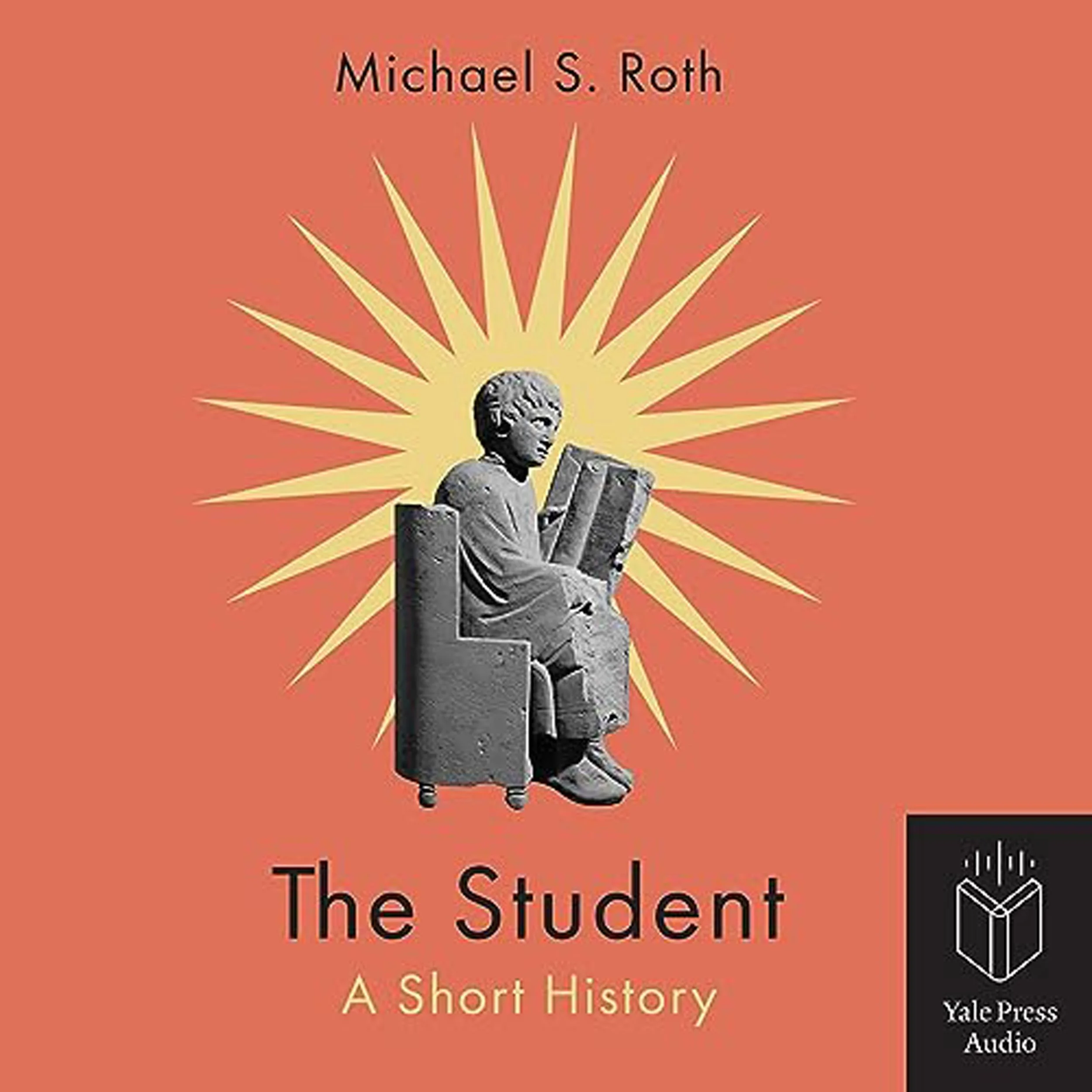
Highlights - MICHAEL S. ROTH - President of Wesleyan University - Author of The Student: A Short History

Highlights - MICHAEL S. ROTH - President of Wesleyan University - Author of The Student: A Short History

President of Wesleyan University
Author of The Student: A Short History

So I wrote this book and it was a lot of fun because I had to learn so much. The book examines three iconic teachers: Confucius, Socrates, and Jesus. And I look at how each of those teachers encourage a certain kind of student. The student as follower, someone who will take on the path that you've developed. In the case of Socrates, the student as critical interlocutor or critical conversation partner, someone who will, in dialogue with you, learn what they don't know, how to take things apart. And in the case of Jesus and the apostles, I look at trying to imitate a way of life to transform themselves to strive towards being the kind of person that Jesus incarnated. And so that's the beginning of the book, these models of studenthood, if I could use that word, and being a teacher. And then I look at the way in which these ideas reverberate in the West across a long period of time. So I'm interested in the idea of the student before there were schools. What did we expect young people to learn even when they weren't going to school?

MICHAEL S. ROTH - Author of The Student: A Short History - President of Wesleyan University

MICHAEL S. ROTH - Author of The Student: A Short History - President of Wesleyan University

President of Wesleyan University
Author of The Student: A Short History

So I wrote this book and it was a lot of fun because I had to learn so much. The book examines three iconic teachers: Confucius, Socrates, and Jesus. And I look at how each of those teachers encourage a certain kind of student. The student as follower, someone who will take on the path that you've developed. In the case of Socrates, the student as critical interlocutor or critical conversation partner, someone who will, in dialogue with you, learn what they don't know, how to take things apart. And in the case of Jesus and the apostles, I look at trying to imitate a way of life to transform themselves to strive towards being the kind of person that Jesus incarnated. And so that's the beginning of the book, these models of studenthood, if I could use that word, and being a teacher. And then I look at the way in which these ideas reverberate in the West across a long period of time. So I'm interested in the idea of the student before there were schools. What did we expect young people to learn even when they weren't going to school?

Highlights - BRIAN DAVID JOHNSON - Director of the ASU Threatcasting Lab - Author of The Future You

Highlights - BRIAN DAVID JOHNSON - Director of the ASU Threatcasting Lab - Author of The Future You

Author of The Future You: How to Create the Life You Always Wanted
Director of the Arizona State University’s Threatcasting Lab
Futurist in Residence, ASU’s Center for Science & the Imagination

Let's talk about technology and the role of humanity and the role of being human and what it means to be present in that. We need to keep humans at the center of everything that we do, that everything that we do in our life is about humans. It begins with humans and ends with humans. There might be technologies and businesses and all these things in between, but we should measure the effect on humans.

When I talk to people about artificial intelligence or technology, I'm generally asking them two questions. What are you optimizing for? What's the effect that you're trying to get? Developing technology for technology's sake, although it can be kind of interesting...then is why you're doing it because you think it's interesting? But then ultimately, if you're doing it beyond your own gratification, why are you doing it?

So much of what I do in that is talking to governments and militaries and large organizations to say we always have to keep humans in the loop. You have to keep humans in the center because it's about us. That really is incredibly important. And that's one of the central ideas in the future. The future should be about humans, and where are humans going. And what do we want as humans? And how are we using technology to make us more human, or healthier, or happier, or more productive?

BRIAN DAVID JOHNSON - Author of The Future You: How to Create the Life You Always Wanted - Futurist in Residence, ASU’s Center for Science & the Imagination

BRIAN DAVID JOHNSON - Author of The Future You: How to Create the Life You Always Wanted - Futurist in Residence, ASU’s Center for Science & the Imagination

Author of The Future You: How to Create the Life You Always Wanted
Director of the Arizona State University’s Threatcasting Lab
Futurist in Residence, ASU’s Center for Science & the Imagination

Let's talk about technology and the role of humanity and the role of being human and what it means to be present in that. We need to keep humans at the center of everything that we do, that everything that we do in our life is about humans. It begins with humans and ends with humans. There might be technologies and businesses and all these things in between, but we should measure the effect on humans.

When I talk to people about artificial intelligence or technology, I'm generally asking them two questions. What are you optimizing for? What's the effect that you're trying to get? Developing technology for technology's sake, although it can be kind of interesting...then is why you're doing it because you think it's interesting? But then ultimately, if you're doing it beyond your own gratification, why are you doing it?

So much of what I do in that is talking to governments and militaries and large organizations to say we always have to keep humans in the loop. You have to keep humans in the center because it's about us. That really is incredibly important. And that's one of the central ideas in the future. The future should be about humans, and where are humans going. And what do we want as humans? And how are we using technology to make us more human, or healthier, or happier, or more productive?

Highlights - RICK BASS - Author & Environmentalist - “Why I Came West”, “For a Little While”

Highlights - RICK BASS - Author & Environmentalist - “Why I Came West”, “For a Little While”

Environmentalist & Story Prize Award-winning Author
Why I Came West · For a Little While · The Traveling Feast

I grieve the changes to the four seasons that are happening here in Montana. One of the great things about this place is having four distinct seasons, and now they're tilted. Some are short, some are long, and some don't exist anymore. And that's unsettling, to say the least. It's not a fear of what's coming. It's a grief for what's gone away. I'm mindful of the pressure that we are putting on the generations who follow us and the mandate to have fun, to be fully human, to be joyous, to celebrate, and to enjoy being in the midst of nature's beauty.

RICK BASS - Environmentalist & Story Prize Award-winning Author of “Why I Came West”, “For a Little While”

RICK BASS - Environmentalist & Story Prize Award-winning Author of “Why I Came West”, “For a Little While”

Environmentalist & Story Prize Award-winning Author
Why I Came West · For a Little While · The Traveling Feast

I grieve the changes to the four seasons that are happening here in Montana. One of the great things about this place is having four distinct seasons, and now they're tilted. Some are short, some are long, and some don't exist anymore. And that's unsettling, to say the least. It's not a fear of what's coming. It's a grief for what's gone away. I'm mindful of the pressure that we are putting on the generations who follow us and the mandate to have fun, to be fully human, to be joyous, to celebrate, and to enjoy being in the midst of nature's beauty.

JIM SHEPARD - Author of The Book of Aron, Project X, The World to Come starring Casey Affleck, Vanessa Kirby, Katherine Waterston

JIM SHEPARD - Author of The Book of Aron, Project X, The World to Come starring Casey Affleck, Vanessa Kirby, Katherine Waterston

Author of The Book of Aron · Project X · The World to Come starring Casey Affleck, Vanessa Kirby, Katherine Waterston
Winner of the PEN New England Award · The Story Prize · Ribalow Prize for Jewish Literature

In terms of what I'm writing, I'm always trying to make myself a more interesting human being. And so that means I'm coming across these human dilemmas where I'm like what would it have been like to be in that position? And that snags my emotional imagination. I do think that literature is all about extending the empathetic imagination. And so I'm always looking to educate myself in emotional terms, too. Because I'm very interested in the way we respond in those situations where it feels like we both have responsibility, and we don't have responsibility.

Highlights - JIM SHEPARD - Award-winning Author of The Book of Aron, Project X, The World to Come, Like You’d Understand, Anyway

Highlights - JIM SHEPARD - Award-winning Author of The Book of Aron, Project X, The World to Come, Like You’d Understand, Anyway

Author of The Book of Aron · Project X · The World to Come starring Casey Affleck, Vanessa Kirby, Katherine Waterston
Winner of the PEN New England Award · The Story Prize · Ribalow Prize for Jewish Literature

In terms of what I'm writing, I'm always trying to make myself a more interesting human being. And so that means I'm coming across these human dilemmas where I'm like what would it have been like to be in that position? And that snags my emotional imagination. I do think that literature is all about extending the empathetic imagination. And so I'm always looking to educate myself in emotional terms, too. Because I'm very interested in the way we respond in those situations where it feels like we both have responsibility, and we don't have responsibility.

Highlights - MARCIA DeSANCTIS - Author of "A Hard Place to Leave", "100 Places in France Every Woman Should Go"

Highlights - MARCIA DeSANCTIS - Author of "A Hard Place to Leave", "100 Places in France Every Woman Should Go"

Journalist, Essayist, Author of A Hard Place to Leave: Stories from a Restless Life
100 Places in France Every Woman Should Go

I started looking over the stories that I had done. I would say the majority of the essays were not really about travel. They were more about aging and marriage and memory and all of those things, but I did find in the travel essays those kernels of things that I wanted to explore - bigger kernels of things that were sort of scratching at me from the inside like a piece of sand in my pocket that was irritating me and that I wanted to explore. What I found was that the theme of coming and going, the theme of arrivals and departures, the theme of entrances and exits, and the theme of home and away seemed to repeat itself. I felt that whenever I was somewhere, there was always a tide home. And when I was home, there was always the urge for going. And so I just weeded out and weeded out and really wanted to keep this theme of home and away.

MARCIA DeSANCTIS - Author of A Hard Place to Leave: Stories from a Restless Life

MARCIA DeSANCTIS - Author of A Hard Place to Leave: Stories from a Restless Life

Journalist, Essayist, Author of A Hard Place to Leave: Stories from a Restless Life
100 Places in France Every Woman Should Go

I started looking over the stories that I had done. I would say the majority of the essays were not really about travel. They were more about aging and marriage and memory and all of those things, but I did find in the travel essays those kernels of things that I wanted to explore - bigger kernels of things that were sort of scratching at me from the inside like a piece of sand in my pocket that was irritating me and that I wanted to explore. What I found was that the theme of coming and going, the theme of arrivals and departures, the theme of entrances and exits, and the theme of home and away seemed to repeat itself. I felt that whenever I was somewhere, there was always a tide home. And when I was home, there was always the urge for going. And so I just weeded out and weeded out and really wanted to keep this theme of home and away.

Highlights - SUSAN SCHNEIDER - Author of Artificial You: AI and the Future of Your Mind, Fmr. Distinguished Scholar, US Library of Congress

Highlights - SUSAN SCHNEIDER - Author of Artificial You: AI and the Future of Your Mind, Fmr. Distinguished Scholar, US Library of Congress

Founding Director · Center for the Future Mind · Florida Atlantic University
Author of Artificial You: AI and the Future of Your Mind
Fmr. NASA Chair at NASA · Fmr. Distinguished Scholar at US Library of Congress

So it's hard to tell exactly what the dangers are, but that's certainly one thing that we need to track that beings that are vastly intellectually superior to other beings may not respect the weaker beings, given our own past. It's really hard to tell exactly what will happen. The first concern I have is with surveillance capitalism in this country. The constant surveillance of us because the US is a surveillance capitalist economy, and it's the same elsewhere in the world, right? With Facebook and all these social media companies, things have just been going deeply wrong. And so it leads me to worry about how the future is going to play out. These tech companies aren't going to be doing the right thing for humanity. And this gets to my second worry, which is how's all this going to work for humans exactly? It's not clear where humans will even be needed in the future.

SUSAN SCHNEIDER - Director, Center for the Future Mind, FAU, Fmr. NASA Chair at NASA

SUSAN SCHNEIDER - Director, Center for the Future Mind, FAU, Fmr. NASA Chair at NASA

Founding Director · Center for the Future Mind · Florida Atlantic University
Author of Artificial You: AI and the Future of Your Mind
Fmr. NASA Chair at NASA · Fmr. Distinguished Scholar at US Library of Congress

So it's hard to tell exactly what the dangers are, but that's certainly one thing that we need to track that beings that are vastly intellectually superior to other beings may not respect the weaker beings, given our own past. It's really hard to tell exactly what will happen. The first concern I have is with surveillance capitalism in this country. The constant surveillance of us because the US is a surveillance capitalist economy, and it's the same elsewhere in the world, right? With Facebook and all these social media companies, things have just been going deeply wrong. And so it leads me to worry about how the future is going to play out. These tech companies aren't going to be doing the right thing for humanity. And this gets to my second worry, which is how's all this going to work for humans exactly? It's not clear where humans will even be needed in the future.

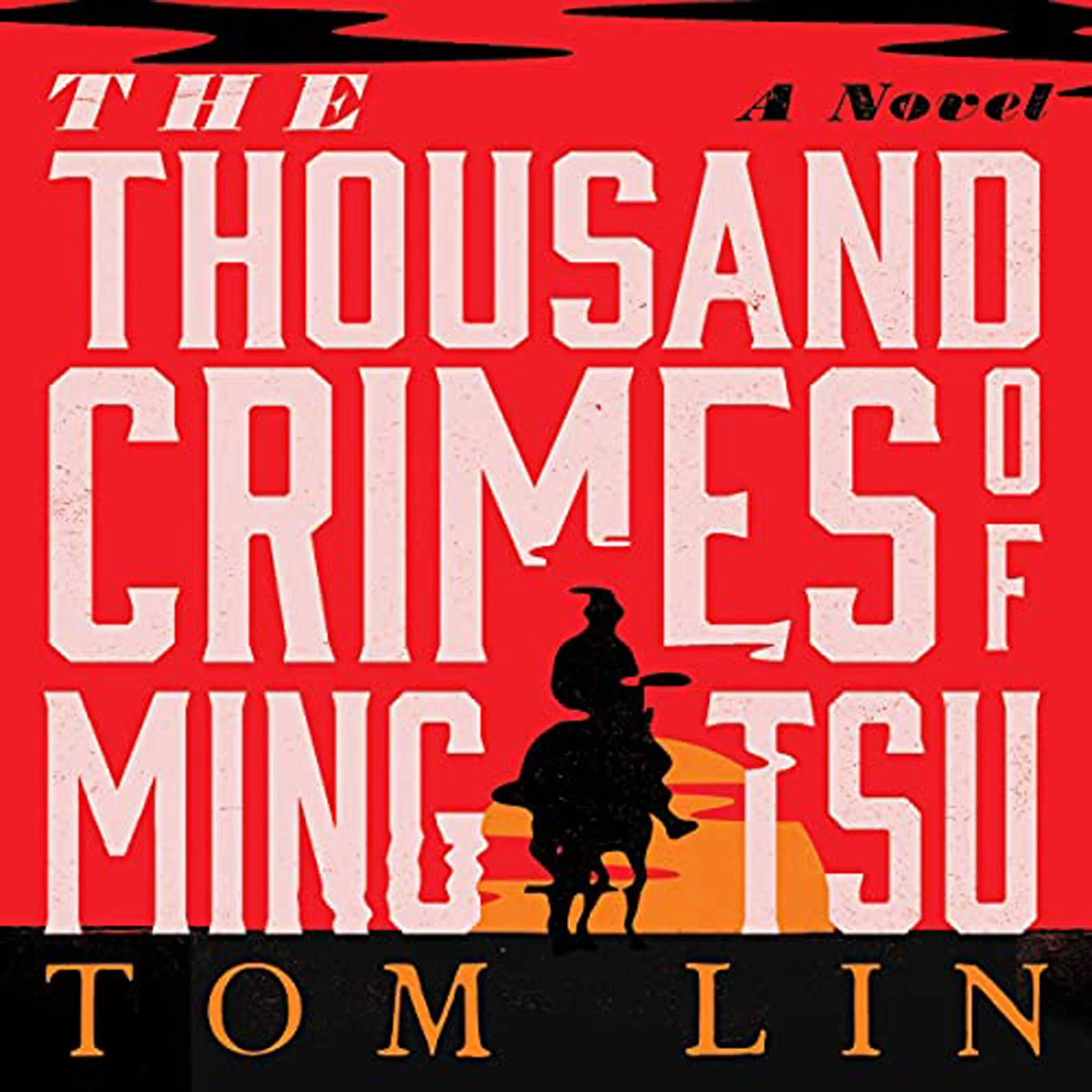
Highlights - TOM LIN - Author of The Thousand Crimes of Ming Tsu - Andrew Carnegie Medal for Excellence in Fiction 2022

Highlights - TOM LIN - Author of The Thousand Crimes of Ming Tsu - Andrew Carnegie Medal for Excellence in Fiction 2022

Author of The Thousand Crimes of Ming Tsu
Winner of the Andrew Carnegie Medal for Excellence in Fiction 2022

When I was growing up, it was all about representation. I think that was the thing that was being championed: we need more people of color in books, movies, across all media. And then I think what we saw was an extremely cynical and capitalistic-minded ruthless optimization of that, where someone said: Oh, you want representation? Then we'll just throw in token people of color into projects. And then we'll check that box. And I think that became so prevalent in so many pieces of media that that became what we thought of as representation. I think it's a salvageable concept because, I mean, when I encountered books growing up, they were all with white people in them. Front to back, start to finish. It was just white characters. And so when I started writing stories of my own in school as a middle schooler they - surprise - they had white people in them, right? There were just white people talking about other white people. I went to public school in Queens. I knew very few white people. And so I think what representation does at its best is that it informs the boundaries of possibility. By seeing yourself represented in media, you become able to imagine your own stories transpiring in media and being made available for everybody else to witness.

And so I think the point of representation is not just if we do a checklist of this piece of media, can we find a person of color. But I think the idea of representation is more that we want to be expanding the realm of storytelling, expanding what's possible by telling these stories that are not normally told.

TOM LIN - Author of The Thousand Crimes of Ming Tsu - Andrew Carnegie Medal for Excellence in Fiction 2022

TOM LIN - Author of The Thousand Crimes of Ming Tsu - Andrew Carnegie Medal for Excellence in Fiction 2022

Author of The Thousand Crimes of Ming Tsu
Winner of the Andrew Carnegie Medal for Excellence in Fiction 2022

When I was growing up, it was all about representation. I think that was the thing that was being championed: we need more people of color in books, movies, across all media. And then I think what we saw was an extremely cynical and capitalistic-minded ruthless optimization of that, where someone said: Oh, you want representation? Then we'll just throw in token people of color into projects. And then we'll check that box. And I think that became so prevalent in so many pieces of media that that became what we thought of as representation. I think it's a salvageable concept because, I mean, when I encountered books growing up, they were all with white people in them. Front to back, start to finish. It was just white characters. And so when I started writing stories of my own in school as a middle schooler they - surprise - they had white people in them, right? There were just white people talking about other white people. I went to public school in Queens. I knew very few white people. And so I think what representation does at its best is that it informs the boundaries of possibility. By seeing yourself represented in media, you become able to imagine your own stories transpiring in media and being made available for everybody else to witness.

And so I think the point of representation is not just if we do a checklist of this piece of media, can we find a person of color. But I think the idea of representation is more that we want to be expanding the realm of storytelling, expanding what's possible by telling these stories that are not normally told.

We All Live on One Planet We Call Home - Part 4 - Environmentalists, Economists, Policymakers & Architects Share their Stories

We All Live on One Planet We Call Home - Part 4 - Environmentalists, Economists, Policymakers & Architects Share their Stories

Environmentalists, Artists, Students & Teachers share their Love for the Planet

Today we’re streaming voices of environmentalists, artists, students, and teachers with music courtesy of composer Max Richter.

DEAN SPADE - Author of Normal Life: Administrative Violence, Critical Trans Politics, and the Limits of Law

DEAN SPADE - Author of Normal Life: Administrative Violence, Critical Trans Politics, and the Limits of Law

Organizer · Speaker · Professor at Seattle University's School of Law
Author of Normal Life: Administrative Violence, Critical Trans Politics, and the Limits of Law
Mutual Aid, Building Solidarity During This Crisis (and the Next)

I want to see movements that embolden our tactics. Like people blocking oil pipelines all over the world. That's what's required now. Asking endlessly from the dominant system to treat us fairly doesn't work. And this frustrating kind of endless appeal and hoping maybe we can get it to work this time doesn't work. And the clock is ticking, especially on ecological collapse. We need to save each other's lives and act.

Highlights - HALA ALYAN - Dayton Literary Peace Prize Winner - Palestinian-American Poet, Novelist & Clinical Psychologist

Highlights - HALA ALYAN - Dayton Literary Peace Prize Winner - Palestinian-American Poet, Novelist & Clinical Psychologist

Dayton Literary Peace Prize Winning Novelist, Poet & Clinical Psychologist

We become the stories we tell ourselves…I started writing around the time I learned English because we moved to the States soon after my fourth birthday, and so I was here for kindergarten into elementary school. I grasped this new language just as I was learning how to also put things onto the page. Those two things really happened at the same time for me. I entered this world where I felt very different and very other, for all intents and purposes I was set to be raised in Kuwait. And then that of course got turned upside down after the invasion by Saddam. I think that so much of my trying to make sense of the world had to do with the displacement, exile and these experiences that my parents had experienced but then that I had as well as we were fleeing the war. It’s hard to know because I think that language was being formed in my brain at the same time that these things were happening.

HALA ALYAN - Palestinian-American Poet, Novelist & Clinical Psychologist - Dayton Literary Peace Prize Winner

HALA ALYAN - Palestinian-American Poet, Novelist & Clinical Psychologist - Dayton Literary Peace Prize Winner

Dayton Literary Peace Prize Winning Novelist, Poet & Clinical Psychologist

We become the stories we tell ourselves…I started writing around the time I learned English because we moved to the States soon after my fourth birthday, and so I was here for kindergarten into elementary school. I grasped this new language just as I was learning how to also put things onto the page. Those two things really happened at the same time for me. I entered this world where I felt very different and very other, for all intents and purposes I was set to be raised in Kuwait. And then that of course got turned upside down after the invasion by Saddam. I think that so much of my trying to make sense of the world had to do with the displacement, exile and these experiences that my parents had experienced but then that I had as well as we were fleeing the war. It’s hard to know because I think that language was being formed in my brain at the same time that these things were happening.

AI & THE FUTURE OF HUMANITY

AI & THE FUTURE OF HUMANITY

What will the future look like? What are the risks and opportunities of AI? What role can we play in designing the future we want to live in? In this first episode of our new channel, philosophers, futurists, AI experts, science fiction authors, activists, and lawyers reflect on AI, technology, and the Future of Humanity..