KOHEI SAITO on Degrowth Communism & the Need for Radical Democracy

KOHEI SAITO on Degrowth Communism & the Need for Radical Democracy

Author of Slow Down! How Degrowth Communism Can Save the World
Marx in the Anthropocene: Towards the Idea of Degrowth Communism

The Green New Deal presents itself as a kind of radical policy. If you look at the content, it's just simply the continuation of what capitalism wants to do. It's a massive investment in new, allegedly green industries, with the creation of more jobs with higher wages, but these are not the things that socialists or any environmentalists should be actually seeking because we recognize that capitalism is basically the root cause of the climate crisis and the misery of the workers. If so, I think it is high time to imagine something radically very different from business-as-usual capitalism.

SPEAKING OUT OF PLACE: BEN FRANTA on Weaponizing Economics - Big Oil, Economic Consultants & Climate Policy Delay

SPEAKING OUT OF PLACE: BEN FRANTA on Weaponizing Economics - Big Oil, Economic Consultants & Climate Policy Delay

Founding Head of the Climate Litigation Lab
Senior Research Fellow at University of Oxford’s Sustainable Law Programme

For 40 years, the American Petroleum Institute has hired economists to argue it would be too expensive to try and control fossil fuels and that climate change wasn't that bad. The same go-to consultancy firm has been involved in every major climate policy fight from the very beginning and hired by the fossil fuel industry, but what are the courts going to do? It's not just the historical deception. It's an ongoing deception.

Highlights - How do we navigate ambiguity, uncertainty & move beyond linear thinking? - RUPERT SHELDRAKE

Highlights - How do we navigate ambiguity, uncertainty & move beyond linear thinking? - RUPERT SHELDRAKE

Biologist · Author
The Science Delusion · The Presence of the Past · Ways to Go Beyond and Why They Work.

The idea that the laws of nature are fixed is taken for granted by almost all scientists and within physics, within cosmology, it leads to an enormous realm of speculation, which I think is totally unnecessary. We're assuming the laws of nature are fixed. Most of science assumes this, but is it really so in an evolving universe? Why shouldn't the laws evolve? And if we think about that, then we realize that actually, the whole idea of a law of nature is a metaphor. It's based on human laws. I mean, after all, dogs and cats don't obey laws. And in tribes, they don't even have laws. They have customs. So it's only in civilized societies that you have laws.

And then if we think through that metaphor, then actually the laws do change.

All artists are influenced by other artists and by things in the collective culture, and I think that morphic resonance as collective memory would say that all of us draw unconsciously as well as consciously on a collective memory and all animals draw on a collective memory of their kind as well. We don't know where it comes from, but there's true creativity involved in evolution, both human and natural.

RUPERT SHELDRAKE - Biologist & Author of The Science Delusion, The Presence of the Past

RUPERT SHELDRAKE - Biologist & Author of The Science Delusion, The Presence of the Past

Biologist · Author
The Science Delusion · The Presence of the Past · Ways to Go Beyond and Why They Work.

The idea that the laws of nature are fixed is taken for granted by almost all scientists and within physics, within cosmology, it leads to an enormous realm of speculation, which I think is totally unnecessary. We're assuming the laws of nature are fixed. Most of science assumes this, but is it really so in an evolving universe? Why shouldn't the laws evolve? And if we think about that, then we realize that actually, the whole idea of a law of nature is a metaphor. It's based on human laws. I mean, after all, dogs and cats don't obey laws. And in tribes, they don't even have laws. They have customs. So it's only in civilized societies that you have laws.

And then if we think through that metaphor, then actually the laws do change.

All artists are influenced by other artists and by things in the collective culture, and I think that morphic resonance as collective memory would say that all of us draw unconsciously as well as consciously on a collective memory and all animals draw on a collective memory of their kind as well. We don't know where it comes from, but there's true creativity involved in evolution, both human and natural.

Are we living in a Simulated Universe? - Highlights - MELVIN VOPSON

Are we living in a Simulated Universe? - Highlights - MELVIN VOPSON

Physicist · Author of Reality Reloaded: The Scientific Case for a Simulated Universe
Co-founder & CEO of the Information Physics Institute

These ideas go as far back as Ancient Greece, which basically gave birth to two lines of thinking, two ideologies, materialism and idealism. And the idealist thinkers like Plato regarded reality as a projection of our minds, as something that is not real. And the only thing that is real is our consciousness and our minds and everything else around us is just constructs of our proception and projections. And that was a philosophy that was opposed to materialism, which regards the world as in a materialistic way, made up of atoms and matter and our minds are a product of these chemical reactions and the matter is coming together and forming our minds and consciousness. And everything in the world exists regardless of our consciousness or our minds and the universe is there and it's a materialistic view of the world. So these are two competing ideologies, and this is actually how we see the world today in a materialistic way.

MELVIN VOPSON - Physicist - Author of Reality Reloaded: The Scientific Case for a Simulated Universe

MELVIN VOPSON - Physicist - Author of Reality Reloaded: The Scientific Case for a Simulated Universe

Physicist · Author of Reality Reloaded: The Scientific Case for a Simulated Universe
Co-founder & CEO of the Information Physics Institute

These ideas go as far back as Ancient Greece, which basically gave birth to two lines of thinking, two ideologies, materialism and idealism. And the idealist thinkers like Plato regarded reality as a projection of our minds, as something that is not real. And the only thing that is real is our consciousness and our minds and everything else around us is just constructs of our proception and projections. And that was a philosophy that was opposed to materialism, which regards the world as in a materialistic way, made up of atoms and matter and our minds are a product of these chemical reactions and the matter is coming together and forming our minds and consciousness. And everything in the world exists regardless of our consciousness or our minds and the universe is there and it's a materialistic view of the world. So these are two competing ideologies, and this is actually how we see the world today in a materialistic way.

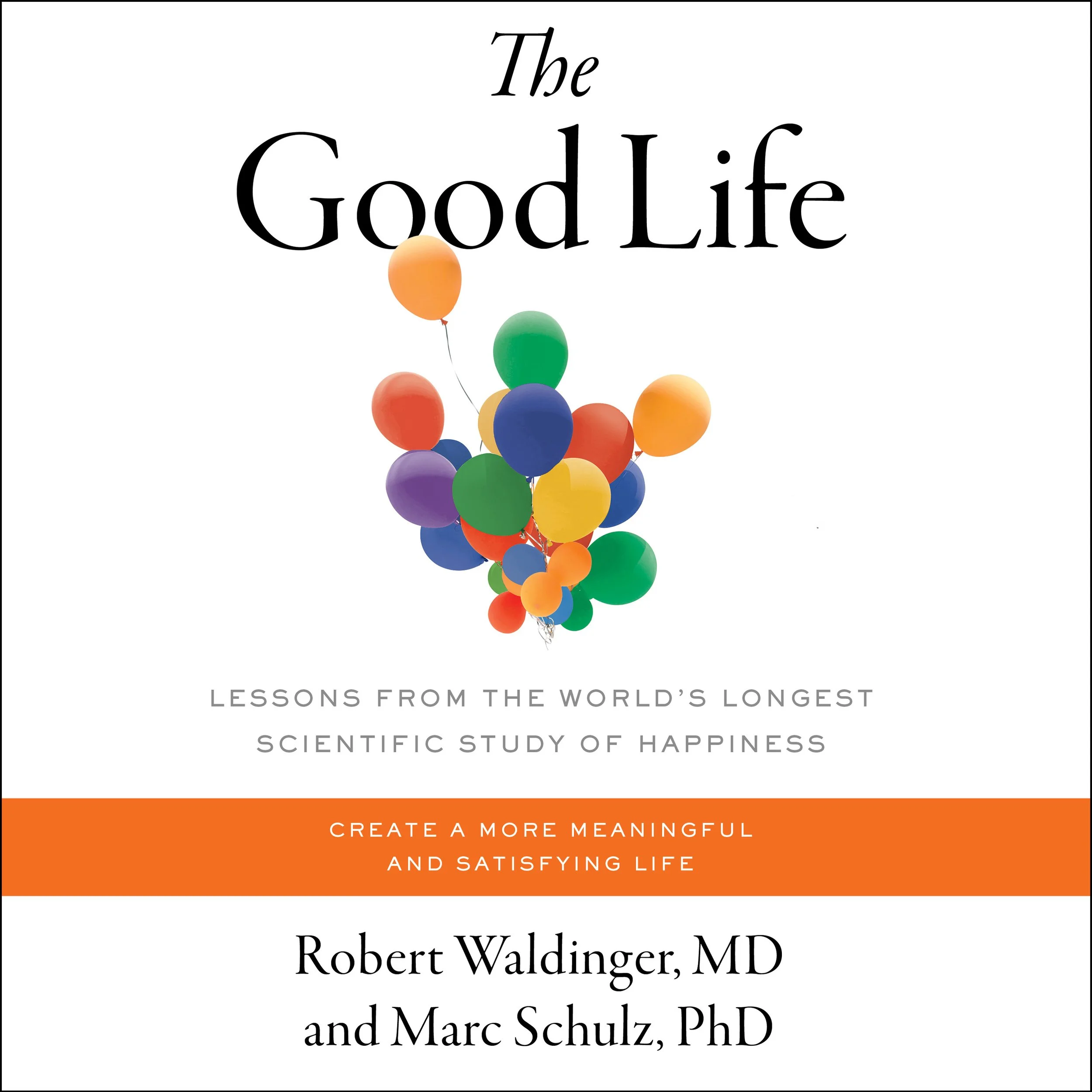
What makes a good life? - Highlights - ROBERT WALDINGER, Psychiatrist, Author, Zen Priest

What makes a good life? - Highlights - ROBERT WALDINGER, Psychiatrist, Author, Zen Priest

Co-Author of The Good Life: Lessons from the World's Longest Scientific Study of Happiness
Director of the Harvard Study of Adult Development
Psychiatrist · Psychoanalyst · Zen Priest

It's a study of adult lifespan development and when it was started in 1938, it was actually radical to study normal development for two reasons. One is that most of what had been studied was about what goes wrong in development, which we still do because we want to try to help people who are having developmental problems.

So that makes a lot of sense, but to study what goes right in development, that was unheard of. The other thing is that for a long time, we certainly thought about children as developing because you can watch children change every day. That change happens so fast, but many people thought that once you got to be in your 20s, you were kind of done with development. You found a partner, you found a line of work, you were set with regard to your personality, and that was it, then you just lived your life.

And of course, now we understand that there's so much that changes and develops through the course of adult life, but my predecessors (I'm the fourth director) were really, insightful in their understanding of how much there was to learn about all the changes that happen across the adult lifespan.

ROBERT WALDINGER - Co-Author of The Good Life: Lessons from the World's Longest Scientific Study of Happiness

ROBERT WALDINGER - Co-Author of The Good Life: Lessons from the World's Longest Scientific Study of Happiness

Co-Author of The Good Life: Lessons from the World's Longest Scientific Study of Happiness
Director of the Harvard Study of Adult Development
Psychiatrist · Psychoanalyst · Zen Priest

It's a study of adult lifespan development and when it was started in 1938, it was actually radical to study normal development for two reasons. One is that most of what had been studied was about what goes wrong in development, which we still do because we want to try to help people who are having developmental problems.

So that makes a lot of sense, but to study what goes right in development, that was unheard of. The other thing is that for a long time, we certainly thought about children as developing because you can watch children change every day. That change happens so fast, but many people thought that once you got to be in your 20s, you were kind of done with development. You found a partner, you found a line of work, you were set with regard to your personality, and that was it, then you just lived your life.

And of course, now we understand that there's so much that changes and develops through the course of adult life, but my predecessors (I'm the fourth director) were really, insightful in their understanding of how much there was to learn about all the changes that happen across the adult lifespan.

How has jazz been interpreted around the world? Highlights - BERNARDO MOREIRA

How has jazz been interpreted around the world? Highlights - BERNARDO MOREIRA

Portuguese Jazz Musician

I had so many people around me when I was young– famous poets like Ary dos Santos, one of Portugal’s greatest poets of the 20th century. Sometimes he would be there talking with my mother, and I had this information that was getting in, but I wasn’t aware of it. And then in the early days, when I had just started playing, I was really into modern jazz, which was very instrumental, so I didn’t really pay attention to lyrics. It took me a while to get interested in Portuguese music, and in that mixture between jazz, Fado music and Portuguese popular music. For a while I was into the importance of a good poem. Now what moves me most of the time is that mixture of cultures— trying to do something that you cannot find in other countries. If you are into a lot of American jazz, for instance, you can play great music, but you are always playing music that started elsewhere, you know? And for a European like me, it’s challenging to try and find what makes you different in such a big market. What sound can you try to create that you wouldn’t hear in France or in Japan or in New York? So that's a very difficult challenge, actually, because you try to get really into your heart and your emotion. And I think Portugal has a lot of good emotions in its popular music that you don't find elsewhere. The music I make always has a kind of nostalgic ambience. It's not always sadness. It's a melancholic approach that is very hard to put into words– you just need to feel it.

BERNARDO MOREIRA - Portuguese Jazz Musician

BERNARDO MOREIRA - Portuguese Jazz Musician

Portuguese Jazz Musician

I had so many people around me when I was young– famous poets like Ary dos Santos, one of Portugal’s greatest poets of the 20th century. Sometimes he would be there talking with my mother, and I had this information that was getting in, but I wasn’t aware of it. And then in the early days, when I had just started playing, I was really into modern jazz, which was very instrumental, so I didn’t really pay attention to lyrics. It took me a while to get interested in Portuguese music, and in that mixture between jazz, Fado music and Portuguese popular music. For a while I was into the importance of a good poem. Now what moves me most of the time is that mixture of cultures— trying to do something that you cannot find in other countries. If you are into a lot of American jazz, for instance, you can play great music, but you are always playing music that started elsewhere, you know? And for a European like me, it’s challenging to try and find what makes you different in such a big market. What sound can you try to create that you wouldn’t hear in France or in Japan or in New York? So that's a very difficult challenge, actually, because you try to get really into your heart and your emotion. And I think Portugal has a lot of good emotions in its popular music that you don't find elsewhere. The music I make always has a kind of nostalgic ambience. It's not always sadness. It's a melancholic approach that is very hard to put into words– you just need to feel it.

Does privacy exist anymore? Or are humans just sets of data to be traded and sold? - Highlights - WENDY WONG

Does privacy exist anymore? Or are humans just sets of data to be traded and sold? - Highlights - WENDY WONG

Author of We, the Data: Human Rights in the Digital Age
Professor of Political Science at University of British Columbia

One of the things that we need to remember is that we are data stakeholders and not data subjects. We're often called data subjects if you look at the way legislation is written and tech companies talk about the users of their technology as data subjects. Being a subject casts this sort of '“you can't help but have this happen to you” effect. But we're actually data stakeholders for the reason that data cannot be created without us. If companies were incentivized to follow data minimization for example, where they only collect the data they need, that would change the way we interact with digital technologies.

WENDY WONG - Author of We, the Data: Human Rights in the Digital Age

WENDY WONG - Author of We, the Data: Human Rights in the Digital Age

Author of We, the Data: Human Rights in the Digital Age
Professor of Political Science at University of British Columbia

One of the things that we need to remember is that we are data stakeholders and not data subjects. We're often called data subjects if you look at the way legislation is written and tech companies talk about the users of their technology as data subjects. Being a subject casts this sort of '“you can't help but have this happen to you” effect. But we're actually data stakeholders for the reason that data cannot be created without us. If companies were incentivized to follow data minimization for example, where they only collect the data they need, that would change the way we interact with digital technologies.

MAX BENNETT - Author of A Brief History of Intelligence: Evolution, AI, and the Five Breakthroughs That Made Our Brains - CEO of Alby

MAX BENNETT - Author of A Brief History of Intelligence: Evolution, AI, and the Five Breakthroughs That Made Our Brains - CEO of Alby

Author of A Brief History of Intelligence: Evolution, AI, and the Five Breakthroughs That Made Our Brains
Cofounder & CEO of Alby · Fmr. Cofounder & CPO of Bluecore

So, modern neuroscientists are questioning if there really is one consistent limbic system. But usually when we're looking at the limbic system, we're thinking about things like emotion, volition, and goals. And those types of things, I would argue reinforcement learning algorithms, at least on a primitive level, we already have because the way that we get them to achieve goals like play a game of go and win is we give them a reward signal or a reward function. And then we let them self-play and teach themselves based on maximizing that reward. But that doesn't mean that they're self-aware, doesn't mean that they're experiencing anything at all. There's a fascinating set of questions in the AI community around what's called the reward hypothesis, which is how much of intelligent behavior can be understood through the lens of just trying to optimize a reward signal. We are more than just trying to optimize reward signals. We do things to try and reinforce our own identities. We do things to try and understand ourselves. These are attributes that are hard to explain from a simple reward signal, but do make sense. And other conceptions of intelligence like Karl Friston's active inference where we build a model of ourselves and try and reinforce that model.

Highlights - JULIAN LENNON -  Singer-songwriter, Author, Founder of The White Feather Foundation, Doc Filmmaker

Highlights - JULIAN LENNON - Singer-songwriter, Author, Founder of The White Feather Foundation, Doc Filmmaker

Singer-songwriter · Photographer · Documentary Filmmaker
Founder of The White Feather Foundation
Executive Producer of Common Ground

I thought, wow, how are they going to bring this across in a way that isn't shoving things down people's throats? It's presenting information in a way that is creative, but also in a way that drives your curiosity into understanding, number one, why are we in the position that we're in? And number two, how can we fix this? What can we do to change all of this? And so, I initially got involved as an executive producer on Kiss the Ground, and I was blown away by how that film came out at the end. How well rounded it was, the flow of the film, the storytelling, and really feeding me information that I didn't even know previously. And so also watching that become a platform around the world was jaw-dropping. I mean, the fact that the belief and the understanding and the wisdom that came out of that project has touched so many hearts, minds, and souls around the world, that people are really single-handedly almost making change for the better around the world. Now, when Common Ground was presented, I did love that concept because Kiss the Ground had been very much a broad approach and about America, for the majority, really, and Common Ground was a much more...I mean, we're still dealing with the same subject matter obviously, but I think it felt great to come from a more personal aspect." 

JULIAN LENNON - Singer-songwriter, Author, Doc Filmmaker, Exec. Producer of Common Ground

JULIAN LENNON - Singer-songwriter, Author, Doc Filmmaker, Exec. Producer of Common Ground

Singer-songwriter · Photographer · Documentary Filmmaker
Founder of The White Feather Foundation
Executive Producer of Common Ground

I thought, wow, how are they going to bring this across in a way that isn't shoving things down people's throats? It's presenting information in a way that is creative, but also in a way that drives your curiosity into understanding, number one, why are we in the position that we're in? And number two, how can we fix this? What can we do to change all of this? And so, I initially got involved as an executive producer on Kiss the Ground, and I was blown away by how that film came out at the end. How well rounded it was, the flow of the film, the storytelling, and really feeding me information that I didn't even know previously. And so also watching that become a platform around the world was jaw-dropping. I mean, the fact that the belief and the understanding and the wisdom that came out of that project has touched so many hearts, minds, and souls around the world, that people are really single-handedly almost making change for the better around the world. Now, when Common Ground was presented, I did love that concept because Kiss the Ground had been very much a broad approach and about America, for the majority, really, and Common Ground was a much more...I mean, we're still dealing with the same subject matter obviously, but I think it felt great to come from a more personal aspect." 

DUANE L. CADY - Philosopher, Author of Moral Vision: How Everyday Life Shapes Ethical Thinking & From Warism to Pacifism

DUANE L. CADY - Philosopher, Author of Moral Vision: How Everyday Life Shapes Ethical Thinking & From Warism to Pacifism

Author of Moral Vision: How Everyday Life Shapes Ethical Thinking · From Warism to Pacifism
Philosopher · Outstanding Educator of the Year · United Methodist Foundation for Higher Education

Warism, taking war for granted as morally acceptable, even morally required, is the primary obstacle to peace. The task for us is to understand how we can get moral visions and then consider the ethics of negotiating between and among them, including collisions between moral visions. So my interest is in the extent to which various forms of reason take part in these different projects. I argue that contemporary technical philosophers tend to avoid this kind of problem. They tend to think of reason as much more narrow, whereas I want to include things like ordinary experience, the arts, theater, and reading a book. All those things can have an effect.

HOWARD GARDNER - Author of A Synthesizing Mind & Frames of Mind: The Theory of Multiple Intelligences - Co-director of The Good Project

HOWARD GARDNER - Author of A Synthesizing Mind & Frames of Mind: The Theory of Multiple Intelligences - Co-director of The Good Project

Author of A Synthesizing Mind · Frames of Mind: The Theory of Multiple Intelligences
Co-director of The Good Project

The garden that makes up one's mind is always to some extent the flowers and trees that we get from our families genetically, but also we get from our families culturally. I became interested in synthesis and I wrote the memoir quite a while ago, but now with the advent of large language instruments or ChatGPT, the pressure to figure out what synthesis is, what these computing systems can or can't do that human beings are still the privileged cohort in carrying out those tasks, that's made the interest in synthesis more important than ever. If we're trying to decide what policy to cover, whether it's an economic policy about interest rates, or whether - we're talking now during the beginning of the war in the Middle East - what policies to follow militarily, economically, and ethically. For that matter, do we entrust that to some kind of a computational system, or is this something that human judgment needs to be brought to bear?

Speaking Out of Place: BILL McKIBBEN, Co-Founder of 350.org, Founder Third Act & CAROLINE LEVINE, Author of The Activist Humanist

Speaking Out of Place: BILL McKIBBEN, Co-Founder of 350.org, Founder Third Act & CAROLINE LEVINE, Author of The Activist Humanist

Co-Founder of 350.org · Founder Third Act · Author of The Activist Humanist

Viewed one way, we live in a very hopeful moment. Thanks to in large part the work of university scientists and engineers, we now live on a planet where the cheapest way to produce power is to point a sheet of glass at the sun. That is to say, we could run our Earth on energy from heaven instead of hell, and we could do it fast. The fast is the hard part here. The only difference between all the examples of the long victories of social justice activism that we're in now is that this one is a time-limited problem. If we don't solve it fast, then no one's got a plan for how you refreeze the Arctic once you've melted it. And so we have to move very quickly. Our systems are not designed to move quickly. It's the easiest thing in the world to slow down and delay change, which is all that the fossil fuel industry at this point is trying to do, and that means that it's time for maximum effort from all of us. The story to tell is that the planet is outside its comfort zone, so we need to be outside ours.

GLADYS KALEMA-ZIKUSOKA - Founder/CEO, Conservation Through Public Health - UN Champion of the Earth for Science & Innovation

GLADYS KALEMA-ZIKUSOKA - Founder/CEO, Conservation Through Public Health - UN Champion of the Earth for Science & Innovation

Founder & CEO of Conservation Through Public Health
UN Champion of the Earth for Science & Innovation · Whitley Award Winner
Author of Walking with Gorillas: The Journey of an African Wildlife Vet.

So you're never too young to make a difference. And I think what I would like to tell many young people is to follow your dreams and the rest will follow. Even if what you're trying to do is something that no one has ever done before. Or let's say women are not considered, it's a male-dominated profession. Wildlife conservation, veterinary medicine in Uganda is still very male-dominated. And you shouldn't really worry about what people think about you, what culture, or society expects you to be doing. If you feel that it's an important thing to do, you should go ahead and do it. And it's so important to protect the natural world, to protect nature and the wildlife because we, we protect nature, we protect nature. We are ultimately protecting ourselves. Gorillas are so few numbers still. I mean, we are happy that the numbers are growing because of so many successful conservation efforts.

MARY HAYASHI - Healthcare Advocate, Former Assemblymember - Author of Women in Politics

MARY HAYASHI - Healthcare Advocate, Former Assemblymember - Author of Women in Politics

Healthcare Advocate · Former Assemblymember · Author of Women in Politics: Breaking Down the Barriers to Achieve True Representation

One of the studies I mentioned in the book is people don't see women as leaders and the barriers you experience as a candidate during a campaign. And even after you win and you're serving inside the government, there are still challenges to overcome. Last year, we had a record number of women elected and becoming leaders in government positions, but it doesn't mean their path is easy or it's set. Because of gender bias, women are supposed to be coalition builders and not supposed to be ambitious. One of the things that I talk a lot about is the ambition gap. When women show ambition, we're penalized. People are often suspicious of our motivation. It's like, why is she running? What is she about? And being an Asian American woman, I was perceived by my colleagues after I won and chaired one of the most powerful policy committees in the legislature, I often felt like people didn't know how to engage with me as a peer. They'd never seen an Asian American woman in that role before and so they would criticize me for being too ambitious or too aggressive, or too opinionated. And that really takes a toll on you just emotionally. I wasn't raised that way, but when you have an opinion, people are just not used to seeing Asian women as peers in that role and that really needs to change. And I think it will over time as they see more people like us serving in leadership roles.