ANIL SETH - Author of Being You: A New Science of Consciousness - Co-director of Sussex Centre for Consciousness Science

ANIL SETH - Author of Being You: A New Science of Consciousness - Co-director of Sussex Centre for Consciousness Science

Author of Being You: A New Science of Consciousness
Co-director of the Sackler Centre for Consciousness Science · Canadian Institute for Advanced Research Program on Brain, Mind & Consciousness

This is a point in philosophy that the world as it is can never be directly apprehended by our minds. We are shielded from it by what's called a sensory veil. There are, for instance, no such thing as colors that are out there. As the artist Cezanne said, "The colors are where the brain and the universe meet." And color is, I think, a really good example because it is, in a sense, less than what's there because our eyes are only sensitive to three wavelengths of this huge electromagnetic spectrum, which goes all the way from x-rays and gamma rays to radio waves. And we live in a tiny, thin slice of that reality. But then out of those three wavelengths we experience our brains generate many more than three colors and almost an infinite palette of colors. So there's no sense in which our perception could ever reveal the world as it really is, that it reveals the world in a way that's very useful for us as organisms hell-bent on continuing to live and to survive. 
SAGARIKA SRIRAM - Founder of Kids4abetterworld, Youth Climate Change Initiative

SAGARIKA SRIRAM - Founder of Kids4abetterworld, Youth Climate Change Initiative

Founder of Kids4abetterworld
Climate Activist & Educator

Sagarika Sriram is currently a student at Jumeirah College in Dubai. She founded the organization Kids4abetterworld when she was 10 years old with a mission to educate and encourage young children to lead a more sustainable life and reduce their carbon footprint. Children are the worst affected by the effects of climate change,  yet most children do not participate in climate change discussions or take actions to live more sustainably because they do not have the awareness and capability to do so. Kids4abetterworld conducts awareness workshops on sustainability aiming to Educate, Motivate and Activate young children to  conserve natural resources, protect biodiversity, and positively  impact climate change. As a UN Climate Advisor, she has participated in the global consultations that will ensure children are made aware of their environmental rights and that UN member states protect and uphold these.

Highlights - DAVID J. LINDEN - Professor of Neuroscience - Author of “Unique” “The Accidental Mind” “The Compass of Pleasure” “Touch”

Highlights - DAVID J. LINDEN - Professor of Neuroscience - Author of “Unique” “The Accidental Mind” “The Compass of Pleasure” “Touch”

Author of Unique: The New Science of Human Individuality · The Accidental Mind · The Compass of Pleasure · Touch
Professor of Neuroscience at Johns Hopkins University

It's a fundamental human question, how do we become individuals? It's a basic thing about being alive and thinking. Nature versus nurture is a phrase that was popularized by Francis Galton in the late 19th century. and the idea behind it is that if you were to look at a particular trait, say, shyness or height, you could say, well, to what degree can we attribute height to nature? In this case, meaning the gene variants that you inherit from your parents versus nurture in this case, meaning how you were raised by your parents and by your community. And I have many problems with this expression. Part of it is that the nature part shouldn't just mean genetics. In other words, there's all kinds of biological things that are not genetic things. If your mother fought off a viral infection while you were developing in utero, then you have a much higher chance of developing schizophrenia or autism when you grow up. Now that's biological, but it's not hereditary. That's not something that you would then acquire and then pass on to your own children. It only happens in the one generation. The other problem is when we hear the word nurture, we really focus on the family, how your parents raised you or failed to raise you, how your community was involved. And those things are very important, but they're far from everything that impinges upon you in your life. I take experience as the thing to substitute for nurture because it is much more inclusive and it includes not just social experience from your family and your peers and your community, but also experience in the more general sense.

DAVID J. LINDEN - Author of “Unique:The New Science of Human Individuality” “The Accidental Mind” “The Compass of Pleasure” “Touch”

DAVID J. LINDEN - Author of “Unique:The New Science of Human Individuality” “The Accidental Mind” “The Compass of Pleasure” “Touch”

Author of Unique: The New Science of Human Individuality · The Accidental Mind · The Compass of Pleasure · Touch
Professor of Neuroscience at Johns Hopkins University

It's a fundamental human question, how do we become individuals? It's a basic thing about being alive and thinking. Nature versus nurture is a phrase that was popularized by Francis Galton in the late 19th century. and the idea behind it is that if you were to look at a particular trait, say, shyness or height, you could say, well, to what degree can we attribute height to nature? In this case, meaning the gene variants that you inherit from your parents versus nurture in this case, meaning how you were raised by your parents and by your community. And I have many problems with this expression. Part of it is that the nature part shouldn't just mean genetics. In other words, there's all kinds of biological things that are not genetic things. If your mother fought off a viral infection while you were developing in utero, then you have a much higher chance of developing schizophrenia or autism when you grow up. Now that's biological, but it's not hereditary. That's not something that you would then acquire and then pass on to your own children. It only happens in the one generation. The other problem is when we hear the word nurture, we really focus on the family, how your parents raised you or failed to raise you, how your community was involved. And those things are very important, but they're far from everything that impinges upon you in your life. I take experience as the thing to substitute for nurture because it is much more inclusive and it includes not just social experience from your family and your peers and your community, but also experience in the more general sense.

We All Live on One Planet We Call Home - Part 4 - Environmentalists, Economists, Policymakers & Architects Share their Stories

We All Live on One Planet We Call Home - Part 4 - Environmentalists, Economists, Policymakers & Architects Share their Stories

Environmentalists, Artists, Students & Teachers share their Love for the Planet

Today we’re streaming voices of environmentalists, artists, students, and teachers with music courtesy of composer Max Richter.

What Kind of World Are We Leaving for Future Generations? - Part 3 - Activists, Environmentalists & Teachers Share their Stories

What Kind of World Are We Leaving for Future Generations? - Part 3 - Activists, Environmentalists & Teachers Share their Stories

Environmentalists, Artists, Students & Teachers share their Love for the Planet

Today we’re streaming voices of environmentalists, artists, students, and teachers with music courtesy of composer Max Richter.

Speaking Out of Place: ASHLEY DAWSON discusses “Environmentalism from Below”

Speaking Out of Place: ASHLEY DAWSON discusses “Environmentalism from Below”

Author of Environmentalism from Below (Haymarket 2024) · Extinction: A Radical History · People’s Power: Reclaiming the Energy Commons · Professor of English at the Graduate Center / CUNY and the College of Staten Island

In this episode of the Speaking Out of Place podcast, Professor David Palumbo-Liu interviews Ashley Dawson, Professor of English at the Graduate Center / City University of New York and the College of Staten Island. Dawson’s recently published books focus on key topics in the Environmental Humanities, and include People’s Power: Reclaiming the Energy Commons (O/R, 2020), Extreme Cities: The Peril and Promise of Urban Life in the Age of Climate Change (Verso, 2017), and Extinction: A Radical History (O/R, 2016). Dawson is the author of a forthcoming book entitled Environmentalism from Below (Haymarket) and the co-editor of Decolonize Conservation! (Common Notions, 2023).

Highlights - JOHN PATRICK SHANLEY - Writer/Director - Doubt starring Meryl Streep, Philip Seymour Hoffman, Amy Adams, Viola Davis - Moonstruck

Highlights - JOHN PATRICK SHANLEY - Writer/Director - Doubt starring Meryl Streep, Philip Seymour Hoffman, Amy Adams, Viola Davis - Moonstruck

Academy Award · Tony · Pulitzer Prize-winning Writer/Director
Doubt starring Meryl Streep, Philip Seymour Hoffman, Amy Adams
Moonstruck · Wild Mountain Thyme · Danny and the Deep Blue Sea · Joe Versus the Volcano

I knew Philip Seymour Hoffman for several years. We went on vacation together. He produced a play of mine. Before we did Doubt, we worked in the same theater company together, and he was, you know, very committed to excellence. And so he could become impatient with anybody who was not committed to excellence, and that could make him a volatile person to deal with. Phil cared. He cared a great deal. And he worked really hard. They're very committed. Like with Viola Davis. Viola had done a decent amount of big work before Doubt, but she was not recognized yet. And she was careful. You know, she certainly wasn't throwing weight around. She was, I'm the new kid on the block, and I'm just here to work and be serious and do my job, keep my head down, and get out. And pretty much that's what I was doing too, you know, because I've got Meryl Streep, I've got Philip Hoffman, who I was friends with, but Phil's not an easy guy to be friends with or was not easy to be friends with. He's a very prickly person prone to getting pissed off about things that you might not expect. And then Amy Adams was somebody who, you know, tried to get along with everybody and Phil would say like, 'You just want everybody to like you.' So, you know, you're in the middle of that group, and you just, you don't want to put yourself in a position where you're trying to prove something. You have to let them...they're very, very smart people, and they're going to figure out whatever it is that you're doing. They're going to figure out whether you are in any way trying to handle that. And that's not going to go well. And so I didn't do that.

JOHN PATRICK SHANLEY - Academy Award-winning Writer/Director - Doubt starring Meryl Streep, Philip Seymour Hoffman, Amy Adams - Moonstruck

JOHN PATRICK SHANLEY - Academy Award-winning Writer/Director - Doubt starring Meryl Streep, Philip Seymour Hoffman, Amy Adams - Moonstruck

Academy Award · Tony · Pulitzer Prize-winning Writer/Director
Doubt starring Meryl Streep, Philip Seymour Hoffman, Amy Adams
Moonstruck · Wild Mountain Thyme · Danny and the Deep Blue Sea · Joe Versus the Volcano

I knew Philip Seymour Hoffman for several years. We went on vacation together. He produced a play of mine. Before we did Doubt, we worked in the same theater company together, and he was, you know, very committed to excellence. And so he could become impatient with anybody who was not committed to excellence, and that could make him a volatile person to deal with. Phil cared. He cared a great deal. And he worked really hard. They're very committed. Like with Viola Davis. Viola had done a decent amount of big work before Doubt, but she was not recognized yet. And she was careful. You know, she certainly wasn't throwing weight around. She was, I'm the new kid on the block, and I'm just here to work and be serious and do my job, keep my head down, and get out. And pretty much that's what I was doing too, you know, because I've got Meryl Streep, I've got Philip Hoffman, who I was friends with, but Phil's not an easy guy to be friends with or was not easy to be friends with. He's a very prickly person prone to getting pissed off about things that you might not expect. And then Amy Adams was somebody who, you know, tried to get along with everybody and Phil would say like, 'You just want everybody to like you.' So, you know, you're in the middle of that group, and you just, you don't want to put yourself in a position where you're trying to prove something. You have to let them...they're very, very smart people, and they're going to figure out whatever it is that you're doing. They're going to figure out whether you are in any way trying to handle that. And that's not going to go well. And so I didn't do that.

Speaking Out of Place: NAOMI ORESKES discusses “The Big Myth: How American Business Taught Us to Loathe Government & Love the Free Market”

Speaking Out of Place: NAOMI ORESKES discusses “The Big Myth: How American Business Taught Us to Loathe Government & Love the Free Market”

Henry Charles Lea Professor of the History of Science & Affiliated Professor · Earth & Planetary Sciences · Harvard University
Co-author of The Big Myth: How American Business Taught Us to Loathe Government & Love the Free Market

I think the word consortium is a good word. It's not a conspiracy, although at times it takes on conspiratorial elements, but it's a kind of network or consortium of people who are working over a very long period of time, going back to the early 20th century to build an ideology that basically says we should trust the marketplace. That markets are not merely an efficient way of developing and delivering goods and services, but that they're actually playing a crucial role in protecting political freedom, protecting political democracy, and they build that story in order to persuade people that government regulation of the marketplace, whether it's to protect workers, consumers, or the environment - even though it might seem attractive superficially - what they're saying is: yeah, but don't be fooled by that because it will actually undermine freedom and democracy. And it's a very clever move because it takes what is initially a self-interested defense of the prerogatives of the privileged, the prerogatives of the captains of industry, and turns it into a seemingly virtuous defense of democracy. And, of course, who wouldn't want to defend democracy?

EARTH MONTH STORIES - Part 2 - Environmentalists, Artists, Students & Teachers Speak Out & Share How We Can Save the Planet

EARTH MONTH STORIES - Part 2 - Environmentalists, Artists, Students & Teachers Speak Out & Share How We Can Save the Planet

Environmentalists, Artists, Students & Teachers share their Love for the Planet

Today we’re streaming voices of environmentalists, artists, students, and teachers with music courtesy of composer Max Richter.

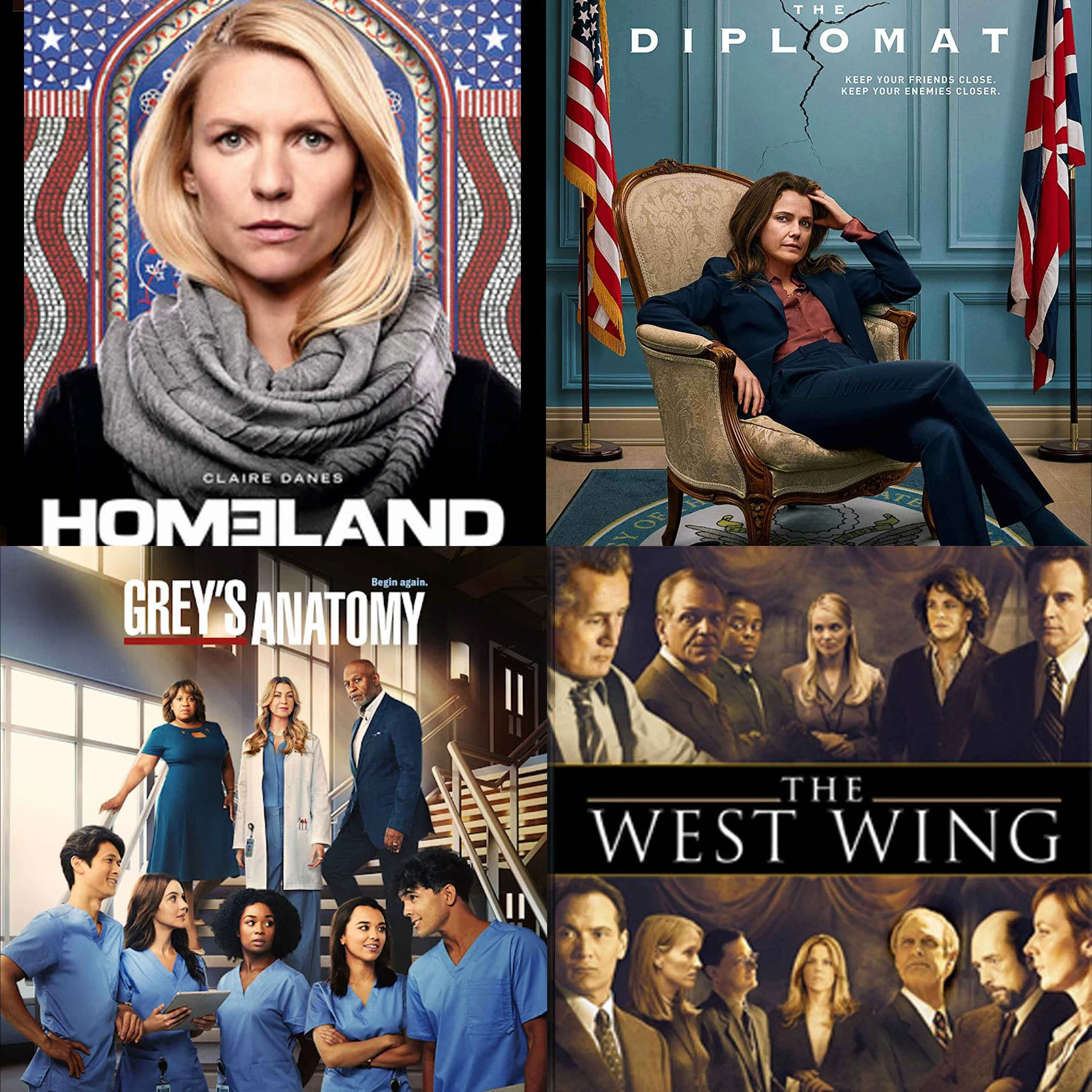
Highlights - DEBORA CAHN - Showrunner of The Diplomat starring Keri Russell - Exec. Producer Homeland, Grey’s Anatomy

Highlights - DEBORA CAHN - Showrunner of The Diplomat starring Keri Russell - Exec. Producer Homeland, Grey’s Anatomy

Showrunner & Executive Producer of Netflix’s The Diplomat starring Keri Russell & Rufus Sewell
Exec. Producer Homeland · Grey’s Anatomy · Vinyl
Co-Producer The West Wing

So the idea was to look at what it's like to be an ambassador for the United States abroad and to do that in the context of a married couple, both of whom are in the same field. And what kind of tensions come from being in a relationship with somebody where you're both collaborators and personal partners and sometimes competitors? And what does that do to your life? What does it do to your work experience? And it felt like a military alliance and a marriage are not so different in many ways. You know, you get together under certain circumstances, and then time marches on and things change, and both parties change, and you're still in this relationship that either can or can't bend with you.

DEBORA CAHN - Showrunner & Executive Producer of Netflix’s The Diplomat starring Keri Russell & Rufus Sewell


DEBORA CAHN - Showrunner & Executive Producer of Netflix’s The Diplomat starring Keri Russell & Rufus Sewell


Showrunner & Executive Producer of Netflix’s The Diplomat starring Keri Russell & Rufus Sewell
Exec. Producer Homeland · Grey’s Anatomy · Vinyl
Co-Producer The West Wing

So the idea was to look at what it's like to be an ambassador for the United States abroad and to do that in the context of a married couple, both of whom are in the same field. And what kind of tensions come from being in a relationship with somebody where you're both collaborators and personal partners and sometimes competitors? And what does that do to your life? What does it do to your work experience? And it felt like a military alliance and a marriage are not so different in many ways. You know, you get together under certain circumstances, and then time marches on and things change, and both parties change, and you're still in this relationship that either can or can't bend with you.

Special Earth Day Stories - Environmentalists, Artists, Students & Teachers share their Love for the Planet - Part 1

Special Earth Day Stories - Environmentalists, Artists, Students & Teachers share their Love for the Planet - Part 1

Environmentalists, Artists, Students & Teachers share their Love for the Planet

Today we’re streaming voices of environmentalists, artists, students, and teachers with music courtesy of composer Max Richter.

Highlights - MAX RICHTER - Award-winning Composer & Pianist

Highlights - MAX RICHTER - Award-winning Composer & Pianist

Award-winning Composer & Pianist
His album Sleep is the most streamed classical album of all time
Film & TV scores for Ad Astra · Black Mirror · Shutter Island · The Leftovers · Arrival · Taboo

For me, the creative process is a sort of a continuous thing in the sense that I'm writing kind of all the time, at some level. And that doesn't mean I'm sitting at my desk all the time, but it does mean that I've got a continuous thought process, a continuous engagement with the material I'm trying to shape. And it's many different kinds of processes. First of all, obviously an intention. You need to have an intention. What is it I'm trying to do? But then you get a process of making things, and then you get into a process of dialogue with the things you've made where they start to take on properties and it feels like the material has intentions of its own.

So then you are trying to - it's like herding cats, you know? - sort of corralling this material into some kind of structure, some kind of formed object. Then it becomes like a sculptural process on the large scale.

MAX RICHTER - Award-winning Composer & Pianist

MAX RICHTER - Award-winning Composer & Pianist

Award-winning Composer & Pianist
His album Sleep is the most streamed classical album of all time
Film & TV scores for Ad Astra · Black Mirror · Shutter Island · The Leftovers · Arrival · Taboo

For me, the creative process is a sort of a continuous thing in the sense that I'm writing kind of all the time, at some level. And that doesn't mean I'm sitting at my desk all the time, but it does mean that I've got a continuous thought process, a continuous engagement with the material I'm trying to shape. And it's many different kinds of processes. First of all, obviously an intention. You need to have an intention. What is it I'm trying to do? But then you get a process of making things, and then you get into a process of dialogue with the things you've made where they start to take on properties and it feels like the material has intentions of its own.

So then you are trying to - it's like herding cats, you know? - sort of corralling this material into some kind of structure, some kind of formed object. Then it becomes like a sculptural process on the large scale.

Highlights - HENRY SHUE - Author of “The Pivotal Generation” - Snr. Research Fellow, Ctr. for International Studies, Oxford

Highlights - HENRY SHUE - Author of “The Pivotal Generation” - Snr. Research Fellow, Ctr. for International Studies, Oxford

Author of The Pivotal Generation: Why We Have a Moral Responsibility to Slow Climate Change Right Now · Basic Rights
Senior Research Fellow · Centre for International Studies · University of Oxford

We can tell from the science that we have to reach zero carbon emissions by 2050. And common sense tells you that bringing them down for the second 50% is going to be harder than the first 50%. So we have to take care of the first 50% by about 2030, and it's 2023 already. We literally must - if we're going to keep climate change from becoming even more dangerous than it is - is to do a very great deal in the next seven or eight years. And a huge amount between now and 2050. So it's not that this problem is the most important of all possible problems. There are other problems like preventing nuclear war, but this is a problem that either we get a grip on it now, or there's a real possibility that it will escape from our control. 

HENRY SHUE - Author of “The Pivotal Generation” - Snr. Research Fellow, Centre for International Studies, Oxford

HENRY SHUE - Author of “The Pivotal Generation” - Snr. Research Fellow, Centre for International Studies, Oxford

Author of The Pivotal Generation: Why We Have a Moral Responsibility to Slow Climate Change Right Now · Basic Rights
Senior Research Fellow · Centre for International Studies · University of Oxford

We can tell from the science that we have to reach zero carbon emissions by 2050. And common sense tells you that bringing them down for the second 50% is going to be harder than the first 50%. So we have to take care of the first 50% by about 2030, and it's 2023 already. We literally must - if we're going to keep climate change from becoming even more dangerous than it is - is to do a very great deal in the next seven or eight years. And a huge amount between now and 2050. So it's not that this problem is the most important of all possible problems. There are other problems like preventing nuclear war, but this is a problem that either we get a grip on it now, or there's a real possibility that it will escape from our control. 

ARTHUR KLEBANOFF - President of Scott Meredith Literary Agency -  Founder of Rodin Books & RosettaBooks

ARTHUR KLEBANOFF - President of Scott Meredith Literary Agency - Founder of Rodin Books & RosettaBooks

President of Scott Meredith Literary Agency
Founder of Rodin Books & RosettaBooks

As President of Scott Meredith Literary Agency, Arthur has represented J.D. Salinger, Arthur C. Clark, several U.S. Presidents, Michael Bloomberg, Bill Bradley, Paul Krugman, among others, and has handled books with over $1 billion in sales. In 2001, Klebanoff founded RosettaBooks, an independent eBook publisher which for twenty years disrupted the publishing business. Klebanoff has published, represented or packaged over 75 thought leadership titles. He founded RodinBooks to publish books by impactful leaders.

Highlights - CHRISTOPHER GERVAIS - Founder/CEO of Wildlife Conservation Film Festival - Cannes Lions Award-winning Producer

Highlights - CHRISTOPHER GERVAIS - Founder/CEO of Wildlife Conservation Film Festival - Cannes Lions Award-winning Producer

Founder & CEO of Wildlife Conservation Film Festival
Cannes Lions Award-winning Producer

I've been fortunate over the last 13 years to meet some of the world's leading conservationists. Dr. Sylvia Earl, David Attenborough, Jane Goodall, his Royal Highness Prince Khaled bin Sultan of Saudi Arabia, who came to the film festival in 2014, where we showed some films from his foundation. And there have been a number of others, award-winning filmmakers, and a number of celebrities that have come to the film festival, Academy Award Winner James Cromwell. We've had other celebrities, from Paul Giamatti to Alec Baldwin to Sigourney Weaver, all of whom may have a passion for, if not saving wildlife, then for the environment. And I have found them very humble, very easy to speak to, and I'm immensely grateful that they took the time to come to WCFF from their busy schedule. And we hope to build more relationships.