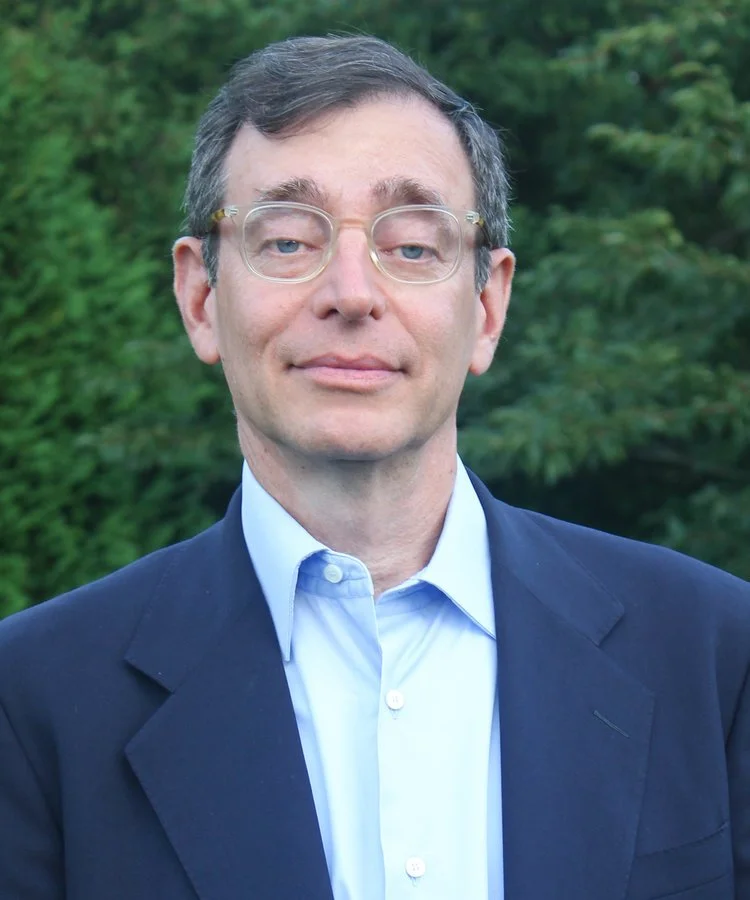
GAURAV GUPTA

GAURAV GUPTA

Director of Kotter International · Co-author of Change: How Organizations Achieve Hard to Imagine Results in Uncertain & Volatile Times

How do you get people to have a sense of urgency to actually take action and do something different? What we're finding is the learnings from business very much do apply to other spheres and also more generally to challenges like climate change. We’re facing the question of how do you get more people to actually be willing to take real meaningful action.

JOHANNES STRIPPLE & HARRIET BULKELEY

JOHANNES STRIPPLE & HARRIET BULKELEY

Carbon Ruins · Climate Futures · Climaginaries · Earth Systems Governance Project

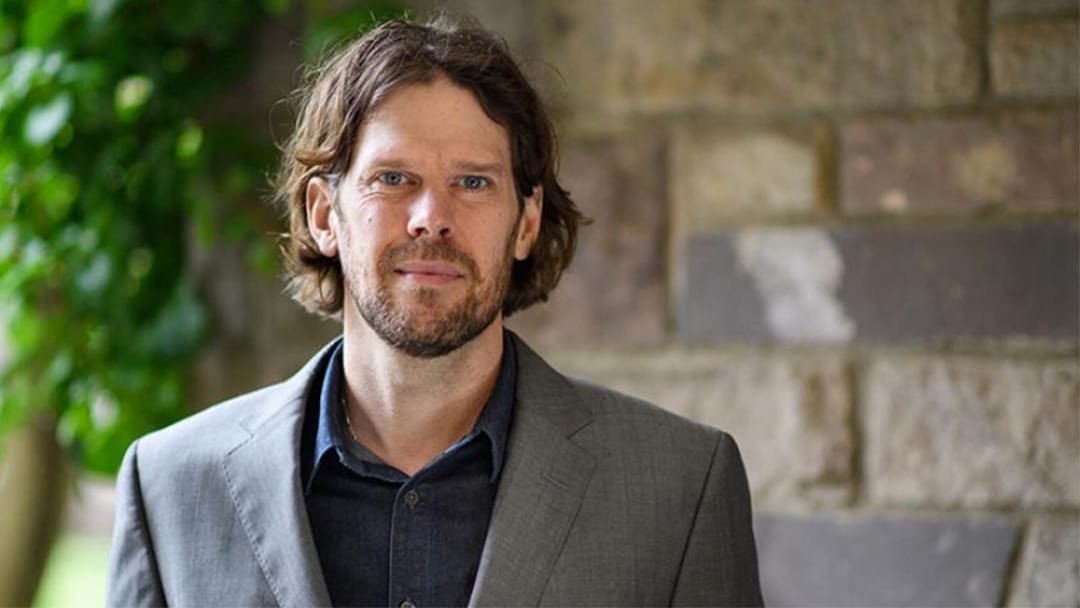
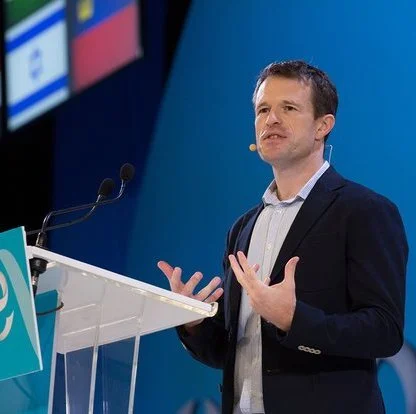
Our starting point was that a lot of the stories we tell about future worlds are quite poor. It’s not stories that are meeting the world as it is now. It’s difficult for people to inhabit the kinds of worlds that we imagine through scenarios or modelling, so there is a kind of distance between where we are now and the life worlds of a decarbonized or a post-fossil world.

MIKE DAVIS

MIKE DAVIS

CEO of Global Witness

As an organization, Global Witness has to take security risks extremely seriously. We encounter quite a range of threats to our work and some of those take the form of cyberattacks, we’re regularly threatened with lawsuits by powerful companies and individuals who don’t like the scrutiny we place them under, but far and away the most serious category of threats is to those we work with in fragile and sometimes dangerous parts of the world.

SETH M. SIEGEL

SETH M. SIEGEL

Entrepreneur, Public Speaker & NYTimes Bestselling Author
Let There Be Water: Israel’s Solution for a Water-Starved World · Troubled Water: What's Wrong with What We Drink

On average in advanced societies, about 70% of freshwater that’s consumed is consumed by agriculture. In less developed countries, sometimes as high as 95% of the freshwater goes to agriculture, which means that you’re depleting the amount of water available for the environment. You’re depleting amount of groundwater to preserve for the future, especially in dry times, and it creates a stress for the future…What are you going to do when you have hundreds of millions of water refugees coming from places where there used to be enough water where there’s now just not enough water? What is the world going to do then?

MARY EDNA FRASER & ORRIN H. PILKEY
ROB PRINGLE

ROB PRINGLE

Ecology & Evolutionary Biology Professor Princeton University · Pringle Lab

For nature and natural beauty to survive, people have to want it. If they don’t ever experience it, why should they want it? What could you see of value in it, something that you not only have never experienced but don’t ever expect to. We intellectually know that the Amazon is an important thing because it stores carbon and it’s home to many species, but I’ve been there. That’s a different thing entirely to be able to appreciate it on that level and care about it for the sheer beauty and magic and joy of being in a place that’s still so big and so wild. So that I think is the most important thing for the next generation.

GAIA VINCE

GAIA VINCE

Science Writer, Broadcaster & Author
Transcendence: How Humans Evolved Through Fire, Language, Beauty & Time · Adventures in the Anthropocene

The good thing about our species is that we create our own environment. What we’ve been doing so far is creating an environment where we’re much more successful. We live a lot longer, we’re much healthier than we have been in the past. There are many, many more of us, so we’re very successful as a species and that’s been at the expense of other ecosystems, but what’s happened is we are now dominating the planet to a dangerous degree, but we are also self-aware. We’re capable of understanding that.

IAN BURUMA

IAN BURUMA

Public Intellectual & Erasmus Prize-Winning Author
The Churchill Complex, Murder in Amsterdam, A Tokyo Romance…

I have a strong feeling that at the moment, especially in the United States, people are much more interested in the culture and backgrounds of minorities than they are in the cultures where those minorities originally came from. I think it’s a sign of people drawing inwards more and more. That goes for the Right Wing populists and White Supremacists just as much. They’re also drawing the wagons around what they see as their identity, and I think that’s exactly not the way to go…I can only emphasize that in terms of education is that everything should be fostered to open people’s minds. Open minds to the past, to other cultures and not to have minds closed by limiting ourselves more and more to the circumstances of our birth.

ASHLEY DAWSON

ASHLEY DAWSON

Author of People’s Power, Extreme Cities, Extinction
Professor of Postcolonial Studies at City University of New York

The political struggle is really hard today and I feel like we haven't been winning, but I think it's important not to think of this as either we win it, or there's catastrophe and that's the end. We win or lose, and there’s this big tidal wave that kills us all. That's not the way the climate crisis is going to play out. It’s going to be a long, slow, attritional crisis punctuated by forms of natural disaster that will decimate populations, but it's also going to be something that people will be impacted by for generations and that people will continue to mobilize around, so I think it's important to keep that in mind.