Art, Performance & the Illusion of Agency

Art, Performance & the Illusion of Agency

with KATIE KITAMURA · Author of Audition
Intimacies · A Separation

I'm really interested in the formal aspect of characters who are channeling language, who are speaking the words of other people, and in characters who are aware of how little agency they actually have, who have passivity forced upon them, who perhaps even embrace their passivity to a certain extent but eventually seek out where they can enact their agency.

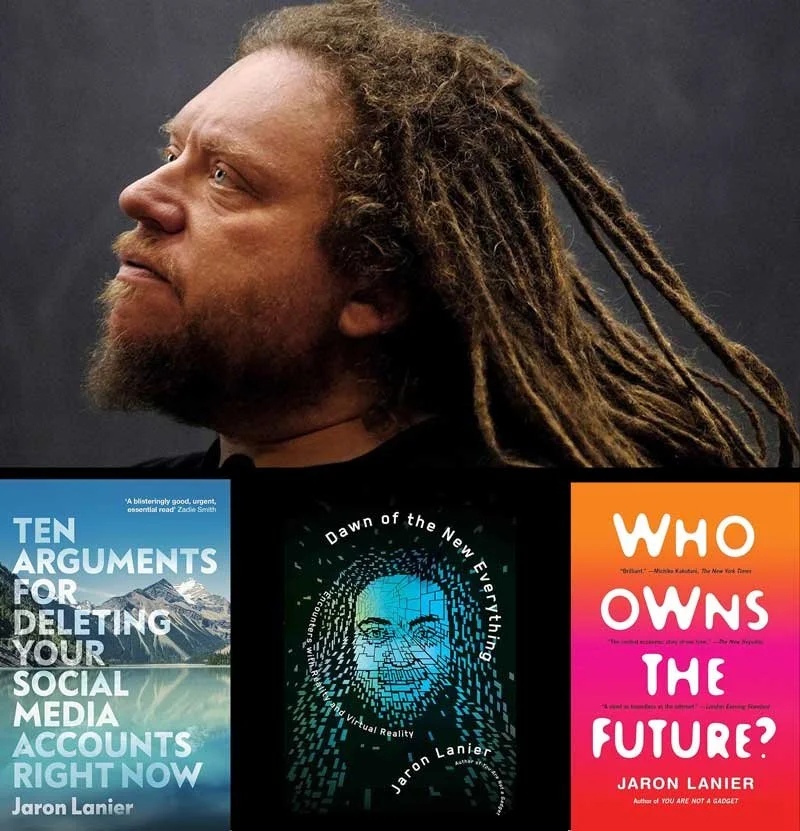
AI · Virtual Reality & Dawn of the New Everything

AI · Virtual Reality & Dawn of the New Everything

VR Pioneer · Musician · Author JARON LANIER
Who Owns the Future? · Dawn of the New Everything: Encounters with Reality & Virtual Reality · Ten Arguments for Deleting Your Social Media Accounts Right Now

AI is obviously the dominant topic in tech lately, and I think occasionally there's AI that's nonsense, and occasionally there's AI that's great. I love finding new proteins for medicine and so on. I don't think we serve ourselves well when we put our own technology up as if it were a new God that we created. I think we're really getting a little too full of ourselves to think that.

When we do that, I think we confuse ourselves too easily. This goes back to Alan Turing, the main founder of computer science, who had this idea of the Turing test. In the test, you can't tell whether the computer has gotten more human-like or the human has gotten more computer-like. People are very prone to becoming more computer-like. When we're on social media, we let ourselves be guided by the algorithms, so we start to become dumb in the way the algorithms want us to. You see that all the time. It's really degraded our psychologies and our society.

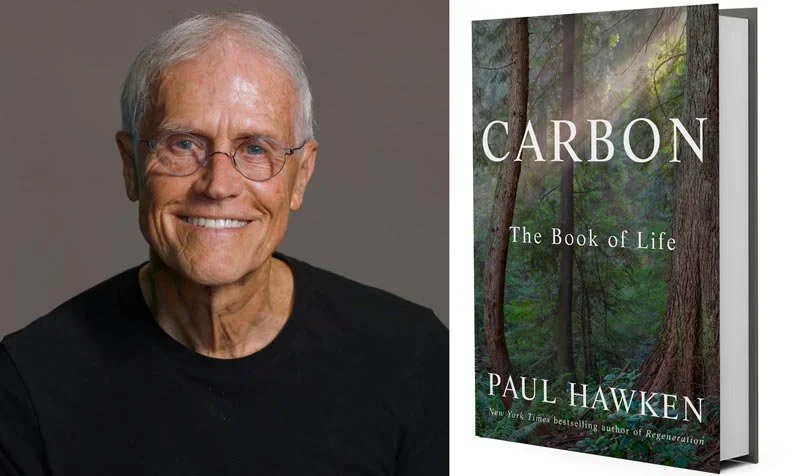
CARBON: The Book of Life

CARBON: The Book of Life

with PAUL HAWKEN
Environmentalist · Entrepreneur
Founder of Project Regeneration & Project Drawdown

We have 1.2 trillion carbon molecules in every cell. We have around 30 trillion cells, and that’s us. So carbon is really a flow that animates everything we love, enjoy, eat, and all plant life, all sea life—everything that's alive on this planet—is animated by the flow of carbon. We want to see the situation we're in as that, as a flow. Where are the flows coming from, and why are we interfering with them? Why are we crushing them? Why are we killing them? For sure. But also, we need to see the wonder, the awe, the astonishment of life itself and to have that sensibility as the overriding narrative of how we act in the world, how we live, and how we talk to each other. Unless we change the conversation about climate into something that's a conversation about more life—better conditions for people in terms of social justice, restoring so much of what we've lost—then we won’t get anywhere.

The French Spider-Man

The French Spider-Man

Famous Rock & Urban Climber ALAIN ROBERT
Known for Free Solo Climbing 200+ of the World’s Tallest Skyscrapers using no Climbing Equipment

You are fighting to stay alive. You are fully in the present moment; you don't have time to think about being afraid. You are focused on what you are doing. You struggle to pass another window, then another, and you don't have time to think about your problems. The only thing you are concerned about deep down in the back of your mind is that you need to stay alive, and for that, you need to remain calm and focused.

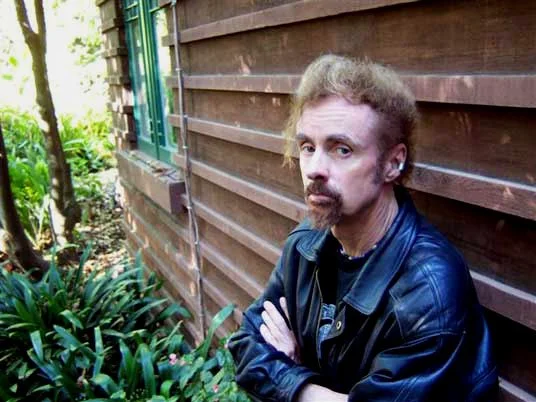
A Life in Writing with T.C. BOYLE

A Life in Writing with T.C. BOYLE

Novelist · Short Story Writer

What I have done in my career is just try to assess who we are, what we are, why we are here, and how come we, as animals, are able to walk around and wear pants and dresses and talk on the internet, while the other animals are not. It's been my obsession since I was young. I think if I hadn't become a novelist, I might have been happy to be a naturalist or a field biologist.

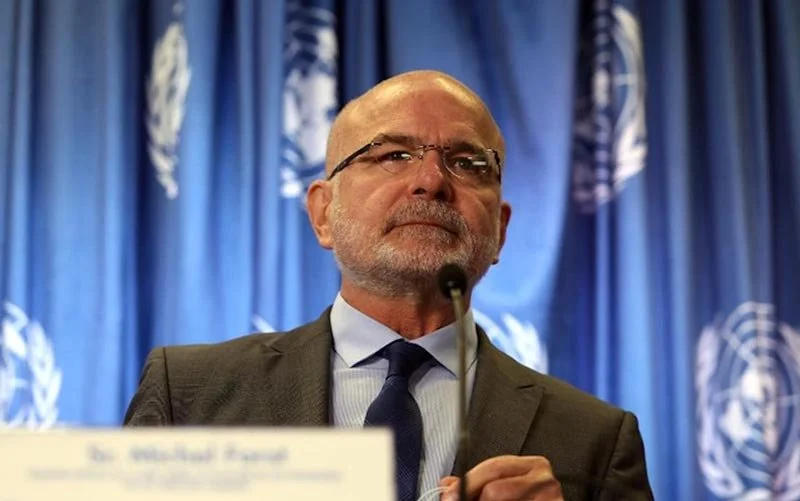
Why is it a Crime to Protest the Destruction of Our Planet?

Why is it a Crime to Protest the Destruction of Our Planet?

UN Special Rapporteur on Environmental Defenders MICHEL FORST on Protecting Environmental Activists

My mandate focuses on the protection of those trying to protect the planet. Protection of defenders is my main topic. When I'm speaking to states or companies, it's always related to cases of defenders facing threats, attacks, or penalization by companies or governments, like the recent case of Paul Watson (founder of Sea Shepherd) in Denmark… When I travel to places like Peru, Colombia, or Honduras and meet Indigenous people, I realize they have a relationship with nature that we don't have anymore. They express that the food they eat, the water they drink, and the air they breathe goes beyond just air and food; it represents what they call Pachamama or Mother Earth. This is a cosmovision shared across various communities, not only in Latin America but globally.

JULIAN LENNON

JULIAN LENNON

Singer-songwriter · Documentary Filmmaker · Founder of The White Feather Foundation
Photographer/Author of Life’s Fragile Moments

I think a lot of joy comes from helping others. One of the things that I've been really focusing on is finding that balance in life, what’s real and what’s true and what makes you happy. How can you help other people feel the same and have a happier life? I think whatever that takes. So if that's charity, if that's photography, if that's documentary, if that's music, and I can do it, then I'm going to do it.

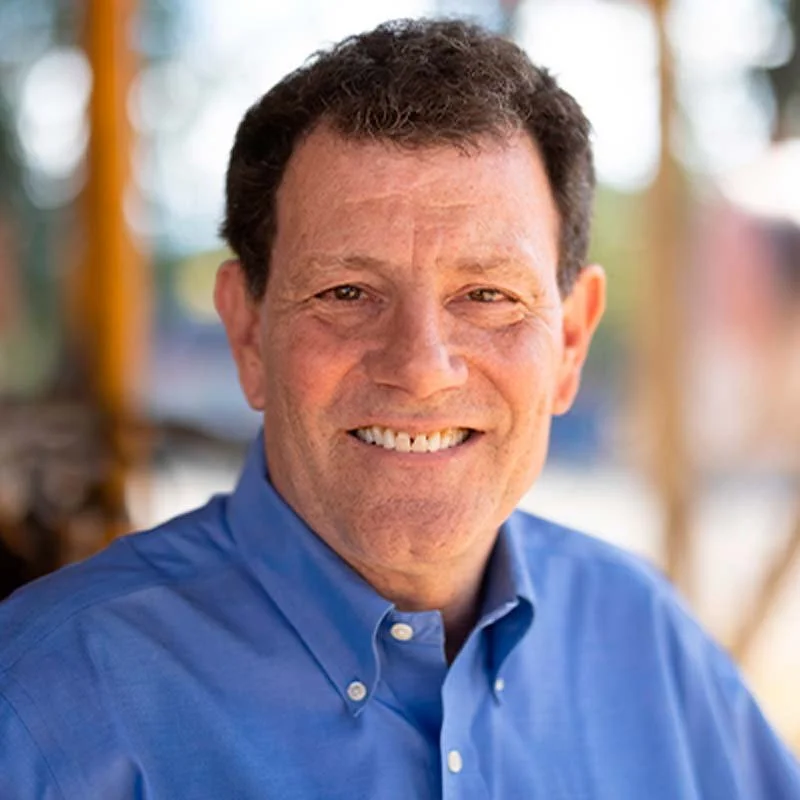
NICHOLAS KRISTOF

NICHOLAS KRISTOF

Pulitzer Prize-winning Journalist · NYTimes Op-Ed Columnist
Author of Chasing Hope, A Reporter's Life · Coauthor of Half the Sky · Tightrope · A Path Appears

I'm trying to get people to care about a crisis in ways that may bring solutions to it. And that's also how I deal with the terror and the fear to find a sense of purpose in what I do. It's incredibly heartbreaking to see some of the things and hear some of the stories, but at the end of the day, it feels like–inconsistently here and there–you can shine a light on problems, and by shining that light, you actually make a difference.

SHARMEEN OBAID-CHINOY

SHARMEEN OBAID-CHINOY

Oscar & Emmy-winning Director
Diane von Furstenberg: Woman in Charge · A Girl in the River
Forthcoming Star Wars film starring Daisy Ridley

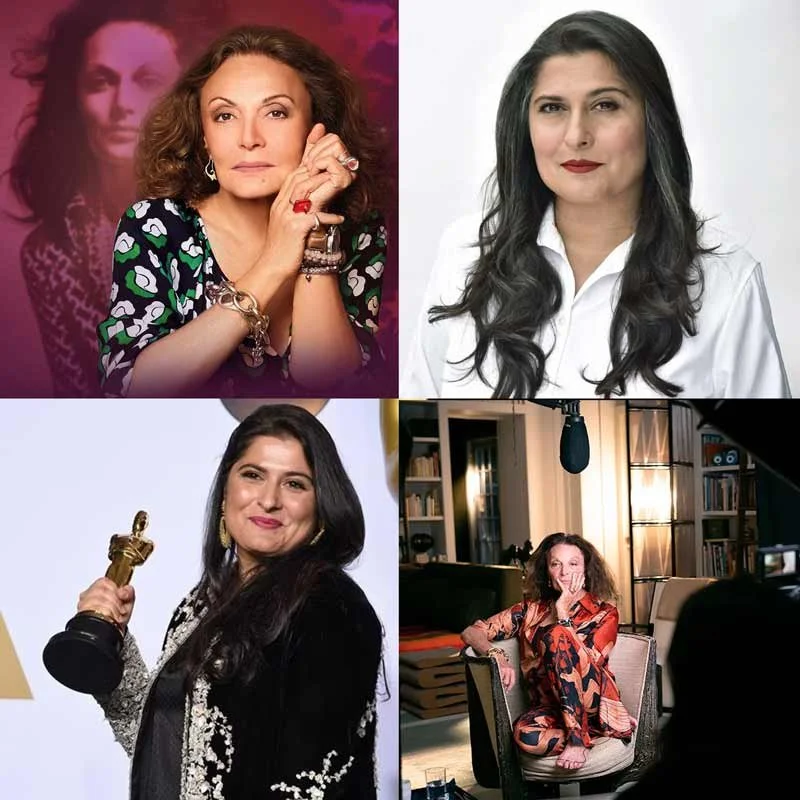
As a filmmaker, I've always made films about extraordinary women whose lives are faced with extenuating circumstances who've had adversity thrown at them and who've risen to the occasion. And when I began to look at Diane's story, for me, Diane is a fashion designer, but she's so much more. Her central ethos is woman before fashion, and we felt it was very important to take that ethos and weave it into the spine of our film, and make it about the woman.

DAVID BYRNE'S THEATER OF THE MIND

DAVID BYRNE'S THEATER OF THE MIND

Stories of Impact · People’s TV

Q: Who is David Byrne?
David Byrne: …I have no idea.

Most people know me through music, but when I was in high school I saw science and the arts as being equally creative fields. More recently, I just started taking an interest in how the brain works, and there's been this explosion of literature. As much as I love reading about neuroscience, I realize that experiencing some of the phenomena is just on a different level. I wanted to create an experience that shows us we're not who we think we are. Theater of the Mind is an immersive Science Theater project. With this show, I've tried to marry a narrative to the experience of different scientific phenomena that reveal how malleable our perception memory and identity really are.

MAX RICHTER

MAX RICHTER

Award-winning Composer & Pianist
His album Sleep is the most streamed classical album of all time
Film & TV scores for Ad Astra · Black Mirror · Shutter Island · The Leftovers · Arrival · Taboo

For me, the creative process is a sort of a continuous thing in the sense that I'm writing kind of all the time, at some level. And that doesn't mean I'm sitting at my desk all the time, but it does mean that I've got a continuous thought process, a continuous engagement with the material I'm trying to shape. And it's many different kinds of processes. First of all, obviously an intention. You need to have an intention. What is it I'm trying to do? But then you get a process of making things, and then you get into a process of dialogue with the things you've made where they start to take on properties and it feels like the material has intentions of its own. So then you are trying to - it's like herding cats, you know? - sort of corralling this material into some kind of structure, some kind of formed object. Then it becomes like a sculptural process on the large scale.

INGRID NEWKIRK

INGRID NEWKIRK

Founder & President of PETA - People for the Ethical Treatment of Animals

I think things do change because of agitation. So agitation is vital. I mean, nobody who is in a cause should be there to win a popularity contest, whether you're working for children or the elderly or working for peace animals, it's all against nonviolence, aggression, domination, and needless cruelty and suffering. It's all for respect. So you have to be vigorous. You have to use your voice. You can use it politely, but if people don't listen, at PETA, we escalate. So we always start off with a polite letter, a polite entreaty. We always try to, as I say, do the homework. So we have the options that we put out on the table to say, look, instead of doing this, you could do that, and we will help you transition to that.

Building a Vital Earth for Everyone
Exploring  Family Dynamics & Fierce Female Friendships

Exploring  Family Dynamics & Fierce Female Friendships

A Conversation with MEGAN ABBOTT
Author of Beware the Woman · You Will Know Me · Give Me Your Hand · The Turnout · Co-creator of Netflix’s Dare Me

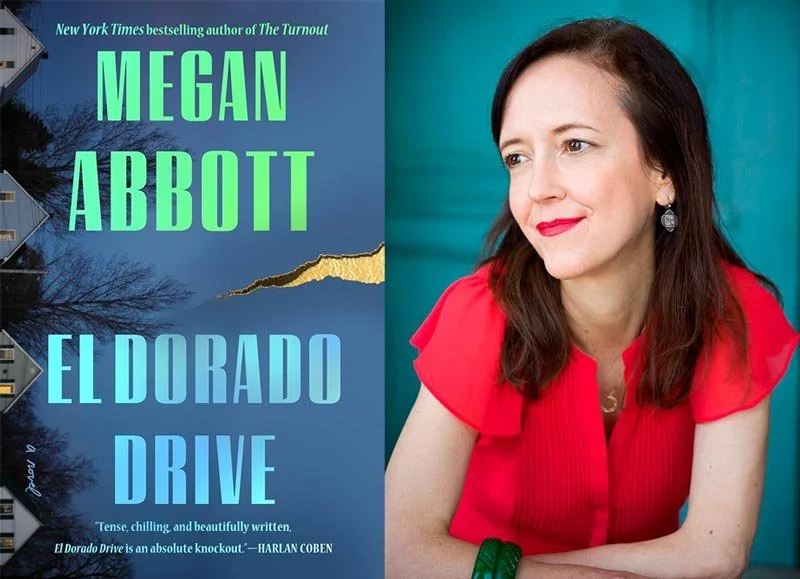
I always say to young writers, you need to put your heart on the page. Don't worry about being like anyone else. I would say that foremost, in any of the arts, it is self-expression at its core… I think that it all goes back to childhood. I’ve always really been writing about family. I suppose we always are. I do think that it is the original wound, and it's where we are kind of wired and built from those early years. So I think every other relationship just replicates that. It's very natural for me to go there, I suppose because the feelings are most intense there. We just keep recycling these relationships and dynamics over and over again—until maybe someday we can catch ourselves and try to break the bad patterns. It feels the most visceral and real to me, always. You're always looking for that in writing. You want everything to be at this peak intensity, or at least I do. That seems the most natural place to start.

Family, Addiction & Overcoming Trauma

Family, Addiction & Overcoming Trauma

Author LIZ MOORE on Long Bright River starring AMANDA SEYFRIED

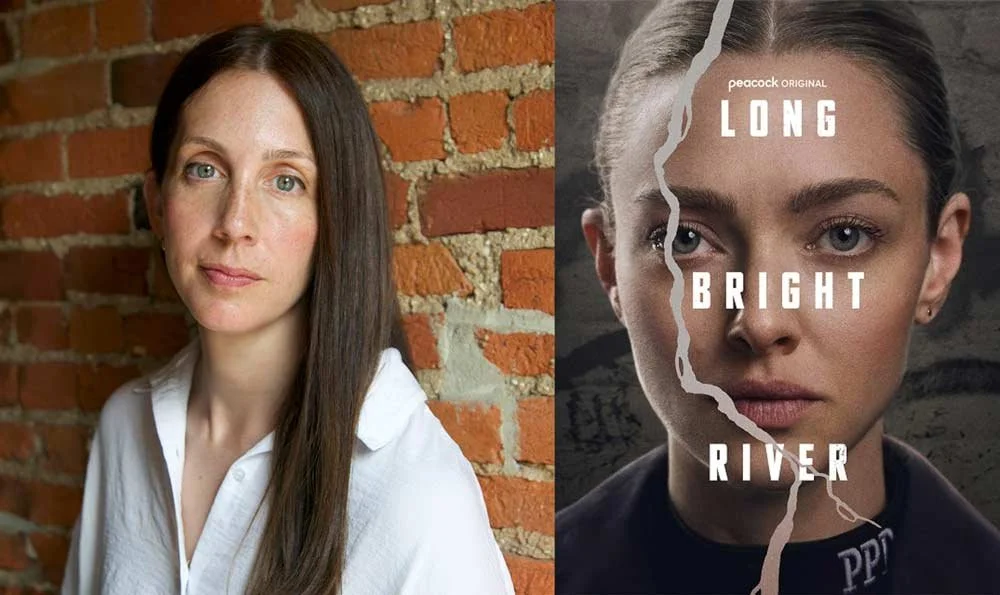
I've lived in Philadelphia for about 16 years.  The book itself was inspired by my time spent in the Kensington neighborhood of Philadelphia interviewing a lot of the people that I met there, both longtime residents of the neighborhood and also people who were transient,  a lot of people struggling with addiction and a lot of women doing sex work to fund their  physical addiction to opioids. You find out about their past,  their road into addiction, their aspirations, their fears.  I began to lead free writing workshops at an organization named St. Francis Inn, which is a longstanding food service organization in the community. They had a women's day shelter where I taught.  I was really able to connect with people within the community on a quite personal level and loved my experiences in Kensington. And I still go, I'm still quite close with a number of the community workers, people who run free healthcare clinics. All of it ultimately informed the writing of Long Bright River.

JAMES FISHKIN
THE DIPLOMAT

THE DIPLOMAT

Conversation with Showrunner · Creator · Head Writer
DEBORA CAHN

I feel very fortunate that the medium I’m in is television, which is a very long form of storytelling. You're not telling a single story; you're telling a world. You're inviting people into a world and asking them to live there with you and these characters for a period of time. The best I can do is build a world where people grapple with these important questions and try their best. All I can expect from people and from myself is that we're trying to do something larger than ourselves.

The First Artist-Led Global Summit

The First Artist-Led Global Summit

& The Future of Museums
A Conversation with NICOLA LEES · Director of the Aspen Art Museum

It's a complicated time to think about how we can slow down, be still, and bring a brilliant group of people together to do something that feels purposeful and can be productive. It's a moment where things are moving so fast. When I brought up the idea of a hinge generation, I think it's impossible to know how we will look back and reflect on this time and these moments. This year, there is a real emphasis on the relationship between the question we have posed for the retreat, which is fundamentally about our relationship with technology and identifying our relationship with the world and how we want to be present in the moment.

On Borges, Gore Vidal, Robert Frost & The Writing Life

On Borges, Gore Vidal, Robert Frost & The Writing Life

A Conversation with Author & Filmmaker JAY PARINI

Poetry is the prince of the literary arts to me. It's at the very top because it's language refined to its apex of memorability. I am interested in poetry as memorability and poetry as something you live by. These are the words you live by. These words stay in your brain and guide your life. That's what I am interested in. My memoir slash autofiction is called Borges and Me, and as you know, it's a story of my time in 1970 when my best friend Billy was drafted for the Vietnam War, and so was I. He went to Vietnam, and I went to Scotland to hide out and do my graduate work. I spent nearly seven years in Scotland, but I certainly spent the next five years definitely in Scotland. I was there before as an undergraduate for a bit, too. During that time, Billy was killed in Vietnam, and I was a nervous wreck. My memoir talks about my depression, my anxieties, and then, through my friend Alastair Reid, I met Borges, the great Argentine writer. We went on a little road trip through the Highlands, and this conversation with Borges really restored me back to myself and what was important in life. I felt that I owed a huge amount to that contact with Borges… I was lucky that suddenly, out of nowhere, came a wonderful director-producer named Mark Turtletaub. He had read my book and loved it, and he approached me. We had a conversation, and he said, "Look, I want to make this movie." So off we went.

All the Water in the World

All the Water in the World

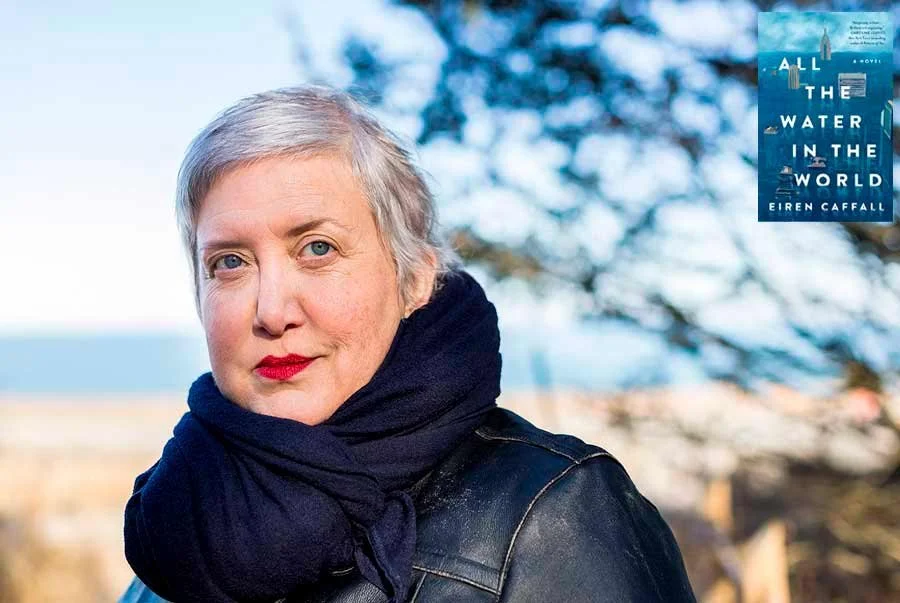
A Conversation with Writer & Musician EIREN CAFFALL

We are in a complex and delicately balanced relationship of connection to everything else on the planet. We begin to recognize, write into, and speak into the complex interdependence and interconnection of every gesture that we make on the planet. Most storytelling that I really respond to, whether it's from my own culture or from previous civilizations, acknowledges that we are in this complex relationship where every gesture we make is connected to the lives of every other creature on the planet. The more narratives we allow to be complex in that way and interconnected, the more we begin to change our brain chemistry around how we protect ourselves and everything that is in relation to us. The more that you have that evolving relationship with it, that's dynamic and alive to the moment you're in, and that's not afraid of the feelings of fear, hopelessness, grief, or pain that attend paying close attention to the world as it is evolving around you, the better we are able to be flexible in the relationship we need to form with fixing what we can and holding onto what we have.