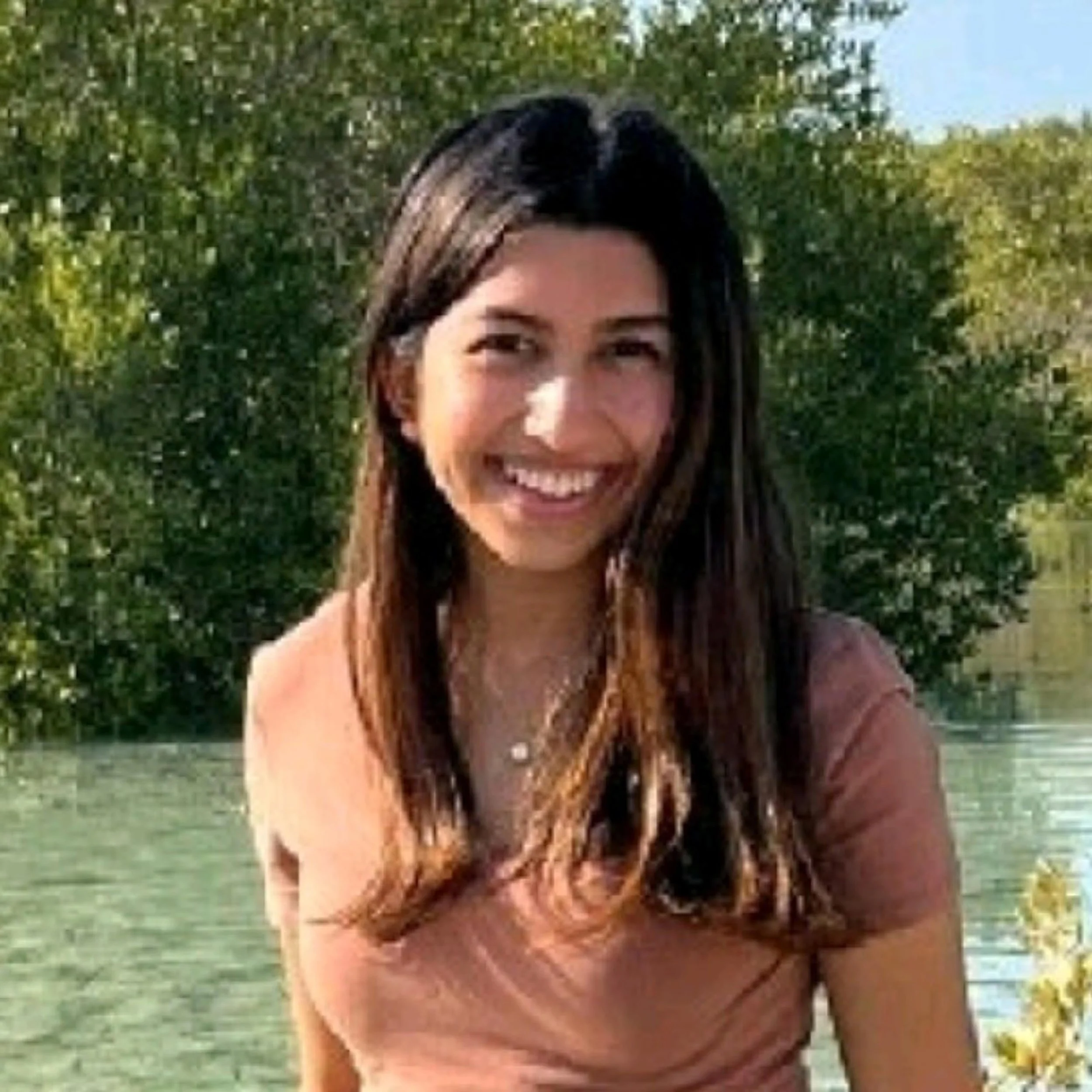
RACHEL ASHEGBOFEH IKEMEH - Whitley Award-winning Conservationist - Founder/Director, Southwest Niger Delta Forest Project

RACHEL ASHEGBOFEH IKEMEH - Whitley Award-winning Conservationist - Founder/Director, Southwest Niger Delta Forest Project

Whitley Award-winning Conservationist
Founder/Director of the Southwest Niger Delta Forest Project

There's no question, we are in a state of conservation emergency. And we have a real situation on our hands and it's so fragile that if we take a step back, we could say goodbye to two types of chimpanzee species and the forest is also on the brink of disappearing forever. And when I started as a conservation researcher, there was kidnapping and insecurity throughout the Nile Delta region, and it was immersed in a lot of oil politics and civil conflicts. Kidnapping and insecurity ran throughout that region. Let's not forget that Nigeria is Africa's most populous nation now. We are over 200 million people in the country, and it's a growing population of young people who are looking for means of livelihood and on the lookout to find space to live. So parts of the forest within one year would suddenly become a new village.

Highlights - MADELEINE WATTS - Author of The Inland Sea

Highlights - MADELEINE WATTS - Author of The Inland Sea

Author of The Inland Sea
Professor of Creative Writing at Columbia University

I was reading ecological history and also reading about violence against women and how violence perpetuates itself over many generations. And there was something about this European sort of supremacy of ideas about nature, their ideas about rationality, all of this stuff that sort of came from the Enlightenment. John Oxley's diaries made no mention of the Indigenous Australians who were at the time subject to genocide. So I was interested in these ideas about how they tried to tame the land, which is often talked about as "a woman" and the way that the kind of violence that comes from a particular kind of European colonial project that is enacted on the land intertwines with the way that violence is enacted upon women. And it was something that I felt growing up in Australia.

MADELEINE WATTS - Author of The Inland Sea - Creative Writing Professor, Columbia University

MADELEINE WATTS - Author of The Inland Sea - Creative Writing Professor, Columbia University

Author of The Inland Sea
Professor of Creative Writing at Columbia University

I was reading ecological history and also reading about violence against women and how violence perpetuates itself over many generations. And there was something about this European sort of supremacy of ideas about nature, their ideas about rationality, all of this stuff that sort of came from the Enlightenment. John Oxley's diaries made no mention of the Indigenous Australians who were at the time subject to genocide. So I was interested in these ideas about how they tried to tame the land, which is often talked about as "a woman" and the way that the kind of violence that comes from a particular kind of European colonial project that is enacted on the land intertwines with the way that violence is enacted upon women. And it was something that I felt growing up in Australia.

Speaking Out of Place: ADAM ARON discusses “The Climate Crisis: Science, Impacts, Policy, Psychology, Justice, Social Movements”

Speaking Out of Place: ADAM ARON discusses “The Climate Crisis: Science, Impacts, Policy, Psychology, Justice, Social Movements”

Author of The Climate Crisis: Science, Impacts, Policy, Psychology, Justice, Social Movements
Professor of Psychology at UC San Diego · Climate Activist

Psychology has something to tell us about why so few people are really engaged in the climate struggle. There are different components to this. First of all, there is what I call epistemic skepticism in the book, which is to say, skepticism about the facts of climate change. The second thing is threat perception, that threat levels are not as high as they should be. And the third is that people are skeptical about the response. They don't think that they can do anything, or they don't believe that groups or even countries can make a difference. Epistemic skepticism: psychologically this means that quite a lot of people, for example, the United States, don't believe in the human cause of heating. And the reason for that is very much to do in fact, with the systematic campaign of misinformation that's been fostered by the fossils industry, systematically set out to confuse people about the scientific consensus. We should be very threatened by this. In fact, the youth, generally speaking, are anxious to some extent about it. In effect, Mother Earth is saying, "I can't deal with what you're doing to me, people. I'm putting up my temperature." And if you're not feeling anxious, then you're not paying attention. That's the right way to feel on Planet Earth.

SAGARIKA SRIRAM - Founder of Kids4abetterworld, Youth Climate Change Initiative

SAGARIKA SRIRAM - Founder of Kids4abetterworld, Youth Climate Change Initiative

Founder of Kids4abetterworld
Climate Activist & Educator

Sagarika Sriram is currently a student at Jumeirah College in Dubai. She founded the organization Kids4abetterworld when she was 10 years old with a mission to educate and encourage young children to lead a more sustainable life and reduce their carbon footprint. Children are the worst affected by the effects of climate change,  yet most children do not participate in climate change discussions or take actions to live more sustainably because they do not have the awareness and capability to do so. Kids4abetterworld conducts awareness workshops on sustainability aiming to Educate, Motivate and Activate young children to  conserve natural resources, protect biodiversity, and positively  impact climate change. As a UN Climate Advisor, she has participated in the global consultations that will ensure children are made aware of their environmental rights and that UN member states protect and uphold these.

We All Live on One Planet We Call Home - Part 4 - Environmentalists, Economists, Policymakers & Architects Share their Stories

We All Live on One Planet We Call Home - Part 4 - Environmentalists, Economists, Policymakers & Architects Share their Stories

Environmentalists, Artists, Students & Teachers share their Love for the Planet

Today we’re streaming voices of environmentalists, artists, students, and teachers with music courtesy of composer Max Richter.

Speaking Out of Place: ASHLEY DAWSON discusses “Environmentalism from Below”

Speaking Out of Place: ASHLEY DAWSON discusses “Environmentalism from Below”

Author of Environmentalism from Below (Haymarket 2024) · Extinction: A Radical History · People’s Power: Reclaiming the Energy Commons · Professor of English at the Graduate Center / CUNY and the College of Staten Island

In this episode of the Speaking Out of Place podcast, Professor David Palumbo-Liu interviews Ashley Dawson, Professor of English at the Graduate Center / City University of New York and the College of Staten Island. Dawson’s recently published books focus on key topics in the Environmental Humanities, and include People’s Power: Reclaiming the Energy Commons (O/R, 2020), Extreme Cities: The Peril and Promise of Urban Life in the Age of Climate Change (Verso, 2017), and Extinction: A Radical History (O/R, 2016). Dawson is the author of a forthcoming book entitled Environmentalism from Below (Haymarket) and the co-editor of Decolonize Conservation! (Common Notions, 2023).

What Kind of World Are We Leaving for Future Generations? - Part 3 - Activists, Environmentalists & Teachers Share their Stories

What Kind of World Are We Leaving for Future Generations? - Part 3 - Activists, Environmentalists & Teachers Share their Stories

Environmentalists, Artists, Students & Teachers share their Love for the Planet

Today we’re streaming voices of environmentalists, artists, students, and teachers with music courtesy of composer Max Richter.

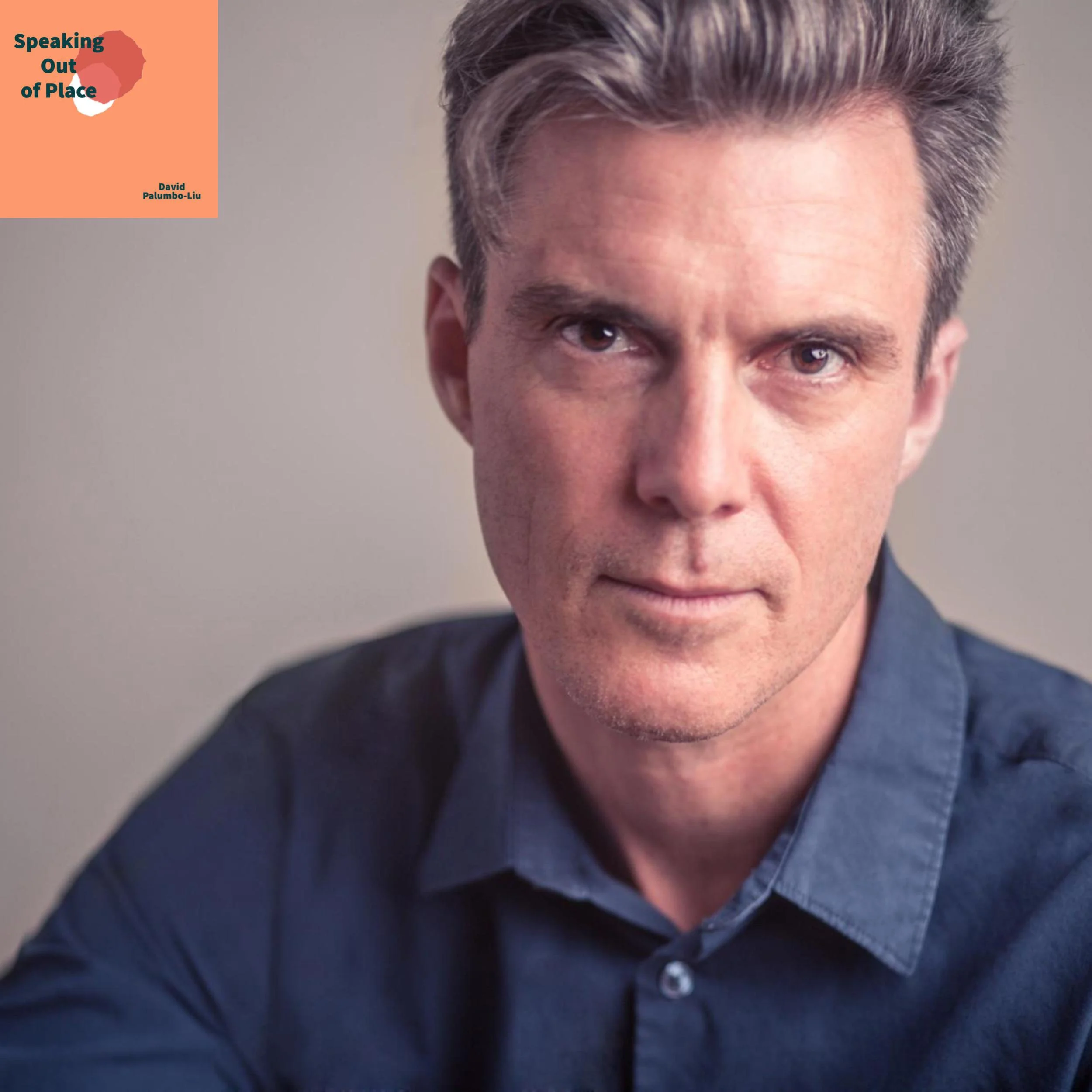
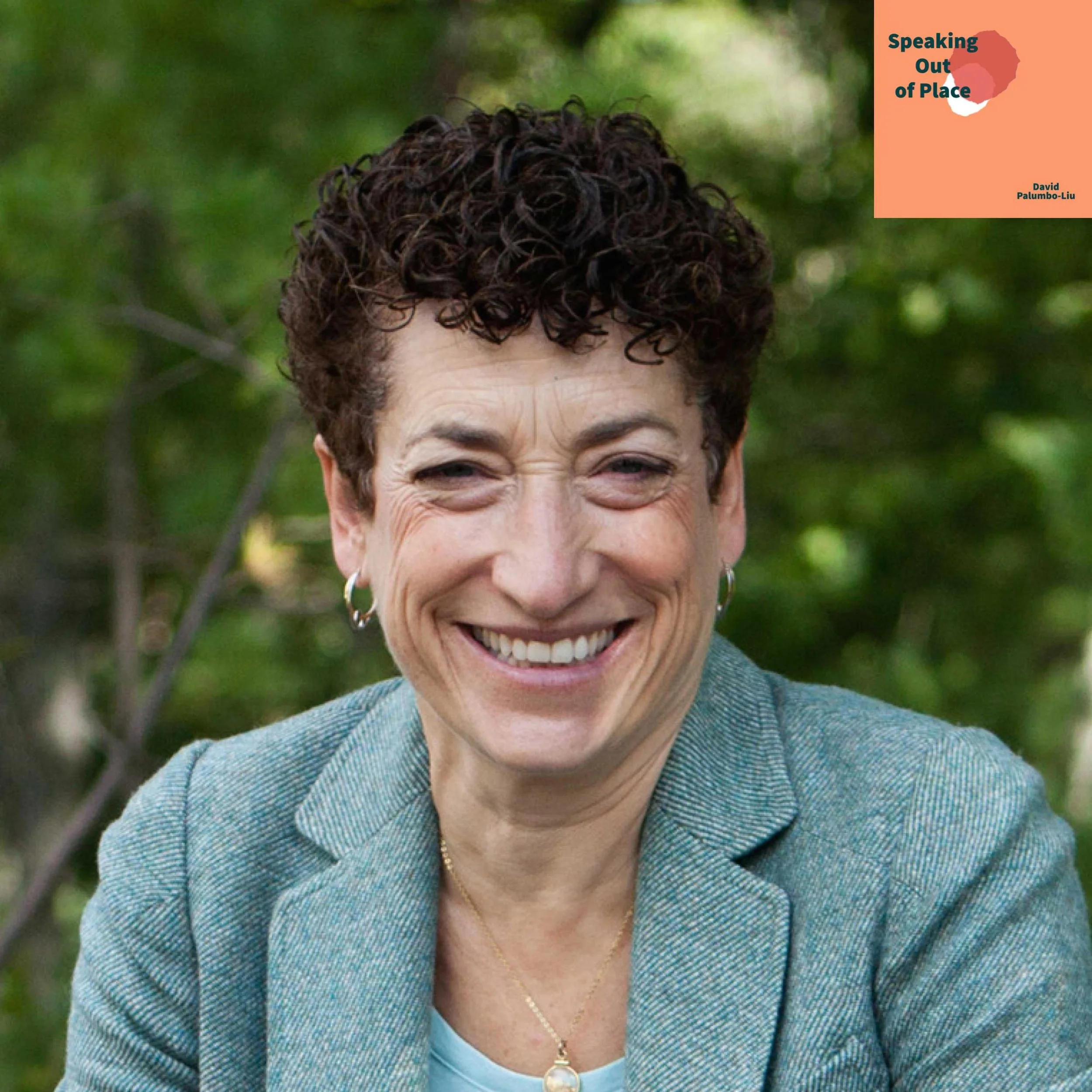
Speaking Out of Place: NAOMI ORESKES discusses “The Big Myth: How American Business Taught Us to Loathe Government & Love the Free Market”

Speaking Out of Place: NAOMI ORESKES discusses “The Big Myth: How American Business Taught Us to Loathe Government & Love the Free Market”

Henry Charles Lea Professor of the History of Science & Affiliated Professor · Earth & Planetary Sciences · Harvard University
Co-author of The Big Myth: How American Business Taught Us to Loathe Government & Love the Free Market

I think the word consortium is a good word. It's not a conspiracy, although at times it takes on conspiratorial elements, but it's a kind of network or consortium of people who are working over a very long period of time, going back to the early 20th century to build an ideology that basically says we should trust the marketplace. That markets are not merely an efficient way of developing and delivering goods and services, but that they're actually playing a crucial role in protecting political freedom, protecting political democracy, and they build that story in order to persuade people that government regulation of the marketplace, whether it's to protect workers, consumers, or the environment - even though it might seem attractive superficially - what they're saying is: yeah, but don't be fooled by that because it will actually undermine freedom and democracy. And it's a very clever move because it takes what is initially a self-interested defense of the prerogatives of the privileged, the prerogatives of the captains of industry, and turns it into a seemingly virtuous defense of democracy. And, of course, who wouldn't want to defend democracy?

EARTH MONTH STORIES - Part 2 - Environmentalists, Artists, Students & Teachers Speak Out & Share How We Can Save the Planet

EARTH MONTH STORIES - Part 2 - Environmentalists, Artists, Students & Teachers Speak Out & Share How We Can Save the Planet

Environmentalists, Artists, Students & Teachers share their Love for the Planet

Today we’re streaming voices of environmentalists, artists, students, and teachers with music courtesy of composer Max Richter.

SPECIAL EARTH DAY STORIES - Environmentalists, Artists, Students & Teachers share their Love for the Planet - Part 1

SPECIAL EARTH DAY STORIES - Environmentalists, Artists, Students & Teachers share their Love for the Planet - Part 1

Environmentalists, Artists, Students & Teachers share their Love for the Planet

Today we’re streaming voices of environmentalists, artists, students, and teachers with music courtesy of composer Max Richter.

Highlights - MAX RICHTER - Award-winning Composer - Pianist - Environmentalist

Highlights - MAX RICHTER - Award-winning Composer - Pianist - Environmentalist

Award-winning Composer & Pianist
His album Sleep is the most streamed classical album of all time
Film & TV scores for Ad Astra · Black Mirror · Shutter Island · The Leftovers · Arrival · Taboo

For me, the creative process is a sort of a continuous thing in the sense that I'm writing kind of all the time, at some level. And that doesn't mean I'm sitting at my desk all the time, but it does mean that I've got a continuous thought process, a continuous engagement with the material I'm trying to shape. And it's many different kinds of processes. First of all, obviously an intention. You need to have an intention. What is it I'm trying to do? But then you get a process of making things, and then you get into a process of dialogue with the things you've made where they start to take on properties and it feels like the material has intentions of its own.

So then you are trying to - it's like herding cats, you know? - sort of corralling this material into some kind of structure, some kind of formed object. Then it becomes like a sculptural process on the large scale.

MAX RICHTER - Award-winning Composer - Pianist - Environmentalist

MAX RICHTER - Award-winning Composer - Pianist - Environmentalist

Award-winning Composer & Pianist
His album Sleep is the most streamed classical album of all time
Film & TV scores for Ad Astra · Black Mirror · Shutter Island · The Leftovers · Arrival · Taboo

For me, the creative process is a sort of a continuous thing in the sense that I'm writing kind of all the time, at some level. And that doesn't mean I'm sitting at my desk all the time, but it does mean that I've got a continuous thought process, a continuous engagement with the material I'm trying to shape. And it's many different kinds of processes. First of all, obviously an intention. You need to have an intention. What is it I'm trying to do? But then you get a process of making things, and then you get into a process of dialogue with the things you've made where they start to take on properties and it feels like the material has intentions of its own.

So then you are trying to - it's like herding cats, you know? - sort of corralling this material into some kind of structure, some kind of formed object. Then it becomes like a sculptural process on the large scale.

HENRY SHUE - Author of “The Pivotal Generation” - Snr. Research Fellow, Centre for International Studies, Oxford

HENRY SHUE - Author of “The Pivotal Generation” - Snr. Research Fellow, Centre for International Studies, Oxford

Author of The Pivotal Generation: Why We Have a Moral Responsibility to Slow Climate Change Right Now · Basic Rights
Senior Research Fellow · Centre for International Studies · University of Oxford

We can tell from the science that we have to reach zero carbon emissions by 2050. And common sense tells you that bringing them down for the second 50% is going to be harder than the first 50%. So we have to take care of the first 50% by about 2030, and it's 2023 already. We literally must - if we're going to keep climate change from becoming even more dangerous than it is - is to do a very great deal in the next seven or eight years. And a huge amount between now and 2050. So it's not that this problem is the most important of all possible problems. There are other problems like preventing nuclear war, but this is a problem that either we get a grip on it now, or there's a real possibility that it will escape from our control. 

HENRY SHUE - Author of “The Pivotal Generation” - Snr. Research Fellow, Centre for International Studies, Oxford

HENRY SHUE - Author of “The Pivotal Generation” - Snr. Research Fellow, Centre for International Studies, Oxford

Author of The Pivotal Generation: Why We Have a Moral Responsibility to Slow Climate Change Right Now · Basic Rights
Senior Research Fellow · Centre for International Studies · University of Oxford

We can tell from the science that we have to reach zero carbon emissions by 2050. And common sense tells you that bringing them down for the second 50% is going to be harder than the first 50%. So we have to take care of the first 50% by about 2030, and it's 2023 already. We literally must - if we're going to keep climate change from becoming even more dangerous than it is - is to do a very great deal in the next seven or eight years. And a huge amount between now and 2050. So it's not that this problem is the most important of all possible problems. There are other problems like preventing nuclear war, but this is a problem that either we get a grip on it now, or there's a real possibility that it will escape from our control. 

Highlights - CHRISTOPHER GERVAIS - Founder/CEO of Wildlife Conservation Film Festival - Cannes Lions Award-winning Producer

Highlights - CHRISTOPHER GERVAIS - Founder/CEO of Wildlife Conservation Film Festival - Cannes Lions Award-winning Producer

Founder & CEO of Wildlife Conservation Film Festival
Cannes Lions Award-winning Producer

I've been fortunate over the last 13 years to meet some of the world's leading conservationists. Dr. Sylvia Earl, David Attenborough, Jane Goodall, his Royal Highness Prince Khaled bin Sultan of Saudi Arabia, who came to the film festival in 2014, where we showed some films from his foundation. And there have been a number of others, award-winning filmmakers, and a number of celebrities that have come to the film festival, Academy Award Winner James Cromwell. We've had other celebrities, from Paul Giamatti to Alec Baldwin to Sigourney Weaver, all of whom may have a passion for, if not saving wildlife, then for the environment. And I have found them very humble, very easy to speak to, and I'm immensely grateful that they took the time to come to WCFF from their busy schedule. And we hope to build more relationships.

CHRISTOPHER J. GERVAIS - Founder/CEO of Wildlife Conservation Film Festival - Cannes Lions Award-winning Producer

CHRISTOPHER J. GERVAIS - Founder/CEO of Wildlife Conservation Film Festival - Cannes Lions Award-winning Producer

Founder & CEO of Wildlife Conservation Film Festival
Cannes Lions Award-winning Producer

I've been fortunate over the last 13 years to meet some of the world's leading conservationists. Dr. Sylvia Earl, David Attenborough, Jane Goodall, his Royal Highness Prince Khaled bin Sultan of Saudi Arabia, who came to the film festival in 2014, where we showed some films from his foundation. And there have been a number of others, award-winning filmmakers, and a number of celebrities that have come to the film festival, Academy Award Winner James Cromwell. We've had other celebrities, from Paul Giamatti to Alec Baldwin to Sigourney Weaver, all of whom may have a passion for, if not saving wildlife, then for the environment. And I have found them very humble, very easy to speak to, and I'm immensely grateful that they took the time to come to WCFF from their busy schedule. And we hope to build more relationships.

Highlights - PIA MANCINI - Co-founder/CEO, Open Collective - Chair, DemocracyEarth Foundation - YGL World Economic Forum

Highlights - PIA MANCINI - Co-founder/CEO, Open Collective - Chair, DemocracyEarth Foundation - YGL World Economic Forum

Co-founder/CEO of Open Collective - Chair of DemocracyEarth Foundation
Alum of YC & Young Global Leaders at World Economic Forum

And so I think many of those challenges have to do with the nature of power and how power is conservative and power will do anything in order to stay in power. And the status quo will do anything and make itself look like anything that you want in order to stay in power. And they might change their spots a little bit here or there, but if you look deep enough, it's the same people. It's the same power.

And so for me, that was the big challenge of realizing that we were facing power and power is conservative, and that's not the way to really achieve the change that we wanted to make. I wasn't patient enough for incremental changes. That's not what I'm interested in. So there's one set of challenges that I think is common to anyone in my position trying to do this. With regards to being a young woman, I mean, sure you face the same kind of sexist comments that you would face anywhere else that I face now as a woman CEO. The best thing I can do for that is just occupying the space and keep occupying the space and refusing to move away or let things like that stop me from engaging.

PIA MANCINI - Co-founder/CEO of Open Collective - Chair of DemocracyEarth Foundation - YGL World Economic Forum

PIA MANCINI - Co-founder/CEO of Open Collective - Chair of DemocracyEarth Foundation - YGL World Economic Forum

Co-founder/CEO of Open Collective - Chair of DemocracyEarth Foundation
Alum of YC & Young Global Leaders at World Economic Forum

And so I think many of those challenges have to do with the nature of power and how power is conservative and power will do anything in order to stay in power. And the status quo will do anything and make itself look like anything that you want in order to stay in power. And they might change their spots a little bit here or there, but if you look deep enough, it's the same people. It's the same power.

And so for me, that was the big challenge of realizing that we were facing power and power is conservative, and that's not the way to really achieve the change that we wanted to make. I wasn't patient enough for incremental changes. That's not what I'm interested in. So there's one set of challenges that I think is common to anyone in my position trying to do this. With regards to being a young woman, I mean, sure you face the same kind of sexist comments that you would face anywhere else that I face now as a woman CEO. The best thing I can do for that is just occupying the space and keep occupying the space and refusing to move away or let things like that stop me from engaging.