"IMAGINATION is more important than knowledge. For knowledge is limited, whereas imagination embraces the entire world, stimulating progress, giving birth to evolution." –ALBERT EINSTEIN
🎧Listen on Apple Podcasts | Spotify

Jake Ferguson · Anthony Joseph · Jermain Jackman
I think as humans, we forget. We are often limited by our own stereotypes, and we don't see that in everyone there's the potential for beauty and love and all these things. And I think The Architecture of Oppression, both parts one and two, are really a reflection of all the community and civil rights work that I've been doing for the same amount of time, really - 25 years. And I wanted to try and mix my day job and my music side, so bringing those two sides of my life together. I wanted to create a platform for black artists, black singers, and poets who I really admire. And it was a no-brainer to give Anthony a call for this second album because I know of his pedigree, and he's much more able to put ideas and thoughts on paper than I would be able to.

on the Recent Elections in Britain and France
I would say what we can celebrate is the incredible mobilization of the young people. They went everywhere, they knocked on the door, they mobilized. This was an incredible, incredible mobilization. So that was extraordinary because it showed real mobilization and an understanding that the National Rally was a real threat. We knew that if they came to power, the first people who would be targeted would be people of color, and that was absolutely clear.

Author · Historian · Curator
Utopia in the Age of Survival: Between Myth and Politics · The Eyelid · Marvellous Utopia
I like to think of utopianism as “effective social daydreaming” because utopia is associated with consciously imagining societies. Our imagination is always involved in creating reality. The opposition between the two, reality and the imaginary, is not a stark one; they're porous.

Author of The Future of Energy · Fmr. BBC Environment Correspondent · Director of Policy & Strategy · Global Clean Energy Thinktank · Ember
The fact is you've got a lot of industrial and political muscle now coming behind clean energy, especially from China, which is the leading country deploying wind energy, solar, and the leading manufacturer and user of electric vehicles. "We have petrostates in the world. China is the first electrostate." And China is on its way to becoming the world's most powerful country. So, where China leads, the rest of the world is almost certain to follow. Yes, there are massive air pollution problems in China, of course, but I think it's more than that. It's also about seeing that this is the future that the world is going to have. And if these goods are going to be made anywhere, well, the Chinese government clearly would like them to be made in China. And they've set out, you know, industrial policies and all kinds of other policies for, well, at least a decade now, in pursuit of that aim. It's interesting now to see other countries, India, for example, and the United States now sort of deploying muscle to try and carve out a slice of the pie themselves as well.

Writer · Organizer · Activist
When Shells Crumble · Shaping San Francisco · Critical Mass
The novel When Shells Crumble begins in December 2024, when the US Supreme Court nullifies the popular vote in the Presidential election and awards the presidency to an authoritarian Republican, who proceeds to demolish democracy and install a fascistic state that hastens ecological havoc. The novel is much more than your usual dystopian tale—it focuses on how to resist political cynicism and defeatism, and rebuild on planetary wreckage. It is a world-building project filled with wisdom, sadness, and joy. We specifically put this fictional text in conservation with his brilliant non-fiction work, Nowtopia, which offers a radical redefinition of “work” that restores dignity and value to their proper places.

with Dr. Osman Hamdan & Umniya Najaer
The ongoing conflict in Sudan has pushed millions to the brink of famine, threatening to devastate an entire generation. Despite the severe humanitarian crisis, global awareness remains limited. Today learn about the long history behind these events, the people and groups involved, and the roles that foreign governments and international organizations like the IMF have played. Importantly, we learn how civil society groups are bringing a form of mutual aid and support to the people of Sudan where the national government, warring factions, and international humanitarian organizations have utterly failed.

AI/Deepfakes/Synthetic Media Advisor · BBC Presenter
Adobe · Meta · European Commission · Partnership on AI · House of Lords
I would like to preserve a real sense of empathy and humility, which comes with understanding that the world is messy, that people are messy, that defects and imperfections exist, that things don't always necessarily kind of go the way you want, even as much as you wish they could. Imperfection is part of life and I guess my concern is that AI-generated content, which smooths and perfects a version of reality to precisely what you want and forces you or makes you feel pressured to represent yourself in this absolutely perfect way, fundamentally gives you no room for error and kind of detaches you from the reality of growth and life and and how people work. Empathize with other people. Everyone has their challenges. Things don't always have to be exactly perfect to how you want them to be or how other people want them to be. And that involves having some humility about yourself as a messy creature, as we all are. I hope that's retained, but I do see this kind of move towards this sort of smoothed and shaped reality that AI is enabling, potentially creating more of a disconnect between that imperfect, messy, but also quite beautiful world. This sort of polished but ultimately plastic version of reality increasingly is becoming the default for some people over the kind of fleshy, messy human side of things.

Writer · Filmmaker 1947-2024
What happens is a space is created. And maybe it’s the only space of its kind in the world in which two absolute strangers can meet each other on terms of absolute intimacy. I think this is what is at the heart of the experience and why once you become a reader that you want to repeat that experience, that very deep total communication with that invisible stranger who has written the book that you’re holding in your hands. And that’s why I think, in spite of everything, novels are not going to stop being written, no matter what the circumstances. We need stories. We’re all human beings, and it’s stories from the moment we’re able to talk.

Co-founder of the Largest Bike Share System in North America · NYC’s CitiBike
Co-founder of re:Charge-e: Wireless Bike & Scooter Docking Stations
Author of The 3rd Mode: Towards a Green Society
The key number for people to remember is one to 150 for the cost and energy that it takes to charge a single electric car, our system could charge 150 bikes or scooters in public space that then people have access to. So the question from an equity standpoint, from really achieving our climate goals standpoint is, do you invest in getting one person mobile and maintaining maybe the current lifestyle that goes along with those cars? Or do we make some changes and invest in 150 to 200 people being mobile with the same energy? Clearly, we think the answer is more people moving more often, more sustainably. And we have to make that shift or we're never going to hit the 2030 goals. They are probably not even in reach, you heard the Secretary-General say just last week. And even 2050 seems a long way to go if we're still investing in technologies that only essentially help the 1 percent that already have the resources. It's the larger population that we really need to reach.

Philosopher · Author of On Disinformation: How To Fight For Truth and Protect Democracy · How to Talk to a Science Denier
One thing people don't realize is that the goal of disinformation is not simply to get you to believe a falsehood. It's to demoralize you into giving up on the idea of truth, to polarize us around factual issues, to get us to distrust people who don't believe the same lie. And even if somebody doesn't believe the lie, it can still make them cynical. I mean, we've all had friends who don't even watch the news anymore. There's a chilling quotation from Holocaust historian Hannah Arendt about how when you always lie to someone, the consequence is not necessarily that they believe the lie, but that they begin to lose their critical faculties, that they begin to give up on the idea of truth, and so they can't judge for themselves what's true and what's false anymore. That's the scary part, the nexus between post-truth and autocracy. That's what the authoritarian wants. Not necessarily to get you to believe the lie. But to give up on truth, because when you give up on truth, then there's no blame, no accountability, and they can just assert their power. There's a connection between disinformation and denial.

Computer Scientist · Mathematician · Theoretical Physicist
Founder/CEO of Wolfram Research · Creator of Mathematica · Wolfram|Alpha
I think as there is more automation, there is more kind of emphasis on this question of our choice. The story of the development of things tends to be what do humans decide that they care about? In what direction do they want to go? What kind of art do they want to make? What kinds of things do they want to think about? There is in the computational universe of all possibilities, there is sort of infinite creativity.

Editor of Illusionism as a Theory of Consciousness · Cambridge University Press’ Elements in Philosophy of Mind
Author of Mind and Supermind · Consciousness
What I like about the sort of view I have is that it represents us as fully part of the world, fully part of the same world. We're not sealed off into little private mental bubbles, Cartesian theaters, where all the real action is happening in here, not out there. No, I think we're much more engaged with the world. It's not all happening in some private mental world. It's happening in our engagement with the shared world, and that seems to me a vision that I find much more uplifting, comforting, and rewarding.

Founder of Project Regeneration & Project Drawdown
Author of Regeneration: Ending the Climate Crisis in One Generation
We and all living beings thrive by being actors in the planet’s regeneration, a civilizational goal that should commence and never cease. We practiced degeneration as a species and it brought us to the threshold of an unimaginable crisis. To reverse global warming, we need to reverse global degeneration.

Retired US Army Officer with a Career in Current and Crisis Intelligence and Strategic Plans and Policy at the Pentagon
We need to work together to handle the migrations that will inevitably come because of climate change and loss of human habitat and loss of agricultural lands. The wisest nation going forward will be the one that can maintain its population through allowing immigration and thinking about where you can draw folks that are coming from stressed environments and they need a place to land and you're losing population. Why should you not accept those people and encourage them to fill the roles that you need them to fill and settle in the areas where you are being depopulated because of falling fertility by choice?

Senior Reporter at ProPublica · Filmmaker · Author
On The Move: The Overheating Earth and the Uprooting of America
Living in California, I've just come to accept the unsettledness of this era we're moving into. And I think that's really how I see the future. You know, we're living in an era of disruption, and there are others I talk to and write about in the book who also muse about the possibility of a more nomadic future. That maybe home isn't a permanent place with deep roots but is a transient place with shallow roots or two places that you alternate between. In addition to a lot of other dramatic changes that the book is about, a change in our sense of home and our sense of place is a part of this story.

Interdisciplinary Composer · AuDHD Coach
Host of the AuDHD Flourishing Podcast
So for me, just removing a lot of the shame and then a lot of the energy that I was wasting trying to fit myself into a neurotypical process or framework or way of thinking or being. So, you know, some people call that unmasking, just kind of removing. I was wasting a lot of energy, basically trying to be someone else and function in a different way. And then just beating myself up internally for not being able to do that. And throughout my healing journey, as I really realized, Oh, that's actually what's happening. Like there's not actually anything wrong with me being able to...That's why it's called Love Your Brain. It's not just, you know, tolerate your brain. Or, fine, you can work with this brain that you have. It's like, no, I genuinely love the weird experiences that my brain can give me and the incredibly rich, deep experience I have of the world. Like I experience nature so deeply and so intensely. I have really strong connections with animals. I have really great intuition, which I think is just from picking up all this sensory data and putting it together. All these experiences that I get to have, but I don't get to have those experiences if I'm just trying to make myself be something else, which I think is most people who are late diagnosed, I feel like that's their experience. It's just like I've been trying to be someone else for so long. It's exhausting. And then you don't have the energy then to be creative, the carving out the time, making the time to actually create.

Director · Center for Environment, Community, & Equity
Author of Saving Ourselves: From Climate Shocks to Climate Action
I call myself an apocalyptic optimist. In other words, I do believe there is hope to save ourselves from the climate crisis that we have caused. However, I also believe that saving ourselves will only be possible with a mass mobilization that is driven by the pain and suffering of climate shocks around the world. A generalized sense of extreme risk can lead to peaceful and less-peaceful mass mobilizations at the levels needed to stimulate an AnthroShift. Only a global risk event (or numerous smaller events that are seen as threatening social and economic centers of power) will motivate the kind of massive social change that is needed. In other words, without a risk pivot—be it driven by social or environmental change—an AnthroShift that is large enough to respond adequately to the climate crisis and open a large enough window of opportunity postshock is improbable.

Author of Working to Restore: Harnessing the Power of Business to Heal the Earth
The term regenerative business started coming into the lexicon in 2017, 2018. And regenerative means to regenerate, means to bring life into something. To sustain means to keep the status quo. And regenerative looks at things from a very holistic lens. You know, it's like if you're going to run a regenerative farm, it's all the different components of the farm and the ecosystem ideally come within the ecosystem.

Asst. Professor in Philosophy of AI · Macquarie University
I'd like to focus more on the immediate harms that the kinds of AI technologies we have today might pose. With language models, the kind of technology that powers ChatGPT and other chatbots, there are harms that might result from regular use of these systems, and then there are harms that might result from malicious use. Regular use would be how you and I might use ChatGPT and other chatbots to do ordinary things. There is a concern that these systems might reproduce and amplify, for example, racist or sexist biases, or spread misinformation. These systems are known to, as researchers put it, “hallucinate” in some cases, making up facts or false citations. And then there are the harms from malicious use, which might result from some bad actors using the systems for nefarious purposes. That would include disinformation on a mass scale. You could imagine a bad actor using language models to automate the creation of fake news and propaganda to try to manipulate voters, for example. And this takes us into the medium term future, because we're not quite there, but another concern would be language models providing dangerous, potentially illegal information that is not readily available on the internet for anyone to access. As they get better over time, there is a concern that in the wrong hands, these systems might become quite powerful weapons, at least indirectly, and so people have been trying to mitigate these potential harm

Bookseller · Poet · Author of How to Protect Bookstores and Why · How to Resist Amazon and Why · Picture Window
The thing that unites my poetry and the nonfiction writing is my main obsession as a writer. It's the question of, how do you live meaningfully in late capitalism? As corporations and global capitalist forces take over the world, what does it mean to try to have a meaningful human life? Bookselling captured my imagination and my heart as soon as I started working at the bookstore because I could see the potential for this great, amazing community-oriented work.

Professor of Physics · GWU · Head of the Dynamic Online Networks Lab
It gets back to this core question: Why AI comes out with what it does. That's the burning question. It's like it's bigger than the origin of the universe to me as a scientist, and here's the reason why. The origin of the universe, it happened. That's why we're here. It's almost like a historical question asking why it happened. The AI future is not a historical question. It's a now and future question.

PEN/E.O. Wilson Literary Science Writing Award-winning Author
The creation of roads is this process that's sort of innate to all beings. We're all sort of inclined to create and follow trails. We just do it at a much vaster and more permanent and destructive scale. I think we need to reconceive how we think about roads. Roads aren't just symbols of movement and mobility and freedom for us. They're also preventing that mobility in basically all other life forms.

Author of The Culmination: Heidegger, German Idealism, and the Fate of Philosophy
Modernism as a Philosophical Problem · Hegel’s Idealism
Philosophy is both an academic discipline and also something that everybody does. Everybody has to have reflective views about what's significant. They also have to justify to themselves why it's significant or important. The nature of justice itself, and the various opinions that have been written about in philosophy about justice, can get to a very high level. So there's this unusual connection between philosophy and human life. We've inherited from the middle ages, this incredible tradition that's now developed into a chance for young people to spend four or five years, in a way, released from the pressures of life. The idea to pursue your ideas a little further in these four years you have, exempt from the pressures of social life, allows philosophy to have a kind of position unique in the academy. In confronting what the best minds in the history of the world have had to say about these issues, the hope is that they provide for the people who are privileged enough to confront philosophy a better and more thoughtful approach to these fundamental questions that everybody has to confront.

Psychiatrist, Explorer, Aviator of First Round-the-World Solar-powered Flight
Founder & Chairman · Solar Impulse Foundation: 1000+ Profitable Climate Solutions
UN Goodwill Ambassador for the Environment
So this is why I prefer to speak with a really down to earth language. So maybe the people who love nature are going to say, “Oh, Bertrand Piccard, now he is too down to earth. He's speaking about profitable solutions. He's speaking to the industries that are polluting,” but we have to speak to the industries that are polluting and bring them profitable solutions, otherwise the world will never change, or humankind will never change. And don't forget one thing, what we are damaging is not the beauty of nature. What is being damaged is the quality of life of human beings on Earth because we can still have beautiful things to see, but if we have climate change, if we have tropical disease in Europe, if we have heat waves, floods, droughts, millions of climate refugees, life will be miserable, even if nature is still beautiful.

Adjunct Lecturer in International Law, Johns Hopkins SAIS
Director of Strategy International, Corporate Sustainability Advisory Firm
My father made me think very much in terms of what kind of planet we are leaving to our children? And what should we be doing in terms of being custodians of this planet? And that we should not be using up all the resources, but actually trying to conserve them and make the world a better for the next generation.

Neuroscientist · Musician · Author
The Emotional Brain · Anxious · The Deep History of Ourselves
The Four Realms of Existence: A New Theory of Being Human
We've got four billion years of biological accidents that created all of the intricate aspects of everything about life, including consciousness. And it's about what's going on in each of those cells at the time that allows it to be connected to everything else and for the information to be understood as it's being exchanged between those things with their multifaceted, deep, complex processing.

Author of The Wandering · Apple and Knife
Editor of Deviant Disciples: Indonesian Women Poets · Co-ed. The Routledge Companion to Asian Cinemas
The Wandering is a choose your own adventure novel, and the reader is situated in the shoes of this brown woman from the Global South. She's 27 and in a way, she is stuck with her life. She aspires to be middle class, but her job doesn't allow her to achieve this social mobility. In her condition, she makes a deal with a devil, a reference to the story of Faust and Mephistopheles, finally getting a pair of red shoes that will take her anywhere. But that means she will never be able to find home—that's the curse of the shoes. The title in Indonesian is Gentayanga, which is a word used to describe ghosts who exist in a liminal state.

Electronic Musician · Fmr. Computational Biologist
As technology becomes more dominant, the arts become ever more important for us to stay in touch the things that the sciences can't tackle. What it's actually like to be a person? What's actually important? We can have this endless progress inside this capitalist machine for greater wealth and longer life and more happiness, according to some metric. Or we can try and quantify society and push it forward. Ultimately, we all have to decide what's important to us as humans, and we need the arts to help with that. So, I think what's important really is just exposing ourselves to as many different ideas as we can, being open-minded, and trying to learn about all facets of life so that we can understand each other as well. And the arts is an essential part of that.

Neuroscientist turned Environmental Journalist
Author of The Weight of Nature: How a Changing Climate Changes Our Minds, Brains, and Bodies
I want to be wowed by the world. I want to gaze at it in awe and wonder. And I think when we take a step back and begin to appreciate the complexity of the interactions around us. We're taking note of a very porous between the self and the rest of the world. We are literally observing our enmeshment in our environment. And it's that kind of a reference frameshift that I think is going to help us move out of some of the darkness. My mother is an artist, and I think growing up surrounded by her practice exposed me to the creative process and is probably that which afforded me a certain sympathy for those tools and those modes of exploring the world later in life.
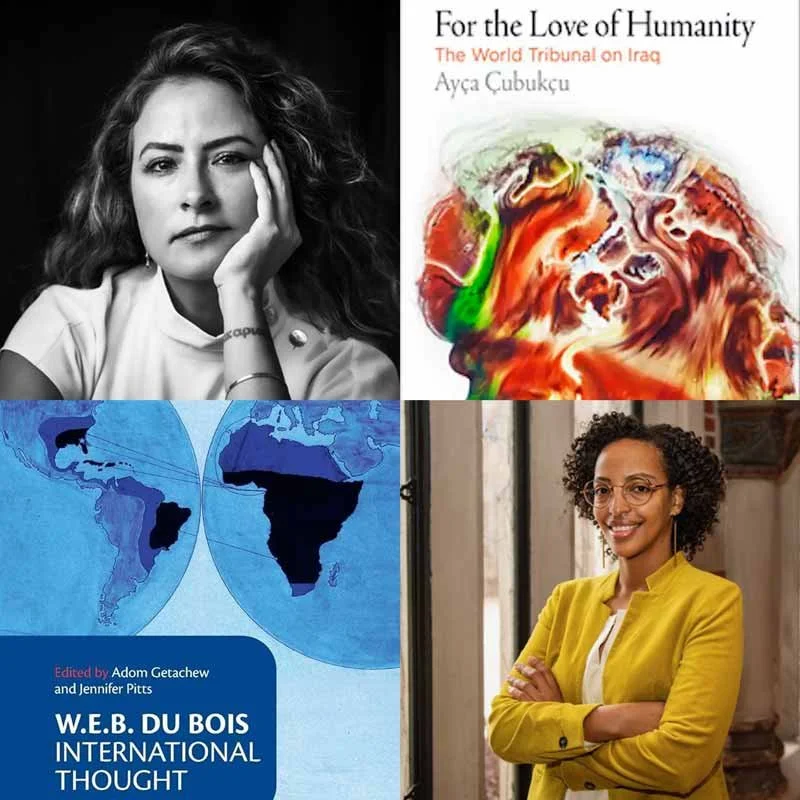
On Imagining a New Left Internationalism Outside the Legacies of the Settler State
In this episode on Speaking Out of Place podcast, Professor David Palumbo-Liu and Azeezah Kanji have a conversation with critical political theorists Adom Getachew and Ayça Çubukçu on the colonial construction of the international system and its organization around the institution of the nation state. The conversation covers and uncovers so many aspects of the hidden colonial history behind the constitution of this system, but also the resistance and creative appropriations by Black, Indigenous, and colonized peoples, allowing us to imagine possible liberatory futures beyond the forms and strictures of the colonial present.

Vice President of Strategy and Planning for Minnesota Power
Julie focuses on long-term strategy and development for Minnesota Power’s customer needs. Her responsibilities include fuel strategy and procurement, project development, consideration of new technology, customer power supply marketing, customer forecasting, and resource planning.
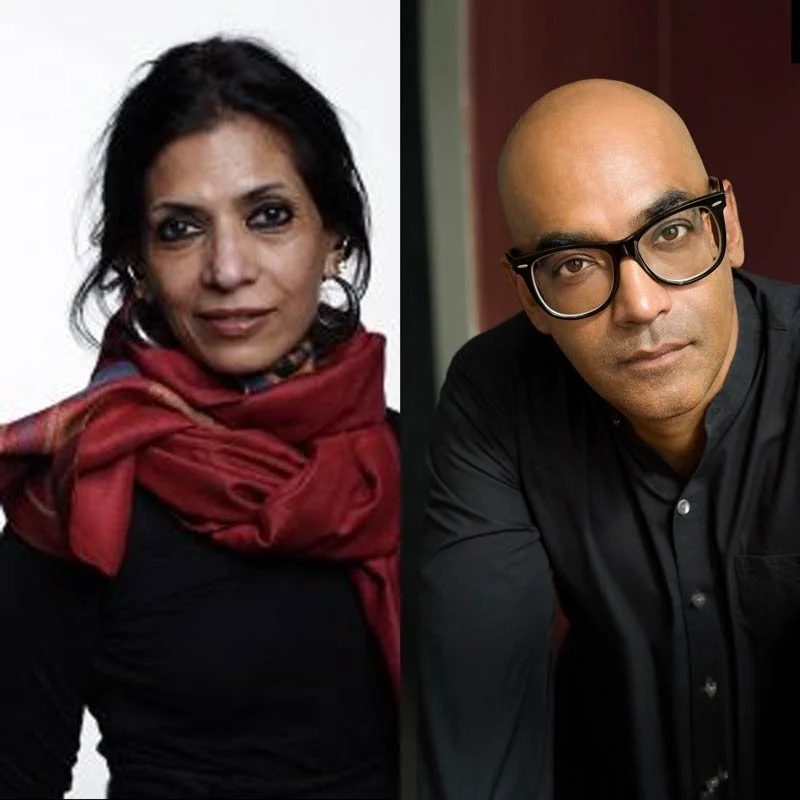
What Do the June 2024 Elections in India Mean?
I think that the 2024 national elections in India signaled a slowdown in its slide into authoritarianism, but did not halt it. The BJP (Bharatiya Janata Party) and the ways in which it secured votes merit analysis. In his June 4th victory speech, Narendra Modi's rallying cry was "Bharat Mata Ki Jai" (Hail to Mother India), a slogan promoted by Hindu nationalists. It objectifies and feminizes the state, linking control over women and control in general to nationalist assertion. "Bharat Mata" is also associated with "Akhand Bharat," or undivided India, the once and future homeland of Hindus. Modi did not show humility in his speech. Instead, he emphasized the exceptionalism of a third consecutive win, stating, "I believe that the country will write a new chapter of big decisions. This is the Modi guarantee." Nevertheless, he also talked about his government's efforts to weed out forms of corruption, which is ironic given the BJP's recent collusion in the electoral bond scandal.
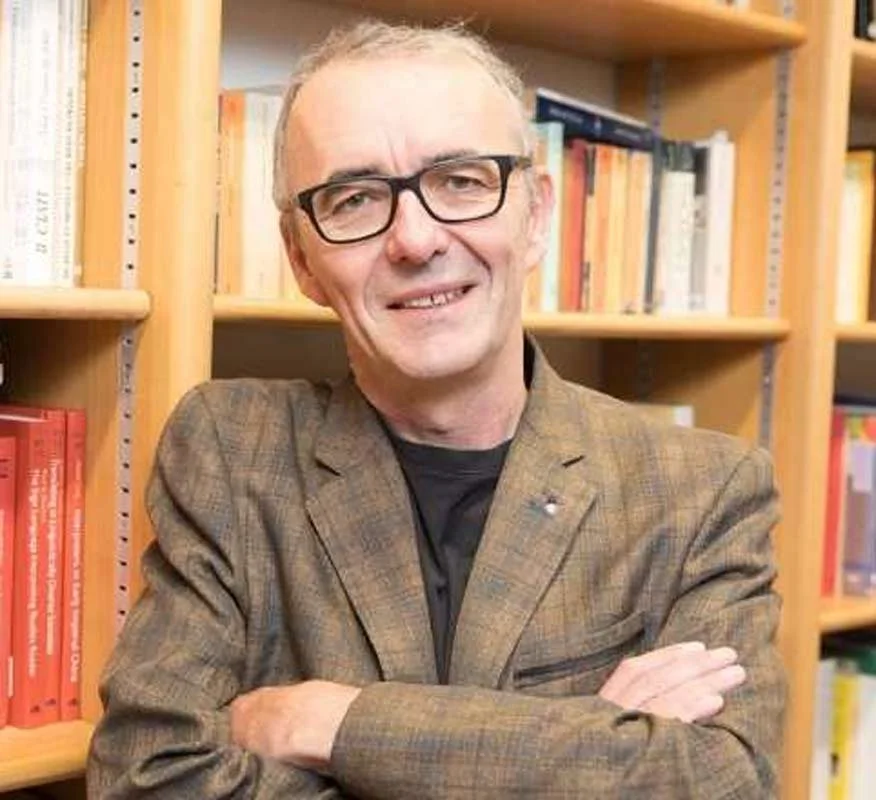
Author of Eco-Travel: Journeying in the Age of the Anthropocene
Snr. Researcher · Trinity Centre for Literary & Cultural Translation
The idea of a kind of inert world that is simply there for our pleasure, enjoyment, and exploitation has proved to be catastrophically mistaken because we see it with flooding, we see it with forest fires. We see it with acidification of the oceans. We see it with the continuing rise in temperatures that the world itself, the more-than-human world is fighting back. It has taken on its own agency. And therefore, the idea of a pyramid, a hierarchy, is no longer operative.
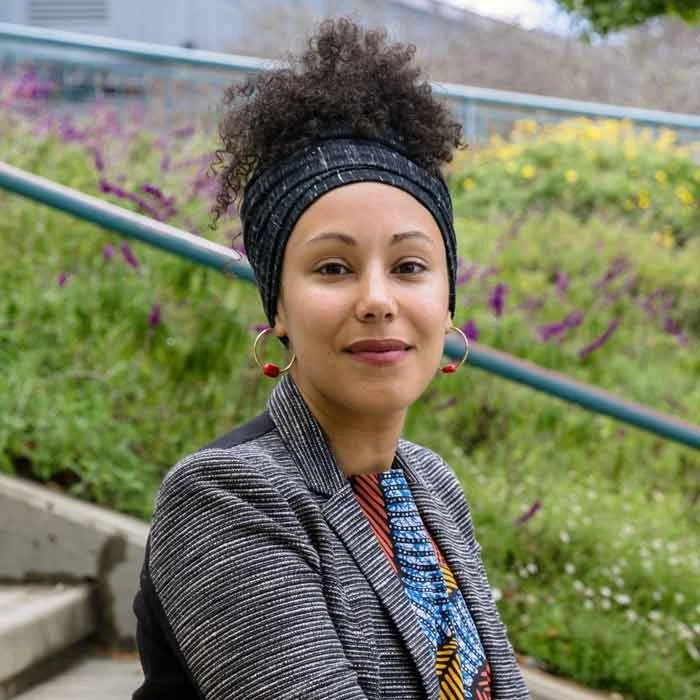
Co-Editor of The Black Geographic: Praxis, Resistance, Futurity
Author of Contesting Race and Citizenship: Youth Politics in the Black Mediterranean
A Black geographic perspective for me was really helpful in trying to clarify how we can simultaneously understand Blackness as a global project, that is anti-national, that transcends borders, but that also takes on really specific meanings and practices in different places, engagements with Black geographies that are looking just beyond the framework of North America.
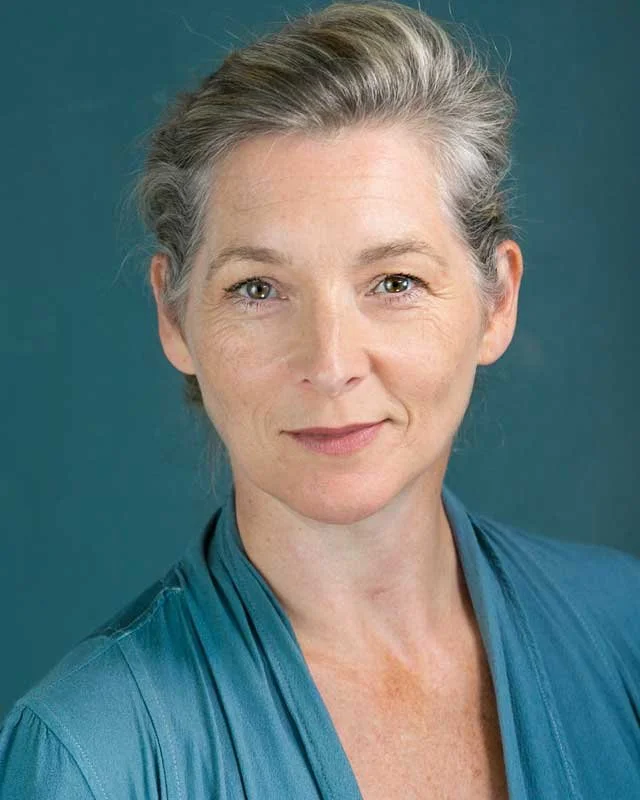
Intimacy Coordinator · Founder of Intimacy on Set
Author of Intimacy On Set Guidelines
For years, people spoke about how awkward or embarrassing it was to perform the intimate content. And what they're speaking about is feeling horrible. If something's awkward, that squirm, that ring in the body, it feels embarrassing. That's actually an emotion that is not professional. That is not allowing the actor to stay feeling listened to, heard, empowered, autonomous. And so that they can just get on without any of those concerns and do their job to their best ability. And that's the awareness that we brought. So, we're saying, it is not suitable in our workplace for anybody to feel harassed or abused.
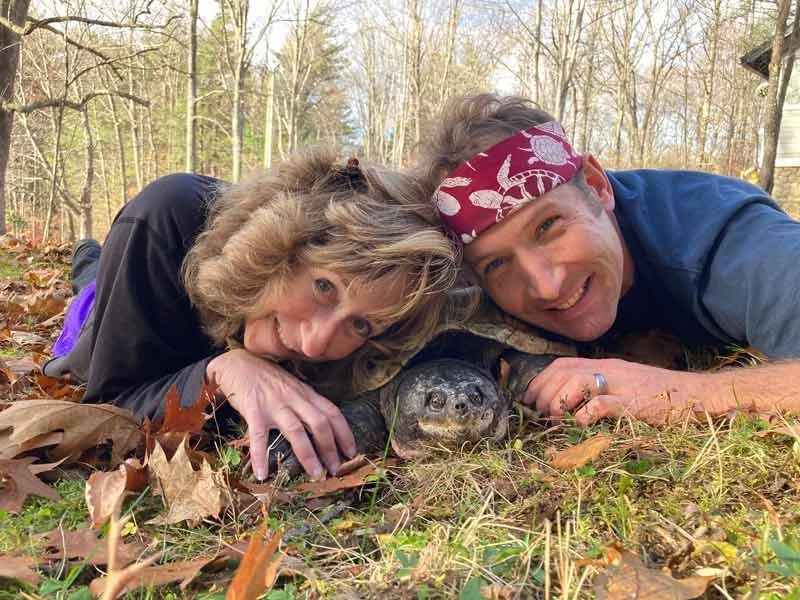
Author | Illustrator
I did know that I wanted this book about turtles to also be about time. It's one of two big questions in philosophy. The one big mystery that I had tackled in a previous book, Soul of an Octopus, was the mystery of consciousness. The other big hard problem in philosophy is time. And I felt, you know, who better to lead me in this exploration than turtles, who live in some cases for centuries, who've been around...they arose with dinosaurs, yet they survived the asteroid impact. They are the embodiment of patience and wisdom.
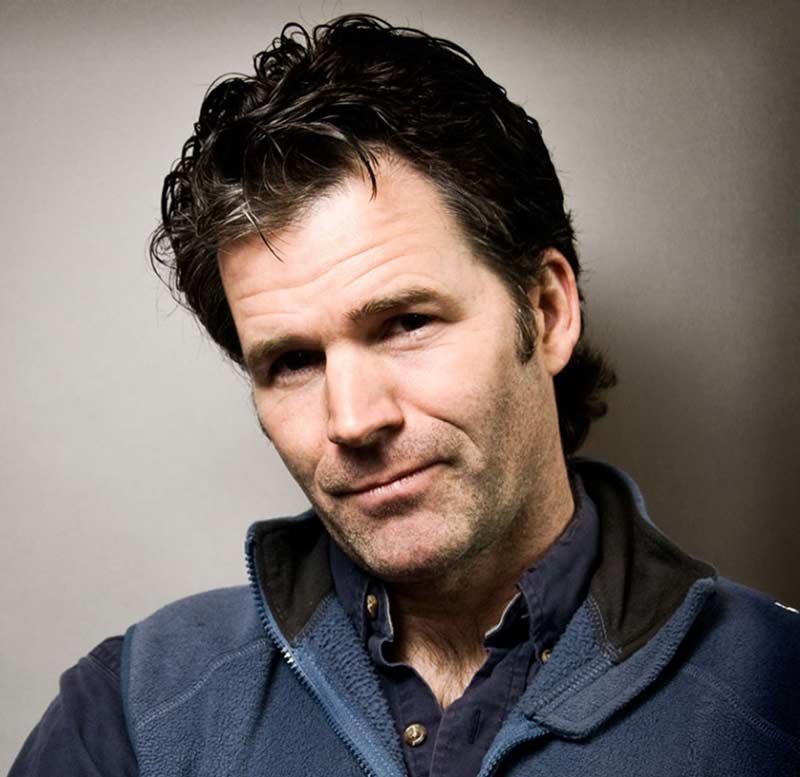
NYTimes Bestselling Author
House of Sand and Fog · The Garden of Last Days · Ghost Dogs · Townie
All creative writing is that act of reaching for the pieces to put it back together again. And with the memoir, the essay, it's human memory. Your memory for your own existence. With fiction, it’s a dream world where you're reaching for the shards. Writing is a free fall into the writer's psyche, and if you want some clarity on what you believe, just write something sincere and emotionally naked and read it back to yourself, and you'll see a lot of what you believe, what you think, what you fear, regret, and desire, etc.
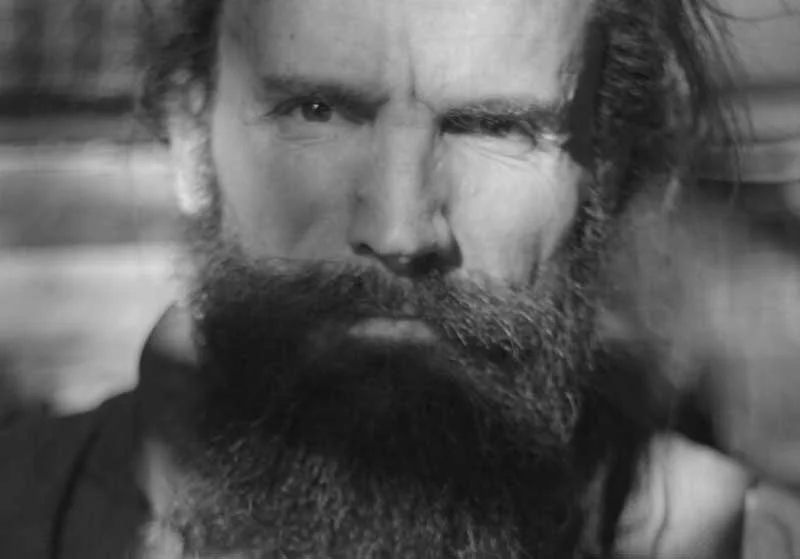
Paleoanthropologist · Author of The Naked Neanderthal: A New Understanding of the Human Creature
This book is not just about Neanderthals. It's a book about us. I wanted to warn humans, to say there is something in us that is so efficient and dangerous. We've effectively collapsed many things and are now inducing the collapse of natural environments on the planet. And after that, we might even cause the collapse of ourselves as Homo sapiens.
Coordinator, Phd Programme, Environmental Sustainability & Wellbeing · University of Ferrara
Co-editor of Cultures of Sustainability and Wellbeing: Theories, Histories and Policies
The humanities are all about representing the world, while the sciences are all about knowing the world. But I believe the roles are deeply intertwined, and that literature, the humanities, philosophy, history, and the arts are all ways of knowing the world. They do exactly the same thing in our understanding of the world. And it is really important to try to put these things together to bring people closer in talking to each other.
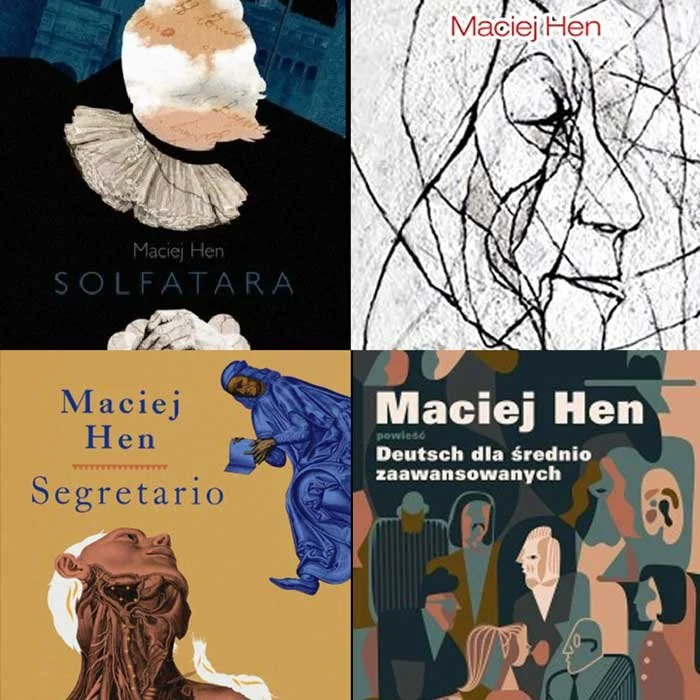
Award-winning Author & Filmmaker
According to Her · Solfatara · Segratario
I wondered who could be a better narrator of the story of Jesus than his own Jewish mother? When I was young, as a European Greco-Christian, I was aware of some of my Jewish history, but writing According to Her, I tried to imagine the story of someone considered to be a Messiah or prophet by some Jewish followers. What could be the genuine story of something that really happened or was told? This led me to write a realistic novel about how it could have been.
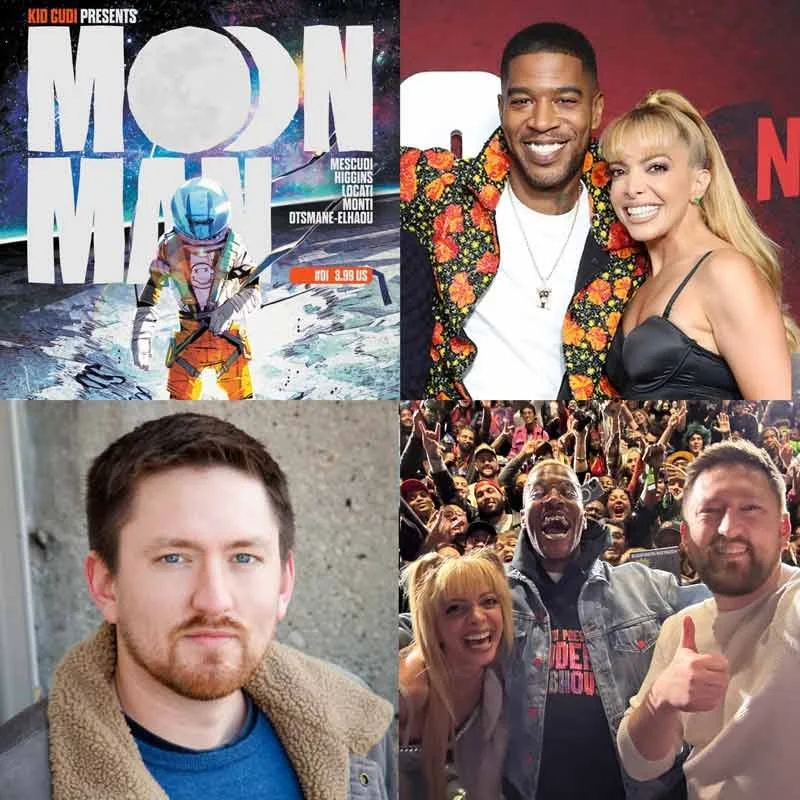
Eisner Award-nominated Comic Book Author KYLE HIGGINS
Emmy-nominated Producer KARINA MANASHIL & KID CUDI on the Making of Moon Man
So, as we started talking and going through what this could look like. What a new black superhero in 2024 could look like? What would the threats be? What the world might look like if it's maybe not even five minutes in the future? I would argue it's like two and a half minutes in the future. And then what kind of really complex, emotionally layered journey we could put this character through?
Climate Change, Education, Mental Health & Advocacy for Nature
Climate change gives us a chance to re-imagine the world in a way that every single human being can participate in. And so whether you're in a remote part of the United States or some other country, when you learn about climate change, it shouldn't just be the science. It should be the opportunity. –Kathleen Rogers, President of EarthDay·ORG

Musicians, Writers, Ecologists & Philosophers on the Mysteries of the Natural World
The natural world has its own sonic language. Its own fingerprints. And that's one of the beautiful things about being out here. There is another acoustic environment, another sort of sonic fingerprint, and it is always changing. Every day is a sort of a different sound picture. I walk out the door and you do hear it changing over time. The leaves are coming in now, different kinds of bird song. The wind sounds different. It's a wonderful thing to be around and experience.
—Max Richter
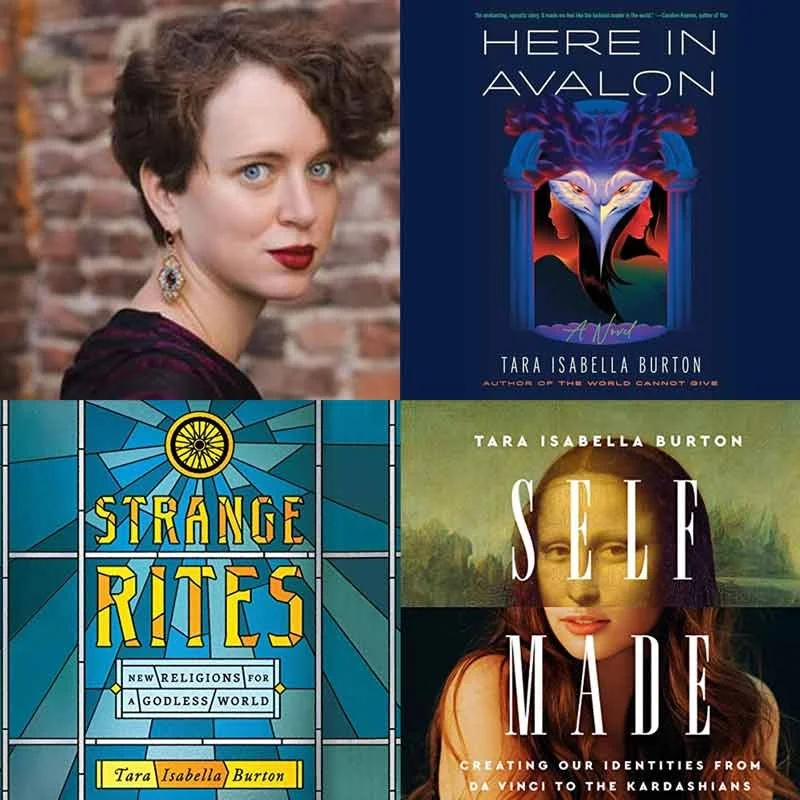
Author of Here in Avalon · Social Creature · Strange Rites: New Religions for a Godless World
Self-Made: Curating Our Image from Da Vinci to the Kardashians
So this idea that we can present ourselves as works of art, that we can create ourselves has always had a particular sort of aristocratic coding, historically associated with monarchs, who create their public image and their public persona, including through fashion. Today, if we don't self-promote, self-create, and self-brand, will we find the right partner? Get into the right college? Even secure the best job?

Director of Education · EarthDay.ORG
If you talk to a young person about the climate crisis, they tend to have one of two responses. They either feel like we're not doing enough, and they're advocating for more. The other response is that students would just shut down and wouldn't want to talk about it. I believe introducing climate education is key to addressing that climate anxiety and providing students with climate optimism, hope and solutions.
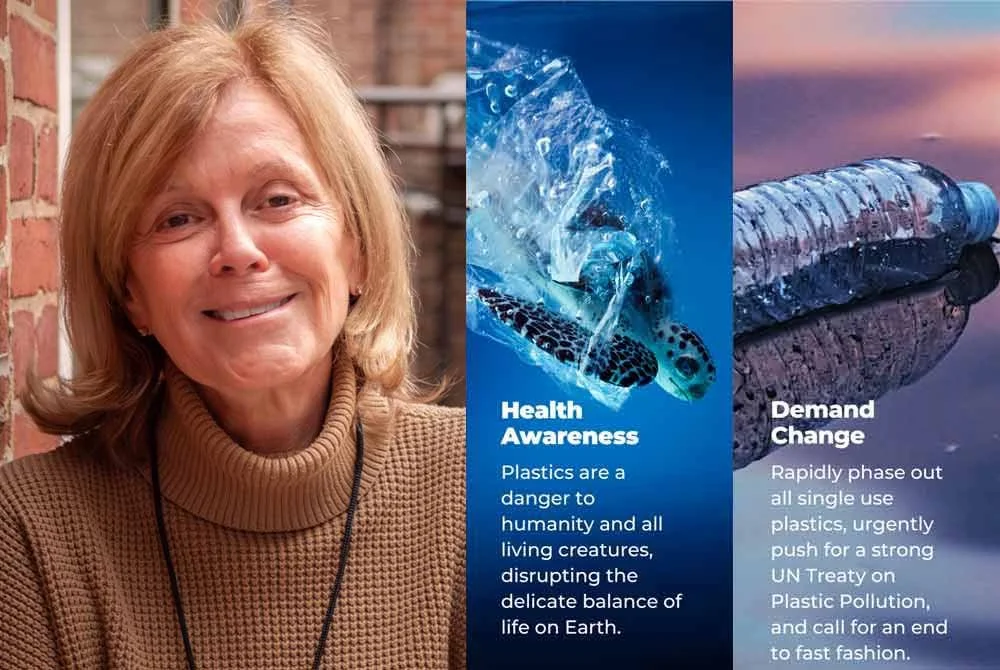
President of EarthDay.ORG
The world recognizes that plastics have imperiled our future. Many environmentalists, myself included, view plastics as on par with, if not worse than, climate change because we do see a little light at the end of the tunnel on climate change. Babies vs. Plastics is a collection of studies, and we particularly focused on children and babies because their bodies and brains are more impacted than adults by the 30, 000 chemicals that assault us every day.
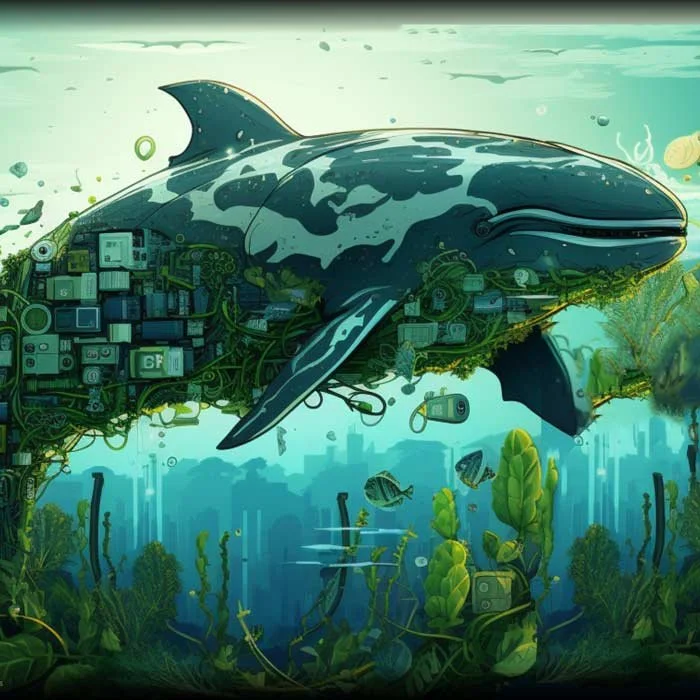
Interview with KATHLEEN ROGERS
President of EarthDay·org
Microplastics and nanoplastic pollution are currently blanketing the planet. They are in the air we breathe, the food we eat, and the water we drink, infiltrating our bodies and even brains and human embryos. Coca-Cola alone sells 100 billion+ single-use plastic bottles each year, ending up in landfills and the ocean. Earth’s population will reach 9.8 billion people by 2050. Two-thirds of humans will become city dwellers. Our waste will drive a mounting worldwide crisis.
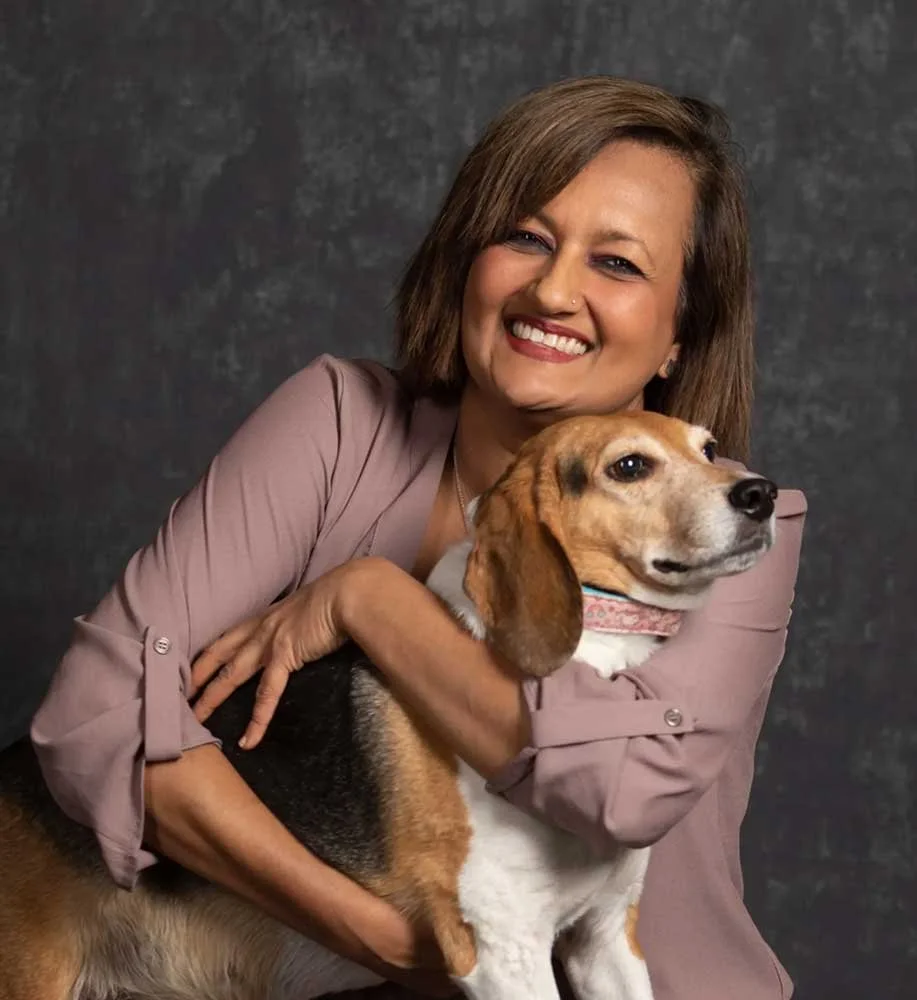
PETA U.K. · Senior Vice President
Author of Survival at Stake: How Our Treatment of Animals is Key to Human Existence
I wrote Survival at Stake because I've been working in animal rights for nearly the past 25 years. Throughout that time, one common question has been asked: Well, shouldn't we deal with human issues first. But animal rights are human rights. Animal rights is environmentalism. These things are not distinct. And that's the point I was really trying to make in my book. I was inspired to write it because of the COVID-19 crisis. It just brings us back to the point of why it is so important to teach people, young people, and young men the importance of being kind to everyone, animals included. If you teach them that, I think the other lessons start to much more automatically transfer over.

Astrobiologist · Science Communicator
Author of Origins: How the Earth Made Us · Being Human: How Our Biology Shaped World History
The challenges facing our society at the moment effectively are the unintended consequence of a solution we found in the late 1700s when society was running out of energy, we had no more timber, and we realized we could dig underground for ancient fossilized woodland, which is basically what coal is from about 300 million years ago. The consequence of burning all that coal and then oil was a release of carbon dioxide, changing our atmosphere and warming the planet. So, it's a problem born out of our ingenuity and resourcefulness, but I'm confident that we will find the solution out of our ingenuity and resourcefulness.
Founding Member of Climate Change AI
AI Researcher & Climate Lead · Hugging Face
My work is really about figuring out how, right now, AI is using resources like energy and emitting greenhouse gases and how it's using our data without our consent. I feel that if we develop AI systems that are more respectful, ethical, and sustainable, we can help future generations so that AI will be less of a risk to society. The way I got into this field was working on the environmentally beneficial applications of AI, and I do believe that that's an impactful way of using AI techniques because there's so much data about the climate, satellite data, and sensor data, and the way to go about this is to work with domain experts. AI is never going to solve the problem on its own, but it can be a tool. So I think that there's a lot of promise there.
Fmr. European Chair for Sustainable Development & Climate Transition · Sciences Po
Development Clinician focused on Cities & Nation States
How do you have economic growth that is socially equitable and environmentally sustainable? It's not just that you have ecological sustainability; hence, that is sustainable development. Because lots of examples of economic, ecological, and ecologically sensitive growth need not be socially equitable. That's why this whole emphasis on just transition is not just about climate, but it's also about justice. It's about social equity in economic growth. Unlike in Europe, where there is now the call for degrowth or a circular economy, most parts of the world would look at you blankly if you talked about degrowth because they are hungry for growth. And so sustainable development is about managing these trade-offs.
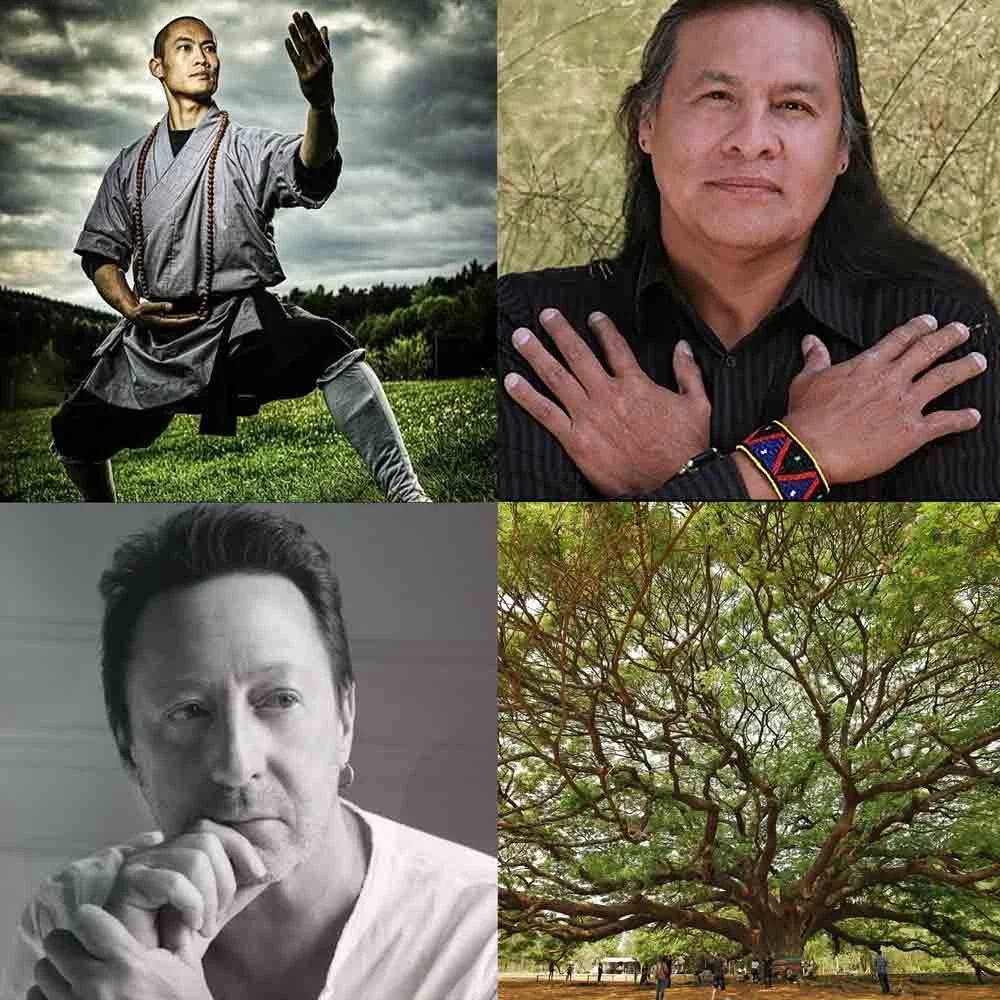
Scientists, Artists, Psychologists & Spiritual Leaders Share their Stories and insights on the importance of connecting with nature, preserving the environment, embracing diversity, and finding harmony in the world.
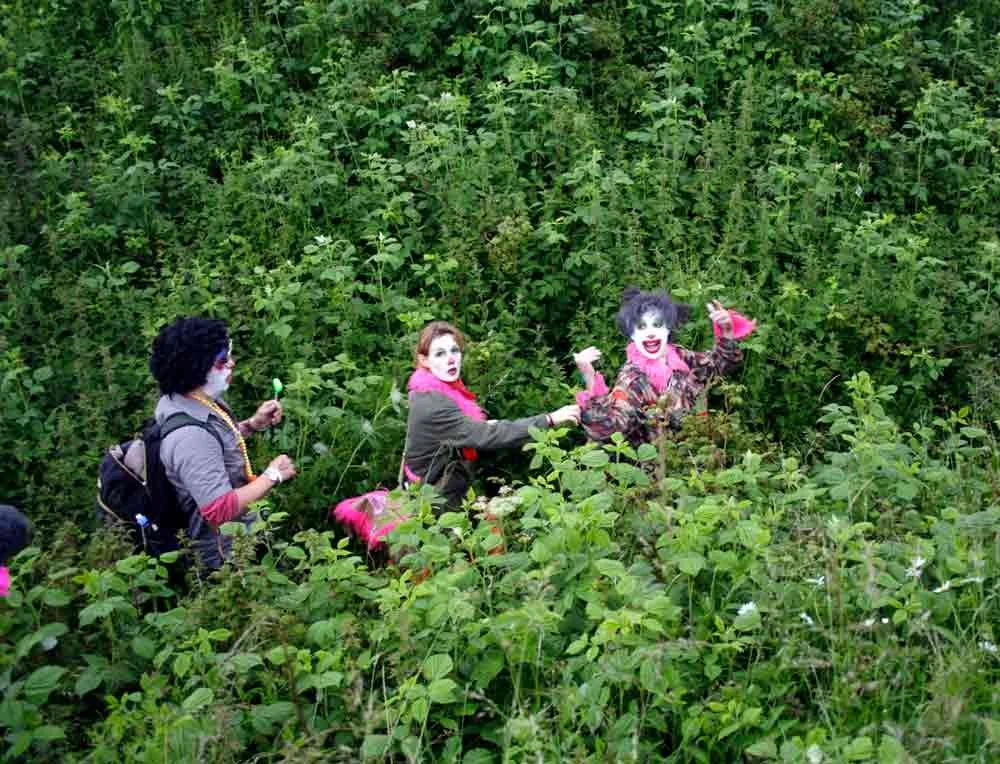
Artists, Activists & Anarchists Seize Wetlands from the French Republic
Authors of We are ‘Nature’ Defending Itself: Entangling Art, Activism and Autonomous Zones
the story of a 40-year struggle to preserve 4,000 acres of wetlands from being destroyed to make way for an airport
Award-winning Scientist · Ecologist · Professor Emeritus · University of Guelph
Author of Cliff Ecology · The Urban Cliff Revolution · The Dogma At My Homework
I think one thing I learned from looking at the ancient trees is that there is no great benefit to anything of growing quickly and accumulating vast resources. Growing slowly and patiently and with fewer demands on the environment in which you live is just as healthy and perhaps more healthy than the endless hunger for more and more and more, which we see as a characteristic of our species.
Ecologist · Founder of Restor
Co-chair of the Board for the UN Decade on Ecosystem Restoration
Global restoration really means finding and empowering the millions of local communities, indigenous populations, and farmers who are promoting biodiversity. Restor is a digital platform, sort of like Google Maps, but for restoration. So rather than seeing coffee shops and supermarkets, you will see conservation projects and Indigenous-led restoration initiatives. And that means you can find a currently on Restor - I think we have around 140, 000 - so you can go on there for free right now and find thousands and thousands of these amazing heroes of nature. And you can zoom in and you can see every single tree on the ground. You can see every bush and you can fund them or you can buy their coffee or you can go visit their projects and do ecotourism. There's a myriad of ways that we can all support their efforts by also improving our own lives.
We need to be cutting our emissions so that we can allow nature to thrive and help us along the way. For far too long people have been squabbling about emissions. We should do this or we should do that. Climate change is way too big for us to be squabbling about things. We need to do everything now. When we grow the same crops every year, the soil gets more depleted and all the nutrients are lost. I've heard quotes that if we cannot find agricultural systems that rejuvenate the soil instead of depleting it, we are signing our death warrant. It's like we need to be promoting healthy soils if we're going to have any agriculture in the future.

Professor of Physics, Ice, Climate & Earth at the Niels Bohr Institute
What happens if we lose the Greenland ice sheet and pass the tipping points and Earth systems shut down?
If that shuts down, roughly speaking, the climate of Northern Europe would be like the climate of Alaska. So, climate models that actually simulate what happens when it's shut down, would say that England becomes like Northern Norway, which means that food security and things like that will be threatened because you cannot grow many crops in Northern Norway. And other models say precipitation changes, so places that are wet might become dry, and so on. So, these are of course severe consequences for Europe, but in some sense, this is going in the opposite direction of global warming. We're all talking about we're getting into a warmer world, but I'm talking about a cooling here. But the warm water that does not then flow from the tropics into the North Atlantic will stay in the tropics. And there, you're not contra-balancing global warming. There you will have the heating on top of the global warming. And that I see as maybe the largest problem we have is that the tropics become even warmer. And we have to realize if you live in a place where mean temperatures are maybe late thirties Celsius and or rise to the forties livelihood becomes very difficult.
Psychologist · Author of Why We Work
The Paradox of Choice: Why More Is Less
In 2004, the internet was just getting started in a major league way, and already the choice overload was a problem. I would say that from the modern perspective, 2004 seems like the 18th century, and as near as I can tell, all of these changes, every single one of them has made the problem substantially worse. The idea that you can get information to help guide you through - well, yeah, but what information do you believe? What's trustworthy? What's being motivated by an opportunity to sell you something? So there is a haze, there is this fog that we're operating in. And I think we just sort of give up in resignation and look at recommendations and hope that they're legitimate because how else do you get through the day?
Author of Slow Down! How Degrowth Communism Can Save the World
Marx in the Anthropocene: Towards the Idea of Degrowth Communism
The Green New Deal presents itself as a kind of radical policy. If you look at the content, it's just simply the continuation of what capitalism wants to do. It's a massive investment in new, allegedly green industries, with the creation of more jobs with higher wages, but these are not the things that socialists or any environmentalists should be actually seeking because we recognize that capitalism is basically the root cause of the climate crisis and the misery of the workers. If so, I think it is high time to imagine something radically very different from business-as-usual capitalism.
American Jews were interested and involved in Palestinian rights all the way back to 1948. There's this idea that it came about just now or in the 1970s, but actually as long as there's been a Nakba. As long as there's been Palestinian refugees, there’s been American Jews concerned with that, too. I would say that a lot of times these American Jews were very well informed and spent time in the region, and they came to these conclusions often not in the United States, but over there where they were talking to the Israeli left and meeting Palestinians and seeing a situation that they don't feel is ethical or sustainable.

Physicist · Author of Reality Reloaded: The Scientific Case for a Simulated Universe
Co-founder & CEO of the Information Physics Institute
These ideas go as far back as Ancient Greece, which basically gave birth to two lines of thinking, two ideologies, materialism and idealism. And the idealist thinkers like Plato regarded reality as a projection of our minds, as something that is not real. And the only thing that is real is our consciousness and our minds and everything else around us is just constructs of our proception and projections. And that was a philosophy that was opposed to materialism, which regards the world as in a materialistic way, made up of atoms and matter and our minds are a product of these chemical reactions and the matter is coming together and forming our minds and consciousness. And everything in the world exists regardless of our consciousness or our minds and the universe is there and it's a materialistic view of the world. So these are two competing ideologies, and this is actually how we see the world today in a materialistic way.
Director & Curator of Greg Kucera Gallery
My curatorial vision lies somewhere between beauty and politics. The art I most admire gravitates between those poles and sometimes touches both. Beauty is harder to pin down because many works I admire may not seem lovely to others. I am drawn now to art that is increasingly formal and spare. Art that makes a powerful statement of contemporary commentary often has the power to move me.
Co-Author of The Good Life: Lessons from the World's Longest Scientific Study of Happiness
Director of the Harvard Study of Adult Development
Psychiatrist · Psychoanalyst · Zen Priest
It's a study of adult lifespan development and when it was started in 1938, it was actually radical to study normal development for two reasons. One is that most of what had been studied was about what goes wrong in development, which we still do because we want to try to help people who are having developmental problems.
So that makes a lot of sense, but to study what goes right in development, that was unheard of. The other thing is that for a long time, we certainly thought about children as developing because you can watch children change every day. That change happens so fast, but many people thought that once you got to be in your 20s, you were kind of done with development. You found a partner, you found a line of work, you were set with regard to your personality, and that was it, then you just lived your life.
And of course, now we understand that there's so much that changes and develops through the course of adult life, but my predecessors (I'm the fourth director) were really, insightful in their understanding of how much there was to learn about all the changes that happen across the adult lifespan.
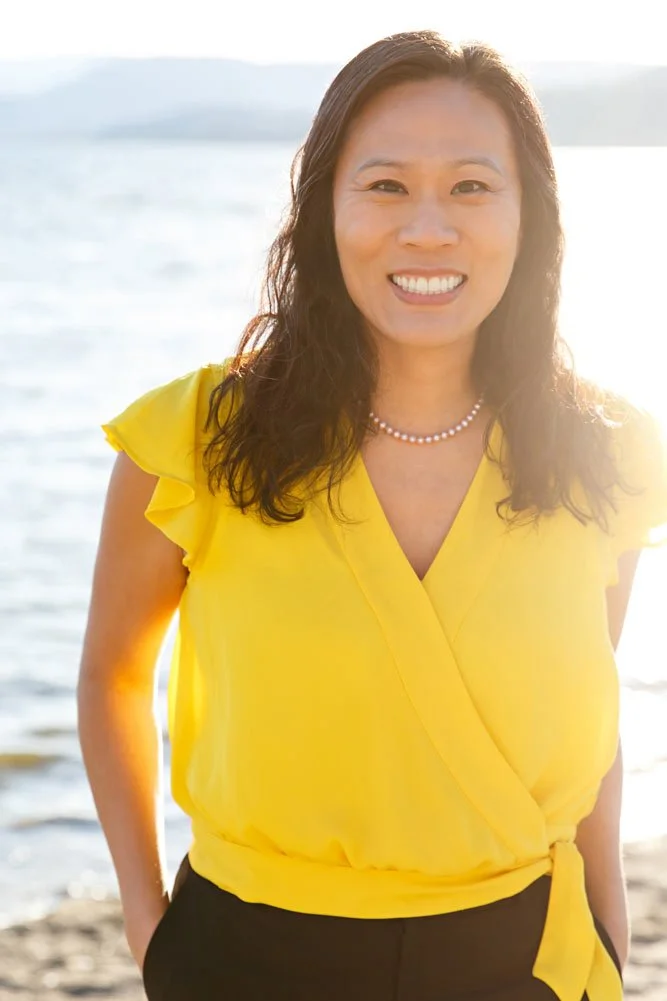
Author of We, the Data: Human Rights in the Digital Age
Professor of Political Science at University of British Columbia
One of the things that we need to remember is that we are data stakeholders and not data subjects. We're often called data subjects if you look at the way legislation is written and tech companies talk about the users of their technology as data subjects. Being a subject casts this sort of '“you can't help but have this happen to you” effect. But we're actually data stakeholders for the reason that data cannot be created without us. If companies were incentivized to follow data minimization for example, where they only collect the data they need, that would change the way we interact with digital technologies.

Author of A Brief History of Intelligence: Evolution, AI, and the Five Breakthroughs That Made Our Brains
Cofounder & CEO of Alby · Fmr. Cofounder & CPO of Bluecore
So, modern neuroscientists are questioning if there really is one consistent limbic system. But usually when we're looking at the limbic system, we're thinking about things like emotion, volition, and goals. And those types of things, I would argue reinforcement learning algorithms, at least on a primitive level, we already have because the way that we get them to achieve goals like play a game of go and win is we give them a reward signal or a reward function. And then we let them self-play and teach themselves based on maximizing that reward. But that doesn't mean that they're self-aware, doesn't mean that they're experiencing anything at all. There's a fascinating set of questions in the AI community around what's called the reward hypothesis, which is how much of intelligent behavior can be understood through the lens of just trying to optimize a reward signal. We are more than just trying to optimize reward signals. We do things to try and reinforce our own identities. We do things to try and understand ourselves. These are attributes that are hard to explain from a simple reward signal, but do make sense. And other conceptions of intelligence like Karl Friston's active inference where we build a model of ourselves and try and reinforce that model.
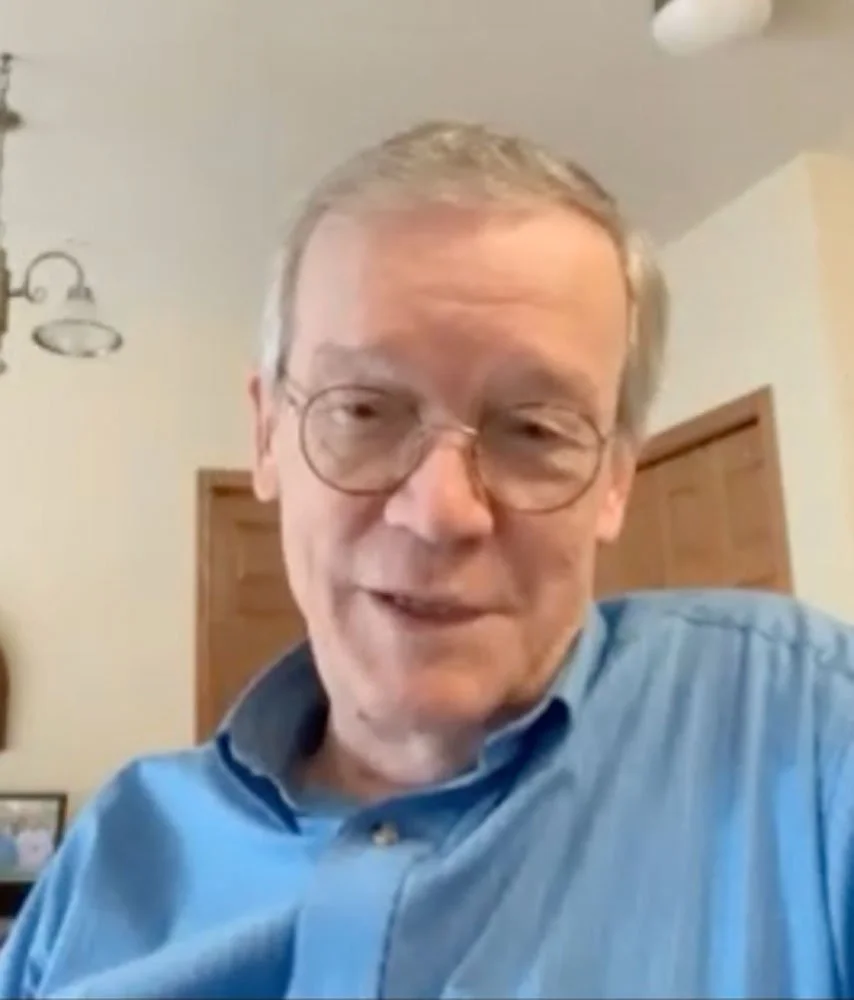
Author of Moral Vision: How Everyday Life Shapes Ethical Thinking · From Warism to Pacifism
Philosopher · Outstanding Educator of the Year · United Methodist Foundation for Higher Education
Warism, taking war for granted as morally acceptable, even morally required, is the primary obstacle to peace. The task for us is to understand how we can get moral visions and then consider the ethics of negotiating between and among them, including collisions between moral visions. So my interest is in the extent to which various forms of reason take part in these different projects. I argue that contemporary technical philosophers tend to avoid this kind of problem. They tend to think of reason as much more narrow, whereas I want to include things like ordinary experience, the arts, theater, and reading a book. All those things can have an effect.

Author of A Synthesizing Mind · Frames of Mind: The Theory of Multiple Intelligences
Co-director of The Good Project
The garden that makes up one's mind is always to some extent the flowers and trees that we get from our families genetically, but also we get from our families culturally. I became interested in synthesis and I wrote the memoir quite a while ago, but now with the advent of large language instruments or ChatGPT, the pressure to figure out what synthesis is, what these computing systems can or can't do that human beings are still the privileged cohort in carrying out those tasks, that's made the interest in synthesis more important than ever. If we're trying to decide what policy to cover, whether it's an economic policy about interest rates, or whether - we're talking now during the beginning of the war in the Middle East - what policies to follow militarily, economically, and ethically. For that matter, do we entrust that to some kind of a computational system, or is this something that human judgment needs to be brought to bear?
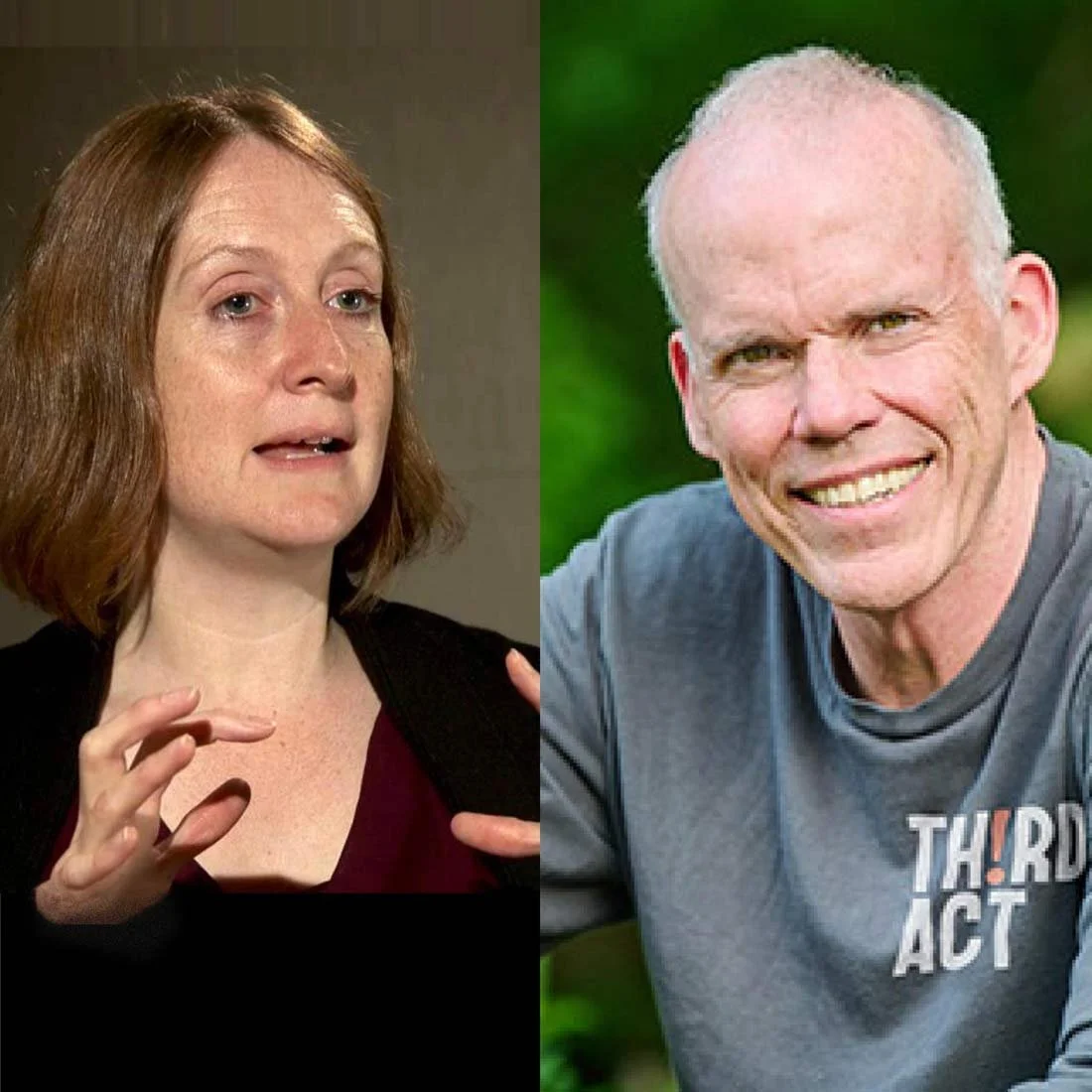
Co-Founder of 350.org · Founder Third Act · Author of The Activist Humanist
Viewed one way, we live in a very hopeful moment. Thanks to in large part the work of university scientists and engineers, we now live on a planet where the cheapest way to produce power is to point a sheet of glass at the sun. That is to say, we could run our Earth on energy from heaven instead of hell, and we could do it fast. The fast is the hard part here. The only difference between all the examples of the long victories of social justice activism that we're in now is that this one is a time-limited problem. If we don't solve it fast, then no one's got a plan for how you refreeze the Arctic once you've melted it. And so we have to move very quickly. Our systems are not designed to move quickly. It's the easiest thing in the world to slow down and delay change, which is all that the fossil fuel industry at this point is trying to do, and that means that it's time for maximum effort from all of us. The story to tell is that the planet is outside its comfort zone, so we need to be outside ours.
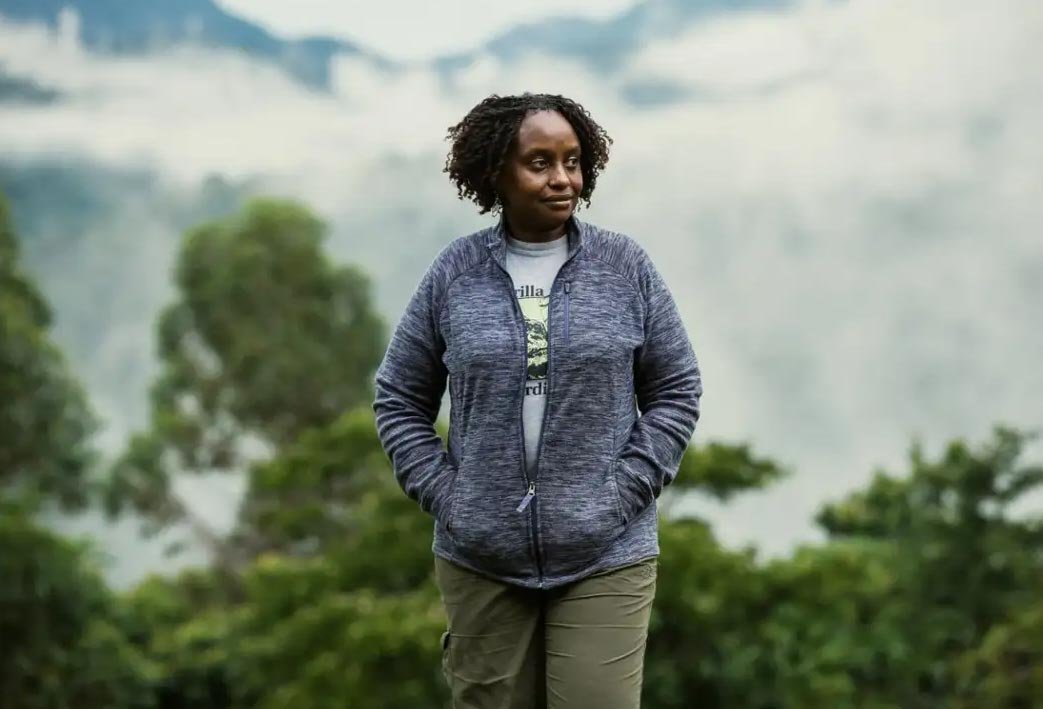
Founder & CEO of Conservation Through Public Health
UN Champion of the Earth for Science & Innovation · Whitley Award Winner
Author of Walking with Gorillas: The Journey of an African Wildlife Vet.
So you're never too young to make a difference. And I think what I would like to tell many young people is to follow your dreams and the rest will follow. Even if what you're trying to do is something that no one has ever done before. Or let's say women are not considered, it's a male-dominated profession. Wildlife conservation, veterinary medicine in Uganda is still very male-dominated. And you shouldn't really worry about what people think about you, what culture, or society expects you to be doing. If you feel that it's an important thing to do, you should go ahead and do it. And it's so important to protect the natural world, to protect nature and the wildlife because we, we protect nature, we protect nature. We are ultimately protecting ourselves. Gorillas are so few numbers still. I mean, we are happy that the numbers are growing because of so many successful conservation efforts.
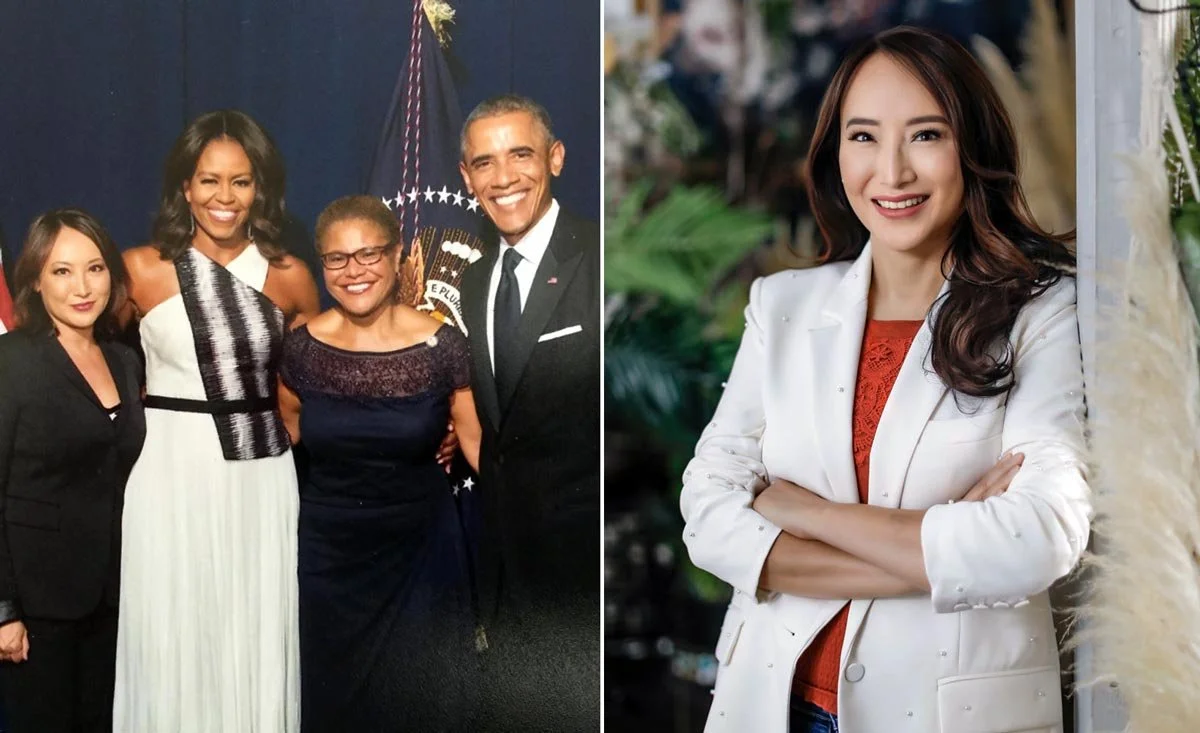
Healthcare Advocate · Former Assemblymember · Author of Women in Politics: Breaking Down the Barriers to Achieve True Representation
One of the studies I mentioned in the book is people don't see women as leaders and the barriers you experience as a candidate during a campaign. And even after you win and you're serving inside the government, there are still challenges to overcome. Last year, we had a record number of women elected and becoming leaders in government positions, but it doesn't mean their path is easy or it's set. Because of gender bias, women are supposed to be coalition builders and not supposed to be ambitious. One of the things that I talk a lot about is the ambition gap. When women show ambition, we're penalized. People are often suspicious of our motivation. It's like, why is she running? What is she about? And being an Asian American woman, I was perceived by my colleagues after I won and chaired one of the most powerful policy committees in the legislature, I often felt like people didn't know how to engage with me as a peer. They'd never seen an Asian American woman in that role before and so they would criticize me for being too ambitious or too aggressive, or too opinionated. And that really takes a toll on you just emotionally. I wasn't raised that way, but when you have an opinion, people are just not used to seeing Asian women as peers in that role and that really needs to change. And I think it will over time as they see more people like us serving in leadership roles.

What is a day in the life for a Palestinian child in Gaza today?
As of last night, the current statistics - and we hate to use numbers describing the kind of tragedy that's fallen on Palestinian children, civilians, men, and women - but over 11, 000 people have been killed. Over 26, 000 have been injured. And of the individuals that have been killed, over 4, 500 have been children. Another 1, 000 children are unaccounted for because presumably they're buried underneath the rubble. And because of the situation on the ground in Gaza right now, we can't even get equipment or people to bring the dead out of the rubble. There continues to be fuel. The water, food, and medicine blockade in the last three days, there have been no shipments of humanitarian supplies coming into Gaza. It is absolutely earth-shattering and catastrophic, the amount of malnutrition and lack of food, water, and medicine that is being denied access to people in Gaza right now. There are over a million internally displaced Palestinians in Gaza right now.

Neuroscientist · Principal Investigator Liad Mudrik Lab · Tel Aviv University
So when I say that I am a conscious creature, I mean that I don't only analyze information about the world, or not only even respond to the world because you can think about, your thermostat response to the world, but when I sense the world, I don't only process information. I also have a qualitative experience, adopting Thomas Nagel's famous title of his paper. It feels like something in his case to be a bat. In our case, to be me. It feels like something to drink coffee, right? So the question is what allows us as human beings not only to process information but also to experience it? And this is what we are trying to understand, basically. And I should say, I said us as human beings, but I think that animals also have such conscious experience.
So to what extent does our cognition affect perception itself? And I belong to those researchers who think that it does. We are affected by what we expect to see. And sometimes we even perceive the expected as opposed to the world as it is. That also pertains to day-to-day life, to politics, to the reality you construct for yourself. So the brain is an amazing, amazing piece of machinery. And one of the things that it does best is to create these narratives. into which we project ourselves. So it creates a model of the world.
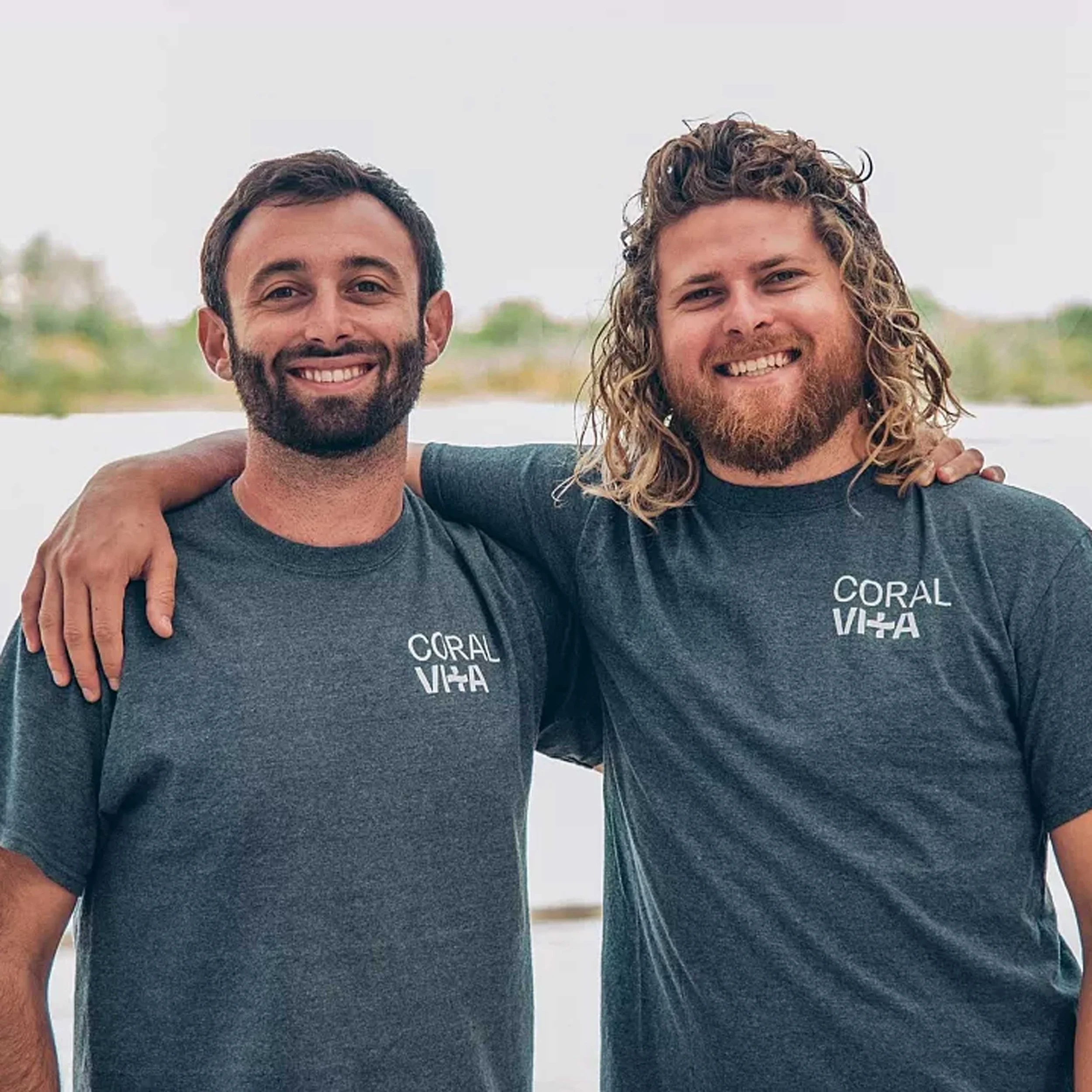
Co-Founder & President of Coral Vita
UN Young Champion of the Earth · Forbes 30 Under 30 Social Entrepreneur
Coral reefs are the most biodiverse habitat on the planet, despite covering less than 1 percent of the ocean area, over a quarter of all marine life exists in these rainforests of the sea. And if you think of a coral reef as a rainforest, the trees are the coral themselves. Which are incredible organisms, so, magic is really the right word to describe them. They're these animals that are one of the original forms of animal life, the second branch of the animal kingdom is actually Cnidaria, which includes coral and jellyfish. So, an ancient animal, but they have a symbiotic relationship with algae, and so inside the animal tissue are these zooxanthellae, these algae that do photosynthesis, like algae do, like plants do. It's able to capture sunlight and convert it into sugars and energy. And so, it's an animal, but it's got plants that live inside it, this algae, and then even more wild - it grows a skeleton that is rock!
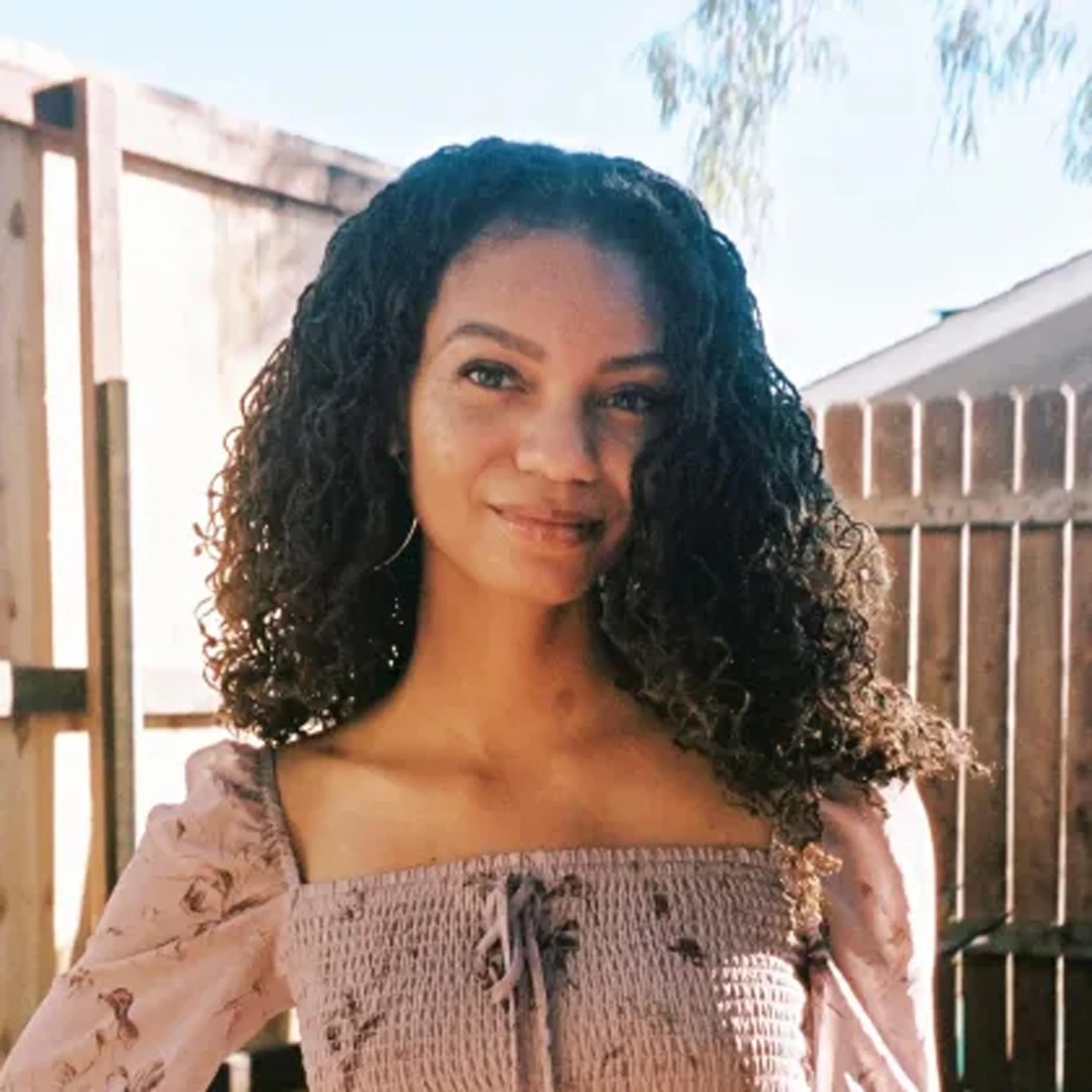
Author of The Intersectional Environmentalist: How to Dismantle Systems of Oppression to Protect People + Planet
Founder of @greengirlleah & The Intersectional Environmentalist platform
Intersectional Environmentalism to me means prioritizing social justice in environmental movements and really thinking about what communities are most impacted by different environmental injustices. So, for example, in the United States, a lot of communities of color, Black, Indigenous communities, and also lower-income communities struggle with things like unclean air and unclean water, and those are environmental injustices. So I thought it was important to have an intersectional approach to environmental advocacy that doesn't ignore these things and these intersections of identity, but explores them to make sure that every community, especially those most impacted by environmental injustices, no longer are. And I wanted to write a really accessible introduction that was targeted at school kids or anyone who wants to learn more.

Edgar Award-winning Author of The House of Love and Death
True Crime dir. Clint Eastwood · Don’t Say a Word starring Michael Douglas
Journalist & Podcast Host
I think that the modern sensibility and certainly the post-modern sensibility tells us that everything is self-referential. That if we have a certain feeling, it's because of our chemistry, it's because of our sexuality or urges that come within ourselves. But the older way of thinking is that we're in a relationship with a world that actually is reflected in our mind. And I think that that older sensibility is probably closer to the truth. It explains a lot more. It makes a lot more sense of things.
So every writer knows this, that he's not actually drawing so much from himself as some kind of literal inspiration, some kind of breathing into him that connects him, his own experiences, his childhood experiences, life experiences, his mental experiences with something that is very real outside him. And what he's trying to do in art, I think, is communicate that experience to other people in the only way possible. You can't describe it, you can't put adjectives into it. You have to dramatize it or paint a picture of it or write a song about it. That's the way human beings communicate the experience of being human.
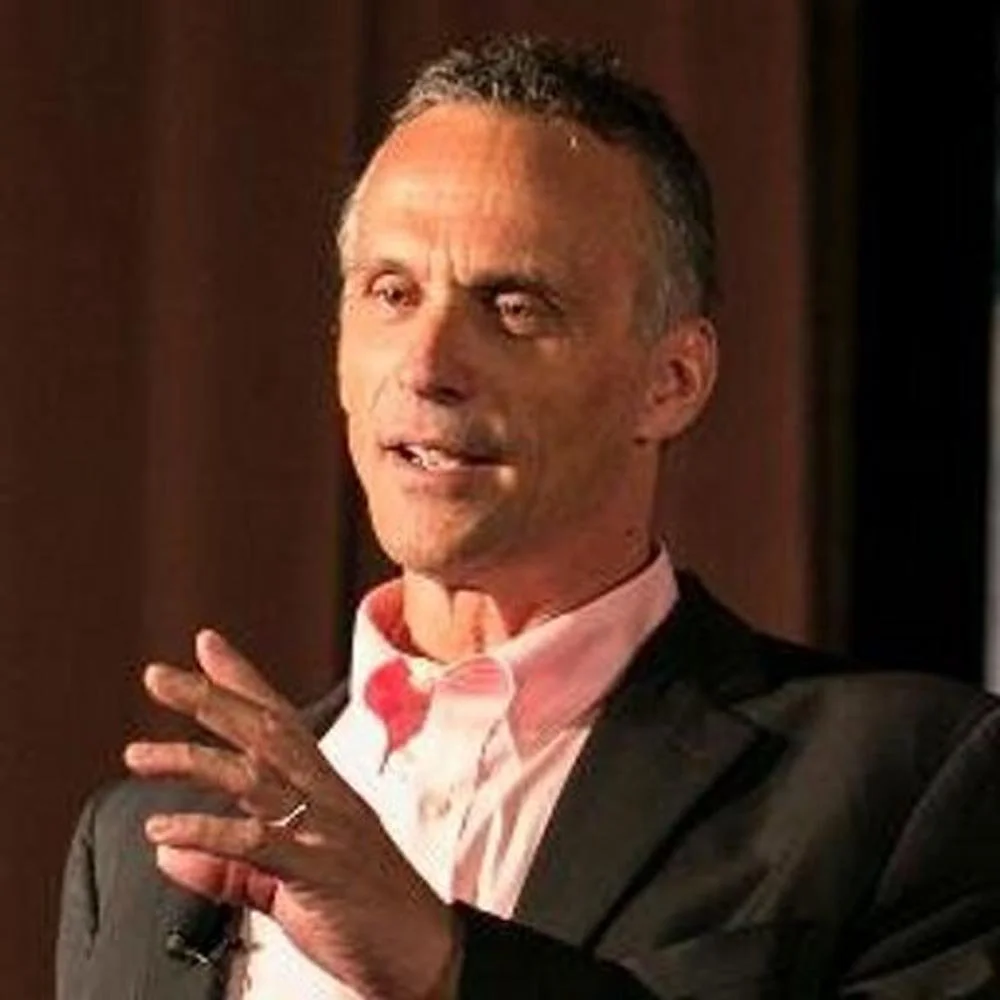
President of Wesleyan University
Author of The Student: A Short History
So I wrote this book and it was a lot of fun because I had to learn so much. The book examines three iconic teachers: Confucius, Socrates, and Jesus. And I look at how each of those teachers encourage a certain kind of student. The student as follower, someone who will take on the path that you've developed. In the case of Socrates, the student as critical interlocutor or critical conversation partner, someone who will, in dialogue with you, learn what they don't know, how to take things apart. And in the case of Jesus and the apostles, I look at trying to imitate a way of life to transform themselves to strive towards being the kind of person that Jesus incarnated. And so that's the beginning of the book, these models of studenthood, if I could use that word, and being a teacher. And then I look at the way in which these ideas reverberate in the West across a long period of time. So I'm interested in the idea of the student before there were schools. What did we expect young people to learn even when they weren't going to school?
Author of The Future You: How to Create the Life You Always Wanted
Director of the Arizona State University’s Threatcasting Lab
Futurist in Residence, ASU’s Center for Science & the Imagination
Let's talk about technology and the role of humanity and the role of being human and what it means to be present in that. We need to keep humans at the center of everything that we do, that everything that we do in our life is about humans. It begins with humans and ends with humans. There might be technologies and businesses and all these things in between, but we should measure the effect on humans.
When I talk to people about artificial intelligence or technology, I'm generally asking them two questions. What are you optimizing for? What's the effect that you're trying to get? Developing technology for technology's sake, although it can be kind of interesting...then is why you're doing it because you think it's interesting? But then ultimately, if you're doing it beyond your own gratification, why are you doing it?
So much of what I do in that is talking to governments and militaries and large organizations to say we always have to keep humans in the loop. You have to keep humans in the center because it's about us. That really is incredibly important. And that's one of the central ideas in the future. The future should be about humans, and where are humans going. And what do we want as humans? And how are we using technology to make us more human, or healthier, or happier, or more productive?
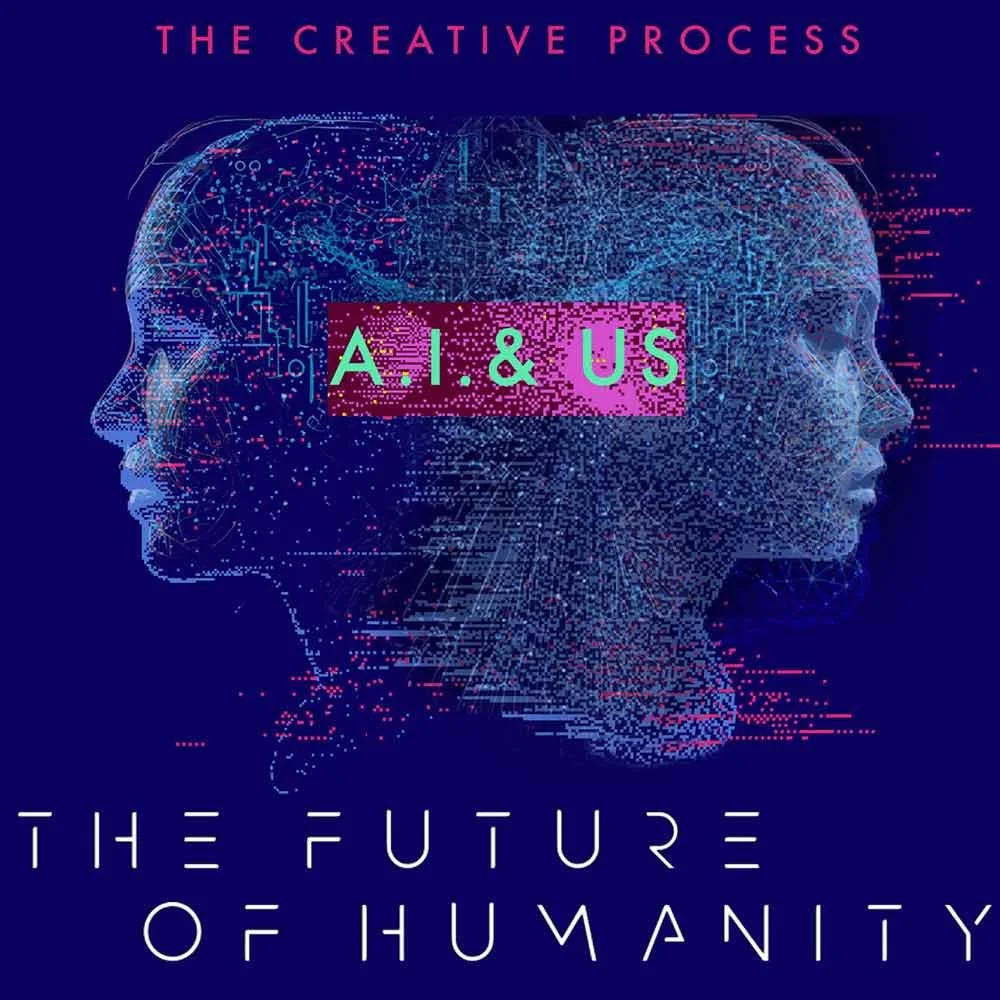
What will the future look like? What are the risks and opportunities of AI? What role can we play in designing the future we want to live in? In this first episode of our new channel, philosophers, futurists, AI experts, science fiction authors, activists, and lawyers reflect on AI, technology, and the Future of Humanity..
Founding Director · Center for the Future Mind · Florida Atlantic University
Author of Artificial You: AI and the Future of Your Mind
Fmr. NASA Chair at NASA · Fmr. Distinguished Scholar at US Library of Congress
So it's hard to tell exactly what the dangers are, but that's certainly one thing that we need to track that beings that are vastly intellectually superior to other beings may not respect the weaker beings, given our own past. It's really hard to tell exactly what will happen. The first concern I have is with surveillance capitalism in this country. The constant surveillance of us because the US is a surveillance capitalist economy, and it's the same elsewhere in the world, right? With Facebook and all these social media companies, things have just been going deeply wrong. And so it leads me to worry about how the future is going to play out. These tech companies aren't going to be doing the right thing for humanity. And this gets to my second worry, which is how's all this going to work for humans exactly? It's not clear where humans will even be needed in the future.
Discuss When “Natives” Aren’t: The Epistemic & Communal Violence & Re-storying
A lot of Pretendians lay claim to this identity of being Native American, and the universities have no problem with it whatsoever. It's indigenous people who fight against that settler colonial initiative to make this about diversity, equity, and inclusion, and not about indigeneity or indigenous rights. And so when students mark down Indigenous, they're accepted as an Indigenous person, and the university pats itself on the back for admitting yet another Indigenous person. And they happily add up those numbers that go into all sorts of reports to say, "This is how many Indigenous students we have at the moment. The numbers are rising, etc." And many of those students never attend any Indigenous events, but some do. Some will come to the support center for Native students. And some will really take on ownership of this idea that they are Native, when in fact they're not. And they actually know they're not. But let's say we have a person who's gifted intellectually. And they can get their heads around these stories. And they can get their heads around epistemic violence. And they become friends with people in the Native community. That's the beginning of their story. And that's the way in which academia produces these people.
Writer · Director · Executive Producer
Pet Sematary: Bloodlines · Sleepy Hollow · Bambi · Lord of the Flies
For me, I don't start a project unless I have a really clear understanding of who the main characters are and why this is a journey that's necessary for them to take. And why are these both the best and the worst people to be in this series? That's the question I ask myself all the time because you need to know: What are their strengths? What are their weaknesses? What are the dramatic tension points going to be where these specific people can really succeed or really fail in this scenario? I love people who are passionate, and Quentin Tarantino is just so passionate. And I've never been in a writer's room or even really in any kind of development experience where a director was just so passionate and so full of kind of energetic ideas. And that was really inspiring. Somebody who just completely knows their own point of view and gets excited by their own ideas is just fun to watch.

Organizer · Speaker · Professor at Seattle University's School of Law
Author of Normal Life: Administrative Violence, Critical Trans Politics, and the Limits of Law
Mutual Aid, Building Solidarity During This Crisis (and the Next)
I want to see movements that embolden our tactics. Like people blocking oil pipelines all over the world. That's what's required now. Asking endlessly from the dominant system to treat us fairly doesn't work. And this frustrating kind of endless appeal and hoping maybe we can get it to work this time doesn't work. And the clock is ticking, especially on ecological collapse. We need to save each other's lives and act.
on how Uber, Lyft, Instacart, DoorDash and others use algorithmic wage discrimination against their workers
In this episode of the Speaking Out of Place podcast, Professor David Palumbo-Liu speaks with Professor Veena Dubal about how such companies have exported globally a technique of algorithmic wage discrimination that pays workers based on data to which they have no access. Owners dangle bonuses before workers but take away work from them as they draw close to achieving their targets; they use psychological tricks derived from video games to create a casino-like environment where the house always wins. Dubal urges us not to fall into the trap of competing against the house, but back to “good old-fashioned organizing.”
Founding Director of the Yale Program on Climate Change Communication
Host of Climate Connections · Senior Research Scientist at the Yale School of the Environment
Storytelling is still one of the most powerful ways we have to communicate from one person to another, from one person to millions, and from millions back to one. At the Yale Program on Climate Change Communication, we study how people respond to climate change. So what do people around the world understand or misunderstand about the causes, the consequences, and solutions? How do they perceive the risks: the likelihood and severity of different types of impacts from sea level rise to the health impacts? What kinds of policies do they support or oppose? And then what kinds of behaviors are people engaged in or willing to change to be part of climate solutions? There are lots of different things there, but our ultimate question is answering why. What are the psychological, cultural, the political reasons why some people get engaged with this issue? While others are kind of apathetic and some are downright dismissive and hostile, or at least they are in the United States, which thankfully is not the case in most of the rest of the world.
Award-winning Photographer
Leica Hall of Fame Inductee · Recipient of the French Legion of Honor
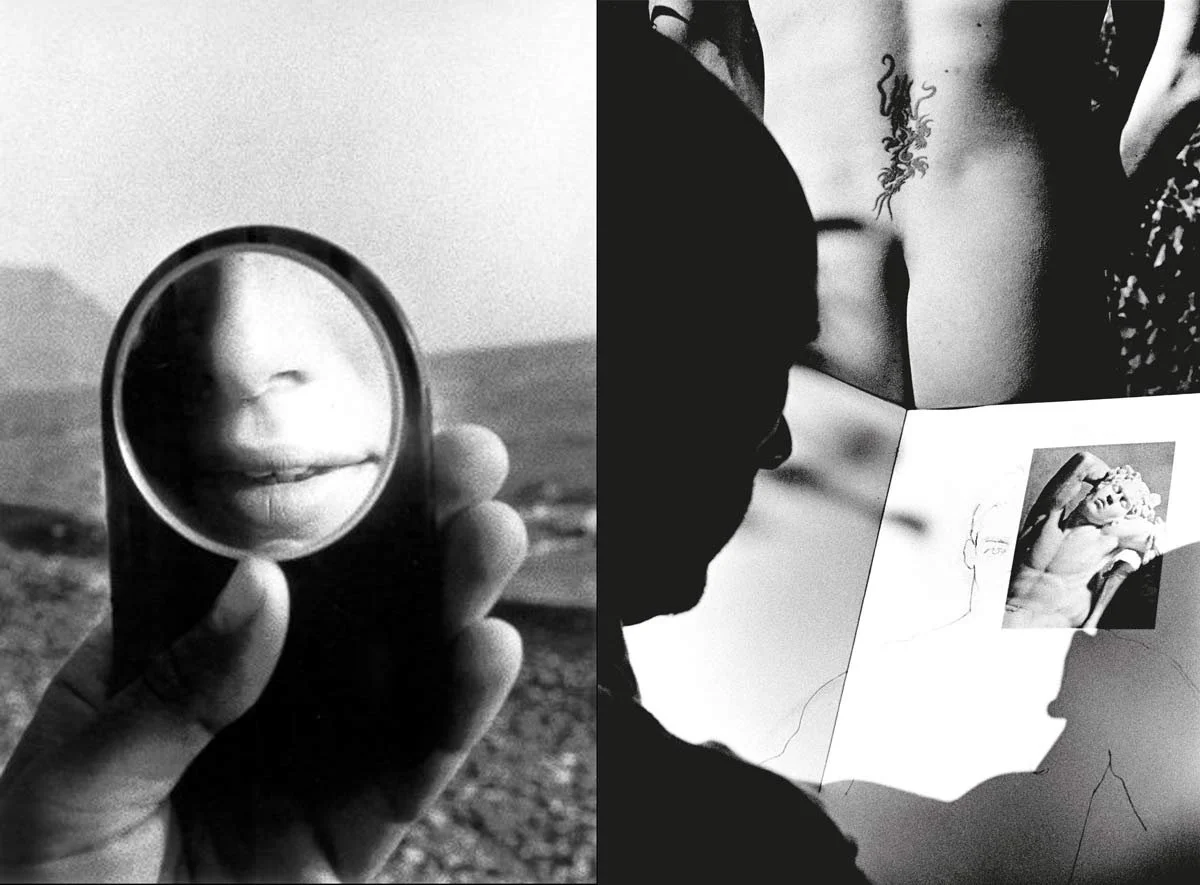
I wouldn't be able to effectively delineate where my life ends and photography begins. They're one and the same. If my eyes are open, I'm seeing. If I'm seeing, I'm essentially in that valence within which, or from within which come the images. In that book, Self Exposure, one of the things I did realize as I was writing it: all autobiographies are chronological and anecdotal. That's the way they unfold. And I realized that there were certain decisions I had made along the way that were crucial. And there was really only a handful of them. But I was very fortunate because I had that initial desire to be a photographer. I don't even know if it was a desire. I think it was something much further beyond that. I would have to say it was more of a...I didn't really choose photography, it sort of chose me, you know. I mean, nolo contendere. I just did what I knew I had to do. There was a sense of devoir, you know, you just do it. Claude Lévi-Strauss the great social anthropologist has made this sort of thing clear: Society changes and with it the context through which we observe something has changed as well. And so I like the role of art in society and my relationship to my society and to art in my society. Now I'm interested in this phase of my life and how does the mind influence the mind?

President of Mad Solar · Creative Confidante & Industry Catalyst for Scott Mescudi a.k.a. Kid Cudi
Exec. Producer: Entergalactic starring Mescudi, Jessica Williams & Timothée Chalamet
Pearl · X starring Mia Goth
And what was so moving was when we went into Netflix to the theater to screen the finished product for the first time. You're sitting there and at the end of it, Scott was crying, and I looked over - it made me cry low-key - but Scott was crying and he said – This completely blows my mind because this is the first time I had a vision up here in my head and tried to express it, and then had to trust all 300 plus people, all around the world, working in different time zones, in different places, and each of them putting a hand to it and seeing exactly that vision. And then watching the product, and it is the best version of anything I could have ever possibly had in my head.
So, to us, that's the purest, most beautiful... Again, how fortunate that every hand was moving in tandem and moving in lockstep, and all of it. But that was the beauty of collaboration, this opportunity for a small vision to touch so many hands and become the big vision.
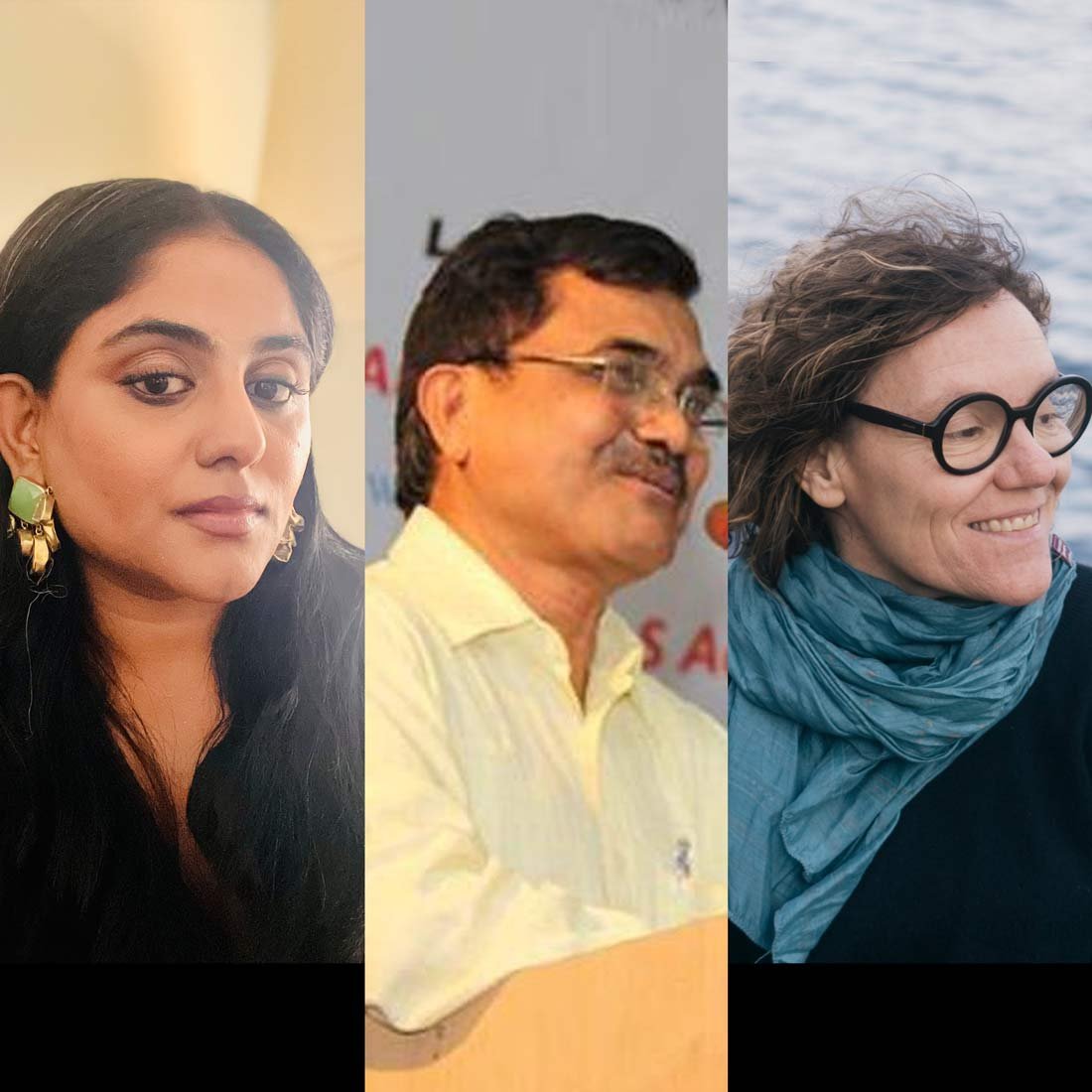
Speaking Out of Place: Voices of Resistance Emerge from Behind the Walls of India’s Security State
Professor David Palumbo-Liu and Azeezah Kanji talk with the founders of the Polis Project—Suchitra Vijayan and Francesca Recchia—about their new book, How Long Can the Moon Be Caged? Voices of Indian Political Prisoners. They are joined by the eminent Dalit intellectual, and former political prisoner Dr. Anand Teltumbde to lend his unique insight into the political situation in India and the realities of being a political prisoner there. The book combines deep historical research, documents regarding the current political situation in India, and a set of creative works from political prisoners conveying to the world their resistance and courage.
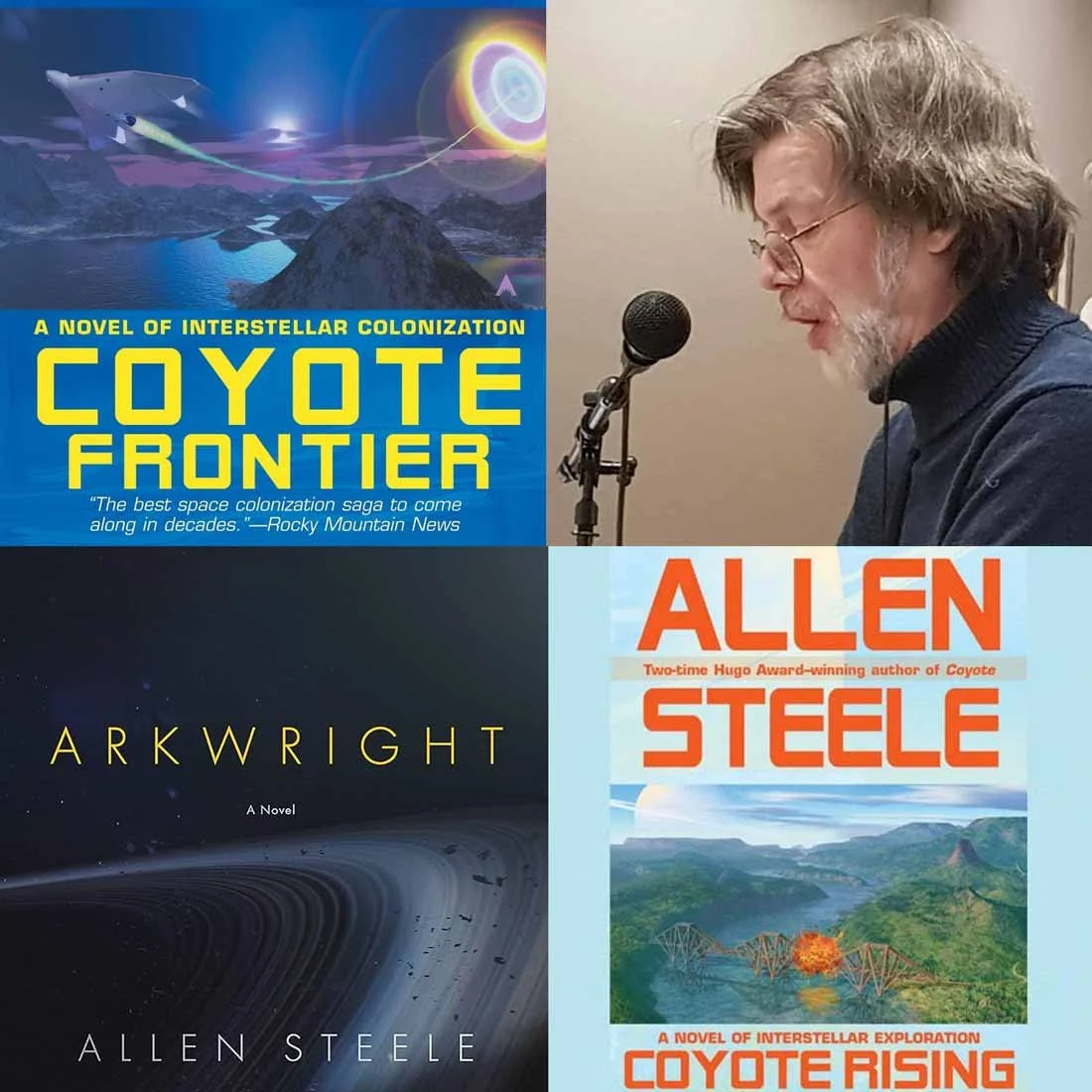
Winner of the Hugo · Asimov's Readers & Locus Awards
Served on the Board of Directors of Science Fiction & Fantasy Writers of America
I'm really very glad. I was happy to see that within my lifetime that the prospects of not just Mars, but in fact interstellar space is being taken seriously. I've been at two conferences where we were talking about building the first starship within this century. One of my later books, Arkwright, is about such a project. I saw that Elon Musk is building Starship One, I wish him all the best. And I envy anybody who goes.
I wish I were a younger person and in better health. Somebody asked me some time ago, would you go to Mars? And I said, “I can't do it now. I've got a bum pancreas, and I'm 65 years old, and I'm not exactly the prime prospect for doing this. If you asked me 40 years ago would I go, I would have said: in a heartbeat!” I would gladly leave behind almost everything. I don't think I'd be glad about leaving my wife and family behind, but I'd be glad to go live on another planet, perhaps for the rest of my life, just for the chance to explore a new world, to be one of the settlers in a new world. We've got to be careful about how we do this. And we've got to be careful, particularly about the rationale of the people who are doing this.
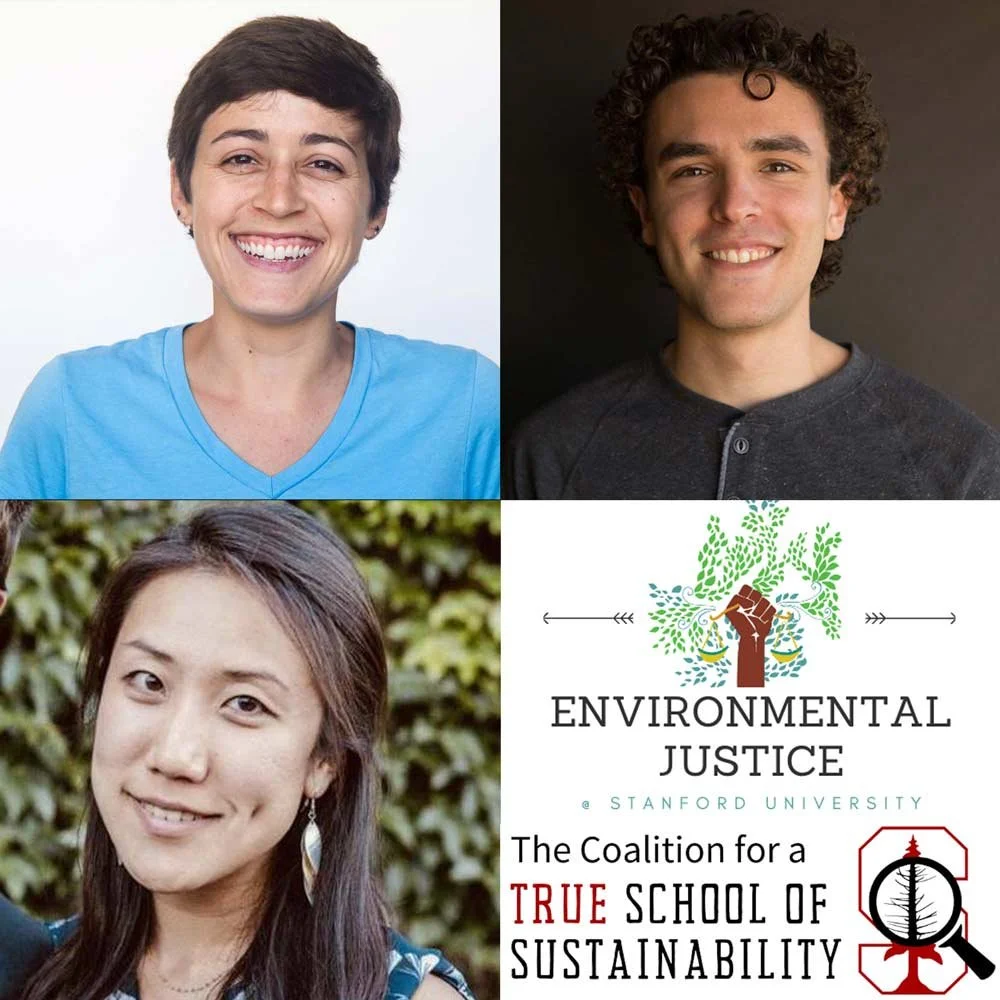
Coalition for a True School of Sustainability
In this episode of the Speaking Out of Place podcast, Professor David Palumbo-Liu speaks with June Choi, Yannai Kashtan, and Belinda Ramírez from the Coalition for a True School of Sustainability. Amidst great fanfare, Stanford University created the Doerr School for Sustainability, which immediately said that it would accept funding from the fossil fuel industry. June, Yannai, and Belinda are helping lead the movement of students pushing back to dissociate from such funds. David asks what drives them and sustains them in building a True School of Sustainability.
Author of How Confidence Works: The New Science of Self-belief
Co-Director of the Global Brain Health Institute · Co-Leader of The BrainHealth Project
The book probes the science and neuroscience behind the idea that confidence can be learned, or whether it is something you inherit. Optimism, hope, and self-esteem are all concepts that are easily confused with confidence. But, as I show, they differ in one fundamental way - confidence empowers action. You can be an optimist who is hopeful that things will work out okay in the end without ever believing that you can play a part in that outcome, or indeed have any realistic grounds for that optimism. And you can have high self-esteem and feel good about yourself without feeling confident that you can achieve a particular goal.
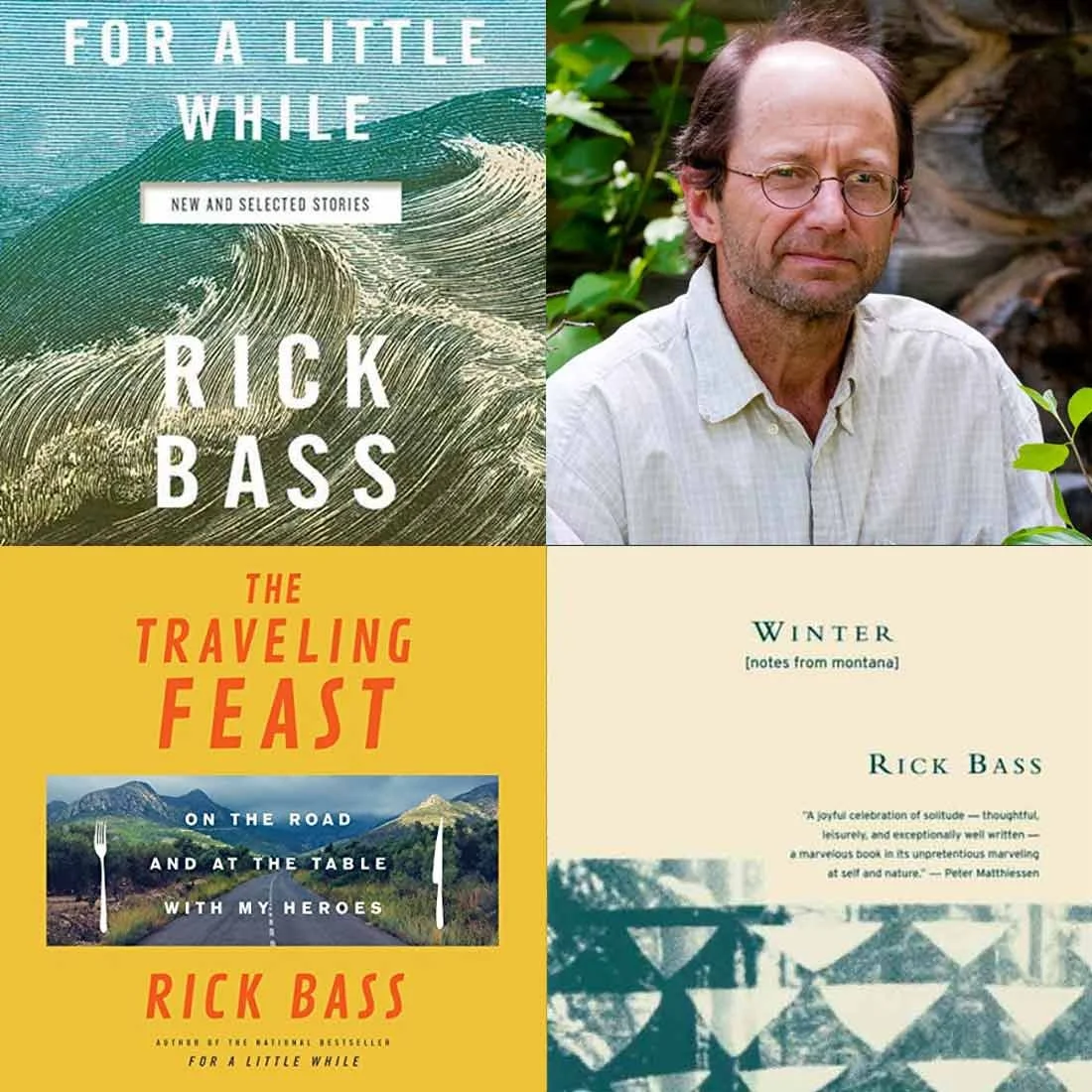
Environmentalist & Story Prize Award-winning Author
Why I Came West · For a Little While · The Traveling Feast
I grieve the changes to the four seasons that are happening here in Montana. One of the great things about this place is having four distinct seasons, and now they're tilted. Some are short, some are long, and some don't exist anymore. And that's unsettling, to say the least. It's not a fear of what's coming. It's a grief for what's gone away. I'm mindful of the pressure that we are putting on the generations who follow us and the mandate to have fun, to be fully human, to be joyous, to celebrate, and to enjoy being in the midst of nature's beauty.

Journalist · Essayist · Author · Teacher
Columnist Jacobin Magazine · New Republic
We have passed the Build Public Renewables Act which mandates and requires the state's power authority the New York State Power Authority to build its own publicly funded renewables: renewable energy, wind, and solar. And this was a long, long hard hard-fought victory. And to say how it happened, we need to think back to the early Bernie days just after the Bernie Sanders' 2016 presidential campaign. Obviously, people were very disappointed that Bernie Sanders didn't win, but a lot of people were also very politicized by that campaign and by that moment. And so a lot of people were joining DSA (Democratic Socialists of America). At the same time, a lot of young people were becoming very aware and very anxious, disturbed, and deeply depressed by the climate crisis.

Whale Researcher
President of the Center for Cetacean Research & Conservation
Director, Cook Islands Whale Research
I don't think a lot of people realize how absolutely important whales are, and not just because they're beautiful and they make people happy, but whales carry nutrients from the depths they feed back to the surface. And there's this liquidy plume of fecal matter, and it's called the whale pump. And they bring all these nutrients upward with their tails by swimming up and down the water column, it's like an upward biological pump. And there's an incredible amount of nitrogen that's released in these plumes. And we get this great soup of nutrients. We get more from this nitrogen than all the rivers combined. And in the past, we recognized microbes and plankton and fish and that they recycled nutrients in the ocean, yet whales and other marine mammals have largely been overlooked and that's too bad because they are bioengineers. They help the climate so much because of all this creates more plankton by circulating the nutrients and fertilizing the phytoplankton with their poo.
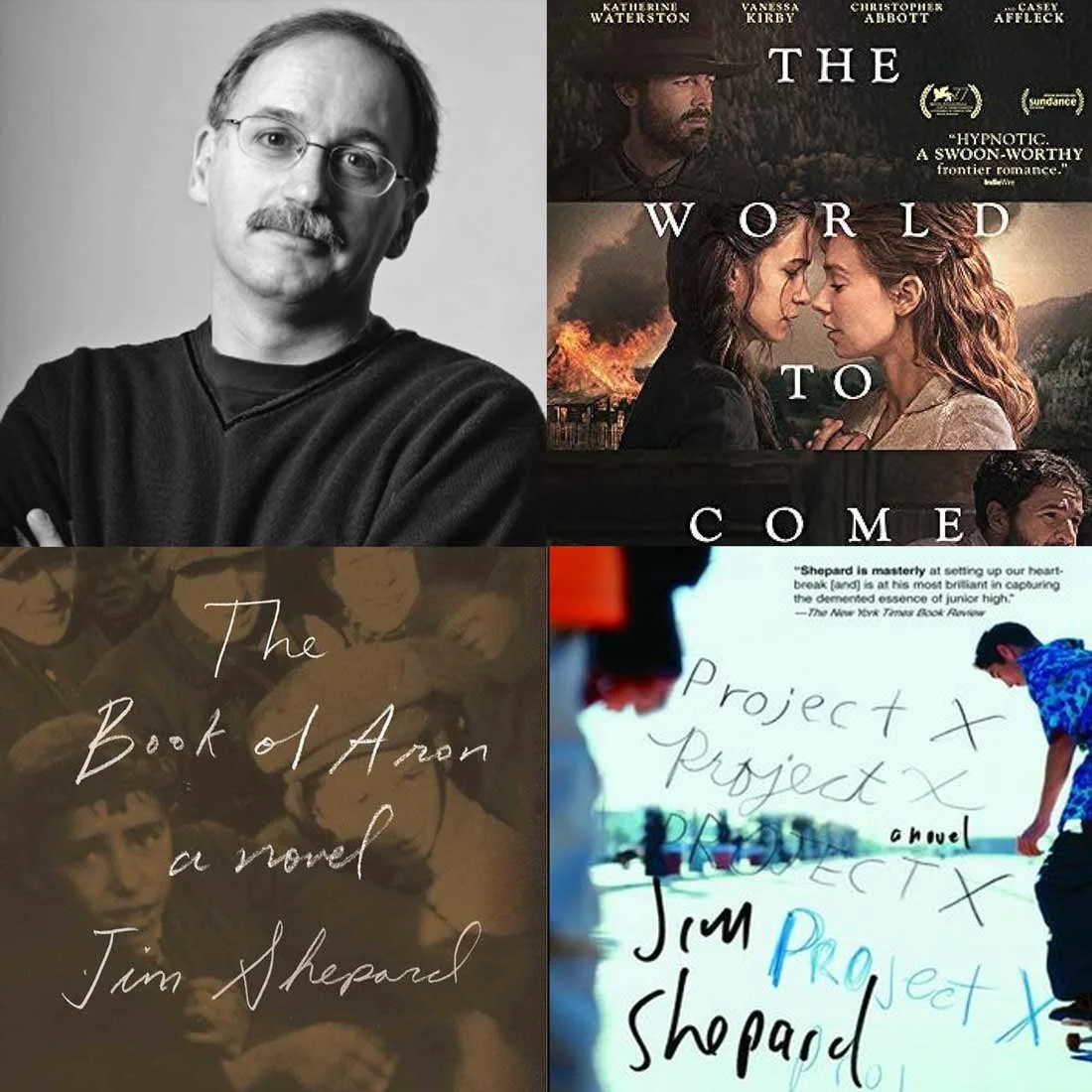
Author of The Book of Aron · Project X · The World to Come starring Casey Affleck, Vanessa Kirby, Katherine Waterston
Winner of the PEN New England Award · The Story Prize · Ribalow Prize for Jewish Literature
In terms of what I'm writing, I'm always trying to make myself a more interesting human being. And so that means I'm coming across these human dilemmas where I'm like what would it have been like to be in that position? And that snags my emotional imagination. I do think that literature is all about extending the empathetic imagination. And so I'm always looking to educate myself in emotional terms, too. Because I'm very interested in the way we respond in those situations where it feels like we both have responsibility, and we don't have responsibility.

Author of The Feminist Killjoy Handbook
Independent Queer Feminist Scholar
You're more likely to progress if you say yes. It's a reproductive mechanism, which is why feminist culture knows so much about everything. We can explain how it is that institutions keep being reproduced in the same way. So what then do you do? Where do you go if your no has nowhere to go? And I think when you say no to the world, and you're pushed out by it, you still find your people. And that there's the world-making is in the people who find in the refusal of the institution a common ground.

Leading Scholar of Disaster & Climate Change Law
EPA Official under the Obama Administration · President of the Center for Progressive Reform
Author of The Octopus in the Parking Garage: A Call for Climate Resilience
I believe that the strongest machine we have, the strongest empathy machine that we have is literature. The best way to get people to feel what someone else is feeling is through literature and stories. And I also think that feeling and emotion are an important part of reasoning and governing too. It's not the only part, but I think you have to understand how people see the world and how they feel about the world. So in my classes, I teach law classes. I teach policy classes. I often assign novels. We read in one of my classes Their Eyes Were Watching God, the case about a hypothetical hurricane in Florida written by Zora Neale Hurston. We read Oryx and Crake by Margaret Atwood, which is a kind of dystopian novel that involves climate change. We've read The Handmaid's Tale in my classes. What's interesting about them is that they make us, they open up our imaginations and say, Oh, I never thought something like that could happen. We hope it doesn't, but it could, right? And so how do we change the way we look at the future? And it also changes, I think, the way that we understand people's lives.

Lead Author of IPCC 4th & 5th Assessment Reports
Director & Councillor of Climate Council of Australia
It's certainly not the case that scientists should be the only people communicating. We have to have everybody in this mix because we're all in this together. So we have to have good science that's communicated. We have to have smart engineers who can work on the technological solutions. We have to have lawyers who are undertaking climate litigation. We have to have creative artists who can tell stories and appeal to people's emotions. No one group should have a responsibility to solve the climate crisis. It's got to be all of those groups bringing what they call the time, the talent, and the treasure to work together on this. We are all in this together, and we've all got a suite of different skills that have to be harnessed to solve this problem.
Author of This Flame Within: Iranian Revolutionaries in the United States
So you start having Iranian students coming in the late 1950s. The numbers increased throughout the sixties and seventies. Tens of thousands of Iranian students, more than from any other country, come to the United States to study. At the moment, in 1979, the moment of the revolution, there were 50,000 or more students in the United States. So it's by far the largest foreign student population here. In the 1970s, it became possible for less affluent students to come. For the first time, there were more government scholarships available to certain groups of workers in the oil industry, for example, to their children. They were not blue-collar, but more like white-collar office workers. Before that, it had been mostly wealthy families who could afford to send their children abroad and who had access to education in the first place, but when you have less affluent students coming to less expensive, smaller colleges. By the 1970s, Iran had become so repressive that young people were trying to leave. They want to leave, and some of them want to leave intentionally to become activists and join the Iran student opposition movement.
Founder & Executive Director of F Minus
a Research & Advocacy Group Calling for Divestment from Fossil Fuel Lobbyists
Author of the novel The Fracking King
The lobbyists that represent the fossil fuel companies like ExxonMobil, Koch companies, and the American Petroleum Institute, they knew for years that the climate crisis would happen, and they've been telling us that it wouldn't. And right now in every state capital, the lobbyists are doing everything they can to slow the transition from fossil fuel to renewables. The sad fact is, these oil and gas lobbyists will never wake up one morning and say: I am worried about the climate crisis. I'm worried about my children. I am going to cut off ties with these oil and gas companies and stop taking their money. That will never happen. And I'm sad to say this, but it's been a long, long road to try to change their behavior with facts or reason.
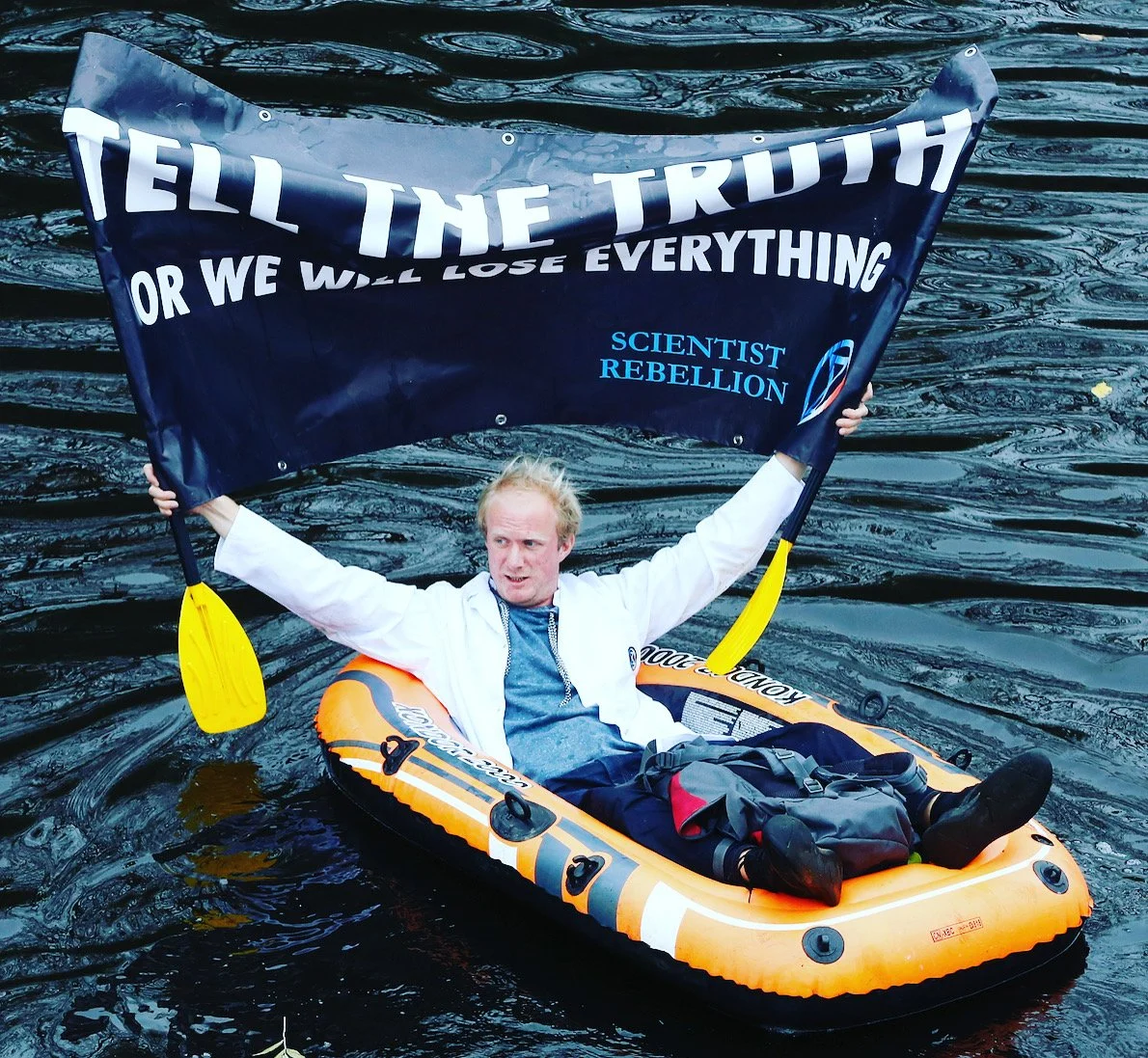
Co-founder of Scientist Rebellion · Climate Activist · Astrophysicist
I think the more pernicious aspect is the way that science as a set of institutions fits into a paradigm that is doomed from the outset. For instance, if you look at the framing of the science within the IPCC reports and how that informs the construction of policy related to the climate around the globe, well, it's foundationally dishonest. If you frame an entire report around the need to keep temperatures below 1.5 degrees or 2 degrees, and all of the efforts that societies are going to make to do that, and you omit from the public discussion the fact that we have no chance whatsoever of achieving those goals.
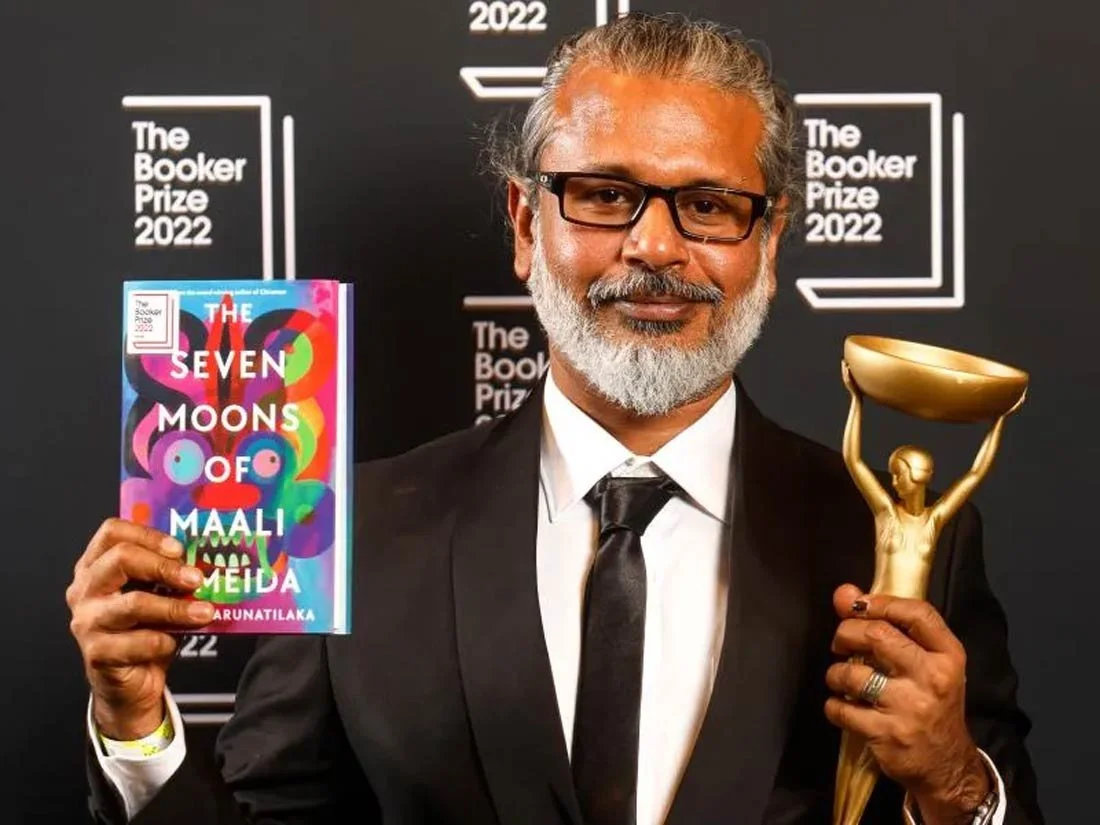
Booker Prize-winning Author
The Seven Moons of Maali Almeida
Chinaman: The Legend of Pradeep Mathew
So this was the decision to write in the second person. A lot of people ask me: why? There are not many examples of this technique. The reason I opted for that is I was trying to figure out interviewing a ghost. And one of the challenges was: what does a disembodied voice sound like? The narrator's body has been chopped up and chucked in a lake. So, I figured that if anything survives the death of your body, it's perhaps the voice in your head. The voice in my head is in the second person. I don't know about your head or anyone else's head, but in mine, it's the second person.
Co-Editors of Voices of a People’s History of the United States in the 21st Century
with contributions from Angela Y. Davis, Nick Estes, Colin Kaepernick, Rebecca Solnit, Christian Smalls, Viet Thanh Nguyen, Howard Zinn, Rev. William Barber, Bree Newsome, Kimberlé Crenshaw, Tarana J. Burke, Dream Defenders, Sins Invalid, Mariame Kaba, Naomi Klein, among others
We have to create alternative institutions to understand history. And to have conversations about how we can intervene because these conversations are increasingly being criminalized, and librarians are being fired and punished. Teachers are also being fired. Whole colleges are being taken over and certain courses are being labeled as not credit-worthy and being canceled. And while conversations around critical race theory and other topics are being declared illegal, there's a long history of book banning in this country. There's a long history of criminalizing dissent in this country, but I do think we all have to recognize that we're in a much more dangerous moment right now, where a new form of McCarthyism is emboldened and we have to speak out against that. - Anthony Arnove
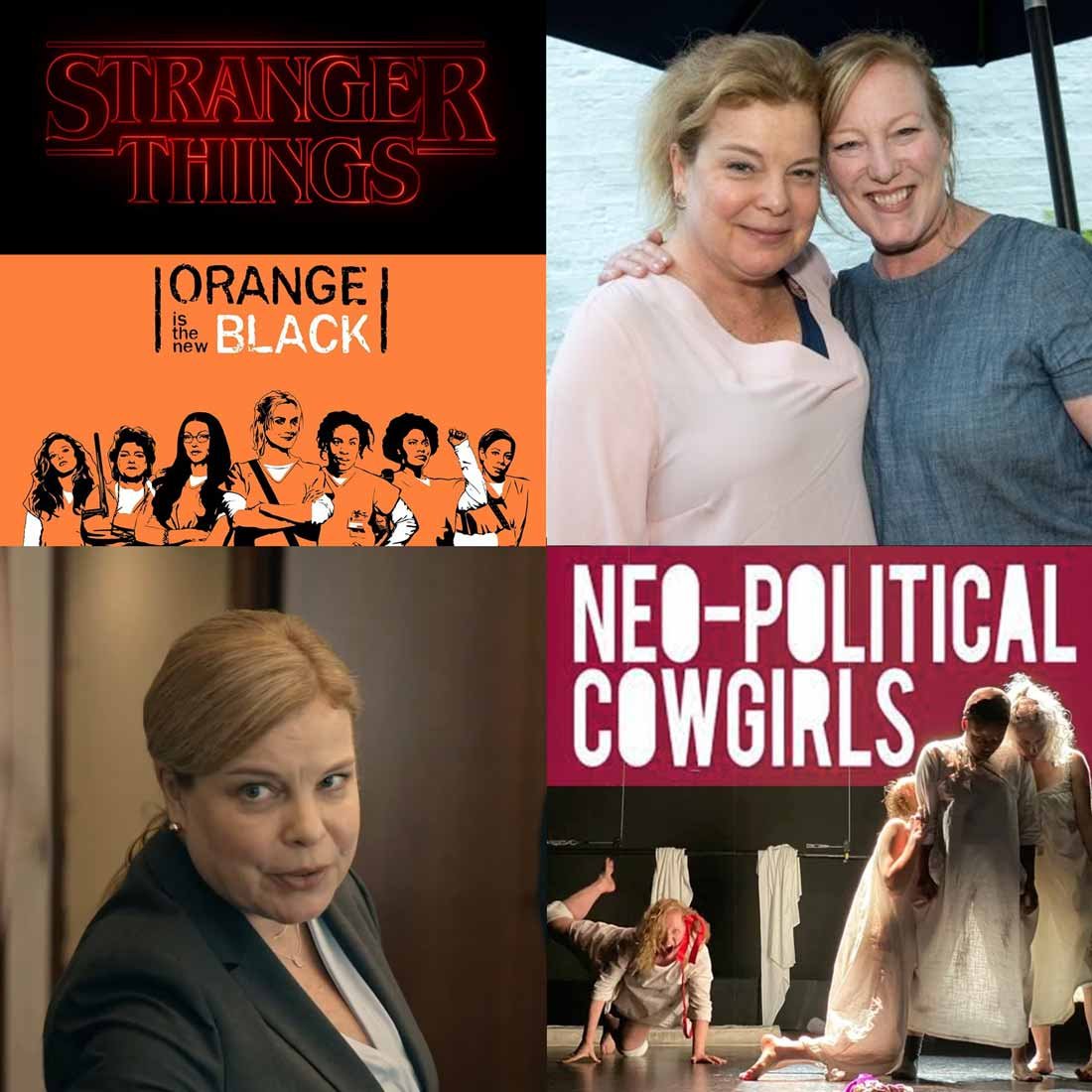
"I don't know why we would really want to tell stories without being connected to the meaning. And I think that's especially for women, but I do think for human beings, that is how we can work as hard and be able to get up the next morning and keep going. Because we are working through the meaning, and it feeds us as we're like making sense of it all, trying to make sense of it, and for being in community and communion.” - Kate Mueth
”What we've done today is we've made everything so fast and so easy that I think there's something to the creative process about it being a little bit more of an exploration than it is wham bam, it's done. Let's go have lunch. And I think there is something to the creative process where it's allowed to develop. It's called process because it is a process. I'm always glad to just relax in the creative process, and I'm always very grateful for that. I think it's why I do so much indie film because it's really fun.” -Catherine Curtin
Population & Sustainability Director of the Center for Biological Diversity
Author of The Animal Lover’s Guide to Changing the World
Take Action: Save Life on Earth
Pretty much everything we do in our lives from the moment we wake up and take a shower, we're using water – that's shared resources. We're using energy that, for most of us, unfortunately, still comes from fossil fuels. We are making decisions about what we eat. We're making purchases that have an impact on the planet and on other animals based on where they came from and what they're made of. There are so many entry points for people to take action and start making changes in their own lives. And that's really important for people to start with what feels right to them. That's a great way to start getting involved in this.
Scholar · Educator · Feminist Activist
Author of Caliban and the Witch
Re-enchanting the World: Feminism and the Politics of the Commons
When I came to America I had a shock. I never knew what it meant to be in a country that seems to have no history, being in a place where you feel like you are nowhere, you could have been dropped by a plane in a cultural, historical desert. In the United States, they're destroying historic buildings. They've paved over cemeteries of African slaves. They're changing the environment so that memory is destroyed.
Because you are placing yourself in a broader arc of time, I asked a woman from Guatemala: how can women keep fighting for so much power? And she said, "Because, for us, the dead are not dead." This gives them the courage to go on when everything seems to be lost. I think that this is the kind of struggle that we need to make against war, against the destruction of nature.
Director of the Climate Change Institute at The Australian National University
Vice Chair of the Intergovernmental Panel on Climate Change (IPCC)
Co-recipient of the 2007 NOBEL PEACE PRIZE
We live in a diverse world, and we're in a funny time where we sometimes see the best of humanity and the worst of humanity. And I think what we need to do is be very strong in wanting to lift the game of each other and ourselves. And so I think that's one of the sort of key things. Particularly, young people should be more demanding that we behave better towards each other and care more about each other and the world that we live in. In terms of these heatwaves, droughts, and fires that the world is seeing, which we thought were going to hit us in 2050 or 2070, are hitting us now in 2023. So, those risks are coming much faster and harder than we thought they were going to come. And so, in many cases, we're unprepared for the severity of these changes.
Author of Advocating for the Environment: How to Gather Your Power and Take Action
Environmental Advocate · Educator · Fmr. Director, Maine Department of Marine Resources
Fmr. Deputy Director, State Planning Office
So to me, the connection is just being outdoors. It really brings energy, to my life and it brings energy to my work. And I think for a lot of people, this is true, that nature is kind of the place where they can regenerate their energy. And if people haven't experienced that, I encourage them to try it, because nature can be very restorative. So, absolutely there's a connection between health, the outdoors, and between environmental issues and creating a healthy, clean environment for future generations.
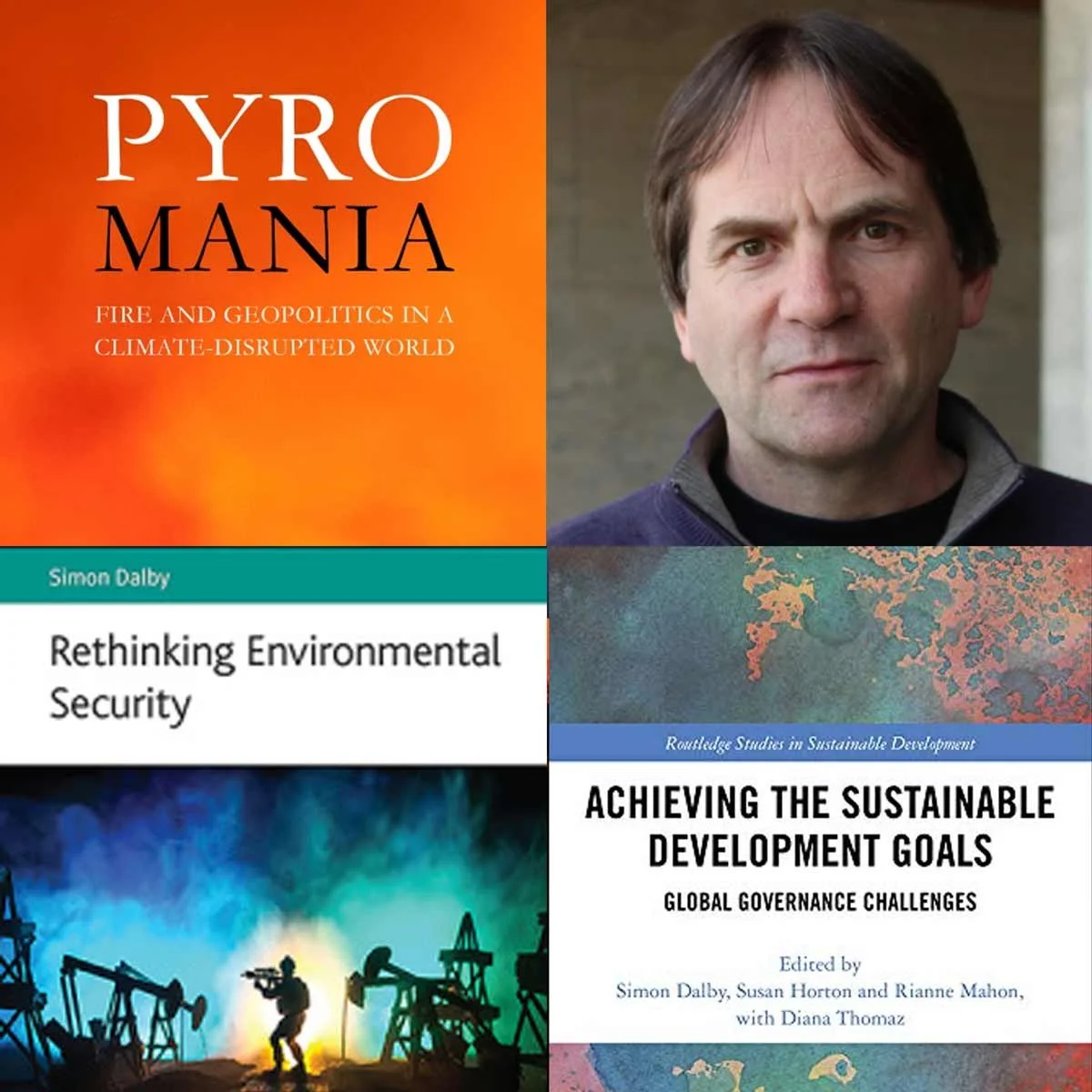
Author of Pyromania: Fire and Geopolitics in a Climate-Disrupted World
Professor Emeritus at Wilfrid Laurier University
We also need to note most people move locally rather than globally. In the discussions about climate refugees, people are going to be dislocated. There are obviously going to be places that are going to become quite literally uninhabitable because they're too hot and too dry, or they've been flooded so frequently that they're just not sustainable. That said it is also worth pointing out that this climate change process is playing out in a global economy, which is also changing where people live and how people live very rapidly. the migration from rural areas to urban systems has been massive over the last couple of generations. We became an urban species.
Novelist · Poet · Essayist · Scientist · Mother · Activist
Organizer of “Palestine Writes” · the only North American literature festival celebrating Palestinian Writers & Artists
Founder of the Children’s Organization Playgrounds for Palestine
Palestinians have been facing erasure for decades. There's the physical erasure of our villages, the names of our villages, the erasure of the word Palestine from the map, erasure of our identities. And now there's this kind of colonization of our narratives, of our stories, and our history. And Palestine Writes is part of a counterforce against this new form of colonization. The Zionist colonial narrative has always shifted with shifting wind, depending on what's in vogue at the time. Initially, it was a sort of romantic ending to Europe's genocide of its own Jewish population. And there was this epic myth of "a land without people for a people without land". And of course that was unsustainable.
Journalist · Activist · Public Intellectual
Author of We Gon' Be Alright: Notes On Race and Resegregation ·
Can't Stop Won't Stop: A History of the Hip-Hop Generation
This conversation focuses on the Supreme Court’s recent decision on affirmative action and presenting a ”true and historically honest confrontation with America’s racism.”
on the cancellation of the Asian American Literary Festival 2023
This August, the Asian American Literary Festival was to take place in Washington, DC.. The longstanding event had been on hiatus because of the pandemic, so this year’s event had generated a lot of buzz. Organized by the Smithsonian Asian Pacific American Center (APAC), the event had already garnered substantial investments and expectations from both national and international groups and states. Ching-In Chen is a poet who was curating a festival event featuring books by trans and nonbinary writers. Kate Hao is a program coordinator who was on contract with the Smithsonian for the festival.
Author of The Playbook: How to Deny Science, Sell Lies, and Make a Killing in the Corporate World
They weren't able to employ scientists to not find a fingerprint of anthropogenic climate change. They weren't able to pull that off, and when they're not able to do that, what they do instead is create an arsenal of expertise who just create the illusion of disagreement, and they were so successful at doing that with climate change that it's remarkable because there actually was scientific consensus. There wasn't this giant rift in the scientific community, and for decades, they created an illusion of disagreement that we all bought. And they're able to do that using Stanford University, Rockefeller University, these names of institutions as well as individuals, but they're not actually publishing science. And so I think it deserves a kind of special carve out of all of the tactics because it really says: actually these systems are working pretty well. You're just not getting the right information. And they do that again through the media and PR firms and controlling the dialogues and press releases and journals, and especially their relationship with the media, is very, very privileged.
Pulitzer Prize-winning Poet · Director of Creative Writing Program · Emory University
Editor of How We Do It: Black Writers on Craft, Practice, and Skill
As writers, it's our job to write what will become clichés. Not to write clichés, but to be original enough that we make something that people are still saying for hundreds of years to come. And if that's what you're doing, that's pretty powerful. When I'm writing a poem I'm making a world. And if I can stick to that, then I have to believe that once a poem is out in the world, another world has been made, another way of living, another way of thinking, another way of seeing things.
Author of Wolfish: Wolf, Self, and the Stories We Tell About Fear
And I think the ways that wolves converse with one another, there's also so much there that really conjures the way that we humans do. And I was trying to piece together: why did we feel so threatened by wolves? In part, I think because there's a sort of uncanny mirror that humans have seen in a wolf. And I'll give an example. Wolf packs will form a diversity of family structures very often. So they will have a nuclear family where you'll have two breeders, but they can also have an extended family where there's sort of aunts and uncles in the pack. Or (these are the biologist's names) they'll call it a step-family if a wolf pack welcomes an outside breeder. A foster family, if they welcome another outsider. And I think the way that a pack is its own ecosystem: if one wolf dies, there's one wolf in this pack that might be the one that teaches how to move through the territory. And if that one wolf dies, the whole pack has a much higher likelihood of disbanding. And so this idea that the interconnectivity between the packs and the individuality of the wolves is so critical. It is so beautiful, and you see that studying these different wolves, they have personalities.
Alt Pop Singer/Songwriter · LGBTQIA+ Openly Non-binary Musician
Autism Awareness Advocate
I struggle a lot with the feeling of being alone and not having a community. And I did even more as a teenager. That's kind of what my music is about, finding those people who get it so you don't feel like you're alone anymore. And that's why I talk about things that maybe I wouldn't talk about outside of music, because in music it's a safer and easier way to find people who really get it.
Author of The Thousand Crimes of Ming Tsu
Winner of the Andrew Carnegie Medal for Excellence in Fiction 2022
When I was growing up, it was all about representation. I think that was the thing that was being championed: we need more people of color in books, movies, across all media. And then I think what we saw was an extremely cynical and capitalistic-minded ruthless optimization of that, where someone said: Oh, you want representation? Then we'll just throw in token people of color into projects. And then we'll check that box. And I think that became so prevalent in so many pieces of media that that became what we thought of as representation. I think it's a salvageable concept because, I mean, when I encountered books growing up, they were all with white people in them. Front to back, start to finish. It was just white characters. And so when I started writing stories of my own in school as a middle schooler they - surprise - they had white people in them, right? There were just white people talking about other white people. I went to public school in Queens. I knew very few white people. And so I think what representation does at its best is that it informs the boundaries of possibility. By seeing yourself represented in media, you become able to imagine your own stories transpiring in media and being made available for everybody else to witness.
And so I think the point of representation is not just if we do a checklist of this piece of media, can we find a person of color. But I think the idea of representation is more that we want to be expanding the realm of storytelling, expanding what's possible by telling these stories that are not normally told.

Author of How To Save Our Planet: The Facts
Professor of Earth System Science at University College London
I think the most important thing is realizing how much impact humans have had on the planet. For example, did you know that we move more rock and sediment than all the natural processes put together? We also have created enough concrete already to cover the whole world in a layer that's two millimeters thick, and that includes the oceans. We have also created and make something like 300 million tons of plastic every single year, which we know ends up in our rivers. It ends up in our oceans. And we've also found that microplastics have been found in human blood. So this is the impact we're having all around the world. We've also cut down 3 trillion trees, that's half the trees on the planet. We have doubled carbon dioxide in the atmosphere. We've increased methane by about 150%, which has led to a warming of the planet of about 1.2 degrees Celsius. And If you weigh the land mammals, 30% of that weight is us humans. There are 8 billion of us, and I have to say a few of us could lose a few pounds, but 67% of that weight is our livestock. And just 3% is those wild animals. So in less than 5,000 years, we've gone from 99% being wild animals to less than 3%. That's how much impact we humans have had on the planet.
Nature’s Songwriter
Producer · Multi-instrumentalist · Composer of Folded Landscapes
Music has the ability to transport you to a place and create a sort of internal landscape. And we all have life-changing things that happened to us. And I remember I made it as a way to kind of ease a busy mind. And perhaps I was missing home. I still call Orkney home, even though I'm not there every day. I'm a thousand miles away today, and I still call Orkney home. For example, when I hear the voice of the curlew, it transports me back to Orkney with such a jolt. In a heartbeat. And music can do that too. It's very transformative. Visual arts have the ability to do that too. And you could stare at a Rothko painting and cry and not quite know why. It can take days to figure out perhaps certain meanings from it. But music I think is quite instant. It can really do that.

Author of Natives against Nativism: Antiracism and Indigenous Critique in Postcolonial France
Associate Professor of French & Comparative Literature at University of Southern California
We know, of course, how colonized territories were settled. They were settled by the poorest, most marginal sometimes, criminal, surplus populations. There is that inbuilt fear, right? I don't want to narrate this in psychological terms, but I do think that there's a way we can understand how these discourses have worked. How is it that these discourses that don't actually make sense when you read them work? It's because they offer a solution. So it's not the fault of globalization in neoliberalism that you don't have a job. It's because of these people at the gates, right? So it just taps into these very primal kind of ways of thinking about threats to one's own well-being.

Vice President · Sustainability · Trane Technologies
Managing Director · Center for Energy Efficiency & Sustainability
I have this need to stay curious. I think all of these big problems have solutions, and they're never one solution. It's always a collection of solutions. And therefore, I think we need a collection of people and ideas, so that's a great thing to keep in mind.

Author of The Cultural Betrayal of Black Women and Girls: A Black Feminist Approach to Healing from Sexual Abuse
Assistant Professor in the School of Social Work · Faculty Affiliate at the Center for Innovation in Social Work & Health at Boston University,
So many of us have experienced things along this vein, and when we know that, then the feelings of isolation can be interrupted with this understanding that many of us have been through these things. And if that person over there can experience joy, well maybe I can experience joy too, and maybe this is a different kind of harm and cultural betrayal. Sexual trauma and abuse as a collective community-level harm, that means community-level healing and personal healing.
Political Economist · Provost of SciencesPo
Co-author of Spin Dictators: The Changing Face of Tyranny in the 21st Century
In Russia, I ran a university, a new economic school. And as an economist and a public intellectual, I was engaged in interactions with the government, including with Vladimir Putin. And there, of course, the situation was that Russia was already a nondemocratic country, meaning that it was a country where elections were not free and fair and partial censorship was already in place. Yet in those years, we could express ourselves openly, not on national TV, but at least in newspapers and on radio. And that eventually brought me into trouble with Vladimir Putin, who at some point suggested that I talked too much and I should not be in the same country. I was also interrogated. My office was searched. And at some point, common friends told me, 'Look, you shouldn't be here.' And I bought a one-way ticket for the next day and just left Russia. The dictators in the 20th century used military or paramilitary uniforms to project brute force and fear. Today, the situation is different. Successful dictators pretend to be democrats.
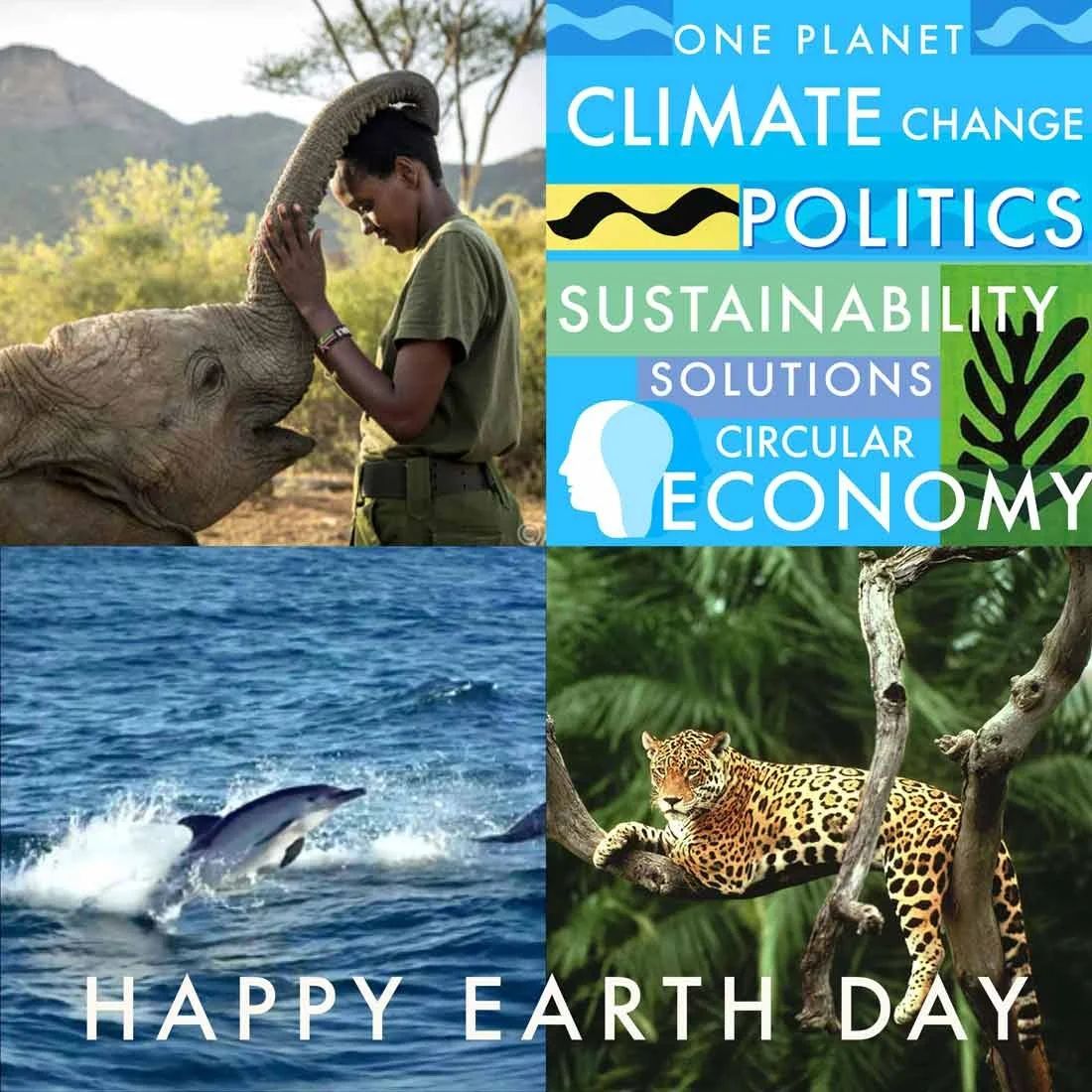
Environmentalists, Artists, Students & Teachers share their Love for the Planet
Today we’re streaming voices of environmentalists, artists, students, and teachers with music courtesy of composer Max Richter.

Marine Ecologist · University of Adelaide · Restoring Lost Oyster Reefs
There's this real emergence of young people doing incredible things enabled by bio-modern technology and a more globalized and connected world and access to amazing educational resources about what the environment does and means for humanity. We've lost something like 85% of oyster reefs globally. In Australia it's over 99%. We've smashed this ecosystem to smithereens. It covered something like 7,000 kilometers of coastline and the flat oyster reef, for example, the flat oysters, one type of oyster that we work with were completely removed from the Australian mainland, and about 5,000 kilometers of reef destroyed in a very short period of time. And because of the intensity with which the coastlines were modified following European settlement of Australia, they haven't been able to come back naturally.

Composer · Songwriter · Conductor
The Land of Dreams ·The Snow Queen 3 · The Boat · Food 2050 · Green Book
I'm always trying to find my place here because, yes, I'm American. I'm an immigrant. I don't want to talk about the difficulties I face in my coming here, but it was not easy. So when I was writing the song called “Give Up”, and it's like a song that I'm singing to myself. Those are things, like there is a lot of personal experience. I was a luxury immigrant on a Fulbright grant on a J-1 Sponsor Visa, you know, with a solid family I could go back to in Italy in case anything went wrong. But at the same time, it was not easy. I want to do my job with a smile on my face, and it brought me to write the lyrics like: 'It's my turn. My time is now.' It's like something that I'm trying, we all try to get our turn to be our moment, to shine our moment. We're all waiting. We don't know if it will happen, but we need to try at least. We need to grab our life with our hands and make it work one way or another. So that's what I mean in my song “Orlando Dreams.”
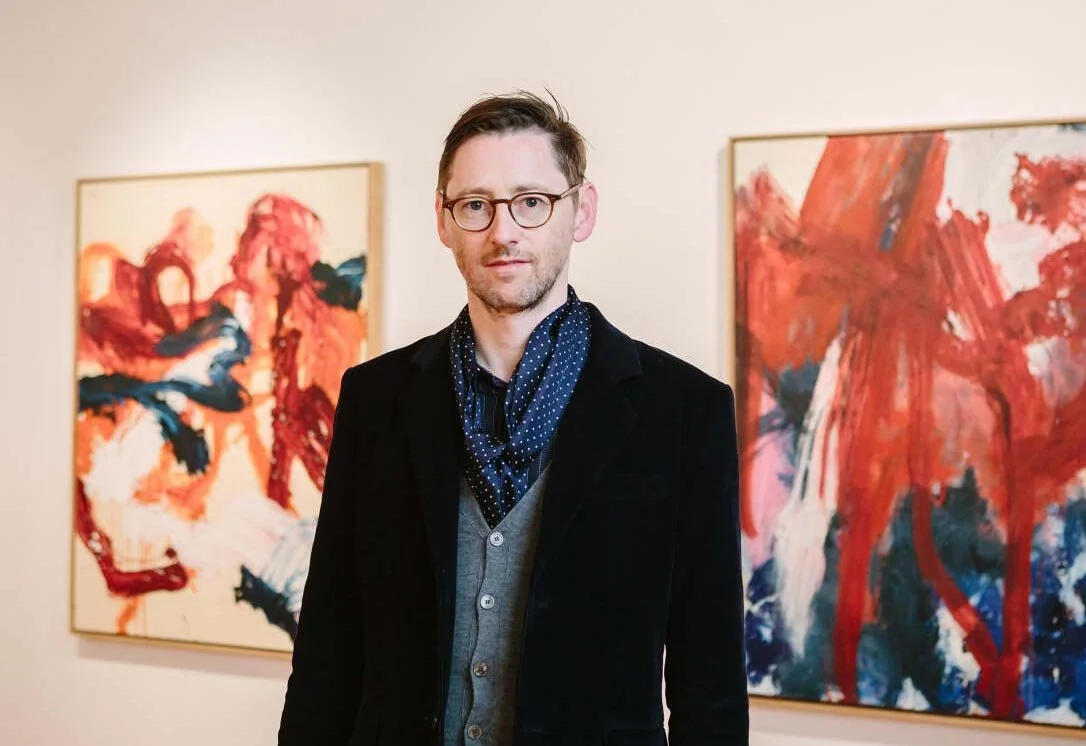
Artist
I think it is a job for artists, not all artists, but I think it's a job for artists to acknowledge that culture can make a difference towards these things and can hold people more accountable. Australians, myself included, grow up in this state of amnesia because what happened is that the British stole the land from the Aboriginal people. We made up a fiction, the fiction of Terra nullius. And then we basically disclaimed any relationship that the Aboriginal people had to the land. The National Day in Australia is the day marked by colonization, which is shameful. So that's another long conversation. And I think that, whether things are better or worse in the United States, but I do know that is the conversation that has only just begun in Australia. And there's a new openness that never has been before.
Vice President & Literary Agent at Trident Media Group
There's a lot of apprenticeship in our industry because historically it had to be that way, otherwise what you would have in publishing - there's still a lot of this - is a bunch of English majors trying to make sense of how to run a business, right?Because book publishing or working at a literary agency - a talent agency for authors like I do - is at the crossroads of creative and business. And if you didn't have that kind of apprenticeship, someone to learn from at the company where you work, then we would all just be English majors just trying to feel our way in the dark.
I think that the important thing for people to really know about storytelling is that books are sort of like the oil paintings of the new media. It's a very fine art form, an old art form, and a story exists in everything, whether it's a photograph, a painting, a song, or a movie, it all began with a story. And stories have been here from the dawn of time. They're going to forever be in our existence, but I think people should just always have curious minds and seek out stories and storytelling and try to see the story in everything, not just look at things for face value.

Founder & CEO of The Ocean Agency · Featured in Netflix’s Chasing Coral
People just forget the importance of the ocean. It controls the climate system and sustains life. For example, there are 20 billion carbon-capturing sea creatures for every human being. They are sucking carbon out of the system and pooping it to the ocean floor. And this is one of the solutions happening on an epic scale in the ocean. And there are so many other examples like that. And if you think about our bodies, we're 60% water. And that water was once in the ocean with fish swimming through it.


Circular Economy & Design Expert · Founder of The Circular Way
Author of Danish Design Heritage & Global Sustainability
Putting design first, it really enables us to shape a future that we don't yet know. But we need to be super tactile and practical about it as well. And then seeing that is something that design very much has the ability to do. And at the same time, having this growing frustration that wherever you go, wherever you talk about sustainability, it was a compromise. It was something that meant uglier, less convenient, more expensive, all these different things, but then diving into the Danish Design heritage, seeing that what set them apart was that after the World Wars, they had a social purpose of democratizing and rebuilding the welfare state, and that was not something that lessened the final result. On the contrary, it heightened the ambition, the final design, and the solutions.
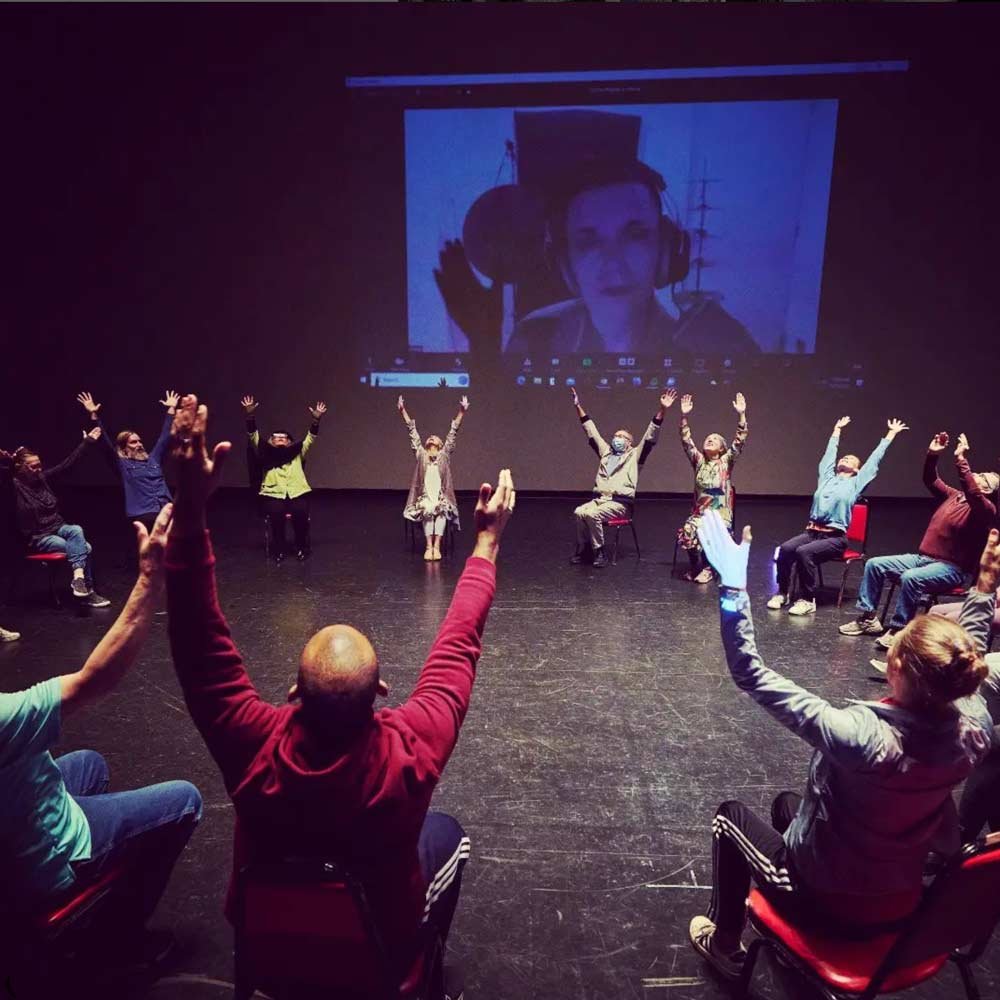
Happy World Environment Day!
For this special episode we celebrate the natural world with Artpark Bridges, the Parkinson's Community, independent living adults with Parkinson's disease, and People Inc, the Arts Experience, a day habilitation program for adults with developmental disabilities.
Artpark Bridges is a year-round community engagement program led by interdisciplinary artist Cynthia Pegado, dedicated to empowering adults of diverse abilities and backgrounds through expressive arts workshops and performance opportunities. Serving the Buffalo-Niagara Falls region of New York State, Artpark Bridges connects citizens with a sense of inclusion and purpose, healing and creative expression.
President of UN Sustainable Development Solutions Network
Director of Center for Sustainable Development, Columbia University
If we’re badly educated, we’re not going to make it on this planet. If I had to put my finger on one Sustainable Development Goal above all else, it is let’s empower young people so that they know the future. They know the world that they’re going to be leading soon. They can do something about it…If you’re in elementary school up to university, you should be learning–What is climate change? What is biodiversity? What can we do about it? And this kind of learning is not only book learning, but is also experiential learning.

Mentalist, Internationally Bestselling Author & TV Host
The Art of Reading Minds · Mind Storm · Cult · BOX
A mentalist is a kind of magician, an illusionist. And a mentalist uses whatever techniques are at that person's disposal to create the illusion of being able to read minds or being able to contact a supernatural presence…The only rule is that that part is fake, but then you can use techniques for magic or from stagecraft or from psychology. A mentalist is really someone who creates this illusion of having an almost supernatural ability. Having said that, today a mentalist sort of has come to mean something else, mainly due to popular culture TV series like The Mentalist and so on. And now there's this understanding of a mentalist as someone being able to read body language and influence behavior. It sort of ties into it all. And I've had a lifelong passion for magic, and it started when I was seven. Because I was always interested in the question: what if there's a color in the sky that we can't see? What if a handkerchief actually can vanish? What does that mean in terms of how the world works?
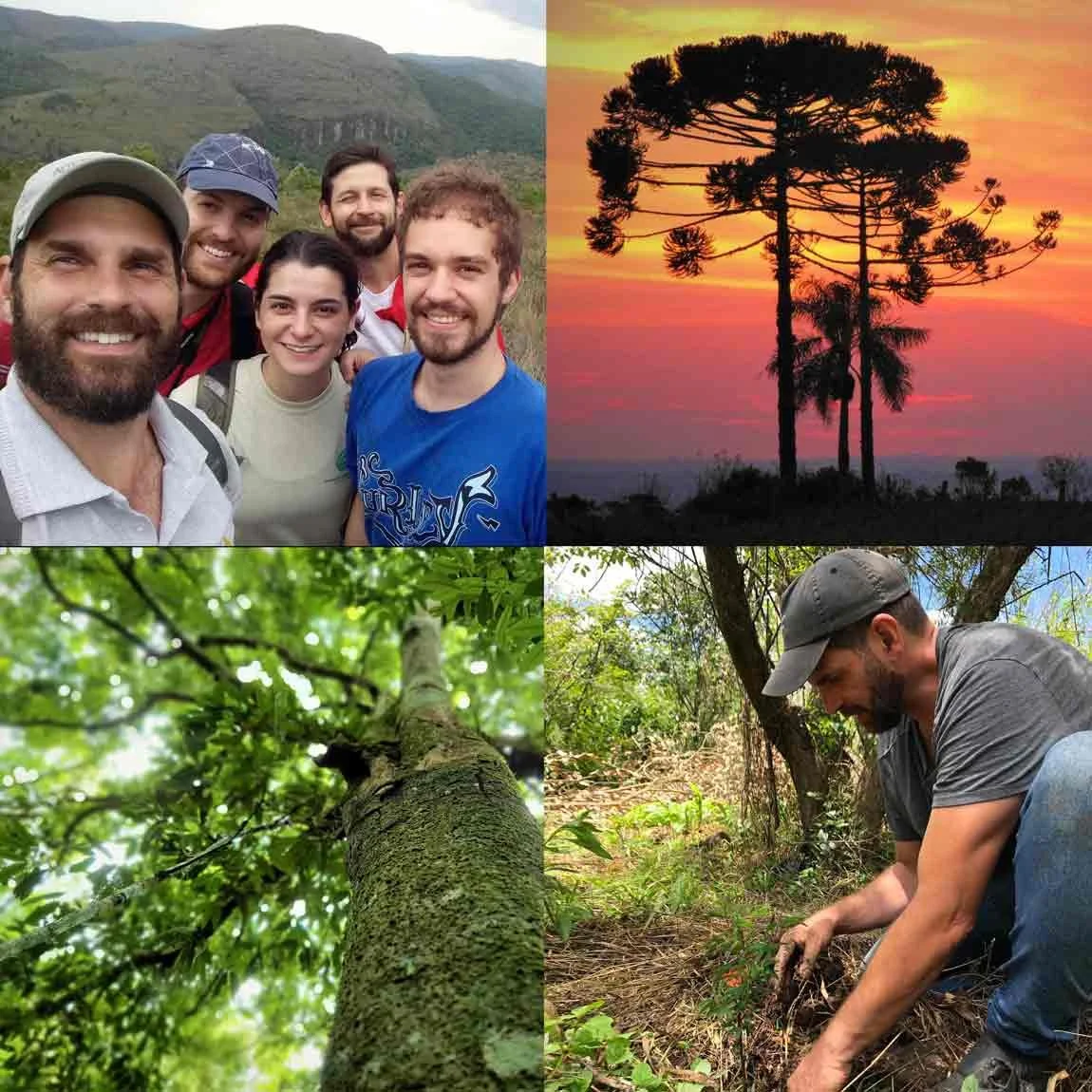
Whitley Award-winning Conservationist of Rare & Endangered Species
Executive Director & Co-Founder of Sociedade Chauá
Most of my family are cowboys and farmers. And I was like eight or nine years old. My grandmother was getting sick, and she always had a lot of plants at home in pots, and she asked me to help her to water the plants. And it was quite a good experience because when you start to like plants, it becomes like a viral thing. After some time I was growing my own plants, and I was very interested in doing her garden. And I would go to the forest and collect plants to grow at home like orchids that were beginning my first nursery. And it's a crazy love that grows when you start to understand how plants grow, and how the ecosystem functions. And how beautiful and amazing all this is. And we as humans are part of it, and I've always loved animals as well, but plants are my passion. And, of course, my, daughter's name is Flora. My wife, she's also a botanist, and she loves plants as well. So we live in the countryside where the farm has all kinds of plants. And I think one of the things that made me love and try to preserve and conserve the ecosystems and species is when you understand how slowly a plant or tree grows, and how much it takes to keep them healthy. And the interactions between the animals and plants, the pollinators and the dispersers within the ecosystem, it's something that everybody should know and see.
Author of The Other Side of Happiness: Embracing a More Fearless Approach to Living
Professor at University of Melbourne’s School of Psychological Sciences
In today's world, feeling happy is no longer simply a state of mind. It's become a marker of mental health and success. On the flip side, pain and sadness are viewed as signals of failure and sickness. If we're not happy, then there is something wrong with us, and we need to fix it. It is no wonder that the painkiller and antidepressant markets, already worth billions of dollars, continue their rapid expansion. We've come to treat even commonplace experiences of pain and sadness as pathological, as things that need to be medicated and eradicated.

Director of Just Transition at the European Commission Directorate-General for Energy
She is responsible for Just Transition, Consumers, Energy Efficiency, Innovation and Energy security. She has been previously Head of Unit at the Directorate-General Energy in the European Commission. She was responsible for Energy Strategy and Policy coordination and then for Renewables and Energy System Integration Policy and Decarbonisation and Sustainability of Energy Sources. She was Acting Director for Energy Policy where she has overseen notably the work of international energy relations, financial instruments and inter-institutional relations.
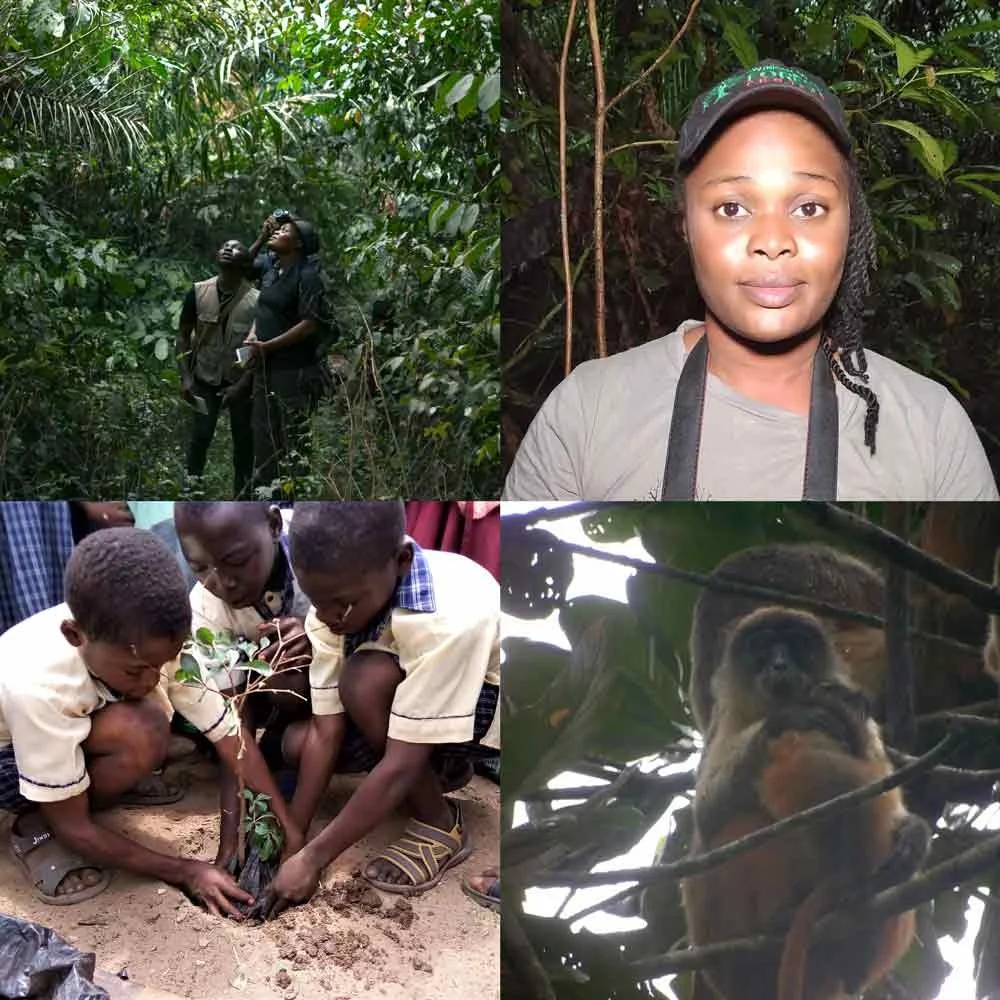
Whitley Award-winning Conservationist
Founder/Director of the Southwest Niger Delta Forest Project
There's no question, we are in a state of conservation emergency. And we have a real situation on our hands and it's so fragile that if we take a step back, we could say goodbye to two types of chimpanzee species and the forest is also on the brink of disappearing forever. And when I started as a conservation researcher, there was kidnapping and insecurity throughout the Nile Delta region, and it was immersed in a lot of oil politics and civil conflicts. Kidnapping and insecurity ran throughout that region. Let's not forget that Nigeria is Africa's most populous nation now. We are over 200 million people in the country, and it's a growing population of young people who are looking for means of livelihood and on the lookout to find space to live. So parts of the forest within one year would suddenly become a new village.
Author of The Inland Sea
Professor of Creative Writing at Columbia University
I was reading ecological history and also reading about violence against women and how violence perpetuates itself over many generations. And there was something about this European sort of supremacy of ideas about nature, their ideas about rationality, all of this stuff that sort of came from the Enlightenment. John Oxley's diaries made no mention of the Indigenous Australians who were at the time subject to genocide. So I was interested in these ideas about how they tried to tame the land, which is often talked about as "a woman" and the way that the kind of violence that comes from a particular kind of European colonial project that is enacted on the land intertwines with the way that violence is enacted upon women. And it was something that I felt growing up in Australia.
Author of Being You: A New Science of Consciousness
Co-director of the Sussex Centre for Consciousness Science · Canadian Institute for Advanced Research Program on Brain, Mind & Consciousness
This is a point in philosophy that the world as it is can never be directly apprehended by our minds. We are shielded from it by what's called a sensory veil. There are, for instance, no such thing as colors that are out there. As the artist Cezanne said, "The colors are where the brain and the universe meet." And color is, I think, a really good example because it is, in a sense, less than what's there because our eyes are only sensitive to three wavelengths of this huge electromagnetic spectrum, which goes all the way from x-rays and gamma rays to radio waves. And we live in a tiny, thin slice of that reality. But then out of those three wavelengths we experience our brains generate many more than three colors and almost an infinite palette of colors. So there's no sense in which our perception could ever reveal the world as it really is, that it reveals the world in a way that's very useful for us as organisms hell-bent on continuing to live and to survive.
UN Climate Advisor · Activist & Educator
Founder of Kids4abetterworld
A child should want to make that difference. A child should feel the need to work towards creating environmental change. I'm on the board of the United Nations Committee on the Rights of the Child and we're currently working on something called General Comment No. 26, which essentially considers these aspects. It's a document that states the demands or requests that children want when it comes to environmental awareness and the fact that children of all different backgrounds, nationalities, and regions should all have the opportunity to have a say in what's going on on our planet.

Author of Unique: The New Science of Human Individuality · The Accidental Mind · The Compass of Pleasure · Touch
Professor of Neuroscience at Johns Hopkins University
It's a fundamental human question, how do we become individuals? It's a basic thing about being alive and thinking. Nature versus nurture is a phrase that was popularized by Francis Galton in the late 19th century. and the idea behind it is that if you were to look at a particular trait, say, shyness or height, you could say, well, to what degree can we attribute height to nature? In this case, meaning the gene variants that you inherit from your parents versus nurture in this case, meaning how you were raised by your parents and by your community. And I have many problems with this expression. Part of it is that the nature part shouldn't just mean genetics. There's all kinds of biological things that are not genetic things. If your mother fought off a viral infection while you were developing in utero, then you have a much higher chance of developing schizophrenia or autism when you grow up. Now that's biological, but it's not hereditary. That's not something that you would then acquire and then pass on to your own children. It only happens in the one generation. The other problem is when we hear the word nurture, we really focus on the family, how your parents raised you or failed to raise you, how your community was involved. And those things are very important, but they're far from everything that impinges upon you in your life. I take experience as the thing to substitute for nurture because it is much more inclusive and it includes not just social experience from your family and your peers and your community, but also experience in the more general sense.
Lead Author of the IPCC Sixth Assessment Report · Author of Humanity’s Moment: A Climate Scientist’s Case for Hope · Sunburnt Country · Contributor to The Climate Book, ed. Greta Thunberg · Not Too Late, eds. Rebecca Solnit, Thelma Young Lutunatabua
We're really starting to witness serious climate extremes that can no longer be ignored. And the IPCC, one of our key conclusions to that report was that effectively the human fingerprint on the climate system is now undeniable. It is now an established fact that we have warmed every single continent, every ocean basin on the planet. And again, that's a pretty serious thing to contemplate that human activity from the burning of fossil fuels and the clearing of land has led to this energy imbalance in the earth system, which is leading to a rapidly shifting climate.

Fmr. Minister of Environment, Ecuador
Fmr. President: WWF Int’l, World Conservation Union, Founder Fundacion Futuro Latinoamericano
One of the reasons why we haven't been able to overcome many of the climate crisis factors is because people don't understand what it means. What is it about? What can I do? Usually, when we hear these experts speak about the climate crisis, at least me, I don't understand 9/10ths of the speech or the document. Simplifying the message, allowing that difficult scientific knowledge to become popular language that I can use when explaining to a child, to a rural person, to someone who has a different type of education, that knows much more about the planet but not necessarily about university, explaining those difficult issues will make a difference. And we have to invest much more in that. Speaking difficult scientific language is not helpful to the majority of society.

Co-author: Water Politics: Governance, Justice & the Right to Water
Fmr. UNDP Programme Officer, United Nations Development Programme
We are always students. We are students of the earth. We need to do better and we can do better because the capacity of the human spirit is quite expansive and we owe it to future generations to do the best we can do while we can…It’s about who is at the table or rather what is the table, meaning what are the terms of the debate. Setting the terms of the debate, but how do we even know what the terms of the debate are, who is being included, who is being heeded, and part of that is, therefore, a decolonizing of knowledge and power structures because it’s centrally or fundamentally a justice issue.

Author of The Climate Crisis: Science, Impacts, Policy, Psychology, Justice, Social Movements
Professor of Psychology at UC San Diego · Climate Activist
Psychology has something to tell us about why so few people are really engaged in the climate struggle. There are different components to this. First of all, there is what I call epistemic skepticism in the book, which is to say, skepticism about the facts of climate change. The second thing is threat perception, that threat levels are not as high as they should be. And the third is that people are skeptical about the response. They don't think that they can do anything, or they don't believe that groups or even countries can make a difference. Epistemic skepticism: psychologically this means that quite a lot of people, for example, the United States, don't believe in the human cause of heating. And the reason for that is very much to do in fact, with the systematic campaign of misinformation that's been fostered by the fossils industry, systematically set out to confuse people about the scientific consensus. We should be very threatened by this. In fact, the youth, generally speaking, are anxious to some extent about it. In effect, Mother Earth is saying, "I can't deal with what you're doing to me, people. I'm putting up my temperature." And if you're not feeling anxious, then you're not paying attention. That's the right way to feel on Planet Earth.
Author of Narrating Humanity: Life Writing and Movement Politics from Palestine to Mauna Kea
Professor of English at University of Hawai'i · Coeditor of the journal Biography
I posit narrated humanity as a lens through which to study how narratives participate in struggles to conceive human being beyond juridical and narrative humanity. What I was thinking about was just the kind of narrative codes and conventions and genres that help us to understand who counts as human in ways that people who are fighting for human rights as a thing that you have to do, even as there are all kinds of critiques that can and have been made rightly so of human rights, but that you have to do it.
Activist/Author/Educators growing Global Awareness of Kashmir to Secure Human Rights for its People
It's a complex history. I think the key thing to understand about Kashmir is that it is a place that was never decolonized, and it was recolonized in what is a nominally post-colonial world. This is the 75th anniversary of the UN Security Council's recognition of Kashmir as an international dispute. And, along with Palestine, Kashmir is the longest-running unresolved dispute on the agenda of the Security Council.
Author of Environmentalism from Below (Haymarket 2024) · Extinction: A Radical History · People’s Power: Reclaiming the Energy Commons · Professor of English at the Graduate Center / CUNY and the College of Staten Island
The message is that indigenous sovereignty is connected to the preservation of biodiversity. And right now the statistics are really shocking on so-called protected areas, which currently constitute 17% of the planet. And the goal coming out of that Montreal conference for the biodiversity crisis last autumn is to roughly double that amount of protected areas, right? So the slogan was 30 by 30. 30% of the planet in protected area status by 2030. So we're really talking about massive expansion of protected areas. But within protected areas themselves, according to recent reports, only about 1% of the land actually has indigenous sovereignty. There are other arrangements like co-management, for instance, or indigenous people who are kind of encouraged to see their claims to conservation organizations with the guarantee that it will be protected and they'll have access of some kind. But, you know, as some of the indigenous activists who appeared at this conference and who are in the Decolonize Conservation! book said, they don't like the idea of co-management because it's essentially colonialism. They want control of their land.
President of Scott Meredith Literary Agency
Founder of Rodin Books & RosettaBooks
As President of Scott Meredith Literary Agency, Arthur has represented J.D. Salinger, Arthur C. Clark, several U.S. Presidents, Michael Bloomberg, Bill Bradley, Paul Krugman, among others, and has handled books with over $1 billion in sales. In 2001, Klebanoff founded RosettaBooks, an independent eBook publisher which for twenty years disrupted the publishing business. Klebanoff has published, represented or packaged over 75 thought leadership titles. He founded RodinBooks to publish books by impactful leaders.

Showrunner & Executive Producer of Netflix’s The Diplomat starring Keri Russell & Rufus Sewell
Exec. Producer Homeland · Grey’s Anatomy · Vinyl
Co-Producer The West Wing
So the idea was to look at what it's like to be an ambassador for the United States abroad and to do that in the context of a married couple, both of whom are in the same field. And what kind of tensions come from being in a relationship with somebody where you're both collaborators and personal partners and sometimes competitors? And what does that do to your life? What does it do to your work experience? And it felt like a military alliance and a marriage are not so different in many ways. You know, you get together under certain circumstances, and then time marches on and things change, and both parties change, and you're still in this relationship that either can or can't bend with you.
President of Mad Solar · Creative Confidante & Industry Catalyst for Scott Mescudi a.k.a. Kid Cudi
Exec. Producer: Entergalactic starring Mescudi, Jessica Williams & Timothée Chalamet
Pearl · X starring Mia Goth
And what was so moving was when we went into Netflix to the theater to screen the finished product for the first time. You're sitting there and at the end of it, Scott was crying, and I looked over - it made me cry low-key - but Scott was crying and he said – This completely blows my mind because this is the first time I had a vision up here in my head and tried to express it, and then had to trust all 300 plus people, all around the world, working in different time zones, in different places, and each of them putting a hand to it and seeing exactly that vision. And then watching the product, and it is the best version of anything I could have ever possibly had in my head.
So, to us, that's the purest, most beautiful... Again, how fortunate that every hand was moving in tandem and moving in lockstep, and all of it. But that was the beauty of collaboration, this opportunity for a small vision to touch so many hands and become the big vision.
Professor of Health Psychology on Psychophysiological Mechanisms of Stress in Daily Life · Leiden University
So social animals need to be connected. Lonely animals show chronic stress responses and die earlier if these needs are not met. Now, what are our concrete, non-negotiable needs? How many friends are enough to keep our default stress response down? Our social media needs, the need to talk, touch, and so on? And what physical spaces do we exactly need? How much nature do we need to be in? Stress science needs to stop studying stressors and focus on what we need to be healthy. Finally, this is not only health. It reduces our general performance, our cognitive flexibility, our creativity and exploration, our mood, and our libido.

Author of The Pivotal Generation: Why We Have a Moral Responsibility to Slow Climate Change Right Now · Basic Rights
Senior Research Fellow · Centre for International Studies · University of Oxford
We can tell from the science that we have to reach zero carbon emissions by 2050. And common sense tells you that bringing them down for the second 50% is going to be harder than the first 50%. So we have to take care of the first 50% by about 2030, and it's 2023 already. We literally must - if we're going to keep climate change from becoming even more dangerous than it is - is to do a very great deal in the next seven or eight years. And a huge amount between now and 2050. So it's not that this problem is the most important of all possible problems. There are other problems like preventing nuclear war, but this is a problem that either we get a grip on it now, or there's a real possibility that it will escape from our control.
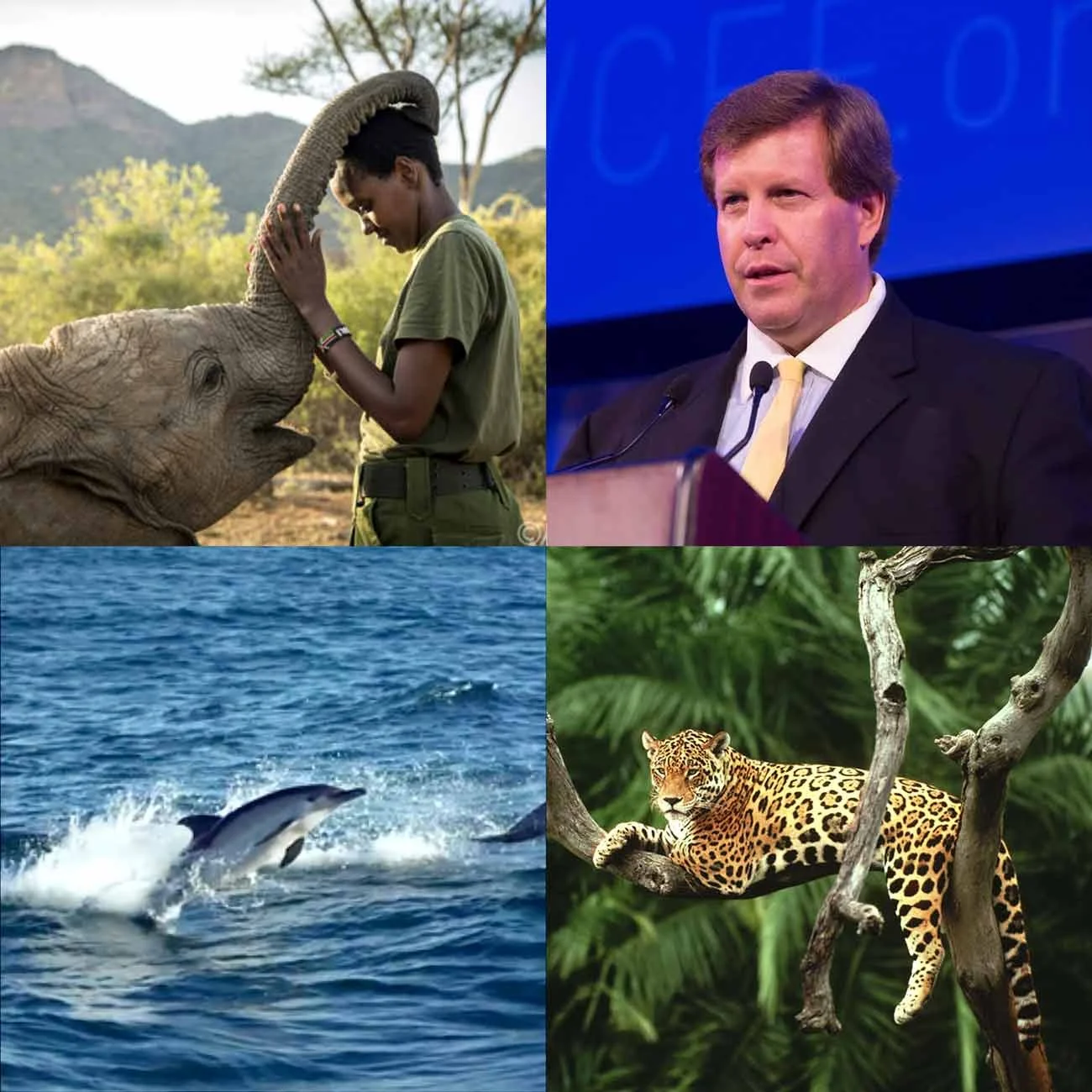
Founder & CEO of Wildlife Conservation Film Festival
Cannes Lions Award-winning Producer
There are hundreds of environmental film festivals, and that's not us. We are really the only pure Wildlife Conservation Film Festival. And we've elected to have these events in large urban areas simply because of the disconnect with nature. Whether we've had it in Beijing or San Paulo, or places in Europe, we find that the people living in these large urban areas are just not aware of the wildlife and the biodiversity around them. Most people in New York City have never been to the Catskills or the Adirondacks, which is just a short drive from Manhattan. And there you can see wildlife year round, all four seasons. And that's one of the purposes of the festival. Our mission is very straightforward and simple: to inform, engage, and inspire wildlife conservation through the power of film and media.
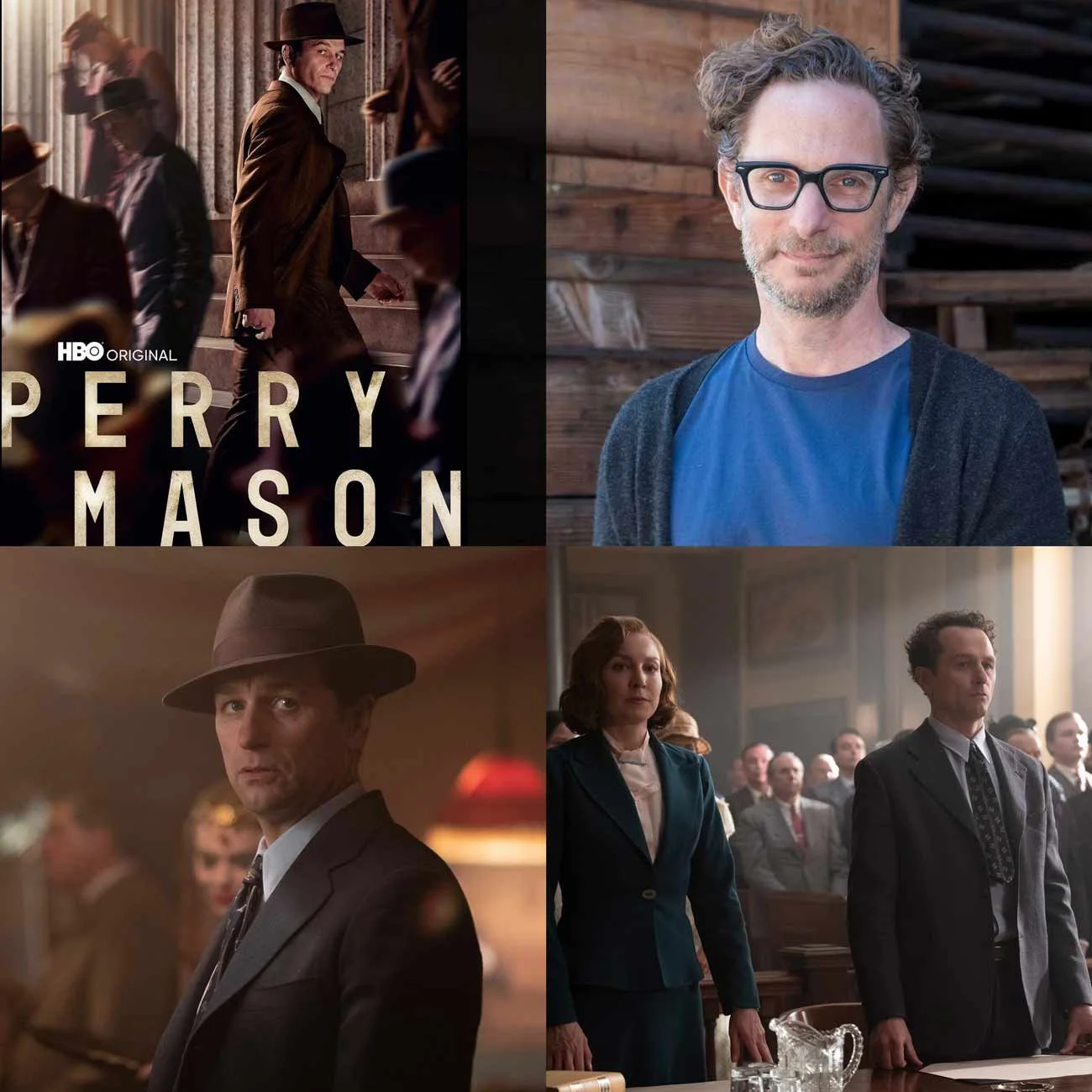
Showrunner · Writer & Executive Producer
Perry Mason starring Matthew Rhys, Juliet Rylance, Shea Whigham, Hope Davis
The Knick starring Clive Owen · directed by Steven Soderbergh
Storytelling is our oldest art form. We can't silence the arts and those voices because if we do, we lose something that is so crucial to who we are just as human beings. We want to tell stories. We want to express things. For example, I cannot draw. And one day the teacher wanted us to do negative space drawings. And I said, "What is that?" And they explained that it's looking at what's around the object and not the object. And it clicked, and it made me look at things from a whole different perspective. And you know, what? That became where I was most successful. And so for me, there's are an infinite number of ways to tell a story that you never run out of ideas, that you can always find another road, another way to look at something. That's probably one of the key elements to my career.
Co-founder & CEO of Open Collective - Chair of DemocracyEarth Foundation
Alum of YC & Young Global Leaders at World Economic Forum
And so I think many of those challenges have to do with the nature of power and how power is conservative and power will do anything in order to stay in power. And the status quo will do anything and make itself look like anything that you want in order to stay in power. And they might change their spots a little bit here or there, but if you look deep enough, it's the same people. It's the same power.
And so for me, that was the big challenge of realizing that we were facing power and power is conservative, and that's not the way to really achieve the change that we wanted to make. I wasn't patient enough for incremental changes. That's not what I'm interested in. So there's one set of challenges that I think is common to anyone in my position trying to do this. With regards to being a young woman, I mean, sure you face the same kind of sexist comments that you would face anywhere else that I face now as a woman CEO. The best thing I can do for that is just occupying the space and keep occupying the space and refusing to move away or let things like that stop me from engaging.
Filmmakers, poets, aviators, musicians, cave divers, environmentalists, writers, and artists explore what love means to them

Sculptor
As a sculptor, I aspire to model the infinity of our existence – I know, that’s a very long perception and even longer effort. I am looking for the organic in our being and that shimmying state of infinite being. Likewise, I believe that human mankind should not be driven exclusively by momentary gratification but shall instead think about what lives on when our lives end. The shortcomings of capitalism are obvious – it is mostly based on self-interest and competition, and it is often anti-collaborative on the macro-level. As an artist, I recommend redesigning capitalism, to make it more socially oriented and inclusive. Markets need to grow for the benefit of all, obliged to support the UN Sustainable Development Goals (SDGs) in general and the environment in particular.

Founder & President of Global Footprint Network
Winner of the World Sustainability Award · IAIA Global Environment Award
So shooting for one planet just means you would be totally dominant, and leave no space for other species. Ecologists say to maintain 85% of preindustrial biodiversity, it would take about at least half the planet left on its own. That would mean getting to half-planet. And now we use at least 1.75. I say at least because our assessments with about 15,000 data points per country in a year are based on UN statistics, and their demand side is probably an underestimate because not all demands are included. And also on the supply side or the regeneration side, the UN is very production oriented, so it's the FAO numbers, for example, look at agricultural production, and the depletion side or the destruction side is not factored in adequately. So that's why it's an underestimate. And still, it shows we use about 1.75 Earths, and that's more than three times half an Earth. So that's kind of the difference. But we also know overshoot will end one way or another. The question is do we choose to end it? Do we choose it by design, or do we let nature take the lead and end overshoot by disaster? So it's really ending overshoot by design or disaster. That's the big choice we need to make.
Award-winning Executive Producer of UnPrisoned starring Kerry Washington & Delroy Lindo
13 Reasons Why · Home Before Dark · Eyes on the Prize: Hallowed Ground
Founder of Joy Coalition
With UnPrisoned and with really my whole body of work as a producer, I'm really drawn to stories that make people feel seen that take issues that have stigma and shame attached to them, and making those issues just more palatable and more human. And few people realize that 50% of American families are touched by incarceration. And when you meet someone like Tracy McMillan, who really is a miracle, this is a woman who's now in her fifties who grew up in 22 different foster homes because her father was incarcerated when she was so little. And yet for all of his mistakes, the fact that he was a career criminal, he still, when he could change her diapers, he was present when he could be there. He braided her hair, and there was real love there. But they were separated not only by his mistakes, but by a system that is really unforgiving and really unfair, especially to black and brown men. So, the idea that we could tell a story where a young woman who was raised that way and by that person turns out to be Kerry Washington. You know, turns out to be somebody who you want to be, turns out to be "Olivia Pope", this woman that we all see as so beautiful and such a hero and so strong and so powerful, I felt was just an incredible opportunity. And when we first put Tracy and Kerry in the same room, Kerry said to Tracy, "You know you're a miracle, right?"
Executive Director of Clean Air Task Force
There's no such thing as completely clean energy. We use that term a lot, but it's not really true. We have low carbon energy, and lower carbon energy, but any kind of industrial system has requirements for materials and processing, and nothing is completely natural in the industrial world. If we can electrify transportation, I think we can clean up the grid, and then I think we can deal with these life cycle issues in a way that's responsible, but it'll never be zero. That's impossible. The good thing about technology is it can move very fast. And so my advice would be if you're interested in this topic, if you have a mathematical, scientific, or business orientation, or you just like solving problems, get trained to really be part of the technological business revolution that's going on right now.

APA Award-winning Author of The Art of Insubordination: How to Dissent and Defy Effectively
Curious? · The Upside of Your Dark Side
Leading Authority on Well-being, Curiosity, Courage & Resilience
We're really talking about principled rebels. And when we talk about insubordination, we're talking about most of us live in these social hierarchies, and there's the idea, this started in the military and still goes on, where if someone at a lower rank questions or challenges a command or a norm that someone of a higher rank, that's considered an act of insubordination. And one of the main problems of that, I think anyone who's listening can acknowledge, is it depends on the quality of the idea of the person who's raising the question. I just realized there was this whole body of literature on minority influence that no one had put together into a book for the general public, and considering the racial reckoning that occurred during COVID-19, the extra attention to diversity, to disadvantaged groups, every moment of society, it just feels like it's more and more relevant of what I've been working on.
Deputy Vice-Chancellor University of Sydney's Indigenous Strategy & Services
We come from the land, and we go back to the land. Aboriginal people have been on this land for at least 60,000 years in some of the most extreme conditions on Earth and survived. And over the last 230 years, the most catastrophic events have occurred to this land because people didn't listen to ancient Aboriginal cultures and knowledge. So my question is, if people were able to look after this place for 60,000 years and thrive, what have we done to ensure that we have a healthy fit world for the next 60,000 years?
Writer, Public Speaker, Facilitator · Founder of Reclaiming Nature Writing
So much of the travel industry was built on the idea of colonialism which really makes us all inherit this idea that whatever we need in life is going to come from seeking it elsewhere and grabbing it from somewhere else, I think looking at that, really deeply thinking about what is lost from that mindset and the harm that is caused by it has been something I've been trying to do over the last few years. And a lot of that has to do with land trauma, right? Like really acknowledging where our settlement of land comes from and how we can heal that in the ways that we travel.
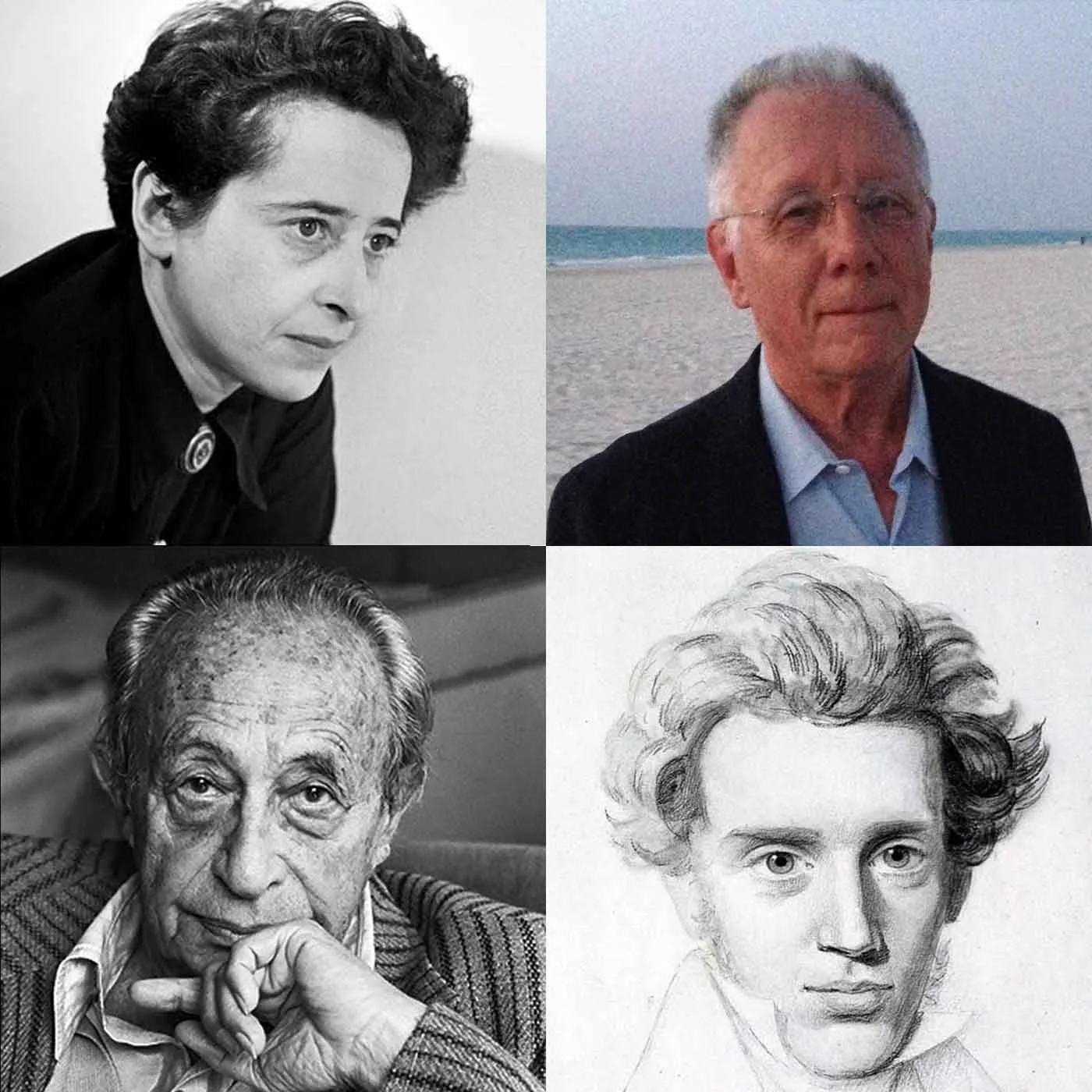
Professor of Philosophy focusing on Science, Technological Ethics, Engineering & the Arts
I have a granddaughter who's just going into high school, and she is filled with idealistic thoughts and is optimistic. She's a person who is both in love with art and in love with science. She's vivacious and just everything about her seems like life is beautiful, and “I'm going to be able to do this and that.” And, of course, when I talk to her, I do everything I can to encourage this kind of openness and optimism, and belief in herself and her ability to do worthwhile things. And not be too concerned about is she going to be able to have a job with enough income to be where she wants to be. And so it’s how to perpetuate and strengthen that kind of spirit and hope, that it can be validated by giving this generation the opportunity to do things. Because I believe that if she and people who think and feel like her were really given the opportunity to be influential and to do things that would have a tremendous shift in the way the world is going. She doesn't think in terms of quarterly profits. She thinks in terms of human happiness and human good, human fairness, and the beauty of nature. I think we need to do. I think the universities can play a part. Schools play a part, but there has to be a broader general sense that this is how we should conceive the future. And, you know, galleries, podcasts, books, newspapers, universities, schools, every kind of institution needs to offer something to help this.
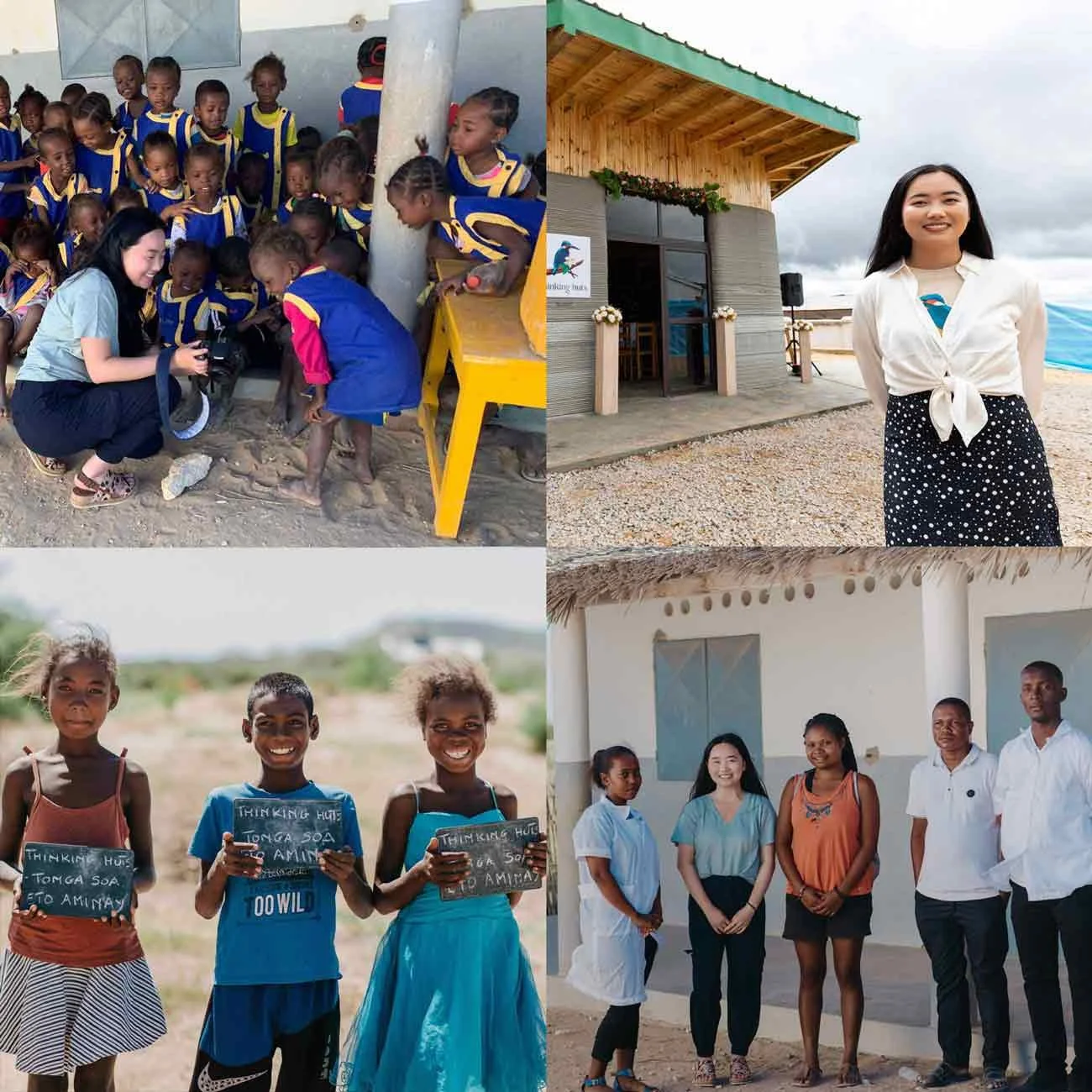
Founder & CEO of Thinking Huts: tackling the Global Education Crisis with 3D Printing
I think being a young Asian woman and trying to lead people can be difficult in the sense that they have those assumptions in place. I do think the typical archetype of Asian women is that you're supposed to be quiet. And maybe those aren't going to be perceived leadership qualities, but in terms of what I have done to overcome that, I've really focused on building the trust and showing people that I genuinely care about them and valuing long-term relationships, especially on the business side. So with the construction team, just showing them that I'll stand up for them if I see behavior that's not okay in my perception. And just being a good person with ethics, I think is maybe what sets me apart because then people respect that and they'll follow you.
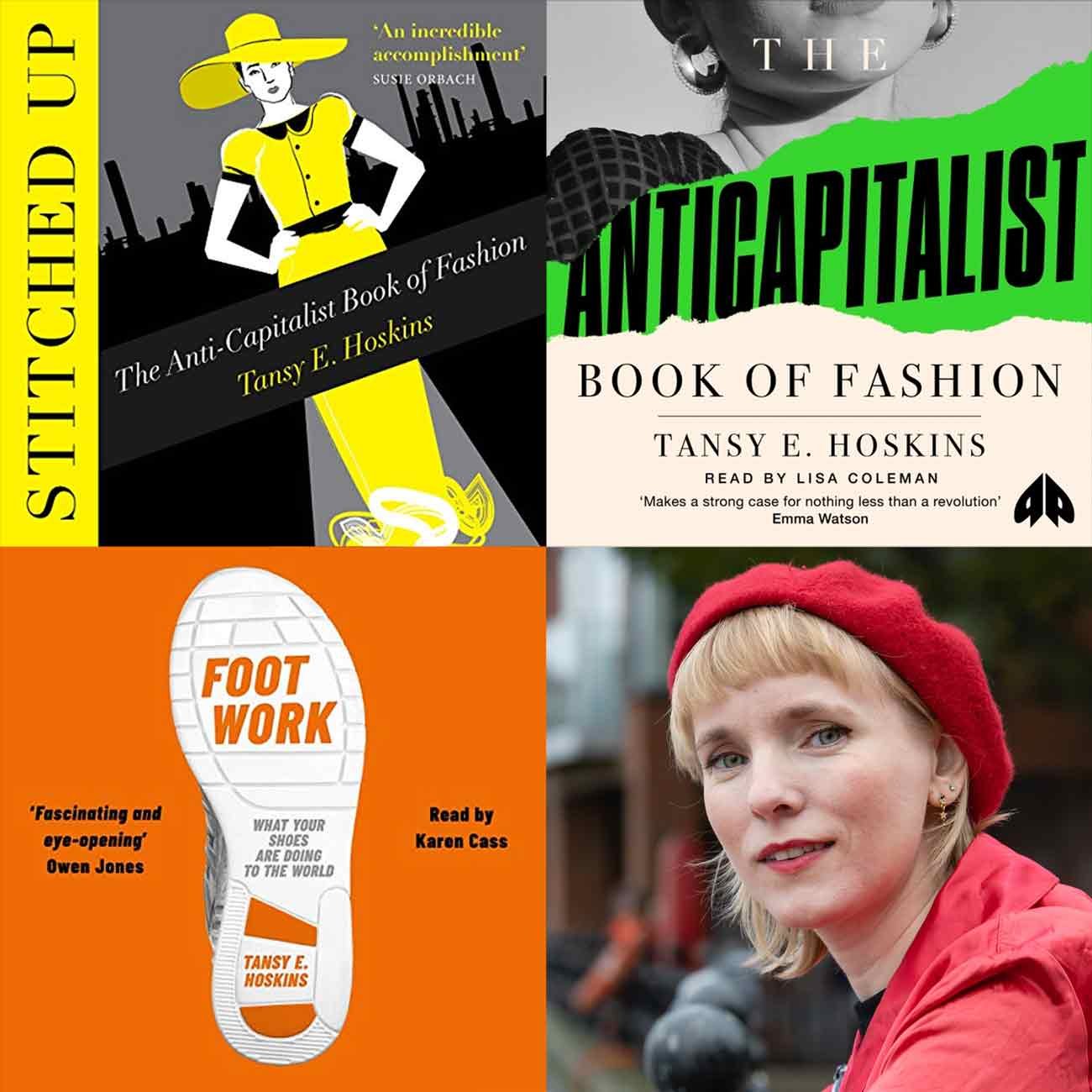
Author of The Anti-Capitalist Book Of Fashion · Foot Work · Stitched Up
Freelance Fashion & Beauty Writer Award Winner
I definitely believe at the moment that fashion brands, big fashion in particular, they just exist to exploit people. It's an excuse to exploit the poor, basically. I see fashion as part of this very extractive global economic society where 100, 150 years ago, that extraction was very obvious. You had the enslavement of people. You had taxation. You had literally armies turning up and occupying the land that they wanted and just taking resources or land. These days it's more subtle, but the brands are still following those colonial pathways.

CEO of Clarim Media
Think about how do they deliver value to all of those constituents rather than just their shareholders. So they will create the more successful long-term companies, especially generationally, as Gen X and millennials care more and more about mission and purpose. This idea of greenwashing or now what we can call woke-washing and that ESG goals are typically held within PR groups, within companies. They just talk about what they're doing versus being held accountable. I think we will continue to see that paradigm shift towards accountability, transparency of companies doing the right thing.
Explorer · Presenter · Author of Into The Planet: My Life as a Cave Diver
It's such a privilege swimming through these places. And I almost feel like I'm getting a secret peak into the body of the planet and that's a very precious and almost a sacred kind of collaboration where I get to experience this, I get to see this, but if I'm going to take these insanely challenging risks I need to make it worthwhile and share what I've seen so that other people have the benefit of understanding, a better conception of our connected planet. Both in the short term and in the long term scale as well. The sense of time can be warped by what's going on in my brain, so I do have this dance between left brain and right brain. Left brain pragmatic, right brain creative.
Tyler Prize Award-winner for Environmental Achievement
Professor of Environmental Change & Public Health
Fmr. Chair of WHO World Health Report · Rockefeller /Lancet Commission on Planetary Health
In terms of the impacts of climate change on health when we started 30 years ago, because there was very little data then, so we made suggestions as to what we thought the health outcomes we thought would be affected like vector-borne diseases, crop failures, water availability, sea level rise, increasing disasters related to climatic extreme events, and obviously the effects of extreme heat on vulnerable populations. In particular, elderly people, but not just elderly people. So we suggested a whole range of different health impacts that could occur. And I think, in general, those ideas have stood the test of time, but of course, as the situation has moved on, we've also become much more preoccupied with what kind of action we need to take.
Author of Jazz in the Time of the Novel: The Temporal Politics of American Race and Culture
Temporal Experiments: Seven Ways of Configuring Time in Art and Literature
Co-director of University of Oslo’s Literature, Rights & Imagined Communities
I really admire how James Baldwin always talks about jazz as a kind of model for his writing style. But music has certainly had a profound influence on the way I see the world, especially in terms of the social world. One of the big problems we have in all sorts of different places around the world is the question of how to coordinate difference. All sorts of people have different modes of living, different cultural rhythms, and different ideas about the future. Jazz is brilliant at a lot of things, but it notably brings together different people and allows them to retain their own sense of time and rhythm while playing together. It's a really profound model of social coordination. Now, of course, it says something particularly pressing about the United States, but I think as a model for how differences go together, jazz is perhaps unparalleled.

Founder & CEO of Climate Analytics · Physicist · Climate Scientist
Net-zero is a big idea. It’s a big theme. And, unfortunately, what's going up are many ways to look like you're doing net-zero when you're not. So in the ideal world, getting to net-zero means essentially reducing your emissions, and then, where you have residual emissions left, that means you might need to have negative emissions. For example, it's relatively easy to decarbonize the power sector completely, and you can do it quickly and cheaply in most places, but you’re always going to be left with some levels of emissions from agriculture.
Director of the Centre for Environmental Policy, Imperial College London · Editor-in-Chief of Conservation Biology
Author of Trusting Judgments: How to Get the Best Out of Experts
The idea of expertise and expert judgment has been around and has been something that society depends upon for a long time, but there have been no serious empirical explorations of who's an expert, what a domain of expertise is, and what sort of frailties are experts susceptible to. Those things haven't been addressed in an empirical way until the last 30 years. Some of this work began in the fifties with Kahneman and Tversky. They began to explore the things that make people misjudge risky situations, and that led to a body of research on who makes good judgments and under what circumstances for things that might affect us in various ways.
Co-author of An Introduction to Literature, Criticism and Theory
Author of Mother: A Memoir · Managing Editor of Oxford Literary Review
My mother died years ago. What has induced me to write about her after all this time remains mysterious to me. It is connected to the climate crisis. As the natural historian David Attenborough says: 'the collapse of our civilizations and the extinction of much of the natural world is on the horizon.' In ways I cannot pretend to fathom I have found that writing about my mother is bound up with writing about Mother Nature and Mother Earth. And no doubt it has to do also with my own aging and the buried life of mourning. The strange timetables of realization and loss. A memoir is 'a written record of a person's knowledge of events or of a person's own experiences'. 'A record of events written by a person having intimate knowledge of them and based on personal observation.' So the dictionaries tell us. But this memoir of my mother makes no attempt at a comprehensive record.

Author of The Neuroscience of Creativity
Director of the Torrance Center for Creativity & Talent Development, University of Georgia
I love podcasts and things like that, if only to listen to people who've done incredible things. We live in a kind of unusual time where we can hear firsthand people talking about their own experiences, and what they went through when they were creating something. And while artists differ greatly from one another in terms of the specifics of their process, what certainly seems to be the case is that they're extraordinarily interested in their own mind, and they have what we would call a metacognitive awareness. They know almost quite precisely, at least what doesn't work for them. They're very cued into what to avoid and how to sort of generate the mental conditions that are necessary in order to be as generative or as creative as they're likely to be in a specific situation. So that is a deep medical awareness that they have about their own process that is really quite something. They know themselves very well.
Award-winning Educator - Author of Adaptive Intelligence: Surviving and Thriving in Times of Uncertainty
Fmr. President of the American Psychological Association
Are we looking at intelligence wrong? There are an awful lot of people who have graduated from top schools who become leaders who are worse than incompetent. They make their countries worse rather than better. And the conclusion I came to is that we made a mistake, in that intelligence was originally defined by the founders of the field Alfred Binet, David Wechsler, and others, as the ability to adapt to the environment a requirement. And answering a vocabulary problem for an obscure word is not about adapting to the environment. So I began to wonder where we lost the train of thought. And the conclusion I came to is that colleges just forgot the original message of the founders of the field, and so we got immersed in these numbers that turn out not to mean that much. So I wrote about intelligence as the ability to get along in the world and hopefully make the world a little bit better
Founding Co-Director of Northwestern Institute on Complex Systems
Award-winning Author of The Nexus: Augmented Thinking for a Complex World - The New Convergence of Art, Technology, and Science
Today's complex problems demand a radically new way of thinking — one in which art, technology, and science converge to expand our creativity and augment our insight. Creativity must be combined with the ability to execute; the leaders and innovators of the future will have to understand this balance and manage such complexities as climate change and pandemics. The place of this convergence is THE NEXUS. In this provocative and visually striking book, Julio Mario Ottino and Bruce Mau offer a guide for navigating the intersections of art, technology, and science.
Award-winning Poet, Filmmaker & Speaker
Creator of the Stand-Up Poetry Special Words That Move
Technology has very much changed the way we read and take in information and shortened it into quick bursts and attention spans. We're living in a new world, for sure. And how do we communicate in this new world? Not just in a way that gets the reach, because there are whole industries aimed at what do I do to get the most likes or the most attention, and all of that, which I don't think is very fulfilling as artists.
It's sort of a diminishing of our art form to try and play the game because then we're getting the attention and getting the hits, as opposed to what do I really want to create? How do I really want to create it? How do I want to display this? And can I do it in a way that breaks through so that if I do it my way, it's still going to get the attention, great. But if it doesn't, can I be cool with that? And can I be okay creating what I want to create, knowing that that's what it's about. It's about sharing in an honest, authentic way what I want to express without letting the tentacles of social media drip into my brain and take over why I'm literally doing the things that I'm doing.

Ecologist & CEO of Wetlands International
Co-author of Water Lands: A vision for the world’s wetlands and their people
Wetlands naturally absorb twice the amount of carbon than all the world’s forests combined.
I think everybody at school learns about the water cycle. That rings a bell with everybody. Maybe this is a good hook to show the place of wetlands in capturing and purifying and the story of water. And then in turn how this links to what we’re seeing every year: droughts, floods, fires, heat waves which are devastating and life-threatening. I think this may be one of the easiest routes in educating people, connecting wetlands with water and the direct impact of that.

Showrunner of Netflix’s Ginny & Georgia
Writer · Exec. Producer · Director · Alias · Criminal Minds · The OC · Charmed
I need a balance of light and dark. It can't be just one thing. I want you to be laughing one minute and by the end I want you to be crying. For me, character study is what is the most important. It all comes down to the characters. It's less about action or things like that, which you can have some of that, but it tonally, has to be female-centric and you have to be crying and laughing. There's so many interesting shows that walk that line of light and dark. I want to always live in the gray area with characters. Always. Nothing is ever black or white. It's always a weird gray area.
Author of NYTimes Bestseller Irresistible: The Rise of Addictive Technology and the Business of Keeping Us Hooked ·
Anatomy of a Breakthrough · Drunk Tank Pink
The other thing from a creativity perspective is we know that more people around you is good for creativity. It's one of the axioms in thinking about creativity in general. You need time. An artist, a writer. I'm a writer. I need time on my own. I also paint and draw. I cannot do that with other people around. It's just my process. But before you get there, before you get to that point where you need that time alone, that space apart, for almost everyone being around other people is good. It's good for creativity. It's both about diversity of opinion and idea and just about having more - just more information, more thoughts, more ways of looking at the world. And some of the most profound research I've come across in preparing for this book suggested that it's better to be around people who are deeply incompetent than it is to be around no one, which I found very surprising.

Cannes Film Festival Award-winning Director
Author of Fly Already · Suddenly a Knock on the Door · The Seven Good Years
For me, there is something about art, it's not a monologue, it's a dialogue. Some people, it doesn't matter who they speak to, they will speak in the same way they would speak to a five-year-old or to an intellectual or to somebody who doesn't speak the language very well. They would speak the same way and they don't care because this is what they have to say, but I think that the natural thing in the dialogue is really to look into the eyes of the person you speak to and see when he understands or when she doesn't understand or when she's moved or when he's angry. And basically out of that, kind of create your own language.

Cinematographer · The Gilded Age · Inventing Anna
Jessica Jones · Luke Cage
What I think made me want to pursue film or what started my fascination with film and cinema were definitely Fellini, Antonioni, and Bertolucci; the masters, if you will, that kind of make you dream - make you just go to a movie theater, enter this space, and just have a communal experience. I know looking at the screen and just being completely immersed and experiencing stories or experiencing things that make you understand life more - or make you understand life less - and create a dialogue between you and the rest of the world.
Creator of the Amazon series Riches
Writer/Producer on Inventing Anna · The First Lady · How to Get Away with Murder
I do feel that if one has the desire and the ability to be a much more big-picture showrunner, I think that's to the best. That benefits the show because there's a creative voice running all the way through. This isn't a movie, where it's a director's medium. It is the writer's medium, so I think the writer should be across producing and also empowering the director, but there is a clear vision. I think Riches has all the hallmarks of the things I've worked on before in terms of complex, slightly subversive women. At the heart of it, it is negotiating power dynamics. And at the heart of it, there are two very complex and yet vulnerable black women, but I've always loved family drama shows and particularly family businesses, whether it's fictional ones or in real life.

Author of Transnational Advocacy in the Digital Era: Think Global, Act Local
Assistant Professor · International Relations · Johns Hopkins School of Advanced International Studies (Europe)
Digital advocacy organizations are recognized as influential actors by the media, politicians, and some academics. In 2016, GetUp, an Australian digital advocacy organization, was named by the Australian Financial Review as one of the top ten actors with ‘covert power’ in Australia.1 Campact in Germany has powerfully mobilized public opinion against the Transatlantic Trade and Investment Partnership. MoveOn was one of the ‘leading advocacy organizations’ mobilizing people against the Iraq War in the United States. Meanwhile, Leadnow, a digital advocacy organization in Canada, helped to unseat Prime Minister Stephen Harper in the 2015 Canadian federal election. This new model of advocacy organization has spread around the world. Nineteen digital advocacy organizations claim to have a total of over 20 million members. What drove the global spread of digital advocacy organizations?

Google’s 1st Engineering Director · Innovation Agitator Emeritus
Author of The Right It: Why So Many Ideas Fail and How to Make Sure Yours Succeed
As much as I would love to take the credit, Google Ads was a big team, and I was fortunate to be brought in as a director that managed the team. I think the reason it was so successful is because innovations and new ideas, they compound. They build one upon the other. So the reason why ads was so successful for Google is because search was so successful for Google. So when you have search and you have billions of people coming in every day, maybe every hour, and searching all kinds of things, you have this treasure trove of data. If you have billion searches per day, you know how many experiments can you run? And so Google is very famous for doing a lot of A/B experiments. That's how we collect the data. So what actually enabled Google to be so successful and to grow is this mental attitude, which is the same one that Amazon and some of these really successful technology companies have, of doing a lot of experiments on small samples and continually refining their data based on that. If you're dealing with a lot of people, you can do those experiments and that's why these companies are successful. The sad thing or what happens with companies that do not operate in that way, that do not try to operate on data and do all of those experiments, those are the ones that are left behind. Innovation is experimentation.

Writer/Director of The Estate starring Toni Collette, Kathleen Turner, David Duchovny
The Honeymoon · Death at a Funeral · Love Wedding Repeat
So, you have my rhythm on the page, and then David Duchovny brings his rhythm and his attributes. And then you get this sort of hopefully wonderful collaboration between writer and director and actor. The Estate is the film that I directed most recently, and that's with Toni Colette, Anna Faris, David Duchovny, Kathleen Turner, Rosemarie DeWitt, Ron Livingston, Keyla Monterroso Mejia. Some really wonderful actors and I think a very fun ensemble that we were able to do there. I had a very strange year where I got to do The Honeymoon and The Estate pretty much back to back with no break in between, which was challenging, but also amazing to be one minute in Venice with these fantastic actors. Really, I can't tell you how much I loved working with Maria and Pico and Asim and Lucas. They were all totally different people and personalities, but all fantastic in their own way. And then I jumped onto the set and had those fantastic actors to work with. So it's been quite a year, I have to say.
Professor of Forest Ecology
Author of Finding the Mother Tree
Think of yourself as a tree. You’ve got neighbours that you live beside for hundreds if not thousands of years, and none of you can move around, so you just have to communicate in other ways. And so trees have evolved to have these ways of communicating with each other, and they’re sophisticated, they’re nuanced. They include things like transmitting information through these root networks that link them together. They transmit information to each other through the air, so they perceive each other, they communicate and then they respond to each other. And that language is complex.
Award-winning Cinematographer of Lady Bird · Frances Ha · While We’re Young · Confess, Fletch
Every movie is different. Every story is different. I think if we're lucky in our lives, we can choose the path that we want to go down, whether it's something creative or in the arts or something else. And I think if you're lucky, you can spend your life or your career following something you really love or spending time following the path, whether it's a hobby or your career. And spending that time paying the attention that the craft or the hobby or the creative pursuit wants.
CEO & Founder of Creative/Branding Agency My Young Auntie
If someone comes to me, and they say, “Oh, I have a new brand. It's a startup.” First of all, I have to like the person, they have to like me. It's a two way street. And that's the most important thing with anyone in life, not just work. In life, why do we make friends with who we make friends with? They are relationships. And if you connect with someone, magic will happen. If you don't connect with someone, and someone doesn't understand or have the same aesthetic or a similar way of thinking – you have to have something in common with someone. And if you have those qualities, which I look for, honesty and loyalty, and they're genuine, and you just know if you're going to get on with someone or not.
Author of Sweet in Tooth and Claw: Stories of Generosity and Cooperation in the Natural World
The Soil Will Save Us
I think it's this story of cooperation is important in terms of the story that we tell ourselves about nature, and seeing as how we are part of nature, it's important that we see ourselves as possibly a partner instead of a destroyer. I think that we have held onto the perspective that nature is all about competition and conflict. And when we shift that, when we look at nature as this vast web of interconnection and cooperation, and of course competition and conflict in there obviously in some places. But when we look at this vast web of cooperation and collaboration, I think that it changes our view. It changes our view of what's possible.

Composer, Musician, Photographer, Artist
Einstein on the Beach, it's a masterpiece. America, in 1976, was to be celebrating its 200th year of existence, and Michel Guy, the French Minister of Culture, came to New York to offer a commission to Philip Glass and Robert Wilson to write an opera. This was the gift that France would give for America's two-hundredth anniversary. That was the first time I met Robert Wilson.
Founding Father of the Circular Economy · Founder-Director of Product-Life Institute
Author of The Circular Economy: A User’s Guide.
The circularity, of course, has existed in nature for a long time. Actually, nature's circularity is by evolution. There is no plan, there is no liability, and there are no preferences. It's simply the cycles such as marine tides, CO2, and water cycles, plants and animals, and basically by evolution, the best solution wins. Also, there is no waste. Dead material becomes food for other animals or plants. Now, early mankind survived by depending on these local natural resources sharing a non-monetary chaotic symbiosis dominated by nature, then poverty or necessity-based society changed when humankind used science to overcome shortages of everything. In other words, the Anthropocene. With nuclear energy, petrochemicals, metal alloys, we became independent from nature, but we overlooked the fact that these new manmade anthropogenic resources or synthetic resources were unknown to nature, so nature could not deal with them. And that means that we, humankind, has to take responsibility for it.
CEO of Legacy Agripartners · Pushing Farming Forward through Seeds, Regenerative Ag & Rural Communities
It's interesting, as I've gotten older, I've really started to reflect back on that early time growing up on a farm. And I'm fiercely, fiercely proud of where my roots are. And Weldon, Saskatchewan, it's a town of 160 people there today. And just being in a spot where every day you have cattle to feed, you've got a grain crop you're trying to grow, right? The things are subject to weather. The sort of ups and downs of farm life are so dependent on the 6 pm news and the weather forecast each night. It's at times very stressful, but most times incredibly rewarding, right? There's nothing like sitting in a combine at harvest time with all the fruits of your labors all coming in at the same time. So it's a lot of responsibility, and it's a great way to get yourself ready for life as an adult.

Author of Slow Violence and the Environmentalism of the Poor
Professor Environmental Humanities at Princeton
There are some recurrent threads in indigenous cultures across the world. One of those is–We don’t own the land. The land owns us. It’s not seen as property first. It’s seen as inalienable in that sense because you don’t own it in the first place. What we’re seeing now is a kind of movement where more and more indigenous people are living kind of amphibious lives. On the one hand, they have their indigenous cosmologies. And the other hand, in order to increase the likelihood that they can keep out big corporations, mining, logging, and so forth, their presence on the land needs to be bureaucratically recognized is to have recognition that “this is your property.” So in one sense many of these communities I find are both inside and outside private property regimes.
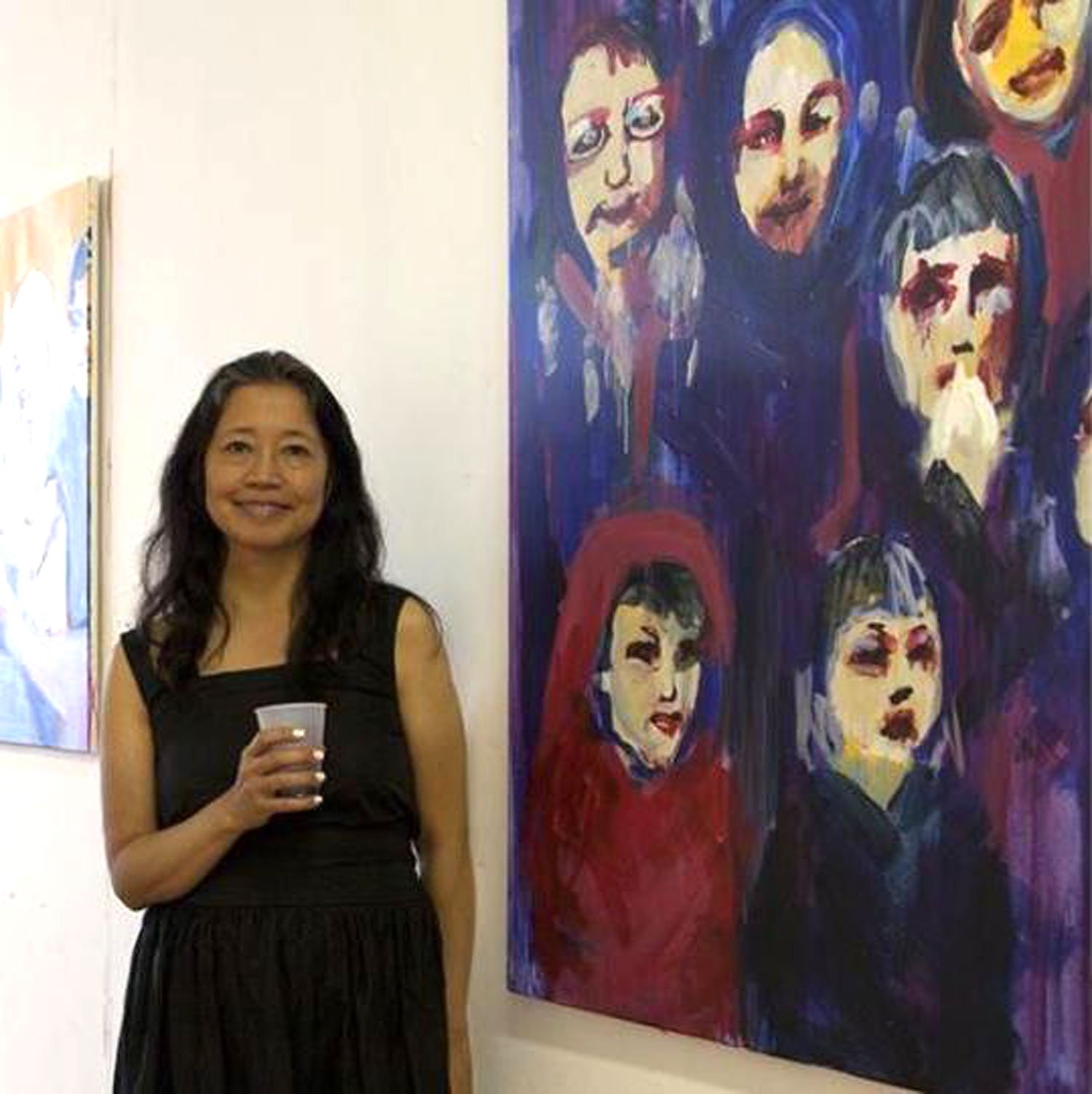
Artist
I just feel there is already a connection, something I have to come to, but that I'm trying to search it out or see what's already there. I feel that we are truly connected as a world. And I'm just trying to make people aware of an existing connection we already have, to send that message out there. And I like to do it in the form of...I guess you'd call it a mundane image, where it's not really about bells and whistles, but it's about something in it makes you want to look, and you want to know why. And it's because you've been there before, regardless of whether you are a dancer or that particular guy in the subway, you know you've been in his head in that mood that he's experiencing.
Author of Dopamine Nation: Finding Balance in the Age of Indulgence
Chief of the Stanford Addiction Medicine Dual Diagnosis Clinic
I'm an addiction psychiatrist. When I use the word addiction, I'm really talking about having crossed the line from basically healthy use with an occasional slip to somebody who's really caught in the vortex of compulsive overconsumption with consequences and typically needing help from others. It's one of the main points of my book Dopamine Nation that we are living in this addictogenic world where almost all human behaviors and substances have become drugified in one way, right? Social media has drugified human connection. Our food has been drugified by the addition of salt, fat, sugar. Reading is drugified, the way that these genre novels fill this sort of gaping hole of compulsive consumption among their readership, people always wanting more. The Netflix binges, where you get the next episode automatically fills unless you do something to stop it. You know, these are all little ways in which our lives have been engineered to keep us clicking and swiping and eating and smoking and drinking to the detriment of the globe. I mean, 70% of global deaths are due to diseases caused by modifiable risk factors, and the top three are smoking, inactivity, and overeating or diet. So we're literally titillating ourselves to death.

Founder of Democracy at Work · Host of Economic Update
Author of The Sickness is the System: When Capitalism Fails to Save Us from Pandemics or Itself
You can criticize many things in the United States, but there are taboos and the number one taboo is that you cannot criticize Capitalism. That is equated with disloyalty…This story about Capitalism being wonderful. This story is fading. You can’t do that anymore. The Right Wing cannot rally its troops around Capitalism. That’s why it doesn’t do it anymore. It rallies the troops around being hateful towards immigrants. It rallies the troops around “fake elections”, around the right to buy a gun, around White Supremacists. Those issues can get some support, but “Let’s get together for Capitalism!” That is bad. They can’t do anything with that. They have to sneak the Capitalism in behind those other issues because otherwise, they have no mass political support.
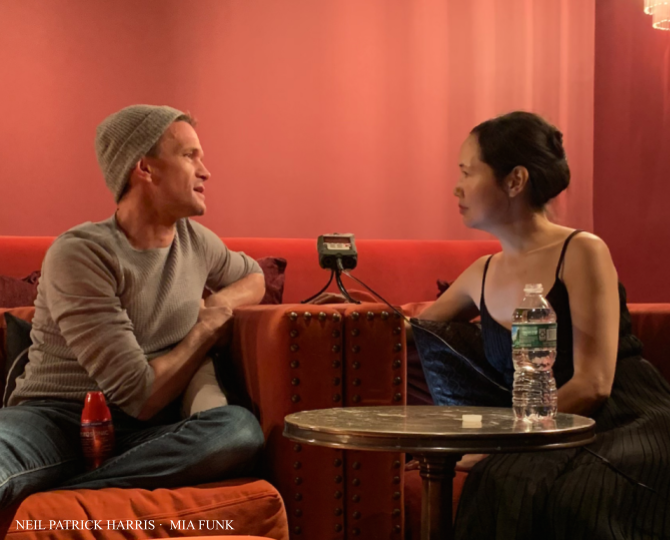
Founder of The Creative Process
What is very important to me is to create work that is meaningful, to reach beyond my particular concerns to speak to others and their concerns and interests, to do something that inspires the next generation and which is larger than myself.