Constitutional Collapse and the Possibilities of a New Democracy

Constitutional Collapse and the Possibilities of a New Democracy

A Conversation with AZIZ RANA

In the US, we have this idea that exists as a kind of popular cultural sense. The country has basically had the same constitution—a document ratified in the 1780s, and it has really been in effect since then. However, one of the things that's distinctive about the US Constitution is that it is perhaps the hardest in the world to formally amend. It is incredibly difficult to change the actual terms of the text, even during times when we've had pretty profound changes to the language. Here, we can think about the Reconstruction period with the passage of the 13th, 14th, and 15th amendments.

AI · Universities & Student Surveillance in the Digital Age

AI · Universities & Student Surveillance in the Digital Age

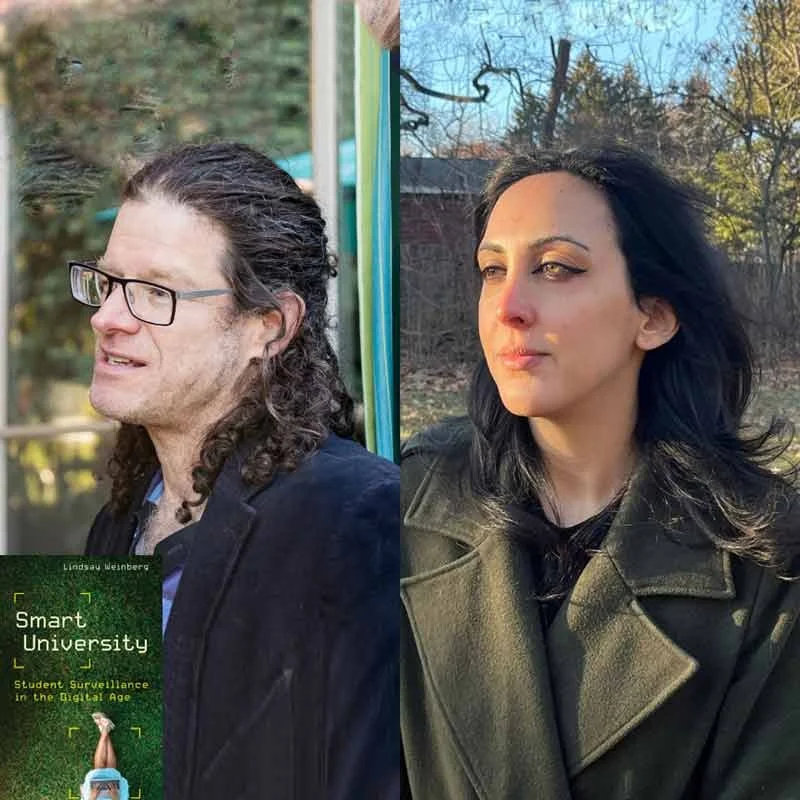
A Conversaton with LINDSAY WEINBERG & ROBERT OVETZ

Under the guise of “personalizing” education and increasing efficiency, universities are increasingly sold on AI as a cure to their financial ills as public funds dry up and college applications drop. Rather than maintain that education is an essential public good that needs broad support, universities are looking to technology in ways that are changing the nature of education in dangerous and destructive ways.  As Lindsay writes in the book, Smart University: “Higher education is becoming increasingly synonymous with digital surveillance in the United States. Advanced network infrastructure, internet- connected devices and sensors, radio frequency identification (RFID), data analytics, and artificial intelligence (AI) are being celebrated as a means of ushering in the age of “smart universities,” one where institutions canrun their services more efficiently and strengthen the quality of higher education using digital tools. However, as this book demonstrates,  these tools have a darker side. They allow public universities to respond to and perpetuate corporate logics of austerity, use student data to reduce risk of financial investment in the face of dwindling public resources, and track student behavior to encourage compliance with institutional metrics of success. Surveillance of student behavior forms the foundation of the smart university, often in ways that prove harmful to students— particularly  those who are already marginalized within the academy.
 The Dream Hotel

The Dream Hotel

A Conversation with Author LAILA LALAMI
on Dreaming Beyond the Algorithmic State

What happens when the state, with the pretext of protecting public safety, can detain indefinitely certain individuals whose dreams seem to indicate they may be capable of committing a crime?  Set in a precarious world where sleep-enhancing devices and algorithms provide the tools and formulae for making one’s unconscious a witness to one’s possible waking life, this novel touches on a myriad of political, philosophical, and moral concerns as they particularly connect to issues of gender, race, ethnicity, privacy, and the security state.

Teach Truth: The Struggle for Antiracist Education

Teach Truth: The Struggle for Antiracist Education

JESSE HAGOPIAN on The Radical Healing of Organized Remembering

In this episode on Speaking Out of Place podcast Professor David Palumbo-Liu talks with activist and educator Jesse Hagopian about his new book, Teach Truth: The Struggle for Antiracist Education. They talk about the assault on public education that takes the form of criminalizing the truth itself. They note both the powerful corporate forces behind this movement and what they are afraid of, and also discuss the many instances of people fighting back to name, amplify, and mobilize the truth together.

The Hidden Humans Behind Artificial Intelligence

The Hidden Humans Behind Artificial Intelligence

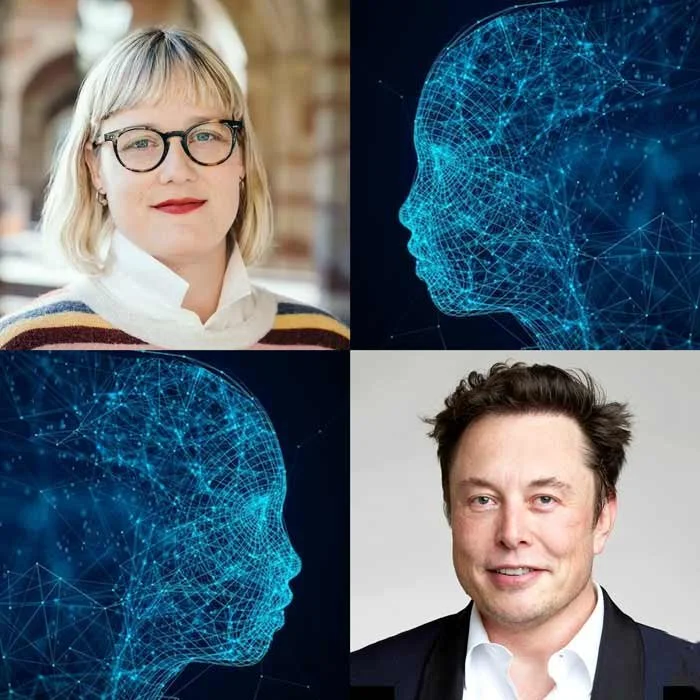
& the Sociopathology of ELON MUSK with SARAH T. ROBERTS

AI is reliant on executives and business managers to direct machine learning to promote their brand and low-level, out-sourced, and poorly paid content managers to slog through masses of images, words, and data before they get fed into the machine. They talk about the cultural, sociological, financial, and political aspects of AI. They end by taking on Elon Musk and the DOGE project, as an emblem of how Silicon Valley executives have embraced a brand of tech rapture that disdains and destroys democracy and attacks the idea that people can take care of each other, independent of sociopathic libertarianism.

On the Significance of the Recent Elections in Germany

On the Significance of the Recent Elections in Germany

In this episode on Speaking Out of Place podcast Professor David Palumbo-Liu talks with Professor Adrian Daub about the recent elections in Germany, where we saw a surge in votes for the Far Right AfD party, which is now the second most powerful party in the country.  They discuss the significance of this rise in popularity and the ways the elections reveal a number of shifts in German politics as the various parties stake out positions that align with not just a center-right orientation but, more dangerously, a far-right one. They speak of the parallels to the recent election of Donald Trump to the US presidency, and what it says about the entrenchment of both neoliberalism and a faux populism based on xenophobia and not serving the actual material interests of everyday people.