JILL HEINERTH - Explorer, Presenter, Author of “Into The Planet: My Life as a Cave Diver”

JILL HEINERTH - Explorer, Presenter, Author of “Into The Planet: My Life as a Cave Diver”

Explorer · Presenter · Author of Into The Planet: My Life as a Cave Diver

If I die, it will be in the most glorious place that nobody has ever seen. I can no longer feel the fingers in my left hand. The glacial Antarctic water to see through a tiny puncture in my formerly waterproof glove. If this water were one-tenth of a degree colder, the ocean will become solid. Finding the knife-edged freeze is depleting my strength, my blood vessels throbbing in a futile attempt to deliver warmth to my extremities. The archway of ice above our heads is furrowed like the surface of a golf ball, carved by the hand of the sea. Iridescent blue, Wedgewood, azure, cerulean, cobalt, and pastel robin’s egg meld with chalk and silvery alabaster. The ice is vibrant, right, and at the same time ghostly. The beauty contradicts the danger. We are the first people to cave dive inside an iceberg. And we may not live to tell the story.

Highlights - CHRIS BLACKWELL - Founder of Island Records - Author of “The Islander: My Life in Music and Beyond"

Highlights - CHRIS BLACKWELL - Founder of Island Records - Author of “The Islander: My Life in Music and Beyond"

Founder of Island Records, which launched the careers of Bob Marley, U2, Cat Stevens, Grace Jones, Roxy Music, Amy Winehouse…
Author of The Islander: My Life in Music and Beyond

I think you need to be aware and see people be open to what can happen and get a feel, get an instinct. I think I've been blessed with instinct. I mean, I did not do well at school. I passed zero exams. I'm unemployable, but I've been blessed with having instincts. The instinct of U2 was seeing their determination, the fact that the music itself initially wasn't close to what most of my music was because most of my music was bass and drum. And most of their music was vocal, so it wasn't a certain kind of music that I like all the time. I like music from all different kinds of levels…I absolutely felt for Bob Marley to really make it worldwide as it were, he needed to change something a little bit. I didn't want him to change what he was doing, not his lyrics and everything else like that. It was more the instrumentation of it. I felt for Bob to be able to reach a wider audience that he needed to move away a little bit from that and focus more and more on his lyrics. When I finally met Cat Stevens, and we just sort of sat down and then when he played the song ‘Father and Son,’ then suddenly the lyrics of the song and what it meant and everything, I suddenly felt this guy is fantastic.

CHRIS BLACKWELL - Founder of Island Records featuring Bob Marley, U2, Cat Stevens, Grace Jones, Roxy Music, Amy Winehouse…

CHRIS BLACKWELL - Founder of Island Records featuring Bob Marley, U2, Cat Stevens, Grace Jones, Roxy Music, Amy Winehouse…

Founder of Island Records, which launched the careers of Bob Marley, U2, Cat Stevens, Grace Jones, Roxy Music, Amy Winehouse…
Author of The Islander: My Life in Music and Beyond

I think you need to be aware and see people be open to what can happen and get a feel, get an instinct. I think I've been blessed with instinct. I mean, I did not do well at school. I passed zero exams. I'm unemployable, but I've been blessed with having instincts. The instinct of U2 was seeing their determination, the fact that the music itself initially wasn't close to what most of my music was because most of my music was bass and drum. And most of their music was vocal, so it wasn't a certain kind of music that I like all the time. I like music from all different kinds of levels…I absolutely felt for Bob Marley to really make it worldwide as it were, he needed to change something a little bit. I didn't want him to change what he was doing, not his lyrics and everything else like that. It was more the instrumentation of it. I felt for Bob to be able to reach a wider audience that he needed to move away a little bit from that and focus more and more on his lyrics. When I finally met Cat Stevens, and we just sort of sat down and then when he played the song ‘Father and Son,’ then suddenly the lyrics of the song and what it meant and everything, I suddenly felt this guy is fantastic.

Highlights - Max Stossel - Award-winning Poet, Filmmaker, Creator of "Words That Move"

Highlights - Max Stossel - Award-winning Poet, Filmmaker, Creator of "Words That Move"

Award-winning Poet, Filmmaker & Speaker
Creator of the Stand-Up Poetry Special Words That Move

Technology has very much changed the way we read and take in information and shortened it into quick bursts and attention spans. We're living in a new world, for sure. And how do we communicate in this new world? Not just in a way that gets the reach, because there are whole industries aimed at what do I do to get the most likes or the most attention, and all of that, which I don't think is very fulfilling as artists.

It's sort of a diminishing of our art form to try and play the game because then we're getting the attention and getting the hits, as opposed to what do I really want to create? How do I really want to create it? How do I want to display this? And can I do it in a way that breaks through so that if I do it my way, it's still going to get the attention, great. But if it doesn't, can I be cool with that? And can I be okay creating what I want to create, knowing that that's what it's about. It's about sharing in an honest, authentic way what I want to express without letting the tentacles of social media drip into my brain and take over why I'm literally doing the things that I'm doing.

Max Stossel - Award-winning Poet, Filmmaker, Creator of "Words That Move"

Max Stossel - Award-winning Poet, Filmmaker, Creator of "Words That Move"

Award-winning Poet, Filmmaker & Speaker
Creator of the Stand-Up Poetry Special Words That Move

Technology has very much changed the way we read and take in information and shortened it into quick bursts and attention spans. We're living in a new world, for sure. And how do we communicate in this new world? Not just in a way that gets the reach, because there are whole industries aimed at what do I do to get the most likes or the most attention, and all of that, which I don't think is very fulfilling as artists.

It's sort of a diminishing of our art form to try and play the game because then we're getting the attention and getting the hits, as opposed to what do I really want to create? How do I really want to create it? How do I want to display this? And can I do it in a way that breaks through so that if I do it my way, it's still going to get the attention, great. But if it doesn't, can I be cool with that? And can I be okay creating what I want to create, knowing that that's what it's about. It's about sharing in an honest, authentic way what I want to express without letting the tentacles of social media drip into my brain and take over why I'm literally doing the things that I'm doing.

Highlights - Debra Fisher - Showrunner of Netflix’s “Ginny & Georgia” - Writer, Exec. Producer “Criminal Minds” , “Alias”

Highlights - Debra Fisher - Showrunner of Netflix’s “Ginny & Georgia” - Writer, Exec. Producer “Criminal Minds” , “Alias”

Showrunner of Netflix’s Ginny & Georgia
Writer · Exec. Producer · Director · Alias · Criminal Minds · The OC · Charmed

I need a balance of light and dark. It can't be just one thing. I want you to be laughing one minute and by the end I want you to be crying. For me, character study is what is the most important. It all comes down to the characters. It's less about action or things like that, which you can have some of that, but it tonally, has to be female-centric and you have to be crying and laughing. There's so many interesting shows that walk that line of light and dark. I want to always live in the gray area with characters. Always. Nothing is ever black or white. It's always a weird gray area.

Debra J. Fisher - Showrunner of Netflix’s “Ginny & Georgia” - Writer, Exec. Producer “Criminal Minds” , “Alias”

Debra J. Fisher - Showrunner of Netflix’s “Ginny & Georgia” - Writer, Exec. Producer “Criminal Minds” , “Alias”

Showrunner of Netflix’s Ginny & Georgia
Writer · Exec. Producer · Director · Alias · Criminal Minds · The OC · Charmed

I need a balance of light and dark. It can't be just one thing. I want you to be laughing one minute and by the end I want you to be crying. For me, character study is what is the most important. It all comes down to the characters. It's less about action or things like that, which you can have some of that, but it tonally, has to be female-centric and you have to be crying and laughing. There's so many interesting shows that walk that line of light and dark. I want to always live in the gray area with characters. Always. Nothing is ever black or white. It's always a weird gray area.

Highlights - Adam Alter - NYTimes Bestselling Author of “Irresistible: The Rise of Addictive Technology”

Highlights - Adam Alter - NYTimes Bestselling Author of “Irresistible: The Rise of Addictive Technology”

Author of NYTimes Bestseller Irresistible: The Rise of Addictive Technology and the Business of Keeping Us Hooked ·
Anatomy of a Breakthrough · Drunk Tank Pink

The other thing from a creativity perspective is we know that more people around you is good for creativity. It's one of the axioms in thinking about creativity in general. You need time. An artist, a writer. I'm a writer. I need time on my own. I also paint and draw. I cannot do that with other people around. It's just my process. But before you get there, before you get to that point where you need that time alone, that space apart, for almost everyone being around other people is good. It's good for creativity. It's both about diversity of opinion and idea and just about having more - just more information, more thoughts, more ways of looking at the world. And some of the most profound research I've come across in preparing for this book suggested that it's better to be around people who are deeply incompetent than it is to be around no one, which I found very surprising.

Adam Alter - Author of “Irresistible: The Rise of Addictive Technology”, “Anatomy of a Breakthrough"

Adam Alter - Author of “Irresistible: The Rise of Addictive Technology”, “Anatomy of a Breakthrough"

Adam Alter is a Professor of Marketing at NYU’s Stern School of Business and the Robert Stansky Teaching Excellence Faculty Fellow. Adam is the New York Times bestselling author of Irresistible: The Rise of Addictive Technology and the Business of Keeping Us Hooked, and Drunk Tank Pink, which investigates how hidden forces in the world around us shape our thoughts, feelings, and behaviors. He has written for the New York Times, New Yorker, The Atlantic, Washington Post, and a host of TV, radio, and publications. His next book Anatomy of a Breakthrough will be published in 2023.

Highlights - Joëlle Gergis - Lead Author  - IPCC Sixth Assessment Report - Author of “Humanity’s Moment”

Highlights - Joëlle Gergis - Lead Author - IPCC Sixth Assessment Report - Author of “Humanity’s Moment”

Lead Author  of the IPCC Sixth Assessment Report
Author of Humanity’s Moment: A Climate Scientist’s Case for Hope
Sunburnt Country: The History and Future of Climate Change in Australia

Contributor to The Climate Book, ed. Greta Thunberg · Not Too Late, eds. Rebecca Solnit, Thelma Young Lutunatabua

is an award-winning climate scientist and writer at the Australian National University. She served as a lead author for the IPCC Sixth Assessment Report and is the author of and Sunburnt Country: The History and Future of Climate Change in Australia. Joëlle has also contributed chapters to The Climate Book by Greta Thunberg, and Not Too Late: Changing the Climate Story from Despair to Possibility, edited by Rebecca Solnit and Thelma Young Lutunatabua.

Joëlle Gergis - Lead Author  - IPCC Sixth Assessment Report - Author of “Humanity’s Moment”

Joëlle Gergis - Lead Author - IPCC Sixth Assessment Report - Author of “Humanity’s Moment”

Lead Author  of the IPCC Sixth Assessment Report · Author of Humanity’s Moment: A Climate Scientist’s Case for Hope · Sunburnt Country · Contributor to The Climate Book, ed. Greta Thunberg · Not Too Late, eds. Rebecca Solnit, Thelma Young Lutunatabua

We're really starting to witness serious climate extremes that can no longer be ignored. And the IPCC, one of our key conclusions to that report was that effectively the human fingerprint on the climate system is now undeniable. It is now an established fact that we have warmed every single continent, every ocean basin on the planet. And again, that's a pretty serious thing to contemplate that human activity from the burning of fossil fuels and the clearing of land has led to this energy imbalance in the earth system, which is leading to a rapidly shifting climate.

Highlights - Etgar Keret - Cannes Film Festival Award-winning Director - Author of “Fly Already”, “The Seven Good Years”

Highlights - Etgar Keret - Cannes Film Festival Award-winning Director - Author of “Fly Already”, “The Seven Good Years”

Cannes Film Festival Award-winning Director
Author of Fly Already · Suddenly a Knock on the Door · The Seven Good Years

For me, there is something about art, it's not a monologue, it's a dialogue. Some people, it doesn't matter who they speak to, they will speak in the same way they would speak to a five-year-old or to an intellectual or to somebody who doesn't speak the language very well. They would speak the same way and they don't care because this is what they have to say, but I think that the natural thing in the dialogue is really to look into the eyes of the person you speak to and see when he understands or when she doesn't understand or when she's moved or when he's angry. And basically out of that, kind of create your own language.

Etgar Keret - Cannes Film Festival Award-winning Director - Author of “Fly Already”, “Suddenly a Knock on the Door”

Etgar Keret - Cannes Film Festival Award-winning Director - Author of “Fly Already”, “Suddenly a Knock on the Door”

Cannes Film Festival Award-winning Director
Author of Fly Already · Suddenly a Knock on the Door · The Seven Good Years

For me, there is something about art, it's not a monologue, it's a dialogue. Some people, it doesn't matter who they speak to, they will speak in the same way they would speak to a five-year-old or to an intellectual or to somebody who doesn't speak the language very well. They would speak the same way and they don't care because this is what they have to say, but I think that the natural thing in the dialogue is really to look into the eyes of the person you speak to and see when he understands or when she doesn't understand or when she's moved or when he's angry. And basically out of that, kind of create your own language.

Highlights - Mathis Wackernagel - Founder, Pres., Global Footprint Network - World Sustainability Award Winner

Highlights - Mathis Wackernagel - Founder, Pres., Global Footprint Network - World Sustainability Award Winner

Founder & President of Global Footprint Network
Winner of the World Sustainability Award · IAIA Global Environment Award

So shooting for one planet just means you would be totally dominant, and leave no space for other species. Ecologists say to maintain 85% of preindustrial biodiversity, it would take about at least half the planet left on its own. That would mean getting to half-planet. And now we use at least 1.75. I say at least because our assessments with about 15,000 data points per country in a year are based on UN statistics, and their demand side is probably an underestimate because not all demands are included. And also on the supply side or the regeneration side, the UN is very production oriented, so it's the FAO numbers, for example, look at agricultural production, and the depletion side or the destruction side is not factored in adequately. So that's why it's an underestimate. And still, it shows we use about 1.75 Earths, and that's more than three times half an Earth. So that's kind of the difference. But we also know overshoot will end one way or another. The question is do we choose to end it? Do we choose it by design, or do we let nature take the lead and end overshoot by disaster? So it's really ending overshoot by design or disaster. That's the big choice we need to make.

Mathis Wackernagel - Founder, President, Global Footprint Network - World Sustainability Award Winner

Mathis Wackernagel - Founder, President, Global Footprint Network - World Sustainability Award Winner

Founder & President of Global Footprint Network
Winner of the World Sustainability Award · IAIA Global Environment Award

So shooting for one planet just means you would be totally dominant, and leave no space for other species. Ecologists say to maintain 85% of preindustrial biodiversity, it would take about at least half the planet left on its own. That would mean getting to half-planet. And now we use at least 1.75. I say at least because our assessments with about 15,000 data points per country in a year are based on UN statistics, and their demand side is probably an underestimate because not all demands are included. And also on the supply side or the regeneration side, the UN is very production oriented, so it's the FAO numbers, for example, look at agricultural production, and the depletion side or the destruction side is not factored in adequately. So that's why it's an underestimate. And still, it shows we use about 1.75 Earths, and that's more than three times half an Earth. So that's kind of the difference. But we also know overshoot will end one way or another. The question is do we choose to end it? Do we choose it by design, or do we let nature take the lead and end overshoot by disaster? So it's really ending overshoot by design or disaster. That's the big choice we need to make.

Highlights - Oberon Sinclair - Founder CEO of Creative/Branding Agency My Young Auntie

Highlights - Oberon Sinclair - Founder CEO of Creative/Branding Agency My Young Auntie

CEO & Founder of Creative/Branding Agency My Young Auntie

If someone comes to me, and they say, “Oh, I have a new brand. It's a startup.” First of all, I have to like the person, they have to like me. It's a two way street. And that's the most important thing with anyone in life, not just work. In life, why do we make friends with who we make friends with? They are relationships. And if you connect with someone, magic will happen. If you don't connect with someone, and someone doesn't understand or have the same aesthetic or a similar way of thinking – you have to have something in common with someone. And if you have those qualities, which I look for, honesty and loyalty, and they're genuine, and you just know if you're going to get on with someone or not.

Oberon Sinclair - Founder CEO of Creative/Branding Agency My Young Auntie - Queen of Kale

Oberon Sinclair - Founder CEO of Creative/Branding Agency My Young Auntie - Queen of Kale

CEO & Founder of Creative/Branding Agency My Young Auntie

If someone comes to me, and they say, “Oh, I have a new brand. It's a startup.” First of all, I have to like the person, they have to like me. It's a two way street. And that's the most important thing with anyone in life, not just work. In life, why do we make friends with who we make friends with? They are relationships. And if you connect with someone, magic will happen. If you don't connect with someone, and someone doesn't understand or have the same aesthetic or a similar way of thinking – you have to have something in common with someone. And if you have those qualities, which I look for, honesty and loyalty, and they're genuine, and you just know if you're going to get on with someone or not.

Highlights - Kristin Ohlson - Author of Sweet in Tooth and Claw, and The Soil Will Save Us

Highlights - Kristin Ohlson - Author of Sweet in Tooth and Claw, and The Soil Will Save Us

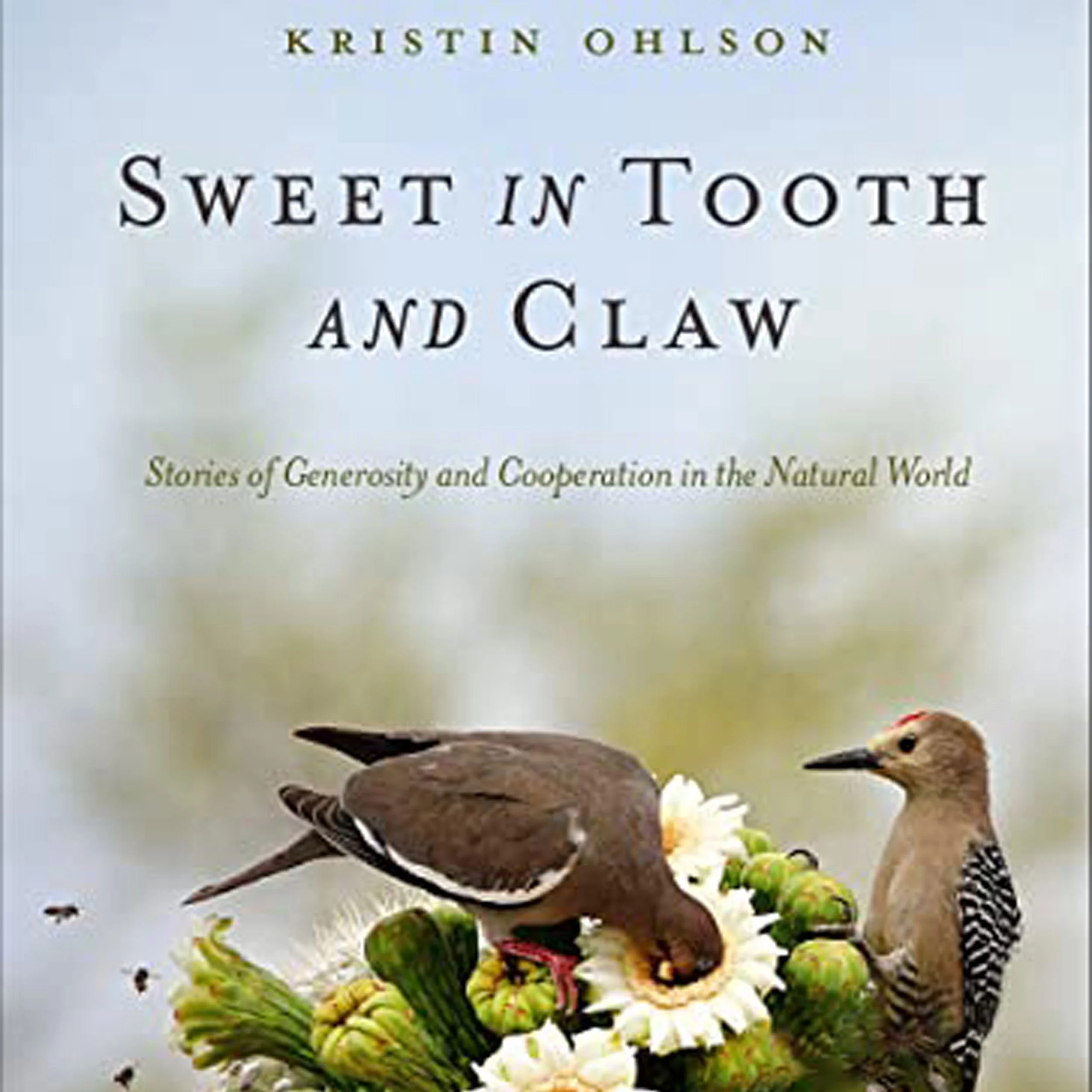
Author of Sweet in Tooth and Claw: Stories of Generosity and Cooperation in the Natural World
The Soil Will Save Us

I think it's this story of cooperation is important in terms of the story that we tell ourselves about nature, and seeing as how we are part of nature, it's important that we see ourselves as possibly a partner instead of a destroyer. I think that we have held onto the perspective that nature is all about competition and conflict. And when we shift that, when we look at nature as this vast web of interconnection and cooperation, and of course competition and conflict in there obviously in some places. But when we look at this vast web of cooperation and collaboration, I think that it changes our view. It changes our view of what's possible.

Kristin Ohlson - Author of Sweet in Tooth and Claw: Stories of Generosity and Cooperation in the Natural World

Kristin Ohlson - Author of Sweet in Tooth and Claw: Stories of Generosity and Cooperation in the Natural World

Author of Sweet in Tooth and Claw: Stories of Generosity and Cooperation in the Natural World
The Soil Will Save Us

I think it's this story of cooperation is important in terms of the story that we tell ourselves about nature, and seeing as how we are part of nature, it's important that we see ourselves as possibly a partner instead of a destroyer. I think that we have held onto the perspective that nature is all about competition and conflict. And when we shift that, when we look at nature as this vast web of interconnection and cooperation, and of course competition and conflict in there obviously in some places. But when we look at this vast web of cooperation and collaboration, I think that it changes our view. It changes our view of what's possible.

Highlights - Todd Kashdan - APA Award-winning Author of The Art of Insubordination, and Curious?

Highlights - Todd Kashdan - APA Award-winning Author of The Art of Insubordination, and Curious?

APA Award-winning Author of The Art of Insubordination: How to Dissent and Defy Effectively
Curious? · The Upside of Your Dark Side
Leading Authority on Well-being, Curiosity, Courage & Resilience

We're really talking about principled rebels. And when we talk about insubordination, we're talking about most of us live in these social hierarchies, and there's the idea, this started in the military and still goes on, where if someone at a lower rank questions or challenges a command or a norm that someone of a higher rank, that's considered an act of insubordination. And one of the main problems of that, I think anyone who's listening can acknowledge, is it depends on the quality of the idea of the person who's raising the question. I just realized there was this whole body of literature on minority influence that no one had put together into a book for the general public, and considering the racial reckoning that occurred during COVID-19, the extra attention to diversity, to disadvantaged groups, every moment of society, it just feels like it's more and more relevant of what I've been working on.